How to Win Product Hunt & Scale with Meme Marketing | Jason Levin
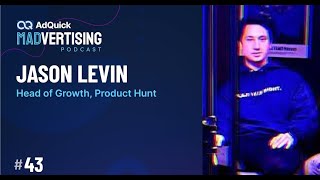
Jason Levin, Head of Growth at Product Hunt, breaks down the ACP funnel (Audience, Community, Product) for successful launches and explains why meme marketing works as free, high-leverage attention. He recommends scrappy Loom demos over polished assets and highlights AI tools like Glyph.app and HeyGen for rapid content creation, while stressing that authenticity and human connection still matter most.
Chapters
Welcome listeners. We are back with the latest episode of the AdQuick Madvertising Podcast, a podcast that explores the intersection of technology, advertising, culture, all of the things that you care about. Today we have Jason Levin. He is the head of growth at Product Hunt. He's also a meme lord. I think that's what he might call himself. Um, an internet publisher. He's an author. He has a great book out. Just all around great marketer. Jason, welcome to the show.
Thank you, sir. It's been a long time coming. Glad to be here.
Yeah, I think we had something scheduled in the past, but schedules are hectic. You're always traveling and doing stuff, so we're glad to have you pinned down and to get a little bit of what's in your brain out for our audience. So thanks for making the time.
Let's do it.
Sweet. So I have a whole bunch of questions for you. I followed Jason online for many years, so I don't need a script to interview Jason Levin, but I did write some down. So as the head of growth at Product Hunt, you're running point on introducing a lot of new companies, apps, products to the market. It's a pretty unique position for a marketer because you have this sort of meta view of what's happening. And so I guess to start out, I think something that'd be interesting for every marketer listening are like, what are some of the commonalities, I guess, you see with the successful companies, ideas, products on Product Hunt? You can talk about either the products themselves or how they go to market, just any like things you've seen repeating themselves over time that are like, wow, everyone should know that and think about it.
Yeah. So the first thing is basically it's called the ACP funnel. Audience, community, product, right? And so on Product Hunt, uh, the people who are, are most likely to win are people with an audience, for better or worse, right? So if you don't like that, then, you know, find somebody with an audience, right? But, or go build your audience, right? Um, because if you build an audience, you know, just like Adam said, we've seen each other for a while. We know each other's work. If Adam goes and launches something on Product Hunt, I'm gonna go upvote it. So there are SaaS builders out there on Twitter, LinkedIn, whatever, who have been building and talking about what they're building for years, and they've built this audience. They've even built offline communities, and then they go launch these products and boom, they have, you know, ultimate distribution, right? Uh, so that is The ultimate cheat code to Product Hunt. I would say another big kind of thing that I see around marketing is just authenticity around it is, you know, not, not, you don't, I guess you don't need it to be perfect. You don't need a beautiful animation. You don't need like, you know, all this fancy, sexy stuff, right? When you launch on Product Hunt, We actually prefer if you just show the software, do a Loom video and just show the software. We are software junkies. Everybody who's consuming Product Hunt is software junkies. Stop showing like Fiverr animations and like stock footage. Show the software. Like, you know, it's, it's sounds simple. And then the third thing, which our CEO Rajiv is very, very big about is taglines. So the tagline is basically just. You know, the, the slogan for your software, right? And, um, you know, the slogan is shows up next to your software's logo and name on the leaderboard. And so that is what immediately makes somebody click it, right? It's, it's just like an ad, um, basically, but you know, a slogan. And the people who have clear slogans are the ones that win where, you know, immediately what the product is, you know, clear is better than clever. You don't need something, you know, jokey. You don't need something sexy. You just need something clear. because you're trying to catch as much attention as possible very quickly. And so Rajiv, our CEO, look him up on Twitter, Rajiv Iyengar. He's done all these threads where he actually like, he's like, all right guys, tell me what software you're building and I'll tell you a good slogan or a good tagline for it. And he's launched on Product Hunt 7 times himself. He's won Product Hunt. He's raised $15 million for his last startup because of Product Hunt. Like he's good at this stuff. And so he'll hit you back with just the most clear version of it as possible. It's really Can you describe this to a friend in one sentence? Super simple. So I would say those are the three main things.
Yeah, I love that you said just build a simple screen grab demo, show what you're doing. I also really liked you're talking about how a lot of engineering-minded people, let's be honest, need to get really one-on-one stuff, like just be clear in what you're doing with your tagline. And I think to me, I think to your point, being scrappy initially and just shipping it is super important early stage. And don't be afraid because later on, if your company does get big traction, you'll get to a point you can bring in the professional marketer to spend a whole bunch of dollars on fancy designs and live action video. But you probably don't need that at early stage unless you've raised a whole bunch of money in your launching something like maybe an AI pin, you know, if it's just a new SaaS tool, or even if you have ambition to go larger, like, like why, like, like you don't need to think you're Google or Facebook at the launch, basically.
Yeah, you should definitely not act like Google or Facebook, especially, I don't know, for you advertisers, people listening, hopefully none of you did the Google Gemini ads during the Olympics, because they made me want to throw up in my mouth. Like, I, I think I did throw up a little bit in my mouth, honestly.
So yeah, we can talk a little bit about advertising faux pas in just a minute, but your, your other statement leads into my next question. So not for smaller companies not to necessarily be like larger companies, let's talk about memes for a while and then we can get back into products and things like that because I think that's a fun conversation to have. So you're kind of known for Memes Make Millions as both a quote and a book. So do you want to give the 2-minute version of what this is and condense this story for our listeners? And then we'll talk about meme marketing a little more.
Right. So I wrote a book called Memes Make Millions. If you read Adam's newsletter, which you definitely should, I did a guest post a while back on it with actually, I think it was like one of the full chapters actually. And Adam helped kind of premiere it. And so the idea of memes make millions is, you know, you're trying to get as much attention as possible on your products, your company, whatever. And we live in a time where it's easier than ever to launch products. AI, no-code, overseas engineers. It's getting cheaper and cheaper every single day, but it's harder and harder to get attention. Harder and harder every single day, right? And what are memes? They are, you know, silly JPEGs, they are GIFs, whatever. But when you think about it, they are really the highest leverage marketing there is. They are free to make, they are easy, they're quick. A 16-year-old college kid, you know, I, I have 17, 18-year-olds making memes for me, right? Like you could, you could pay people $10, right? And you have stuff that can go viral, right? So it's free. Easy and it could go super duper viral. So it's, it's very high leverage marketing. And you know, at the end of the day, like memes don't just make millions. You need a good product behind it. Right. But that's, you know, memes make millions is a sexier title than memes are the thing that bring attention to your good product that make millions. Right. So you need a good product behind it, but memes are just a fantastic way to just capture attention. It's just a lever that you could kind of pull. Like a very quick lever that you could pull and just bang stuff out. You know, when something is going viral and there's like, you know, a new giant topic that's popping off, it's very hard to write, you know, a thousand-word tweet or thousand-word essay, but you could have a viral meme. Adam, you and I do this all the time on Twitter that just pops off and, you know, goes crazy because it's, you're able to do it so fast. So. Yeah, that's the Memes Make Millions philosophy. And I think that like every marketer should be incorporating it and maybe Google and Facebook would benefit a little bit if they embraced the meme lord philosophy.
I think, I think some of the marketers there try to meme, but this is actually my exact next question is I think to be honest, most corporate marketers and most people broadly in corporate America can't meme. The people that are listening to this are extremely online and certainly the ones that can go create memes, but the people not listening to a podcast about advertising that are super plugged in, I don't think they can. And so I guess my question is, will they have to in the future? Is making memes table stakes? For example, every marketer can run an A/B test or can do ad ops and optimize an ad campaign or write a catchy email. Memes just another thing they're going to have to learn, or is this something where you're just going to outsource it, I guess, like you said, to an 18 or 19-year-old?
That's a great question. I've never been asked that question. I think you will need to have taste for what is funny. I mean, a sense of humor is pretty innate. At least I think that's the main thing. There are some really fantastic AI meme tools, actually. I was very, very bearish on AI being funny. And for the first 2 years, ChatGPT comes out, it's terrible, it's not funny. And then Claude 3.5 Sonnet, which is a new ChatGPT competitor by Anthropic, it comes out and these guys over at Glyph.app, it's called Glyph.app, G-L-Y-P-H.app. The founder is actually the founder of Know Your Meme. And now he built basically an AI meme tool and it is unhinged and ridiculous. And you could literally type in whatever you want and it'll make a meme about it. So I think knowing how to use memes, knowing how and when to use humor, knowing how to engage with the community, every social media marketer needs to know that. But going in and like going into templates, maybe not as much. And I do think there's also a lot of other cool AI meme tools that aren't just JPEGs, but videos. There's tools like Viggle, which you could insert yourself or insert your brand character into a meme or a dancing character. So I think knowing how and when to use humor and when to keep it serious is definitely important. But the art of memeing. I don't know if it's a must for every business, but it's a nice to have and certainly what I look for when I'm hiring people or adding people onto my teams.
Yeah, I think also in many ways it's a language of the internet and unfortunately that excludes a lot of advertisers that aren't really part of online communities. And I noticed this, you know, when I was a young consultant advising brands to, like, I advise brands to build some of the first Facebook communities. And I had like other marketers in the room saying, well, why would my brand wanna be on Facebook? Then people can say whatever they want. I said, people are already saying whatever they want about your brand. And I showed them the 5,000 individuals that had already made like unofficial brand pages for this brand were saying what they want. I'm like, look, you've got a whole nother marketing funnel. Of bringing all these people in one place. It's kind of dumb not to do it. And of course there was a lot of alpha to being first because previously if you had a million member Facebook page, I built one of the first ones for National QSR. And at that point, all of their updates were going to all of the users. So it's not like now where you have to actually pay to play. At that point it made sense because it was just free marketing to distribute in a fairly viral fashion. Early on for Facebook page, there was so much upside because you'd publish something and it was decent, it would go viral. You weren't like algo killed like you were today. So I think to your point about memes, I actually wrote a post about AI and creativity and I said that memes and humor are the no-brainer case of AI. Like we can argue to death if AI is gonna be used in like serious creativity, like, you know, in like a Christopher Nolan type movie, he doesn't use CGI at all. But for like people making jokes online, like they were instantly doing that. you know, with, with AI tools and with AI images. And that like stood out as the use case where you could be like a hardened creative. I don't want any technology tools. Or you could be like, you know, Gen Z fully, you know, fully tech guy. And like everyone was kind of like, oh, these are funny. Right. Like that was the sort of entry point of AI.
I think what has changed about that though, with glyph.app is we are no longer just laughing at AI mistakes. It's actually clever and like will make you giggle and make you laugh where we're not just laughing because, you know, it transmorphs the Pope into like, you know, DJ Khaled. Like we are laughing because it's actually really clever and it's very different. I think especially the clever writing, that's very hard. And yeah, I think, you know, I don't think all meme lords will use AI. I don't think all marketers will, but like the best will know how and when to use it. And just knowing the tools out there makes you more dangerous. It makes you, you know, more able to just make something quicker or know how to use it when you need to. It's, it's like just knowing another language or something like that. And you get thrown in a country, you can speak it, you know.
Oh, 100%. And a really cool thing, especially for your users at Product Hunt, about AI is, so if you're like Nissan, right now you can have the most amazing cinematic ad made with like amazing B-roll and you got the guy in the car going through the savanna or the outback and there's like lions and stuff and it looks great. Well, guess what? Your small startup can have cinematic S-B-roll from AI. And you know what? It's already kind of good enough to where if you're an end user, you'll see it and you'll be like, hey, this is polished. This looks great for my brand. So beyond just memes, it's actually helping marketers who might be severely budget constrained actually get a more high quality polished vision so their ads don't look like lo-fi Tim and Eric sketch, which of course larger brands do on purpose, but you can actually, it can equalize things for a resource constrained marketing team or a startup, I think.
100%. Also something that I've been experimenting a lot with right now is it's called HeyGen. I don't know if you've gotten a chance to use it. Basically create AI avatars of yourself. And it's pretty crazy. Like I look exactly like myself. I could write the script. And then what's even cooler is you could do automation. So let's say, you know, there's something big in the news. You get a Google alert that sends to your Zapier and then you, you know, Adam Singer is talking about whatever happened in the news with some billboard, right? There's like a lot of stuff there that unlocks, that AI unlocks that you couldn't do before where maybe you don't need to go sit down and film for a half hour and redo your TikTok again and again. And maybe, 'cause personally I don't like doing that. Like I, you know, I prefer to write, right? And so if I could write the script and then I don't have to always be on camera, it's kind of nice. I don't know. I'm excited about that. And I'm excited about that for other creators and brands to try to do that stuff. And also like the weird stuff that'll come out of that will be really cool. Like I'm bullish on that.
Yeah. I think for us as marketers, I'm like perma bullish of always trying new things and seeing what happens. I'm not necessarily always the same for like people who make like movies and cinema, we're like, I want them to spend enough time with the new tech to make it like actually cool instead of just being like buzzy, right? Do you know what I mean?
Yeah. Yes. I accidentally, I saw a terrible movie the other day. It was like, it just popped up on Netflix. I'm pretty sure it just came out. It was like Kevin Hart was like stealing an NFT. And it was like, dude, it was like 3 years late, but it's like, he totally He had no idea what he was saying, like the entire movie. Right. And yeah, I think using it in marketing, especially startup where like a lot of your clients are tech early adopters is very different than using it in Hollywood. I think Hollywood like has a lot higher level of standard and they should because they are producing giant movies with like, you know, beautiful kind of productions, right? Versus social media content.
Totally. So let's talk about, I wanna talk about Product Hunt more in just a second. Before you get back into that, do you wanna share while we're talking about like brands, some of either the startups or large companies you think do a really good job marketing right now? Because you kind of have, you're like, you're not just a marketer, you have an online aesthetic that I think is appreciated where You kind of vibe with what companies are actually doing cool things versus kind of cringe things. Is there anything right now that company— that a company is doing that you really like that can sort of inspire others?
Yes, check out jam.dev. J-A-M.dev. Uh, they are a bug reporting tool. That's really it. But it is, uh, they've just done such an excellent job marketing. I've been working with them, um, and just like beautiful design. And very, very strong founder-led marketing where, you know, the founder is sharing wisdom all the time. They also, what I think is the coolest part is they have a creator on staff, so they didn't just go hire like, you know, a video editor. They're not working with 100 different influencers and trying to do a bunch of weird campaigns. Like they have one creator and he makes like beautifully designed like videos that are just like very high quality, like around tech. And I think that's kind of the future we're heading is every company or every startup should have like a video kind of YouTuber on staff, essentially. Like, I know somebody else who has that as well, where like he has one of like these, uh, coding engineer guys, uh, coding engineer tutorial guys on staff as a creator for his startup. Right. It's like, I think that is really cool. So jam.dev, they're, they're doing an excellent job. It's, yeah, it's one that I've really been impressed with is Anthropic and Claude. So Claude is, you know, this ChatGPT competitor, but just like their design and aesthetic is insanely good. Like, look this stuff up. Their posters don't annoy you. Like, their billboards aren't like annoying. They are actually art. And I don't know. Do they convert? Hopefully, but like they are just aesthetically very beautiful. And I feel like ChatGPT is very like a medical office, like a doctor. And like Claude is like hanging out with your grandpa who like knows all the answers to something. And personally, I don't know. I kind of like it.
Um, and just the whole OpenAI brand is a bit clinical. I don't, I, I kind of don't hate it because I get that they're kind of like weird autistic nerds working there. Look, I'm a weird autistic nerd too, so I'm here. It's my people. So I don't hate what they're doing. I actually, a lot of people give Sam Altman crap and I really like Sam. I like the company. I think they're like complete trailblazers and it's good that there's like a bunch of AI tools now. So now for a lot of things, I take the same query and I put it into ChatGPT, I put it into Gemini, I put it into Perplexity. And what's really interesting is in some of the cases it's like total parity. And then in other cases I'm like, actually Perplexity is really cool. They're giving me citations.
Yeah.
Yeah. This is super useful. So it's really interesting to watch the space evolve. There are some people who are bearish AI and I'm like, they're crazy. It's like being bearish Amazon in '99. It's like, of course you can be bearish in the near term and be like, look, the valuations don't make sense. But with the long-term vision, it's obvious a lot of things that are going to happen. It's just a question of building out pipes and who is going to create a lot of the AI agent type things and how it's going to work with plugging into your internal intranet and tech stack. And there's a lot of questions, but I'm bullish.
Yeah, I'm, I'm very bullish and I think there's definitely a lot of AI startups that have raised money and they won't hit venture-backed valuations, like where they'll have some giant exit, but maybe they'll sell for, you know, a few million, 5, 10 million and like get a, you know, an acquisition to a bigger company and call it a day. So it's not gonna be like a unicorn necessarily or something, but I think there are a lot of tools out there that are fantastic. And yet there were definitely some overhyped valuations. Like you think about something like Jasper, like you haven't heard that in a while because now every app does copywriting and AI, right? So I think there's just a lot of, when you say AI, there's just so many tools out there that like you can't really just put it in a box, you know? Yeah. And I think also what I'm really bullish on is workflows in general. So like, you know, whether it's Zapier bots or Glyph or Wordware, which just launched on Product Hunt, um, there's a lot of different tools and just, yeah, being able to like imagine these workflows and I, I, you know, maybe they're not fully autonomous agents yet, but that's where we're heading. And, um, and it's okay even if they're not fully autonomous, they're still making things faster, which makes me happy. Like, you know, I want fully autonomous and for me to just sit back and do podcasts with you all day, but like, you know, it's nice that I am having my time saved, right? As well.
Yeah. And ultimately when I use GenAI for things, I end up, you know, if it's an image, I still work on it in post a little bit. I, you know, tweak, tweak the contrast, tweak the settings, make it look like what I want. For text, I find it's a really good research assistant. But like, it can't write a blog post for me because A, I write in my own style and B, I'm in like a different vibe every day and it like takes me less time to just write the idea. But in terms of like, I'll be like, look, find me 3 examples of this. It will come back and find me the examples or stats that I previously had to go out and Google before. So now it's just like you have your own, like almost like you're, you know, you're the editor in a newsroom and you're yelling out to the newsroom, look, get me some research for this. Comes back.
Want to know what I'm really bearish on is AI friends. I am very bullish on AI assistants, um, but friends is just screwed up, man. Like, I like, I like my friends. I like my dog. Actually, you know what, I love my friends and I love my dog and I love my wife. I don't, I don't need AI pretending to be my friend and giving me like encouragement.
Jason Levin, you're the antithesis of the kind of stereotypical Gen Z doomer online, which I think is overplayed. So I love that you say that.
Yeah, I am like the most cyberpunk person I know, and my screen time is probably higher than anybody, but I will say like that just is terrible. And like profiting off of loneliness like that is just kind of screwy or trying to.
Yeah. So that was my next question. Um, okay. We're, we're, we're. We don't like the trends of friends, AI friends. I agree with you on that. I think it's kind of weird. In terms of like not tech trends, like what are some of the interesting ones that you see right now, whether in the consumer space, like creatine, or whether in just the meme space, like the, the, the trad husband or trad wife meme. What are some of the like more interesting trends that you see frequently right now that like get you having conversations?
Yeah, um, I think just the shareability factor of things. And maybe this is, you know, it is around tech, so that is what I focus on. But, um, like, you think about something like PolyMarket, and you've probably seen them a lot. And I was talking with one of their guys the other day, and like, they worked so hard and have tried so many iterations to have PolyMarket next to The Graph. So like, every time you take a screenshot of a graph, you see their brand name. Like, ah, that's so smart. I just find that brilliant. Like whatever company you're working on, you could figure out some way to do that and make your things screenshotable. I love that.
Polymarket is a little bit like if Google, like Google Trends in the future, it's slowly becoming that because now people are like predicting like elections or the Fed is going to raise all these things. And like Google Trends does that in hindsight. It's like, oh, here's what happened. But now that's like another tool that's trying to predict the future. So it is pretty cool. It is pretty cyberpunk that to have betting markets for pretty much anything.
Yeah, I'm excited by it. I guess another fun trend I'm seeing, like an almost enlightenment towards craft again and craftsmanship. And I think it has to do a lot with AI putting out slop. And there's just so much slop on the internet and people really, you know, the people who really care about their work, who don't just copy and paste from AI, the people who were making beautiful work before are just gonna stand out so much more. And whether you're making software like Arc Browser or Jamf or Notion or whoever, or you're making music or you're making, uh, you know, art or writing, like the people who really, really care about their art and aren't just doing it now because AI can do it for them. Like AI, like you were a writer before AI, right? Like you didn't just like, you know, now I'm a writer cuz I plug things into ChatGPT. You're a real writer. Like I think that's, uh, there's, there's a big thing in that. And I think that's really special. Yeah.
I like to hear that. I like to hear that you say that as a trend, because I think it's ultimately really nihilistic to just have AI live your life for you. It's at some point, it's like The Matrix. You're no longer making the decisions and the machines are making all the decisions for you. And now you've opted out of your own life. And so that's not fun because now you're sitting in a room. With nothing to do because everything is being done for you. Like, I see this both with the idea of having a computer write an essay for me or write a song for me. Where AI is interesting is if the AI could generate like a noise that's really interesting, and then I could take that noise and put it into my synthesizer and play some notes of it and then put it into the song. Well, that's cool because now I've created something out of the digital ether that didn't exist before. and now I'm gonna use that as like, you know, as my brush on the canvas right now versus, okay, AI, give me the end product, the, you know, the electronic music song, the house song, the country music song where it's like, okay, great. But when you do something like that where there's no craft and you didn't earn it, you feel empty at the end, right? Like versus you write an essay that's, you know, 500 words you're really proud of, that's your words. Not only will more people share it because it will be better, the machines might be better one day, but they're not yet. But also I think more importantly, you have that fulfillment. And so I think that's underrated. So to your point of craft, yes, you can have machines do everything for you. You can outsource. If you're really rich, you can outsource your cooking to a professional chef, right? And I've gone to friends' houses who've done that, but my favorite meal is still like, I like to cook. I have a barbecue. I have a grill. Like, I don't want to pay someone to do that. I really like to grill. You would be taking something away from me.
Yeah. I, I, if I could never write again and I had to tell AI what to write for me, I would, I would go crazy. I'd kill myself. Like I would just like, I, my, my main form of communication is writing in my notebook and writing on the internet. And like, if I had to prompt, oh my God, that feels like a nightmare. Uh, and, and writing is learning how to think, right? Or clear writing is clear thinking, right? And so, uh, you know, if you are telling AI what to do all the time and not thinking for yourself, uh, your thinking is going to be blurrier. Um, and, uh, you know, another, another trend that I think I'm, I'm really excited about is, um, I think so. I had, I had my friend Randy on my podcast the other day, and Randy told me about this thesis, which, uh, is, is this idea of like screen time coaching. So there are health coaches, there are relationship coaches, there are therapists, um, but there's not really like a screen time coaching, uh, app or a screen time coaching like person, you know. Like if I have a kid who's like super addicted to screens, like and I could afford it, like, all right, let me pay for a coach to, you know, kind of coach him and tutor him. Or if I'm a very, very wealthy CEO and, you know, I have a problem getting off screens, which like all of us do, right? And so I think there's this giant market here. And we're already seeing it with some like, you know, digital wellness apps. We're seeing it with, you know, all sorts of stuff, but I think there's an epidemic of screen addiction right now, and I fall into that for sure. And so maybe I'm a little bit biased in thinking that this is like a giant billion-dollar market, but I think that it's going to be huge in the next few years. It's going to be normalized, totally normalized.
Yeah, I think if I have kids, I will give them flip phones until they're like 18. I think everyone should just have a flip phone until then, and then you should have your full computer. Because here's the thing, I grew up with a flip phone and then I had social media and forums and Warcraft 2 and Quake. I'm an old on my computer, but then when I left my computer and I went outside with friends, I was fully present. So I think flip phones are the answer. They also have these apps where if you're a parent, you can say, look, you have X number of minutes. You can use this a day. You can use Instagram X number of minutes or whatever, and then it just won't open. So they have apps that kind of police it, but I think the easier solution is just to get kids off smartphones and just have your computing time at a desk and then go out and be present with friends in, in, in real life. And I think your life is just much better. And the difference is if you do that, like, like I, I use Twitter a lot, but I actually don't tweet from my mobile device. I tweet when I'm at my workstation. And I have, you know, my keyboard. I don't even like to type on my mobile device anymore. I think it's like annoying. I'm like, why am I using this unergonomic, you know, compressed version of everything when I want, you know, my two monitors? Like, this is ergonomic. I've got the nice chair, all that stuff. So I, I think we'll see more of a trend. I mean, I saw smart flip phones are like trending up in sales once again. So yeah, I think we're still learning how to deal with all this stuff. And in another 5 or 10 years, it'll become obvious. And I think you'll get, if not already, you'll be like shamed. Like if you're out with friends and you're just on your phone, like, why are you not in the conversation? Why are you not, you know, focused at the event? Like it will just seem as weird.
Yeah. Two things on that. One, I think I'm just realizing this now. Touchscreens kind of blow. Like we were super excited when they first came out and we're like, oh my God, this is amazing. But like, man, I love typing on my laptop so much more.
I even like my tactile keyboard on the BlackBerry. I actually really like it.
Dude, I miss my QWERTY. Like, I had one of those like swipe up ones or whatever. Like, it was one of those weird phones. I don't know when I was in middle school or high school and like, I kind of miss that a little bit now thinking about it. Like, I saw there's somebody actually made like an extension for an iPhone that has the keyboard come out kind of like that. Uh, wow, that's a cool idea. Yeah, I think it's called Clicks or Taps or something. And then I don't need—
also, I don't even like— I don't even like the cars that don't— that don't have tangible buttons anymore.
Yeah, I, I think touchscreens were a mistake. Maybe, I don't know, maybe a slight mistake. Um, but second thing on that is, um, I think— I hope we see a, uh, I think Apple Watches also a bit of a mistake. Like, we don't need watches that tell us everything. I don't know, we don't— yeah, I, maybe I'm just like, I don't know, maybe I'm old-fashioned, but I don't want to, I don't want to be distracted in the middle of a conversation. Like, yeah, I just want to walk, you know.
I, I, I did a meme on this before where like on all the fitness tracking stuff, you know, the, the IQ meme of the, the, the monk and then the, you know, caveman and then the person in the middle. Like the two ends are the just go to the gym and eat well. And like the middle guy is like, no, you have to measure everything. And it's like, do we, do we not understand what to do here? I think everyone knows and they just don't want to. And like, maybe they're for some people, maybe they need their device to shame them into going to the gym or to shame them and to get up and take a walk. Like I have a cattle dog and if I sit here for too long, he will come in here and get me for a walk or a hike or to play. So the other thing you can do is just get a dog and your dog will force you. To get up and be present.
Honestly, yeah, he does, dude. My dog reminds me to smell the flowers, you know?
Stay— yeah, dogs, dogs are like Taoists. They're like meditative. They're in the moment. They're present. That's why your dog is happy all the time and you're unhappy, because you're living the future. Everyone unhappy is just living the future, dude.
I always thought it was weird that dog and God are spelled backwards, like flipped. There's something there, something there.
Um, so, so let's talk a little bit more about Product Hunt. I wanted to circle back to this because I think you probably have the most to say on this topic. So Product Hunt obviously has had a strong community of users from the beginning, and so now you're, you know, fostering that community and growing them. Um, do you want to give some tips for maybe a young community manager who's coming in to a role like yours, either with the expectation of the community growing and building it, or maybe there's one already there and it's larger than what someone has dealt with. Do you wanna share some words of wisdom for like a young marketer, community builder who's entering your role so they don't repeat your mistakes? You can skip 'em ahead.
Yeah, I would say number one is, it's a talk to users, talk to community members. Like, Yeah, you could just put out a tweet and Product Hunt has 500,000 followers and I tweet from it all the time, but it'd be meaningless if I wasn't actually messaging with people. So I, um, when I interviewed for Product Hunt, the previous social media manager had not responded to anybody for 6 months. They were just using it as a one-way channel. And I said, we are changing this. I will fix that. And, um, I am, you know, Earlier today I was just DMing with a random maker on Product Hunt, a random hacker with like, he's got like 300, 400 followers. I don't know, like who knows? He's just like one person and I'm just trying to get to know people. I hop on the phone with people who I think have cool products who are working on cool stuff. It's these one-to-one connections that don't scale. And that's how you build like real trust and real, like, I don't know, it's really meaningful to me to do that. And when somebody like, gets a follow by Product Hunt, they're so happy. They're like, oh my God, I made it. Like, especially for, you know, a young 18-year-old in India, like working on side projects, like that is like the— it's, it's huge to them. And so it makes me really happy. And I send them a message and I say, yo, this is Jason Levin. Like, you know, I don't just pretend to be the logo, the brand, right? So if you're like managing a brand account, like show your humanity. You are a real person behind there. This is not like You are not the brand, like you are just a human behind there and get to know the person that they are and just be a real person, like make internet friends. That would be my number one piece of advice is like, just get to know people as much as you can. And, and, and, and support them as much as you can. If you have a community, especially around Product Hunt, where it is filled with people who are making cool stuff. And you're not sharing their cool stuff, like, you kind of suck. Like, you gotta share their cool stuff. Like, go highlight them, you know? Like, all these people are like, you know, launching on our website and we don't share their stuff. Like, that's so rude. Like, that's just so ungrateful. Like, share their cool stuff, you know? Highlight your users. Um, if you need some case studies on that, check out Beehive. Like, they are just incredible at that. Like, if you tweet that you are, you know, I'm personally like 150 weeks straight on Beehive. Like they will retweet that in 30 seconds or less. Like, cause like they know it's good for them. It's good for me. Like it gets me more subscribers and it gets them, you know, a better brand reputation. Like pretty simple. Right. And so running a brand account, just support your users, get to know them, be on a first name basis, like be on a phone call basis with your community. Like, you know, not everyone. but some people.
I, I love that. And I like what you said about, um, you said do things that don't scale, but I think over time those connections with those 300, 400 followed accounts matter more than the connection with that one big account because A, they're gonna feel special, as you noted, and they are special. They're part of your community. You wanna see them succeed. But more than that, that intimate connection that you foster over time, enough of those people become basically partner marketers for you. They're not in the formal sense of you sending them press releases, but when you wanna see them grow, they wanna see you grow. And it's a symbiotic relationship. It's really how tribes form and grow on the internet and become stronger. So I love what you said there because I think too many marketers don't do enough to really talk to that small user to not just not just even get them as a viral marketer or word of mouth marketer for you, but just to understand them and understand like what's going on in their head because they obviously represent a bunch of other people in the cohort. So now when you come up with your next marketing campaign, you have all that context. You know exactly what they're thinking about, and then you know all the ways that you can go ahead and create things that do scale, like a big out of home ad or like a TV ad if you're at that point. but you can't know what to do at the scaled level unless you know what to do at the, at the micro, at the individual level. And you know enough of what's happening in those people's heads, right? So like a good example of that probably is, I don't know if you remember years ago, like Robinhood app had like the, like some of the coolest videos for like young traders and to make like a lot of those videos where they were like making fun of trad fi, like you had to understand what was going on in the mind of a retail trader at that time. You had to be a member of WallStreetBets. You had to be someone who was, you know, probably like YOLOing stocks and in that mindset. I think they've grown up a little bit, but the point I was standing is you couldn't then create, like they spent a lot, millions of dollars on a lot of those ads. They use the guy who, I think he's one of the guys who's like behind Community and like some of those big sitcoms to like do some of the ad creative. And you, you wouldn't know what to do unless you really understood the individual user.
Yeah, 100%. I think, you know, it shouldn't just be developers talking to users or, you know, UX people. It should be marketers too. And there's this saying in writing in general, like, you know, you think of like one person who's reading your work sometimes, right? Um, and like, it's a, it's kind of a good way to, uh, say like, what will, you know, Adam think of my something like that, right? And like, or write to help one person. And if you haven't, if you just see everybody as a number and like in a cohort, like what you're saying, or as a statistic, like it's a very inhuman approach and your marketing comes off like Google at the Olympics callback. There we go.
Yeah, it's, I've been in those meetings and the problem is with that you have so many people in the brainstorm for the piece of creative that the original idea is watered down because groups aren't inherently uncreative because you're going to find the average of all the ideas. The very creative ideas come from an individual and that singular point of view where, you know, you're running with the story and you're not going to sacrifice any aspect of it to appease the other people in the room. And in fact, the thing we've gotten away from with a lot of the sequels to nowhere and the Marvel nonsense. Is the fact that we've bureaucratically wrung all of the creativity out of a lot of media to either appease everyone or to remove risk, or because we were worried about what a small group thinks, even though no one really cares. So I still worry about that. A lot of my blog posts lately are talking about creativity for that reason. So I hope we reverse course there soon enough.
Yeah. Statues are never erected for committees. I think that was Ogilvy, right?
Oh, that's a good quote. I like that one.
Yeah, it's true. So let your crazy social media managers cook is what I'm saying.
I love it. Look, I don't think we're going to beat a quote from the ad industry god. Jason Levin, let's bring it home. Where can people find and connect with you online and also with Product Hunt online?
Yeah, you could find me, uh, I am Jason Levin, uh, on Twitter. Uh, just look me up on LinkedIn. Uh, I got the, the purple and, you know, cyberpunk profile picture everywhere. Um, and then Product Hunt is just producthunt.com. Uh, we, uh, have the coolest startups in the world launching every day on our website. It's like, if you wanna, if you need new cool startups or new, new cool apps, to find if you're like somebody who just loves finding cool new apps, like go to producthunt.com and just check out the leaderboard every day.
Awesome. And we will put links to connect with Jason in the episode description. So if you are watching this on YouTube, you can just click those. If you're listening, you can just go to Google and find Jason Levin. He's easy to find. Always post cool stuff. Well, thank you everyone for listening and we will be back back soon with another new episode. Um, we hope you are having a great summer.
All right, thank








