Jason Levin: Humor as a Moat, The Barbell Theory, and the Art of Being Unhinged
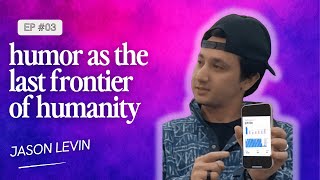
In this interview, Jason Levin, the founder of Memeler Technologies and self‑styled "Memelord," walks through his evolution from a meme‑making kid to a SaaS founder, explains why humor serves as a durable competitive moat against AI‑generated content, and shares his "Barbell Theory" of alternating between extreme online focus and deep offline disengagement. He emphasizes a simple content creation hack: turn any real‑life event—whether a conference, a product launch, or a personal milestone—into a story or meme, avoiding the need for SEO‑driven ideation. Levin also details his digital wellness rituals, including nightly journaling, voice‑note capture, and strict phone‑free bedroom rules, and discusses how he cultivates internet friendships that transition into offline relationships. The conversation rounds out with rapid‑fire questions about his favorite and overrated tech tools, app deletions, and the one piece of technology he’d keep forever (a Kindle). Throughout, Levin blends humor, authenticity, and strategic thinking, offering actionable advice for creators seeking to stand out in an AI‑saturated landscape.
Chapters
All right, Jason Levin, thank you for hopping on and joining. I appreciate it.
What's up, dude?
So everyone probably heard your bio, and if they are anywhere on Twitter, they've seen the Memelord and his Memelord Mafia at work. But why don't you catch people up with a little bit about just, you know, 30-second kind of timeline of your story and what you're up to now?
Yeah, I have been making content since I was a little kid, 11 or 12. Took 10 years of failing, trying a bunch of stuff to figure my stuff out. I have always made super silly content and it's really hard to like make money doing that until you like build an audience and figure your stuff out and build products and leverage online. And so I figured it out. It took a while, but I figured it out. And now I run a software called Memeler Technologies where, you know, marketers from everything from Solo creators to public companies use our software to make viral memes for organic marketing. So everything from like, you know, Coinbase to Semrush and HubSpot to like a random, you know, and anybody can give it a try. So yeah, that's, that's what I'm doing now is memeing and scheming.
So I love it. And yeah, anyone who reads my newsletter, they've probably seen me use memes in that all of those are Made with Memoard, really honestly amazing technology that I think the kind of wow factor hits you right when you start to use it. And one, it's fun just to actually make and laugh and make friends laugh. And then two, like you said, there's real marketing impact that can be used across any type of industry, any type of size of business, because humor is so universal. I think that's been kind of a core facet of you as a person. And then obviously you mentioned your content, for a long time before kind of unhinged marketing was hot, before meme marketing was hot. So now that AI is constantly advancing, constantly iterating, the moat to creating any type of nonfiction writing is near zero and there's really almost no way to stand out. How do you think about humor within not only the context of marketing, but just anything that you're going and creating art into the world?
Yeah, so humor is the last frontier untouched by AI currently. You know, I saw a tweet the other day where it was like it took, you know, a trillion bits or whatever to make AI at a PhD level. We still haven't hit like funny, right? So maybe humor is a real sign of intelligence. And, you know, I've always felt that way. And it's nice to feel that others do as well, that AI still hasn't replaced us, the funny meme lords out there. And so when ChatGPT came out, that's when I doubled down on the funny stuff because I realized The internet's about to be filled with boring slop. And so you can either double down on two things, which you and I are both doing in our own ways, which is one, humor, or two, authentic human personal stories and connections. Ideally both, which we are both doing in our own ways as well. Uh, so can you tell a funny story about your personal life that AI can't make up, right? Or can you have a deep and meaningful connection that makes somebody laugh and makes somebody feel good, right? Um, can you host a comedy show like I've done, right? Or can you go to a comedy show with your your friends or host offline events. So really like in the age of AI, the last two things in my opinion, and you know, commonly agreed on by content people in general is humor and personal connections. So that's why, you know, personally, like I love being unhinged. I've always been that way. If you, you know, as I was saying earlier, been making content since I was a little kid. If you look at my content from when I was 10 or 11, it is the same thing. Like literally Photoshopped pictures of my faces, unhinged, wearing like mafia outfits, like straight up. And so now I've got my Memelord Mafia. I'm just the same dude doing unhinged content. Um, and, uh, yeah, so if you wanna stand out in the age of AI, uh, either be very funny, unhinged, which AI can't do, or, uh, be a person who has lived a very cool and interesting life. Um, ideally do both. So, um, that is the goal and, uh, what, what I think both of us do pretty well in my opinion.
So yeah, and the article I wrote today was about how I think a lot of the digital wellness industry with a lot of the app blockers, they're all focused on how do you spend less time on your phone, you know, blocking apps, doing whatever they do. But I think the real way to do it is actually what you just said, live a really interesting, exciting life where everything that you're doing The alternative is the alternative of being on your phone is so damn boring compared to going and living this incredible life that you just naturally want to go and do it. And then because of that, I think for you specifically, the volume of content that you put out, whether that's a newsletter, video, tweets, is so large because you don't need to think and kind of get in that content paralysis of like, oh, what is everyone else doing? What are the hot takes in the industry? You're just like, oh, I did some cool shit today. I'm going to go and talk about it.
That's it.
And I started doing that with me as well. And it makes my life so much easier. I've done a lot of cool shit that you were always telling, like, you should talk about this, you should tell this story, blah, blah, blah. And I never did. And the second I started doing it, whether that was on LinkedIn, whether it was through the newsletter, night and day difference as far as people directly relating to you.
Dude, it makes life so much easier. It's the ultimate content hack is just do cool stuff, then write about it or yap about it. Right. And so I do this anytime I host an event, I will take a picture and I will write about it. Anytime I build a new feature for my software, right, I'll yap about it or I'll write about it anytime, you know, I went to a conference with like some billionaires, right? And so I tell that whole story in a newsletter. When I quit my job, I wrote like a whole post about that and told people about it. You don't have to go searching for ideas or like go SEO optimize BS that every other dude in every country is trying to do. Just tell your personal story. And make it funny if you can. And that makes it better in my opinion when you do that. And so it's just the ultimate content hack. There is ideas just in your life constantly. There are ideas in your texts, in your email, in your, in your even, you know, even in your, in your DMs and in your chats with your parents, you know, there are constantly ideas all around you. Where you don't have to be going ask ChatGPT for ideas because that is a quick way to get terrible ideas and terrible content. So if you want good original ideas, you know, look at your life. You are a unique person. Um, whoever's listening to this, you, you live a weird and unique life in some sort of way, even if it's not like the most exciting, there's something unique about it, right? You know, a great example of this, this week actually was this guy Peter Levels, right? So he is a very famous, you know, solopreneur hacker guy on the internet and he built this, you know, plane game, basically like a plane flying game. And so what he did was every day he just wrote about how he was building it and growing it and growing it and growing it. And it grew, you know, very, very big. You know, he already had a giant audience, but He's been doing the same thing for 10+ years, which is build cool stuff, write about it, build cool stuff, write, ship, write, ship, write, ship, write. It's just a constant cycle of shipping and writing. So make cool shit or do cool shit or do both and then write about it or yap about it. Just the ultimate hack.
So yeah, and I think one thing that's really interesting about you, and I don't know if everyone gets to see this side because for people who know you more parasocially, you're just like this funny guy on the internet, you are one of the more thoughtful, kind of intentional people with when you do spend your time offline, whether, whether how much of that, that is, you are, you know, journaling, you're reading alone, you're going for walks, you're giving yourself that time and solitude to think about how to be strategic or how to go and write about that. So can you walk me through a bit of what that process looks like and even just your thought process around what time you're gonna spend kind of front-facing on the internet and the time that you're gonna spend strategizing about it?
Yeah, so I have a, a barbell theory, which is like you should either be totally online or totally offline, but it's the, the middle where you're sort of online and sort of offline where you're like miserable, right? So when you're like with family and everybody's just on their phones, like everybody's pretty miserable. But if you are totally online working, locked in, drinking coffee, maybe you're popping a Zinn. I don't do that stuff, but like maybe, maybe you're doing that, whatever. Right? Then you're locked in, you're happy. And then afterwards, you know, you're in airplane mode, you are journaling, you are walking, you are exercising or hanging out with your wife and kids and dogs or whatever. So I'm a big believer in the barbell theory. Uh, I do, uh, I don't mean to hide it because I'm just online a lot and I also schedule out content, which is quite helpful. But, you know, every night, like, I don't, I don't let my phone in the bedroom. Um, that's been a rule I've had for 5 years. Occasionally I'll break it. I'm not perfect, but. Uh, the bed for me is really a time for, you know, bedtime is really a time for journaling and, uh, and reading on my Kindle, uh, generally. And so, uh, I find that's really helpful for deep thinking. And same with like going on walks. I try to turn my phone on airplane mode, uh, so I can't, you know, be disturbed by calls. Um, and maybe I'll, uh, you know, take a voice memo or something, or, you know, think if I have an idea. Um, So yeah, I'm a big believer in the barbell theory. It's hard to do perfectly, but my clearest, best ideas always come from journaling. You know, every single time I have a good idea, it comes from journaling. And my best ideas— like, I have a lot of good ideas, you know, that are just on the subway or something where I'm tweeting. But my clearest thinking comes when I'm fully offline and, um, you know, why, why I keep you around. No, um, dude, I, I hear Randy's voice in the back of my head. So, uh, for people unaware, Randy was, was at my wedding and, um, and, uh, he was, he was bricked up. I remember you bringing up that term and, and surprising people around us where he had the brick and I already had the brick, but I never heard that term bricked up. And, uh, you know, the entire, you know, it's like a whole weekend in Florida, right? And Randy was, was bricked up, uh, for like the entire Saturday and like, it was, it was, it was just very commendable. I think Randy, whether you realize it or not, you're inspiring a lot of people around you, uh, to, to think more, uh, intentionally with their time. Um, I know you are for me and for a lot of our friend group have gotten bricks or have gotten offline more because of you.
So yeah, I appreciate that. And I think even the delivery of like bricked up, right, as a term plays back to the humor aspect because everyone's on their phone. I've been thinking about even with my own content, like I don't want to be on a soapbox, just be like, get off your phone, phone is bad. It's like, how can you go and deliver that same message but do it in a way that's entertaining or funny or relatable? And those are constantly things that I'm thinking about as far as passing that message along. But I do think that as, again, AI advances more, form factors become smaller, things are more immersive, especially as the younger generation will start to assume more responsibility in society and some of the things that they're used to doing now just simply won't fly if you're in office or whatnot. People are really starting to seek out, you know, finding ways to get that balance. And I do think the Barbell Theory is one that, you know, does work, and it's one that I'm guilty of. I think in runners there's this, uh, phrase called junk miles, which is essentially like miles when you're training that you're just doing but they don't exactly contribute to your goal. You're probably better off resting, letting your muscles heal, and then be able to do a a big run the next day. And I think that a lot of people, myself included, when I'm watching TV or I'm watching a show, even though that's screen time, that might be screen time that they're using to relax. And there is a place for that for sure. But when you are also, you know, substituting some side of second screen in there, it completely defeats the purpose. And I find myself like clicking around on Twitter or refreshing and all that type of stuff. And it's just—
When I am, yeah. When you are watching TV without a phone, it is a whole other experience. Like as a writer, as a creative, like you get to actually dive into the world of the show. And if you feel the desire to pick up your phone, you know, I'm saying this to myself as much as anyone, but it's probably just a sign that you don't like the show and you like don't know what else to do with your time. And something that like, you know, when I decide to put my phone away and I'm watching, you know, one of my favorite shows and I'm analyzing, you know, thinking about what's going to happen next, or I'm thinking like, oh, I got to write down that quote because, you know, Raymond Reddington from Blacklist just said something really iconic. Or, you know, from White Collar, like another one of my favorite shows, right? Like that is really joyful time to me, you know? And so there's nothing wrong with watching TV or entertainment. I think you're 100% right though. It's, it's the mindless doom scrolling, right? And even if it's not doom scrolling, even if it's texting while doing something else, it's, it's a little bit of the multitasking as well. It's nice, dude. Like, when I was in high school, I used to just listen to albums all the time. And I was, you know, like you, a big stoner back in, back in high school. And so I would just listen to albums constantly, the whole thing. Grateful Dead, Frank Ocean, you know, a mix of rap, whatever. And I don't do that anymore. And I don't know anybody else really who does. And, you know, a few weeks ago I did that and just I totally just put on big headphones, laid in bed, and listened to an album. And holy fuck, music is cool. I forgot how cool music was. I feel like a lot of people have forgotten how cool music is because we're so used to listening to music while we're texting or while we're scrolling. Like, we've forgotten, like, oh my God, music is like really deep when you let it be. Um, or maybe, maybe it's just me that forgot about it.
I agree.
Maybe I'm retarded.
No, I'm just someone who is in all the blogs, you know, scouring all the music. I would listen all the time. Like, I know we had that in common, but yeah, I was thinking the other day how much it's fallen out of my life simply because it's been, you know, background music as opposed to the forefront. I think when you look at it from a more broader standpoint, that's almost like sacrificing the art or enjoying the art for efficiency's sake. And one thing about you that I also really admire is the fact that you like digital wellness. Stuff takes time. Improving yourself takes time. Building up a skill takes time. With writing and Failing on the Internet, I think you're one of the most consistent people that I know in terms of putting out work every single week. So I don't know what the number's up to now, but it's like 150, 180 weeks that you've written a newsletter and you still do. And you have a very distinct writing style where, especially as a writer yourself and then someone who wrote for clients where it's very easy, especially in that case, to go and outsource to AI for the sake of efficiency. Why have you chosen to not use AI, or if you do, how do you use it?
Yeah, so I started writing the blog because our mutual friend Justin Feinberg told me that it would help me clarify my thinking. Um, and that's why I'm still writing it and why I don't outsource any of it to AI is because every week I like to clarify my thinking better about my business, about whatever marketing experiments I'm running, about whatever trends I'm seeing. And you can't outsource your thinking to AI. Maybe it could help you. I don't use it for my newsletter. I don't use it for any of my writing really is, you know, my, I personally think I'm a good enough writer that I don't need it and I write better than any AI. So that is like my personal chutzpah and belief around that. But, you know, at the end of the day, you know, I've written my blog 180 weeks straight. It has become like a ritual. and, uh, really just like enjoyable aspect. And when I don't write every day, when I don't spend that time, I feel it. Like I feel my brain frazzled. Uh, I am less, uh, clear with my thinking and talking. Like I feel clear right now because I journaled last night for like an hour about like ideas and I wrote a short story and like, you know, came up with some stuff, right? And I, I spent a lot of time reading a book last night. Like I tweeted this, uh, today it's like, when the world is feeling very unpredictable, uh, read old books, right? Um, and you know, there's a lot of patterns over time, right? Find patterns. I, my newsletter's called Cyber Patterns, right? It's like there's a lot of patterns. And when, when the world feels scary out there, look at the old stuff, whether it's old books or spending time in nature with your friends or going to, you know, a wellness retreat or a hangout, like find the stuff that is Lindy, that will be around forever. In 1,000 years, like people are still gonna be hanging out with their friends. Whether they're on phones, whether they're in Neuralinks or whether none of it and electricity got turned off. Right. So I guess that was a long answer, but the short answer is I just like it too. Like it's the best part of my week writing my blog. Like I enjoy it. I love the process. So yeah, yeah, it's just me doing it. So.
I love it. And I think the friendship point segues really nicely into even the origin story about how we met, right? We met online. You are also one of the better people that I've met in terms of taking online relationships into offline. At your wedding, there was a table of people that you met on Twitter.
Yes.
You personally have introduced me to some of my now closer friends that I've met in this kind of broader business, New York City world that came from, I think, initially you meeting them online. And so you have this massive, massive network. That's something that's one, really hard for really a lot of people. And then two, some people find it so foreign of the idea of—
Yeah.
So how does that work?
Yeah.
Tell me.
Yeah. So the, um, let me, what's the word? The stigma around online dating is completely gone at this point, in my opinion. Most people meet online. Um, but for some reason, the stigma around making friends online still isn't there. And I don't really understand it. I think it just has something to do with like, everybody feels the natural desire to get laid and some people don't feel that around making friends. I don't really know. Or some people just assume that like, why are you, why do you need more friends? It's like, I don't know. I like meeting cool people. Like, I don't know what to say when I meet, when I see somebody who looks cool or they're like doing cool stuff, I want to talk to them. Um, maybe it's, maybe it's something about that. I don't know. But there's a very real, like, internet friend to real friend pipeline, right? We met online. You're at my wedding. Jack Kovecky, right? You introduced me to Jack. We're starting a show together. We hang out all the time. He's, you know, he's been to my house. He's met my wife. He hangs out and, you know, with us all the time. Right. And some of my best friends, you know, come from the internet. And, you know, I think like Uh, at the end of the day, like, uh, there are a— the, the information, um, the information, uh, what's the word, the, the social media and information network is so fractionalized at this point. Everybody has very, very different timelines that me and a kid I went to high school with can be completely different mindsets, and I could be more similar to somebody in Taiwan or India, right? Or wherever, just because of our timelines, because of how much time we spend with it, right? And so something I literally found with my employees who are in Taiwan and India is they understand memes better than 99% of people in New York. And like very niche tech memes because they are into tech and they're into the same thing. So you can make friends with anybody if they're into the same interests. And it turns out that having the same interests and hobbies and passions is a better predictor of friendships than where you grew up accidentally. Who would have fucking thought? I mean, obviously, right?
It's like I discovered that when I was doing my travel stuff. I met this Russian girl who we were in Turkey, but she was so almost Americanized, not in a bad way, but like tapped into kind of like the Gen Z lore, internet zeitgeist, whatever, that we were immediately just hit it off. And like now still that relationship compared to a lot of the other ones that I made during that period has stuck because we both like Taylor Swift, we both like music. She's very into the like Gen Z stuff and it, and it gives us memes. I send that back and forth. Like it gives us something to, uh, to talk about. And I've noticed that with even the newsletter, right? Like one of the beautiful things about Reddit, which can be a really dark place, is that it's global. And a lot of people do find me through Reddit, through the digital minimalism subreddit or the NoSurf. And of the newsletter, you know, 2 weeks ago I had set up kind of calls with a bunch of people who were reading. I think it was India, Mexico City, the UK, Honduras, Malaysia. Like it is completely global of one, people who struggle with this problem, which is, you know, awesome to see, to be able to impact it on that scale. But two, how many people, one, are interested in it and our lives are not nearly that different. Like a lot of us are all struggling with the same shit. We find the same things really interesting. And only until you step out of that world, whether that is through travel or allowing yourself to go and meet people on the internet, do you get to actually go and see that.
Yeah. Yeah. 100%. That's the cool thing about content and software is like scales everywhere. Where, you know, something like struggling with the phone is universal addiction. Like that is— it's addiction at the end of the day and like a universal problem. The need to— the desire to laugh and make people laugh, you know, similar as well in that way. You know, it's— I would really suggest people out there go make some internet friends. You know, I was a pretty lonely person 5 years ago until I started making real internet friends and finding people with similar passions and mindsets. I was surrounded by a lot of people who, um, didn't think the same way or didn't, uh, didn't think of me, uh, in a good way. Like, because I was ambitious or entrepreneurial, um, they almost looked down on me in college, right? In, in some circles, right? And, um, or in high school even. And so, um, the sooner you start making internet friends who have similar drives and passions and ambitions, like the more normal of a person you'll feel and accepted, uh, for who you are. Um, so you want friends who accept and respect your craziness and want you to, you know, go be your crazy self. Um, and, uh, and get that. And, and sometimes, I mean, I know you've experienced this, I've experienced this, is you'll be super surprised when you're making content, when you're making friends online that Some of the most supportive people of your work are complete strangers. They aren't your family, they aren't your best friends from high school, they aren't even your significant other sometimes. Um, they are complete and utter fucking strangers who will buy your work and read it every week, and it's because they are similar to you. They have the same passions and drives, and like, we as humans are not that, that different. Um, and so the internet like connects us. So, um, another, another long rant there, but, uh, yeah, no.
And the fact, uh, just to add on that, that when you first start creating any type of content, you're gonna be posting out into the void. The view count is very easy to be like, oh, no one's seeing this, it's not worth it, or it hurts my ego. But it's not about how many people, it's about the right people. And if you find that, you know, small cohort of people that really do care about what you're doing, it is so easy to go and build that initial group. So I'm curious if you have any kind of actionable advice or tip that you usually do as kind of that first touchpoint. So I have heard a lot of people be like, yeah, I want to make internet friends, but they're scared of reaching out or they don't know where to start. They don't want to seem weird. I know you don't auto send out DMs. It's play and pray. But like, what does that kind of thought process look like when you're reaching out to someone new?
Yeah, generally like It's just if I see somebody who is working on something cool, maybe they're working on a startup I find interesting, or they write a blog that I like, just shoot them a message with a thoughtful comment about it. It never looks the same. Maybe it's a funny meme that I make. Maybe it's a post that I wrote that is similar. You know, and sometimes not everybody's gonna respond. Some people I've met are real dicks too. And, you know, some people I never want to meet again. that's just the nature of making friends in this world and meeting people is like, you're not going to like everybody. Um, but personally, I don't know, I've always been pretty good at getting rejected. So getting rejected in, uh, in middle school of girls, uh, paid off, I guess, in business.
So huge skill, very underrated skill.
Yeah, we did. Our 6th grade selves are proud of us now.
So I know I was gonna say, it's like the people who are just automatically good looking from the jump and then tail off, like you do not want that. You want to be ugly, no confidence, get it out the mud, and then life just becomes a hell.
Awkward Jewish teen boys, like, yeah.
Exactly.
Pays off, dude, in the long run.
Exactly. And I also found that even with the outreach, like, and I was guilty of this too in terms of especially like running when I was doing outreach more so from a sales, get clients perspective of making it a bit transactional and kind of getting into an ask right away where there are so few people that just reach out for the sake of saying like, Hey, saw what you're doing, it's cool, keep it up. And like, that's it. They're not looking for anything. There's no ask. It's literally just like a game respect game type thing. And once I started doing that, it goes such, such a long way, even with like much bigger creators who would normally have no business answering you or whatever that may be. They're just like, oh, that guy showed love.
Cool, dude. I do that every single day in some way, whether like it's not intentional at this point. It's just like, I don't know, I saw somebody who made a funny meme and they're, you know, some, some big kind of Guy at Vercel or something, and I just sent a message just saying, you know, like, oh, that was sick. Like, keep it up, you know, respect or something. And like they said the same thing back and like, you know, it's just the little things. It's, those little, those little things build up over time. You know, and, and if somebody doesn't respond, don't, don't worry about it. There's plenty of cool people out there for you to meet in this world. You know, it's, yeah, there's a lot of people out there. So 100%.
All right. I want to jump into a few rapid-fire questions and then we'll wrap this up. But these are going to be mainly digital wellness, digital minimalism focused. You can go as short or as in-depth as you want, but what was the last app that you deleted and why?
Ooh, last app I deleted. Damn, rapid-fire. I was not prepared for this. I delete a lot of apps. I don't know. I deleted CapCut and a bunch of like just video editors on my phone. Um, cause, uh, I have a video editor software now that I built and I also have like a video editor who helps me build stuff. So I just don't have any of that. Um, that was a terrible answer, but that's fine.
We'll roll with it.
Yeah.
If you had to disconnect completely for a month, what's the first thing you'd do?
Ooh, first thing I would do, uh, is make sure my employees are all good for the month and all paid upfront and that there was somebody I trust to look over the business. That's— and make sure— yeah, yeah. Make sure the software wasn't exploding in my sleep. So I have trouble with that.
You know, I was going to say, I feel like that a month— I feel like even a few hours is already a constraint. I don't know what a month would do to you.
Yeah, I'm struggling. I would be struggling.
What's, uh, what's one piece of tech you secretly love and one that you think is wildly overrated?
One that I secretly love, um, would be wired headphones actually, which I'm wearing now.
Agree.
Uh, I've, I've been on this for a couple years, a few years. I, you could, you could check my tweet history. Um, I think AirPods are kind of overrated and, uh, wired headphones, dude. There's a reason why Apple made those iconic posters with wired headphones, because they're just a vibe. You never lose them. They never die. Overrated, um, I would say like Notion or Linear, uh, stuff like that, like really pretty software that actually doesn't work that well. There's a lot of that out there. So, um, yeah, I, I think, uh, yeah, stuff like that. Like I'm, I'm getting back to just Notes app. I was like in the Notion, you know, world for like 4 or 5 years trying to like do all that databases. And now I'm like, oh, like Notes app.
So yeah, that's like the real midwit curve is, is within note taking. I've been a Notes app aficionado since day one. I've like played around with Notion a few times, could never get into it. You know, I love my Airtable, but that's more for like business stuff. But like for just my own thoughts, it's just a running Notes app list.
Yeah.
Yeah.
Oh, I guess most underrated app, I think, if you could keep this one in here too. Most underrated app that I recommend to digital minimalism people in general, Voice Notes. So it is sick. It is like voice memos, but it has like Zapier connections and stuff. So if you're an entrepreneur, it's super helpful. If you're just on a walk, and you record it, it'll use AI, and then you could send the stuff anywhere. So like I'm on a walk, I have an idea, I record a voice note. By the time I'm back, it's already a draft for my Twitter and LinkedIn on Typefully. Um, so really recommend Voice Notes. Uh, the creator of it is, is pretty cool as well. It's, uh, the same guy as Buy Me a Coffee. So he just seems like a cool dude and I love the software.
So that's sick. I actually have been looking for something like that, so I will definitely look into that. I've been using Whisperflow. Have you seen that? I use it on my computer, but essentially what it lets you do is you press the Fn key and then you just speak into your computer and then it—
Oh, I use Aqua for that. Aqua Voice.
Yeah. So I use it across like email, text, whatever. And it, it's great. Cool. All right. Last two. You kind of alluded to this, but I'm curious to see your answer. What's one thing you do every day that makes you feel more human?
Yeah, I would definitely say jerking off. No, journaling. Yeah, journaling for sure. Like, Uh, helps a lot, like reflecting around my day. Um, and, uh, I think, oh, also hanging out with my dog, uh, is probably some of the, the best times is just, uh, my wife and I at the end of the day, we just like pet our dog's belly, uh, sit, sit at the, at the, at the crook of the bed and just like pet his belly at the end of the day and just, just chat. Uh, so after a long day and we're both like super online. It helps to like disconnect and do that. So 100%.
And then lastly, if you could use one piece of tech for the rest of your life, what would it be?
Just my Kindle. If I could use just my Kindle and then somehow make memes on there or voice to meme. There we go. Voice to—
I was going to say, I was surprised you didn't say Memelord.
Yeah, I guess Memelord Technologies, right? I haven't even promoted it, dude. I— wow, I'm a bad founder, but Um, if I could use just my Kindle and then voice for everything else, like, I think voice is like the last, uh, frontier as well of like, we're gonna talk to everything. So just read and then speak to everything. Um, yeah, but anyways, while we're talking Memeler Tech, go check it out. Shane's plug.
Yeah, this is your time. Go, go plug your writing.
Plug Memeler. Go, go, go make memes. And if you are trying to be more offline, we actually, uh, we send SMS alerts and email alerts for new viral memes. So if you don't want to be scrolling, but you still need to be like active on social media, or you still need to know what's going on, we send alerts. Uh, so it's just memelord.tech. Um, and, uh, or just look up Memelord Technologies. So you can check it out.
And this is a, a Kanzo certified software. Like I said, it's great. A best tool out there for making memes. And, uh, even if you do want to spread some type of message that is really thoughtful and, you know, means well. And even about getting people offline, like you gotta get people's attention somehow. And I've been using the like funny meme as a hook, get people in and then kind of, you know, say my spiel and it works really well.
I've had people print out the memes and bring them to a Chinese restaurant before. So don't hate on, uh, on the good old printer, you know?
Exactly. Bring in the—
you really want to go offline.
Yeah.
Yeah, dude. This is great.
Awesome. Yeah. Thank you, Jason. I appreciate you pulling off. Up, and, uh, I think a lot of people are going to benefit from this.
Of course, man. I'll talk to you soon.
Cool.








