The Meme Marketing Playbook Brands Are Sleeping On | Jason Levin Interview
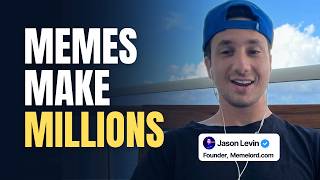
In this interview, Jason Levin—author of Memes Make Millions and founder of memelord.com—explains why memes are a powerful, yet under‑utilized, lever in modern marketing. Levin traces his own journey from high‑school Photoshop stickers to a career built on humor‑driven growth, arguing that memes are the digital evolution of funny posters and should be taken seriously. He stresses that memes are a tactical tool, not a replacement for core strategy, and that brands often shy away from humor out of fear of brand safety. Levin cites high‑profile examples (Coinbase, Palantir, Brian Johnson, Bryan Johnson vs. AG1) to illustrate how even serious companies succeed with meme content. He offers concrete tactics: using side accounts, personal experimentation, leveraging memelord.com’s real‑time meme alerts, and aligning memes with the zeitgeist while staying true to a brand’s niche. The conversation also covers how to convince skeptical CMOs or social‑media coordinators—using data, case studies, and low‑risk experiments—and why authenticity and unhinged creativity are essential in an era of AI‑generated content. Throughout, Levin frames meme marketing as a cultural shift away from bland, overly‑safe millennial branding toward fun, authentic, and shareable communication that can drive traffic, engagement, and revenue for brands of any size.
Chapters
another internet knower of ball who has just— back to back the show, back to back, straight back. I am talking about the internet's meme lord, the one and only Jason Levin. Jason, get inside of this show, sir. We need you in here right now.
Get him in here, Jack.
Yes!
All right, let's go!
What is up, brother?
What's popping?
Man, we're glad to have you. You know, I have a short confessional story here. I have tried to work with Jason several times here and get this forlorn e-com brand off the ground. It never happened. But now Jason is inside of this show. Jason, you are, I would consider, the creator of meme marketing, my friend. But you've done so many things. You've worked with political figures, some of the biggest names in tech. Now you have the software itself, memelord.com. And just give us perspective. How did you get here? How did you become the meme maker who is generating millions for yourself and others?
Because the internet, I guess, man. I'm an internet kid. I've been creating stuff since I was a little kid, just down to Photoshop when I was in high school, making crazy stickers, selling those online. In college, I would be freelancing for sororities. I was that kid. And all of it led to just unhinged marketing and like graphic design, you know what I mean? And like that leads to memes, right? And at the end of the day, like, how do you sell? Like, the oldest form of marketing is humor, right? Like, it's been around for thousands of years. You know, I wrote the book Memes Make Millions, uh, and doing that research, like, uh, it really led me to believe fully that, that memes are just the latest form of funny posters or funny ads that people saw in the newspaper and You know, I, I just take my memes seriously, man. I guess that's, that's, that's the short answer is I just take memes more seriously probably than anybody alive. And like, I think if you take anything seriously, especially your silliness, you, you tend to have success. Yeah.
Love that.
I find, Jason Levin Levin, that when, when you reach a certain point in revenue inside of a company, I would just say, Colin, in our world, probably get to 8 figures. I find that founders and marketers, heads of departments, and they get so serious, so serious about protecting brand and not making, not putting any piece of content out that would offend anybody in the world ever. From a foundational point, just make the case for us why that's wrong and why people should lean into making their ideal customer laugh and how, how that's got power to it and can stand out in the timeline.
Yeah, I would just say humor is a lever to pull like anything else. It shouldn't be your whole strategy, and memes will never save your brand. Uh, it's just a lever, right? Like, like anything else, it's, it's a lever like a serious long article from your CEO. It's a, it's a lever like pulling the podcast lever. And so if your brand needs some spicing up and you wanna figure that out and you feel comfortable doing that, go for it. It's funny, man, like I am the meme lord, the meme marketing guy, I wrote a book about it, I own that, but like not every brand should do it, right? Like I'm actually serious about that. Like you should be funny, yes, but like I say this seriously, I own a lot of old Playboys for the ads. I promise you it's for the ads mostly. But like, you know, it's like they were just clever ads, right? And like, you don't have to do memes. I think you should, but like, you could do it in your own style. Like, at the end of the day, Memelord, like, it's used for all sorts of funny marketing. And I think like, if you wanna speak the language of the internet, the younger kids who are getting more and more money, right? Like, you know, you have 20-somethings with multi, multi-million dollar budgets, right? Who are founders and CMOs, and this was part of our pitch deck, was there's going to be a broccoli-haired, you know, Gen Z, Gen Alpha public company CEO very soon, right?
That's true.
You know, he's gonna be shitposting on the timeline, um, and, and, uh, you know, the younger kids, they have money. And so if you want to do that, you speak unhinged, you speak, you speak real, uh, especially like I really doubled down on memes when ChatGPT came out because I saw the whole world was turning boring. And they always say like Oh, the, the real way to stand out is typos, right? No, it's, it's be so unhinged that AI can never copy you and be so authentically you that AI can't tell your story. So that's what I'd say to the serious brands. I'd also look at direction at people way ahead of me, like, you know, Brian Armstrong, Coinbase, is posting memes all the time. He just did his public company, um, quarterly call with a Subway Surfer next to him, right? You look at, uh, plenty of public companies. Fucking Palantir is posting memes, right?
That's true.
And Anderol and Elon can do it, so can your, you know, 8-figure brand. I think a lot of brands get scared once they have, you know, something to protect. And also a lot of like the early people might leave at a certain point who had like the humor and charisma to start a company. And like, I, I think it's— spice it up, man. Like, anybody can benefit in some aspect and At the end of the day, memes are also just like trending ideas, right? Like, you don't have to use some political format, but you could like know what's going on in the world, right? Um, I don't know, it's just a way to speak to people, in my opinion. Uh, and, and anybody should know how to speak that language if you're marketing.
Yeah, when I was at Triple Whale, a software company, yeah, we were using that. Yeah, Tommy. So Tommy was using the Hezbollah memes Yes, he was.
He was dirty. He was dirty with that. I don't know why he just loved that meme.
And I was a huge fan because he would share them in the Slack channel with us. He'd be like, how funny is this? And I'd be like, oh, that's a great meme. Like, please share that. And he would constantly go viral by just leveraging Hezbollah. And we're like, I guess this is our path now.
Dude, it's so funny. That's literally the meme of like the social media manager who like does the random shit and it just works. It's like, yeah, let's go.
Yeah, that's him personified. Um, but do you have any brands that you can point to now where you're saying, wow, they're doing a great job at memes and they're like, they're kind of toeing that line of this is still super funny?
Yeah. Yeah. I would say, you know, one of the reasons why I guess we, we talked was, uh, around Brian Johnson.
Yes.
I think like Brian's team is just absolutely killing it. He's one of my heroes in the marketing world. He is opinionated. He doesn't care who attacks him. He is cancelable. And that is what great marketing is, is it offends some people to find the right people. Extremely serious mission, right? Yeah. Living long, no matter what you think about longevity or health or supplements, he is authentically obsessed with that mission and it offends some people. He loves it, but he's able to make people laugh and also make fun of himself, which I think is crucial. True. Yeah, I mean, the other one there actually, again, is just like Palantir is the fact that, like, you have, you know, Palantir marketers posting memes when they are one of, if not the most serious company to our world's, you know, the country's infrastructure. Like, you know, you also have the government posting memes. That was right. That was in my deck, right? Like, with the fact that the government is posting memes is the fact that every politician has some memelord, right? Or some crack Gen Z kid helping them, right? And so, I mean, it's just proof that you could be both serious and funny. You have, again, like Palmer, right? Palmer Luckey is getting called memelord in articles again and again, which is great SEO for me. But it's great for you. Yeah, it's great. But like, he's working on stuff that is much more serious than the average Joe. Yeah, I think like, I don't know, I think a lot of people are just scared to be themselves on the internet. And, and, uh, once, once you get over that fear, it makes everything a lot easier, including marketing and making money.
I think this is a great point, and there will be a lot of debates about, you know, some of the companies, the government, Palantir, etc. There's a lot of debate about, you know, should they be sharing that kind of stuff. But the one thing you cannot debate is the effect And the effect is traffic and it's shares and it's retweets. And you cannot debate the effect. And it does seem to tie into being okay with just kind of getting over yourself and, and being able to be hated. And it's going to offend others, but the effect is that the people who love you even more, they share and they skyrocket traffic, etc.
Yeah, exactly. I mean I'd rather be loved for who I am, you know, like, and I'd rather post some silly stuff and get hated on. And it's happened to me. I've had hit piece after hit piece for some of my work. And, you know, I've had love pieces as well, right? Like, that's just, that's just life, you know, it's, I don't know how else to say it.
So go ahead, Colin.
I would say put yourself in the scared social media coordinator that's trying to get her boss's approval on memes. She wants to do something. How are you breaking through that CMO and you're like, hey, I really want to try this. Can you just like take a bet on me? How are you approaching that? Are you using data? Are you using the examples that you're using? But, uh, I'm super, super curious how you would tackle that.
Yeah, I would say two things. One is you can start experimenting with side accounts, which a lot of brands do. And so a lot of the best software brands and e-commerce brands, and we actually do that for brands as well on the low, low, low. And, um, and so if you want to do that without the risk on the main page, uh, yeah, I would do that. And then the second one is just kind of like, you know, quick little experiments, just even on your personal account. I think that's how I proved it to one of the founders that I used to work with, which she saw. Like, so I— before I got into doing what I'm doing now and running my own company, I was ghostwriter for founders and VCs, right? And so I was shitposting myself, having fun and going viral, and then they would be like, yo, give me some of that, right? And at first I was writing all the serious posts for them, but slowly they started asking me more and more and feeling comfortable. So I mean, at the end of the day, I mean, my opinion, you should only hire a social media manager if they are posting themselves anyways. But like, I would just tell her to prove it for yourself. If you go and buy your going viral and people are still converting and doing that, then, um, think of it like a portfolio almost and proof of it working for your niche and brand. Because memes will work for any niche and every brand, from defense like I was talking about to health and e-commerce and, and, uh, a lot around software, like B2B SaaS, dude. Like, we have a lot of B2B SaaS customers. You'd be surprised. Like, all they need is a few, you know, clients and they're making a lot of profits.
I, I, uh, I think this should not be skipped over on the low, low, low. Just a few, just a few side accounts perhaps on the low, low, low. I love that. Take us back, Jason. I want your opinion on this. You know, Bryan Johnson had the intense kind of debate with AG1, you know, and he's coming out saying, hey, your product is trash, basically. Is what he's saying. Yeah, he's citing research to it, etc. You know, AG1 definitely did some brand account response, but, but to me there was almost no debate to be had, simply for two reasons. Number one, Bryan Johnson, incredible personal brand. Okay, it's coming from a person instead of a brand account. Number two, once the guy started memefying the entire thing and making people laugh, there's like no debate, there's like no argument to be had.
He's already won.
So good.
Yeah, that— my, my common saying is the best response to ridicule is to be ridiculous, right? Because it's like you're getting bullied as a kid. Like, if you just like fuck around and laugh, like, they stop, right? And it shows that you're tougher, even if it's just in your head, right? Even if you're just faking it, right? And so when I was getting hit pieces, like, what did I do is I literally paid a videographer to meet me down at City Hall, and I pretended to run for mayor and then answered every single question with a ridiculous answer to the next level, right? And so it's the exact same thing. And so I don't know, speaking for like Brian and AG1, or speaking about them, is like, uh, AG1 has no personal brand anymore. I'm not sure if they ever had one besides Tim Ferriss podcast ads. And like Brian has a cult, and so like you just don't mess with the cult. Um, and the simple fact is like, I don't know, man, I've had both products and I could tell you that my My fridge is stacked with Bryan Johnson stuff right now. Oh nice, it's pretty sick. So, um, I don't know, they— it's, it's good. And I think at the end of the day, that's what's so cool about Bryan too, is like memes are just top of funnel for the smart stuff, right? It's like, like, like nobody would listen to Bryan if he didn't do, you know, millions and million dollars of research. Just because, you know, it's like he has a real product and real science. Like, that's what I always tell people, memes can't save you. Making, you know, you actually do have to have real shit too and a real business. And, you know, he's a genius.
So yeah, this all seems to me to be almost like a— it's almost like a reaction to what I would kind of classify my generation's— the bland kind of millennial brand that just appeals to everyone.
I grew up on, you know, funny marketing. Like, I don't know if you guys remember the GoDaddy commercials. Like, that's what I thought marketing was like. And then I think, I think what happened was like the woke era and kind of millennial, like, whatever, like ruined it for kids my age. In between, like, I'm 28, like ages like 18 to 30, 19, 21 to 30, you get out of college and now your job is just Meta Business Center. And like corporate BS. And it's like, this is all— you're 100% right. This is all a reaction to like me dreaming of being in Mad Men and me being stuck in Meta Business Center. Like that's my entire life story right there, dude. It's like, it's just that. And so you're dead on. It's just like marketers are pissed off and we're sick of it, man. We wanna have fun. That's what being a marketer is, is like sharing crazy ideas. Like that is what marketing is. And like, I think a lot of people forgot that in the wave of, you know, wokeness and cancellation of brands. It's like, you're supposed to have fun. You're supposed to be sexy and goofy and silly. Like, that's what marketing is. Like, that is marketing. I don't know. It's all a reaction. Yeah, 100%, you're right.
I, man, I think you're touching a nerve there. And I see that. I think we're seeing that across many different categories. Colin, I want to take this one more way before we get out of here. And we appreciate Jason Levin joining us. And giving us his time. Any— where do you want to take this before, before we give him one more and get him out of here? For sure.
I mean, I think after this show I'm going to try to dive into memes for Ethan Cowboy.
Yes.
How should we be thinking about it? How should we be thinking also about the timeliness of things for trying to find the source for things, uh, being in the zeitgeist, so to speak? How would you approach that?
I'm signed up right now, Jason Levin. There we go. Yeah, I am a forthcoming meme lord.
There we go. So memelord.com sends you notifications for all the newest memes through iOS. You'll, you'll just get a notification, uh, and also on web as well. And so what I would recommend is take those in the zeitgeist, don't choose everything, but choose ones that are related. And for you guys specifically, slap some cowboy hats on them, make them, you know, add it, add some, add some memes around different, uh, add some captions around e-commerce, maybe around things in the zeitgeist, so it combines both your brand, it combines the zeitgeist, and it also combines your niche around e-commerce. I probably wouldn't do it every single one with, you know, the brand in it, but I would, you know, take what's in the zeitgeist and then share it. And I'd also recommend just like, you know, jumping, uh, into like the social aspect. Like, I was on the phone— I don't know if you guys know that guy Zane, he posts like— oh yeah, yeah, we were on here. Yeah, yeah. Oh, he's great, dude. And like he's so good at like the zeitgeist of like, it's so like nobody outside of e-commerce gets it. And like, I only get it because like I've like, you know, I'm in this world. But like, I think, um, doubling down on that, like you don't have to go mega, mega viral to like be, you know, a niche celebrity in that world. And I think a lot of people forget that or like don't think about that. And I think he does that very well where only Like everybody in, in this world loves him, right? Or thinks he cares or is scared of him.
Yeah, exactly, exactly.
Which is fine, right? But like, yeah, I would say lean into that. Yeah, Zane is a great—
he's a great example of, hey, I just signed this 9-figure client to do TikTok shops with us.
Why?
Because I'm funny on the internet.
That's literally it, man. I mean, Dude, we got on the phone because we— I, uh, I couldn't reset his password, and so I had to— I had to have my seat the other day. And, uh, and then he immediately gets off and just starts posting bangers from, from Meme Lord, like just firing them off.
Let's go, baby! Let's go! Well, I, I am signed up. And, you know, if I gotta sign up— if there was a world that existed where, you know, the Meme Lords could run a side account for people, that would be awesome. Too bad it doesn't exist on the low low. But I think everybody needs to go and sign up at memelord.com and get in there. And why not tap in? Why not tap into that and make it a part of your marketing mix? Doesn't have to be everything, but a crucial part that for a lot of brands too scared to even try. Is that fair, Jason Levin?
100%. Just try it. And I assure you, it's more fun than being locked in Google AdSense or Meta Business Center or whatever. Jason Levin, theme lord.
Yeah, man, thanks for joining us. We look forward to having you back, man.
See you, man.








