Viral Growth Hacks From Jason Levin
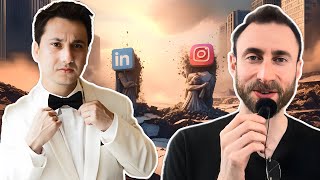
In this interview, former Product Hunt growth lead Jason Levin walks host Edward through his meme‑driven marketing playbook. He explains the concept behind his new product Elon Email – a ruthless, proactive AI that replies to weekly prompts via email – and how he built it entirely with no‑code tools (Bubble, Zapier). Levin details his audience‑first launch strategy, leveraging his 33k X (Twitter) followers, his newsletter, and targeted influencer beta access (e.g., a 17‑year‑old A16Z‑linked creator). He shares concrete growth hacks for newsletters (plugging links under high‑performing posts, LinkedIn custom button, PhantomBuster LinkedIn outreach to VCs and YC founders) and case studies where memes generated massive traffic (Lily Phillips OnlyFans video, Momentic AI, Fondo, OneUp.ai). The conversation expands to “cringe arbitrage” on LinkedIn, parasite SEO on Reddit/Quora/Medium, and the importance of prolific content creation across X, TikTok, Instagram, and YouTube. Levin also offers practical advice on video production workflows (Descript, daily shooting cadence) and the mindset of “prolific > perfect.” The episode ends with pointers to his social profiles, Memelord Technologies, and his book Memes Make Millions.
Chapters
Jason Levin, master of memes, former head of growth at Product Hunt.
Yes, sir. Yes, sir. That is me. What's happening?
Super legendary marketer. Welcome. Welcome to the podcast.
I appreciate it, man. I appreciate it.
Thank you for being here, dude. You, uh, you're killing it. So you just launched, you just launched Elon Email and you told me you got 1,000 signups to it in your first week, less than your first week.
Yes, sir. So I launched Elon Email and what it is is basically a ruthless AI. So I was sick of the nicey nice ChatGPT and like the nicey nice therapist baby talk. And I wanted a ruthless AI that would be savage and give me advice, right? And then the second part was, I love asking ChatGPT, I love asking AI for business advice, but I never remember to do it. It's only when I remember. So I was like, why don't I get a weekly email? And we do it like Elon. So it just says, what did you get done this week? Right. And it's proactive, right? Proactive AI. And, and so it's been fantastic, man. And I launched it right before New Year's. That way we could jump on the New Year's resolutions, people, you know, getting all excited about that. And yeah, it, it blew up, got 1,000 signups in the first week. And what happens is after you send that email, you reply all in your email. And then Elon roasts you and gives you advice about your business. And it's been surprising how good some of the advice has been for my users. Like I've been really quite happy with how it's going so far. So I'm stoked.
So I have two questions. So the AI actually like emails you back and you have a full back and forth email thread with the AI.
Yeah. So I did it in email to make it feel super natural. And it's all, you know, just a series of APIs and workflows and whatnot, but it's all just very, very natural because, dude, you built it yourself. Yeah, yeah, I did. I—
it's— how do you make it?
Uh, just all with, uh, no-code tools. So Bubble and Zapier, uh, that's how— dude, Memelord Technologies is all no-code as well, actually. Um, so, uh, you know, it's an entrepreneur— like, we're in our emails all day. And like you don't want another app, right? And so I was like, why don't we just have it be natural in your email? Yeah. So that was the goal with that.
I think that's super cool. For people who don't know Jason Levin, he's @iamjasonlevin on X, like, uh, just great marketer, huge meme marketer. I've talked about, I've actually talked about you on the show. I appreciate it quite a lot, especially when you were doing, uh, Subway Reader. Oh yeah. In like my early episodes I used to talk about you. You were doing, uh, so you were doing this thing where you read embarrassing books on the subway. To promote your meme marketing book, and that was, you were going so viral.
Dude, you helped me double down on that, man. Edward and I had coffee and you know, I, it was probably after the second video started popping off and I was like, should I double down on this? And you're like, yeah, change your name, do the whole thing. Like just go hard on it. And so from there I just started filming one video a day. Taking Edward's advice of being super consistent about it. And stuff started really popping off with it. It was so much fun, man. It led to so many like weird businesses, like, and so many things to write about, books sold. And then I started doing these street interviews from that. And so I was doing all these street interviews from brands because I had like proven my Instagram that I was able to grow it a bit. So it was like all this stuff led from me reading weird books on the subway. So, and you were literally getting like, I don't know, it was like 25 million views.
Yeah.
Yeah. It was crazy, man.
It was funny. So I wanted to ask too, you said like when you launched Elon, Elon email, like it just blew up right away. How did you launch it? Was it just, so you have your audience on X now is I guess like 33,000. Was it just your audience? Did you, did you launch it in other places? Did you cross-promote it with people?
Yeah, so a few things. My audience is mostly on X and because it's Elon Email, Elon owns X, right? So I focused, I doubled down super hard on X for this. I didn't even worry about Instagram or TikTok. And so I just focused on X and then also my newsletter. So on the same day I launched to my newsletter and so it was newsletter and X at the same time. You know, personally, yeah, I was like, a lot of my newsletter comes from X already. So it just like hit people like perfectly, right? And because my product is very, very tech nerd focused, X is like the place for that. So right now I am trying to figure out the other platforms as well. Instagram, TikTok, whatever. Oh, I guess I posted on LinkedIn too, like a couple times.
Actually, I think that's how I saw it.
I think I saw it. Yeah. Yeah. So I posted on LinkedIn too. And I think the majority of signups though have been from Twitter and my newsletters for sure. I also, I did do, I guess, a little bit of influencer stuff, but nothing. So one of my friends, his name is Jay Yang and he is like this kind of jacked, hardcore disciplined, you know, entrepreneur guy, like 17 years old, wakes up at 4:00 AM, has 100,000 followers, you know, one of those guys, like, just like absolutely Chad killing it. And so I gave him early access, right? Because he's like the perfect ICP for it. He's the perfect person who like works really hard and wants to get like pushed harder. And so because I gave him early access, he was happy to retweet it. He was happy to give a testimonial. This is something that you've done before, Edward, as well with like testimonials and stuff and giving it to the right people. Um, and you know, beta access and stuff like that. So, you know, that was just like free.
He, he, he reshared it or he shared it on his, he, it was just on X or he shared it in other places.
He retweeted it and then he also has a newsletter too, which is pretty, uh, sizable. And so he included it there and, you know, Jay and I are just friends. Like we hang out when he's in New York and stuff. So like it was, it was totally free. Um, and, and really helpful. Um, Uh, yeah, yeah, that was pretty, pretty solid. I haven't— I'm starting to think about, all right, paid influencer marketing and that kind of stuff. But dude, you know me, I don't think you need it.
I don't think organic is way more fun. I don't think you need it.
Yeah, it's fair.
So what you could do too is like when you have a viral video, that's when you start paying. You, you go and you go hard with like organic viral on IG and TikTok, and then you have something that, that actually pops off. That's your ad.
Yeah, so I took your advice with that as well, actually, Edward. I don't know if you know this, but, so I was talking to these guys who like run one of these like giga chad agencies, right? Where they have all these like college kids making videos. And then I texted you about that. I was like, should I do that? And you're like, no, just do it yourself. And you know, it's been hard for me to block out video. Like I just struggle with it. Like, but I decided I was like, all right, gonna listen to Edward. I block out, you know, time every, every, every week now. And I posted the first video last time and I'm doing, you know, basically just like talking head last time is, so I have an American flag like over there and it was just me talking about how like, if you wanna build stuff, you know, make America cool and like build cool stuff, do that. Right. And just leaning into like the tech bro aspect of like who I am and, and, and basically just trying to do it myself. You know, it had really good results on Twitter and LinkedIn so far. You know, I'm just getting started again with some of this serious content on Instagram. It's weird to like go from the silly subway reader to now building apps on Instagram. Do you have any advice on that? It's like, it's kind of, you know, kind of a switch up, you know what I'm saying?
I actually do. I have a question, but I wanted to ask first because you were talking about your newsletter. And I know you have a really big newsletter that you've been growing for years. Um, and what I wanted to ask before, before I share that is what, how do you grow your newsletter with X and what are the, like, where do you place your call to actions and what call to actions have been best for you? Because like, you're so good at X and you have, and you're really good at newsletter marketing. You have a huge, well-known newsletter and like, yeah. So I'm really curious about your call to actions and what has worked really well in growing the newsletter. But bam, I make this show because I believe any business can get customers, can get users, can get visibility if the marketing is right. I just released a full SEO program called Compact Keywords, compactkeywords.com. It shows exactly how to find keywords, things that people are searching in Google where they are searching for a solution to their problems. Their solution is your brand, but they don't know the brand that's going to give it to them. They don't know that your brand exists, but they're searching. And every niche, every brand has these people. You make, you make your brand for a reason and you make your brand because you believe that it is going to solve somebody's problems. What a lot of people don't realize is even if it's a small market, there's way more people looking for what you offer than you think. Compaq Keywords shows how to target these people who are looking for what you are offering. These keywords, these search terms, nobody thinks to go after them. Nobody knows how to find them. Everybody targets them wrong. This shows how to do all of that. If you have zero SEO experience, this shows exactly what to do step by step. If you don't even have a website, this shows how to go after these keywords with other platforms. YouTube, for example, is ranking really, really, really well right now. YouTube is showing up in the search results above normal websites. Compact Keywords shows how to use social media, how to use YouTube, And if you do have a website, very in-depth breakdown for how to do defensive SEO, defensive search engine optimization, and then hyper-offensive SEO to get these very purchase intent keywords where people are searching because they have the intent to use or purchase your product. I spent the last 11 months making this. It just came out, compactkeywords.com. It's a timeless strategy. I've been using this strategy Since 2019, my rankings are unchanged. A friend used this to get $3 million in extra ARR for his client with 2 days of work. That testimonial is at the top of the landing page. A customer with an ad agency got it and in the last year booked an extra $100,000 of business through SEO just in the last year with this method. Compactkeywords.com. Back to the podcast.
The biggest things with newsletters is just plugging it underneath your best posts. So X is very, very like, they are demoting links. You know, Elon wants to keep everybody on the platform, but he has specifically said that if you post a link underneath a post, like it doesn't get demoted. So whenever I have a post doing really well, I'll drop the link underneath. Just, you know, subscribe to my newsletter for more marketing hacks. Essentially, I try to keep it you know, a little more casual about it. But, you know, I have, I share these marketing hacks either in threads, in tweets, whatever it might be, and then underneath just plug it. And, you know, it doesn't happen overnight. It's been, you know, 3 years of doing this constantly. But, you know, you'll have one post that gets a few, you have one post that gets a few hundred. And then another kind of hack as well is like, So I run this software called Meme Lord Technologies, right? And it's a meme marketing app. And so everybody who signs up for my meme marketing app gets added to my newsletter too, right? So that's what's really cool now is like when you're a newsletter writer, when you're building software, they could all work hand in hand, right? And I just have a Zap that sends from my meme marketing software to my newsletter because it's the same thing, right? I'm giving people marketing advice. You're using my software. So It works hand in hand. So I guess that's one little hack as well that I definitely recommend is just integrating everything into one big world. The newsletter's like my home base, right? So yeah.
What is your landing page for the newsletter like?
The newsletter landing page is super simple. It's just, you know, Beehive's native landing page that they have and it just says, I think like, join like, you know, 15,000 marketers from blank blank learning about organic marketing every week. I haven't changed it in a while, honestly. Um, so maybe I should do that, but it's super simple. Um, try to just have like, you know, just one little slot that says, you know, sign up here with the email. Keep it simple. Yeah.
Have there been any, any times of growth that like grew it way more than just like anything else?
Yeah. Yeah. So guest posts always do really well. I definitely recommend that for newsletter writers is like, it's free, you know, just hit up friends who have newsletters, you know, you'll get a, if you know, you'll get a few hundred readers there. That's one thing. And then just any, like, if you share a good, you know, hack on LinkedIn, on Twitter, whatever, that's amazing. Right. And you just gotta plug it underneath. make sure to do that. And then I guess one other thing is LinkedIn. They added this custom button thing. I don't know if you've seen this where it's above your name. Um, that actually, uh, was driving a lot of growth. I've switched the custom button to my software now because like, you know, you make more money that way, but just having that button there has been pretty helpful as well on LinkedIn. And that's, I'm pretty sure you just need LinkedIn Premium to do that. Um, but yeah, it's, it's definitely worthwhile. Um, oh, one other thing, uh, as well, actually. So you'll love this hack. You know, Phantom Buster, you're familiar with that?
I, I've heard of it. I don't remember what it is. Yeah.
So Phantom Buster is kind of auto DMs, uh, on LinkedIn and, um, auto connections, like a bunch of stuff, a lot of scraping and, and stuff like that. And so what I did was I created this Phantom, it's called a Phantom, right? That connects with everybody who has A16Z in their bio, right? So this is people who work at a16z, is people who are funded by a16z, and then it connects with them. And after it connects, they say, hey, you get a chance to check out my newsletter about organic growth, right, for startups. And that was actually getting a lot of subscribes from like VCs at a16z, like from people who are funded by a16z who are like, you know, potential customers. So that was one little hack and I still do that. I use Phantom Buster. Definitely recommend it. Don't, don't try it on Twitter. Twitter's a lot like, they have Twitter tools, but Twitter bans people a lot more. Like it works great on LinkedIn though. 10 out of 10 recommend.
You only, so for people who don't know, a16z is Andreessen Horowitz, like the top venture capital firm. I think it's like the top one in technology. Yeah.
Yeah.
And so you're, so you're only doing, you're only doing this for people who work at a16z or have been funded by a16z.
That was just an example. So another one I did was YC. So a lot of people were funded by Y Combinator, YC. They put it in their LinkedIn header. You know, it says like YC S16, which is like summer '16 class or whatever. So there's like thousands of people who have gone through YC who have that in their bio. And so I just had it sending for like, you know, thousands of people and it does like 20 every day. But like it adds up, you know, and it's gotten me customers, it's gotten me readers. And then if you use like—
So wait, wait, you get 20, you're doing 20 connections a day from this?
Yeah, yeah, yeah.
And that's 20 pitches to join the newsletter a day.
Exactly.
All, you know, I think that's intense. That's so, and, and so now, so you're connecting, it's just like cold connections with people who you don't know, but you haven't, you have like some mutual connects with. What is your message? Do you send a message along with the connection or is this just like—
No, so Here's another hack too, is like, I think that if you, it, it's a lot more natural just to send a LinkedIn request without a message. Like if I'm connecting with a friend, I'm not going to include a message. The people who include a message, I tend, like it's usually just Indian spammers generally. It feels like, you know, generally, or like an AI, like sales dev person, like an SDR or something. And so I just connect without a message. And then after, uh, they accept, Phantom Buster sends a message saying, hey, did you get a chance to check out my newsletter with the link? Right?
Is that, is that the exact copy? Hey, did you get a chance to check out my newsletter?
Yeah. I keep it simple, dude. I keep it, dude. These are busy VCs, bro.
All right. Actually, I want, I want your, I want your opinion. So this is, this is something that I do with the podcast. I don't, I, I don't, um, I don't add people anymore. But just every day I get a bunch of connection requests.
Yeah.
And I say, I pretty much accept everybody and then I send them all the same message.
Dude, you can do that on Phantom Buster. It automatically does that. So anytime somebody accepts. Yeah.
I should do that. I should do that. And so, and so actually a bunch of people add me though and they say in their message, like, I'm adding you because I listen to your podcast or I watch your IG. But what I say to people, and I want your thoughts on this copy, I say, Hey, thanks for connecting. You may actually like the Daily Marketing Pod. And then I link to the, to the show and then I say it's about how to grow a brand and audience with high return, low spend strats, SEO, Instagram, X, LinkedIn, and TikTok. And that's, and that's it. And I say that to like every, I don't know, I don't know if it's a good strategy or not. I say it to anyone who tries to connect with me and then I accept them and I send that to them.
Nice. Yeah, I, I just try to keep it as simple as possible. I would probably take out Thanks for connecting. Um, it feels kind of formal, I would say. Um, but besides that, it's probably fine. Um, yeah, Phantom Buster has a thing that anytime somebody sends a request, you could just accept and automatically send them a message. So I have that too. I have that going all the time. Yeah.
The reason I haven't done that is cuz like, I don't want my, I don't want my feed to be like polluted, but I guess at this point, at this point it's already pretty polluted.
I'm not gonna lie.
We were talking about that before the show.
Yeah. I want, yeah, I just like don't care anymore. Like Twitter, I, I would never touch that for Twitter cuz that's like my home base. But for me, like LinkedIn is just about making money. Like I don't go on there for fun. I don't go on there to make friends. Like Twitter is where all like, that's, you know, that's where all my friends are. Like I would never have auto DMs on for Twitter. So Twitter, it's all like, you know, by hand, me just sitting, you know, sending DMs to meet people. but I don't really care on LinkedIn. Fuck it. It's just like, it's a, you know, it's a pretty inauthentic platform already, so I might as well just make some money off it.
It is super inauthentic.
It is.
You are so right, man.
I think we gotta make a commercial. LinkedIn, the most inauthentic place on the internet.
It is like the most thrilled to announce.
Yeah, yeah, yeah. It is.
Yeah.
That's actually something that there's an opportunity there though. What we were talking about before the pod was like, So what, you know, there's the fact that it's so inauthentic, you could kind of arbitrage that and be authentic, right? And so you see these posts going viral on LinkedIn a lot of time, you know, maybe it's something that's super, you know, whatever, hippie, whatever, or, but a lot of times the posts that go viral are ones that have people's photos in it. It's ones that have family. It's stuff like that. It's when you're willing to be more authentic. So every time I host an event, I post photos after. You know, photos of me and my wife and stuff like that. If you're willing to be authentic on LinkedIn, which is the least authentic platform, or if you're willing to post memes and be funny, that's why memes kill, right? So, so many of my customers are posting memes, unhinged memes on LinkedIn, and it just slaps, right? Because people are not expecting it. Like LinkedIn, they're so used to, I'm thrilled and humbled to announce blah, blah, blah. So if you're willing to, you know, kind of arbitrage on that and post some silly stuff, it kills absolutely on LinkedIn.
Dude, that's an amazing insight. That's crazy valuable.
I call it cringe arbitrage, you know, because like so many people are afraid of looking cringe by posting on LinkedIn, but there's so much money to be made on there, you know, like, okay, yeah, I'm cringe because I post on LinkedIn, but I made tens of thousands of dollars last month just from LinkedIn. All right, call me cringe. Fuck you. Like, I don't care. Like, who cares? You know, I don't care. You don't care.
I don't care. That's, that's such a good insight. It's like, yeah, really like focus on being— I, I think I've, I've talked about that before, but the examples that you give, especially like family photos, throwing events, memes. Oh yeah. So dude, okay, so I met you when you were— I think you had just finished writing, um, Your, what was the name of the book? Was it just Memes Make Millions? Oh man, great title.
Yeah. I guess we met around then.
Yeah.
And was I at Product Hunt at that time or?
No, no, no, no.
That was way before.
Yeah.
Yeah. Yeah. Okay.
Yeah. But, but like, so you have to like, your, your niche is like post memes with your marketing. It's going to get you customers and it really works and you have some insane stories. Yeah. And it's like, and you have, so you wrote this book, Memes Make Millions, then you created software to actually make memes. And I shared this on Instagram. It's your daily meme recommendations, which are legit. That is legit. I appreciate it.
Yeah. Yeah.
So did you share stories or like, or how do you create them? Like all that stuff.
Yeah, of course, man.
So, um, and especially like, yeah, stories that are getting about like where memes are getting people customers and users and visibility.
Yes. So I actually just wrote up a case study yesterday for somebody's blog, you know, one of these guest posts that I like to do. So I could share some of these. So one of these companies that uses my products, it's called Momentic AI. It is a YC-backed AI SaaS essentially for bug fixing and like QA testing, quality assurance. It's called boring stuff, right? Generally pretty boring. Like I don't even understand how it works. But they are a customer. Uh, their founder is our age. He, you know, he's in his 20s, 30s, loves making memes. He's goofy. And, um, he posts memes on Twitter and you could, I can, I can link it to you or send it to you afterwards, but he quote tweeted is like, just booked a deal from this meme, right? You know, just booked a demo. Like this is B2B SaaS, right? So then I have another company, uh, called Fondo, right? So I invested in this company actually after they, subscribed. I got to, you know, hang out with the founder and meet him. And so they are another super boring SaaS. They are accounting. You can't get much more boring than accounting, right? Accounting software. But they post memes. And how do you, you know, make accounting fun? They actually managed to do that. And it attracts the Gen Z founders who, like, you know, think accounting is boring, right? And so they are booking deals on Twitter and LinkedIn, just using memes, right? And then last example, number 3, it's called oneup.ai. So they are a sales software. Again, super boring. It literally like is for salespeople to fill out like request proposals using AI. Super boring. But they never talk about that on LinkedIn, on Twitter, on Instagram. They never talk about that. All they do is post sales memes and they like are super unhinged and they double down super hard. They even have, a memes page on their website of all their best sales memes and their Instagram. It's called Crushing Quota and it is unhinged and it's just like unhinged sales content. And the founder George literally told me 90% of our pipeline comes from meme marketing. So these are all like customers of mine and we, you know, they use my software and we even also do a memes as a service for them where we make daily memes for them. And so these are like B2B SaaS getting customers with memes. So that's, that's one of the big reasons why I'm so bullish on memes is just like the leverage. When you think about it, like a meme is basically free to make. It's cheap, it's fast, it's inherently viral because that's what memes are. Like you don't need to go to, you know, one of these fancy like commercial sandwich or whatever, right? And pay $100 grand for a launch video. You don't need to go to Upwork or Fiverr and pay like, you know, $2 grand for an animation. Like you can just make a meme and it's like funnier and more natural and can get you just as many or more customers. So, you know, I say this again and again in my work is like memes are the highest leverage form of marketing. I say it, you know, all the time because like literally just the ROI of a meme is just so big. If you have a good product, you need a good product, you know, you need a good product to sell with it. But if you have a good product that can make you a lot of money, then memes are just a great top of funnel lever to pull. So how, that was a, that was a long answer, but one, one more, wait, one more example.
One more example is, is you told me that you're getting signups with Lily Phillips.
Yes. Yes.
So wait, before we get into this, before, 'cause I, I know some people listen with their children. This is gonna, this is like super, this is just super, if, if you've heard of Lily Phillips, super, super NS, NS, not safe for work, NSFW. Yeah.
The most NSFW possible.
Yeah. So could you say who, who Lily Phillips is?
Yes.
And then, so, and then. Yeah, and then how you're, how you're using this Lily Phillips meme to get signups, which is crazy.
So Lily Phillips is an OnlyFans star who gained fame for, um, banging 100 guys in one day. And recently she, uh, posted a video of her doing a cum walk. I don't know how to say this in a non-NSFW way, but basically like she walked around England with, you know, a facial, right? And she posted this video. And so she posted on Twitter and I just basically— so I grabbed the video and posted it with the caption, Founders walking around SF after pitching VCs. And it has like 5 million views, just that tweet. Wow. And so underneath that post, right, I commented my software and that post, right, that comment has 180,000 views right now of just me, my software. And I joked around. I was like, this is literally me walking around, you know, pitching my meme marketing software, right? And so I've gotten, you know, dozens of customers from just this dumb, you know, OnlyFans star posting this video. And funnily enough, she replied. As well, just saying, hey, that's me. And, you know, it just added to the funniness of it. And then on top of that, right? So once all this started happening, I started posting about it saying, hey, here's how Lily Phillips got me customers. So it was like this whole story that started happening and it was just this dumb thing. But it's literally what I'm always talking about, which is, you know, people are afraid to post these videos, right? They're afraid to talk about sex, dude. Marketing, like you look at marketing in the 1920s and '30s, bro, is all sex. Like I've written this post, if you look it up, sexvertising, like, that's literally a thing, right? Like, like, that used to be very popular. And so being able to talk about sex in marketing is like such a hack. So if you have a brand where you're able to do that, or if you don't have a boss, if you don't have— if it's just you, like, you can leverage on people's fear. Again, this is just another arbitrage. People are afraid to talk about sex. If you don't— if you're not afraid, then you can make a lot of money doing that. And you don't have to go naked. You don't have to— I don't I don't do that, but you could still leverage it.
So the only, the only problem with that on X, that's great because X is like pretty uncensored, but like some platforms like TikTok, you need to like censor super hard. YouTube's even somewhat like, especially if you're monetized, you need to censor super hard. But for X, absolutely. Like, yeah, absolutely. Especially X allows porn. That's crazy.
Yeah. X, there's no rules allowed, man. So it's, uh, it's crazy, but I guess on Instagram, TikTok, whatever, I guess the, the, you know, the similar thing is just kind of an, you know, an OnlyFans girl or a model or whatever. They do this all the time. Brands do it with models. And, you know, or Jake Paul will like make videos with OnlyFans stars. Like it's all sexvertising. If you're trying to attract teenage guys, like, what do you do? You get an OnlyFans star and she doesn't have to be naked. She could, you know, it could be whatever. But that's It's just simple biology, you know, it's, people look, you know, there's not, there's no way around it.
So, oh, the amount of OnlyFans, like viral video. I mean, it's, that's just, it's a niche. It's like a known niche.
Dude, TikTok is just like an OnlyFans pipeline essentially. Yeah.
TikTok, IG. Yeah.
Yeah.
It's hilarious. You, so you said your customer, your, so you have like all these customers who are using memes to, to get their own customers. Where are they posting the memes and then how do they funnel converting the attention that the memes get them into actual sales?
Yeah, so they're posting memes, mostly Twitter, LinkedIn, Instagram as well. And they're doing the same thing as me, right? And it's just plugging the link. And don't underestimate the plug. Alright, so you get a meme that gets 10,000 views, the plug underneath might only get 1,000. But that's still quite a lot. All you need is one customer from that and you're making ROI. So don't underestimate the plug. Chris Bakke actually kind of taught me this method. So he is the founder of Lasky. He sold it for $100 million to Elon, Elon himself, who he met through memes on Twitter. And it's a hiring startup, or it was, you know, and so he drove $3 million in B2B sales just from viral memes and plugging the link underneath. Right. And I interviewed Chris and, you know, I met him in in Austin. And basically, like, his whole thesis was like, I, you know, memes are what's getting attention. These silly shitposts is what's getting attention. Um, I am, you know, he, he tried going the serious route on Twitter, but it just, like, wasn't, you know, standing out, right? And he wanted to stand out. And so he, he did a great job with that. And, you know, this really goes down to, like, why did I double down on memes and humor? Is like I did it the second ChatGPT came out, right? I doubled the fuck down. I've always been funny. I've always loved making memes. But once ChatGPT came out, I knew the internet was gonna fill with boring AI slop. And you're seeing that everywhere, right? All the blog posts, everything. And so if you're willing to, you know, take the time, write something funny, write something authentic, you stand out if you're able to, if you're able to do that because there's just so much boring, terrible AI slop on the internet. So, you know, Chris did it. But basically the plan, like I was saying, is post the, post the meme, post the viral video, whatever it might be, and then just plug underneath. And, you know, some percentage of a big number is quite a lot, right? You know, a percentage, 180,000 views, right, on this tweet underneath.
Okay.
That's not as much as the 5 million of the Lily Phillips, but 180,000 views on my link. That's a lot of views. That's a lot of clicks. There's a lot of people clicking.
What was your, what was your call to action for the, uh, Lily Phillips?
The Lily Phillips, uh, it was just me joking around saying this is me pitching, uh, you know, uh, me pitching my meme marketing app to VCs. Yeah.
Uh, that was, that was in the main, that was in the one that got 5 million, or that was in the comment below?
So that was right, it was in the comment below.
So in the top video, me, this is me pitching my, my meme app, that was the one that got 180,000 views?
Yeah. So I mean, as of, as of yesterday, it has 180,000 in the comment. I could Check now. I mean, it's probably, probably a lot more around 200,000, 300,000.
Cool.
Because that, dude, this video is, yeah, blew up of her. I mean, dude, she's, she's killing it. I mean, it's, she's killing it herself. She's arbitraging on fear, right? You know, all these, all these, you know, people who are afraid to talk about this stuff or do this, right? And personally, it's not my thing. I don't want to walk around with cum on my face, but Hey, you know, she's probably— that video, all right, it made me some customers. It probably made her millions. Like when you think about it. So that video now of me saying founders walking through SF after VC pitches is up to 7.4 million views. And the—
you posted the video or a screenshot?
I posted the video. So I posted the video, um, and on, on Twitter you could just like cross-post her video. So it says it's her video. Wait, what was it?
Was it a quote tweet or like, how did you do it?
No, no. So I'll show you. So is it okay if I show a video on here? Here, let me show it. Well, if you're showing—
if you're showing this, like, let me show a safe for work one.
So on, on Twitter. So this is somebody else's— man, the— let me turn down the brightness maybe or something. I don't know. But on Twitter, like, you have somebody else's video and if you just hold it down, like this.
I didn't even know this.
Oh my gosh, so hold it down.
I don't even know this.
And then press post video. You don't have to download it or anything, um, and it just like posts the video, um, and that way that person, uh, gets also gets credit and they end up seeing it and it's just like more natural of it. Um, but yeah, so that Lily one is up to, uh, 7.8 mil And then that's your post. Yeah.
How many views does the original have?
Hers actually has less, so she might be a little upset.
Wow.
Dude, I'm trying to get— I'm trying to get her on my podcast.
You're a legend.
You're a legend. I need to get her on my podcast. I need her to become a meme lord.
What's the name of your podcast?
My podcast is just The Jason Levin Show. You know, I interview marketers, founders, VCs, all those kind of people, goof around, have fun.
Totally.
Yeah.
Okay. So, um, so when you, okay, so you post memes and then you, you, you funnel them with, uh, a comment below.
Yeah.
There, there's like different, different ways to place that comment in different platforms. On X, it's very straightforward. You, you have the main post and then you have the comment right below it.
Yeah.
Or it's a thread and then you have the comment right below it. What about, and LinkedIn, same, Same thing, I suppose. I don't remember if you can even pin a comment on LinkedIn.
Yeah, so LinkedIn, uh, I definitely recommend a comment after the post gets traction or editing the post and adding the link after like a couple hours after it gets traction. Because if it's in the first like 90 to 120 minutes, it demotes the post. It's kind of, you know, it's, it's annoying, but if you have, if you do it yourself or if you have a VA that helps out. It's pretty easy.
And you said edit it after how, how long?
After like an hour or 2 hours, just after it gets some traction, you know, generally.
Okay. How about, how about Instagram? What do you do there? You do, you do a topic and comment?
Yeah, I, I haven't experimented. I know, you know, the link in bio is probably the most common thing, uh, that, that people do, uh, at least my clients. Um, interestingly, I have a lot of people doing Reddit. And Reddit is like very, very against self-promotion, as I'm sure you're aware. And so Reddit is very, very tricky. You have to be clever about it. You can't, you know, you can't just comment after you post a meme, right? You have to have it, you know, the link in your, in your profile, maybe have a friend comment. Like it's very, very clever about it. But Reddit, if you could figure that out too, there's definitely money there.
That makes sense. I actually talk about parasite search engine optimization all the time on the show. And what that is, it's using a big platform to rank for your keywords on Google. Yes. And so like what a lot of people are doing is they are targeting their keywords with comments or posts on Reddit or Quora or Medium. I just made actually an episode about Medium. Parasite search engine optimization.
Ooh, Medium's still— dude, that's crazy. That's crazy. Medium's still a thing. That's wild.
It's still a thing. Still a thing.
Yeah. Medium, Medium and Quora. I feel like there's some, like, there's some, there's some gold there that I have not even touched. I've heard of people making a lot of money on Quora and I'm like, bro, I just look up weird questions on there. Like, I didn't know you can make money on there. But dude, I accidentally did parasite search engine optimization. So, uh, I, I accidentally did that because I, I just posted about like these Twitter marketing tools that I use, um, on Reddit. But now if you like look up Twitter marketing tools or something like that, like my post was showing up. I forget what it was. I just saw it in Ahrefs. I was like, how the hell is this happening? And I was like getting affiliate sales from it. I was so confused. Um, so I need to like figure out how to do that the right way. Cause I actually—
wait, wait, you, you, uh, you, you placed an affiliate link on Reddit and—
yeah, yeah, yeah.
How long ago was this?
A couple years ago. It was, it was a while ago.
Because now they've gotten a lot more strict with it.
I've heard. Yeah. Yeah. So it was, it was a while back. But yeah, I need to figure out how to do that a little bit better because I feel like Reddit's one of those things where I've tried outsourcing to, you know, a couple employees, but people could just tell so easily. And Reddit is like the most, like, they just love to attack you, bro. Like anything you post. Like, like, I actually tweeted about this the other day. It was like, there should be like, if somebody attacks you on Reddit, that's how you know you got a good idea. Because like, they just have, they just love attacking people. So, um, yeah, Reddit's one of those things that's really hard to like outsource for, um, because they could tell if it's not natural.
Um, well, I'll tell you, so I'll tell you what people are doing. And I, I literally made a post on IG and I said, I think Reddit hijacking is going to be like the big marketing trend in 2025. What people are doing, and you have this across big companies, startups, people who have like their own companies, or like, sorry, like literally like single person companies, but they do outsource. They outsource to low GDP per capita countries where the cost of labor is cheap. Someone gets trained on your brand and your niche for a month. Somebody who speaks the the target language and who can write in the target language. They get trained on your brand and your niche and the subreddit for like a month. And then they start, they basically, they just start commenting on, so there's a tool called F5Bot, which is crazy. F5Bot, I think it's just f5bot.com. You can put in keywords, it monitors Reddit and I think Hacker News for these keywords and alerts you whenever one of these keywords shows up. And you can have like match the entire keyword or you can have like a partial match of the keyword. And so what these people do is most of their comments, mostly comments, they never post links. If you post links, it's like very easy to get flagged for spam. So they never actually post links. They're always, they're kind of like a brand ambassador because they're saying the brand name. So people who are interested in the brand, they Google it. By posting a link, then it's seen as a lot more spammy or it's or suspicious. So, so they don't post, post a brand. And most of their comments or posts, but it's mostly comments, most of their comments are just about like random— it's random stuff they're posting in different subreddits. They're not, they're not promoting the brand. They're looking like a normal Reddit user. And then maybe like 1 out of, out of like 8 or 15 posts is, is recommending the brand. And, and so they, they have that pattern like Basically 1 out of like 8 or 15 posts. And then if there's like a post, 1 out of 50, sorry, 1 out of 8 or 15 comments is posting, is promoting the brand on a relevant post, not using a link. And that's like, I mean, when you see other people promoting it, it's like, that's where the conversions happen. It's the referrals.
Oh dude, I had somebody pitch me on this. How do you measure that though? Like, oh, that's the problem. It's like, well, the thing is, the thing is, the thing—
well, you don't, but the thing is, the thing is, the— well, you can't— no, you don't, you don't. But the thing is, our cost of labor is so cheap. I mean, you could— maybe you could, maybe you could correlate an increase in, in clicks from search for your brand name, uh, with, with posts, or when the— when this campaign has started, you could you could do that. But if you're doing, if you're running a lot of other campaigns, attribution is very hard. Yeah. However, like, the, it's like the cost of labor is so cheap. And either way, it's also gonna, it's gonna help with conversions because if you're using the brand name, people, maybe they're thinking about converting, they're Googling recommendations. Well, guess what? Like, Reddit is like the third most clicked site in Google search now. Reddit. Has taken up all of the clicks.
Yeah, it's crazy. I, I've been— it's wild. You just search for something and Reddit's up there. I was—
well, that's because a lot of people trust Reddit more, and that's why, that's why the strategy is getting so huge and why so many people are doing— they've been doing it for a while, but a lot, a lot more people are doing it now.
Yeah, I— so I had, I, I had a kid pitch me this because he was doing it for, you know, a viral B2C app or whatever, you know, some, some direct, you know, whatever app. And I don't know, I was worried about putting, you know, even, even $500 or a few hundred bucks a month. It feels like a lot when you just have like, it's hard. All right. Just go comment stuff. Like that's crazy. But I don't know. I maybe I, maybe I should just ball out and do it. So I don't know.
Well, the thing is, yeah, I mean, the thing is when you see when you see it recommended a couple of times and you're like always on the subreddit, and even then, if it's— I mean, it's just, I think there's— I've converted from Reddit recommendations tons of times.
Yeah. Yeah. All right. All right.
Well, a lot of— and a lot of people are getting like more than one person too.
Yeah.
Do you think even one is enough?
Do you think just like a simple VA can do it or should it be somebody who like really understands this strategy?
I think a simple VA can do it because I, I mean, it depends on the posting frequency. Yeah. So like, let's say someone, even if someone is posting, like, it doesn't really, doesn't take a lot of time. Like maybe you're posting 3 times a day. And so then the brand is being recommended once every 2 or 3 days.
Could I just do it from like ghost accounts? Yeah. All right. Maybe I'll just do that. At first and see what happens. Dude, I like being scrappy. You know that. I like, I like being scrappy as hell.
Scrappy is fun.
It's so much more fun. Like, that's why, you know, I haven't raised VC. Like, I kind of like the challenge. It's, it's kind of fun. Um, I don't know. There's something, there's something exciting about it.
You know, also, I think when you're, when you're like a good marketer too, it's like you want to limit how much money you take from people.
100%, dude. Like, I really think like there should not be any software companies taking VC money anymore, except for like if you're building some really fancy AI shit.
Like, it's just the only exception is if you need to scale really fast because there's going to be a lot of competitors and you really need to spend on, on ads or like, or whatever development.
Yeah.
Or like I said, like it just takes a lot of capital to build, but like if there's gonna be a lot of competitors and you need to scale up super fast and you're gonna buy all the ads that you can, like I get it. I get it there.
Yeah. But yeah. Yeah. I'm, I'm just seeing like some of these SaaS taking, I was like, oh, you'd be so much happier if you just bootstrapped that. Um, so, but you know, to each their own.
You asked me about Instagram before.
Yes.
Um, so I had a, I had a thought. You told me you're basically, correct me if I'm wrong, you ba— you block out like a couple of hours. One day each week to make your videos?
That's, that's what I'm trying now. Is that, is that not enough, you think? What do you think?
Oh, so no, what I always recommend is, is don't block out. So by, by doing it only once a week, you don't, you don't get enough, like you're not iterating fast enough. That's, that's the problem with that.
Yeah.
So, so like what often will happen with me is I will post something and I'll realize it sucks and then I'll try something different the next day and then there's a good chance that that'll actually do well or I'll get another lesson and then on the third day I'll have something that does well and I think you're a lot more likely to find success if you, if you, if you're making, actually making the video and posting the video every day because you're, you're just going to learn so much faster. So much faster.
Dude, I think, I think you're right. Do you ever like, I mean, do you—
that's number one. Number two, by the way, sorry, sorry for interrupting. Number two is I don't know how you're making your videos, but like you could be making a video in 20 minutes, man. Well, I do. When I made a video showing, showing off, uh, Memelord Technologies.
Yeah.
I made that video, I think in like 15 or 20 minutes.
Yeah. Yeah. For me, it's like I shot it on my laptop with my phone. It's not even like the time thing. Sometimes it's like an energy thing that I struggle with. It's really hard to go from writing first to video. That is like, I think the big challenge of this year for me is like, how do I go from the guy who just writes all the time to—
All right. Well, there's two things. Oh man. A bunch of things. You mentioned Chris Bakke before. I didn't even realize that's how his last name was pronounced. He's got— gotten me viral so many times.
Really?
Because, yeah, because he will— he will write a tweet. Oh, and then I literally— bro, I literally read the tweet. I literally read it, and then my video of me reading it goes viral.
Chris is the guy, bro. He— yo, he— he got me some nice steak dinner too, actually. So shout out.
Incredible. He is— he is a goat. He's got— he's gotten me viral so many times. I remember he posted about, there was a dentist office in Texas that was using a VA in the Philippines. And he posted that and I like literally read his copy from X and showed the picture that he posted. And then that went viral and he had it. That's happened, I think like 5 times with him. And I'm like, this guy is always—
I got to do it with some of my tweets too then. I mean, I—
and so here's, well, here's the thing. I actually was telling, uh, my close friend Brett Cohen, he's head of events at Forbes, and I've had him on the show a bunch of times, talked about him a lot. He just started making videos, and I'm giving him just— he's one, like, one of my best friends. We've been friends for, I don't know, 12 years, like best friends for like 12 years. So I'm giving him a lot of advice, and I told him, I'm like, listen, because he's smiling when he's making his videos, he's all upbeat, he kind of sounds like a, like a late night show host. And I'm like, dude, deadpan does better. Deadpan does better on IG and TikTok.
Well, I'm good at that.
I could do that. Yeah. And I, I know you are. And so, so dude, you can use, you can, you can use Descript, which has automatic eye tracking and it literally just like read. Yeah. So I love Descript. It removes all the gaps between words automatically. It removes all of your retakes. So if you say the same thing 10 times in a row, it just uses the last one, removes all the gaps between words, all the retakes. Does eye tracking, does green screening. And so like—
So you're making your Shorts on your laptop generally, or what?
It's mixed between my phone and my laptop. I just posted one. I just, oh man, I got this like crazy great hub for content because Sam Parr, who sold The Hustle for $20 million to HubSpot, one of the co-hosts of My First Million, I have like a huge folder, several huge folders of like content inspiration. And I think he posted like, um, it was like, this is how we got our first 100,000 subscribers. He posted this, I don't know, like a year ago or something. And, and he shares like pieces that The Hustle wrote 10 years ago that blew up. But these are timeless pieces. And so one of them was about— I, I just started using this as like this like treasure for, for content inspiration. And so one of them was about how the founder of Pandora didn't pay his employees for 2 years. He, he ran out of— he, he launched Pandora with $2 million in funding in— and he launched it in 2000. By 2001, they ran out of money. And, and so he had to give this speech to his employees every 2 years to have them dip into their savings and literally work for free for 2 years. And he got everyone to— inspired everyone to work for free. And, and then he talked at HustleCon about how he did this and the speech that he gave and how he repaid everyone back. And so The Hustle made a story about this and that story got a million views. So I like used a lot of that copy. I actually think I credited it in my post, but I use a lot of that copy and I read it and like I made a script based off of that because it was proven content. It was validated content. And so like, dude, you have so many viral posts on X and the The thing that I've noticed too is X posts, specifically ones that are viral on X, if you just read them, it goes viral on IG and TikTok. I'm gonna tell you something else, and maybe I told you this before, I don't know. I made the most viewed video in the world on the Silicon Valley Bank collapse. People who listen to this podcast know the story. I, I don't know if you know the story. Most viewed video in the world on the Silicon Valley Bank collapse. That's because Pedro Scurano, who we follow each other on IG, we talk, and I've made videos for his products. He, and he's just a brilliant AI guy and a good technologist. He used, like when the Silicon Valley Bank collapse was happening, he used Bing's AI chat to have it describe the Silicon Valley Bank collapse in monkey banana terms. And he posted that on, it was Twitter at the time, posted on Twitter, goes viral. And I see it. We, we didn't know each other then, and I see it and I literally just read it. I literally just read it as a TikTok. And that TikTok has got— that's gone like 15 million views or something, and it was being shared. Like, I had so many friends in technology I know being like, yo, my girl just sent me your video. Like, it was happening all over the place. And I literally just read this viral tweet from somebody else.
Yeah.
Yeah, and so dude, like, you have so many of your own viral stuff, you can literally read it deadpan and I need to start doing that. Perform well.
I, I think you're 100% right, dude. It's, it's— I gotta stop making excuses about video. Just gotta go full Edward mode. I, I really do.
Well, you like to spend a lot of time on it. You can, you, you can make a video in 20 or 30 minutes.
Yeah, yeah, I know, I know, man. I, I gotta do it.
Look, here's what you do. I'm going to tell you, I kind of have a formula, and I did this actually yesterday. It doesn't always work, but sometimes it works and it's really easy. You, so you write your script and, and then what you do, you always want to have your face in the video at one point. Your face is the brand. So what I do is like, I like, let's say I just have like some average script. Maybe I start the video with myself and whatever I am saying is the hook. So like, I, I, I don't even know what it is, but like, Okay, this new, this, this new Instagram trick is insane. And that's that. You see me and I shoot with the front facing camera because the quality is better. And then I just shoot the rest of it on my laptop. I literally have it on my computer and I, and I literally just shoot it from my phone and it's on my screen. And, and then what I do is like, maybe it takes me 10 or 20 minutes to record it. I put it into Descript. The editing takes 5 minutes. And, and then it's ready to go, and then, then I post it. And I don't know if I've sent this to you, but I've talked about this on, on the podcast a lot. I, over the past like 2 years, I've, I've posted every single day at least one video a day since November 1st, 2022, when starting on TikTok. And I've posted, I don't know, like 3,000, 4,000 videos at this point. And I've learned that there are ways to post on every different platform. For example, you can actually use an automation tool to have your videos— I told you this. Yeah, you can have— I told you this text, have your videos come out on LinkedIn with an automation tool, and that's fine. The views are not gonna be suppressed. It'll perform normally. But if you do that on Instagram, on a Meta property, your views will be suppressed. So you actually need to post manually on Instagram and on Facebook. And so I have this post, you can just search Edward Sturm. If like anyone who's listening, you can search Edward Sturm. Exact social media posting strategy. And like, I share step-by-step directions of how to post on each— how to post a video on each platform. And so like, yeah, you make the video, it takes you 10 or it takes you 20 or 25 minutes, export it, post it, 30 minutes total. I even had it like— oh, I'll tell you, okay, I'll tell you this. Sean Puri, another, another host of My First Million, shared in his newsletter. So, okay, I was in Warsaw escaping, I was in Warsaw, Poland, escaping a flood in the other Polish city that I was in because there were these floods several months ago rolling across Europe and I had to leave the city that I was in because like if flood knocked out power, I wouldn't be able to post my podcast. That was crazy. Because I literally left, like left the city. I didn't care about like them running out of food or like being like cold. I'm just like, if there's no electricity or if the Wi-Fi gets knocked out, I won't, I'll miss a day of posting. And so I literally got like a flight for 4 hours in the future just to Warsaw. And I went to Warsaw and I was at my friend March's place and it was like 9:15 PM and I hadn't made a video for the day. And I'm like, oh, I got to make a video for the day. What am I going to do it on? Sean Perry. I looked at his newsletter because he usually posts viral tweets. And I see that there's this tweet about how like wearing an NVIDIA hoodie in San Francisco is like the new flex. And then I see that that tweet has like, because, oh, because like for people who don't know, like I think 30% of NVIDIA employees are millionaires.
Dude, so I think it's 50. I'm pretty sure it's 50.
Is it 50?
Yeah, it's crazy. It's insane.
Yeah, yeah. So, so I see that that tweet has like 1 or 1.5 million views, maybe 2 million views, whatever. I'm like, okay, this performed well. And I literally read that tweet and I make the video in, if the tweet is short, I make the video in a total, I make it, edit it. No, no, no. Sorry. I conceptualize it, make it, edit it, and post it in 12 minutes. 12 minutes from like just like Discovering it or like starting content research. Cause I went right, right there. And then in 12 minutes later, it's posted everywhere. And that video has since gotten, I think, 10 million views and that was 12 minutes. And so my point is like, dude, you're always writing bangers on, on X. And so like you can just use your phone and if it performed well on X, there's a good chance.
Today I will be making a video of how Lily Phillips got me customers. That's what I'm doing today. And I, I need to go Edward mode. I think you're right. No more excuses, dude. For me, it's like an energy thing where some days I just wake up and I'm like, oh, I can't be on camera. Like I can, I can, you know, I could write, writing, you just don't have to be on camera. And I think I just need to suck it up. I think I need to follow your advice.
Dude, I'll tell you another story. This was, this was, I think, uh, like 2 weeks ago, whenever ChatGPT Pro was announced for $200 a month. So dude, I spent an hour, I spent an hour procrastinating making a video and I was texting all of my friends like, ah, dude, I don't know. Like I want to miss a day of posting today. I know I'm not going to do it, but like, I just really don't want to make a video today. It was dude, it was 7 PM and up until 8 PM I procrastinated just texting my friends. Like, I don't want, I just don't, I'm not feeling it. I don't want to, I don't want to do it. And at 8 PM I'm like, all right, now it's getting late. I really should do it. What am I going to talk about?
Okay.
OpenAI, ChatGPT, they're doing 12 days of announcements for Christmas. That's a cool marketing move. I'll make a video about that. I made that video really fast. Then they dropped their ChatGPT Pro announcement at $200 a month and their new 01. And now I'm a little bit more warmed up and I make a video showing that off. And now I'm feeling pretty good. And so now I make a video about how to do SEO for Shopify stores. And then I realized, post that, and then I realized, wait, the real announcement here is that ChatGPT is gonna be $200 a month. So then I'm making a fourth video. And like, at this point, like, did you post them all that, that day? Yeah, all that day.
Is that fine to do?
Just like, yes, totally fine to do. Yeah, because, yeah, totally fine.
So when you're on a roll, you just, you just fuck it up.
I just post. Yeah, just post.
All right. Yeah.
All right. And so, dude, so fourth video is, is, I, because I realized that the actual hook is that ChatGPT Pro is going to be $200 a month. and I'm like, that's the hook. That's the announcement. I, because I mentioned it in a previous video, but I didn't start with that. So then I start this fourth video, ChatGPT. It is literally like it, it's just me on my couch and I'm pumping out videos. ChatGPT is now going to cost $200 a month. And, and I post that and that's gotten like 5 million views. And that was after complaining for an hour to my friends, I don't want to make content. I can't do it. I'm not feeling it. And yeah.
Yeah. So, all right. I'm in. I'm in, dude. I've written my blog every week for 170 weeks straight. I think I could, I could do video. I, I got it.
Wait, I have one, I have one last question and then we're gonna wrap. Um, my last question is, is how prolific are you? 'Cause I know personally I want you to just share like how prolific are you and how do you do it?
Yeah, man. So like I just said, written my blog. Every Sunday for 170 weeks straight. And it was a similar thing where I wasn't writing the blog every week. And then I turned on the switch where it was like every single Sunday.
Your blog is a newsletter?
It's the same thing. Yeah. Yeah. My newsletter. Yeah. It's called Cyber Patterns. You could go to jlev.blog. So jlev.blog. And so, you know, I've written that 170 Sundays straight and then I tweet, you know, all the time, every day.
And for me, it's like, You know, uh, how many tweets do you think you like, you put out a day if you had to guess?
Including replies or what? I, I don't know, man. Like, uh, 100 maybe. I'm not sure. 50 to 100. Like, I'm just always on. Like, it's my— I love Twitter. I love the platform. I, I have so many friends on there. It's like, you know, I'm just talking to my friends all day, shooting the shit. And so for me, it's super fun. And, and you could bang out stuff so fast. That's what I like is like, I could do it on the subway. Right? I could do it wherever. I could, you know, tweet, you know, in bed. I could, I could do whatever. And so I just, I do love Twitter about that stuff. But for me, like, there's a good saying, is what is it like, prolific is better than perfect. You know, just press publish, man. Like, you know, just put, putting stuff out there. And for me, like, yeah, it's just a constant, constantly just trying to do new shit. You know, it's, it's very similar where like, if one tweet doesn't work, you know, then you iterate and you iterate and iterate. So I've had the similar experience that you've had with Instagram and TikTok, but with Twitter, where it's like compounding and you iterate over time. So now, now it's time, like you said, go video mode. But, but yeah, man, prolific. Just be more prolific, you know, just, just make more shit. There's constantly like, people are always trying to find like, oh, I don't know what to make content about. You find it, you find the content ideas by making the content, just like you said with video. You find the ideas to write about by writing. Every time I write my blog, I think of the next idea for my next week, or I think of an idea for a tweet, or I think of an idea for a meme. Like, it all works hand in hand. And the only way you come up with content ideas is by actually sitting down and doing it. It doesn't come to me naturally, like some, some, you know, God-given white light. It's just from doing the work, you get the ideas. And, um, if you just never stop doing the work, you never stop getting new ideas. That's pretty, pretty simple, right?
That's a muscle.
Yes, sir. Yes, sir. Dude, this was, this was fun. You cool wrapping up?
Yeah. Yeah, dude. Thank you. Thanks for coming. Where can people find you?
Where are your sites?
What are your products?
Yeah. Yeah. Easiest place is Twitter @iamjasonlevin. But if you're not on Twitter, LinkedIn, Jason Levin, or my software is Memelord Technologies. You could just Google Memelord. And it's, it's actually top. And then, or it's, it's in the top 3 at least. And then, or just memelord.tech, you could just go there too.
And get Jason's book, Memes Make Millions.
Yes, sir. Yes, sir. All right. Thank you, man.
Dude, everybody, this is episode 560 of my Daily Digital Marketing Podcast. For people who don't know, I do this thing every day. So there's 560 days in a row doing this podcast. And yeah, if you watch this on YouTube, thank you for watching. If you listened on Spotify or Apple Podcasts, Thank you for listening, and everybody, I will talk to you again tomorrow. Bye now.








