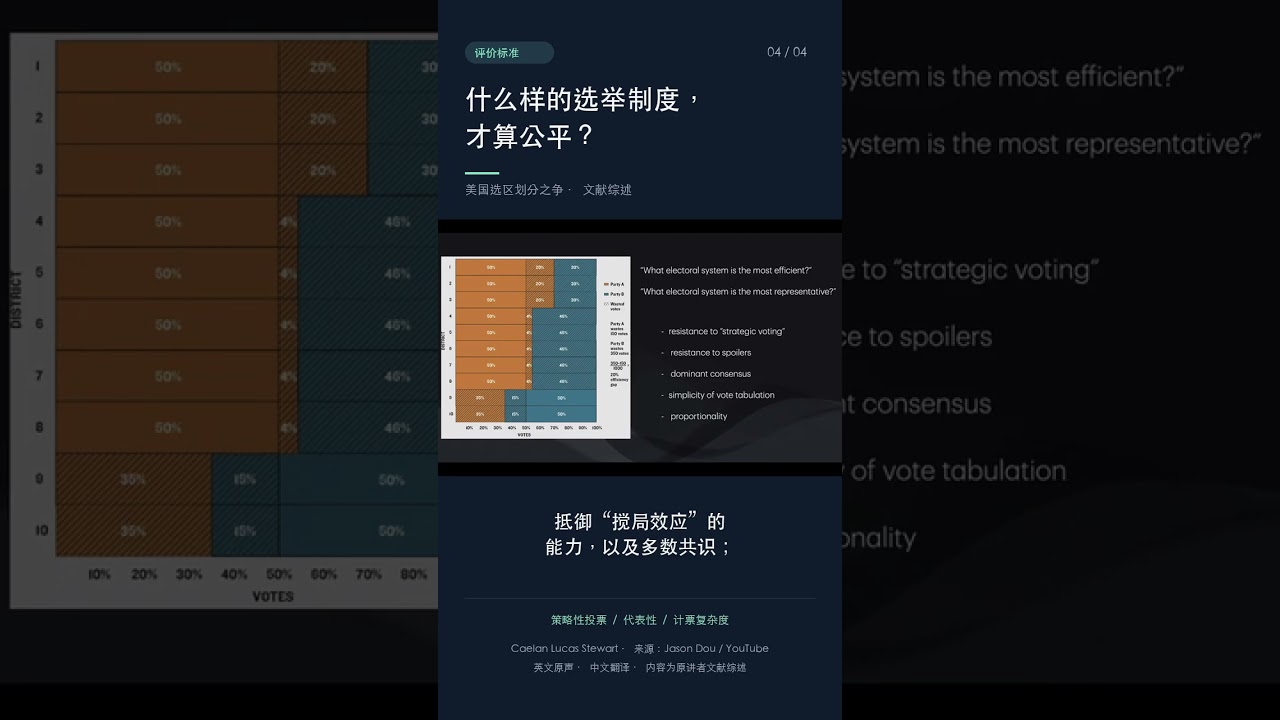
Few studies systematically compare electoral systems to find the fairest one, despite claims of superiority. A researcher proposes evaluation criteria: resistance to strategic voting, proportional representation across race and gender, simplicity, and alignment with majority will. Better systems could reduce voter compromise and increase trust in government.
Chapters
One remaining limitation is that there haven't been many comparisons between each electoral system on which one is more fair or efficient, as many papers claim that their electoral systems are fair and efficient. Therefore, possible research questions are, what electoral system is the most efficient, or what electoral system is the most representative? These questions can study many electoral systems on a select few criteria, definitively answering these questions. Some criteria that I recommend studying are resistance to strategic voting, resistance to spoilers, dominant consensus, or whether the system's results reflect the will of the majority of voters, simplicity of vote tabulation, and proportionality through race, gender, and political identity. These questions are important to ask because when we have a government that is supposed to be of the people, by the people, for the people, we must ensure that all people are represented in the picture and not be forced to compromise on their values while voting. To know what best ensures that and then to implement it guarantees that voters trust government more and that the government tries to cater to all of its citizens.