E921 Confluent's Jay Kreps builds data-streaming unicorn, partnership w/Google, future of enterprise
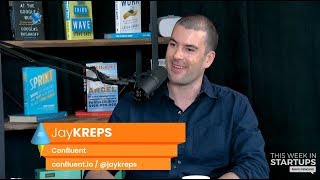
Jay Kreps, CEO of Confluent, discusses how Apache Kafka grew from a LinkedIn project into a $2.5 billion company processing trillions of events daily. Confluent raised $125 million in Series C funding and partnered with Google Cloud to deliver real-time data streaming for enterprises.
Chapters
This Week in Startups is brought to you by Squarespace. Turn your idea into a new website. When you're ready to launch, use offer code TWIST to save 10% off your first purchase of a website or domain. Pendo, a product cloud that helps digital product teams understand and guide their users, enabling them to build software experiences customers love. Visit pendo.io/twist for 2 months of Pendo free. And Salesforce Essentials. Jumpstart sales and support by leveraging the world's number one CRM at a startup price point at just $25 a month per user. Go to salesforce.com/twist for an additional 50% off and a free onboarding call.
Hey everybody, welcome to This Week in Startups, the podcast we host 100 times a year and have been doing for a decade here in Silicon Valley. We have many different ways for people to get the seat of CEO, founder in a company. One of the ways is you're a product person and you just develop an amazing, beautiful product, right? Steve Jobs was like a product person. Sometimes you have a salesperson. They're just great at sales, right? And they just create a product and they sell the heck out of it. Other times you have engineers start companies, right? In the case of Google or Facebook. Well, my next guest has built one of the fastest growing and largest companies after his 7 years at LinkedIn as an engineer. His name is Jay Kreps, and he is the co-founder and CEO of Confluent. Welcome to the podcast, Jay.
Thanks for having me.
How would you describe Confluent? And congratulations, just raised $125 million. That's right. On a $2 or $3 billion valuation.
Yeah, 2.5.
2.5.
Yeah.
From Sequoia Capital.
Yep.
And Index?
And Index.
Yeah, Danny Rimer and—
Yeah, it's actually Mike Volpe and not Danny.
Oh, Mike Volpe.
Yeah.
Oh, great. So you've got two of the great VC firms, one of the more recent ones and the greatest of all time. So you're doing something right. When did you start the company and what was the goal of starting this company? And then even taking us back, what did you do at LinkedIn?
Well, the company's about 4 and a half years old. The team came from LinkedIn and we actually created an open source project there internally.
Great.
And so we, you know, you were saying we kind of started as engineers, but I guess for these open source projects, you're kind of the product and the marketing and the engineer all in one.
Yeah. Explain that with open source. How does an open source project work for somebody who's heard the word open source but doesn't understand how an open source project is called a project as opposed to a company, right?
Yeah, yeah. I mean, it's kind of a methodology for making software where people just contribute bits and it's done out in the open and you can kind of see how it works and pick apart the bits of it. And it kind of became pretty mainstream in a lot of these big tech companies. So a lot of the internal infrastructure at LinkedIn was built that way.
And this is Apache.
Yeah, yeah, so the system we built is called Apache Kafka.
Right, 'cause Apache is the web server that everybody knows.
Apache is a web server and then a whole foundation for these open source projects, and so they kinda help govern these communities that contribute to them.
Got it. Stupid question, but for people who don't know, who decides what goes into the software? If there's 20 people contributing to this, open source project you created at LinkedIn, who gets to decide if LinkedIn and Microsoft and Google are all contributing to it and somebody says, "I don't want to add that," and Microsoft's like, "No, you have to add it." How does that resolve?
It's one of the fascinating things about these open source projects. The first thing they have to do is pick a governance model. It's like picking your constitution or something. Is it going to be democracy? Is it going to be dictatorship?
Right. Benevolent dictatorship.
The Apache projects are kind of a— You know, it's sort of representative democracy where there's some set of people who are kind of going through and approving all the changes and helping set direction.
Got it. And is it the first people who sign up are the most important?
You know, it's based—
It's your project?
Yeah, it's based on contribution. So people who come and contribute and stick around do it. And so that works pretty well. That kind of incentivizes people to try and do something useful.
So you were making this Apache, What was the name of the project? Kafka. Kafka.
Yeah, like the writer.
Like the writer.
Yeah.
Was he a surrealist or?
Yeah, yeah.
Kind of. And you picked that?
Kafka? Yeah.
You're a fan?
Uh, yeah, a little bit. You know, we had, we had a, we had a, um, you know, for these internal projects they always have goofy names. So we had Harry Potter characters, we had a database named Voldemort for a while.
Yeah.
Uh, and then, uh, then we switched to writers.
So what was this project Kafka that you built in the Apache framework. What was the goal of that at LinkedIn?
Yeah, you know, like the transition LinkedIn was going through was, you know, kind of moving off, you know, running big Oracle databases and then moving to this world of like big distributed systems that have data all around the world and kind of scale on bunches of servers. And so We were doing a bunch of things to try and make that transition. And one of the things we thought you needed was something that would work off of streams of data. And so we thought like, look, you could look, you could think of all the clicks on a social network and all the updates to people's profiles and all the emails. You could see that as some stream of changes and you could build all kinds of things around that. And so we built a system that did that and we spent about 5 years turning that into something that kind of scales around the world with trillions of events flowing through it in real time. And then as that was open sourced, it got really popular, mostly just in Silicon Valley. So all the, you know, the Ubers and Pinterests and Airbnbs all chose this architecture that was kind of built around these real-time streams.
And so a way for somebody to think about this is, hey, it used to be you have a database of, say, books at Amazon, every book ever made, and every day they put 500 new books in.
Yeah.
But when you start thinking about tracking real-time data, say on Twitter, you might have somebody who uses Twitter every day, like, comment, retweet, um, and tweet 500 times a day themselves.
Yeah.
And then you might have 10 million of those people doing it all day long, or 100 million, and now you've got 5 billion or 50 billion behaviors, moments being added to a database.
Yeah, that's exactly right. So like in some sense, traditional databases, you would hear the phrase data warehousing and it's kind of like in Indiana Jones, you know, that big warehouse.
Yeah, sure. Where the Ark of the Covenant is.
Yeah, it's all full of data and you might go ask it some question, but the answer is out of date by the time you get it.
Right.
But for, you know, for these much more real-time, you know, consumer sites, that kind of doesn't cut it. You're not like producing updates for your users at the end of the day, you're doing something continuously. And so it does work much more like Twitter where there's some feed of all the changes that are kind of flying at you and you kind of process it as it occurs.
And this required a different database architecture than the one that came before it. Explain the paradigms of these databases. And we all hear about Oracle, they've built this ginormous trillion-dollar business or whatever it is in terms of revenue over the last decade. Around the concept of these, you know, huge databases, but the open source systems came in and challenged them or replaced them or evolved them. How do we look at it versus what people used to do?
I think there's like a huge transition happening right now where, you know, there was traditional databases like Oracle. With the emergence of these kind of consumer tech startups, you had people that were like using data in a completely different way and they kind of built their own databases, which is what LinkedIn was doing and Facebook was doing and Google was doing.
Why did they make their own? Was it a function of what?
You know, it's a bunch of things. Like, one, the whole company is kind of built in software in a way that was pretty niche, you know, maybe 20 years ago and is now becoming very mainstream in all kinds, you know, everything from grocery stores to car companies would think about themselves that way. So they just had a lot more data. It was much more deeply intertwined with how they served customers. and then the scale is a lot larger. There's just a lot more data about more things. And so—
Was it also, did it also have to do with the arduous nature of maybe getting through the Oracle sales process to buy and spend $1 million on a license to build a database when you're doing some social network that has tons of data, but no, tons of data, but maybe you have no revenue yet?
Yeah, you know, I, Maybe that's part of it, but I think a lot of the big change came not from that because they were able to hold onto that for a long time. And what's actually kind of chipped away at it has been these totally different requirements, totally different product, something that runs across a fleet of servers in the cloud. It's just built completely differently for different use cases. And so of course then people like these open source software components. They love these cloud services where you can just buy what you need and pay for what you use and you're not locked in forever. And so that's been a huge part of it, but I think without this kind of change in how people think about data, I don't think you would've gotten in there with just a better sales model.
And so you have this open source project that everybody's benefiting from, and then you decide Confluent will become a for-profit company that provides what around this open source project?
Yeah, you know, we were, so we were looking at what was happening. We thought, look, we have, you know, huge adoption. Basically in a 50-mile radius of where we are. All the Silicon Valley tech companies are using this. Everybody else is interested, but they need something that's much more of a product and plugs into all the systems they have.
Got it.
They want something that can be like a cloud service or that can be easy to manage in their data centers. They don't adopt technology the same way that the kind of tech companies do.
Right.
And so we thought, if we really want to make this something real, we got to really turn it into a real product and take it out into the world.
Right.
And so that's what we do. So we, you know, we provide a version of this that's, you know, secure, that, you know, scales elastically, that you can run across data centers. And then we help companies actually get that going and run it. And then we offer it as a, you know, as a service in the cloud. So you can just kind of, you know, pay for what you use and get it without having to do any of the work yourself.
Amazing. When we get back from this quick break, I wanna understand how you made that transition from being a team of engineers to going out and raising that first round of funding and convincing people that this open source project could then become a project that actually generates real revenue, becomes a sustainable business and a company. When we get back on This Week in Startups. It's time for you to turn your great idea, perhaps even your startup idea, into a website. What are you gonna do? You're going to use Squarespace because you need a beautiful website with incredible functionality from blogging to e-commerce, and you want everybody on the team to be able to quickly edit and update the website. And you want to get a great price, whether you're trying to sell products or services or promote an online business, or maybe a physical real-world business. Maybe you're doing an event, and we do a lot of events, or a special project. Bing bang boom. Boom, you can get your Squarespace website up and running immediately with their beautiful templates that are customizable, powerful e-commerce functionality, and it's all optimized for mobile, tablet. You make it, it looks beautiful in all different screen sizes, and you get analytics. Plus you can buy domains and choose from over 200 extensions. You may have seen how you— I did, uh, angel.university and founder.university using Squarespace. It's free, it's secure, and 24/7 award-winning customer support. So here is your call to action. I want you to visit squarespace.com for a free trial, and when you're ready to launch, just use that offer code TWIST, T-W-I-S-T, and you'll save 10% off your first purchase of a website or domain. I love Squarespace. They've been an incredible supporter of this podcast, and every month, every quarter, week in, week out, they're delivering new features. This is one of the great things about cloud software and the, and the movement. Squarespace just keeps listening to those customers and adding new features, and then you can just see it in the product and the functionality, and the price stays the same and the value goes up. That's efficiency. That's what entrepreneurship is about, building a better mousetrap, and that better mousetrap is Squarespace. So go ahead and visit squarespace.com, use the promo code TWIST to save 10% off your first purchase. Okay, let's get back to this amazing website. I'm sorry, amazing podcast. Hey everybody, welcome back to This Week in Startups. My guest today, Jay Kreps, from a unicorn you may not have heard of, but everybody here in Silicon Valley is talking about. Confluent was founded just 4.5 years ago. In that time, they've built a business worth $2.5 billion according to the smartest investors in the room. That's Sequoia Capital and Index, which no schlubs in and of themselves. They're pretty great.
And Benchmark. I should get their name in there as well, right? Otherwise—
It is your Series A or something?
They did the Series A.
Really? Who at Benchmark?
Eric Visria.
Oh, wow. Great. Bill Gurley, my good friend who's been on the pod.
All right.
Another tall guy. Another— yeah, you're— people don't know because we're both sitting here. I'm 5'9" on a good day. You're 6'5".
Yeah.
But you've never dunked a basketball.
I know. Completely wasted.
Heartbreaking.
Heartbreaking.
You could literally be in the NBA, but instead you went to the East Coast.
I threw it all away.
Yeah. Silicon Valley. So your 4 founders, so they are pre-IPO. For LinkedIn. That's exciting. I guess you did pretty good since you were the tech team there. I'm sure you had some nice options.
Yep. Yeah, it was good.
Got to ride that. And then you decide at some point, hey, this project could— this Apache Kafka project could turn into a for-profit company that builds products and services around the open source project. You're not the first person to do this. This happened many times now, a dozen times.
Yeah, yeah, yeah. There's a number of these.
Hadoop became DataStax, is that right?
Yeah, it became Cloudera.
Cloudera.
Yep.
And then DataStax was based on an open source.
Yeah, another Apache Cassandra.
Cassandra. I'm an investor in DataStax. Oh, really? Great. Yeah, I met them and yeah, I think they're a unicorn too now.
Yeah, it's a similar story. The technology came out of Facebook and they started a company around it.
Yeah. So you saw some of that happening. So the roadmap was there.
Yeah, and more than that, you know, we kind of believed a lot of these technologies that were being, you know, developed in-house in the kind of consumer tech giants were going to be really mainstream. Yeah, we were kind of looking at what was happening in the world. We're like, look, everybody— every company is going to have stuff like this. Yeah. And it's either going to be our stuff or it's going to be somebody else's stuff.
It's interesting how the use case then opens up, uh, the ability to invest so LinkedIn is doing so well, Facebook's doing so well, Twitter is doing so well. It gives those companies permission and even the necessity to invest heavily— tens of millions, hundreds of millions of dollars— into these open-source projects. Yeah. And then to solve their problem— we got to track likes, we got to track people's feeds, etc. Once that happens, I would guess a bunch of other people that who are technologists or entrepreneurs look at that technology and say, "I have an idea for what that database, that new architecture could do." What other projects now, outside of social networking, are taking advantage of this Apache Kafka and Confluent offering?
Yeah, it's everywhere. It would show up in ridesharing, like Lyft and Uber. It would show up in big retailers.
What are they doing at like the ridesharing? They have to track GPS locations.
Yeah, you know, it's all the locations of all the drivers.
In real time.
In real time, it's calculating supply and demand so they can set the prices. It's, you know, helping get all the data to match you to the right pickup.
If there are a million drivers on the road right now, what would that mean in terms of data points coming in?
Yeah, it's—
And how often? Is it sending the GPS location every 10 seconds?
It's amazing. If you look at the large users of these data systems now, they have, literally like trillions of messages a day that go through.
Trillions a day?
Yeah, you know, globally distributed around the world. So the use of data inside companies has just changed so much in the last 10 years, it's amazing.
And how do they manage it on a global basis? Do they have to make it into pockets and clusters of databases? Because you start looking at like the number of rides in China, then you look at, oh, well, there's 10 cities with over 30 million people, and each of those is the equivalent of maybe their whole ridesharing footprint here in America. So how do you, do these databases all wind up connecting or?
It's actually a huge problem. That's, you know, that's what's motivated, we're talking about what motivated this next round of data systems and it's, you know, the days of having one database on one server somewhere.
Rebuilding it.
In a data center.
Charting it.
Yeah, that's over. These are now these distributed systems that are around the world. And so, you know, one of the things we provide as a company is a hosted service. So you can just, you know, this problem of how do we get clusters up all around the world and globally connect them, that's something, you know, we kind to do for you, which is an immensely hard technical problem.
Racking those servers would be arduous.
Or even, you know, even we provide our cloud service in AWS. So there's, you know, under all the layers, there's somebody racking servers, but—
Well, that's interesting.
Yeah, you can get it kind of at the click of a button.
You have a cloud service offering. Yeah. And if you were to strip it all away, you're renting server space at AWS.
Yeah, that's right. That's right.
And then you built on top of it to do that.
Yeah, we're providing this kind of data system as a service. So you can just get it instead of having to set it up and run it yourself.
That's amazing. So now we're abstracting layers upon layers.
Yeah.
And today you made some huge announcement with Google.
Yeah, that's right.
What was that?
That's right. So we're, you know, what we've done is, is taken our service and natively integrated it into their cloud as well. So, you know, kind of looks like a seamless part of their offering. You can go down the list of services and see Confluent Cloud there. We're doing work to integrate the billing and the support and all of that, which is just a really cool thing.
When people look at these cloud services, the bills have been starting to get very big for some of these big companies. Yeah. Is there a point at which companies who are hitting scale, it makes more sense for them to actually start racking servers again?
I think it's extremely rare. So we, you know, we provide our offering on-premise, we provide it in the cloud. You know, the direction is mostly on-premise to cloud. You know, in fact, we kind of connect all that up and help companies do that. But the, you know, there's a few of these exceptional cases where either, you know, you're Facebook, and your level of scale is so high that nobody's even solving for that problem and you have to eke out pennies on every single thing you do, or where you do something really specialized. So you've heard about companies like Dropbox, where they've taken some specialized system that stores all the files and they've just really built that out from servers to everything else. But for most companies, it's not, what's holding them back on the cloud is not, has nothing to do with cost. It has everything to do with just, legacy software and how can you connect that up to new applications that would be there.
When you brought this to the venture community, how did they react? They understand open source enough now to see this path clearly, this playbook?
Yeah, it was interesting. It was an interesting time because I think the open source companies were not that well understood. Beyond that, it wasn't even clear what the category of thing we had was. So we could say, okay, look, this is really popular. And they would be like, well, is it a database? And we're like, well, kinda, but really different. And so it was definitely work to explain it. And then, but I think like the venture community generally responds well to traction. The one thing you can't BS your way through is like real people doing valuable things with your product, whatever it is.
Yeah, the attention of smart people on the platform smart people are not going to engage to do you a favor, or you're not going to be able to fake that.
Yeah, you know, I think if you're in the business of having people come and tell you hopeful stories all day long, you kind of get— you start to just discount it. And so the things that are hard to fake, I think, are the things that people believe most in. So that was one of our big learnings in the early fundraising, was we would go through this long pitch about why this was all inevitable. At the last slide, we would show some traction, which was amazing for this open source project. And then, you know, the whole time the venture people would be like on their phones, not paying attention. Last slide, they're like, holy shit.
Yeah.
So, so then we were like, put that— yeah, put that up for— that was our— it's interesting.
I wrote a blog post recently. I was like, if you want to close funding immediately, have this chart. And the chart is we're doubling every 4 months.
Yeah.
Because any company that can double every 3, 4, 5 months, you know, with whatever amount of resources they have, if given more resources, they could grow faster. You've been— year over year, what's the revenue growth like at a company like yours to hit these kind of levels, unicorn levels, since we're having unicorn companies on?
Yeah, we grew over 3x, you know, closer to about 3.5x last year to this year.
Wow.
Yeah.
So 2019 versus 2018 is going to be 3x.
2017 to 2018.
It was 3x.
Yeah, 2019 is still happening.
Yeah. You think you can do another 3x or more like a 2x?
Yeah, we're going pretty quick.
So we'll see.
But yes, so— It gets harder as you get— the numbers get bigger. That's right, that's right. This last year we were definitely getting to scale. The company's like 500 people. We have a bunch of customers.
500 people? Where are you based?
Yeah, well, everywhere. The headquarters is in Palo Alto, but we have an office up here in San Francisco. We've got offices in London. We got really folks all around the world.
What are your thoughts on Silicon Valley? You started this 4.5 years ago, I think, so that was right before it got crazy here.
More fancy, I don't know.
Yeah, it was always— At this point, if you were starting today, would you even be able to or consider starting here, or would you just think, I gotta move this to LA or Toronto or Vancouver?
Yeah, yeah. You know, it's an interesting question. Like the, we've done what a lot of companies have done, which has just gotten really liberal about where we'll hire people. And the collaboration tools make that a lot easier. The one thing Silicon Valley still has that's hard to get elsewhere is the pool of startup executives. You know, I think the venture people have gotten much more liberal about being willing to travel and invest elsewhere. But the pool of startup executives just doesn't really exist everywhere. And it's a particular thing. You know, you may be an executive in a large corporation. It's not quite the same thing as coming in and, you know, building a team from scratch and really scaling something.
Yeah. If you want a Google PM or somebody who was at Facebook when they were under 100 people or somebody who did the sysadmin at, whatever company, Twitter, maybe that's a bad example since Falwell is up all the time.
No, no, I mean, I think any of those companies where they're going through crazy growth, you know, I think it's a very different job to do that. And so having people who've been through that before is just, you know, really helpful.
How is it different?
You know, like the, most companies just aren't growing at that fast of a rate. You know, if you look at the, you know, the category of growth public companies, it's usually about 20% a year. If you're, you know, a small startup growing at 20% a year, you're, No, you got nothing, right?
So you're shutting it down, you're selling for assets.
Yeah, you're going to be doing it much, much faster than that. And that ability to kind of come in and put it all together from scratch, you know, pull together a team, put together a strategy, that's actually something you rarely get the opportunity to do in a larger company.
Yeah, it's sort of like getting the ability to like work on a film that, you know, has a certain budget or something like working on a Pixar film. The number of people who worked on a computer animated short or Feature was like 10 people. Yeah, I, I actually think it's a good, it's a good analogy.
I, I do think startups and movies have some similarities in that they kind of somehow assemble a team out of nothing.
Yeah.
You know, put together these, this amazing pool of talent, build something great, and then, you know, with the movie they throw it all away and do, yeah, start from scratch the next time. But, uh, with the startup, hopefully it keeps going.
Well, I, you know, you, unless it's a sequel, in which case you're just like, yeah, that's right.
I guess now you have more of the perpetual model. That's right.
Let's go. We just need the Darth Vader costume. We can use the same one. All right. I'm going to give you a tough question right now.
Yeah, do it.
But we're going to go to commercial so you have at least 90 seconds to think of an answer. There are things that you've made possible with this high-scale technology that was driven because nobody ever thought there would be a billion people on a social network doing hundreds of activities each and this need for it. What is this technology not capable of yet but that in 10 years it might be capable of, and what might that unleash on the world? What use case, what problem that we can't currently solve with the technology, but that we're a decade or two away from actually having this technology be able to solve this problem or provide this opportunity in the world that may be even hard for people to think about or get their brains around a database or data being able to do this. When we get back on This Week in Startups. Do you build or manage a SaaS product? Well, I have something for you. It's called Pendo, P-E-N-D-O. And if you install it in your app, it's going to give you a rich set of application-level data. That means you put in a little code, and then you find out what your users are doing. And maybe there's something very frustrating for them in your app that you can fix. Or maybe there's something that's delighting them or a feature that you've been arguing in your staff meetings about what people are doing with the app and you find out they're not using feature A, but they're using feature B twice as much as you thought. This is the kind of actionable insight that companies like OpenTable, Zendesk, Glassdoor, Instacart, Marketo, and two of my investments, 15Five and Lead Genius— these are the companies using Pendo to quickly understand user behavior in their apps so they can make better products. And that's what you want to do. If you get rid of some features nobody's using, you can take all of that maintenance time and developer time and simplify your code base and product and then put it into the features that are being used. Well, Sprinklr, which I'm a shareholder in, they're using it to do onboarding of new users and to convert their free trials to paid trials. You get all these like very nuanced user flows. Well, they're doing that to guide the legacy customers into adopting the new digital platforms and reducing support tickets. While improving NPS, Net Promoter Score, critical for any great startup. And the best part is no engineering resources are needed. So here is your call to action: pendo.io, P-E-N-D-O dot I-O slash Twist. Again, pendo.io/twist, and you will get not one but two, two free months of Pendo. That's right. Also, Pendo's Product Craft community is producing a great event for product teams, and that event is taking place at the Palace of Fine Arts in San Francisco on May 9th. You can learn more and snag a discount code at pendo.io/twist. Okay, let's get back to this amazing episode. Hey everybody, welcome back to This Week in Startups. I'm your host Jason Calacanis, and My guest today, Jay Kreps, formerly of LinkedIn, where he was a pre-IPO employee. What employee number were you? You must know.
I think it was around 160, something like that.
160? Was Reid Hoffman in the building when you were there?
Yeah, yeah. He was actually the first person at LinkedIn I met.
Really?
Yeah, yeah.
Why is Reid so successful?
He has an interesting approach where he seems to just talk to everybody and be a really nice guy. It's nice to see that that can work.
Wait a second, he's really successful about being an a-hole or a d-bag in Silicon Valley. It is possible.
Uh, yeah, yeah. You know, it seems to be that like, you know, uh, you never seem to catch him when, when that comes away and people love him and want to work with him.
Uh, what was it like there in the early days when there were 100 employees at LinkedIn? And what was it like 5 million users or something.
Yeah, it was great. That's right. Yeah, it was, it was pretty early. You know, it was interesting, the, the, for any of these companies, you have so many big ideas early on.
Yeah.
And, you know, I think a lot of people joined because of Reid. So there was, you know, 1,001 ways that we were going to kind of change the internet. We didn't get to all of them. Yeah. But we got some of them.
Was the revenue turned on when you joined yet? Were they charging you that $5,000 a seat?
It was just starting. You know, it was one of the things that was interesting about LinkedIn as a social Social Network was they started a bunch of experiments early on with monetization and they all worked.
You know, I had Reid on the podcast and it was interesting. He said that. He's like, "We didn't want to charge anybody, but these HR people kept asking and haranguing us. So finally we just said, 'Well, what can they afford?' Said $5,000 a year." And I think that was the going price for a seat with like the pro account.
That's right. That's right. $500 a month or something.
It's probably a little more now, but—
It might be a little more.
And then what was it like? You were there for the IPO? Yeah.
Yeah.
What was that like to go from being the, you know, whatever, in the first 100 or so employees to then watching an IPO?
You know, it was really interesting that when I joined, people really felt that it was a little unclear if a social network was going to be a business or not. Yeah. It's similar maybe to some of these open source companies where people are like, well, but yeah, really a company remains to be seen. Yeah.
Yeah, people didn't think, I didn't think advertising would work in social networks.
Yeah.
So, I was convinced LinkedIn would work. And then, before that, there was a company that was the first business. There was another social something.
There was SocialNet and Friendster.
Friendster. Yeah, there were a couple of these social networks that came right around the same time. Oh, Mark Pincus had Tribe.
Yeah.
And there was one or two other ones. But I thought advertising on a social network would be like somebody walking into a bar and getting between two people and saying, "Do you want to buy Kraft macaroni and cheese?" Yeah, and sure enough, it is a little bit like that, but it still works. And it is exactly like that, and nobody cares, and the click-through rate is terrible, but the number of people engaged is so high that net-net, it works.
Yeah, and what was interesting was LinkedIn actually today is in large part an enterprise software business. They sell—
Yeah.
A recruiter product, a sales product. Most people don't know that, but it's actually a very interesting model for a social network. They're unique in that they have this like three-sided business.
And they have the talent business now where you can learn skills.
Yeah, that's right.
And the jobs business where you can find a job. So they've really— people underestimate, people overestimate startups in the short term and what they can get done and then underestimate them in the long term.
Yeah, yeah. You know, actually, I'm a huge fan of that kind of platform technology. LinkedIn was kind of a really interesting platform that they showed they could build, you know, 4 or 5 different businesses on top of it that were all pretty successful. I think a lot of these infrastructure platforms you're now seeing in the cloud, I think we're one of them, they have that same characteristic where you have something that's popular and there's, there's a bunch of different ways to monetize it. Like we're selling it as a software package, we're selling it as a cloud service, and those all seem to work, which is, you know, maybe just a sign that if you have something that has traction and creates value, there's, you know, a number of different viable ways to make money off it.
This big data thing was big a decade ago. People were talking about it. And obviously the social networks became the driving force of this in the same way GPUs got driven largely by mobile phones and GPS. Like, yeah, it drove the lowering the cost and increasing the power of this technology. When I left us before the break, I was wondering, in 10 years or 20 years, if we continue on this curve, what will this technology unlock? What will the ability to process such large global real-time feeds of data, what will that unlock for humanity?
Yeah, you know, I think we're still figuring that out. You know, I think our vision with Kafka and with Confluent was, you know, really build something that could be kind of like the central nervous system in a body. You want something where you can connect all the parts where something happens here and the rest of the business can kind of respond in a really natural and immediate way. I think as companies are getting more built out in software, that's like what's happening. That's kind of the architecture of a modern business. So that's, you know, I think it plays out in all these cool ways in different companies, but it's an interesting process to watch. It's probably the most fun part of my job is I get to go meet with all these different companies in different industries and they tell you how they're built and what they think that looks like now and what it's gonna look like in the future.
What breaks the system now? I'll take another swing at it.
Yeah.
What, when you meet with a client, you say, we're not there yet, we can't do this?
Oh, the big thing for us is, you know, we're very much like a developer layer.
Yeah.
And so we're not as kind of point-and-clicky, you know, there's no interface for the business user yet. And so, you know, that's, that's the big thing, like the tools that, you know, for us and any of these modern layers, we're not broken as much by the, you know, the scalability or servers failing that this new generation of software is all kind of like built to, to live in that scale. Yeah, yeah.
So when a series of self-driving cars— let's take the Tesla or Uber case. Yeah, yeah. There are now a couple of hundred thousand of these Model 3s on the road. Everybody knows they have cameras and sensors around them. There's all this data coming into the car.
Yeah.
So as I'm driving up and down the 280 every day, they have all that data. I don't know how much of it they store, if they roll it up, But is it possible to take a billion cars on the road today? Let's just assume all billion cars on the road or the first— a billion cars that get on the road in the coming years have the same sensor arrays, cameras, et cetera. Would we be able to, in real time with today's infrastructure, store all of that data for what's happening in every car? Every frame of all 8 cameras, 12 sensors, this, that, and the other thing. Would that data all be able to be processed in real time and stored, or would that just take taking all computing power in the world, all storage power in the world, and just 10x-ing it?
Yeah, no, that's very possible. So like, not only is it possible, um, Audi is a customer of ours. They did an amazing talk, um, at, at a conference we put on. And yeah, they're, they're really building a whole generation of cars that does exactly that. And there's all these features from the traffic on the maps to, you know, telling you that there's going to be hazards up ahead to, you know, helping you figure out when your car needs to go in for maintenance that these car companies are looking at building around these streams of data. I think it's an amazing set of use cases and it's like a total change in what a car is. You know, it used to be a hardware product and now it's like a hardware-software global internet service product and it's It's really incredible.
Well, if you think of the value coming from these cars, the first couple of 100,000 people with a Model 3, you drive one of these Teslas, the self-driving?
Yeah, yeah, yeah.
Self-driving?
I just got one of these recently. You know, I didn't do that. I don't quite trust the self-driving stuff.
You have a Model 3?
Yeah, yeah.
Oh, you could totally zip up and down the 101 in 280, no problem.
Yeah, yeah, you can zip. I think if you spend too much time building software, then you don't trust it for the first few years.
Well, I'm not gonna say you should get in the backseat like some dipshit did. Literally a guy attached a camera clamp to his steering wheel.
Oh, I didn't hear about this one.
Well, you know, if you're gonna put self-driving on— I tweeted it, you might be able to find it in real time. Anyway, the driving in real time, the guy clips a soda can like a cup holder to the steering wheel because the way the Tesla self-driving works is you have to have a little bit of friction on the steering wheel in order for it to know that you're gripping. Yes, this person hacked that by putting a weight on the steering wheel. And then climbed into the backseat and videotaped it and then climbed back. They don't show him climbing back, but they show him asleep in the backseat.
I didn't hear about that. I heard about the, the drunk people who fall asleep with the self-driving. That seems like, well, maybe it's better than driving, but maybe they should have just gotten a ride.
Of course they should have gotten a ride. The fact that the car had self-driving, you have to ask yourself, we have people drunk driving every day. People are idiots. People take their own lives. They do things that are stupid. Would you rather that person be in a car with self-driving and airbags, right? Because if you just look at self-driving as a technology like airbags, I don't think the self-driving is making people go, "I should— now that I have self-driving, I should drink and drive." They're not saying that. Yeah, this person made a terrible choice. They probably would have driven anyway, just like the other people driving drunk. If it has self-driving, at least when they're on the highway, it's going to drive until it runs out of battery and then come to a stop. And if you have self-driving and you don't have your hands on the wheel, it eventually does an alarm, slows down, and comes to a stop and puts the hazards on.
Yeah.
So that's actually—
Yeah.
A better parachute than not having it.
I agree. Yeah, I agree. You know, I think it's a hard thing for society when there's some new technology. It's always scary. Yeah. But you actually don't think about the risk of not developing. It's true with these medical treatments. It's true with the self-driving cars. You don't think of all the people who die if you don't have it.
I gotta think medical is gonna be a holy grail for you too, because we're just getting to the point at which Apple's probably gonna have a glucose reader in real time soon, and there'll be some other real-time data tools. We already have it for our heart rates and stuff like that, but can you imagine if we had real-time data on every person on the planet's heartbeat, body temperature, stuff?
I think it's an amazing area. It's a little slower moving with nutrition, new technologies often. But already we heard from a hospital that had hooked this up. They treat infants who get brain trauma, like a head injury. And they're using it to detect brain swelling. And if you get brain swelling, you can get brain damage. And so you have to catch it real fast. And there's a couple of these use cases that are like that where these really forward-thinking people have turned it on that and actually are saving lives. I think it's amazing.
I think it's really cool. I think for drug discovery and all this drug testing is going to be another one, and then space seems to be another one where we're starting to get large amounts of data. I don't know if you know, Yuri Milner is putting a series of satellites up.
No, I haven't heard about this. Yeah.
Yuri Milner is one of the most interesting people, not in terms of making money, which is super boring, but the spending of money I find fascinating. Going to daisy chain like some array of satellites into the solar system to send data back and see how far he can go and get data out there and then get it back. And can you imagine sending out like whatever number, you know, society as a human species, if we put 1% of our effort, like GDP and human capacity, it would be whatever, tens of millions, hundreds of millions of people and whatever trillions of dollars. To just send satellites out. Imagine we did like a Manhattan Project where 1% of the planet just worked on sending satellites to space to just try to get as much data as we could from out there. We could actually get pretty far in 100 or 200 years.
Yeah, yeah.
But the amount of data— yeah, would be insane.
Yeah, yeah, I agree. Yeah. If, you know, if nothing else, this crop of Silicon Valley tech billionaires certainly has, you know, more interesting side projects than previous, uh, Bezos is going for it too.
I guess he found out that Elon was putting out this like 5,000 satellite cluster or 10,000 satellites.
That's right. You got to keep up with the Joneses, right?
Low Earth orbit satellites. That's going to be, when you think about the impact that will have on data collection, 5G and low Earth orbit satellites providing broadband to the entire planet, what impact is that going to have, you think, on the data sort of?
Yeah. You know, I think it's an amazing thing if they can get people connectivity. I think it's great.
Yeah. 5G. Extraordinary.
Yeah.
You operating in China and those kind of places yet?
No, not yet. I mean, the open source part of our offering is actually incredibly widely adopted in China. So like we actually track, you know, downloads and there's about twice as many downloads in China as the US.
Wow.
And obviously the US technology sector is not small.
No.
So, so I think that's amazing. As a business, we're not there yet, though.
Yeah, it'd be interesting to see if you can even go there, if they let you.
It's definitely more complicated to operate there, but—
Well, especially if you're collecting data.
Yeah. I mean, they have a whole set of cloud, you know, cloud providers. Alibaba is huge. You know, we, we never hear about them because there's, there's not as many companies building on them, you know, here in the US. But, but it's huge in Asia.
So, yeah, the only problem is they pick the winners over there. It's a little bit more difficult for American companies when they say that's the winner.
Yeah, it's a different operating environment.
Different operating system. Well, listen, continued success with this. I guess you're going to hire a gazillion more people.
Yeah, we're working on it.
How many job openings do you have right now?
Oh my God, I don't know.
100?
Yeah, at least 100. What developers? Yeah, you know, all of it. You know, like if you're trying to build a company quickly like this, you need good people of all kinds.
Is it fun to get that big that fast? I think it is. 500 is a lot of people.
You know, it's one of those things where you want to avoid kind of crashing the car in terms of the culture of your company or you just how you operate or all that. You got to really like try and make yourself better as you get bigger, which is not—
not the biggest challenge for you.
You know, I think just making sure, you know, I think it changes each time you kind of add another layer in the company and making sure you're really in touch with what's going on and how things really operate. Yeah, really important.
What, what was your personal biggest challenge?
Oh, you know, it was a huge transition for me. I went from being, you know, basically an engineer and engineering manager and architect to like, running an enterprise company, which is, you know, it's a completely different area. None of the founders of the company knew anything about it. So, you know, the list of challenges was huge. We had to, you know, figure it out.
You like that seat better or no?
I think it's really fun to get to see all the parts of a company. It's a little bit like, you know, understanding all the parts of the car and how they work. Like, it's really been fascinating for me.
Do you ever wish you could just let somebody else be CEO and then you get to go down there and just work on the tech again and be an engineer?
No, you know, I—
You like the throne? You like the cockpit seat?
I think if you start something, it's kind of like your baby. You care too much to take your hands off the steering wheel, I guess.
All right. Listen, continued success. It's amazing that you've gotten this far. What a great story. I think for people who are listening, you know, this is one of the great reasons to go work at a big company right as they're about to do that tipping. Like, I always tell people like that if you're going into— if you're coming out to Silicon Valley, like, yeah, going into startups is great, but getting to that company that's at their Series B or something, they got 100 employees, 200 employees, even yours, 500. Man, do you get to see up close and personal like you did at LinkedIn. You get to see how it's done. You get to see all the mistakes. You get to see all the challenges. And you take that with you to your next one. That's 7 years at LinkedIn was your MBA times 4.
Yeah. Yeah. It was a really fun thing to see.
Yeah. No, Reid and Jeff. Oh, you were there during the transition to Reid and Jeff? Yeah.
That's right. That's right.
Yeah.
That went well.
Yeah.
Yeah.
It was wonderful.
Jeff's extraordinary. All right. Listen, continued success. If you want to work at a rocket ship, because Listen, this guy's going to go public in a year or two. You haven't filed or anything?
No, no.
So they're pre-IPO, but he's seen this movie before. I guess we'll be sitting here in 2 years. This will be the, uh, this will be the episode that all the bankers on Wall Street be looking at. This company be public in 2, 3 years. Uh, continued success, Jay. Thanks for coming on the pod. And everybody go check out Confluent. That's confluent.com. You got the com?.io..io.
I know, we're—
look at that, you raised $100 million. And you're just like, I'm gonna go.io. You could buy the.com. Yeah, you've chosen to go.io.
We're doing it.
The.io people are pretty happy with you right now. What is the.io anyway? Is that like a specific country or they just—
Yeah, it's, it's some island thing. We did it because, you know, I/O is input/output.
Of course. Yeah, it makes total sense. Yeah, yeah. You know, just don't do LY. What happened was everybody's like, oh, Bitly or thisly or—
LY is on the way out, huh?
It's Libya. Yeah. So when Libya went, you know, like had chaos or whatever, it's like having Venezuela as your domain extension, if the country devolves, everybody loses their domain name, which is what happened in the Libya sense. Bitly, the URL shortener was bit.ly. Yeah, like half the links on the internet went down one weekend during the blogging. It was hilarious or not hilarious. All right. Continue success and we'll be right back. Scaling your sales team and your process is brutally hard, and this is where a lot of startups get themselves in trouble. They start to figure out sales, but it doesn't scale. Why doesn't it scale? Because you're not using Salesforce, which is the world's number one system for doing customer relationship management. Everybody knows Salesforce works best. Salesforce is the greatest. But you might be saying, is my startup too small for this? Is it too expensive? Well, I've got I have great news for fans of This Week in Startups. Salesforce Essentials is easy to use out of the box and perfect for startups at a great price point. I want you to go to salesforce.com/twist and you will get 50% off with an annual contract and free onboard training. Salesforce is awesome, and it's going to be set up instantly, same day. And you're going to be able to do everything faster and better. You're gonna be able to track your emails, track your calls, and all the meetings, all from within your inbox. So I want you to automatically connect all of your support channels to Salesforce and start doing it right. When you look at a sales executive's resume, it says that they're Salesforce trained and they know how to use Salesforce. And when they come into your building, and they're in your office and they sit there, the first thing they say is, "Where's my Salesforce login? How do I get to my dashboard?" The world runs on Salesforce, and now startups can get a great price with Salesforce Essentials. That's right, Salesforce Essentials is 50% off. I can't believe it. Thank you so much to Salesforce for supporting This Week in Startups and for supporting the startups that watch This Week in Startups. So get that 50% discount discount. I'm not sure how long it's going to last. I want you to get in there right now. salesforce.com/twist. Scaling is hard unless you're using Salesforce Essentials, and then it's easy breezy, and you're going to get that startup price. So lock in your startup price right now. salesforce.com/twist. Okay, let's get back to this amazing episode. Okay, we're here at Office Hours. This is my chance to interact with founders and try to help them. I try to make every interaction with the founder the most beneficial interaction they've ever had with an investor, whether I'm an investor or not, because I want them to leave— for those of you who are angel investors or aspiring ones— my goal is to have them leave, leaving the meeting pumped up and feeling like they got the best, most actionable advice they've ever gotten in their lives, whether I'm an investor or not. So I'm careful not to crush their souls, but it really is a challenging thing because being candid with people Sometimes can be jarring for you, the listener. I will assure you that any founder who should be a founder wants the most candid advice, so it's not a shock to them to get candid advice. In fact, they love it. And so I've decided for this next one I'm going to be particularly brutal. Parssa, welcome to the program.
Thank you very much for having me.
Okay, you are doing a peer tutoring marketplace called Tutorfly. It's at tutorfly.org. Uh, I see you have a 650 number, so you're here in the Valley.
Correct.
How many employees do you have?
Uh, it's just me and two other co-founders right now.
Great. And how long, uh, have you been running the service? When did it launch?
Yeah, so, uh, we launched it fully in early 2018.
Okay.
Um, so I graduated from UCLA in June and we're living the glamorous life out of my parents' home in the South Bay right now, actually.
Perfect. Perfect. Well, at least you get the fish cakes and, uh, get to play Xbox in the basement. Congratulations. And you're saving all that money. So tell me, what is the biggest challenge you've got with Tutorfly.org?
Yeah, so the biggest challenge we have is with a lot of two-sided marketplaces, which is how do we incentivize our users, the tutors and the clients, to not circumvent the platform once they become familiar with each other.
Okay, so I get this question a lot, and I'll explain it to the audience in plain language. If you get in an Uber in the early days, or if you were taking even Carrie car service before that, or music car service, and you're paying them $100 $125 for an airport job, I would always get the name of the person, and the person would always hand you their business card so they could route around their cab company. And they would say to you, hey, if you have another ride, contact me direct. And I contact them direct and say, hey, it's $125 from Carrie, what will you charge me? And they would typically say, oh, we'll charge you $75. So we're both saving money because they were probably giving 60% to the cab company. Then Uber came out. Well, Uber has so many— you don't route around the Ubers. And the reason you don't route around an Uber is because Uber's only taking 20-25%. So there is a point at which the rake, the take from the marketplace is so great that people begrudge it and try to route around it. So what is your take rate? What percentage do you take from the tutors?
So, right now, it's between 33% and 40%. And because they're high school and university students, relative to what they would be making, they're okay with it.
Yeah.
But we're looking down the road where when this— we're kind of really pushing this through and peer tutoring really becomes something that you can do and it's pretty normal, that we're kind of looking ahead to see when people start hopping off the platform what we can do.
Yeah. At first, when you said 30% or 33%, I was like, "Okay, no big deal." When you said 40%, I started to say, "Perhaps an issue." So I would just be generous from the beginning, 25%. And then Apple had the same issue. Apple takes 30%. That seems reasonable. But then for people who had subscription businesses like Netflix and Spotify, they're like, wait a second, people stay with our service for 10 years. You get the subscription the first year, we give you 30%, but we don't want to give you 30% forever. That makes no sense. And those platforms no longer let you subscribe through the App Store. However, other people like Calm do. And they benefit from that. So by giving the marketplace some of the take, you get promotion.
Yeah.
And so when you're coming up, people would do that. Now, if you became an all-star tutor, which may or may not exist in your field, you, you're never going to be able to keep them forever. Like a platform like AngelList isn't keeping me on their platform forever because I can do it without them. I'm bigger than AngelList. I have a bigger following. You know, I wrote the book on angel investing. Like, I don't need AngelList. But in the beginning they taught me a lot and it was worth being on AngelList. So realistically you're not gonna keep everybody. So that's what you have to think about. And then the other reasons people stay typically listed are insurance. So if you cover them in insurance, so with the dog walking services, they want to have that million-dollar insurance if in case the dog, you know, gets out of its collar and gets hit by a car, God forbid, and they don't personally get sued. So insurance is another sticky one. Reputation system is another one. So if they really care about the reputation system, If I go around it, I don't get my reputation going up. So reputation system's another one. And then there's also this concept of fairness. Like, do I feel the platform deserves it? So that's something where some people always want to cut corners and other places may not. So back to the iTunes one, they started charging— I think it's 15% on renewals. So if you have a subscription business, 30% for the first year, but they only take 15% for the second year. So even Apple. Which doesn't have to cut deals, realizes the rake can be the deciding factor between keeping and losing people. They should have cut a deal with Spotify and Netflix and said, for you at your scale, we will take 5%. So they should just say, for anybody who has over 100 million subscriptions going through the system, we drop it to a flat 5%. It was a mistake on Apple's part. But many people don't want to give up the relationship. So I wouldn't sweat it too much. I would worry about having a world-class service. Maybe having the insurance. So if something happens, they have the blanket insurance. Maybe the reputation system. And then most of all, if you're delivering high-quality customers over time, it really doesn't matter. So the problem with routing around a system is, well, what if that driver is not available? So if I use one of these in-home massage things, OK, I love this masseuse. I want to go direct. But if I need a massage on Saturday, I'm really stressed out, and that person's on vacation or they're booked, I still want a massage. So sometimes it's the liquidity of the network that matters, right?
Yeah.
So I wouldn't oversweat this one. I would drop the rate down massively, make it 25%. OK. Or make it 40% for the first one, and then if you do 10 in a month, you drop to 30, and if you do 20 sessions, you drop to 20.
Yeah. And so a couple of comments on that. So the first part of it is we do sell bundles. So after the first couple hours of tutoring, if it's The tutor gets a great review. We sell a bundle, so the parent's not gonna hop off the platform if he or she's paying a grand up front. But I guess a follow-up I have is the social impact component of our model is that 20% of our 1,000+ tutors actually volunteer their time to raise money for local PTAs and charities. And so we haven't really been pushing the social impact portion of that, but do you think because of the rise of socially conscious consumers, we should really be more mindful about how we're Friends.
OK, trigger warning. OK. Don't ever bring up this social nonsense again. OK. All right? With investors. OK. They will look at this and say you're not a cutthroat founder and that you're a do-gooder and you want to save the world. Now, they're not going to say that. They're going to say, in fact, the exact opposite. Like, oh my god, social good, that's so important to us. OK. And then they're going to look at your business and go, does this— does it add to our ability to make 100 times our investment, or does it take away? If you're such a do-gooder that they feel it's going to throttle the business, or that you're giving away too much money and it impacts their 100x, they're not going to do it. Now if you say, listen, we're going to give for every 10 sessions, we're going to give one to an underprivileged person. And we're doing that not just because it's the right thing to do, candidly. We're doing it because we'll convert more people. There's a group of people that when they hear we're doing this, they'll spend more with us.
Okay.
Take that cutthroat approach to it. Okay. Independent of what you think. Okay. You may actually care about the world and you might be like such a great human being that you're gonna get 10 gold stars and a high five and a cookie. Yeah. Congratulations. But with this crowd, yeah, you need to come across as cutthroat.
Okay.
So when presenting any social nonsense, I mean social good, make sure it's perceived.
Okay.
As cutthroat. That there is a business reason for that because nobody in the venture community is doing this to do good in the world. They're doing it explicitly to get a return. If they say they're doing it to do good in the world, they're lying. Because if they don't make a profit, they don't get their next fund. And if you don't make a profit, you don't get your next quarter to operate your business. Your business goes out of business. If you want to do a nonprofit, do a nonprofit. and go beg for money with your hat out. If you want to do a cutthroat venture-backed business, do that. And take all your money and success and give it away.
And if I can follow up on that, so we— what I'm taking away is I should have framed it differently, where we didn't spend any money on marketing advertising the first year. It was 20% of our tutors volunteer, so local charities, PTA groups are getting the money.
It's a marketing play. Yeah, it's presented as such.
They're— yeah, so they're promoting Tutorfly, and that's how we're getting more clients.
Literally call it a marketing In your marketing section, say we have 3 marketing techniques that work for us. One, our customer acquisition cost on LinkedIn is X. Two, we do content marketing where we solve the hardest problems that we know come up all the time on YouTube, and we promote those videos locally using geotagging and retargeting. And then we, you know, get people to convert over. And three, we give away hours at schools and at nonprofits, and we ask them to hand out cards to people who need tutoring, and it's one of our— it just cuts our acquisition. So the $20 we lose, because we actually pay the tutors for that hour, the $20 we lose on that hour we make back.
Okay.
From the goodwill.
Okay.
Boom. Okay, well done. Good luck with your business.
Great, thank you so much.
And you should definitely come to Founder University and apply to the accelerator. Okay. You seem like you're in that range.
More from Jay
How to build a company when you’re not an optimist | Jay Kreps (Co-founder and CEO, Confluent)
We're the 'central nervous system' for data streaming, says Confluent CEO Jay Kreps
Beyond Speed: Kafka Summit London 2023 Keynote | Jay Kreps, Co-founder & CEO, Confluent
From Open Source to a Global Business - (Confluent) Jay Kreps & (Sequoia) Matt Miller | Slush 2022
Keynote: Jay Kreps, Confluent | Modern Data Flow: Data Pipelines Done Right | RTA Summit '22
The Evolution of Apache Kafka: From In-House Infrastructure to Managed Cloud Service ft. Jay Kreps
Event-Driven Architectures | Jay Kreps, CEO, Confluent (Overview for Technical Leaders & Executives)
Confluent CEO: Cloud services are a new way of delivering capabilities to companies