2005 Mayapur Gaura Purnima Festival Morning S.B. Class Given By H.H. Jayapataka Swami Maharaja.
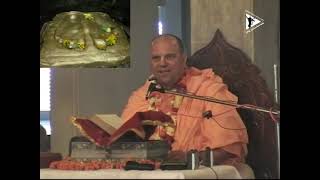
In this recorded morning class delivered by His Holiness Jayapataka Swami at the 2005 Gaura Purnima Festival in Mayapur, the speaker offers a multi‑layered devotional exposition. He begins with a scriptural analysis of Vidura’s birth, explaining that Vidura was the incarnation of Yamarāja, a mahā‑jana who temporarily left his cosmic office to preach devotion, thereby illustrating that caste or birth does not limit spiritual authority. The lecture then expands to describe the participation of various demigods (devas, angels) in Lord Caitanya’s pastimes, recounting anecdotes of Yamarāja’s ecstatic reaction to Caitanya’s mercy, and naming specific celestial personalities who incarnated in Caitanya‑līla. Throughout, Swami repeatedly cites A.C. Bhaktivedanta Swami Prabhupāda’s teachings on guru eligibility, the universality of the Bhagavad‑gītā, and the importance of kīrtana. The second half shifts to practical ISKCON concerns: the vision of Mayapur as a “transcendental United Nations,” the need for global preaching, youth training, and various organizational programs (Bhakti Riksha groups, counselor circles, Naumāt home‑centers). Swami exhorts devotees to continue the movement’s work with enthusiasm, humility, and devotion, emphasizing that service to the previous acharyas and spreading Krishna consciousness are the core of success. The lecture concludes with a call to maintain the momentum of preaching, book distribution, and community building worldwide.
Chapters
Don't forget, grab your smartphone and download the Lava Mantra app and stay in touch. Guru Maharaj's message is your advantage. The following is a morning Śrīmad-Bhāgavatam class given by His Holiness Jayapataka Swami Maharaj during the 2005 Gaura Purnima Festival. Yama officiated at the post of Yamaraja to punish those who committed sinful acts. Therefore, Vidura, born in the womb of a śūdra woman, was forbidden even to be a part of the royal heritage, along with his brothers Dh��tarā����ra and Pā��u, then how could he occupy the post of a preacher to instruct such learned kings and śākhīyas as Dh��tarā����ra and Maharāja Nisthira? The first answer is that even though it is accepted that he was a śūdra by birth, because he renounced the world for spiritual enlightenment by the authority of Rishi Maitreya and was thoroughly educated by him in transcendental knowledge. He was quite confident to occupy the post of an ��cārya, or spiritual preceptor. According to Śrī Caitanya Mahāprabhu, anyone who is conversant in the transcendental knowledge or the science of Godhead be he a brahmana or a sudra, a householder or a sannyāsi, is eligible to become a spiritual master. Even in the ordinary moral codes maintained by Chanakya Pandit, the great politician and moralist, there is no harm in taking lessons from a person who may be by birth less than a sudra. This is one part of the answer. The other is that Vidura was not actually a sudra. He was to play the part of a so-called sudra for 100 years, being cursed by Manduka Muni. He was the incarnation of Yamarāja, one of the 12 mahā-janas, on the level with such exalted personalities as Brahmā, Nārāya��a, Śiva, Kapila, Viśma, Prahlāda, etc. Being a mahā-jana, it is the duty of Yamarāja to preach the cult of devotion to the people of the world, as Nārāda, Brahmā, and other mahā-janas do. But Yamarāja is always busy in his plutonic kingdom punishing the doers of sinful acts. Yamarāja is deputed by the Lord to a particular planet some hundreds of thousands of miles away from the planet of earth to take away the corrupt souls after death and convict them in accordance with their respective sinful activities. Thus Yamarāja has very little time to take leave from his responsible office of punishing the wrongdoers. There are more wrongdoers than righteous men. Therefore, Amarāja has to do more work than the other demigods, who are also authorized agents of the Supreme Lord. But he wanted to preach the glories of the Lord, and therefore by the will of the Lord he was cursed by Manduka Muni to come into the world in the incarnation of Vidura and work very hard as a great devotee. Such a devotee is neither as soon a brahmana. He is transcendental to such divisions of mundane society. Just as the Personality of Godhead assumes His incarnation as a hog, but He is neither a hog nor a brahma. He is above all mundane creatures. The Lord and His different authorized devotees sometimes have to play the role of many lower creatures to claim the conditioned souls, but both the Lord and His pure devotees are always in the transcendental position. When Yamarāja thus incarnated himself as Vi����u, his post was officiated by Aryamā, one of the many sons of Kasyapa and Aditi. The Adityas are sons of Aditi, and there are 12 Adityas. Aryavāma is one of the 12 Adityas, and therefore it was quite possible for him to take charge of the office of Yamarāja during his 100 years' absence in the form of Vidura. The conclusion is that Vidura was never a sudra, but was greater than the purest type of rāvana. Thus ends the Bhaktivedanta Swami translation purport to the Śrīmad-Bhāgavatam, First Canto, 13th Chapter, 15th Verse, in the matter of Vīrāś��ra with home. Śrīmad-Bhāgavatam, Rāpta-ārthaki. Very inspirational verse. In K������a's pastimes there are many participants. Some of them are coming from the spiritual world, Goloka V��ndāvana, where they are eternally residing, but just to participate in the Lord's pastimes. Last time they come down to this material world. They may take birth in different families. They are obviously not conditioned souls, even though they may play the part of one, play that part as an actor. Then you also have celestial beings from higher planets within the material world. Known as devas or demigods, or in the Christian semantics they call them angels. We have different kinds of angels, material angels and spiritual angels. So we have, just like in India there's so many different names for every relation, we have different names means for every level of angel. So the demigods are angelic people. So Yamarāja is such an angel demigod who came down. It's very interesting what Prabhupāda says here. Normally, some of the devas get a chance to preach the glories of K������a. But Yamarāja, he doesn't get vacation. Prabhupāda used the word, doesn't get vacation. Everybody working. How many of you are on vacation? How many are normally working, you took leave to come here? Okay, see. So like that, Yamarāja is holding a very important post. He has to find a replacement when he goes. He has to get leave of absence. So he had to organize all those things. Sāryamā wants his replacement. So for him, this is a great opportunity. Now he doesn't have to be judging all the people for their sins. He can just preach to liberate people. And especially he's focusing on his blind brother. But everybody's hearing the preaching. He's giving regular preaching for everyone. See, Yamarāja also likes to come down and preach. This, I was thinking that, because we know that when Lord Caitanya was in the womb of His mother, many of the devas prayed that they wanted to participate. And in Vi����u's pastime, many had prayed they wanted to participate. In the Lord's past times. Actually, many celestial beings have incarnated in Lord Caitanya's past times according to Gauragana-dāsa di����hika. You have Brihaspatī, the guru of the Devas. He came as Sarvabhauma Mārāchaarya. You have Kālakānta Devī and Sukantā Devī, the two Gandharva dancers. Up here in Caitanya-līlā, they were in Vācchā-bhūmī dancing, then they came in that Caitanya pastime as Rāvananda Vāsu and Satya-rāja. It says that Dāmodara Pandit, he was combining hot-tempered Sāibhyā-gopī of Vācchā-līlā as well as the goddess Sarasvati. Says, "The gopis, a lot of the female players in Vraja-lila, they come as male players in Gaura-lila." The Dāmadāra, he was very intelligent, very, very pointed for deciding things. At the same time, he had a hot temper. Kuber, King of the Treasure of the Demigods, King of the Gūyātras. He appeared in Lord Caitanya's pastimes as Kuber Pandit, the father of Vār��advaita. Some people question, how do they figure out who's who? So here it explains that formerly Kuber was very dear to Lord Śiva. He was chanting the transcendental names dedicated to Lord Śiva. And Śiva asked him, he asked for a benediction. He said, "It's my desire to give you blessings, a gift, a boon." So Kuber said, "Okay, my Lord, please become my son." So being requested, Lord Śiva, master of the Devas, best of the Phalanthropus, told Kuber during my next birth in the material world I shall accept the position of being your son. So therefore because Lord Advaita is Mahā-Vi����u as well as Sada��iva combined, the Kuber became the father of Advaita Acharya. So some things are written, different Different Puranas, Caitanya Bhāgavata, so those were all collected. Different devotees studied the characters of the people and could analyze who they were like. Somehow they figured it out. Or if there was two opinions, they put both the opinions. Narayana Muni was Śiva's and Rādhārā�����ana was Parvata Muni. Kācī-nāla, Lokanāla, Śrīkānta-nāla, and Rādhārā�����ana were the four Kumāras. The chariot devas who always remain young. Chandrashekhara Chariot was the incarnation of Chandra Devi, the Moon Goddess. Like there's so many. So actually Lord Caitanya's womb was filled with celestial beings. And I remember once Srila Prabhupada said that in his movement, in his society, so many persons have come. Even from the celestial planets. I don't expect any of you to own up to which planet you really come from. But I'm sure that many of you hearing some of the pastimes and some of the revelations that are going on about Śrīla Prabhupāda from these different devotees, you can understand that they're definitely not from this world. Their realizations and their experiences show that they are out of this world. Shrī Rūpa Ki, Rūpa's parśad Ki. So we have, like, it goes on and on. There's so many different celestial beings who came down for Chaitanya Mahāprabhu pastime. Of course, top of the harī-rāja is Lord Rāma. But one person was conspicuous. By his absence, and that was Yamarāja. Because he only got last yuga, he got vacation. This yuga he didn't get vacation. He had to stay on the work. But it says sometimes he would sneak over and watch Lord Caitanya. Apparently he has 14 assistants and then they can paint for a little, but he can't, he has to stay on top of the whole thing. So when Jagāi Mādhaya Jagai-Mādhāi. How many have saw the drama of Jagai-Mādhāi? Probably heard about that story a few times. When Jagai-Mādhāi were delivered, so Kamarāja came to watch it. He was watching the Jagai-Mādhāi delivering, and then he went back to Yamadū and he asked Chitrāgupta, "You know, I just saw these two brahmā-rāk��asas, these two brahmā-nā���imas delivered by Lord Gauranga." Jagadguru Mahārāja, "How much karma do they have?" And Chitrāgupta, who was head accountant for Yamarāja, he said, "If we put 100,000 very expert writers, kāyāsas, writing for 1 year, they couldn't finish." He said, "If we pile up the accounts of How much sin they did, it will become a mountain. But somehow Lord Caitanya's mercy flooded even the mountain of Jagai Swami's sins. So when Yamarāja heard that, he became so ecstatic Then how merciful is Lord Caitanya Swami, because all the sin was wiped out. He said, "Glory is to Gauranga and glory is to Jayapataka Swami." They surrendered. And he got so overwhelmed in ecstasy that he fell unconscious. So all the assistants, the Chitra Gūrtas and all the other staff over there, the other gūrtas, they were trying to fan Trying to wake up Yamarāja. Somehow cases were jamming up. So other Devas started to realize something was going wrong in Yama Loka. The different Devas appeared there. And so Lord Śiva came and he asked, "What happened? What's wrong with Yamarāja?" They told him what happened. She was in ecstasy. She went over and started chanting in Yamarāja's ear. Then as soon as he heard the Holy Name, the Amarāja got up and started to dance in ecstasy. Then the Devas said, "How merciful is Lord Gaurāga! He wipes away all the sins of the sinful people." And then everyone started to do a big kīrtana there. Whoever the Devas that weren't here with Lord Caitanya, up there they were having a big kīrtana. Hare K������a, Hare K������a. So Indra was dancing, he got so ecstatic that where his thunderbolt went, where did all his astra and weapons go? They flew and he is rolling on the ground, "Bora, bora!" So Ganesh was dancing, Kartikeya, all of them, Shiva was dancing, "Hagita!" I don't know how that is, but anyway, all seen in the Bhāgavata. So they're all there having a big kīrtan. Or maybe this is another kīrtan. But anyway, this huge kīrtan. And it describes so many devas when they're all dancing and having this kīrtan. It's about remembering that how all these devas are devotees of the Lord and they were all appreciating Lord Caitanya. We get also a very special blessing. Whenever I remember this pastime, I just think Prabhupāda himself was like Rath Yatra Festival, where they take right Jagannātha, big deer tribe, right down the main streets of so many major cities of the world, London, New York, Paris, Bangladesh, 100 cities around the world of Ekāntara Mahābhāgavata Maha-bhāgavata. And, uh, I'm just thinking What this is doing to the karma of so many people. We're putting them, or they're probably running short of white-out in Yama Loka for one rādhī-yātra. So many people are watching, "Oh, beautiful! Oh, Hare K������a!" Sometimes a lady walked up and said, "This is so wonderful what you're doing." It was in Toronto, rādhī-yātra, another major city of the world. Toronto, Montreal, Vancouver, Sydney, Byron Bay, anyway, around the world, so many of us, Durban and Johannesburg, so many Pratyāhātras, Nairobi, all over the world, even Lima, Peru, Buenos Aires, Rio, São Paulo. This is having revolution on the karma of the the people. And I would say, like Prabhupāda, he was so dynamic in his preaching, but he had very high expectations for all of us. In Prabhupāda's arrival In his address to all the assembled devotees, he mentioned it was Bhaktivedānta Mahāprabhu's aspiration that the Europeans, Americans, and Indians all together dance jubilantly and chant, "Gaura Hari! Gaura Hari! Gaura Hari! Gaura Hari!" So this temple, Mayapur Chandrodaya Temple, is meant for a transcendental United Nations. What the United Nations has failed to achieve, that will be achieved here by the process recommended by Śrī Caitanya Mahāprabhu. So you have to come from all parts of the world and are living together in this temple. So you have come from all parts of the world, you are living together in this temple. So train these small boys. I'm very glad especially to see the small children from all other countries. Indians, Bengalis all together forgetting their bodily passions, consciousness. That is the greatest achievement in this movement, that everyone forgets the bodily conception of life. Nobody thinks themselves here as European, American, Indian, Hindu, Muslim, Christian. They forget all these designations and simply they are ecstatic and chanting the Hare Krishna mantra. So kindly, what you have begun, do not Make it. Continue it very jubilantly. And Caitanya Mahāprabhu, the Master of Mayāpūr, He will be very much pleased upon you, and ultimately you will go back to home, back to Godhead. Thank you very much. Jiva jiva! So all of you, by coming here to Mayāpūr, you are fulfilling Śrīla Prabhupāda's desires. You're also pleasing the previous ��cāryas. That was Prabhupāda's advice to us, that the secret of success is to please the previous ��cāryas. So our previous ��cāryas wanted us to develop Māyāpur, to do Māyāpur Mahāprabhu Dīvārī Krama, to publish books, distribute books, to preach Dharma, and like this that everybody in the world can also come and serve Manavpurda and get the blessings of Chaitanya Mahāprabhu. These kind of desires were very dear to our previous ��cāryas. Today is the disappearance day of Jagannātha Swāmiji. He was a great Mahāmāgavān. He was known in V��ndāvana as a Siddha, as a liberated soul, perfected soul. Sometimes he would take a vow and for 3 days and nights without stopping he would just chant his rounds and chant a huge number of rounds. At the end of 3 days and nights of non-stopping He would start chanting loudly in ecstasy, then he would break his fast with a little yogurt and flatbread. Somehow Prabhupāda picked me out of that society lower than lechon and engaged me in Krishna's servants. So many people Prabhupāda picked up. And then Prabhupāda just says here, it says, it doesn't matter who you are, if you are a brahmin or a sannyāsi or whether you are a śūdra, whatever it may be, in every As Prabhupāda, he said that whether you're bihāstas or whatever you may be, everybody should take out— here's the microphone. I want to get some quotes from Prabhupāda speaking in Vaiyāpur. This is during Gaura-Purīma Festival, March 16th, 1976. Jālī-dako jālīko ho kīś��o buddhe. CC Madhya 7.5.128. Prabhupāda, anywhere, either you are in this district or that district, it doesn't matter. Either you are at home or outside home, it doesn't matter. You become a guru. Everyone, "How shall I become guru? I have no qualification." Chaitanya Mahāprabhu said, You don't require any qualification. You simply require one qualification, that you repeat the instructions of Bhāgavad-gītā. That's all. Jānīnā ko tali ko ho kīś��a upo deś. Ho ho re kāro kīś��a upo deś. That's all. You become a guru. Don't adulterate K������a upo deś like a rascal or nonsense. Present it as it is, Bhāgavad-gītā. Then you become a guru. You can become a guru in your family, you can guru your society, your nation, wherever you are. And if it is possible, you go outside and preach this mission of Bhāgavad-gītā. Therefore, our movement's name is K������a consciousness. Wherever K������a says, whatever, excuse me, whatever K������a says, you accept and preach. You become guru. Śrī Prabhupāda ji. Jai! So, we have many preachers here, many prabhupāda direct disciples, many prabhupāda Swami Jayapataka Swami, all of our siksā disciples, grand disciples, especially for our senior devotees. Sometimes we find that we get so many new devotees who are taking up so much responsibility in preaching, and we need to encourage all our devotees, even many people may be in their temples, for them they get, they take grihastha-āśrama, they go into their home province, it doesn't matter. Be guru in your home. We've devised, as the congregational minister, we are always trying to create better systems of congregational preaching, promote. We have our abhārta, the generic kind of all kinds of house programs, regular programs. The Bhakti Vidyaontakura in Mārīcana�� has started. You don't know all the different kinds of meetings, but at one place Lord Caitanya said, "5, 10 of you get together, clap your hands, chant in your doorsteps." So that inspired us for the Bhakti Riksha program, small groups where one doesn't have to be very qualified. They can be a facilitator and facilitate the meetings. But now we have from the Choppādhī, they have started the counselor groups where people are quite senior devotees who are counselors for the younger devotees. Devotees. So different kinds of programs. But almost anyone, like Churiprabhu from Laguna Beach, he's got some bhakti-viksha groups, different problems. One lady disciple's here, she told me she has a namahātmāra in her home. And everybody, even if you're not living in a temple anymore, you can have some kind of a namahātmāra program or house program from your home. Be a guru for at least please the people that you're in association with. I think this will double our movement every year very quickly and keep everybody in the fire. One doesn't have— you see here in Mayapur, we have so many brahmacharis, but a certain percentage of them get married. It's natural, right? Not so many as maybe other places, but a certain percentage get married. When they go home, we insist they have to, if they go home, if they don't stay serving here, It says they have to be part of the Naumāt. So they go home and they spread even 25 Naumāt groups in a few years. So somehow we can have a system, some of our devotees were in a temple, now maybe they are in the home unit, that they should also be preaching. Everybody should keep on preaching. This is a preaching movement. This is all we are meant for. Whether we are in the house or whether we are in the ashram, preach, preach, preach. Whether distributing books or following up after the book distribution and cultivating the people who got the books, training them. Prabhupada said, "We distribute so many books, we need to train the people so they become devotees." So all of you senior devotees that are here, you all have so much knowledge. We are all listening to the nectar. You have got it. Give it. Just like Lord Caitanya Nityananda, He gave the mercy, don't keep it to yourself. We're so grateful You're here giving it to us. And we want You to keep on giving it to whoever You meet. Jādi-dhāko, jādi-gol ki śrūpa deś. Everyone You meet, just keep on telling them how wonderful Prabhupāda is. How wonderful Caitanya Mahāprabhu's mercy is. That's the only qualification. Even if we are lower than a sūdra or lower than a vācya or whatever, but if we can repeat whatever we heard from Prabhupāda and K������a, that is our qualification, our only qualification. We don't need any other qualification. And Prabhupāda, I mean, he was— I was reading some— he was preaching so heavy, man. It's amazing some of the things he says. The visible effect of this chanting is that the members of the Hare K������a movement, regardless of regardless of their backgrounds, all give up the four principles of sinful life and come to an elevated standard of devotion. Although past posing as great scholars, ascetics, householders, and swamis, the so-called followers of the Hindu religion are all useless, dried-up branches of the Vedic religion. They are important. They cannot do anything to spread the Vedic Vedic culture for the benefit of human society. The essence of the Vedic culture is the message of Śrī Caitanya Mahāprabhu. Lord Caitanya instructed, "Jāre dāko, tāre goho, kiśto upade, ��mara��� gī-guru-vaya-tāmoh-ei te��." So Prabhupāda, he doesn't want us to become dried-up twigs either. We have to keep on telling whatever. Even I am not qualified, I am not I am not able, but I have to tell you, I learned something from the greatest spiritual master that was here in the modern era. His Divine Grace A.C. Bhaktivedanta Swami Prabhupada. And I want to tell you that even if I am not able to follow fully, whatever I am able to follow, to whatever extent I have understood, it is the most amazing thing. It is the most wonderful message. Prabhupāda also said, Śrī Caitanya Mahāprabhu, one should simply instruct everyone he meets regarding the principles of K������a-bhāgavata as expressed in Bhāgavad-gītā As It Is and Śrīmad-Bhāgavatam. One who has no interest in K������a-bhāgavata or the movement of Śrī Caitanya Mahāprabhu is like dry useless wood with no living force, the iskāt branch being directly watered by Śrī Caitanya Mahāprabhu. Mahāprabhu is becoming undoubtedly successful, whereas the disconnected branches of the so-called Hindu religion that are envious of ISKCON are drying out and dying. ��di-līlā 12.74. We can revitalize the Hindu religion by just getting all the Hindus to also work glorify K������a. That's the secret. Anybody, whatever religion they're from, whatever, if they glorify the Supreme Personality of Godhead, if they do K������a-kīrtana, then they will get the mercy. I wanted to say how my very dear godbrother, Tamāpli����hakau��vāmī, he was always glorifying K������a in so many different ways, whether it was seeing, hearing, whether it was in Mayapur or whether it was in Rādhā-Dāmodara Party or whether it was in China or Philippines or Dallas or wherever, He was always thinking of ways. Sometimes, you know, He had different ideas. Some worked out really good, some didn't, but that's what happens in preaching. You try different things. But He was always innovating, always thinking of new ways how to spread K������a consciousness. He was the first one to come up with the idea, I think. I may be wrong, who was first or second, but anyway, he was one of the first, if not the first, to come up with the idea of creating a temple community. Building, buying the whole city block around the Dallas Temple and putting riāstas there. Now we have a few communities where devotees having houses around the temple in Alāshu'ā and in Nū��alabha��. I have a friend again in He was very old, maybe there are two other wells. It's like we heard him start an Agathi and carry it different places and move over that. But he had that vision first, I think, at least one of the first anyway, to put it into practice. See, he was such a— we really need also all his followers and all those who are his brothers and sisters and followers. We should all be inspired by his determination to preach. I think he is for us, for me, Mr. President, a great loss. And for all of us that we were expecting him to do a lot more preaching now that he had got his PhD. But at least to the very— the last thing he did was really to get us all to do a lot of kirtans. There's an interesting pastime they tell him in Mūna, where his ashram was. And there was a yogi, some tantric yogi who had learned how to fly on the back of a branch. This would cut down a lot the cost of devotees coming here if they do this. They couldn't bring much luggage with them though. But, anyway, I'm not promoting that we have to learn that, but if we see anybody flying in on a branch, we'll know. So the villagers all came over to tell Rasīkhananda, "Gurudeva, Gurudeva, you should see! The sanyāsī in the village is flying! He's on a branch, he's flying!" That time was early in the morning and Rasīkhananda was brushing his teeth with a neem twig. You know how, I don't know if you have a problem, he still loves neem twigs to brush his teeth. He gets a neem twig about this big, you chew and chew on the end, the juice is very bitter very good for your whole training and everything, the digestion and the motions and whatnot. I don't want to be too graphic here, but anyway. Then you brush your teeth with that brush at the end of the twig. He said, "It's not important. This thing's not important." Another group came, "Guru Dev Guru ji, see this flying." He's flying all around the village on a branch with that spoon. He said, "It's not important." Then a third group came, you know, this time, "Guru Dev Guru ji." Flying! Flying! I never saw a man fly, he's flying! So then Rā��īkā said, "I told you it's not important. If it was important, I would have told you about it." He took his twig out from his mouth, put it under his leg, and he started flying around the ��śrama. "I told you it wasn't important! It's not important! K������a-bhakti is important!" Psssh! He flew back down. Thank you for watching our videos. Be sure to subscribe to our channel. We publish new videos every day. And don't forget to like and share our channel.
More from Jayapataka

20260205 Mayapur Academy Zoom Class at Śrī Māyāpur, India #JayapatakaSwamiArchives


Jayananda Prabhu is a Super Empowered Devotee as is Jayapataka Swami. Offering by Ramesvara Pr.

Jayapataka Swami Empowerment Is Beyond Human Comprehension. Offering by Ramesvara Pr ACBSP

Prabhupada Planted The Bhakti Lata Bhija in the West. JPS Vyasa Puja Offering by Ramesvara Pr ACBSP


Prabhupada Sent His Personal ISKCON Ambassador to India. JPS Vyasa Puja Offering by Ramesvara Prabhu


It Has Been My Great Honor & Privilage to Serve Jayapataka Swami by Ramesvara Prabhu. ACBSP

Prabhupada Planted Spiritual Energy into Jayapataka Swami. Vyasa Puja Offering by RamesvaraPr ACBSP

Вот русский перевод текста песни «Любовная песня матери Лорри своему сыну Джею»