20050520 || Śrīmad Bhāgavatam Class & Ratha-yātrā || Atlanta, US #JayapatakaSwamiArchives
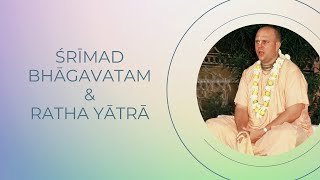
Transcribed lecture (recorded class) by Jaya Pataka Swami focusing on the primacy of bhakti (devotional service) over ritual, illustrated by scriptural episodes (King Nabhī/King Navi, Advaita Acarya) and many practical anecdotes. The speaker discusses festival organization (Panihati, Shantipur, Ratha-yātrā), reception/prasāda logistics and fundraising (auctions), and strategies for local adaptation and outreach across regions (USA, Russia, Middle East, Malaysia, South Africa, Sri Lanka).
Personality. Personality by performance of sacrifice encumbered by master Familiar. We can see. We can see. We have engaged in your worship with many things and have offered sacrifices unto you. But we think that there is no need for so many arrangements to please your lordship. Translation repetition. We have engaged in your worship with many things and have offered sacrifices unto you. We think that there is no need for so many arrangements. We think that there is no need for so many arrangements to please your lordship. Performed by Shrilla. He will accept them. Bhakti devotional service is the main way to satisfy the supreme personality of God. It is not a question of arranging huge sacrifices. The priests were regretful thinking that they were not on the path of devotional service and that their sacrifice was not pleasing to the Lord. Your devotees. You're certainly ready satisfied when your devotees offer your prayers with faltering voices and in ecstasy when your Tulsi leaves water. So this makes you satisfied. So this is Lord Vishnu appearing in the sacrificial arena of King Navi. It King Navi was a great devotee of the Lord for the king. He needed to have a prince to send him for keeping on the line. So he did a ceremony, a ritual sacrifice. It says that actually the real important thing was that he was a pure devotee. That's why the prayers and worship and everything offered with great faith and devotion caused the Lord to come. Now the priests are even embarrassed because they feel that when we did all the rituals. There's seven different types of aspects for a ritual. Sacrificing valuable things, some edibles, acting in terms of place, acting in terms of time. Offering hymns, going through the priests, offering gifts to the priests, observing regular principles. But the thing that really, I mean that quite rare that Krishna himself comes. But he actually came and personally he blessed everybody and says that that was because Navi was such a great devotee. So see, this verse is like the priests, the praying. They're feeling overwhelmed that we do all these things to worship you. But we feel that what's really needed is devotion. Which is the one thing that we really don't feel advanced in that devotion. It was of course, if somebody has the capacity and we have devotion, obviously they're going to make an elaborate arrangement. When Lord Chaitanya went to see Advaita Acharya's arrangements for worshipping his guru at Shantipur, we observe the Shantisu festival there in Chaitanya Bhagavad, it says that he went around and saw the elaborate arrangements that Advaita Charya had Made a super festival for the disappearance day of Madhavindapuri, his virtual master. And that he got everybody engaged in different services. Some people were doing kirtan, some people were reading Bhagavatam. Some people were starting with receiving the guests, giving them garland sandalwood. Last year at Mayanpur, the Chaupatti devotees, in other words, devotees came and we tried to give up a special reception to all the people coming for the festival. And it's really people like that. It adds a whole different flavor. So this is a part of organizing a nice festival. We have nice festivals here in Atlanta. Panihati festival. I don't know how much we do reception people. That may be an area that, I mean, we give prashada. We're pretty happy. But I mean, have some programs more or less keep their schedule. Advaita Sharia here, the super reception. Some people, not only did they give them garments and sandalwood, but they bathed their feet. I don't know in America how they like that. I want to bathe your feet. They think my feet are dirty. Because in those days people would walk barefoot or with some kind of wooden shoes or something. And there was dirt roads, so your feet would be dusty. So you go and sit inside the assembly to listen to Bhagavatam class or something and you'd have your dusty feet. So tradition was to bathe the feet. I think even Jesus in the Bible had feet bathing, right? I remember baking something. It's been a long time since I read the Bible, but I seem to remember that Jesus bathed the feet of his apostles, things like that. So there was a custom of bathing the feet in olden times. Now if we bathe somebody's feet and it becomes a big thing. Right? But I mean, it's in the Bible that foot bathing was going on. So we're just keeping a traditional item. I think the Pope bathes kisses and maids of even cat cardinals or something once a year or something. They do. They know that before they do that because I don't know so much about it. But it seems like Jesus was showing his extreme humility. And he did some sampling like that. Although normally listening guest, the guru. Well, we do sometimes her rooms in some kind of place. But it was there everybody was having their feet paint. Then there was. The women were engaged in decorations and making preserve artistic. And they also were in the kitchen and all different kinds of cooking arrangements. Then he had so many ingredients for cooking that they would have measured these ingredients not in like kilos, like we have for the Pani nati festival cake, two little baskets of raspberries and two boxes of mangoes or something. You know, for the Chiradoy. They got menu every year. Mama, when I was around, purchased all the things. But different people donated here. It was like measured in houses. They made little grass huts and filled them up so there would be, you know, so many huts filled with yogurt. So many huts filled with, you know, 12 huts filled with beef plates to keep all the ingredients. And the whole village came up just with all huts and all the fruits and vegetables. And then the people were cutting all those things. So when Lord Chaitani came and looked around, he was ignoring all the points one after another. He said, this is first of all, no human being can do all this. This is like this is beyond human capacity to put together such a festival. And then he said, it must be that each Shiva, he's a transcendental Lord. He's not a human being. Because of course Advaita is a combined form of Mahavishna and Sadha Shiva. So that time Chaitanya Bhagavad is Sada Shiva form and Gustavaishnavana Jata devotee they had. The man saw everything. Oh so many things going on. And then he was cave time. The Lord Chitan joined the miguet and he brought him over after the offer of the bowl of pennants. Siddhaan take the son. He got so ecstatic. He just said, anybody who comes on this Titi Titi means, you know, the hunter anniversary of this TT takes prasadam here. You will get your devotion for moving there. That's how we go every year. We do our Panihati or not Pranihati but our Shantipur festival. Nar Titi Govinda Vas to get love for KA by eating this also. When I first came here 20 years ago in Vermils more than 20 years, I came in 1980. They told me this is Nubani Hati Dam. Prabhupada gave the name Nubani Hati Dam. That's far out. So do you have an Achirudhray festival here? And they said, Chirad, what's that? We heard about reading the scripture. So then they didn't know I know exactly how to do it or anything. So since we've been doing it already in Mayapur for the Panihati, the real Panihati. So we had some experience of making all Shabbos. So then we started to put together our little festival. And I said, well, we're here together. We should remember Prabhupada's pastimes here because he visited this place and he had for a number of days his pictures there in the back. You can see he had past times here where he was when he first came. I mean, nowadays it's hard to get all the old veterans to come back and share their somewhere. If someone goes through all my old Tate ministry, then you could get those. Because we recorded those days, the different pastimes. We try to get them all together, put all the pastimes together over the years. And probably one day on Sunday, while I'm cooking that you're doing. We used to have a loudspeaker that worked in the kitchen. Khans and I was. We would hear also in there, the pastimes. And we would. Leela Smara Prabhupada's pastimes here. Especially here. And I remember they would tell that all people were chanting kirtan when Prabhupada was here. And you see this one picture somewhere. I don't know if it's here, but there's one picture where you see one person. You see literally his belly button above somebody else's head. It's pretty hard to jump that high because you gotta be Olympic. You gotta jump, right? So jump that high up. But that was the kind people were like floating. It was like so much energy was there. It was like this picture. We see someone and it's like that people said they were just like exploding and jumping high in the air. And. And then Prabhupada was chanting that swam parama karuna pavudui jana nitaigora Chandra crying. Taught all devotees how to chant it. So it was so many things were happening. And then people were the normal kind of pastime where somebody goes, why is there always smell fresh pain the hour before you arrive? Just finish painting his room or something. But I can't remember all the different pastimes, but different devotees that did their perception realization. And Prabhupada said, this is the best temple, of course. What happened that time? I don't know. When our party was here, there was a lot of everybody from the whole east coast and came here. And then Prabhupada, just after coming from. I think it was Caracas in Mexico City, came here. Miami. Miami. But it was after the Latin America man in here. So that time they all came here and converged and they had like a weekend festivities would go. But he started the Bhakti Vedanta Institute. You see a picture there, young, he's very young when he was still just in college. So a lot of different things are happening here. Of course, at that time I was in India, but I was happy to hear the different devotees sharing. So how to create a festivity here and how to create some kind of a culture here. She thought Panihati. Then we'll definitely need to have a chira doy, flat rice and yogurt. Because here it's America, everything's more opulent. And here you get fruits from all over the world. And like in India, you get mangoes and leeches and few fruits. Maybe jackfruit, bananas, but even that's just according to what's in season. But here you get the mangoes from Mexico, you get the peaches from the local. This is Peachland. Then you get, you know, dry fruits from all kinds of dry fruits and you get cherries, all kinds of different fruits coming to America locally grow as well as imported. So we started making different flavors with different kinds of fruits. Like we would do in India. We'd make malchevo with yogurt with condensed milk. But there wasn't so many varieties of fruits. But here you get big variety. A few years ago we started a salad, salty chirudoi, which is quite popular. When the mother came in and she said, why are you giving all this chirudoiye Frida? You should auction it. So we started auctioning and one year Abrish Babu was here and he auctioned it. The bid went 400, 500, 600 went up, went over a thousand dollars for one pot of Chiradoy. Now it's regularly that it grows over a thousand since he broke the dairy, the thousand there, you know, if someone. Someone pledges in advance, but if they whatever is not pledged, there's a few pots that we auction off. It's quite common. Somewhere during the auction, someone, two people want the same pot so bad that the auction goes up to over 1200. So that helps to finance the. But like that, this Panihati Prabhupada said is one of the eternal Dhs. The Lord Chitan is eternally residing in Panihati. So just like you have Vrindavan and you have Mayav and Jagannath, Puri and Dwarka, but then also Panihati is actually Terminal Dhamma. So I don't know how I hope that in the generations and the yugas that come, the devotees will somehow keep up with Banati's spirit. Prabhupada, in his original charter for iskcon, he said that we should make One of our purposes in ISKCON is to make places of the transcendental pastimes of the Lord. I don't remember that Kim, or paraphrase, I can't remember the exact wording, but something dedicated to the Tantal pastimes of the Lord. So the heroic Prabhupada gives a name to the place that gives us an opportunity to dedicate some past times. Panihati was, of course, famous for a number of things. The Chirudrai festival is the focal point. But also it was the house of Raghava, Pandya and Ramayanti, who are super cooks. So it's important, I think, here that we have good feasts. He loved the Parmihatti tradition. I don't think anybody minds that. But this requires some cooking dedication. But that's one of the. About Pani Hadi, what did go there. And he would have these feasts, not only the paniha, not only the Chirudoi feast, but many times he would go. Other thing that happened was that was this place where Vichinanda first started Namha preaching. Later he made his headquarters in Navajpasurabhikunshava. When he came back from Jagannathuri, he started his Bengal teaching initiative at Paneehatu. So it would be those who are hoping that we could see the congregation expand more and more here. It's always been active, but America is a little bit slower congregationally compared to some of the other places. I don't know what. What's the secret to do that? What's the secret to get it going? But it's going. I mean, it's going. It's not. It's not going. It's going different places and. But like I was just in Moscow and they're trying to build up their congregation to have, you know, over 108 groups. And last time I was there a few months ago, they had 20 groups, and now they're up to 30. But there they feel it. Moscow feels it's a bit slow for. But so they're trained. But in America, you don't have cities that have 20, 30 groups. They're not focused like that very much. You have some cities with one group, like there was no temple in this room, like the Nauh type set up. You have big congregations that come to the temples by the bhakti and Shayla comes to groups or hyena naomats is something that could be developed. I know that Khalid Nashnirdas was able to set up a vai rickshaw group in The Gulfport area of all middle class American people. They still need. They're still Krishna. So if it shows us it can be done. Just got to penetrate the initial ice. Yeah. At the meeting in denominator this year. And we had a breakup in the different committees to address different initiatives. So I was on the committee for nonprofit with the one plus family and several other buildings. So we made a plan in the next couple of years we'll double all the non altitudes, all the population groups, all the focusing on trying to do that. Then we can do is give you the score sheet so you can go to get it immediately now get a report and send it in for annual rewards ceremony and then. But that will give you a benchmark. You know what you have what's happening now? This is our yajna. I was just thinking because we're talking about yajnas here. And then Nabi Maharaj had a big yagya. This yajya was already karma khanda munyagya to have a child because he was a king and child. And the priests were feeling are praying here. They're feeling embarrassed that they are not really having so much devotion. They just did it all ritualistically. But the Lord came and the previous verse says because he had pure devotion. So Krishna appeared which means gift times, festivals, namahatas. So many things that was said this morning. When you have your core group who does all the deity worship, it's a lot of energy goes into the daily puja. I think the congregation doesn't appreciate how much effort goes into maintaining a daily program for the deities and that somehow everybody can bite into that, participate in that yajna. This our panchatric sign here on the temple. We serve the Lord and the Lord's here. But the idea that pleases Gornyata here are presiding deities, which is very rare. There's the panihati gorditaya turning residence. And we put gornyai in the center where they worship. They're being worshipped as before personality of godhood and expansion devotees. I was thinking that so much could be done. It was just in the Middle east and there they have so many restrictions on preaching. There's so many difficulties because in the Middle east we have a situation where we're mainly preaching to the Indian and the southern Asian expatriates that work there. Because of the linguistic and legal difficulties in preaching to the locals who are like it's highly illegal to preach, to proselytize Chile anybody really do it to them. Most of them you're in big trouble if you lose the whistle. So all the time Christians get deported. It's just a non starter. So we will call some. There's so many foreigners that work there. So they're trying to figure. They figure out how can we expand. And the Pakti rickshaws expand on their own organically. But then you have also problems that people lose their jobs. There's a certain kind of a situation. They try to give jobs to the local Arabs and so then they replaced the expense when the local. They lose their job. So you get somebody trained up for years together and then they get. They lose their job and they go back to some other country. So you lose 30% a year. Even 20, 30 is like a big number. A big percent could shift or they have at least that apprehension. And I could lose my job. So it doesn't want your road stable. But in spite of all that, they're growing. One area has 126 groups to 3,000 devotees and they want to double it this year. But they grow not only vertically, but they also grow horizontally. They have people go out and they found that there's a lot of labor camps. And these labor camps are poor people, minimum wage alone. But somehow I met one place I was in the Middle east and one of the Pakistani managers, he allowed us to have one room where they could have kirtans and have their weekly prayer meetings and they gave. So they find that amongst poor people tend to be a little more religious. So they have a lot of poor people now. I mean they're relatively poor still. They're in the Middle East. But they may get $200 a month, which for India is a lot. I mean for them, for India it's not too bad for poor, poor people. But it's for that from the Middle east, this hand to mouth. But they get their place to stay, they get their food and then they. What they get from the salary is proper. They can send home and maintain their family. So that way. But they got all the time in the world. They have no money to blow. Rich people can go into hotels and then spend money with these people. So they found that they open up a huge number of people chanting amongst the relatively economically struggling. Then they found that by opening up different linguistic groups, you have people from different parts of the world and if you have bhakti bhiksha meetings in their own language, then they like to participate in that. Even if they know English. Some of them like English. They just call it English ones. But some people like to talk in their Mother tongue. That's fun. So they go to those ones and that way you can invite. You get more people, new people come just because oh there's a program in my language. So then they go. So they must have about eight, nine different year classes. Like almost like the Maya professor. You have eight, nine different languages you can translate. Whenever I go for a joint program. So somehow they're skipping, they're using what's the areas that we couldn't expand here. Like Atlanta is a very unique place. It's a cosmopolitan place, pretty mellow place. You have all kinds of ethnic groups. You know, a large Latin community. You have a large Indian community. You have a large Afro American community which is very, very powerful community. And politically political majority is in terms of. The mayors are usually correct because then you have your. The Russian though, the big Russian community and the people. How does it feel? Yeah, Polish, Polish, Polish. Then you have your normal. Whatever. Whatever normal Americans mean whatever you have here or whatever. And you're only halfway. So having some programs here. We have our devotees. We have so many devotees here from Mayanpur, the community. I define a losing the trouble up losing their jobs at the airport. Anyway, there seems like lots of opportunities to go out. That's one way is to set programs here for the different groups or just different festivals. Somehow the. So like they just invited me to come over to Russia for. Because they have a crisis there that they lost their temple. Temple was destroyed. Right. But they also got a new land from the government. Empty land doesn't help too much in 15 minus 15 degrees weather. For why don't you translate for Brenda? She don't understand half of what I'm saying. So we're talking about ethnic Russian preaching. So they, they. They have a periodic Greek festival where they rent to a hall and they invite everybody and so to try to keep everybody enthused because they don't have a regular weekly Sunday feast program in the same way that they had before. So I came out for the three day festival. Two days. I was there for two days. Over a thousand people came. They had to rent the hall paying a thousand dollars. But they got the money back by people paying $2. They'll transfer. So just as like with all the paraphernalia for Yagya, it says the time, place, the circumstance was a sudden different paraphernalia sacrificing valuable things and edibles. We have the prasadam acting in terms of place. What's our place? What's the situation here? What's the opportunities that exist in Terms of time according to the particular time yarn. 21st century Internet. Different things. That is like one disciple of mine was doing a Spanish Bakti Shastri course from Argentina. He says Spanish people all over the world taking this practitioner course and offering hymns. We have our hymns. Hare Krishna. Hare Krishna Krishna, Hare Kanrama. Going through the priests. Well, we do different things. To the leading devotees. Dakshina to the priests. Supporting the temple. That's part of the enemy. Supporting the priests in the temple worship observing regulative principles. In our Sankirtan Yagya we have also the same principles. But here it's more important is also the bhakti. But how Watchitania of Arkansas. When he first went back to banking, I just got everybody to chant. Remember I saw Induda at the. At the Woodstock festivals. All these young people go for rock and roll and everything. And he's got one booth where it all sells Indian stuff. In one corner they got drums. So there's always like 10 bues to sit down there with these bamboos and different shaped drums. Start all the big drums. People like drum beats. Just having. Just having a hari mountain with lots of drums. People like it introduced different kinds of drums. What's his name? African drums, Caribbean. They call them Congos. So what is the place and what is the things that are going to be attractive to people? Like I was just at the festival in Byron Bay. As I talked about last night, how they had this Rathyatran New Year's Eve. Yes. Taking the Chagannatharat. Everybody's in the street trying to enjoy some crazy way. Here comes the rath yacht. Come on. Pull the rot in here. Yeah. They start pulling the rats. Yeah. And they gotta. The swamis have to have like a circle around them. Because there was one bhakti Madhav. What's his name? Visramba Madhav. Bhakti Shomra Madhav. Bhakti Vishondramada. He was there in the Cape Town and then he saw that some young reveler tied him up and hugged me. Because that's the word. I'm really hugging my. But I have. I have my. You know. Cordon had my founding stance. When he saw that, he got freaked out. Then he ran up and jumped up on top of the rock. Just stand up there. It's too heavy. There's an old lady that comes every year to the and stands behind the rat. When people try to climb up the rat, she has a broom. She has like a cane or something and taps it. Get out. Behave. Do Not. I didn't. I didn't know cuz I'm from France. I met her at the end. I said oh, I come here every year, it's my 12th year or something. I keep them from climbing up to that. But you get the people and the people love to see singing, dance. One lady came up to Ramaya Swami and told him thank you so much for being here because you come here every year. And I heard some people saying that this is really the spirit of the whole New Year's festival. They were going to not go this year because big expense and some of the leaders were doing a rock and roll thing. Festivals and catering instead. And when the city council heard they wrote a personal letter requesting them to please come and do it on the edge. Normally we had to go and ask. They're asking us 50,000 people at least on the street. So it's different environments but it's trucking. That school got a big strobe light on the top turns yellow and different colored lights. It's kind of not the normal. I was going to say kind of disco rot. But that's the time of the place. You know, living is very respectful and pick people. And he got these muscle men pulling the rocks. You guys go around the world and saw the different kind of environments in different places. Of course the Malaysian mainly were preaching to the Indian community and they have in the Kuala lumpur they have 57 Narmatas last year and this year they have 90. So they almost doubled it. But then in Penang they started something new. They started preaching to the Chinese people which you know, I've been telling them to do but they haven't been doing it. So they've been really. They almost had one Chinese group in Kuala Lumpur but they never expanded. But now in Penang they're going to expand. They have four Chinese groups. Last year was one two, now up to four. And this year the Suva Tarat was all Chinese people pulling the Suva da rats. So it's really nice to see Chinese devotees. Feels like that time and place they have a goddess of mercy Subhadra. Looks like the Goddess of mercy Subhadra is the most merciful. So by the way we got. It was amazing the tsunami came which was such a disastrous thing. Our temple is not so far from the ocean side in Penang. But the water came within 100 meters of our temple and stopped and turned back one show and then our temple in Chennai is 500 meters from the beach. It's just, just, you know, Chennai Ichambakam Ichambakam but the golden beach. So I have the golden beach. It's on the other side of the road. But also I didn't. Didn't get hit by the woman it didn't reach. So we were. Krishna saved them, even though they were very close to the wire. So now they're distributing. They're distributing prasadam and they still are in Sri Lanka. But the people have actually begun to themselves more than together the limit Al master and the stimuli every month or two until they get their new houses and that. But then they found that the fishermen, not all the fishermen liked it. Some places they like vegetarian food. Some people they want. So initially, when they're really hungry, they don't like to. So they hadn't focused. But they found that people were being traumatized and that they appreciated. I mean, some ladies told me in Chennai that they couldn't sleep by the beach where their houses were destroyed, even if they put up a little hut. They were just too afraid to wake up and see our sun swept away by a gigantic wind. You know, it's like they're freaked out. So they stay there all day by the beach, but they go out to sleep far away. They still have nightmares. So the kirtans are being highly appreciated. It's soothing them. It's giving them some. So the loving Kirtans, they found that a lot of Russians always slow down in Sri Lanka and they're doing Kirtan. And then now they see the rock for the long range. We have an orphanage run by ladies. The wife of the president has a group of ladies that runs an orphanage and there's a tsunami orphans. So they're going to get maybe over 100 orphans from the tsunami whose parents were lost because the Christian missionaries and the name of this big Oxford. I don't know which groups are doing it, but some of the Christian groups do and they take the orphans and they convert them into. They're all Hindu orphans, Buddhist orphans. They make them change their religion. So some of the local groups are upset because, you know, in the name of charity, they're not taking advantage of it. So they're very happy that we're giving an alternative. So people the nearest select, which, you know, they don't mind, but at least they're going to choice. So they're going to thinking to use time, place and circumstance that the people have enough food, if they have real surplus money, use it to maintain the orphans. The tsunami orphans created fund for them at least for some years, which is also food relief anywhere they have them in Houses. That movie star donated the land and the house for the orphans practically down to a children's family home. So it's like different places, opportunities in the world. He's taken South America and the holies Mahabhaktas, Bhakti Bhaksha groups are expanding. About 10 or so, 6 to 10 in Peru and Lima in other different places. About 30 in Argentina. The Navya put on the Rath Yatra and Buenos Aires. Those are Rathyatra temple chariot. But they didn't know how to build the telescopic wealth. They introduced some technological gynecolog designs and telescopic. They didn't know how to do telescopics. Right. The rat wasn't so tall. In India they have special designs for different size as well. So like I said, around the world you find different situations. Different. Like Prabhupada, when he was preaching in teaching, he heard that there are no snakes. And there's talk about a gigantic multi headed sleep snake somewhere. Dragon or something like that in the water. So it sounds like Kaliya. And where there's Kaliya then there's no snakes. So that's why Prabhupada established the Kaliya ka temple in Fiji recently. Parakrishna once installed another degree, another temple. I don't know which temple that was another island, another place. He would have all he did it, but the locals did it. He listed up there. I acknowledge that you could see there. So like all over the world, this sacrifice is mainly taking advantage of what are the possibilities that are available. What's interesting is that in New York I don't know if they still do it, but for some time Omopad had a mirage. Had a flatbed truck with the harem going around the city. Long time ago, long time ago. That would be nice though, rather than just be in one, you know, just be in one downtown area. How many people. Cities are now sprawling and spread out. Having that kind of. It's legal. You can do a legal good license. Get someone to sponsor the beds. The far out the Duharina. 12 people go through the whole town. You know, you get stuck in a traffic jam. They can. You can enter into New Orleans. Yeah. Or like you do the Mardi Gras, they have this crews where they have these gigantic tracks all the youths put together every year. The special floats, they're called cruise and with a different theme and paint it. And we join them to the parade and you're allowed to have loudspeakers and you have kirtan going and it's always very Popular people there have this tradition that they want you to throw them things. Beads and trinkets. So their mantra is Throw me something. Hey mister, throw me something. So then we have rule assigned to say Chen or Karma. Hare Krishna. People say Hare Krishna. Hare Krishna. We got thousands of people saying Hare Krishna to get, you know, because if you want to get to throw, throw, throw something with us. You're going to chain Hare Krishna. So that time and place to get everybody to chant. It's unusual to see Americans raised their hands. Anybody that raises their hand to get you to throw something. Everyone's name is the Khan. I'll raise their hand. So then you get on the chant Hare Krishna. Hare Krishna. So it's like Gyana Sri Kriti. They're raising their hands and saying Hare Krishna. One time we saw some people dressed up. We all wear a different fancy dress. One dressed up is Hare Krishna. Then they came apologize. But that's complimenting hormone. It would be nice if you throw a sign of. Where else do the firework things? West America. The way they take place throughout theatre, throughout the whole States. Every weekend in a different place. That's a unique, unique thing. They do the same thing. They do a similar kind. Exactly the same thing. But they do also have multiple Rafaques in Malaysia move the different rafts around. But here moving the whole festival of India gigantic tracks. That's quite unique in the world. With all the youth complain about. My Iconaza Gordas is doing a youth tour in South Korea, in Peru and Bolivia. He's trying to do it all. But they've seen his success. Right now they do on Easter Sunday big Rath yacht and it's in the beach of Durban, South Africa. They have these youth from Kenya. They have their AIDS orphans in South Africa, Africa, all over Africa. So many people have aids. Some countries it's like huge percentage. I don't know, it's like 50%, 40% are HIV positive. So the number of people dying from AIDS is just. So get AIDS orphans. So there's an orphanage set up by the Hindus and Kirsimsa devotees are there. What's his name? Pramayaphore Tomlinson. So Falguna got these kids. There's one Uganda Dharuni, who was a good rap singer. So he talked to him about rap. You probably saw the video or something. So they were performing down in South Africa. They do many devotional raps. Then they did the one on the AIDS orphans, which is. Were more like social. Little. Little touch of devotion, but more Just social and. But literally the people, the African people that were there, they were. So many of them were crying hip hop, AIDS orphans. You know, you wear aids. AIDS kills. Killed our dad, killed our mom, killed our. But these are kids. We were on the street, we were roaming around and now we pick him up. We're chanting Hare Krishna and a better life. But be careful. Aids, something like that. I mean just the fact was just how that kind of music was so giving was very impressive to the local people. I think that they did a tour even North America. They probably get tremendous support from northerners. We create an awareness just how different times the Kaaba. When he was preaching, he was telling the hippies Chennai Krishna, be happy. Chandra Krishna Giray. He used the kind of language and the kind of people could relate with at that time. I think that we're not adapting enough in America to the situation. That's what we write on tomorrow. He wanted to have more intellectual preaching and different types of preaching that would have a little more broad vision, let's say the broad spectrum. But he had also, I agree with him, he had to preach in a way that people will appreciate. And he has that vision for this temple also. But how to actually do that? Who God is? Who God is preaching who God is. All religions are believed in one God are good. But what is the most complete religion? The one that knows who that God is? Yes, no more scientific. Actually how to pull that together. The concept is good. But then there's so many stuff. Like you said, usually this thing works for trouble, trial and error. You get an idea, you try it, it works, it doesn't work. You try something a little bit, works a little bit and then you get fine, you do a little more, you get the right kind of good people. Something clicks, you go. Then what happens is when you get something that works, you just. After eventually it wears out. Sometimes it wears out. You have to do something different. Or you try one thing, it doesn't work. You don't get give up. Keep trying other ideas. Try some of them. See, Learn for what? Why didn't it work? Why did it initially work and later it didn't work? One of the interesting things I saw in South Africa, in Cape Town is they have. They started a bhakti yoga club for. At Cape Town University. CP Cape Town ctu. And in order to get a hall from the university, you need a certain number of members. So because during their Wednesday meetings, or the two, or Tuesday, Thursday or Wednesday, two, once or twice a week they meet, they give people free consent. So therefore the youth sign up on the freshman year. You can join a club so they have people go around and be able to sign up. So they got enough people that sign up and they get a hall and they all get their prasada. Then what they did is they got permission to give a kiosk for their members to provide them with the vegetarian food because we're a vegetarian yogurt food, the bhakti yogurt. So they get one kiosk for like 12 grand, $2 for a huge plate of bright. So then that became a big hit. That was the best bargain for food on the campus. So everybody started joining the Bhai to Yoga club. You pay $3 a year and you remember. Back to yoga club and get your car. Ra Sam Sa la. It's Ram. Thank you for watching our videos. Be sure to subscribe to our channel. We publish new videos every day. And don't forget to like and share our channel.
More from Jayapataka

20260205 Mayapur Academy Zoom Class at Śrī Māyāpur, India #JayapatakaSwamiArchives


Jayananda Prabhu is a Super Empowered Devotee as is Jayapataka Swami. Offering by Ramesvara Pr.

Jayapataka Swami Empowerment Is Beyond Human Comprehension. Offering by Ramesvara Pr ACBSP

Prabhupada Planted The Bhakti Lata Bhija in the West. JPS Vyasa Puja Offering by Ramesvara Pr ACBSP


Prabhupada Sent His Personal ISKCON Ambassador to India. JPS Vyasa Puja Offering by Ramesvara Prabhu


It Has Been My Great Honor & Privilage to Serve Jayapataka Swami by Ramesvara Prabhu. ACBSP

Prabhupada Planted Spiritual Energy into Jayapataka Swami. Vyasa Puja Offering by RamesvaraPr ACBSP

Вот русский перевод текста песни «Любовная песня матери Лорри своему сыну Джею»