In Memory of H.H. Jayapataka Swami's sister, Leslie who shared memories at the New Orleans Temple.
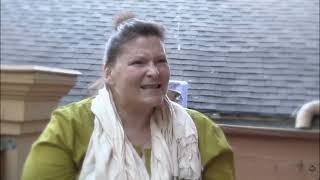
In this recorded tribute, Leslie, the sister of H.H. Jayapataka Swami, recounts a vivid tapestry of family life, childhood games, and the formative experiences that shaped Jay's path. She describes the family's love of strategic games—chess, Risk, and card games—through which Jay's intellect and competitive spirit were evident. Leslie explains how Jay was sent to St. John's Military Academy in Delafield, Wisconsin, a decision driven by his father's desire to protect him from the Vietnam draft and to prepare him for a leadership role in the family business. The narrative moves through the family's complex dynamics: divorce, step‑parents (Laurie and a later “step‑monster”), foster care arrangements, and the influence of a strong Lutheran background. Leslie details the moment Jay’s spiritual shift became apparent when a reporter’s photo exhibit in Canada revealed him among Hare Krishna devotees, leading the family to discover his new path. She reflects on Jay’s personality—his humor, confidence, ability to make others feel important, and his later role as a spiritual leader—while also sharing poignant memories of their father’s practical jokes, his love of jazz, and his eventual stroke. Throughout, Leslie expresses deep pride, nostalgia, and a sense of destiny regarding Jay’s impact on countless lives.
Chapters
It's much more nuanced than we have.
But she actually— he sends her audio of different translations and she transcribes them.
So she's really expert at that.
If I make a mistake, then he looks at me.
My father had— he had chess, he had checkers for me, he had a game of Risk. They played card games, and at any given time, Dad would, um, start a game, and then Jay would come over and they'd challenge him to make the next move. Now, of course, this chess game probably went on for 3 years, but, um, you know, every time he He had made a move, Dad had kind of critiqued him on it, and it was always interesting to see how Jay would respond to things. I remember going out to St. John's Military Academy also.
That was out in Delafield, Wisconsin.
In where?
Delafield, Wisconsin. It was a military school that Jay had been sent to. Now, he— we had sent him to the public school where we lived. But, um, I don't think Jay was— I don't think he was challenged at all. I mean, he was always outwitting either his teachers or— and Mom would always say— Mom already knew what it was. Grandma was like, well, he should be in Smarty Pants. But it's like, no, he was just— wasn't challenged enough. So, um, I think years ago they classified things as behavioral problems, which they really weren't behavioral problems. They were just, um, it's like, say, stand on that P right over there. And what's the purpose of standing on this P? You know, is it because I'm doing something great or I have to stand on this P?
You know, but this question, because I've said so much Right, exactly.
So, um, so I hadn't seen him, of course I hadn't seen my big brother in quite some time, and so we went out there on a Sunday afternoon and, um, it was a typical '60s thing. My dad had that little sports cap on and a sweater with the leather, you know, I remember seeing that. Amazing, you know, Mom was of course very pretty, and she had her full skirt on and her high-heeled shoes. Janice had gone out there, and she was wearing—
we were all—
the thing for me was that I never wanted to wear, um, I never wanted to wear the gloves and the hat. To me, it was like, what is the deal with the gloves and the hat?
Why do I have to?
And you were just a little girl. I was just really— yeah, I was really little. Yeah, well, Sunday church, or, um, And I remember I was— I must have pouted about it, and she was holding my hand, and— or I'm holding her hand. I can see when she's walking that, you know, what color her lipstick was. I'm looking up, and, um, so we went out there to see Jay, and I was like ready for him to start being Jay. He was dressed in this military costume. I must have been Why is he doing this? Why is everybody wearing these clothes like this? I couldn't figure out what it was. Um, he wasn't— he wasn't the Jay that I knew. He wasn't happy. I didn't like the costume that he was in.
Like, who is this guy?
Yeah. When I look back on it now, I kind of felt like, um, I had not visited him because I didn't see his spirit. Because brothers will be brothers. They poke each other and do dumb stuff. And, you know, you walk by him, he slaps him in the head. You know, they're just being brothers, you know. And then all of a sudden, it was like we were taking all of these things that Jay had as a brother with Jeff And we were making him behave by putting him in this military costume. To me, that was—
I mean, he got sent there because of this quote-unquote—
yeah, I think that, um, I don't know if it was so much the behavior. I think they wanted— Jay was always—
everybody knew he was smart.
I mean, Everybody knew that.
I mean, my aunts, my uncles.
Jay was to take over the family business. And a cousin of mine who's also a male, um, I think he was 2 years younger— no, 2 years older than Jay was. My father's oldest brother. And when you went to the Erdman house in Elm Grove, there was a tennis— set of tennis courts on the end of the property. And it was quite a walk. I mean, it was very pretty, but it was a walk. And all of a sudden my cousin comes running up, one of the girls, and she says, uh, he fell over the— jumped over the, um, Patrick jumped over the, uh, tennis net and now he can't breathe. He's not, he's not alive. There's something wrong with him. And of course, back then we didn't have 911. So was that Jay? No, that was my cousin. Yeah. So we, you know, everybody ran out there. All the grown-ups were out there and, and we kids were supposed to stay back. And, um, then they were trying to figure out how to pick him up to take him to the hospital. And unfortunately, he had broken his spleen.
He was dead.
And, um, yeah, yeah. And he was the quintessential perfect boy. He would, you know, he, he followed all the rules. He, um, I don't know if he was— I mean, his sister Karen, I still see her at family reunions and not, but that was like a whole chapter of the Erdmans that was never written because of that abrupt ending to that. And then of course Jay was the one who was gonna be taking over, and Dad thought, great, I'm gonna redeem my, my space in this family because even though I couldn't I can be a pastor, my son will be the, you know, he'll be the managing, or I should say the president or the CEO of this company, and that'll get me in good graces. And Jay was just kind of like, you know—
Being different than him?
No, he didn't, and a lot of it I thought maybe just was the '60s. I mean, we as Americans, I think we just lost a lot of our innocence in the '60s.
It was just—
it was hard to figure out what was going on. All of us were. I mean, I remember coming home in the afternoon and my dad, you know, my mom would always have the nightly news on, and of course he would have his Manhattan there, you know. And, um, they talk about how many people had died that day in the Vietnam War. And, um, so it was hard from that standpoint. And I think, you know, some of it was Dad thought if he got J smart enough or esteemed enough, he wouldn't have to go overseas, or he'd be higher in the military so he wouldn't have to go see the front line. But when he went out to, um, school, things were going on out there that were And where was that? That was in, um, he went to Providence College in Rhode Island, didn't he? Brown? Any— well, at that time it was Brown.
Brown. Oh yeah, Brown University.
Yeah, in Providence. Yes. And, um, I think Jay wasn't sure what he wanted to do. I think he was, um He was thinking that education was not something that he needed because he was smarter than most of these people were anyway. And I didn't see too much of him after that. Now, I don't know if Mother Laurie ever told you, we had a hard time finding jobs. We knew kind of where he was, but we didn't know for sure. And because my father had threatened to give his name—
He threatened to like disown him?
Well, disown him and give his name to the draft board. My father was also in—
was also in—
well, the FBI had come over to the house and they wanted to know why Jay was no longer there, and they were concerned with— they were drafting people. Yeah, yeah. Um, and then, um, of course the police sat down at the end of our block forever, and I still don't know why they picked on Jay. What was the deal with Jay?
Um, he was distinguished I guess. I don't know.
I mean, um, I remember my, my, my mom saying, well, you know, Jay— she never forgave Jay for throwing that ball and breaking her window. That's why they're there. What's the big deal with that?
Um, what was the relationship between Jay and your mom? How was that? Because being a stepchild and not as well— they— your father and his mother were divorced when they were teenagers, isn't it?
Well, Laurie is my stepmother. I'm the one who's the foster, the stepchild. My mother died when I was 9. I was taken away from her when I was less than 2. Did she take care of you guys? Yes. Well, some of it. Yeah, some of that. It was on and off for many years. Um, and then she— my sister Jan had moved to California. And Jeff had moved to California, and Dad had paid a family to take care of me. And, um, when I think back on it, they were just wonderful people, the Spence family. I was just one of the kids, and they had 5 of them.
Who is this?
It was a family that my father had paid to take care of me. He was on the road at the time for Badger Paint because that was kind of his backup thing because they didn't want him as a pastor. So he just started doing— every one of the brothers had like a thing they had done. Dad's was supposed to be— he was supposed to be the pastor, the person that was supposed to help our family become more insightful of Christ. And then one of his brothers was the marketing person, and then there was, um, the other guy who took care of finance, and then a legal standpoint, um, Uncle Ted took over. And none of these men had children that were male except for one. Uncle Norbert, um, had this son that was 2 years older than Jay, and, um, he was to take over the business until he had broken screen, and then he was the only— he was— Jay was like next in line.
Yeah, in the dynasty.
Yeah, yeah. Isn't that strange? Well, he changed all of our lives. Um, I think my dad was hurt by Jay doing this. He just kind of felt like This is what you're supposed to do, you know. And, um, my dad growing up— and I don't know for sure, he only spoke of his face some of the time— but he had a birthmark that covered most of his face, and it was purple. And, um I remember as a kid, you'd be like— my friends would be like, what's wrong with your dad's face? It's like, well, he's got a birthmark. And it's like, can I get it? It's like, no, it doesn't come that way, you know. And then once—
that's cool.
Yeah. But then, then after a while, once you met him and you realize what, um, he had this ability to kind of zoom in on you and tell you about yourself. Um, like there was this girl, Karen Sherman, and I'm still friends with her. She lived two doors down from us, and Karen's dad was a police officer. And, um, but he knew that Karen, after absolutely loved her gold hair.
Her mom would—
she had this beautiful blonde golden hair, and her mother would put it up and put things in it. And we just— that's what Karen's hair was always like. My dad would say, oh, your hair looks just wonderful today, Karen. And she'd be like, oh yeah, you know. And he kind of felt he, he knew how to talk.
Like importance, you know.
Yes, I think he got that.
I think Jay got that.
But I, you know, it, it was— it must have been just an absolutely cruel thing growing up with that birthmark. I mean, I can't imagine the things that people must have said to him.
But, but it sounds like he had so much really self-confident and, you know, was—
Well, I think he thinks, you know, I remember him saying nobody ever coddled me. And, um, but I think my grandmother did. I think they did to a certain extent. I think that, um, they literally spent— and my grandmother said this a million of dollars, and I'm not really sure what that meant, but I know that they had spent— he had sent— Jeff was, or, uh, Dad was sent to many different places to try to get this thing off of his face, and, um, some of them were experimental, and I think they were painful. And, um, as a kid, I I mean, it was just the way my dad looked. It was just him. And 5 minutes after you met him, you never saw it again. No. So, um, you know, maybe in a cruel way, I remember somebody saying, well, your dad has got something on his face, and, you know, so-and-so. And, you know, these were all things that children did. Um, but I think that, yeah, I think Jay picked up on that. I think he was able to, um, because, you know, he really does make every single person feel like they're important and that he's concerned about them.
I think it's genuine. It's completely genuine.
It's not for any kind of, like, fame or, you know, but I think Jay also, um, growing up, it was very hard when our parents divorced, when his mother and my father divorced. Um, my mother was an alcoholic. And, um, I'm sorry to interrupt, but were you already in the family when they divorced? Um, Jay, Janice, and Jeff were my father's first marriage to Mother Laurie. When they got divorced, uh, 2 years later, he met my mother and they had me. Um, they were divorced within that 2-year window. I was taken away, um, from my mother. She was an alcoholic. And, um, you know, back then, I just think that people got married much quicker. I mean, they just got married either because they wanted to have sex, we got to get married, you know, or, you know, or they were pregnant, or they're pregnant. Yeah, I mean, I don't think, you know, there was this formality of what they were supposed to do. My— I always, um, I always waited my family to the Rat Pack. My father always wore suits.
He always had a tie.
My parents always had a full bar, and even though I don't drink, I don't think I'd be known as a good girl if I didn't have a full bar. You know, Richard and I both don't drink, but, um, I always have wine, I always have brandy.
There's always—
I just threw a 12-pack away of beer, replaced it in case somebody stopped by and wanted a beer. You know, that's kind of how we grew up. Um, Barry smoked. Cigarettes, you know. People who had tattoos were kind of rough. Yeah. Um, my dad always had music, um, Dean Martin and Frank Sinatra.
Oh yeah, Mel Tormé.
My dad really loved jazz, so he was a Coltrane nut. And he had the reel-to-reel, you know, so that was kind of cool. We always had the best, um, so to speak, grown-up toys. They were pretty well— yeah. Oh yeah, yeah. We had, um, I don't— I know they later called them minibikes, but we had these little motorized scooters. And my dad had— he had time to tinker, you know, so he had devised this, this thing that was a, um, a fogger because the back yard would be very full of mosquitoes. We had these great big weeping willow trees. So he devised this thing on there, and he would turn it on, and he'd tell the boys that he could ride this minibike all over the yard, you know. And of course, Jay always pushed it right to the limit, you know. Um, He was always getting in trouble, but I think it was because he was— he was different. Yeah, he was always—
yeah, in our philosophy, Śrīla Prabhupāda was Jayapataka Swami's spiritual master. He said mischievousness is a sign of intelligence.
Yeah, so there you have it.
Yeah, that's That's what he was.
So then he joined the temple in what year? '69?
'68.
'68. And then you just kind of lost track of him?
Well, what happened, and I don't know if Mother was I ever told you about this. Um, Dad had friends from the seminary, uh, and there was one fella that he had become very close to, and he wrote him. Of course, they didn't have email then, or, you know, they didn't know how to get a hold via telephone. He wrote him a letter, and this had taken time, and he wanted to know if he could contact Jay and see how he was. And this man had written back. He was a pastor at that time, and it said, well, Jay just has absolutely no interest in coming back. He's found something else, and he'll write you a letter. I encouraged him to write you a letter, which he did.
And where was he?
He was in Canada. It was Hare Krishna letterhead, and I think I gave Jay the letter. He actually wrote it all. I mean, he wrote the whole thing with a manual typewriter, you know, and, um, we didn't know where Jayapataka Swami was, but there was a reporter that supposedly had gone to Canada and had seen all these young men, and there were a lot of them that were considered dodge drafters and they were lost. We didn't know what happened to them. So this reporter had made an announcement that he had had all these photographs. If you wanted to come down, he would have all the photographs on display if you saw your son or your daughter in there, I can tell you where they were, where I took these photos. So they found Jay in these photos. So right away she calls my dad. My dad's like, all right, you know, he was a salesman on the road.
And, um, but they, they were separated?
Yes. And, um, Dad went looking for Jay and found out.
I hope so.
Um, oh, I don't know, he's still recording it.
Maybe not.
Boo's got— got to do—
okay. Um, I think, you know what, these, these may not go more than 3 minutes.
Okay, okay.
Yeah, yeah, no, no, no. Um, so he had gone up there and Jay was not there, and, um, then my dad got married for a third time. It's my step— I called her my stepmonster because she was a step— she was a monster. And, um, and how old were you then?
Were you—
um, I was 7. But you had to live with her? Yeah. And as, um, She was a— she looked like Marilyn Monroe.
She acted like Marilyn Monroe.
She wanted to be. Maybe. I don't know. She was always burning me in the face because she always had this cigarette. She'd tell me to come over and be like, you know, she didn't clean the house.
We didn't have a housekeeper.
She just, that just, she was, and I think at this point Dad was, he had this beautiful young woman, this terribly ugly scarred man has this woman, and she She's beautiful and she wants him. She didn't, she didn't really want him. She wanted the money, you know. Um, and Mother Erdman, um, not I, um, Mother Lori, Mother— Grandmother Erdman. Um. She was a, she was a tough cookie. She really was. Um, I remember my dad had this convertible and I was sitting in the back seat and I would, I would, um, this house that they had built after Pewaukee, um, it was called the Monterey, and there was this huge article in the newspaper um, that featured the Badger Paint Home, which was what the name of the company was that my father owned, Badger Paint. And, um, every Sunday, um, well, every Saturday and Sunday. Every Sunday you could go through for free, but on Saturdays there was a nominal fee that Jayapataka Swami to go through the first floor of the home. My father, sometimes it scares me when I see him.
But of all the things that Jay is and my father was, was they had a great sense of humor. And my father and Jay would go back and forth on practical jokes. One of the ones that comes to mind that my dad talked about quite a bit was, um, we had a lake property and my father had built, um, or had a shed built in the back of it, and only Only part of the roof had been completed, and Jay and his buddies wanted to sleep in there that night. Dad said, well, if it rains, you have to stay out there. And he was like, oh, we'll be okay, it won't rain. He says, I'm going to lock the door. He says, that's okay, we'll be all right. So, uh, at about 11:30, when it started getting quiet outside, you could tell the boys were really tired. Dad decided that he was going to take the sprinkler and put it on top of the shed, and he turned on the sprinkler and it It rained in there, and they all got up and they were scrambling to try to get out of there. And they ran up to the house, and the door was locked, and my dad was sitting there on the porch laughing. He turned off the water, and the boys were like, what happened? My dad just stood there and laughed.
But they would go back and forth.
And one of the things that my dad and Jay, my brother Jeff, my sister Jan, they were all very, very intelligent people, and they constantly challenged each other every day. In my dad's library, he had a chessboard, and I think it took 3 years to finish that game of chess because they would go over there and make one move, and my dad would talk to him about the other move. And then, um, he always had a game of Risk. That was another, like, war game that we used to always play. Sheep's Head. But they were constantly challenging each other. One of the things my dad would talk about would be, um, history. And he would talk about what particular thing happened that was enlightening about— I can't think of anybody off hand right now, but I would say, for example, Lincoln. Dad would say, what's a famous quote that he said? Jay would be able to come out and spit it out, or my sister Jan would. I was very small and I just kind of looked around like, I have no idea, don't ask me. I mean, but, um, Another time that I was very, very proud of my brother Jay, um, he's my oldest brother. I have a sister Janice who has passed away. I have, uh, mom and dad have passed away, and I have a brother Jeff who lives in Wisconsin. I live in Virginia, so we're, we're not all in the same place anymore. So what we do have is we have our memories. My brother Jay was always a source of challenge, is what one of my aunts used to say. And I know that he was destined to be where he is. Where, where can he be in his life and touch this many lives and know the right thing to do? So it was his destiny to be here. It was his destiny me in this lifetime.
I'm very proud of him.
He's my brother, my big brother. That's not to say that when I was little he would take my doll and throw it into the lake, but just to annoy me, you know, walk by me and ping me in the head or something, you know. That's what brothers do. But one of the times that I remember, I was very proud of them. My father, it was, it was America. It was the Vietnam War had just broke out and I'd come home after school and go in. We all had to go in and say hi to Dad. And there was this rocking chair that was next to my father's leather chair, and of course he had the TV on, and they would get the count of how many people had died that day in the war. On the evening news. And my father thought, well, um, Jay will— we'll send him to military school, and that way he won't be on the front lines. He'll, he'll be able to go through the war and be a sergeant or somebody who doesn't have to carry a gun and be on the front lines. And Of course, um, that was not what Jay wanted to do either. He had his reasons and my father had his, which were mainly because this was his son and he felt that this is what he needed to do. But he went to St. John's Military Academy, and I always remembered Jay— we all had like um, well, not me, but all the boys had buzz cuts, which was very short hair. And, um, we were always running around in our swim shorts because the lake was right there. We were always in the lake, and we always wore just a t-shirt or a sweatshirt, nothing fancy. But that's how I had remembered my brother. And then all of a sudden we went up to see him at St. John's Military Academy. He was wearing this uniform and he had— he looked like a soldier. And I'm looking at all these people and I'm thinking, why are they all dressed like this?
Is it Halloween?
You know, I didn't understand. And then they, um, actually that was the first time I had ever seen anything quite like that because they had this march and they would do a thing with the gun and, um, I really didn't quite understand it, but my father was very proud of him. He was proud of the fact But he had this discipline of doing this regimen. And when I think back on that, I think because that was something that my father wanted for Jay, was to have him be in the military and make him proud. There were a lot of boys that thought that they were making their families proud by going there. It was a confusing time.
The '60s was—
I don't know, have we ever gotten over it? Is it done yet? I'm not sure. Um, and that's where Jay wound up, and he, he came up with what he felt his calling was. My father's calling was different. Your calling may be different. Um, I'm very proud of who he is and what he's become. I don't know where or if anyone can say that they touched so many lives.
So I'm very proud of my brother.
I'm not sure if I, I'd answered any questions, if anybody wanted to know anything about It's kind of funny sometimes because I'll, I'll see these tape recordings on, on the Facebook because that's kind of how I keep up with them. And everybody's like they are here, and I'm thinking, you know, he used to take my doll and throw it in the lake. That's not the same guy, I'm telling you. But as kids, we had a pretty good childhood. Jeff, my brother, younger brother, or I should say my older brother Jeff, Jay's younger brother, um, he's a, he's a philosopher, and he and Jay do not always see eye to eye. I think they challenge each other through their conversations, um, and it's not that Jay doesn't want to know Jeff and Jeff doesn't want to know Jay. I think they just are in two different places, but my father would be proud of Jay today, I think. Right before my father had his stroke. I should say not right after, but the day that I found out that he had the stroke, he— they called me and I quickly ran to the hospital. And I was working at a Mexican restaurant at the time, and he could smell the spices on me and the door of the room had two people in it and the curtain was closed. And, um, he said, Leslie. And I said, yes. I go, how'd you know I was here? He says, I could smell you. Now come in here and help me. He wanted to get up onto the side of the bed, and this big strong man that that I knew as my father was crying and he wanted to get up. He didn't want to sit. He didn't want any help. This was gonna go away and he was gonna get over it. And, um, every day for 47 days I had to go to the hospital And he insisted that I bring a pad of paper and two pencils, or two pens, two pieces of something to write with. And because Jay had, had left Wisconsin and there had been a disconnect with his dad, our father.
And my—
I never, I never second-guessed the fact after I'd gone, went through that with my dad, that he adored this man, he adored this child. And he, as parents do, they love their children. They disappoint us, but they're The end of the day, they're still your children and you still love them and you still want to share your wisdom with them and you want to see them grow. And, um, Dad pretty much purged, um, everything that he felt bad about when he was not there with Jay. And, uh, I know I gave the writings to Jay. I, I sound like a very selfish young lady because I was like, I got better things to do than sit here and write this, Dad. But he wanted to talk to Jay, and he knew that he wouldn't have the opportunity to talk to Jay, but he did know that I would see Jay. And my father was proud of him. So that was good. I have a question from one of the boys here. He asked that after he joined the movement, was there any any spiritual changes in your family? Yeah, I think there was.
Um, now Jay, um, our family—
my father had studied the ministry and was going to become a Lutheran pastor at some point. That was going to be his job as the family So he felt, my dad felt that, you know, we had, we were pretty strong Lutherans. I know that my father didn't want Jay to be a pastor, but I think that he felt that Jay had the ability and the spiritualness Being Lutheran, um, we were the middle of the road. There's 3 different kinds of Lutherans. It's a, it's a religion derived from Catholic, a movement that was done by Martin Luther, and There's an ELCA, very lax, Missouri Senate, which is what we were, and then there was Wisconsin Senate, which is very strict. And, um, I know growing up that that was pretty much shoved down our throats. Well, we— our father was going to be a pastor or so. But with Jay, he, he knew all that stuff.
He knew it.
He knew how my father was. He knew the discipline of it and actually was kind of bored with it, I think. I remember there was a guy that lived a couple doors down from us. Um, I used to go there after school. They had like 12 kids, and I would go over there and help the lady with her laundry and carry things up and down, help her start dinner. And her husband said to me, you know, that brother of yours, he should be a— he should be a spiritual leader or some kind of pastor. And, um, I think that was felt with all of us. Thank you.
Anything else? Yeah, um, yeah, Mother Laurie.
Now, Mother Laurie is my stepmother. After my parents— after Jay's mother Laurie and my father divorced, 3 children, my father married again to my mother, and they were married less than 2 years. And, um, how Mother Laurie did some raising of me— she was very involved, um, with Jay. She got I don't know, as a parent you never let go, I don't think. Um, I think I told somebody earlier about this week, we didn't know where Jay was, and, um, I didn't even know he was missing. But, you know, it was, it was, I was so much younger, and, um, I Reporter from the Milwaukee Journal, which, that was the biggest newspaper in our area, had contacted, um, or put an ad in the paper and said that, um, because so many parents had complained that they couldn't find their children, it was like this Hare Krishna thing. They're being hypnotized, you know. And, uh, but you could come down and they had an afternoon where this reporter had had all these photographs and he knew where he had taken them. And he invited mothers, fathers, sisters, brothers to come down and take a look at these pictures and he'd be able to tell you where he had taken that photo. And Jay was down there, and he told, uh, Mother Laurie that, uh, it was in Canada. So my dad was on the next plane, and he went up there, and Jay wasn't there. He had already gone to India. But Mother Loy was, you know, she knew there was a purpose for him and she was very nurturing as a mom. I miss her so much. And she was a, she was a good mom. She loved her son.
More from Jayapataka

20260205 Mayapur Academy Zoom Class at Śrī Māyāpur, India #JayapatakaSwamiArchives


Jayananda Prabhu is a Super Empowered Devotee as is Jayapataka Swami. Offering by Ramesvara Pr.

Jayapataka Swami Empowerment Is Beyond Human Comprehension. Offering by Ramesvara Pr ACBSP

Prabhupada Planted The Bhakti Lata Bhija in the West. JPS Vyasa Puja Offering by Ramesvara Pr ACBSP


Prabhupada Sent His Personal ISKCON Ambassador to India. JPS Vyasa Puja Offering by Ramesvara Prabhu


It Has Been My Great Honor & Privilage to Serve Jayapataka Swami by Ramesvara Prabhu. ACBSP

Prabhupada Planted Spiritual Energy into Jayapataka Swami. Vyasa Puja Offering by RamesvaraPr ACBSP

Вот русский перевод текста песни «Любовная песня матери Лорри своему сыну Джею»