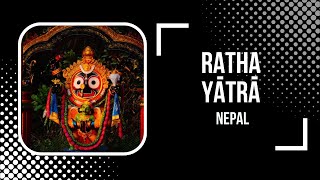
This is a recorded festival address by Jaya Pataka Swami (Ratha-yātrā context) discussing Bhakti Vriksha (devotional small-group) methodology: short readings followed by interactive discussion in three stages (discovery, understanding, application). The speaker describes structure (small groups of ~8–15, branching tree model), spiritual and practical benefits (communication skills, service attitude, leadership development), and community anecdotes (festival chariots, temple-cleaning competition, devotional humility). The talk also notes wide geographic adoption and scale of these groups (examples from Pune, Bangalore, the Middle East) and emphasizes servant-leadership and sustaining association with devotees.
Questions this video answers
About 2,000 groups
About 50
About 25
125 groups (plus ~25 Namahattas/larger groups)
About 2,500 people
The K time in the airport inspired everyone. And we have three chariots all around. First Sumatra and chariot. Here's one chariot. We have ladies. They also have different clothes with devotees with dioramas and many children decorated like Sitaram Lakshmanuman. Like Kamsa driving rat, Devaki and the Vasudeva. Different scenes children are dressed up and some elephants. We also have four horses have children dressed up in Quranic seats. And behind the Jagannath rat there's Prasadam. Rat. Prasadam Pas people like Prasadam. Today in the airport, whatever I had for all the youth he said I gave out. And then all the public also took. So those who are not at the airport, I don't know what to do. We have a program that we have over almost about 2,000 groups around the world called Bhakti Vriksha groups. And even in Pune the youth there, they like this format. Bhakti Vriksha groups are highly interactive. You know, interactive discussion. Instead of just one is having someone give a class. Like no, I'm giving class, I'm speaking, you're listening. So at this point it's not very interactive. A class teacher, student format. But Bhakti Bhiksha is a really short class or discussion. A short class or reading. And then there's discussion interactive. Each person contributes what they think is. There's like for the discussion three levels. Discovery, understanding and application. Abhishek, Upa Lamdi and Prayog. So you read something. Then afterwards you find out what was the important issue. That is the friend to want these. What is the important issue? And then you pick out one of those important points that was read and you discuss it, try to understand it. Someone can repeat what was the example given to support that point? That's Upper Lapdi. Then you have the kayak under this application. Now how to apply that point. What are some other supporting points from Shastra from Guru, how it affected you? Maybe someone got some special experience, some realization or emotionally they were really touched by that. Maybe they're inspired to change their life because of understanding. There was so many transformations in devotees who participate in this type of discussion. So gives everyone also it's a good training how to communicate. In South India they have in Bangalore they have about 50 of these fakir Miksha groups. So many of the college students they also participate in Pune 25. And some of the students when they have to go for getting a job, they have interview with the boss human resource people. So they have around the table discussion to see how good the candidate can communicate. So they find that the person who was part of Bhakti Biksha, they know how to communicate very well. And so they get the job better than other people. That's a side benefit, but it's very useful. I mean, I actually won person was from a scheduled, what they call scheduled tribe. And he was in India. This is not issue. But in India, if you're a tribal in the province and Aishas and others, sometimes they make fun if you're a scheduled GAS contract. So but after doing the Bhakti rickshaw, he became very capable to discuss. He didn't have that otherwise they tried to drive him a browbeat, bring him down. But he could face up to them and he could discuss in a very eloquent way. He got the job for that was for IES office and India. They're trying against India and administrative service administrators who have to get those jobs. Very heavy competition because they become bureaucrats in the future. So he got it. So we're trying to communicate about Ka to learn about the journey of self discovery. But it's very good training and it's very useful. So for many ways it's very beneficial. Even material. What to speak of. Spiritually, you become more realized. Like I'm speaking now and you're looking at me. But I don't know whether you understand it or how much you understand. Sometimes I know some people are laughing or something, get some feedback. But this Bhakti Riksha, you get to know what everybody thinks as you go around the room. And it's a small group, 10, 15 people, eight people, no more. We try to avoid more than 15. Maybe a short while, of course, a little more. Another feature of it is that the students themselves get to become the leaders of the group. Initially, there may be some older devotee as the leader. Once the group gets big to say about 15, 20 people, then we multiply the group and make like a branch. It's called Vaiti rickshaw. Vriksha is a tree. Tree has branches. So one branch become two branches, two branches become four branches, four branches become eight. It goes on multiply. So what happens is after some time every group has an assistant leader. You're already doing it. All these things probably know, right? How many are members of Akhiviksha group. So it's not everybody. So for some people. So then we have like one country in the Middle east where we have Nepalis, we have Indians, we have Sri Lankans, we have all the expatriates being part of it. And we have 125 Akhiviksha groups in my country with over another 25 Namahattas which are more larger groups, less class. They have about 2500 people chanting Hare ka. This is in an Arab country. All done hostile. They can't have so many big programs because of the Arab restrictions. These small groups are very useful for that. So there we have. For every one group there's a leader and a training leader. So many of the leaders. Of course normally men are always taking leadership role. But in the vati rickshaw we find that ladies also take leadership role. There's no such restriction. Lady can be leader for three sectors. There's a circle leader, three circles, circle equal chakra, chakra, sevak, all sevaks. Everyone is serving the group. That's what's really important. The whole point structure we can discuss all about. But what's really important is that everybody has this service attitude. They should be the same about that.
They're doing this as a service.
Not to be the controller or be the ruler or be something. That is a service you do. If you ask to be a leader, you do it as a service. You learn to be a facilitator. You facilitate other people. Because in the bhakhi misha, we want everyone to participate. Everyone should talk, everyone should interact. So the leader isn't controlling, he isn't giving the big speeches but rather he's serving the group. So he's called facilitator or servant leader. So that mood and the group should be one where everyone wants to help the other. Everyone has a service attitude. Having the service attitude, then you actually feel better. It's like in real life, head of the family, they're serving the family. They may take care of their head, but all day long they are serving how to get them ordinary, how to get the same marriage, how to earn the money for putting the children to the college, so on and so forth. So they're there for service. You want to refine that service attitude. That's why as a devotee, when we get initiated, we get the name servant, Servant of the servant. You say everybody wants to become boss. But here we're trying to be boss. When you're a servant in spiritual life on behalf of Krishna, you're a servant of God. That's actually the highest position. They can guide others. The idea is that there is some disagreement. Rather than arguing, we don't argue. We discuss it with the next higher leader. Ask them, get their opinion. Then they can arbitrate. Still not. Shall this let you go the next time finally go to the program director. In this case we have Patri Das as our program director. So that he can solve that will be there to do things in a very constructive way. For those who are already doing Bhakti rickshaw. How long you been doing? One year. What's your experience? I'd like to hear from you. Who's doing Bhakti rickshaw? Bhakti Vishwa, I won't call on you. You can volunteer.
For you to maintain our spiritual life and to balance with material life is really important. Because we can discuss freely with our group members. Spiritual. We have so many spiritual questions as well as material anxieties in our mind. And we can discuss with each other very free. And we are doing with Bhagavad Gita this posted ritual class with Bhagavad Gita. And it helps us to learn more. And we can study it detailedly and we can help each other very nicely. And it develops association with devotees, which is the most important thing. And actually separation from devotees, separation from Vaishnavas. It is the greatest suffering that we suffer in this world. And this Bhakti Brucha program, it encourages Western association and association with devotees is very, very real case, real opportunity that we have. And today Maharaj is with us here. And it is a very rare opportunity that we are getting this rare opportunity since one year back. Because in Pune with each of saying I'm coming to Nepal, please wait. We will wait for so long time. And today finally we got this opportunity to associate with him. And we are very grateful to you for help. Our first opportunities.
When there's many people, you might feel shy to express yourself. Put in a Bhakti Bhiksha group. How many are in your group? 10 members, 10 people. You get to know each other. You don't feel so shy to speak up. The small group, you get that kind of more open. But I'm asking you to be a little brave today. Even though it's a big group and tell something. And those who are doing Bhakti bhiksha. Actually this is my second visit this year. 25. What happened? I went to Birganj but it was strike. It was that four day, five day strike or something. So I couldn't come up to Katmandhu because there was a lot of striking. So I went up to Dhir Khanjan who's going to speak next. The man, he picked up stones and you know, as the birds chew some fruit and leave the seed there. So there may be mango seeds. You can see from the Crows. All those things were laying in the temple. He cleaned them all up. He said, let's have a competition.
Competition. Who can collect the most will keep our pile separate. So everyone was running and trying to get more dirt. So Lord Chaitanya used also friendly competition in his devotional practices. And guess who won?
Who had the biggest pile? He won.
His pile was bigger than all the other put together. He was so fired up to pick up. Then after picking up the pebble stones. And then they had brooms brought. And they all swept the dust. Swept the temple till it was swept clean. Second layer of cleaning. Then the third layer. They were throwing water. There were hundreds of devotees passing the water jugs from the Indra Dhumna Sarovara up to the Gundija Mandir. And so there was like bucket brigade.
I don't know.
There was this line of people passing the bucket. This clay pot is breakable. So then when finally the Lord Chaitani. He was throwing the water on the ceiling and the wall on the altar. He was cleaning everything. Some of the body was taking the water and sneaking. Throwing on Lord Chaitanya's feet.
And someone else from behind was catching.
The water.
Or giving in charity.
How many would you like to have? Gauranga Mahaprabhu. Chaitanya Mahaprabhu's water from his lotus feet. Cheram reed.
Special nectar.
With one devotee did right in front of.
Watch this.
He took the one. The Lord said, what are you doing otherwise sneaking it. He did it. And he said, I'm in temple. You're taking my food water in temple. You want to send me to hell. And he's taking the role that he's only a devotee.
Although actually he I marry him alone.
He said, call Surabdamana. Where is your ghoriya? This devotee from Bengal, what he has done. He took my foot water in the temple. He had so much mercy he's not allowed to come. And I'm never a band or anything. I want to be disrespected also. But you're always treating me with respect. Why don't you treat me with disrespect? Like so that I can feel more humble.
You cheated me.
You gave him more mercy than me. So there is a very deep kind of even. Don't ask me to explain how this Advaita is Maha Vishnu and Loy Chaitanya is Krishna. But they are all in devotee mode.
Ram it sa it Ra Ram. Ram sam Ra Ram Ham sam it Harik Shana it ra Sam Ram Sa J Sam Ham.
Thank you for watching our videos. Be sure to subscribe to our channel. We publish new videos every day. And don't forget to like and share our channel.