Fashion Is Industry Success Via Collaboration & Giving Back | Gifting Brands - Latest video
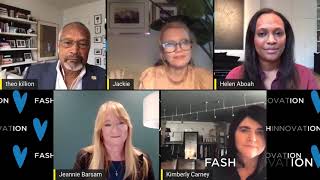
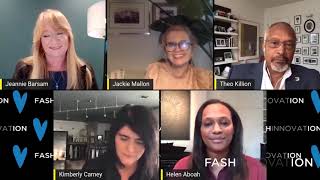
This transcript records a moderated panel (moderator Jackie Mallon) with Helen (Urban Zen CEO), Kimberly Carney (founder/CEO of Fashwire), Jeannie Barsam (SVP at Michaels and founder/CEO of Gifting Brands), and Theo Killian (retail exec and A Better Chance board member). The discussion centers on meaningful collaboration in fashion (beyond trend collabs), "inventory philanthropy" via Gifting Brands (donating excess inventory to raise funds for charities), mentorship and giving back, COVID-driven pivots (digital programs, mask production, digital wellness content), and evolving consumer behavior toward comfort, quality, and home-focused purchases.
Chapters
Hi, everyone.
Hey.
Hey.
So first of all, I introduce myself. I'm Jackie Mallon. I am the US editor of fashionunited.com which is an Amsterdam based fashion B2B website which has a presence in 30 countries and in 10 languages. Today's panel, which I'm excited to moderate on, is Fashion is industry success via collaboration and giving back. And I have with me three of the four individuals that Theo is joining us. Four individuals from the industry who are passionately committed to the idea of giving back. It should promise to be 34 minutes, 40 minutes of very uplifting content, I think, which all of us could use at this time, given everything that's going on in the world. So without further ado, I will ask you guys to give a brief intro of yourselves and what you have going on. And so if we can start with Helen.
Great. Thank you for having me. I'm really excited to be here. Urban Zen is, I'm the CEO of Urban Zen. It's a multifaceted company in the retail, health and wellness space. So we have a foundation that supports several important causes and also our namesake foundation and we were founded by the iconic designer Donna Karan. Some people know us for our luxury products, our partnerships and collaborations with artisans around the world through all categories, jewelry, home, and so forth. And on the wellness front, we complement western medicine by teaching healing techniques to anyone from our own employees to to healthcare workers and patients across hospitals in America.
Thank you, Helen. Kimberly.
Hi, I'm Kimberly Carney, founder and CEO of faschfire. Thank you so much for having me here today. So FASCHFIRE is a global platform providing 300 designers from more than 30 countries vital insight into consumer buying and behavior patterns. We are a two sided marketplace. Fashwire is a B2B data hub to navigate consumer demand and increase profitability. And a B2C shopping platform powered by consumer preferences, using personalization to connect consumers to brands. And we have a fast give philanthropic arm and we work closely with retailers United. So it's super exciting right now to be able to give back to our industry.
Jeannie.
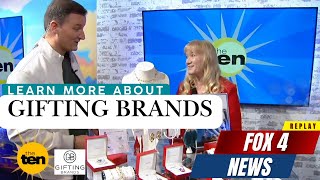
Hi, I'm Jeannie Barsom and I'm the senior vice president at merchandise operations at Michaels. But I'm also the founder and CEO of gifting brands. And so that video you saw in the beginning was all about us. And we're all about collaborating with both consumers, brands and charities. And how it works is Gifting Brands is the first ever fashion e commerce website that partners with fashion and luxury brands to donate excess inventory. So, you know, in today's world. Part of sustainability is for us, we fill that circle of sustainability when you have end of season inventory and you don't have anywhere to go with it, you don't want to sell it off to a jobber or you don't want to sell it off to TJ Maxx or Ross instead of putting it in landfills, which has been a practice that people are now, thank goodness, walking away from. You can donate it to gifting brands. And gifting brands then gives you a tax write off because we are a 501 and we actually put it on our website for sale and it has your brand, you have your own brand page. And 100% of the proceeds go back to charity. And so we're really excited. We're working with charities like A Better Chance, who Theo is on the stage with us today, who he'll tell you about himself. He's part of Better Chance. We're working with charity Water. We're working with really charities that support women, children and families. So we're really excited that we're sustainable company, but we're also a nonprofit and we give everything back to charities. And we're now a new. It's a new way to collaborate with brands. We call it inventory philanthropy. So you don't have to give money, you can give excess inventory, get a tax, write off and make a difference. So we're really thrilled to be here.
I love that inventory philanthropy. Maybe you can go into that further a little bit later on. Just my first question deals with the first half of the title of our panel today, which is collaboration. So the word collab has become a very trendy term, sort of a marketing cliche for maybe when luxury designers partner with sneaker brands to drop an exclusive shoe. This is obviously not that. So I wondered, we could start maybe with each of you giving your idea of what the word collaboration means. So we'll start with Helen.
So at Urban Zen, collaboration is connecting creatively to, you know, create a wonderful product. In our case, it's two or more companies, regardless of the size, coming together to create what otherwise would be complicated or impossible without the other. We love the idea of collaboration rather than commissioning someone to do something for us. It's so nice to share the stage with another partner, whether it's in the home or in apparel or jewelry. So it's, you know, sometimes we think of going to a partner for shoes and saying, hey, why don't, you know, make us this shoe? We're looking for this. And then we slap our name on it. For us, it's. We'd rather be who we are with who that other person is. And again, creativity leaves space for collaboration and to share a stage. And that's what that means to us here at Urban Zen.
Yeah, Jeannie, what does that mean to you?
For us, collaboration can happen in many different ways. And I'll use an example. Before I joined Michaels a couple months ago, right when the pandemic broke, we were just getting ready to launch gifting brands, and one of my board members called me and said, hey, I know you have a lot of industry connections in retail. I'm working on a project to help get masks made. Because UT Southwestern hospitals here in Dallas was, you know, obviously, everyone back then was worried about having enough masks. And so I made some phone calls. I called a friend at Michaels, and Michaels ended up donating a million dollars worth of fabric that we were then able to pass that along through Gifting Brands, our nonprofit, and they were able to get over 200,000 masks made. They were really trying to help the healthcare workers because they wanted double protection, so. So collaboration can come in many different ways. So we're open to collaborating in whatever way a brand wants to collaborate. There's Theo.
Hi, Theo. Excellent.
Do you wanna take that?
Can you guys hear me?
We can.
We're so glad you're here.
All right. Technologically challenged.
Well, you're here now. That's what's important.
Yes.
We were just in the middle of speaking about what the word collaboration means, so I was going to ask Kimberly, and then after maybe, Theo, you could give us a little introduction just of yourself and what you have going on, and then rush right into what collaboration means to you personally and professionally. Kimberly.
So collaboration for Fast Wire comes in so many different forms. We have our brand partners who we work with daily as we help connect them directly to the consumers. And what we want is for our designers to be able to understand the consumers needs, to help drive profitability by helping them cut back on the production costs by getting the consumer data. So for us, we collaborate with our designers on a daily basis with over 300 brands from worldwide that can come together. And we. We have our fash talks. That has been phenomenal in helping people get to know and understand all these designers around the world. And prior to Covid, we were able to put them on fashion shows, which helped give them original content. So pretty exciting time for us right now as we've all navigated through this time together, and collaboration will continue as part of our DNA as we move forward.
That's Great elc.
Sure. A brief introduction. I'm Theo Killian. I have been in retail for the lion's share of my career, starting out at Macy's, going to Home Shopping Network, working with Jeanne at the Limited, and then going to Tommy Hilfiger and Jeannie. And I met up again in Dallas to turn around the Zale Corporation. So that's sort of what the professional profile is. I'm currently on several boards. I'm the chairman of the board of Tailored Brands. I am on the board of Claire's, the wonderful little girls brand in the mall. And most importantly and most significantly, I'm on the board of an organization called A Better Chance, which is an organization that's been around since 1963 and that allows talented children of color who may not have the economic means to be able to get into private school and create a platform for their future. So when I think about collaboration, and I'll talk about it more as it relates to A Better Chance, I think about this opportunity, particularly in the moment that we're in right now, because I believe Covid laid bare all of the infrastructure issues that we have in healthcare and education and employment. And certainly in terms of racial inequity, all of that has been laid bare. During the course of this session, 33 people will die in the United States, which is a staggering, staggering number. So collaboration for me is defined sort of narrowly by the work that Jeanne is doing and that A Better Chance will benefit from. But more importantly, it's all the people and partners that we've had at A Better chance over that 57 year period to be able to change 16,500 children of color's lives in ways that are beyond anything that they could have ever dreamed. Including me, as in A Better Chance alum myself.
Wow. I wonder as you guys are so inspired to give back and, and think of others and have a very humane attitude within the fashion industry. I wonder if in your past, maybe as you're coming up or early in your career, if you had mentors or you had a figure that personified the idea of giving back really into it. I see you raise your hand.
I have to say Theo actually is my mentor. Love him. Theo and I met in the early 90s when I was a buyer at the Limited and he was head of HR. And then we stayed in contact and then obviously he called me to Dallas and I joined with Zales. And he's amazing. Not only is he kind hearted, he's very philanthropic. But the one thing I always loved about him at Zales, he knew everyone's name in the company, even the people that worked in the D.C. he connected with everyone, no matter what level of the organization. And it didn't matter who you were, whether you worked in the cafe or you were an executive. He treated everyone the same. And I just love that about him. And he's an amazing mentor. He actually helped inspire me through. The reason I came up with this idea of inventory philanthropy was when Theo and I were together at Zales. He was the CEO, by the way. He didn't mention that we had a million dollars of excess inventory that we were able to write off when we were selling the company. And I started looking for none. I couldn't find any. And so a couple years after that happened, I contacted Theo and said, hey, I have this great idea. What do you think about it? And he encouraged me. And he's been on my advisory board the whole time. So he's amazing. And I can't express how important it is to have a great mentor and multiple mentors.
And Theo, was there someone who was that figure for you that you could pass it on to?
Jeannie.
You know, there's an expression, we stand on the shoulders of the people who got us to where we are. And so for me, that's a countless amount of people. I will only name a few. It starts with my grandmother, who made it to the fourth grade, but who always inspired in me this idea that education was going to change my life. My grade school teachers, all of whom's names I could recite, who made a difference in my life, my junior high school teachers, and then the people who I've learned from throughout my career at Macy's, there were innumerable people who inspired me and who taught me. And the reason why I knew so many people's names when Jeanne and I worked together, Zales, is because I believe that every human being is a book. And if you open them up, there is a story. And if you let that story come out, you're going to learn something that's going to inspire you. So the work that Jeanne and I were able to do at Zales was largely inspired by going into the stores and just listening to people telling us what to do. So, yeah, I get inspiration every single day and every walk of my life because, you know, but for the will of God, there go I.
And Helen, I read your amazing. I think it was an op ed in Fortune.
Yes.
Where you spoke about being a black CEO in America. And I know that you mentioned a little bit about Mentors within that. If you'd like to share some of.
That with us, I, you know, I think Theo said it perfectly. I would also only be reiterating what he said in the sense that there are so many people along the way who made the investment.
Right.
Whether we call them allies or friends or leaders. But all along the way, I can say you can track all these influential individuals who invested in my career development. And that was incredible for me. I think when I think about giving back, I can't help. And I don't say this because I work for Donna at Urban Zen, but I worked with Donna Karen back at LVMH when I, you know, we were there under Donna Karen is. She was always, it was always about the we and not the me. Right. She was always thinking about how am I giving back? What are we doing? It's not enough just to be for us. And I thought, how incredible because it resonated with my life and my upbringing. So whether she did seventh on sale for HIV and AIDS or it was, you know, super Saturday for cancer research and even now at Urban Zen, you know, with children and education and the healthcare system. So there's. When I think about one person, it's definitely her because she's. And I'm always impressed by people who I. Who not only do it in word but action, especially when the world expects them not to be doing it right.
So.
And she did it way before it was cool and way before it was a trend in the industry. She was all about conscious consumerism. So know who you're buying from.
Know.
And she wanted us to be the best because she wanted people to not only buy the best product, but know they're buying into an ethos that we stood by and that they could, they themselves hopefully would incorporate in their life, which is giving back.
Yeah.
And Kimberly, you.
For me, it starts really with my dad. He was one of my biggest. He is my biggest inspiration and he was a self made businessman and always gave back. And growing up, I always heard, oh, your dad has the biggest heart or your dad did this or your dad. And I just remember thinking, I really want to be like him when I grow up. And I want people to say, like how they talk about him. So for me, it really started with my dad and then just like everybody else, it's along the way you have these different mentors. And today I'm inspired every day by my team, by my advisory board, by people I work with on a daily basis with, which helps me learn and continue to grow and Continue to enjoy giving back. So.
So Kimberly, you're in, you're in your. It looks like you're in your flashwire brick and mortar right there.
Flashwire showroom now. Yes.
And you have E Commerce. And so I wondered if you could talk a little bit. People, we don't really know what untold damage that Covid has leveled across our industry, but some people believe that crisis brings innovation and opportunity. And so I'm wondering how it has impacted what you do good or bad.
So. Well, this was a store and prior to Covid, it was doing very well. But I had already thought ahead and realized a while back that there needed to be a digital solution store. So quietly my team and I were building this digital platform. And so when the pandemic hit, we had about 225 designers. And then we were able, when everything came to a halt, retail production, we were able to provide a global solution, a reach out to consumers all over the world. So we were able to. Our designers were impacted, but we were able to help with our platform, not only bring on new designers that were rethinking their strategy, but continue to help with our own brands. So for me it's two sides, but it's definitely taught me a lot. And I think that we're all navigating through this next normal and what that will be. And I try to stay positive and look at. There's a reason for. I've gone from two businesses to really focused on the direct to consumer. And it really is. I'm learning every day like how to go forward with all of this and meeting people like Jeannie and listening to other people's stories, super helpful because then I can in turn look and see, oh well, what can I do to turn the store situation positive? And so that's. And just even this panel is inspiring.
To me and Jeannie, you launched gifting brands during the pandemic. So talking about.
So we originally we were waiting to launch until we had this event because our whole purpose of doing this event is to let brands know. So this is the first time we're really out speaking to brands to let them know about inventory philanthropy and that we are a solution for them that is not only sustainable, but it also elevates the brand image because we can tell this story about how they're giving back and tie back to charities like Theo's with a better chance. So we launched two charities, A Better Chance, Theo's Charity, as well as the Family Place. We made the decision in April to launch early. We only Had a few brands online, but we said, you know what, let's do something. Let's not wait till it's perfect. Until the fall. When we were going to launch, after we had more brands online, we said, let's just do it and we'll use it as a testing environment. It's been great. People have responded and now we're excited to launch and tell everyone who we are and, and come collaborate with us and help us make a difference and you know, especially to be able to raise money for grants for a better chance.
Yeah, if I may, and maybe Jeannie talked about this while I was struggling with my technology, but the Family Place is a wonderful organization that provides shelter for women who are at risk. And I was speaking to one of our co workers, Jeannie, who as you know, is also involved in domestic violence. And one of the other issues that's been laid bare during COVID is this idea that they had a 22% spike in the number of women who are captured at home and who are subjected to domestic violence. So there's all of these things that are going on that we now have an opportunity. You talked about innovation, Jackie. We have an opportunity to change the things. All of these things have existed before COVID There was racial inequity, there was educational inequity, there's indigenous people inequity. There is incredible issues with women having violence against them. Now we have an opportunity to do something about it, to make a choice, to take a road that we're going to go down and do something that I think it's terrific that people are giving a million dollars here and a million dollars there. That's great. Those kind of transactional things are terrific. But to really get involved in making a difference in people's lives is the kind of thing I think we're talking about here today. So I just wanted to shine a light on this issue of domestic violence because I don't think it gets talked about enough.
I would definitely say about innovation. This period has been incredible for our foundation in the sense that we focus on healthcare and supporting healthcare workers and nurses and training them for self healing techniques. But it was so challenging because historically we've been in the hospitals, our integrative therapists have been in hospitals across the country. And then to be told that you're not an essential worker in the midst of the peak of COVID especially in New York. So we immediately pivoted and which we weren't digital in that space, in our foundation healthcare space went completely digital, created five Videos, five minutes each that were shared for free to every frontline worker across the country in order to stop and wherever they are, whether you're waking up before you go to your shift, in the middle of a hard shift, right. Dealing with those that issues that are specific to Covid. Right. And this is they're dealing with life and death within a second and it so fast which they're working is incredible. So how do we assist the healthcare workers when we can't go in? So we found a way to do that on their phone again, escape, get in your car right before you go to bed and just a five minute meditation to help. And that has been, I'd say for us, just the silver lining in all this that we were still able to find a way to get in and help our frontline workers. Those are on the front line supporting us.
That's awesome.
I was on the gifting brands website. You have some gorgeous products there, luxury jewelry. And I wondered what you have noticed about the consumer emerging from the pandemic. If their shopping habits have changed. Are they only buying sweatpants? Are they going for the beautiful jewelry with the diamonds in it? What have you noticed?
Honestly? You know what's been interesting, Our men's shirts from Tory Richards has been doing really well. So I think it's wives buying for their husbands and the higher price jewelry. One of the other things that we do is not only do we sell the product, but the charities that we work with, when they have big galas or charity events, we donate the product there as well. And that's where those do really well. And we're able to get, you know, higher ticket prices, thousand dollars, $2,000 sales off of those. But the men's shirts, the men's dresses and the jewelry has been good. We don't have any sweatpants right now, but we'd love some.
Kimberly at FlashWire, have you noticed a difference with what consumers are buying? Have you noticed what people are buying? If it's, if it's changed since COVID if they're looking for particular items, I.
Think they've prioritized what they want. They want quality, they want comfort and they want ease. So you know, whether they're going to be on a zoom call or they are just going to be working from home and not having to show their face that day. It just, it's different now because people aren't buying the luxury that they once were on a regular basis because there's no events at the moment. So I think there's just been a shift in priorities of what's important to them. And just even as simple as they don't want to have to take it to the dry cleaner or they don't want to, you know. And that's a lot that I hear from people who do come by the store because we are still selling the product we have in. And that's one of the number one questions I get asked is, you know, what's the. What's the wash? And, you know, and do I have to hang it right to do this? And you can just tell they just want ease. Ease is really, I think, what I'm noticing.
Can I just add a couple of notes of optimism, please? Particularly if you're in the men's business. One is our rental business is actually pretty good. People are starting to get married again. Those weddings that were held off for a while. And they're not getting married in sweatpants, thank God. So that's one hopeful thing, is that people are. And not unlike throughout history, women are leading the way, thank God, to dress the idiots who can't dress themselves. And the second hopeful thing from history is the pandemic in 1918 lasted for two years from 1918 to 1920. And out of 1920 came the roaring twenties when everybody was fashionable, everybody was dancing, everybody was collaborating, and there was a worldwide celebration of the freedom that they had. And fashion was at the forefront of that. So don't know if history will repeat itself, but I'm told history doesn't always repeat itself. Sometimes it rhymes. So I'm hoping that it's going to rhyme this time and that we're going to start seeing people dress up again on the other side of this thing.
And we're seeing a lot of home shopping, we're seeing a lot of our home product blowing off. People coming in wanting to buy the product off the floor. And we're like, no, no, we need that. But it's a lot of demand at the home space and we're seeing an uptick depending on the region. So in China, where you're seeing people going back out, we're seeing business pick up. We're seeing, you know, of course, some of the coastals, you see LA slowing down, port, naturally. But yeah, it's the home blow exceeding expectations. Incredible.
The other interesting thing is because, you know, I'm at Michael's, people are taking on new hobbies. Art. Art supplies are blowing out. Jewelry supplies are blowing out. People are. And a lot of kids things because, you know, so many people now are having their kids at home. Then they need art projects. So that business has been really strong, and, you know, people are taking up hobbies that they've never done before. Knitting, you know, crocheting, all of that. It's been great.
Banana bread. I hope I get this right. I heard from you. In our previous conversation, we used a Gandhi quote, which. Which was, when we try to find ourselves, we should lose ourselves in the service of others. And I'm thinking. I'm wondering if that is how you guys together believe that we're going to get out of what we're in at the minute in fashion, because we previously were going hard, we were going fast. There was no stopping it. We've started to think of people over profit and slowing down. And then the pandemic happened. And I wonder if what you guys are doing and that kind of Gandhi spirit is really what will take us through this. Theo, you can start as you brought.
Sure, sure, sure. There's a few things that are going on that I think should give us hope. The Business Roundtable, which is made up of 181 incredibly powerful CEOs a year ago, broaden their platform and said it's no longer just about shareholders. It's about stakeholders. And stakeholders includes community, communities, and it includes employees. So all of a sudden, if you're one of those corporations, you have permission to do good work. The other thing is institutional investors for the past three years have been focused on esg, environmental, social, and governmental. That gives us permission from the biggest investors in the world to be able to change the environment that's ravaging California right now, to be able to do great social work. And then I think the other thing that, for me, gives me enormous hope about this. For me, you know, Helen and I talked about things that are personal in the way that we give back. So for a better chance, it's really closing the circle. They got me started. They gave me a lift. So I owe it to people to create 500 opportunities every year for young people to be able to get the same chance that I had. But the thing that is most encouraging right now, different than the civil rights issues in the 60s, is the color of the people who are walking the ages, of the people who are walking the people who are pissed off, really gives me great encouragement that we're at a point where we can make seismic, systemic change that'll last for a long time.
Love to hear it. Does anyone else have anything to add to that?
You know, I partner with the New York City Mayor's office on healthcare issues and women Just helping women succeed. And the more I give myself to that, the more I see there are so many hopeful entrepreneurs and business people and healthcare workers who are actually really positive about the future.
Right.
You see, it's all doom and gloom, but inside, everyone's hopeful, supportive. And it's just sometimes it gets us out of our bubble or that media channel that we're so used to hearing. But when you're with the people on the ground, there's so much hope. And I think we're going to get out of it stronger and better.
Yeah. And like, I'm part of Retailers United, and it's a group of tech and retail industry executives who have come together to help America reopen and help retailers and wholesalers open up their businesses again by giving grants and resources to help do that. So it's a great organization to be a part of and really has been super impactful on the designers that have received grants from us to date.
So I wonder, you guys have had. You've worked with some of the biggest brands in the US You've held some C Suite positions and very high roles. And looking back, what you would. What you would tell your younger self, what you would say not to worry about or what you would say, focus.
On this or keep raising the bar.
Yeah.
Yeah.
What you would tell your younger self.
I would say take a risk, make a difference and give back. I think I spent way too much time in my early career trying to work my way up in the different companies I was at, and I didn't have time to volunteer and give back. And I wish I would have done more of that then. It's so fulfilling. It really makes a difference. And don't forget to spend time with your family.
Well, and trusting your instincts, I think, adds to all of that as well as, you know, trust your instincts to go forward, you know, with your vision and stay true to your values. As you move forward in your positions and as you continue to raise the bar, stay. Stay true to your core.
We don't have a lot of time left. It looks like a couple of minutes. But I was interested in hearing a little bit from you, Helen, about your relationships or your collaboration partnerships with artisans, the artisanal community. Because I know that in Urban Den, a lot of product is very well crafted and from different parks. And so how do you approach collaboration like that?
Right.
So Donna does do extensive traveling, and some of our artisan community comes just from connections and networks, but a lot of it, I would say about 80% from her travels. So she meets People, and she works and she's on the ground, and she's, you know, molding clay or, you know, direct how things are. It's incredible. She's in there. And then we give them the platform, you know, we give them the selling opportunity. We know that she has a platform, and she succeeds, succeeded at it. And she, as we all do, we believe that there's so much beauty in this world and that we need to sort of break through the noise and show something different. So I love it. I love the work from Bali. The furniture is from Bali. Some of it's bamboo. It's all done by hand. You look at, you know, Guatemala. Even in America, there's amazing artisans who just. They just need the platform.
Yes, Theo, I'll be very quick. Just. Just what I tell my younger self is something that is a line from a song in the Color Purple that says, I'm thankful for every day that I'm giving, given the hard and the tough ones I'm living. And I think understanding that early on that the hard ones are gonna pass and be thankful for those days is something I think I tell my younger self. But I also wanted to one, thank the three of you for participation. Jeannie, for introducing me to fashion innovation, to Marcello and Jordana, who've done an amazing job of creating this platform and do a shameless plug for Jordana's book, which is coming out, I believe, early next year, which is about homelessness in Brazil. It can be you. So this idea of philanthropy, I think we runs deep and runs through all of us. So kudos to Jordana.
That's amazing. Just briefly, Jordana will probably be along soon, but how do you guys choose the charities that you work with, like gd? How did you choose the charity?
We are really focused on women, children, and families. And I first chose charities that I have been involved with. So I'm on the board of directors, and I obviously chose a better chance because I know what great work they do through Theo. And then I've also researched other charities, like Charity Water will be launching next month. They're doing an amazing job of creating wells all over the world for third world countries. And so we really want to work with charities that are making a big impact because we want them when people buy our products and our donated products, we want it all. You know, we want it to make a difference. So we want to know that we're working with nonprofits where a large percentage, typically it's about 85 to 90% of their of their income, goes straight to their mission. And at Charity Water, 100% goes back because they have philanthropists that come in and pay for all their headcount or their overhead. And 100% goes back. So that's why I chose them.
More from Jeannie
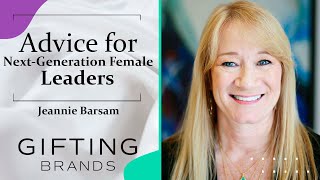
Advice for Next-Generation Female Leaders | Jeannie Barsam, Founder and CEO, Gifting Brands