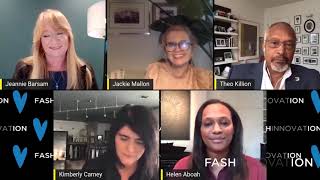
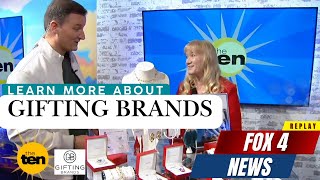
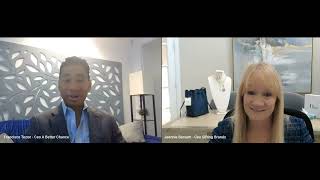
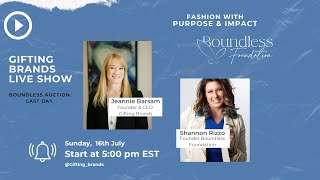
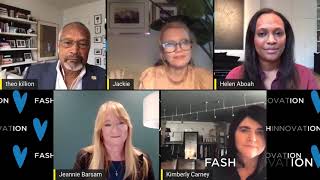
A recorded panel led by Jeannie Barsam describing Gifting Brands, a nonprofit fashion e-commerce platform that partners with luxury and fashion brands to take excess inventory and sell it to raise funds for charities (an approach they call “inventory philanthropy”). Jeannie explains the model (brands donate inventory, Gifting Brands is a 501(c)(3), 100% of proceeds go to charity), recounts launching during the COVID-19 pandemic (launched early in April), and gives a concrete pandemic example where Michaels donated $1,000,000 in fabric through Gifting Brands to produce over 200,000 masks. Panelists (including Theo) discuss collaborators/charities (A Better Chance, The Family Place, Charity Water), pandemic-era shifts in consumer behavior (demand for men’s shirts from Tori Richards, jewelry sales at charity galas, and high-ticket items $1,000–$2,000), and social issues (a reported 22% spike in domestic violence during COVID, Business Roundtable’s stakeholder shift of 181 CEOs, and ambitions like creating 500 opportunities per year).
Questions this video answers
$1,000,000
Over 200,000 masks
In April (during the COVID-19 pandemic)
501(c)(3) nonprofit
100% of proceeds go to charity
Chapters
Hi, I'm Jeannie Barsom and I am the senior vice president at merchandise operations at Michaels. But I'm also the founder and CEO of Gifting Brands. So that video you saw in the beginning was about all about us. And we're all about collaborating with both consumers, brands and charities. And how it works is Gifting Brands is the first ever fashion e commerce website that partners with with fashion and luxury brands to donate excess inventory. So, you know, in today's world, part of sustainability is for us, we fill that circle of sustainability. When you end have end of season inventory and you don't have anywhere to to go with it. You don't want to sell it off to a jobber or you don't want to sell it off to TJ Maxx or Ross instead of putting it in landfills, which has been a practice that people are now, thank goodness, walking away from, you can donate it to Gifting Brands. And Gifting Brands then gives you a tax write off because we are a 501C3 and we actually put it on our website for sale and it has your brand, you have your own brand page. And 100% of the proceeds go back to charity. And so we're really excited. We're working with charities like A Better Chance, who Theo is on the stage with us today who he'll tell you about himself. He's part of Better Chance. We're working with Charity Water. We're working with really charities that support women, children and families. So we're really excited that we're sustainable company, but we're also a nonprofit and we give everything back to charities. And we're now a new. It's a new way to collaborate with brands. We call it inventory philanthropy. So you don't have to give money. You can give excess inventory, get a tax write off and make a difference. So we're really thrilled to be here.
Jeannie, what does that mean to you?
For us, collaboration can happen in many different ways. And I'll use an example. Before I joined Michaels a couple months ago, right when the pandemic broke, we were just getting ready to launch Gifting Brands and one of my board members called me and said, hey, I know you have a lot of industry connections in retail. I'm working on a project to help get masks made because UT Southwestern hospitals here in Dallas was, you know, obviously everyone back then was worried about having enough masks. And so I made some phone calls, I called a friend at Michael's, and Michaels ended up donating a million dollars worth of fabric that we were then able to pass that along through Gifting Brands, our nonprofit, and they were able to get over 200,000 masks made. And they were really trying to help the healthcare workers because they wanted double protection. So collaboration can come in many different ways.
And, Jeannie, you launched Gifting Brands during the pandemic, so talk about that.
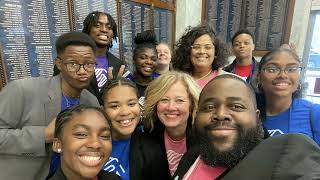
So originally we were waiting to launch until we had this event, because our whole purpose of doing this event is to let brands know. So this is the first time we're really out speaking to brands and to let them know about inventory, philanthropy, and that we are a solution for them that is not only sustainable, but it also elevates the brand image because we can tell the story about how they're giving back and tie back to charities like Theo's with A Better Chance. So we launched two charities, A Better Chance, Theo's charity, as well as the Family Place. We made the decision in April to launch early. We only had a few brands online, but we said, you know what, let's do something. Let's not wait till it's perfect, until the fall. When we were going to launch after we had more brands online, we said, let's just do it, and we'll use it as a testing environment. It's been great. People have responded, and now we're excited to launch and tell everyone who we are and come collaborate with us and help us make a difference and, you know, especially to be able to raise money for grants for A Better Chance.
Theo?
Yeah, if I may, and maybe Jeannie talked about this while I was struggling with my technology, but the Family Place is a wonderful organization that provides shelter for women who are at risk. And I was speaking to one of our co workers, Jeannie, who, as you know, is also involved in domestic violence. And one of the other issues that's been laid bare during COVID is this idea that they had a 22% spike in the number of women who are captured at home and who are subjected to domestic violence. So there's all of these things that are going on that we now have an opportunity. You talked about innovation, Jackie. We have an opportunity to change the things. All of these things have existed before COVID There was racial inequity, there was educational inequity. There's indigenous people inequity. There is incredible issues with women having violent violence against them. Now we have an opportunity to do something about it, to make a choice, to take a road that we're going to go down and do something that I think it's terrific that People are getting a million dollars here and a million dollars there. That's great. Those kind of transactional things are terrific. But to really get involved in making a difference in people's lives is the kind of thing I think we're talking about here today. So I just wanted to shine a light on this issue of domestic violence because I don't think it gets talked about enough.
I was on the gifting brand's website. You have some gorgeous products there, luxury jewelry. And I wondered what you have noticed about the consumer emerging from the pandemic. If their shopping habits have changed. Are they only buying sweatpants? Are they going for the beautiful jewelry with the diamonds in it? What have you noticed?
Honestly? You know what's been interesting? Our men's shirts from Tori Richards has been doing really well. So I think it's wives buying for their husbands and the higher price jewelry. One of the other things that we do is not only do we sell the product, but the charities that we work with, when they have big galas or charity events, we donate the product there as well. And that's where those do really well. And we're able to get, you know, higher ticket prices, thousand dollars, $2,000 sales off of those. But the men's shirts, men's dresses, and the jewelry has been good. We don't have any sweatpants right now, but we love some. The other interesting thing is because I'm, you know, I'm at Michael's, people are taking on new hobbies. Art. Art supplies are blowing out. Jewelry supplies are blowing out. People are. And a lot of kids things, because, you know, so many people now are having their kids at home, then they need art projects. So that business has been really strong. And, you know, people are taking up hobbies that they've never done before. Knitting, you know, crocheting, all of that. It's been great.
Banana bread. I hope I get this right. I heard from you. In our previous conversation, we used a Gandhi quote, which. Which was, when we try to find ourselves, we should lose ourselves in the service of others. And I'm thinking, I'm wondering if that is how you guys together believe that we're going to get out of what we're in at the minute in fashion. Because we previously were. We were going hard, we were going fast. There was no stopping it. We started to think of people over profit and slowing down. And then the pandemic happened. And I wonder if what you guys are doing and that kind of Gandhi spirit is really what will take us through this. Theo, you can Start as you rush.
There's a few things that are going on that I think should give us hope. The Business Roundtable, which is made up of 181 incredibly powerful CEOs a year ago, broaden their platform and said it's no longer just about shareholders, it's about stakeholders. And stakeholders includes communities, and it includes employees. So all of a sudden, if you're one of those corporations, you have permission to do good work. The other thing is institutional investors for the past three years have been focused on esg, environmental, social, and governmental. That gives us permission from the biggest investors in the world to be able to change the environment that's ravaging California right now, to be able to do great social work. And then I think the other thing that for me, gives me enormous hope about this. For me, Helen and I talked about things that are personal in the way that we give back. So for a better chance, it's really closing the circle. But they got me started. They gave me a lift. So I owe it to people to create 500 opportunities every year for young people to be able to get the same chance that I had. But the thing that is most encouraging right now, different than the civil rights issues in the 60s, is the color of the people who are walking the ages, of the people who are walking the people who are pissed off. Really gives me great encouragement that we're at a point where we can make seismic, systemic change that'll last for a long time.
Love to hear it. Does anyone else have anything to add to that?
You know, I partner with the New York City Mayor's office on healthcare issues and women, just helping women succeed. And the more I give myself to that, the more I see there are so many hopeful entrepreneurs and business people and healthcare workers who are actually really positive about the future. You right? You see, it's all doom and gloom, but inside, everyone's hopeful, supportive, and it just. Sometimes it gets us out of our bubble or that media channel that we're so used to hearing. But when you're with. When you're with the people on the ground, there's so much hope, and I think we're going to get out of it stronger and better. Yeah. And like, I'm part of Retailers United, and it's a group of tech and retail industry executives who have come together to help America reopen and help retailers and wholesalers open up their businesses again by giving grants and resources to help do that. So it's a great organization to be a part of and really has been super impactful on the designers that have received grants from us to date.
So I wonder, you guys have had. You've worked with some of the biggest brands in the US You've held some C suite positions and very high roles. And looking back, what you would. What you would tell your younger self, what you would say not to worry about or what you would say focus.
On this or keep raising the bar.
Yeah.
Yeah.
What you would tell your younger self.
I would say take a risk, make a difference, and give back. I think I spent way too much time in my early career trying to work my way up in the different companies I was at, and I didn't have time to volunteer and give back. And I wish I would have done more of that then. It's so fulfilling. It really makes a difference. And don't forget to spend time with your family, just briefly.
Jordana will probably be alone soon. But how do you guys choose the charities that you work with? How did you choose the charity?
We are really focused on women, children, and families, and I first chose charities that I have been involved with. So I'm on the board, and I obviously chose a better chance because I know what great work they do through Theo. And then I've also researched other charities, like Charity Water will be launching next month. They're doing an amazing job of creating wells all over the world for third world countries. And so we really want to work with charities that are making a big impact because we want to. We want them when people buy our products and our donated products. We want it, you know, we want it to make a difference. So we want to know that we're working with nonprofits where a large percentage, typically it's about 85 to 90% of their. Of their income, goes straight to their mission. And at Charity Water, 100% goes back because they have philanthropists that come in and pay for all their headcount or their overhead, and 100% goes back. So that's why I chose them.