Jeffrey Quintero designed Burger King's first video drive-thru in 1989, then built a LinkedIn for Hispanic entertainment. After 25 years studying philosophy and physics, he heard a voice in 2003 saying "Any idea conducive to the improvement of life order." Now he's proposing we replace jobs with spiritually emergent roles supported by AI.
Chapters
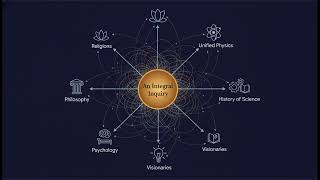
You know that feeling of burnout? What if I told you it isn't a personal failure but a design flaw in civilization itself? Today, we are diving into the incredible story of a man who went from architecting tech for giants like Burger King to architecting a new blueprint for humanity. This is the story of Geoffrey Quintero, and honestly, it might just change how you see your own place in the world. Alright, so to really get what Quintero's all about, We've gotta start where he did—as a master builder of real-world, practical, scalable systems. This isn't just some guy with a bunch of abstract theories; this story is grounded in tangible, high-stakes results. And his journey as a builder kicks off in a place you would probably never expect. We're talkin' a major global brand, a drive-thru, and one of the very first Mac-based systems out there. See, long before he was asking these huge questions about the meaning of life, Geoffrey Cantara was solving a really practical problem. How do you get a burger order right every single time? Okay, this slide really shows you how the guy operates. Back in 1989, Burger King brings him in to fix their order accuracy. Now, you've got giants like Apple and IBM in the mix, but Quintero, moving with incredible speed, designs and prototypes the first-ever video drive-thru system. And get this, he built the whole working prototype for just $50,000. It was so impressive, it actually boosted Burger King's stock price. He then rolled out 45 of these systems, and in this crazy turn of events, he ends up having to train his bigger competitors on how to install the very system he designed. It's just a classic story of an agile innovator running circles around the giants. And that Burger King project? Yeah, that was no fluke. To really cement his reputation as a tech visionary, in the late '90s, he developed the entire business model and tech architecture for what pretty much became the LinkedIn for the Hispanic entertainment industry. So, you're seeing a clear pattern here, right? This is a builder who sees a problem and creates the system to solve it—and solve it at scale. So, here's the pivot. He had the skills, the success, the amazing track record. He was the classic builder, the ultimate entrepreneur. But this brings up a massive question—one that I think a lot of us face. What happens when all of that success, all that achievement, still leaves you feeling kind of empty inside? This question, this is the turning point in our story. It's the moment he goes from building systems for business to architecting a system for human meaning. And that question just launched the second huge phase of his journey. He took that same architectural mind, that same problem-solving brain, and he turned it inward. He started on this deep, personal quest to understand the fundamental blueprints of human existence itself. And look, this wasn't just some weekend hobby. We're talking about a dedicated, 25-year search. He talks about how his whole idea of "the good life" changed over time. At first, he thought it was about being popular. When that didn't do it for him, he chased money and financial success. Then, he shifted again, this time to just finding personal happiness. But through all of it, he finally landed on this profound realization: the real goal wasn't any single one of those things. It was about finding a deep harmony, both inside himself and with the world around him. And this? This just shows you the incredible scope of his investigation. I mean, he didn't just dabble; he went all in. He researched everything from the world's major religions to the whole history of Western and Eastern philosophy. He studied psychology, from Freud to Jung, and dug into contemporary thinkers like Ken Wilber and Deepak Chopra. But here's what makes his approach so unique—he didn't stop there. He integrated all of that with a deep dive into the history of science, from Copernicus and Newton all the way to modern unified physics, including the mind-bending work of people like Nassim Haramein. He was looking for a single, unified truth that could connect our inner world to the outer cosmos. Then, in 2003, something huge happened. He describes it as a divine revelation. He literally woke up in the middle of the night hearing a voice that said this exact phrase: "Any idea conducive to the improvement of life order." That phrase became the intuitive source, the central guiding principle, for his entire life's work from that moment on. Now, this blend of science, spirituality, and philosophy, it wasn't just an intellectual game. It allowed him to use those same root cause analysis skills, the ones he used back at Burger King, and apply them to our entire civilization. And what he found was a fundamental design flaw in our modern world, one that hits young professionals especially hard today. He gave this flaw a name: ontological severance. Just let that sink in for a second. It's that specific, hollowing kind of exhaustion you feel from living your life inside a system that demands all your time and energy but is totally structurally indifferent to who you actually are and what you're truly capable of. If you have ever felt that deep, soul-crushing burnout, that feeling that your job has nothing to do with your real self, this is the name for it. And this idea is so powerful, so validating. Quintero basically argues that the burnout and the mental health crisis we're seeing, especially with millennials and Gen Z, is not your fault. It's not a lack of grit or some personal weakness. It's a systemic problem. It is a failure in the very design of our civilization. The system is broken, not you. But hey, a diagnosis is one thing. A true architect builds solutions. So Quintero proposes a new blueprint. A complete architectural shift away from the paradigm that's causing all this pain. A fundamental move from jobs to roles. Okay, let's break this down, 'cause this is the heart of his entire argument. On one side, you've got the old world of jobs. He calls this materially reductive, because it reduces you, a human being, to just a set of tasks, a cog in a giant machine, built for competition and survival. It's all about extracting value from you. But on the other side, he proposes this new world of roles, which he calls spiritually emergent. Instead of reducing us, this new system is designed to help our unique potential, our goodness, emerge. It's not about extraction; it's about co-realization, working together to build a more meaningful, regenerative world. Now, this is a massive reframe for how most of us think about AI. In that old Jobs paradigm, of course AI is a threat—it's coming to automate the boring, machine-like tasks that humans were forced to do. But Quintero argues that in this new paradigm, AI is actually the key—it is the liberation infrastructure that will finally free us up to be fully, truly human. So how does that even work? Well, in this ROLLS paradigm, AI takes over all the soul-crushing work—you know, the the repetitive, mechanical, algorithmic stuff. This frees us from having to act like machines and lets us operate at a much higher level, amplifying what makes us uniquely human—our insights, our virtues, our creativity. AI handles the boring tasks so we can focus on our emergent goodness, contributing from a place of our authentic R-O-L-L-S. And to help define that authentic role, he created something called the Qualians Framework. You can think of it like a map of your irreplaceable human value. It lays out these 8 dimensions that AI just can't replicate—things like your unique insights, your core virtues, your natural talents, and your capacity for creative ideas and wise decisions. A resume lists what you can do, but your Qualiance Configuration describes who you are. It's the architecture for understanding your true value in this new AI-powered world. So we've got the diagnosis, we've got the new blueprint, and we've got the framework. The final piece of the puzzle is actually building it. And this is where Quintero's journey comes full circle. From architecting tech for corporations to architecting a platform for all of humanity. And it's being backed by some of the biggest names in human potential. And this isn't just some theory in a book. He's actually building the platform to make it all real. It's called Corealizeit.com, and it's designed to be the real-world infrastructure for this new ROLS paradigm. He calls it the first user-owned co-realization infrastructure as a service, which points to a totally new kind of organization built on these very principles. The weight of this vision is really underscored by who has endorsed it. Dr. Gene Houston, one of the co-founders of the entire human potential movement, called his work a superb piece of original philosophy and put him in the same league as the great philosophers who reveal the very structure of existence. I mean, that's a massive statement. Then you have Ken Wilber, a guy often called the Einstein of consciousness studies. His take is both humbling and just profound. He told Cantero, "What you are trying to do is more difficult than what I have done." Coming from someone like Wilber, that speaks volumes about how ambitious and important this project really is. And finally, Deepak Chopra, a global leader in spirituality and wellness, gave his own validation, saying simply, "Great work." "You are already a member of the new humanity." These three endorsements, from these pillars of philosophy, consciousness, and spirituality, they form this powerful testament to the depth of what Kintero is building. And the invitation to join this whole movement, it's also framed differently. Co-foundership here isn't about stock options or a salary; it's defined as an ontological commitment. It's a conscious decision to stop just performing a job, and to start fully inhabiting your role, dedicating your unique goodness to building this new civilizational infrastructure. Which really leaves us with this final, powerful question. This entire journey, from tech innovator to integral philosopher, it all leads to this choice. The old world, the world of jobs, it asks what tasks you can perform. The new world, the world of roles, it asks who you are at your deepest level. Geoffrey Quintero's life and work is a blueprint for answering that second question. So, which one will you answer?