A Step-By-Step Guide to Interpreting Your Bloodwork
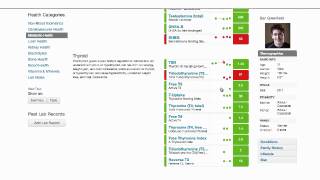
Ben Greenfield breaks down his blood panel results, showing how his high-fat diet and Ironman training affect his markers. His HDL is high and triglycerides low, but elevated cortisol is suppressing his free testosterone, and he's had to address low T3 during heavy training with supplements like Thyro Gold and curcumin.
Questions this video answers
244
~145
~91
4.56
About 86–90 mg/dL (examples given: 90, 87, 86, 90).
Chapters
Hey, it's Ben Greenfield. Welcome to my WellnessFX panel where I'm gonna walk you through the results of a performance evaluation that I take about every four months or so through WellnessFX. And the reason that I'm recording this video for you is so that I can walk you through some of the big results that I tend to see over and over again when it comes to things that most folks need to focus on and also to kind of give you some insight into what the results of my blood look like with regards to my high fat diet, Ironman training, what it looks like when you stop training for Ironman, which is about where I was two weeks into having taken this test. And just basically open your eyes to a few of the things that are important to take into consideration when you're looking at your own blood work. So what you're looking at right now is basically the WellnessFX dashboard and we're going to scroll down to really where the, where the good stuff starts, which is down here at cardiovascular health. So during the course of this video we're going to take a look at cardiovascular health, metabolic health, liver, kidney, electrolytes, bone health, blood health, vitamins and minerals, and I'll just explain each parameter as we go. So the very first thing that you're going to see is basic lipid panel. And the lipid panel tells you your overview of your cholesterols. Now, first of all, I try to keep my cholesterol above 200 because cholesterol that is below 200 has been shown to result in things like lower IQ, neural deficits, drops in hormones, drops in steroids. Basically cholesterol is necessary for everything from forming the sheath that surrounds your neural membranes and your nerve lining to, to your joints, your hormones as a hormonal precursor to the membranes of your cells. A lot of reasons to make sure that you're not trying to shove cholesterol down. Anyways, though, you can see here that my cholesterol is at 244. Now you'll see that my LDL. And even though this is termed as bad cholesterol on the Wellness Effects panel, I don't consider LDL to be bad cholesterol per se. My, my LDL cholesterol is at 91. That's fairly significant considering that I eat about an 80% fat based diet. My HDL cholesterol or my quote unquote good cholesterol is up around 145. And you can see that it's been rising over the entire summer that I've been eating a ketogenic high fat, low carb diet. It's very, very interesting that my good cholesterol has gone up and my bad cholesterol has gone down during the time that I've been eating that diet. Now, even more importantly to me is the fact that my triglycerides are rock bottom low. Now, something like low HDL combined with high triglycerides is a real risk factor for heart disease. And it's typically a scenario you see in a lot of people who eat vegetable oils, sugar, starches, et cetera. My HDL is through the roof and my triglycerides are very low, which is fantastic. What they say is that you're supposed to look for ratio of of around 1 to 2 and that triglyceride should be no more than about double what HDL is. But if you can get closer to a one to one ratio or even better yet, up around that four to one ratio where I'm at, you're looking at a really, really nice value for your basic lipid panel. Now, don't worry, as we're going through this panel, it's not just going to be me bragging about my values. There are some definite areas that I need to work on and we'll get into those. But as you can see, high fat, low carb diet definitely does not do anything bad when it comes to your HDL to triglyceride ratio. Now, of course, there are some other very important things to look at when you're considering cholesterol, and that is your LDL particles. And you can see down here the very low density lipoprotein cholesterol. Those are the small oxidized cholesterol particles that tend to dig their way into your arterial cell walls. It's very important that those stay low. You can see that my VLDLC is low. It's probably because of my low carbohydrate diet. Low amounts of sugar in my bloodstream, low amounts of cholesterol actually being oxidized. I'm also very, very careful with heated vegetable oils. I'm careful not to even heat things like extra virgin olive oil. Those are all things that could raise vldlc. You can see that mine is very low. Now, LP is a protein that adheres to the surface of cholesterol particles, as is apob. You can see that LP is low and total amount of LP is low. You can see the APO B here was kind of high over the summer. One of the things that can elevate APO B is High amounts of endurance training and heavy exercise. Now as I've started to kind of taper off of my Ironman training, which I was doing for about two weeks going into this test, you can see the APO B levels have begun to fall. Now it's very rare to ever see Apple B levels that are for example below 60 in anyone who has a high total cholesterol count simply because APOBE does adhere to the surface of LDL cholesterol particles. And so it's going to be somewhat elevated if your cholesterol is high, but ultimately you want it to be preferably below 100. I've seen people with Apple B particle levels up around 400, 500. Those are the real high risk scenarios. But, but elevated APO B in and of itself, especially in the presence of high HDL and low triglycerides is not something to be too concerned about. I think it's interesting that mine started to fall once I lowered my inflammation and began to do even less training, less hard and heavy exercise. Now a lot of people are under the impression that athletes walk around constantly inflamed. Now if you look at my inflammatory markers you'll see one spike. This spike here was taken the day after back to back triathlons back when I did the Olympic distance Wildflower triathlon followed by the half Ironman triathlon. And you could see my HSCRP There was at 4.56 through the roof. Now high inflammation is a very bad thing for probably obvious reasons and I probably don't need to jump into with you why inflammation is a bad thing. But it's very very interesting that even through the entire course of my ironman training and especially now that I've finished ironman training, my inflammation is rock bottom. I attribute that to the fact that I do eat a diet that's very very high in anti inflammatory fats such as omega 3 fatty acids. I take a great deal of curcumin which is a natural anti inflammatory. I use the form of phenocaine for that. I also use another supplement called Capreflex that's a natural inflammatory or anti inflammatory. I do lots of dark leafy greens and naturally low inflammation foods, but HSCRP is low which I'm very happy about. Now next we jump down to metabolic health. I like to see fasted glucose between 80 and 90. Now I've always kind of struggled a little bit. No matter how much I control my carbohydrate intake, with my fasted glucose never dropping quite as low as I'd like it to see. Now you can see there, 90, 87, 86, 90. I mean as long as it's below 100, it's really not that bad. But I would really like to see mine closer to being between 80 and 90. The fact is I've done genetic testing. I know that I have a higher than normal risk for type 2 diabetes myself as well as my brothers. We tend to struggle with getting low blood sugar for when we don't eat for long periods of time. We tend to really see our blood glucose rise quickly and then fall when we eat carbohydrate laden foods. So this is really inspiration for me to continue being really careful with my carbohydrate intake. And you know, 80 to 90 or 90 for a fasted blood glucose is not bad, but I really like to see it in the 80s to 90s. And this is something you can, you can even test this with just like a basic blood glucose monitor that you could get at, you know a.
Store like a pharmacy, like a Walgreens or a CVS or something like that. Hemoglobin A1C. A three month snapshot of my facet blood glucose values or my overall blood glucose values is consistently low, which I like. That means I'm not spiking my blood sugar levels a lot and that's a great value for that to be below 5.7. And you can also see that my insulin stays relatively low. I'm doing a really good job not making my pancreas churn out a bunch of insulin. Now these are values that you'd also expect to see in kind of like a higher fat, lower carbohydrate intake. Now next we jump down to hormones and like I mentioned, there are some areas that I need to work on and this is definitely one of them. You can see that as soon as I stop training for Ironman, my total testosterone started to rise. Just since I've stopped training for Ironman, it's gone up by 200 points. It's very rare that I see total testosterone high or up around that 700 plus value that I like to see in people who are doing hard and heavy training. Now since I started to back off a little bit, kind of go into more of this like muscle mass program that I'm doing. That's more weightlifting, less chronic repetitive motion cardio training, automatically you can see that my testosterone is starting to climb, which I'm very happy about. When I test again in about three months or so, I expect testosterone to be up above 700. I expect free testosterone to be much higher than it is right now. You can see that even though my total testosterone is climbing, my free testosterone is a little bit low. Now the reason for that is because my sex hormone binding globulin is high. And sex hormone binding globulin, no matter how high your total testosterone is, will bind to that total testosterone and cause that total testosterone to be in its inactive form. Unless sex hormone binding globulin is low. Now what's the main thing that can cause the sex hormone binding globulin to be elevated? Well, there's two things that tend to contribute to this pretty dramatically. One would be constantly elevated sex levels of blood sugar, high insulin levels, high glucose levels. That's not the case with me. But the other thing that can cause high levels of sex hormone binding globulin is high cortisol. And that's certainly the case. You can see that if we jump down to cortisol values here for a second, you'll see my cortisol levels have been dropping as I've quit training for Ironman triathlon, but they're still pretty high. And anytime you're hypercortisolic like this, it's pretty natural for those sex hormone binding globulin levels to be high. So the more I de stress, the more I start to kind of come down off of doing a lot of this heavy endurance training, the better and better my free testosterone levels are going to get. And I've already started to notice the effects of that, such as the way I wake up in the morning. As far as my levels of libido, you guys know what I'm talking about when I say the way I wake up in the morning. But just libido, sex drive, competitiveness, stuff like that has started to increase ever since I've just started doing something as simple as kind of dropping some of the weekend long bike rides and the long swims and even getting rid of the semi long run that I do. It's kind of interesting how the body bounces so quickly because it's only been two weeks since I've stopped doing that stuff.
Now here you can see thyroid. Now my thyroid got very concerning to me when I peaked for Ironman training over the summer. My TSH really went through the roof. My T3 dropped to rock bottom. A big, big reason for that is because carbohydrates and glucose are necessary for the conversion of T4 to T3. Hard and heavy training and high cortisol can also inhibit the conversion of the T3 to the active T4 version. And I was really noticing some big effects. Now, about here is where I started to take a supplement called thyro Gold and also eat more organ meats. Two good ways to give your thyroid what it needs. And you'll notice right away my TSH started to stabilize. My T3 is starting to climb. I'm feeling like my body temperature is not quite as cold, cold during the day. I've been taking my axillary and my oral body temperature in the morning, and those are all going up. So two takeaway points here. One, even if you're going like, ketogenic or low carb, be careful with how low carb you go. Well, you'll notice here, in this time frame, I switched from limiting my carbohydrates to no more than 75 grams per day to kind of keep me in ketosis, to giving myself 100 plus grams per day and in some cases, 200 grams of carbohydrates. I was still able to stay in ketosis, but my thyroid responded really favorably to that. And it just turns out that this whole low carb thing, you could still maintain a good lipid panel and a good blood sugar level. And if you're a very active person, you can still get away with eating a decent amount of carbohydrates. The more important thing is to time your carbohydrates properly as you're doing that. So what I mean by that is to time your carbohydrates to be in conjunction with exercise so that you're staying insulin sensitive. So before, during, and after your exercise sessions are primarily when you should be eating your carbohydrates. So my thyroid is starting to respond favorably to the measures that I've taken in terms of beginning to reduce cortisol and beginning to take some desiccated thyroid gland. I take one called Thyro Gold. And also beginning to drop off some of the hard and heavy training and, and make sure I'm getting enough carbohydrates. So next we get down to cortisol. Cortisol, or stress, is something I've always internalized. This is something I've always dealt with. You can see it's always high every time that I test, and I'm slowly but surely getting on it. But you can see that this is really an area I need to work on. No matter how de stressed I feel during the day, I'm obviously internalizing some of this stress. Cortisol is staying elevated because I do train a lot. I take pride in buffeting my body and trying to turn myself into a beast, so to speak. But I do need to be careful. High cortisol levels aren't healthy and you can see that reflected in my sex hormone binding globulin levels up here. And this is one of my big, big goals over the next few months is to really focus on getting those cortisol levels down through relaxation, meditation, yoga, not over training, etc. So insulin, like growth hormone, this is another thing that through hard and heavy training or through very low carbohydrate values can drop low. Now I'm not going to start eating a bunch of carbohydrate to jack up insulin and jack up insulin like growth factor. But one of the things that I am going to focus on is supplementing a little bit more with one thing that can help out quite a bit with growth hormone and growth factor. I'm going to be doubling the amount of a supplement called colostrum that I use. So rather than eating a bunch of sugar to get IGF up, I'm just going to take more Colostrum which has been shown in research to really, really help out with insulin like growth factor. And that's the way that I'm going to tackle that now. Next we jump down to the liver. Now you can see that all of my liver enzymes and these two mark orange and red, that's not because my liver enzymes are elevated. You'd see elevated liver enzymes in a case of, for example, lots and lots of food intake, exposure to environmental toxins, pollutants, hard and heavy training can cause the liver to have to get a little bit more stressed. Needing to detox can cause that. All those things you'll see that my liver enzymes used to be kind of high. If you look here, they used to be really in that high risk range. They've dropped very, very much in the past couple of months since I last tested. The main thing I can contribute that to is probably this MPX100 supplement I've been taking to control blood sugar level. It also contains rock lotus extract, which is a really, really good liver tonic. And this is about the point where you see these liver enzymes drop that I started taking that supplement. I take two about 30 minutes before dinner to control blood sugar levels. But it's got some really good liver cleansing properties in it too. That's really the only thing I can think of that would have caused these to drop as low as they did. So I'm really happy my liver is looking really healthy at this point. So that's good. Kidney function all looks good. Blood urea nitrogen, you can see that flag's red. That's always going to be high if you've exercised within a couple of days of the test. And I actually exercise, I went for a long swim like the night before. I fasted and went in and took this test. So it's no surprise to me that blood urea nitrogen is high and even creatinine is borderline elevated. That's very, very common if you've been exercising, so that's really not a cause of concern for me. It'll also be elevated if you haven't been hydrating properly, etc. But I drink a ton of water. For me, it was just the fact that I exercised the day before. So you always have to take some of these numbers into context in terms of where you're at in life. You can see here that all of my electrolytes are really well balanced. There was a point during my hard and heavy ironman training where my CO2 dropped as low as 21. That reflects that you've become very acidic. And acidity can be created through eating tons and tons of meats, starches, sugars, processed foods, vegetable oils, etc. And it can also be produced by simply training a ton and leaching a lot of minerals. Well, you can see as soon as I stopped really that hard and heavy ironman training, my alkalinity restored. And I'm really, really careful to get lots of dark leafy greens to use lots of like sea salts and alkalinizing foods. And I really like to see that CO2 value between about 25 and 30. So I'm really happy with where the PH of my body is at now. Down here under bone, you can see that alkaline phosphatase flags kind of low. I would be more concerned if that were really, really high. We wouldn't want alkaline phosphatase to be high because that reflects some issues with the liver. I like that it's low. I'm not concerned about my bone density at all because my calcium levels are really nice. They're right where they're supposed to be balanced in between 8 and 10. And my vitamin D, again, you can see here, as soon as I quit ironman training, my vitamin D jumped back by 10 points, reflecting less shuttling of a lot of my hormone and steroid precursors towards cortisol. So I'm really happy about that vitamin D value and that's great. I like to see it between 40 and 70, especially in athletes. So really happy about that. When we jump down to blood health, you can see all my red blood count, my hemoglobin, my hematocrit. Everything is looking really nice. I'm really happy about that. I've been going out of my way to make sure to eat some kind of a red meat a couple of times a week. I'm doing spinach and kale and dark leafy greens every morning for breakfast. So all of that is looking really, really good. You can see that somebody was just trying to call me on Skype. That was probably for a podcast I'm supposed to be on right now. We're almost done, so don't worry.
Okay. White blood cell count. All of my white blood cells are looking really good. They started to get a little bit suppressed during the season of Ironman training. I started taking echinacea, astragalus and oil of oregano. Those are three essential oils that I put into my diet. And you can see that they've really, really stabilized my immune system, my white blood cell count. Everything's looking really good from an immunity standpoint. So I'm happy with that as well. And that's looking good. You can see that. Even though my iron got kind of low over the summer, that started to climb as I started to eat more of the red meat and make sure I went out of my way to include things not only like red meat, but also organ meats. I started to eat liver once a week when that iron drop to 44 in the middle of the race season, and you can see that that number has responded really favorably. So I'm really happy about that. Iron and iron saturation and ferritin, all of that's looking really good, as is my platelet count, which is fantastic. So just a couple other quick things to hear down towards the bottom. Ignore this RBC folate number. That's a random value. We didn't even test that. I don't even know why that's appearing on this test. It's. That's not supposed to be there. So anyways, my vitamin B12 is through the freaking roof. You can see top level here is 300. I'm up in the 1000s. It's probably because I use a vitamin B12 supplement before my workouts called life shots that my. My physician designed for me to take. And my no issues with vitamin B12. So that's great. It's not a toxic vitamin. That's fantastic for energy levels for that to be elevated. You can see down here, this is just about everything that we've already been over, except RBC magnesium. You can see that magnesium is interestingly kind of borderline low. I mean, when you're sweating a lot and you're losing a lot of minerals, it'll tend to be low. But I think it's interesting here that even though I use magnesium before I go to bed at night and I even use some transdermal magnesium, it's not, you know, it's a little bit suppressed. It's towards that lower value. I may consider actually using a little bit more transdermal magnesium on a daily basis because that stuff gets absorbed really well. Right now I do about 10 sprays or so of magnesium or a quarter size piece of magnesium lotion on myself after my workouts. I'll probably about double that just to see if I can get my RBC magnesium levels up. Because magnesium is a really fantastic electrolyte to have in good levels in your body for a lot of different enzymatic reactions. All right, so that's the end of the panel. And I hope that really helped you in terms of seeing how you can interpret some of these values. And I know I probably created a lot of questions here. You'll notice that I actually do not have this particular post open to comments now. There's a reason for that. I've actually got a separate section for comments open in the Ben Greenfield Fitness inner circle. My reason for that is because I want to give my inner circle members some value. It's 10 bucks a month to be part of the inner circle. And that's kind of an area of Ben Greenfield Fitness where we tend to geek out on this stuff anyways. So if you want to really dig in and comment on these values and get into some discussion around these values, you can click on the link there in the blog post to join the inner circle. It's well worth it. And we just have a forum discussion going on right now around these values. So if you have questions and you want to open up some comments about this stuff, just head over to the inner circle. And I'm happy to kind of comment and stuff there, but I know I'm going to spend a lot of time replying to comments and answering questions about blood work. I'd rather do that for the people that are actually part of my inner circle. So that's why the comments aren't open on this blog. But you know how to get in the inner circle and it's not hard to do. And I mean, for 10 bucks a month, you can't go wrong so, anyways, I hope that was helpful. And if you have questions, head over to the inner circle and I'll see you in there. And until next time, thanks for watching. This is Ben Greenfield signing out.
More from Jeffrey





The Solution to Aging Might Be Closer Than Anyone Realizes - With Ben Goertzel


