Ben Greenfield's Blood Testing Results
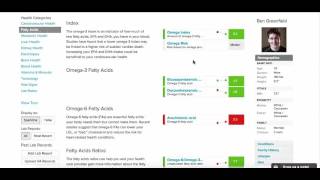
Ben Greenfield walks through his comprehensive blood panel, revealing high HDL and low iron, slightly suppressed thyroid hormones, and elevated cortisol. He recommends off-season rest, Thyro Gold, iron bisglycinate, vitamin D, and magnesium to address the imbalances.
Chapters
Hello, everyone. It's Ben Greenfield here, and today I have the pleasure of sharing with you all of the nitty gritty things that are floating around in my personal blood. I had the pleasure of helping a company called WellnessFX here in the States design a panel called the Longevity Panel. The idea being, what if you could test everything that could be tested in the blood, what would be the most comprehensive test that you could get? So I went ahead and put myself through this panel, and it is called the Greenfield Longevity Panel. In today's video, I'm going to walk you through what to look for in your blood, whether you do this panel or any other panel from a basic complete blood count that your doctor might order for you, along with a comprehensive metabolic panel or a deeper dive like this one. So either way, let's jump in. Cardiovascular health, I always am sure to keep my total cholesterol above 200. Important for neural health. It's important for hormonal health. And whenever you are making an attempt to keep cholesterol levels high, it is very important that you keep inflammation low, you keep blood glucose low, and you also optimize your triglyceride to HDL ratio. If any of these are unfavorable in the presence of high cholesterol, that high cholesterol could be doing you just as much damage as good. So you can see that my cholesterol here is at 219. That's the total cholesterol. Now, the HDL is at 114, very, very high, and LDL is at 97. So whenever your HDL is this high, make sure if you're able to look at the particles associated with HDL, in particular one called APOA1, you want to make sure that APOA1 is high. So what APOA1 does is it helps HDL particles bind to blood vessels. And if you have low levels of Apoa 1, even if you have high HDL, that high HDL is more likely to become oxidized or adhere to glucose in your bloodstream and kind of fight against your health. So you want to make sure that APOA1 is high if HDL is high, and in this case, mine is. So I'm happy, and I'm going to move on to the triglyceride to HDL ratio. The triglyceride to HDL ratio is a bigger risk factor for coronary heart disease than LDL or total cholesterol. And you want it to be below one. Okay? You want your triglyceride to HDL ratio to be below One you can see here, mine is at 0.4. The type of things that increase HDL for example, would be like plant matter and vegetables, fiber, fish oil, interestingly is another fish and fish oil. The type of things that would increase triglycerides would be alcohol and or fructose intake, high amount of vegetable oil, high amount of sugar or starch, and even more overdoing things on the butter, coconut oil, MCT oil side. So basically the idea is you want to do everything you can to keep HDL up and triglycerides relatively low. So I'm happy with my trig to HDL ratio. But if you're looking at your lipid panel, that's another very important one to look at. Now you'll see some other parameters here associated with the basic lipid panel. And these are all LDL particle calculations which often aren't done on a lipid panel. The type of testing WellnessFX does allows them to look at things like the size. You may have heard that the size of your LDL cholesterol particles is very important. So I can see that I've got nice big fluffy LDL particles and a very, very low amount of very low density lipoprotein cholesterol. So very, very low amounts of the type of cholesterol that tends to become atherosclerotic and dig its way into arterial cell walls. My LDL particle count is high, but I expect it to be high because my total cholesterol is high, my small LD mildly elevated, as are my medium LDLs. But again, I'm only really concerned about the VLDL here and also the large LDL size. I expect all these other parameters, for example the actual small LDL particles and the medium LDL particles to be borderline elevated just because I have high total cholesterol. So that being said, let's go ahead and move down to inflammation. You can see here that in previous tests my inflammation has been all over the place. These two red dots are when I tested directly after this was after an Ironman triathlon. This other red dot was after back to back spartan races. Aside from that, I like to keep general inflammation very low. HSCRP is more of a marker of general muscle inflammation in general whole body inflammation, whereas Lp PLA2 would be more of an indicator of vascular inflammation. Homocysteine is a little bit of mix muscular and vascular and then fibrinogen is typically muscle damage. I eat a relatively high plant, high dark vegetable, high antioxidant type of diet. I try to keep My inflammation low with things like cold baths and recovery protocols and smart proper training. So my inflammation is generally pretty low. A little bit surprising to me is I did exercise the day prior to this test. You're not supposed to do that, but I had to get my workout in. So anyways, I had exercise going into this test, but still inflammation was pretty low despite that. So this is important also with my high cholesterol levels that I keep inflammation down. And these four markers of inflammation kind cover all the bases of inflammation. So you can look at both muscular inflammation as well as vascular inflammation. A lot of times if LP PLA2 is high, by the way, it doesn't just indicate vascular inflammation, but it can also indicate gut inflammation. So sometimes if that's really elevated, I'll advise or go on to do a gut panel, a stool test, lovely as those are. Okay, next we get to fatty acids. Now the fatty acids are what help you to build cell membranes and they're responsible for anti inflammatory. DHA especially is important for neuronal health. So my free fatty acid count is low. I don't necessarily want a whole bunch of fatty acids floating around my bloodstream, just like I don't want a bunch of glucose floating around in my bloodstream. Because very high amounts of free fatty acids can lead to plaque formation. They can deposit in blood vessels. So my fatty acid count is low, which I am happy about. It's low even though I eat a relatively high fat diet. But I'm more interested in my omega 6 omega 3 fatty acid ratio and also the amount of DHA that I have. So you can see that the omega 3 index is an indicator of EPA and DHA. How much EPA and DHA you have in your blood, you can see mine has actually dropped a little bit since my last test. So I've got slightly lower levels of some of the omega 3 fatty acids. But again, I'm still not too concerned because they're well within regular values. I haven't changed a whole lot in my diet that would have influenced this. Aside from I quit doing sardines with my morning or with my afternoon lunch, I'm guessing that's probably had the biggest influence on omega 3 fatty acids. I just did that because I got into the habit of running in the afternoon and I felt like I was burping up sardines. So I quit the sardines and my afternoon lunch is a little bit more vegetarian. Avocado, seeds, nuts, stuff like that. That may have affected that omega 3 fatty acid ratio. Omega 6 fatty acids have climbed a little bit, but again are not concerningly high. DHA is nice and high and again that has dropped as well, probably due to some reduction in fish intake. So something to note. I may even want to, for example, take extra fish oil in the morning. That would be one thing to do. And then my arachidonic acid to EPA ratio, how much arachidonic I have acid, omega 6 fatty acids I have compared to omega 3 fatty acids. That's also gone up slightly. Again, probably not because I've increased the amount of vegetable oils or omega 6 fatty acids that I'm consuming, more likely because I've slightly decreased the amount of Omega 3s I'm consuming. But I'm still well within the parameters of what I would, what I would want from a fatty acid panel standpoint. So some interesting things on the fat side. Next we get to metabolic health. So I always look for hemoglobin A1C, which is a three month snapshot of your average blood sugar levels. I want that at 5.5 or lower because red blood cell turnover in athletes and exercising individuals is higher than in the general population. This is less of a reliable number in athletes than it is in the general population compared to just looking at what fasted glucose looks like that morning. But nonetheless, I'm happy that it's low and I'm happy that insulin is low as well. Glucose being at 90 for me, I'm okay with that. 85 to 89 I think is a little bit more metabolically favorable. I have done genetic testing via 23andMe. I know I have a higher than normal risk for type 2 diabetes. High blood glucose is something I've always had to fight against. I've done a pretty good job keeping it normalized. But I'll continue to take the measures that I do avoiding high amount of starches, sugars, including natural insulin stabilizers like cinnamon, apple, cider vinegar, things like that in my daily routine. Now next we get to my bane. One thing that I've always had to fight an uphill battle against. I suspect due to a combination of high cortisol and gut stress. Gut stress from simply consuming an ungodly amount of calories to support a very active lifestyle. And then of cortisol and high stress from just a lot of exercise, I do beat my body up. I do some pretty masochistic things. When you have high levels of cortisol, the conversion of T4 to your T3 can be inhibited. You can see my total T3 is a little bit tanked. My TSH, which is the signal that my brain sends to my thyroid gland to produce thyroid, that also is a little bit high. When that is high, it means your body is trying to get you to produce more thyroid. In this case, I'm producing a decent amount of T4, just not a lot of it is getting converted into T3. Now, this isn't necessarily due to some kind of like a food allergy reaction. You can see my antibodies to thyroid are very low. In this case, it's likely due to stress. I get more than adequate iodine, selenium precursors for thyroid health, et cetera. This would be a scenario where I would advise myself or others who have a similar profile to either a, or take a really nice good off season, which I will be doing here in about a month. You'll see me drop off the face of the planet in terms of athletic events for about a month and a half. And I'll typically see levels stabilize after that. And then also the other thing is even consider using a little bit of extra help with thyroid. I will probably start back into after seeing these values, a supplement called Thyro Gold, which is a mix of T1, T2, T3 and T4. It's not like a synthetic T3 like Armour Thyroid is, for example, or not Armour Thyroid, Levothyroxine or Synthroid. And it also doesn't have gluten and things in it like Armour Thyroid does. So I'm always fighting an uphill battle against the thyroid. Despite this, I continue to do my cold thermogenesis and cold showers, even though perhaps I'm colder than I should be when I do those, because my thyroid isn't keeping me as warm as it could. But nonetheless, that's a red flag for me and something to continue to keep my eye on is my thyroid.
So next up is cortisol. Like I mentioned, my cortisol is slightly elevated, frankly, in people who don't do a lot of exercise or people who do more, whatever they do, three yoga sessions a week and a few 20 minute bike rides, I tend to see Cortisol values between about 8 and 12. In athletes, I tend to see values closer to 15 and 20 plus. And again, it's because your body turns out much more stress hormone. I suspect even in the morning, for a morning blood value of cortisol, that it's even higher than it would be throughout the day because your body gets out of bed. I don't know about you, but I get out of bed ready and roaring and ready to rumble. So Cortisol is elevated. When cortisol is elevated like this, one of the other things that tracks along with hypercortisolism is typically a little bit of thyroid disruption. The other thing you tend to see is a drop or, I'm sorry, a rise in sex hormone binding globulin. You can see my sex hormone binding globulin is also high. What this means is that when your body is stressed, it essentially sends you a message, your gonads message to decrease fertility a little bit. So the total testosterone that you're making, you can see my total testosterone is at 478 here. A lot of it does not get converted into free testosterone the way that it should. Now granted, testosterone values tend to be all over the map when it comes to what allows someone to have normal libido and motivation and what doesn't. My libido.
My sexual motivation is up, but my free testosterone is still a little bit low and total testosterone is a little bit low. Now, luteinizing hormone, the message that my brain sends to my testes to produce testosterone, is also low. Meaning that I could likely come at this from two ways. I could decrease cortisol, but I could also use things. There are things like bulbous and stinging nettle and some of these herbs out there that can help you to produce more luteinizing hormone if the brain is not producing as much as it should. Again, I could also quit beating myself up so much and take an off season here for a little while and let those reproductive hormone values come back into line. But again, it appears that in the hormonal department regarding both thyroid and testosterone, things that I've always had to fight a little bit against, I still have some work to do. A couple of things I skipped over here regarding metabolic hormones, by the way. Insulin is low, but insulin like growth factor is not extremely low. I like for insulin to be low, but insulin like growth factor, a bigger measure of anabolism and a precursor to growth hormone. I like for that to be mid range or high. Even if insulin is low. In my case, I think I'm still, yes, I'm still borderline low on insulin like growth factor. So. So again, from a hormonal standpoint.
Let'S put it this way. Let's say I were to go from the weight I'm at right now, 175, up to my normal body weight that I stay at when I am not restricting calories, which is 190, and I were to back off endurance and running even more, lift some heavy stuff, take an off season, blah, blah, blah. All the things that.
It'S always a balancing act, right? Between physical activity and caloric control and going out and doing these things like Spartans and runs and stuff like that, and putting some weight on and optimizing hormones, right? So this I'll admit that my metabolic hormones, my thyroid, my reproductive hormones definitely make me want to take an extended off season this year and then retest hormones and see where they're at to see the impact that that has. Okay, liver, like I mentioned, I exercised the day before. I tend to do that a lot. So aspartate aminotransferase and alanine aminotransferase, two liver enzymes that tend to be elevated in response to physical activity are indeed elevated now. Alkaline phosphatase. A lot of times alkaline phosphatase can be up when you have some liver damage or specifically liver inflammation due to medications, alcohol, poor diet, etc. This one, fortunately, is very low. That's the one I care about a little bit more. But sometimes people will tend to see their liver ends elevated and freak out and go do whatever a liver detox when they just shouldn't have lifted weights the day before the test. So there's that bilirubin, albumin, total protein, et cetera look good. Sometimes I see total protein albumin through the roof in like eggs, bacon, liver steak. People who are just eating that too much protein all day long, which can be stressful in the liver. So I always check out those values too to make sure I'm not overloading myself with proteins. Okay, Creatinine measurement of kidney function. That one is not super elevated. I do use creatine. Anyone who uses creatine will see mildly elevated levels of creatinine in the kidneys, as will anyone who has exercised the day prior to the test. Same with blood urea nitrogen. If you exercise the day prior to a test, blood urea and nitrogen will also tend to be up. However, at the time that I took this test, I was also doing and you could do a search for this@BenGreenfieldFitness.com if you wanted to urine all the I was testing my urine for a couple of weeks to see if I was properly hydrated. And I was looking specifically something called urine specific gravity. It turns out that my urine specific gravity was showing that I am or have been mildly dehydrated during the day. Not drinking enough water, basically. And I drink, I would say about a if you picture a Starbucks cup, like a tall Starbucks, which is 12 to 16 ounces. Somewhere in there. I have one of those every hour during the day. So I drink a lot of water and I'm still showing some signs that I could be dehydrated. So blood, urine, nitrogen is up a little bit and I'll continue to focus on drinking adequate amounts of wadah. Okay. Electrolytes. One thing I always look at in addition to sodium, potassium and calcium, which I'll check out fine on me, are chloride and CO2. Very, very low. CO2 can indicate a net acidic state. So a value of 28 indicates good acid alkaline balance. The same with chloride. Chloride is an electrolyte that if that's abnormal, that also can show an improper acid alkaline balance. In my case, chloride is not super low, CO2 is not super low. So I'm pretty happy with that value. That's actually a pretty good one to look at if you're concerned about overtraining too. Is your CO2 chloride levels okay? Vitamin D. Interestingly, my vitamin D has dropped. It is winter here. The sun is shining less. I live on a north facing slope and despite spending a good amount of time outdoors, I'm probably going to need to step up my vitamin D supplementation and my intake of fat soluble rich foods this winter. Because vitamin D is a little bit lower than what I would like it to be. And the ideal range is, it's not like more is better, but an ideal range is 40 to 80. Okay. Mine is at 37. So I need to get a little bit more vitamin D into my system. I take about 2,000 units a day. Now I probably need to step that up to about 4,000 units a day and then I'll retest after I do an off season this winter. Okay. Blood health. My platelet count, my ability to form cells look good. Sometimes I see platelet count very, very low in people who don't get enough vitamin K2 because that helps you form clots. But this platelet count looks fine. No signs of severe immune system depression, which you tend to see a lot of times. Sometimes I'll see red across the board in athletes who are beating themselves up way too much. I mean really close to overtraining because of complete immune system depression. My immune system values look pretty good. Maybe it's all that, that chaga mushroom I've been consuming. But I'm happy with my white blood cell count. I don't really have any issues with the immune system. I don't really ever get sick either. So I think I've just, I've got a pretty decent genetic card dealt to me when it comes to immune system and white blood cells that's probably a part of this as well.
Red blood cells also look pretty good. My hematocrit looks just fine. Red blood cell count and hemoglobin all look good. So I'm happy with that. There is one value for red blood cells, iron that you see down here. Along with ferritin, which is my iron storage protein. My iron is very low, almost down to anemic like levels. So I need to step up my iron intake. And again whenever I look at blood work and supplementation I look at things like little targets I can throw darts at. So for example for the thyroid I will use for example like that thyro gold stuff. For iron I will use, I'll start using a non constipating form of iron exos makes one called iron bisglycinate.
And I'm going through these values. Basically you're getting to see me go through these kind of of in real time as I look at them and think out loud. I'll start into iron bisglycinate this week and so I will test again because it's very important, especially for males who aren't losing blood each month to keep track of potential for hemochromatosis or iron overload. But in this case I will definitely start into an iron bisglycinate. And as far as ferritin goes, a lot of times if you start using iron, ferritin will go up. If iron is already high and ferritin is low, there's another supplement called ferritin pyrophosphate, a non constipating form of ferritin. There's a company called Floradix that makes that. But in this case I'll just start on the iron bisglycinate.
Okay, a few other things here. My folate looks really good. Just my folic acid values. Vitamin B12 also looks good. RBC folate, the folate found in red blood cells. You can see this is red, but this is a measurement a long time ago. This was actually a lab error value so I wouldn't pay attention to that one as it was just kind of an errant value that made its way under the test. You can see most of these values look pretty good. Magnesium, copper, selenium and calcium. However, my magnesium has gone down a little bit from my last test and kind of hovered a little bit low on some other tests as well. I've been using transdermal magnesium. I probably have not been using enough. I've been using about a quarter size dab on each hand, which comes out to the equivalent of around 50 milligrams of magnesium. For targeted supplementation, I'll often Recommend north of 300mg of magnesium. So I may begin to use a little bit of oral magnesium supplementation just because frankly topical magnesium is expensive, but something like a natural calm oral magnesium in the evening. I'll probably step up my magnesium intake a little bit after seeing that magnesium is just a little bit suppressed. So toxicology this particular longevity blood panel does include measurements for metals, in this case lead and mercury, which thank goodness are both low, which is fantastic. So those are the biggies. Everything else is just like vital signs, weight, blah blah blah. But those are the biggies from the longevity panel. And of course you can see I've got a running value here. Previous tests I've done. I can upload VA records, I can add lab reports from other labs. I can look at this in table format. I can look at my most recent labs if I click here versus looking at all my labs.
I'm just showing you some of the other features here. I can schedule a consultation with a practitioner physician if I want to. I can look over recommendations that docs have given me in the past and that they've uploaded to my panel. So kind of a cool interface. This is why I like the WellnessFX interface. Anyways, though I know you probably you may have some questions or maybe you're just the smart little rocket scientist cookie and you soaked all that up. But either way, leave your comments, your questions, your feedback in the comment section below this video and I will be happy to reply. If you happen to be watching this on YouTube, just go to BenGreenfieldFitness.com longevity1 that's BenGreenfieldFitness.com Longevity the number one. And you can access the comments and everything to ask over there along with seeing a description from me on how exactly to go about getting this test for yourself if that's something you want to do. Okay, thanks for watching. And if you're watching this video, the time it comes out, Happy post Halloween. Woohoo. Pumpkin faces galore. Scary pumpkin face on my cholesterol.
More from Jeffrey





The Solution to Aging Might Be Closer Than Anyone Realizes - With Ben Goertzel


