Caffeine Evolved: The New Darling Molecule Of The Energy Supplement Industry - "Paraxanthine"
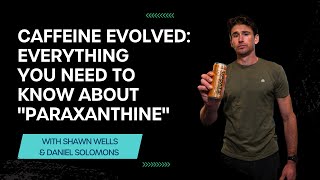
Ben Greenfield interviews Sean Wells and Daniel Solomons about paraxanthine, the main metabolite of caffeine that your body produces from 72-84% of what you drink. They claim isolated paraxanthine delivers caffeine's focus and endurance benefits with less anxiety and sleep disruption, and discuss Update, a 300 mg paraxanthine energy drink with taurine and amino acids.
Questions this video answers
Speakers state roughly 72%–84% ("roughly 80%") of caffeine converts to paraxanthine.
Speakers report 300 mg of paraxanthine per can.
Speakers state each can contains about 15–20 calories.
Referred to as Infinity (spelled/marketed by speakers as "nfinity"/Infinity).
Chapters
When you increase paraxanthine versus caffeine, you see reduction in errors versus with caffeine, increased errors. We're seeing improved endurance and resistance to fatigue and overall improved performance because of the things that I was mentioning. You're increasing nitric oxide, you're increasing neuroplasticity, you're increasing serotonin dopamine, you're decreasing beta amyloid plaque. Are all these things that are happening. There is this afterglow period, and again, we're seeing this time effect so that, like, the more you use it, the better it gets.
All right, so you, if you're listening, might have heard me talking in the past, recently, at least, about this new energy molecule that I've been experimenting with called paraxanthine. It's spelled an X, P A R A X A N T H, I, N E. It's super interesting. And although my guests on today's show will be able to explain this stuff a little bit better, it's. It feels like caffeine, but it's a little bit different. Like, you don't get this crash. You get a lot better focus. A lot of people, including myself, say it seems to give you more swagger and more confidence. You could take it late in the day and still sleep. Okay, it's super interesting. And it seems like energy compounds are a dime a dozen. They're obviously all over the place. You can't swing a dead cat by the tail without hitting some new energy drink or new energy capsule or supplement or patch or something like that. And frankly, I use a lot of them just because people send me this stuff and I experiment with it. I try everything at least once, once. And I've had things like the sweaty palms and the racing heart and the crash and the poor sleep and a lot of the stuff that goes along with many of these fringe molecules that pop up. But this one, paraxanthine, is kind of like. It stuck with me. Like, I like it. I think that the very first person I heard about it from was one of the guests on today's show, Sean Wells, who. Who's been on my podcast before. He's actually known as one of the world's leading formulators and is a nutritional biochemist. And when I was talking with Sean, I forget Sean if it was on a podcast or if we were just chatting offline in person. You told me about this paraxanthine stuff, and I think you sent me a beta batch, like, some little capsules of it. And then later on, I met your friend Daniel, who's also on the call, Daniel Solomons and and Daniel had been working with you to figure out how to get it into a drink. So I tried the capsules and those worked pretty well. Then I tried the drink and that was even better. I think you combined it with some stuff that you can tell us about. So long story short is this stuff's super interesting. I don't think a lot of people even know about it yet, but I wanted to break the news about Paraxanthine. So Daniel and Sean, welcome to the show.
Thanks for having me on.
Yeah, yeah, for sure. And by the way, for those of you listening in, we are now doing almost all of our podcasts, video podcasts. You can watch this on YouTube or you can go to the show notes and that's going to be@BenGreenfieldLife.com update podcast BenGreenfieldLife.com update podcast because the name of this stuff that has the paraxanthin in it, this drink is called Update. Now that we're doing video, I should have grabbed a can, brought it down to my office, but I didn't. I've actually been drinking it like in the late afternoon. It's like my late afternoon pick me up because I still like to have a cup of coffee in the morning. I don't want to double up and double fist too much. But anyways, just one other quick thing for people listening in. You probably already familiar with Sean because he's been on the show before and I'll link to some of the other podcasts that we've done, but he's formulated like a thousand different supplements and foods and beverages and cosmeceuticals. He's got 25 different novel ingredients and he's kind like known as an ingredientologist, if that's an actual term. And so he basically studies this stuff in his sleep. And then Daniel has not been on the show before. Sorry, Daniel, you're gonna have to keep up with Sean as a three peak guest. But Daniel is the co founder of this company, Update, and.
He has a background in working to develop some pretty groundbreaking formulas. So this one amongst them. So Sean and Daniel have kind of partnered up on this thing and so we got both of them on the show. So as is always the awkward case when I've got two guests who wants to be the first person to explain what Paraxanthine is? And I don't care if you get super scientific, but just ease us into it. Don't blow too much smoke out of our ears too soon.
So firstly I'm glad he told you what paraxanthin was when he sent you the bag of capsules. I didn't get a warning. I was just sent a bag of capsules and told me if you like it. So that was my foray into paraxanthine. Paraxanthin is the main metabolite of caffeine. So when you consume caffeine, whether it's in a coffee, a tea, an energy drink, it's going to break down in your liver into three metabolites, paraxanthine being the primary one. It breaks down to roughly 80%, and then you have the abromine and theophylline and.
Okay, wait, wait. So coffee breaks down into those three. Paraxanthine. You said theobromine and theophylline. So when you drink a cup of coffee, you're getting all three of those.
Exactly. So paraxanthine isn't something new. It's not something that we should be spooked out about. It's just something we haven't really known or haven't discussed before.
Until now.
If we've been drinking coffee for. I don't know, I forget what it is. When that guy first fed his goats coffee beans and they got all hyped up. I don't know if it was hundreds years ago or thousands years ago or what. I'm not a coffee historian, but why didn't we really stumble across the idea of isolating this stuff until recently?
That's an amazing question and one I get asked often. I think there's a few reasons. One, when you look at the conversion, imagine caffeine, if you're. If you're listening at kind of the top of this pyramid, right? And then there's the split, like as Daniel said, into these three metabolites of theophylline, theobromine, paraxanthine, the majority of caffeine converts into paraxanthine. So you might look at this and say somewhere between 72% and 84% of caffeine is converting to paraxanthine. So why would we really need to take it? And two, when you look back just 10 years ago, it was believed that paraxanthine did not occur naturally. Now, we've found many food sources of it occurring naturally. Now, we've done a lot of work on that. So that wasn't fully understood. And I think that held up some things, and it was just considered maybe a chemical compound. So I think it's those two things. But now we found that it occurs naturally. And here's the thing that makes this very different that when you one, you have fast and slow metabolizers of caffeine. Looking at the CYP1A2 gene, like I'm sure a lot of your followers have looked at this genetic information and you can decide whether you are this fast or slow metabolizer. And by the way, it gets super complex. I'm saying this very simply, when I've looked this up, there's actually like 43 variants of this gene. So it's not just fast and slow. There's medium, there's people that have deficiencies, people that have no gene.
It's like muscle fibers. People hear about type 1 and type 2 and then you actually find out that you've got a whole host of slow oxidative, fast oxidative, fast glycolytic, type 1, type 2A, type 2B. So yeah, painting with a broad brush, most people just think they're either fast coffee metabolizers or slow, I should say caffeine metabolizers.
Yeah, so, so here's the thing. We know there's a lot of bio individuality at the point of caffeine where so much so that some people, the fast metabolizers people say, oh, I can have coffee and go straight to sleep. Right. A lot of people are like that out there. There's people that have a one and a half hour half life for caffeine. At the opposite end of the spectrum, there's people that have, we're seeing 10 and a half 14 in some literature. And then those people that don't even have the Gene, it's like 152 hours to clear this stuff out. But there's a lot of us, many of us, that it's taking three days to eliminate caffeine from our system. And so what we're seeing with paraxanthin, if you're the fast metabolizer and you say, oh, I can have coffee and go straight to bed, you're not getting the side effects, which is great, but you're not really getting the benefits either. And on the other end of the spectrum with the slow metabolizers, those are the people that are generally in the hell created by caffeine where they're not getting the benefits and they're not and they're getting all the side effects. And so this is where there's a huge difference when we go directly to paraxanthine because paraxanthine we're seeing is the majority, the lion's share of the benefits that you get from caffeine. So that conversion is the most important step. And when you're a slow metabolizer, you're stuck in what's generally a toxic state with caffeine. I mean, think about caffeine was in plants generally to be toxic to insects as like an essentially an insect repellent.
You mean it was like a plant defense mechanism?
Exactly.
Like lectins or gluten would be.
And we see theobromine, which is fairly benign in humans, but it has toxicity in cats and dogs. Theophylline is a controlled substance. Right. And a bronchodilator, a ton of side effects. And so we're seeing that these molecules, except for paraxanthine, have many side effects, have greater toxicity. And this one compound that has all the benefits, doesn't have the toxicity, doesn't have the side effects, doesn't disrupt your sleep, doesn't give you the anxiety issues. And then we're seeing it's 50% better at adenosine inhibition. We're seeing it's 50% better at dopamine. So you are getting more of that, as you mentioned, the swagger, the focus.
The productivity that comes with dopamine. You're also getting the neuroprotection that comes with dopamine. When you look at neurological conditions, degeneration such as Parkinson's.
But on a preclinical sense, we're seeing so many things change. We're seeing BDNF elevated, which is a hot term, right? Like the brain derived neurotrophic factor, neuroplasticity. We're seeing that upregulated. We're seeing serotonin upregulated along with the dopamine. We're seeing reduced oxidative stress and we're seeing increased along those lines, increased glutathione and catalase.
You know, we're seeing a decreased beta amyloid plaque. So now think of that as a potential mechanism for Alzheimer's. So we're seeing increased nitric oxide to the brain via PDE9 inhibition. So think about how not only are you getting the focus and the energy, but it's not that come at a cost type thing like caffeine's always been. This is like actually making you better. And we're actually seeing this with some early data.
And I can't really explain it all quite yet because it's too preliminary, but we're seeing that there is a time effect, meaning like when we continue to use it, the results get better. So this is like.
And that's Interesting, because people will say that about like, I don't know, like, like Provigil, Modafinil. Right. People are like, oh, it's like driving a car, you take it and you eventually kind of like learn how to operate and function better and better the longer you take. And obviously there's a lot of, at least in my opinion. I don't know what your opinion is, Sean or Daniel. I think there's some dopaminergic issues with long term use of a pretty powerful sledgehammer like Modafinil compared to something like this. But why would that be, you know, with a molecule like paraxanthine that the more you use it, the better it works versus what you'd expect with an energetic compound being that the more you use it, the more you'd need to actually feel stimulated.
Well, it's not just inhibition, like you know, this adenosine pathway. It's not just like the histamine modulation like with Provigil or New Vigil, you know. And by the way, there is a study with rodents that showed that paraxanthine outperformed Provigil.
So but, and I'm not making any claims for humans around that don't connect that to me, but just since you brought that up. But I think the whole point of this is what I was just saying. Like people talk about there being no crash and they're almost being like an afterglow. Right. Like after the adenosine inhibition phase. And this is by the way a shorter acting molecule than caffeine. It's much cleaner for that reason and more consistent bio individually. Like where people can take this at 5 or 6pm, have a great workout and still get great sleep.
Yeah, well actually, actually I don't want to like toot your horn too much, but I would argue better sleep. Like that's actually what I might like. And obviously I'm doing a lot of stuff when I'm going through a typical series of weeks. And I would say that there were a few things that I did close to the time that I started to use Paraxanthine. Like I started to experiment a little bit more consistently with mouth taping and was, was doing using a lot of different forms of red light in the morning, et cetera. But I mean I can guarantee that the extent to which it increased my energy levels again when I'm using it in the late afternoon were a little bit.
Concerning to me. When I thought about what was probably going to happen to my sleep architecture, that didn't happen. And my Sleep scores have been consistently improving. And I can't again attribute that all to the paraxanthine. But then the other thing you mentioned about the, the afterglow effect, I mean, people talk about that with like lsd, you know, microdosing or even macro dosing with lsd. They'll say the next day is amazing. And so people are noticing something similar with parazanthin is what you're saying.
Yeah, there's a. They're not perceiving the drop off or the crash that they're used to with a number of these other compounds that you mentioned, these other methylxanthines, including caffeine. You know, we're seeing that because of the things that I was mentioning. You're increasing nitric oxide, you're increasing neuroplasticity, you're increasing serotonin, dopamine, you're decreasing beta amyloid plaque. All these things that are happening there is this afterglow period. And again, we're seeing this time effect so that the more you use it, the better it gets. And it's not just because of wakefulness adenosine inhibition. There's so many other things going on. And you're not having the toxicity of these other compounds. You're eliminating caffeine, theobromin, theophylline and their metabolites, by the way, there's even more metabolites from there. So you're eliminating all that and you're having a much cleaner experience. That's one of the words we always hear is, it felt so clean. You know, I hear afterglow, I hear swagger. Like there's a lot of interesting words that come up, but probably clean is number one.
Okay, now I know I'm totally ignoring you, Daniel, and asking Sean all the scientific questions, but just wait, we'll get to update here eventually, because I want to talk about this drink, too. I know it goes beyond just paraxanthine, but I'm curious, just the geek in me, and I guess maybe the 0.1% of my listeners who might care about this part of things as much as I do, Sean, the potentiation of nitric oxide transmission, there's a link between that and increased dopamine release, I think. And I don't know if you can explain exactly what's going on when you take paraxanthine with nitric oxide and what that has to do with dopamine, but I find it fascinating.
Yeah, there is a link, and particularly with these PDE9 or PDE compounds, the phosphodiesterase inhibition. We do see in the brain, in particular, the PDE9, greater nitric oxide release. And we are seeing dopamine in particular at the brain level. We haven't looked at things like gut. It would be really interesting to look at gut neurotransmitters and how they're affected. But we also believe that we're seeing.
All of the neurotransmitters potentially potentiated. So that is something we're exploring. We did see of serotonin. We're about to look into histamine, acetylcholine, norepinephrine, epinephrine. We want to look at all of them because, like, Ben, I know you've explored and had people on that talk about psychedelics which work via some of these mechanisms. And I'm not saying this has any psychedelic effect, but I am saying that with neuroplasticity enhanced and nitric oxide enhanced, to your point. Point, we do see not just dopamine increase, but potentially all of the neurotransmitters come up, which is really interesting. So we're exploring that more, and that might be where there's that afterglow impact and just like how psychedelics have a very different impact where they potentiate all the neurotransmitters. And you look at their impact on depression versus SSRIs, which work on one mechanism, one neurotransmitter don't have as strong of an effect. And I feel like there's something going on here with potentiation of all of these neurotransmitters. Certainly dopamine is maybe the most impactful on our productivity and swagger and some of these things we talked about. But that's something that we're going to continue to explore. I can't make definitive claims around that, but saying we're exploring that right now, and there's a lot of reason to be excited for it right now.
Interesting. No, when you look at something like the active component or ingredient in Viagra, like sildenafil, I know that inhibits phosphodiesterase enzymes. I think it's PD5. You said Parazantine is inhibiting PD9.
Yeah, exactly. There's different. Exactly the different numbers. Kind of potentially different.
It's all Star wars robots. But would have. Has this ever been studied for sexual performance then, or things like even, like erectile dysfunction or anything like that in males?
We were reluctant to really go down that path. We're already, like, on a highly scrutinized path of energy. And we do have New data coming out on a study that just finished on weight loss, which is a highly scrutinized area. So we're not going down the libido path quite yet. But to be honest, when you're improving mood and swagger and confidence and energy and blood flow, it's very possible. So it's just not something we have data around yet.
Got it. Now, you were the co author of a paper, I think, almost a year ago that looked at paraxanthine relative to exercise performance. I think it was muscle mass, strength, and endurance. What did you find with paraxanthine?
Yeah, so we're seeing that one. We're not seeing nearly the side effects when we compare that with caffeine. We're seeing that when you increase paraxanthine versus caffeine, you see reduction in errors versus with caffeine, increased errors. We're seeing improved endurance and resistance to fatigue and overall improved performance. As far as.
Muscle mass, that is something we're exploring right now with a strength training study. Yeah.
Interesting. Okay. So as far as paraxanthin goes, obviously it's got a lot going for it. And I think it was.
On the update energy drink label or somewhere in our communication back and forth. I think it was with you, Daniel. You use the term infinity. Is Infinity just like the branded name for paraxanthine?
Yeah, it is. Infinity is the name that Sean and his colleagues, his team at ING2 have trademarked paraxanthine by.
Okay. And so was it actually hard to create and patent this considering that you can get it from coffee? I mean, I'll admit I don't quite understand how the patent process works when you're isolating something that you can already get from a natural ingredient. But how exactly did you pull that off?
It's a few things here. And by the way, that's nfinity with an en, like infinite energy kind of thing. But the patents, and we have many filed now, there's a number of patents that you can do. You can do compositional patents where we're combining them with certain ingredients. You can do utility or use patents around, like how you use these things, like let's say for muscle mass or for endurance or whatever. And then there can be synthesis patents. And with paraxanthine Infinity.
You can potentially convert some of it from the caffeine that you would consume in coffee. But the amounts of pure paraxanthine that are in coffee, chocolate, some of these tea compounds is extremely low, like hundreds of a percentage point. So you're not going to get appreciable pure paraxanthine. And the problem is you're going to be getting the caffeine, theobromine, the theophylline, bare metabolites, all of that going on in whatever caffeine source you're getting, whether it's natural or synthetic. So you're dealing with all that. And so there's the toxicity with that, there's the bio individuality with that, there's the metabolism issues genetically with that. So it's just a wholly different experience. I can tell you. People may think, oh, I've probably experienced this before since I've had caffeine. No, I can promise you it's a very different experience. And you know this, Ben, you can speak to this too.
Now, what would happen if you were to take paraxanthine, like in capsular form? I don't even know where to get the capsules. All I had was just like that unlabeled bottle, bottle of little white capsules that you handed me, which.
Unlike Daniel, I knew what I was taking when I took it, but.
I didn't combine it with coffee. What would happen if you took paraxanthine capsules along with coffee?
Yeah, so that's like taking your pure water and then adding some dirty water to it. I mean, what we're seeing in multiple studies that we have now is that there's actually a kind of converse or negative effect when you take the two compounds together. And what may be happening is that you're actually preventing the caffeine from being converted into paraxanthine. You may be pushing the pathway back. And this is theoretical, but we haven't explored this part. But we showed the negative performance both mentally and physically when you co administer. But you may be pushing things towards that. Theophylline and theobromine versus the conversion of caffeine to paraxanthine by stacking the two together. That's a theory I potentially have.
Okay, got it, got it. It'd be like taking. I know some people will take amino acids and then take like a sleep supplement at the same time. And apparently it competes for tryptophan and you don't get quite as sleepy if you take the amino acids with the sleep, sleep supplement. I've heard some people report that before, so it sounds kind of similar. So you wouldn't want to take this with coffee. But you guys have obviously looked into other stuff that you could stack it with because you've got it now in a drink. And maybe Daniel, you can tell us a little bit More about this drink, but it's not just paraxanthin. It's kind of like this whopping stack of different nootropics. There's a list of them that you have in there. So tell me about Update, this drink that has parazantine in it and what exactly you guys wound up doing with that.
Totally. So the whole premise behind Update was we live in this world and people are still drinking Red Bulls and monsters and rock stars. And to us, that never really made sense. Right.
Sometimes with vodka, by the way, which apparently is very frowned upon in the nightclub industry now because of issues with, I think, like strokes and heart attacks and things like that. But I've always thought it interesting that you can still get a. You can get an espresso martini at the average fancy cocktail bar, and yet Red Bull and vodka is now frowned upon. You just have to do it with. With coffee and espresso and vodka instead at a fancy restaurant. But anyways, we digress.
Exactly.
Go ahead.
It's just a pig with lipsticks. And I think when you think about energy drinks, it's always been that way. You know, Red Bull was caffeine plus sugar. Monster came along a few years later with more caffeine and more sugar. Then Celsius and bang. And all these other drinks come with more caffeine and they start to use chemical sweeteners like sucralose and aspartame. And that never resonated with us. You know, the idea of consuming a copious amount of caffeine in a 16 ounce can, branded, like something you would be embarrassed to walk around with, you know, was not something that I would ever touch. No one I knew would ever really touch that either. But we all wanted energy and we also all want to cut down on our caffeine consumption and stop drinking a ton of coffee all day. And so that's when the idea came to really see if we could create an energy drink. But instead of using caffeine as a stimulant, use nootropics. And then after a lot of, how should I say, experimenting on my kitchen counter, ordering ingredients from Amazon, not being particularly successful at formulating a drink myself, that's when I reached out to Sean. I'd actually heard about him on one of your earlier podcasts that you guys did together. So I reached out to him, thought, you know, if anyone can help me create this drink, it's going to be Sean. And that's when, you know, we began our three year journey working out how to formulate a new Energy drink, not using caffeine as a stimulant, you know, trying to make it equally, if not more effective than what people are used to. So it was really important that you can't compromise on the energy or the alertness that you would get. You can't compromise on the taste and you can't compromise on, you know, the doses of other ingredients that you're putting in. We didn't want to feather dust things and we wanted all of this in a 12 ounce can instead of a big 16 ounce can. And we didn't want to use artificial sweeteners, only natural sweeteners. And we wanted it tasting more like a souped up seltzer than a full blown soda, which proved to be more of a challenge than Sean had hoped, that's for sure.
This is like zero compromises.
Using sucralose makes things a whole lot easier. Using these non caloric natural sweeteners is certainly harder. And then they wanted in the smaller can, like the Red Bull can, then they wanted it to be flavored like water, you know, seltzer kind of thing and not like a fully sweetened drink. And then they wanted to use the full dose nootropics and then the larger dose of the paraxanthine, the 300 milligrams, like it was like, oh my God, this is like next to impossible. And it took us a while.
But the nutrition, that's something I've learned from you, by the way. Sean is like working with flavoring agents because you've worked with a lot of people in the industry to on flavoring. And it's a process, like to actually go from something functional. I'm one of those guys that doesn't care that much. Like I'll just put a bunch of stuff in a blender and suck it down and drop powder straight into my mouth and not care that much about the flavor. But I know that's a concern for a lot of people. So you guys actually had to, had to test it. What is it? Mandarin berry, peach and lime. And lime, yeah. And by the way, the berry one's my favorite. Each one's like 15 to 20 calories. So there's not many calories at all. We can get into the actual sweeteners that you guys use shortly. But did it take a lot of work with these flavoring agents to actually nail those four flavors?
Yeah, it took about two years.
Absolutely. Because like these nootropics, as you know, Ben, you know, you and I know, like we've played with these things and I don't know, like, of all the categories of supplements, nootropics are the worst. And so across the board, a number of these ingredients are just rough to use and flavor over. Luckily, paraxanthine is similar to caffeine in terms of bitterness. It's not quite like, certainly nothing like these other compounds that I used to have, the T cream and Dynamine. So these are, these are tough to work with, especially given these constraints. Again, that kind of full 300 milligram dose. Nothing is fairy dusted in here. Everything's legitimately dose, scientifically dosed. He wanted to have the, you know, the claims behind these things and the efficacy. And so there's nothing like, if you're used to energy drinks, maybe the taurine is fully dosed and the caffeine is fully dosed, which are both cheap, but nothing else is fully dosed. The rest of it's very dusted. The ginseng, the, you know, these, all these other CoQ10 or whatever they put in there, you know, it's all kind of.
Window dressing.
Yeah, it looks, it looks good on the label, though. So let's get into. Actually, since we're talking about flavor before we talk about these other things that you can stack paraxanthin with, which I think is super interesting. What did you wind up using as your actual sweeteners and why we ended.
Up using a combination of allulose and stevia glycosides. Sean can get into the weeds there, but these were sweeteners that he'd worked with before that our flavor has worked with before. They're non caloric or incredibly low in calories. So all the drinks we have between 15 and 20 calories each, and they certainly don't give you that sickly sweet feeling in your mouth and taste profile that you would know to associate with like a sucralose.
Yeah, allulose is interesting. I think a lot of people see the OS and confuse it with sucralose and think that they might experience, for example, gut or biome issues, which is sometimes associated with sucralose. And the allulose, from what I understand, it is something that actually can to a certain extent stabilize blood glucose or at least not cause a spike in blood glucose. But it's. It's got a pretty similar flavor profile of sugar.
Exactly. Yeah, it's a non glycemic sugar and like very much almost like non caloric. It's like, I think it's a quarter of a calorie per gram versus 4 calories per gram. So very low when it comes to caloric value and essentially non glycemic as well.
Yeah, I think you and I talked about this last time that I podcasted with you, Sean. But stevia, which you guys also use in the energy drink, it's got kind of like two different forms of it, and each form of stevia has a slightly different flavor profile. And I think I don't. Again, I don't have the can in front of me, but I think you or Daniel were telling me you guys kind of like combine different flavors forms of stevia.
Exactly. There's a lot of technology there that's happening with the Robotia sides. When you know about Reb A, Reb D, REB M, Rev X, they hit at different points. And when I do flavor work, we look at front end, middle end, back end, and even like post swallow. And where that sweetness kind of lasts or hits, it brings out different elements of the flavor so that you can essentially lower your level of sweetness but have it experienced more broadly and therefore the flavor is experienced more broadly. If, you know, like, on the opposite end of the spectrum of what I'm talking about, this is more insidious in flavor science. Like, think about some of these drinks, like the Mountain Dews and whatnot. They actually do research to have all the flavor hit on the front end and have it be empty on the back end so that you keep drinking it. And there's a really dark science around that.
Interesting. So. So what you did was you combined the two forms of stevia and then added allulose to that.
Exactly. Yep.
Okay, got it. Now, in terms of, I think, where the sweet spot lies again, because I've tried the isolated paraxanthine capsules, and then I've tried the update. And the update is it. It's notably better in terms of the actual effects from a neural performance standpoint. Let's talk about what else is in there besides paraxanthine and those two sweeteners that we talked about.
Yeah, perfect. So, you know, we worked with Sean and a team of scientific advisors to really work out what other nootropics would complement paraxanthine being the hero ingredient and really try to optimize that experience you get. So we've combined it with things like Taurine, L tyrosine, Alpha gpc, there's a little bit of L theanine and a little bit of 5 HTP. And then we also use vitamin B12. And we found that that really rounded out that experience and kind of elevated it beyond Just paraxanthine.
That's the methylated coenzymated form of B12 methylcobalamins as well.
Okay, got it. So the N acetyl L tyrosine. Am I pronouncing that the right way? N acetyl L tyrosine.
Yeah, you can say N acetyl tyrosine.
Or N acetyl L tyrosine. What's that do exactly?
It's going to work synergistically as a dopamine precursor with the paraxanthine. So it's going to enhance that neurotransmission of dopamine. So just working hand in hand with the paraxanthine that already has the dopaminergic response.
Okay, so that one's in there. And then L theanine, which a lot of people will combine with coffee, like I've recommended that in the past. I think you have too, Sean, to take like 100 milligrams of L theanine when you have a cup of coffee to increase a little bit of the alpha brainwave production and stave off a little bit of the potential jitteriness of coffee, especially for those slow caffeine metabolizers we were talking about. But the L theanine, anything special about the L theanine that you put in there or was it just standard dose of L theanine?
It's standard, but it is the active isomer, the L isomer. So it is a really clean form. And you're right, it does have a smoothing out effect. And what you brought up is spot on with the alpha brainwave that's associated more with that focus. When we think this is the difference between paraxanthine and caffeine, you're getting that CNS stimulation with both potentially. But with caffeine you're getting all of these side effects. You're getting overstimulated, you're not getting into that alpha brainwave state. So a lot of us tend to think of stimulation, meaning now I have the energy to do well, to focus. But there's an element of kind of like that yin and yang here, where we need to be stimulated but relaxed to have maximal focus to be in that zone or flow state. Right. Like we need to be both. And that's where, like, you know, having some elements of things like the paraxanthine, which is less overstimulating like, than caffeine, it's more of a clean experience. But also adding some of these other things can really smooth out the whole experience and kind of give you that, that glow, that flow, that zone.
You know, what we've found, which is really interesting, is we have a ton of people who are really slow metabolizers, who the idea of drinking a coffee is torture to them. They're able to drink updates, they're able to consume paraxanthine, you know, in every day. And they get the energy that they so wanted from caffeine without having to sacrifice, without having to, you know, have a racing card or have a crash that's going to come a few hours later or feel anxious and jittery. So, you know, that. That's also something really interesting that we've found with, you know, paraxanthine and update.
Got it. And then in addition to the tyrosine, the parazanthine, the theanine that we talked about, the vitamin B12, you have taurine in there. And that, that one's kind of, you know, a darling of the energy drink industry, it seems, because it actually does work pretty well. It has a calming effect, in my opinion, a little bit similar to theanine, but it's also got that neuroprotective effect for when you're pushing down the gas pedals on the brain. And then there's five HTP in there also.
Right? Yeah. As a precursor to serotonin. And again, we're seeing, at least on the preclinical level, serotonin upregulated. And again, we're exploring more of these neurotransmitters, but there's an effect on that uplifting of mood that is just enhanced even further that we already see with paraxanthine. So this is, it's a really, as you know, Ben, this is a very experiential compound. And then an even more experiential drink with paraxanthine maximized at 300 milligrams. And then to have all these other nootropics in there, I mean, to say this could replace your morning coffee is an understatement. I mean, this can change your day pretty dramatically. Change your mood, your outlook, your productivity, all of that.
Yeah, yeah. And explain to me what you think is going on in terms of the fact that you can take it later on in the day and still be able to sleep. Is it because what you mentioned about it not actually blocking the adenosine receptors like caffeine does, or is it something else?
Well, exactly. So it's twofold. One, it's a shorter. Maybe I'll go threefold. So it's a shorter half life and a more consistent Half life.
That'S really important. And then you're not getting the toxic compounds in there that your body's having to deal with. And then lastly, we're getting all of these beneficial side effects, if you will, again with the nitric oxide, the bdnf, the.
You know, the glutathione and catalase being upregulated. These are powerful antioxidants.
You know, across the board. The dopamine, the serotonin, the reduced amyloid plaque. I mean, what we're. We're also exploring, like, maybe this is potentially protective for things like TBIs, like, you know, both prophylactically meaning preventative or therapeutically meaning after an injury happens, that maybe this compound could be powerful for that, for all those reasons. So I think that's why we're seeing not only people get a more consistent experience, be able to sleep better. And then to your point, Ben, we're actually seeing not only people sleep better than caffeine. And I don't have data on this. This is just anecdotal feedback from a number of people so far, so don't quote me on this, but we're exploring this too. We're seeing HRVs from people wearing wearables improve over baseline. Meaning, like when people aren't even using caffeine or paraxanthine. When they're using paraxanthine, it's better. Your sleep is actually better.
Interesting.
We need to explore that more. But it could be if that's happening because of all of these other benefits to the brain.
So do you think that if I have. So I've got a couple boxes of cans of this stuff out in my garage, so I've got some to play with. Do you think that if I were to choose one time a day to drink it, it would be better in the morning? Or is this more like an afternoon thing? Or you think it matters that much?
It's a great question. I think it's just out of your need whether you wake up. Well, get moving. Well, feel energized in the mornings. If you're someone who sleeps well, then maybe it is better if you do struggle, like you're saying, like kind of that afternoon lull like a lot of people have, then it could be powerful there. For me, I tend to work out early in the morning and I get up when it's still dark out. And I'm one of these seasonal effective people that just struggles when it's dark or gray. And so for me, I use my blue light and red lights on the way to the gym and I take an update.
Do you guys look at anything related to packaging? Because I just know somebody's going to ask, what's in the can? Are there metals? Because it is a can. Anything along those lines?
Yeah. So on the packaging front, we use Bpani cans, and so that's kind of like the standard these days. The safest cans you can be using, we buy them from the largest can manufacturers. And, you know, in terms of the rest of the packaging now, it's a can with, you know, with a plastic sleeve on it right now.
And the sleeve obviously not penetrating.
Okay, got it, got it. So I'm just curious for both of you guys. You're obviously interested in brain performance and nootropics and, you know, cognition in general. Especially having developed this, are you doing anything that would be, I guess, considered kind of tech from a biohacking standpoint that you pair with your use of something like this? Because there's everything from, like, you know, light sound stimulation to PEMF to different forms of brain training. Do you guys have anything that you're really into right now that you think would be interesting for the listeners when it comes to things you can stack with Paraxanthine or with this update drink or things that you're just doing independently that you find to be pretty useful for your own cognitive performance?
I mean, I'll tell you right now, I've microdosed in the past, and again, I don't want to.
Put this next to that and say this is that and whatever, but the benefits of microdosing would be things like neuroplasticity, enhanced performance, and focus without stimulation. You know, those kinds of things. For me, I've put aside microdosing and, you know, this is where I focused. And like I said, my stack on the way to the gym is using.
A small panel.
From this company, Light Path, and. And it has the blue and red light at the same time. And I'm putting it, you know, by my photoreceptors, which, like, corner of my eye and ear and.
What did you say it's called? What's the.
What's the company Light Path. I really like their panels. Yeah, it's a small, portable one, and I travel so much that I really like it. And the fact that it has the combined blue and red, I really like it because I again, like, red light's awesome. But I'm someone who gets very depressed. And blue, like, when it's gray or when I wake up and trying to go to the Gym, especially in the winter and it's dark out. So for me that's been a game changer. And then kind of like waking up my system with the update on the way to the gym. I mean I just did this this morning. It's a game changer for me because I work out pretty early in the morning.
Yeah, it's kind of interesting you say that Sean, because I have a similar strategy. Even though I don't go to the gym when it's dark, I usually go do my workout sometimes in the late afternoon or early evening and then sometimes around like 8:39am or so. So I'm up for a few hours before I actually exercise. But I find the same thing because I flip on the red lights in my office to do work. I have a couple of these joovv panels and for me as far as wakefulness goes, it's not quite enough. And a lot of times I'll put on the red light for like the first 20 minutes or so of the day to kind of ease myself into light. And then I've got essentially one of these boxes that would be very similar to what you get for seasonal affective disorder that I then flip on. So I've got the very, very bright lights going on along with the red lights, like a combination of blue and red. And I think that people who are maybe wanting the best of both worlds to experiment with red and blue light in the morning. It actually is pretty useful. I think the one I have, it's got. It's a EV, EV wide light. It's like a 40, 40 Hz signal light. That's very stimulating. And so I just flip that one on in the office at the same time as or right after the red lights.
How about you, Daniel?
Using any type of tech for your brain?
Mostly update, quite frankly, that's not, that's not tech, dude.
That's. That's nutrition.
That's nutrition. But that would be it really. That's kind of my go to.
Yeah. Anything else that you guys consider right now in your own protocols to be something that you kind of stand by in your routine and it doesn't have to be brain related. Anything that you're excited about right now that's a part of your routine that you pair with update or that's just something that's making you a better person.
On the daily from my point of view.
I used to be a huge coffee drinker. I would drink five cups of coffee a day and you know, the price of coffee also just continuing to rise and for me, what I've found is I'm now drinking maybe one cup of coffee in the morning because I want a hot drink and it happens to cool down faster than tea for some reason. And then I'll have an update, you know, mid morning or early afternoon. And for me, I've been able to really reduce my caffeine consumption, which I feel better about. My body is telling me that I'm, you know, physically feeling better as well. You know, I'm not getting like stomach aches in the afternoon, not getting the sweaty palms when, you know, I'm trying to work. And, and I also don't get any headaches if I don't drink. Update for a few days. So for me, that's really been my biggest change.
Yeah. So for you it's pretty much 100% update. That's all you do.
Exactly.
Morning, afternoon, evening, all update. Anything for you, Sean, Besides the blue combined with the red light on your way to the gym? Yeah.
I've been exploring doing infrared light and combining that, knowing that there's that mitochondrial biogenesis and reduced dysfunction and kind of ramping up mitochondrial functionality.
With actually at the same time, very high dose niacin nmnr, you don't get the flush. And niacin I actually feel is the most potent NAD activator. Now at 500 milligrams twice a day.
You'Re going to get pretty intense paresthesis, that tingling effect. And some people don't like it.
Okay.
And I know that. And for 45 minutes it's kind of itchy, burning looking skin. But I've gotten used to it and I've been stacking that with going into the sauna. And I feel like the blood flow, the paresthesis, the tingling, the activating of the nervous system, especially superficially, is actually going to enhance the impact at that superficial level of the infrared light and all of its spectra that's penetrating my skin. So I feel like I'm exploring this synergistic idea of using the niacin along with the sauna.
Yeah, it's interesting. Are you familiar with Dr. Nathan Bryan? Does a lot of research on nitric oxide.
No.
You should look into him. He's got some cool products. He has one called, I think it's N101. It's a nitric oxide lozenge. And I've actually tested it. They make these little mouse strips you can use to see how much nitric oxide you're actually producing. Shockingly, with the use of either mouthwash or any fluoridated compounds like fluoridated toothpaste, your ability to convert, I believe it's nitrates, into nitric oxide in the mouth is significantly decreased. And you won't see these strips light up that much at all. Even if you're using nitric oxide or even like niacin or something like that. And you don't have the stuff in your mouth to allow for the conversion if it's like an oral nitric oxide or niacin type of supplement. But anyways, he's got these, these nitric oxide lozenges. And similar to you, I get a lot of the flushing if I take niacin prior to a sauna, even though I've used that protocol before, the high dose niacin with the sauna, it's a popular detoxification protocol. I forget who made it popular. It's a. Another doctor. I'm blanking on his name. But anyways, the nitric oxide lozenges, I actually like those. They give me a little bit of a similar feeling as doing the niacin without the flush.
So, yeah, I've done those before too, and like those as well. I didn't know that was the researcher attached to that. But yeah, those are, those are great. And yeah, you bring up a great point, by the way, with.
Mouthwash in particular, that, you know, if you're someone that's battling ED or has troubles with blood flow or certainly cardiovascular issues, be very careful with mouthwash. It's crazy that it's even out there, given this data.
Yeah, yeah. And that is also interesting, we say about niacin. I'm hearing that a lot more from a lot of people, how good they feel using niacin, sometimes even more than like nr, nmn, or nad. Probably the two things I've heard because I talk to a lot of people, obviously on the podcast and just via texts and phone calls and things like that. Two things that have come up, this is beyond paraxanthine. One is slightly higher dose niacin and then the other one is slightly higher dose iodine, which might be a topic for another day. But there's a lot of people who are feeling pretty good by adding, well, I shouldn't say higher dose, but by supplementing with iodine to a certain extent. So, yeah, yeah, for sure. Interesting things. Have you done much of that with iodine?
I have a friend of mine, I think you've had him on the show, Barton Scott has some of those nano minerals and I've used his product and I've seen Pretty good benefits. And as you know, salt in particular used to be iodized, and now we're not getting much iodine in our diet anymore. You know, especially if you're not eating, you know, sea minerals, algae, seaweed, you know, those kinds of things, you're not getting much iodine in your diet.
So absolutely, there can be thyroid issues. And certainly if you turn that on, if that's been off for you for a long time, you are going to feel night and day different.
Yeah. Yeah. Well, for people listening in, I don't know if that podcast will have been released before this one comes out. I think it probably will have been, but I interviewed Dr. Leland Stillman. Really cool doctor. He flew out to my house and we went on a long walk and talked, amongst other things, quite a bit about iodine. So take a listen to that one if you want to wrap your head a little bit more around the iodine piece. And in the meantime, I know that Daniel and Sean have a discount for us going for Update for those of you who want to try it. How could you not after listening to this? Yeah, I'm serious. It actually does work really well, and I'm loving it. You can go to. Well, you can go to the Show Notes if you just want to dig into some of the research that I'll post there and my other podcasts I've done with Sean. That's @BenGreenfieldLife.com updatepodcast that's BenGreenfieldLife.com updatepodcast and then also if you just go to BenGreenfieldLife.com update drink, I think is what it is. BenGreenfieldLife.com updatedrink update there's a discount code, and it's Ben. And that'll save you 10% off of any of the flavors or the cases of Update. I recommend you try all four. Although my favorite is the blue one. It's the blue one's berry, right? I think. Yeah, yeah, yeah. That's my favorite, so. Well, you guys did a really great.
Job with this one.
What's that?
Thank you for it.
Which one's your favorite? Mine's actually peach. I'm curious.
My favorite's Mandarin.
Okay. All right. That's interesting not to be used as.
A cocktail mixer, folks. You heard it here. Taurine. All that other stuff doesn't mix too well with vodka, et cetera. We could talk about mocktails later on. My go to for cocktails right now if I want a cocktail alternative is just the 13 butane. Dial the ketone esters like Ketone Aid, they've got. Speaking of canned drinks, they have a gin and tonic. They got Ginger Mule. They've got a. What else? A. A new pina colada flavor. So in the evenings, if I want to do like a. A canned drink for relaxation, those things are pretty bomb. I don't know if you guys have experimented much with ketones as a cocktail alternative, but they do the trick.
All right, well, we're running out of time. So again, folks, BenGreenfieldLife.com update podcast is where the show notes are. The drink, if you want to grab some, is@BenGreenfieldLife.com updatedrink if you do, you can use 10% discount code. Ben and I also would love to hear what you think if you try this stuff because, again, not a lot of people know about it yet, and I think it's going to kind of take the world by storm. Everybody I've given a can to is just absolutely loved it. Even people who just don't like energy drinks in general have really dug this stuff. So, Sean, Daniel, thanks so much for coming on the show and sharing this with us and for formulating a cool new thing.
Thank you for having me.
Thanks so much, Ben.
All right, folks. Well, I'm Ben Greenfield, along with Sean Wells and Daniel Solomon signing out from BenGreenfieldLife.com have an amazing week.
More from Jeffrey





The Solution to Aging Might Be Closer Than Anyone Realizes - With Ben Goertzel


