Eating Healthy At Parties, Hidden Toxins In Your Children's "Health Food," & Why Baby Food Has MSG
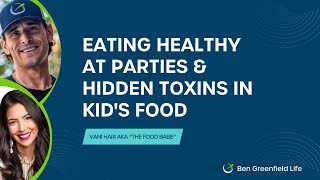
YouTube interview (recorded Dec 16, 2023) of Ben Greenfield with Vani Hari (the Food Babe) about feeding children and avoiding processed/engineered foods. Vani describes her family routines (sprouted/glyphosate-free steel-cut oats, breastfeeding timelines, introducing savory/bitter solids like vegetables and sardines), criticizes baby-food additives (autolyzed yeast extract, torula yeast, MSG derivatives) and processed snacks (Gerber Little Crunchies, veggie straws), and offers practical strategies for parties, meal planning, and healthier product substitutes from her cookbook Food Babe Family.
Chapters
If you were to look at any of the studies that they do on obesity, one of the things that they give rats to make them fat so they can study obesity related diseases and obesity related drugs and other things is MSG or MSG compounds like autolyzed yeast extract. And so what that does to your brain, it actually hijacks your taste buds and it makes you remember a flavor and it makes your mouth water. It makes you want to finish that meal. It makes you want to eat more than you should. It triggers a part of our brain that is the ultimate pleasure zone of food. And this is why food manufacturers have figured out if they add it to their food, they will hook a customer for life.
Alright folks, Well I am holding up a brand new book that just hit my front doorstep a couple of weeks ago. It's written by somebody who creates actually a lot of, I guess you would say, controversy in the realm of nutrition. She's known as the food Babe. Her name is Vani Hari and I had her on my podcast years ago about her controversial articles about things like yoga mat chemicals in our subway sandwich, bread or meat or something like that. I don't even remember. But anyway, she definitely creates some waves in the industry as a food activist. A food activist, but she's also a New York Times best selling author. She has an organic food brand named Truvani. She was one of the most influential people on the Internet according to Time magazine. And she runs Foodbabe.com, where she spreads information there and on her Instagram and elsewhere about what really is in our food. Kind of makes you squirm a little bit. But of course like. And Vonnie, I have to tell you this. What I appreciate about you and particularly the reason I want to have you back on the show was because it's really easy to say all the things that are going to kill you, but it's a little bit harder to say what to do when your kid goes off to a birthday party. As a parent when it comes to trench proven strategies that someone with experience like you has actually implemented and written about. So first of all, if you're listening in, I'll link to Bonnie's new cookbook. It is going to be at BenGreenfieldLife.com FoodBabeFamily that's where the Shownotes are. That's where her book is. That's where you'll find Our previous podcast, BenGreenfieldLife.com FoodBabeFamily More More than 100 recipes and Foolproof strategies to help your kids fall in love with real food. Bonnie, welcome back to the show.
Thank you so much for having me. Ben, it's great to reconnect with you. It's been a while. I've been busy having children, taking care of children, and so I haven't been on the travel circuit as much. And so I haven't seen you.
How many kids do you have now?
I have two. One is two and one is six.
Okay, that's not too bad. I've got two also. It still can be a handful at that age. And I guess I should jump straight to the elephant in the room. What did you and your kids have for breakfast this morning? Because we're recording this on Monday morning.
So we had. Every night I make sprouted glyphosate free oatmeal in my crock pot because it's like one of the first things that I can give to my kids first thing in the morning that's hot and ready to go. And I put ground fresh flaxseeds. So I grind my own flax seeds every single, like every three or four days. Otherwise they get kind of rancid and they lose that DHA that's. That's in Omega 3s that are in there. And it's not as. It's not, it's not as bioavailable. So I grab my own and I put that on top and then I put cinnamon. And then we add some kind of, you know, sometimes we add nuts, sometimes we have berries. We eat a lot of pomegranate seeds. And so I put all of that stuff on top and they love it. And it's the first thing they usually eat because they just love something hot and nourishing. You know, there's a lot of controversy around oatmeal because Quaker oats was found to have high levels of glyphosate in it. And that's because it's desiccated with Roundup before it it's harvested. But there's a brand called One Degree that I found. I have no affiliation with them, but they test their oats for glyphosate and they're certified glyphosate free and they're organic and they're sprouted. So they remove the phytic acid that makes oats more digestible. So it's a wonderful nourishing thing to have first thing in the morning. And then I have time because they, you know, they're. They're little rascals in the morning. They're so hungry right I have time to make something else, like whether that's a smoothie or some chicken, sausage or bacon or something else to go along with that porridge. And we call our oatmeal porridge.
And that's what I make every morning.
I think a lot of people might be wondering about the oats thing because like you said, oats are super popular even in the health industry. You buy overnight oats all over the place. And I would say that they're still considered to be healthy. But you said, I think, desiccated with glyphosate. What's that mean?
Well, what happens right before harvest in order to kill all the weeds that makes it easier to get the oats is they, they literally spray it down with Roundup. And they do the same thing with wheat too in this country. So people are really excited when they see the non GMO label on all of these products. But unless it's certified glyphosate free wheat or oats, it likely has glyphosate along with almonds, lentils, beans, pea protein. So many different things out there that are harvested with the use of Roundup. So we have to do our best to not only buy organic, that helps prevent that second stage of harvesting of what happens on the field, but also because organic can sometimes be contaminated with glyphosate. You want to look for that glyphosate free label and something I'm feeding my kids on a daily basis or, or a weekly basis or whatever. I want to make sure I'm choosing the best product available and I also want to choose the right type of oats. So a lot of overnight oats are made with instant oats or rolled oats. And you can get even a granule or better when you do steel cut oats that are also sprouted because the steel cut is going to digest slower in the digestive system, make you feel full longer. And then also when it's sprouted again, it's removing that phytic acid which can disrupt kind of nutrient absorption. And so you want to remove that as well.
Yeah, I actually do steel cut oats that I'll sometimes add to a smoothie for a little bit of a filler. And I soak them overnight with apple cider vinegar. Shout out. I forgot the brand you mentioned. I might have to have you repeat it. But I've been using Dr. Thomas Cowens, he's a doctor who has Cowan's vegetable powders. So they do like ashitaba and low oxalate greens and beets. Powders, but they also have a steel cut. Oh, that's, that's pretty good. And that, I don't know if it's certified glyphosate free, but it's, I mean, knowing Thomas, it's, it's a, it's a clean oat.
Is this the same town Common from Cowan, from the West Nape Foundation?
That's him. Yeah.
Yeah, he probably does that because they take this very seriously. Yeah.
And what was the brand that you use for the oats?
One Degree. It's called One Degree.
One Degree. Okay, cool. What did you feed your kids when, you know, before they could chew, when they were babies? Besides breast milk? As far as baby food goes, how did you tackle that?
So I breastfed my first child until she was three and a half. She just stopped all on her own one day. It was so beautiful because I was worried that I was going to have to wean her right. Because she just weaned naturally. It was so beautiful to watch. And then my second child, I've actually, I'm still breastfeeding him. He's about to turn three and I'm, you know, he's starting to slow down. But breast milk is just absolutely incredible for kids. And it's been such a wonderful thing that I've been able to do by kind of like, you know, designing my life around my children in a way because I, I run two companies. I run Food Babe and I also help run Truvani. And it's a lot of work being a working mom and a breastfeeding mom. I mean, there's all of these memes that go around the Internet that show that the time it takes to breastfeed equates to a full time job in terms of hours. And so it's been so wonderful to be able to do that. But one of the things I did as soon as I started learning about how to transition to food when they were young is I waited until six or seven months. First of all, I waited longer than the average child that actually they usually start at like four months. And I think that's too early, especially if you're able to breastfeed or, you know, have some kind of nourishing form of like homemade formula. There's lots of better formulas these days. But I waited till about six and a half to seven months. And then I started with every single vegetable I could get into my child's hands so that they would understand the bitter, complex flavors of a vegetable and, and their palates wouldn't be immediately introduced to sweet Foods. So I waited on carrots and sweet potatoes and banana and applesauce and all of that kind of stuff. I waited until I went through every single vegetable. The only fruit I could say that I started with was avocado. And, you know, avocado is not sweet at all. So it's actually a great fruit to start with as well.
If I could clarify that sugar piece. So theoretically, by doing that, you could almost stave off a little bit of what I guess is a big struggle now with particularly adolescents. This whole idea of dopamine desensitization and a constant dopamine rush and expectation of sweet rewards from food or smartphones or the Internet or whatever, you're actually almost like building in a certain amount of bitter esque stoicism at an early age by paying attention to the way that you're training your child's palate.
That's correct. And, you know, one of the things that causes picky eating is actually processed foods. So imagine a jar of Gerber food that is mixed puree and they always mix it with something sweet like banana and broccoli, or sweet potato and beets, or, you know, they're always making it sweet. They're always taking a vegetable and then making it sweet. And this is the case too, with a lot of pouches out there. There's actually a company called Serenity Kids that has broken that mold and is making bone, broth and meat forward pouches.
Which is so cool, by the way. I was so impressed when Serenity Kids launched because they sent me some of their baby foods. You can still find a viral video of me on the Internet dressed up like a baby with a giant adult diaper on eating their baby food at the table. And it's kind of joking and kind of not because I still have their baby food pouches with lunch almost every day. Instead of putting dressing on my meats or my fish or my salad or whatever, I squeeze a baby food pouch from Serenity on there. But anyways, I was so impressed with them. I actually invested in that company when they launched.
I did, too. I'm an investor as well. Yeah. And it's funny is I didn't feed my kids pouches up until maybe they were in. Maybe until they were like one and a half or two. I only use them, like, very sparingly when we're on vacation or we're traveling or something like that. So I. I'm not even a huge pouch person. But I was so impressed with what they were doing in terms of breaking the mold and the palate and training a kid's palate to actually enjoy savory foods that I was just like, I have to support this company. I think it's amazing. But going back to that jarred Gerber baby food, if you're giving that to your child as one of the first foods and spoon feeding them, not only are they getting the same flavor and taste every single time, they're not getting the variety of what a real vegetable and fruit in nature feels and tastes like. And one day, let's just take the instance of a blueberry one day. A blueberry can be really juicy, it can be sweet, it can be sour, it can be mealy. You know, it can be big and plump, it can be small and tiny. Right. There's so much variety in nature in terms of how we get our fruits and vegetables. But when you're getting the same jar of baby food manufactured to taste the exact same way every single time, you're reducing the neurons that go up into your brain that make you acceptable to a wide range of flavors.
Yeah. I don't even want to tell you, by the way, how many kids, I would imagine, think that carrots are all shaped like tiny, little evenly rounded baby rocket ships. And when you look at our crispr, our vegetable crispr in the fridge, our carrots are butt ugly because they're from the garden and they're just like deformed and shaped in all which ways and look like they hit a Chernobyl nuclear accident. But it's the way that carrots are kind of supposed to look, right?
Absolutely. We want that variety in our bodies, and so we want to expose our kids to that variety. And so that's why it's so important to. When you're first choosing to give your child food, I feel like it needs to be as close to nature as possible. And so that's the, that's what I use. It's like, I just remember the first time my daughter was eating bok choy. Like, you know, at 1 years old, she knew the word bok choy. And when we were at a restaurant, they had it on a menu and she was like saying, bok choy, bok choy, bok choy. And the waiter and the waitress was like, are you kidding me? Like, how does she know what this is? And I'm like, well, we grow it on our garden. We picked it, we cooked it for her with a little garlic and sea salt and olive oil, and she loves it. And she just gnaws on it and it's it's like such a bitter, complex flavor. But because she started eating that types of food at a very early young age, and we continue to feed that to her now, she could eat just about any vegetable and love it. And the same goes for my son. He's been a little bit more challenging, a little bit more maybe, because when you have a second child, you aren't able to hold the boundary as much because you're so over taxed, you know, I mean, I think a lot of the situations in terms of how we feed our kids come from our own parent misguidings, if you will. Like, we have the power, we have the ultimate power on like how to feed our kids. So after I did vegetables, I really went into, I went into interesting things that people would just like. I know you wouldn't freak out about, Ben, but if I told people what I was feeding my kids, they would just be like, what you gave them? What? And like, literally I would open up a jar of wild sardines or a little tin of wild sardines and I would just hand over those little baby fishes to my kids and they would go to town on them. And not only was it the easiest food ever to give them, it's one of the healthiest because sardines are the lowest on the chain in terms of exposure to mercury and other heavy metals in the sea. But also it's one of the highest in that brain boosting dha, vitamin A, all the things that we want our kids to be eating.
Yeah. Most people probably think if you tell someone you're feeding your child little fish that you mean goldfish crackers, but you were doing the actual little fish. That's fantastic. We did the same thing. You mentioned that two of your strategies were limiting sugar with the baby food piece as far as what you fed your babies, and then keeping the food as close to nature as possible. But when I was reading in the book, when you got to the part about Gerber baby food, you mentioned autolyzed yeast extract, and I think you pronounce it torula yeast as two things that you'll find on a lot of these labels in baby food that you don't really like the idea of. Can you explain why? With the autolyzed yeast extract and the yeast derivatives.
Yeah. So these derivatives are similar to what MSG is, monosodium glutamate. And if you were to look at any of the studies that they do on obesity, one of the things that they give rats to make them fat so they can study Obesity related diseases and obesity related drugs and other things is MSG or MSG compounds like autolyzed yeast extract. And so what that does to your brain, it actually hijacks your taste buds. And it makes you remember a flavor and it makes your mouth water. It makes you want to finish that meal. It makes you want to eat more than you should. It triggers a part of our brain that is the ultimate pleasure zone of food. And this is why food manufacturers have figured out if they add it to their food, they will hook a customer for life. It's one of the reasons why Chick Fil A, no matter how many times I've called them out, met with them at their headquarters, talk to their executives, they won't remove MSG from their Chick Fil A chicken sandwiches because they know they will lose customers. It's the same thing in Doritos. It's in Doritos because they want you to finish the whole bag. They want you to remember that flavor. They want you to eat, keep eating until you can't stop. Once you pop, you can't stop. I mean, that was the Pringles slogan, right? And it was added to Pringles, right? So this is one of the things that is now being added to baby food so that children get hooked on baby food very early and they only eat processed foods, and they start to shun real food because it doesn't taste as good, because their little brains are being hijacked by these chemicals.
You know, there's kind of like a debate out there about msg. You've probably seen it because literally, if you go to the FDA's website, they write that glutamate in MSG is chemically indistinguishable from the glutamate that's naturally present in our foods and that our bodies metabolize the both sources of glutamate the same way. Now, I realize most of what you just said about MSG is related to the addictive nature of it, and maybe not to what some people might say about MSG related to its potential as a neurotoxin, for example. But is the FDA right about that? Is the MSG in foods chemically indistinguishable?
They're completely wrong. That's pseudoscience, basically. Because what they're comparing a bag of Doritos to is like a natural, like let's say a tomato, a regular tomato actually has glutamic acid. It mimics the same glutamic acid that's in the molecule of msg. However, the way MSG is added to food, along with the other engineered components that they're adding, like the natural flavors, the types, the amount of salt, the amount of sugar, the amount of refined carbohydrates. When you combine all of that along with the msg, you create a product that. That's hyper palatable to. Whereas a tomato would never. You would never OD on tomatoes, but you can OD on MSG because you are actually wanting to eat that whole bag after you eat it. And then the worst part about it is that the way they engineer it, it actually triggers your excited toxins in your brain so you remember the flavor. Now, when I eat a tomato, I kind of remember what it tastes like, but if I start to think about what Doritos taste like, man, do I understand. And does my water, my mouth start to water. Because my brain is activated in a different way than a regular tomato. They are actually creating something that's completely beyond what's in nature to the point where it's actually. I believe it's like one of the most disastrous things that have happened to processed foods because this is what has caused the obesity epidemic. It's caused children to become super picky, and it's caused these situations where we're not getting the nutrients we need in our bodies and we're so sick.
Yeah. It's not often you hear somebody who smoked a joint and goes off to hunt down a little plastic carton full of cherry tomatoes. It definitely, I think, in concentrated amounts, there is a lot of that addictive potential that you talk about. You'll hear a lot of people say that it's neurotoxic, that MSG is neurotoxic. What do you think about that? Is it the same thing? Kind of like the dose is the poison, the delivery mechanism, and the concentration? Or is MSG bad for the brain?
I mean, the fact that it's making rats obese.
In laboratories, I mean, I think that says enough on its own. Like, we're not supposed to be obligated obese. Right. Like, we're not supposed to get fat. We are supposed to. I mean, if you look at the way human. Humans have evolved, we are in a situation that we've never seen before. We're, you know, almost close to half of our population out there is in the obese category. Most of them, I would say two thirds of them are overweight. And we're in a situation that's never been seen before, and that's largely due to the introduction of these processed foods. Because we thought it was convenient and easy. But what the processed food industry wants to do is they just want to sell us food, right? Like there, it's just capitalism at play. And so it's really up for us to make a decision as human beings whether we want to be a part of this experiment or we want to opt out. And Ben, I know you've opt out. I want to opt out. I want to raise kids that have opted out. And so every single day I take it as an opportunity to teach my kids about why we eat the way we do and why we buy the products we do. And when we're at the grocery store, I take my little 2 year old and we talk about the foods we're buying. And when he picks up something even as meaningless as a potato, we check to see if it's organic or not. And then we say, yeah, you can put it in the cart if it's organic. And I'll tell you why. And like we take the time to talk about, oh, potatoes have, you know, 67 different types of pesticides on them if they're not organic, like, you know, all of these different facts that I know that are just crazy in my head because I've spent the last, you know, 12 years of my life writing a blog on the subject, but the last 20 of my years really delving deep into why I want to eat this way and why I find what's happening in the food industry so alarming. So let me just ask you this. The last time you made a burger at your house, Ben, compared to the time previous to that, do you remember exactly what it tastes like? Whereas if you think back to the last time you ate a McDonald's hamburger or a Wendy's hamburger or a Burger King hamburger, do you remember exactly what, what those taste like? Because I haven't eaten a hamburger since I was 16 years old, I'm 44 now. But I remember those burgers and I know distinctly how they vary in the way they taste.
The 29 cent hamburger, 39 cent cheeseburger. I think it was Wednesdays or Thursdays or whatever for the hamburger and then the cheeseburger. My mom would take us to McDonald's and we'd load up with several dozen burgers and then the next day cheeseburgers and have like a suburban full of greasy burger bags that we'd then stock in the fridge for the next few days of eating for me and my brothers. And yeah, I totally remember. It's hard to describe, but it's like that dill Pickle, sweet ketchup, kind of like quick burst in your mouth with a little bit of the dryness of the bun. And half the time I was eating them cold. So the cold beef and. Yeah, it's kind of weird that you say that. I've never really thought about it that way. You think that's because of the food engineering and the amount of glutamate derivatives specifically that they would add to a burger like that? You know, what I've learned here is that I need to get MSG and start adding it to the burgers that I make for dinner parties. And I would probably have way more friends.
That's a bad idea. But, yeah, they'll remember your flavor. They'll remember your burger. The memory part is the part that gets you because if you're going to remember that flavor, you're going to go back for more every single time. And that's why my mouth still waters when I think of a chick fil. A chicken sandwich. And. And when you think about a goldfish cracker, why? Oh, man, those things are so good. I just keep eating them because they're laced with this MSG additive, right? And they want little kids and adults and everyone to just finish the whole bag. So they keep buying more and more and more.
What about these Crunchies, you know, we brought up? You know, I don't want this to come up like a commercial for Serenity baby foods, but they have these amazing little puffs that I also keep in my pantry even though I have no babies around and sprinkle on my lunch every once in a while for a crunch. And you say in the book that many of us are feeding our babies Cheetos. And you also have some opinionated ideas about veggie straws. So tell me about the Crunchies and what your beef is with them.
Well, yeah, so Gerber made these little products called Little Crunchies, and they look literally like Cheetos. And when you look at the ingredients, they're literally Cheetos for kids. They have those MSG additives. They have the corn meal that makes up the little crunchy, you know, snack and in the cheese. And so this is exactly what they're doing in terms of they're creating a child product that has a child brand name on it, Gerber, along with, you know, kid, like, marketing on it that's gonna, you know, track their eyes. And parents are gonna buy these snacks thinking they're good for kids because they're marketed towards children.
It's red right there. Cheetos for babies on the book that I'm holding up right now. And I'm looking at the list of ingredients, Bonnie, for the Gerber snacks for the baby, little Crunchies, mild cheddar flavor. And compare it to the Cheetos Simply Puffs. It's almost got more crap in it.
Yes. It's actually worse. It's worse than the better Cheeto you can buy.
Yeah, it is literally like a worse than Cheeto baby version of a Cheeto. I don't think a lot of people realize that.
That's right.
I just think about the aisles at the grocery store that are, you know, the baby food aisles. And there's a lot of great companies out there doing things that are better now. You know, we named one Serenity Kids. I think, you know, Simple Mills is another great company that's doing innovative thing in this space. They just created these little puffs called Popums and they're made out of organic red bean and butternut squash. And I think it's just, they're gluten free. You know, it's. It's really amazing what they've created with those. And there's, there's other brands too that are actually doing the right thing by creating products that are.
Made with real food ingredients. But with kid marketing, which I love. There's a company called Sweet Nothings that's made a Otter Pop, if you will. If you remember Otter Pops, those little freezer pops in the little plastic tube, they've made those. But they're using fruits and vegetables as a combination in them. Not just sweet fruits or from concentrate fruit juice. They're actually using the actual fruit that contains the fiber too. So they're taking strawberry and beets and combining it along with chia and dates and putting it in a little pop. Their blueberry has kale in it. Their orange one has carrots and mango, and they have a green one that has pineapple and spinach. And it's the coolest thing because I'm like, finally there's some products that we can actually buy for our children that are fun to eat and are fun to give them as treats so they don't feel like they're missing out on life. And it's an opportunity to actually get good nutrition in their bodies.
So like five nights ago, when I was going through your book to read it, before this podcast, I was laying in bed with my wife. And I'm careful about what books I read in bed. I don't want to be like too exciting or too much about business, but Obviously, this is a cookbook with some nutrition tips thrown in. It's an easy read. The only risk being it makes you want to get up and have a midnight snack. But page 76, related to what you were just talking about, that's gold right there. You've got all the different popular candy bars and candies and then your substitute next to them, like a brand called Ocho O C H O. I don't know if I'm pronouncing that right, but they've got Oko Caramel and Peanut Bar instead of a Snickers. Or you've got Justin's Peanut Butter Cups instead of Reese's Peanut Butter Cups. Or you've got Yum Earth. I didn't even know there was such a thing as healthy candy corn. Yum Earth Candy Corn instead of Brock's Candy Corn and Yum Earth Licorice instead of Twizzlers. Or the Tory and Howard Chewy Fruities instead of the Starburst. I mean, the book alone is worth that one page with all the substitutes. But it is kind of cool to know that because how often, for example, on Halloween do you want to still maybe give kids a little treat or a celebration of the fall or however you celebrate that time of year, but you don't want the usuals. This is a pretty good list.
Yeah, this is the type of products that I'll buy to give out for Halloween or to have during those different holiday periods where you're walking at the grocery store and you see the holiday death aisle. That's what I call it, the holiday death aisle. It's literally poison that's just distributed in fancy festive colors to bring out the nostalgia in your, your body that makes you want to, you know, partake in all of their poison. And that candy, whether it's Easter, Christmas, you know, Valentine's Day, Halloween, no matter when it is, it's full of artificial flavors that are carcinogens, full of artificial colors that are linked to hyperactivity in children that require a warning label in Europe that says may cause adverse effects on activity attention in children. It causes asthma, eczema, inflammation of the brain, the lessening of your immune system. Those products contain titanium dioxide. Another color that's actually banned in the EU now that makes things more white or more. More vibrant. They have caramel coloring, which is made with heating ammonia. So it's a very toxic substance. The International for Agency for Research on Cancer says it's a carcinogen. Caramel color level four. And then you have Vanillin which is an artificial form of vanilla that is actually made from petrochemicals. Then you have pgpr, which is a emulsifier that they use in cocoa butter that is very problematic along with TBHQ and TBHQ you'll find in Reese's peanut butter cups. And this is something that actually turns on your immune system to the point where you become more allergic to the things that you might be allergic to or you might have a sensitivity to. It starts to create inflammation in your body. So this is something you don't want to be eating. And then it also, a lot of these holiday poisons contain bht, which is linked to cancer and is banned all over the globe. So it's the holiday death aisle. And I've coined that for several years. People think I, I'm outrageous and crazy that I say that, but that's what it is because it's, it's absolutely awful how you walk into a grocery store or a fancy store, like you know, one of the big box stores and you see this amazing display of all these tasty treats and they're, they're wrapped up in this nostalgia of a holiday and you want to celebrate by getting these fun looking packages, but you can't, you can't do it because it's the death aisle.
That's kind of funny you say that because my wife sometimes gives me the sharp elbow when we go to church and we walk past the giant table of cupcakes and store bought pies and candies and bowls of wrapped sugar laden goodies and I'm like, there's the holy diabetes channel. You know, great, great plan. Go eat a bunch of sugar and then sit for two hours. And you know, granted, I know they're just being nice and hospitable, but it would be, it would be better if people were educated on some of these healthier choices that you talk about in the book. 1 I think in particular, let's say, Vonnie, I go, let's say I'm going through the airport and I walk through the so called healthy food snack section of the newsstand, Hudson's or whatever and I grab the veggie straws. Would that be healthier than just like grabbing a bag of ruffles potato chips?
Not really. They're made with the same inflammatory omega 6 hot high in omega 6 fatty acids, right? They're made with either not organic, by the way, they're made with conventional canola oil or sunflower oil that may not be expeller press so that it's extracted with hexane, which the FDA doesn't even regulate the amount of hexane, that residue that remains in our food. It's a very carcinogenic compound.
The High Omega 6 fatty acid oils actually are really high in linoleic acid and that like turns on cancer cells. And Dr. Joseph McCollo actually just came out with a book all about that. And then you're dealing with the potatoes that are not organic. So they have such a high level of pesticides in them. So no matter if you're eating ruffles or veggie straws, you're still getting that non organic potato. And then on top of that you're getting the, the health washing effects of the veggie straws, which is a dusting of powder to color these potatoes. You know, one of the things that I've seen at Hudson News and all these little airport shops is Rhythm Snacks. Now Rhythm Snacks actually takes real vegetables and dehydrates them and sells them so you can get dehydrated kale, dehydrated cauliflower, dehydrated broccoli. I saw asparagus. I mean they have all kinds of different things. I mean I love the dehydrated beet chips, the kids love those. And they have dehydrated carrot sticks. Now those would be actual veggie straws, right? That's a real veggie straw. But the Veggie straw company, no, that's not a real veggie straw.
Rhythm's organic naked carrot sticks made simply from surprise dehydrated carrots. And you're right, you can find Rhythms Organics at a lot of airports. Or you could save yourself like five bucks a bag and just freaking go to Amazon and get some and plan ahead and put them in your bag before you travel. Up to you. But yeah, I'm glad you made that note about all the so called dehydrated vegetables that really are the same as or when I look over the ingredient list, possibly worse than ruffles because you're going to eat more of them because of all the spinach paste. So they might even be worse. But what about this? Your kids go to a birthday party, you know they're going to be surrounded by all the things and the peer pressure and you don't want to be guilty or in front of the other parents, you know, being that person who's whatever, taking away their veggie straw birthday cake. What do you do about birthdays and birthday parties?
Well, from the beginning I've instilled in My children kind of our modi of opera operations in terms of how we navigate when we go to parties in general, whether it's a birthday party or some other kind of holiday event, you're allowed to have one treat, right? And that treat needs to be artificial dye free. And so if there's a cake and it's full of blue coloring on top, and I know the mom hasn't bought it from Whole Foods or someplace that doesn't do, you know, food coloring, I'll let them eat the cake part. You know, have a small piece and have the cake part, and they don't feel like they're missing out at all. And we just take off the icing. And she's just known that since day one of birthday party, since she was about three. So she's just automatically done that, which is so awesome because it's just. That's the only thing she knows. And one of the challenges I had as a result of this is she would ask me, my daughter, she'd say, mom, why don't the other kids know about these chemicals? Why are they eating this stuff? Why isn't. Why are their parents allowing them to eat this? Or why do they not know that this is happening? And so that's been a beautiful conversation starter to explaining how our values, in terms of how we value health is different than other people's. And this is going to be the case with everything they experience in life, right? Whether their moral values, the value of how you study, the value of how you play sports. I mean, all of the things, right? It's not just in health. So it's just a beautiful conversation on how we can talk about how we are going to be different in this world than other people and be unconventional. And it's been a beautiful thing because now I see her making decisions on her own based on what she's learned about food. And so I'll give you an example. An ice cream truck came to school and we received a note from the headmaster, hey, we're going to have ice cream day. And like in 2Ns, I'm replying to that, going, hey, I'll supply the ice cream, right? She's like, no, we've got it covered. Well, it ends up being a big ice cream truck comes and my daughter goes and makes her decision. And so, of course, I'm not there to know what's going on or anything. So she gets home from school and she says, mom, I loved ice cream day. I'm like, oh, really? What happened? Tell me what happened? She's like, oh, this huge ice cream truck came, and there was this big menu, and we got to choose whatever we wanted. And I think I chose the best option. I said, oh, really? Well, what's. What was that? And she goes, I chose the ice cream sandwich. And, mom, the ice cream sandwich was double the size of the ones that you want, because the organic ones are, like half the size, right? And. And I said, oh, really? And she goes, yes. And I go, was it good? She goes, oh, it was so good. She goes, but there were a lot of, like, really brightly colored ice creams available. And I thought I chose the best because it was like, chocolate and vanilla. And I'm like, I think you did great. Well, I'm glad you made that decision. You know, did you enjoy it? Like, great. And I left it at that, right? And I just kind of walked away from that conversation. I was like, damn, she's six years old thinking through this decision that she's left out on her own with, and she thinks she made the best decision. Like, that's so cool, right? That she made that decision based on what she's learned about food. Well, then my sorry ass, okay.
Why I'm calling myself a sorry ass is because. Because I can't help myself. I went and decided to Google what a Good Humor ice cream sandwich has in it. Like our typical one, right? Because we buy the organic ones that don't have any of the junk. And of course, they found a way to put artificial food dyes in an ice cream sandwich that is normal. So they put caramel collar level four to make the chocolate wafer. They're not using real chocolate. And then they're using titanium dioxide to color the ice. The non ice cream. It's not even real ice cream because it doesn't even melt in the sun white, right? So there was two in there. And she thought she was making a better choice. And I was so happy for her that she was able to use those critical thinking skills and figure it out. But damn, it's like, we are. We have a lot of work to do as human beings that want to stand up for our own bodies and give ourselves the best food possible. I mean, the fact that we can get tricked like this is insane.
Well, we're in it for the long game, you know, not only are I think companies like, I don't know, is it Kraft that just bought Primal Kitchen Foods, and I believe General Mills has acquired a couple of healthy food brands. I think corporations are beginning to wake up to the idea that we are wanting cleaner products. And in addition to that long game of just producing content like you produce, doing podcasts like this, et cetera. I think it all starts with the family. We use what I would describe as very similar to your approach, a love and logic approach to parenting where we educate our children about the decisions and the mechanisms and the consequences behind the options that they have, for example, at a birthday party. And then we let them make the decision or at least present them with multiple choices so they feel like they've made the decision between, I don't know, the gluten free snickerdoodle and the vanilla ice cream cake. And.
Yes, they often choose things that I wouldn't personally choose, but they know, they come home and they're like, dad, that you've taught me about what gluten does to the brain or to my digestive tract when consumed in excess. I had the cupcake, but I had half of it and I had a couple extra cups of water to keep me full because you've taught me about that. And so equipping them with the knowledge that they need to make the decisions. Then the other thing, this works for adults too, by the way. News flash, going to a party like that full or having eaten or giving your kids a good high protein snack, like maybe not the little fish you don't want your kids at the birthday party, the sardine breath, but something healthy, maybe the dehydrated carrot chips or whatever with some protein. I think just having a kid not be ravenous or you be ravenous when you arrive at a social occasion or party works pretty well also, and I have to admit, I don't know what this does to a child. Psychologically, it probably messes them up big time. But I have been known to tell my kids, hey, eat mindfully and eat good food at the birthday party and don't have a lot of sugars and sweets and I'll take you out for dinner this weekend. And I realize that's rewarding with food. I don't know if that's the right way to go or not, but it seems to make an impact. Go out, have a good time with dad because you did a good job passing the marshmallow test, so to speak.
Right? We want to create a lifestyle in a community of people that enjoy food too. And so I think it's so important. I love your tip about feeding them before a party. That's definitely something that I always do. I want to make sure they're fed with good, high quality ingredients before we leave the door because when they get there, of course they're not going to be like over overly excited about what's there. They're going to be more interested in what their, you know, their friends are playing with or the balloons or the decorations at the party instead or having more fun like doing the activity there as opposed to the food. But I'll tell you, the same goes for me as an adult, like when I'm going to a holiday party or anything in the evening, or someone else's birthday, or I'm going out with adults in the evening and they want to eat late, I'm still eating my dinner at 5 or 6 o' clock because I want to make sure I don't show up there wanting to eat everything imaginable just because I know that's how my schedule in terms of my body operates. And so it makes me healthier too. And so one of the things that I think that is a misconception about me or the way I live is that it's a very life of deprivation that I don't get to eat anything delicious or that's sweet or fun. And that's not the case.
You're like the female Brian Johnson biohacker, except with little kids.
But yeah, so it's, it's basically, you know, as long as the food is made with real food ingredients, if it's a real food cupcake, I'm going to eat it. I think it's delicious. And we have dessert every single day at my household. And people would be like, what? You have dessert every single day? Yes, but it's a dessert that is made with real ingredients. Like we had these cookies that we just made out of a turkey mold and they were made with inkhorn, all purpose flour, really good ancient wheat, you know, pasture raised eggs, grass fed butter. Yes, they had a little bit of coconut sugar in it and but then they had, you know, real vanilla in it and lemon. I mean it was just a great cookie. Right? It was just like you wouldn't be able to find that cookie anywhere at the grocery store. But because they, we made it with such good high quality ingredients, they had one each and that was it. And like you're full after that. Right. But if you make a cookie with processed ingredients or you buy a cookie that's already been made and created so that you eat more than you should, you're going to eat many more and then you're going to have an abundance of sugar in your diet. The other thing I want to mention is that if There is a party where we go to and like nothing is suitable to eat. And I'm so horrified. A lot of times I whisper into my kids ears, hey guys, in my purse I've got, you know, Yum Earth or Justin's or Ocho candies available if you'd like to try that instead. Or hey, hey, why don't we stop at this other donut shop that I love, that I know that makes better donuts for you in coconut oil and we'll stop and get a donut instead. I would rather do that than watch them eat a bunch of poisonous food.
Yeah, I totally agree. And I don't force things on them. I don't want to produce kids with orthorexia or eating disorders. But even just the other day, we are at a tennis tournament all day and I noticed my son Taren mow down like four of those nature's whatever granola bars from Costco and some kind of crappy sandwich they had chipped in for the tournament. And when we were driving home at the end of the day, I was pretty subtle about it, but I just said, hey, dude, I'm out there on the front lines teaching people about the kind of food that's super nutritious and wholesome and staves off onset of chronic disease. And it feels kind of weird for me for my son to be eating all those things that I'm telling people they'd be better served not to eat. And I know you know better and have better options. So do you think you just think about that more in the future when we have more tennis tournaments? And he was like, yeah, yeah, you're right, you're right. And we actually had a tennis tournament this past weekend. He did a great job. He packed like pemmican and one of these little like keto chocolate bars that I have and brought his own food. And so sometimes it's just a simple discussion like that. And again, you want them to feel as though they're being educated and able to make responsible decisions for themselves. It's never forbidden fruit or no. Or slapping their hand away from the Tootsie Roll or whatever, right?
Yeah, absolutely. There's no punishments around it. It's more of, hey, this is our values. This is what the information is. This is the truth about the food that you're about to eat. Right? And that's one of the things that I feel like there's this. And I think some of these registered dietitians are actually paid by the food industry to like propagate this this kind of situation in terms of saying that, like, if we tell our kids the truth about food, then they're going to turn into like an eating disorder. I don't think that's the case because I think the more information you know about food, the stronger and smarter you'll be in terms of creating a health that is actually. In terms of creating a body that's actually healthy. Right. Is if I can only imagine what would have happened had I known this information growing up, what kind of decisions I would have made. I would have made a lot different decisions and I would have probably not had ended up in the hospital taking my appendix out. You know, they say that your appendix, like, you don't need it. Right. It's like this useless organization. Well, that's just not the case. Your appendix is actually something that you can use. It populates your gut with good bacteria and helps your immune system. And now I don't have one because of the way that I was eating. It became inflamed because I was eating inflammatory foods. And so that's a long lasting impact on my body for the rest of my life, not having that organ. And that's a decision that I wish I didn't have to make it that age, you know, when I was 22 years old.
And I don't want my kids to ever have to suffer like that.
Yeah. And I wouldn't want any parent listening to feel regret or shame necessarily. I would just say, you know, the best time to plant a tree is 20 years ago or today. Be armed with this information. Go make the change that you can make. And if your kid's a little older, it'll be information that rubs off on your grandkids. And by the way, you know, I mentioned Brian Johnson, the biohacker guy who runs that popular blueprint protocol in which he eats a relatively.
Maybe not a bland diet, but the same thing day in, day out. And I should say I actually am very similar. I love my smoothie. I love my lunchtime miracle noodles with sardines and primal kitchen dressing. I love my ribeye or fish or chicken with dinner and roasted vegetables. And it's almost the same every day all the way down to dessert. It's almost like yogurt and almond butter with dark chocolate chunks. And I love it. And I can do that every single night. I'm a total creature of habit. And I think that if that helps people, and you're probably aware of that research, Bonnie, that limiting food choices and having your meals planned out in advance helps a Ton. Whether you're planning for the whole family or for yourself. So I would imagine you probably do a little bit of meal planning with your kids, too.
Yeah, oh, absolutely. That's a critical part of my entire operation here in terms of food. Babe, Family. My cookbook, it has a hundred recipes in it, but majority of them are you can make under 30 minutes. And a lot of them are, I'm making on repeat. Every Tuesday, for example, we're doing fajitas, and then on Wednesdays, we. We use the leftovers to make the quesadillas. And so we have these certain days, like we have salmon every single week on a certain day. And I have the salmon recipe in there. And, you know, and so it's like, I have different ways to make salmon too, but the kids know that we're having salmon at least once a week. And so I have kind of my meal planning worked out for me so that we know what we're having. Otherwise, I would fail. I would fail at this. It would be 5 o' clock and I would be looking at my fridge and I would be like, oh, I don't want to start cooking from scratch right now. And. And I would end up, you know, ending up having to, like, order out or something like that. And we have to be in a situation where we're prepared so that we're not always outsourcing our food to other people. Because as soon as we outsource our food to other people, that's when all the additives start to enter our bodies and the inflammatory oils that they use at restaurants and 99% of the restaurants out there. And so we really need to control the ingredients that we're putting in our body.
Yeah. And should any of you think this is just more sardines from mommy's purse, Homemade Oreos, copycat toaster strudel and oatmeal cream pie cookies. I mean, it actually is. I was reading some of the recipes to my wife again, because I was just reading it in bed and she was on board. Even though I'll one up your fajita Tuesdays, Vonnie, because we do tongue taco Tuesdays with a crock potted beef tongue, which is, I think, the best taco meat out there. Maybe you could say that fish is pretty good for tacos, too. But tongue tacos with a little hot sauce, it's pretty good, Vonnie. This is fantastic. The book is great. And the show notes are going to be at BenGreenfieldLife.com FoodBabeFamily where's the best place for people to grab quick up to date bites from you, Vonnie. Is it Instagram or your blog or podcast or where?
Yeah, you can come on over to Instagram at the Food Babe, or you can go to my blog, foodbabe.com, sign up for our newsletter. And I send out a newsletter every single week with new blog posts. What's going on, the podcast that I do, everything along with my new books. And you know, Ben, I just really appreciate you having me on today. I really have enjoyed talking with you and catching up. I hope we get to see each other in person sometime because I would love to meet your kids. They look, they, they look amazing, by the way, and they're fascinating. I've been kind of following online some of the things you guys are doing, and it's really cool.
They're good guys. We should go to a birthday party together sometime or maybe go eat out at the airport. We'll find. We'll find some time. Yeah, that'd be, that'd be a fun video. Me, me, shopping with the Food Babe. All right, well, thanks so much, Bonnie. It's a great book. I'll hold it up again for, for people who want to get this book, Food Babe Family. You don't just have to have a family to benefit from this one. Lots of great recipe substitutes, meal substitutes, snack substitutes, and boots on the ground tips from Bonnie Hari, the Food Babe. So until next time, I'm Ben Greenfield, along with Bonnie Hari, signing out from BenGreenfieldLife.com have an amazing week.
More from Jeffrey





The Solution to Aging Might Be Closer Than Anyone Realizes - With Ben Goertzel


