Fighting With Double Hip Replacements, Jiu Jitsu Fighter & Coach Adam "SMASH" Smith
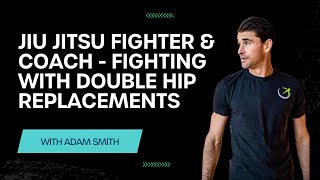
Adam 'Smash' Smith, a jiu jitsu fighter and coach, talks about competing and teaching after two hip replacements. He covers his recovery protocols, regenerative medicine, running his academy, and his nonprofit tournaments and mobile classroom bus for underserved students.
Questions this video answers
March 31 (as stated by Adam).
TB-500 and BPC-157.
Hyperbaric oxygen therapy (HBOT) — he reported using a hyperbaric chamber often.
Harvested from a fetus (as described by Adam).
About two and a half months after his hip replacement.
Chapters
I got my hip replacement. It was like, March 31st. And then two and a half months later, I competed at the biggest jiu jitsu tournament in the Northwest. And I competed at the black belt level, and I won a gold medal. I used the hyperbaric quite a bit, but I also did some peptides. So I did TB 500, BPC 157, and that was pretty much it. I think probably some of the biggest thing was I was really active going into the surgery. One of my first hip surgeries, I actually ran two miles to the surgery. Got there, I was all winded. He's like, oh, you ran a surgery? Yeah, I wanted to be in shape by the time I got in there. And I think a lot of that, as you talk about it, helps so much by the time I got, you know, into that recovery process as well.
Well, folks, I've mentioned it before on the podcast, but my. My sons have been jiu jitsu devotees since. I don't know how. How old were they, Adam, when we started?
Gosh, they're 14 now, so they must have been like eight or nine years old.
Okay, yeah, that's what I was thinking about. I'm pretty sure it was right around 8 years old. And, you know, I'd actually taken him to a UFC fight, and I liked to watch jiu jitsu and had kind of played around with it a little bit, but began to have you up to the house to work with me and my sons. And, you know, I initially joined in for, I think, a couple of months or so, and. And regrettably, I didn't keep the practice up, but they did. And it's actually kind of on my radar to get back into it. It's just. Gosh, it's just life and busyness, and for some reason, I've been playing more pickleball, and I know that's not quite as badass as Jiu jitsu, but either way, river and Terran, I've just watched them flourish under your tutelage. And I really wanted to get you on the show because.
Your experience and what you can speak to goes beyond just being a youth and an adult jiu jitsu coach. And I'll fill people in on Adam. You've heard his voice already. And if you're at the Show Notes, you can also see the video of Adam and I talking@BenGreenfieldLife.com CoachAdam But Adam, who I've had the pleasure of knowing, as I mentioned, for about six years now, he's been a lifelong Martial arts competitor and teacher. He's won a lot of martial arts tournaments. I've seen him fight a few times. Just fantastic, explosive fighting style. He moved to Brazilian Jiu Jitsu and mma and his nickname is actually Adam Smash Smith. Maybe you can fill us in later on, Adam, about where that nickname came about. And he's competed in several professional fights across the country, many high level Jiu jitsu competitions. He's got a black belt also in American Kenpo Karate, and a black belt in Brazilian Jiu Jitsu. And he has three martial arts academies here in Spokane, Washington. Over 250 students, thousands of former students, and he works with kids starting at around three years old. He works with, and we'll talk about this during our discussion today, special needs students. He's done that for over 15 years. And he's also just on the side in his spare time, certified firefighter, an emergency emergency medical technician, EMT, which he's been for about 12 years. And so he's done a lot of that in the local Spokane area as well. Now, Adam, I've also seen you go through double hip replacements done just this year, and you're already back to training and working to win a world title right now. So, folks, Adam has a lot of experience working with children, with adults, and also applying a lot of the lessons from martial arts and Jiu Jitsu into life in general. So I think you're gonna be able to gather a lot of wisdom from Adam today. But Adam, I gotta ask, where did the nickname Smash come from?
You know, it's funny actually, because I've taught karate for a long time and my first original nickname was actually Square Bear. You know, the fighting community is kind of a rough and tough group, and more or less a lot of the guys are street guys and stuff like that. So I was the nice, nice kid that came from teaching kids and stuff like that. So originally I was called Square Bear, but later on, one of my friends, my fighting style kind of emulated me more, being a Smash and Pass style, or a guy that likes to put the pressure on people, gave me that nickname of Smash as more representative of who I was.
Smash. What is a Smash and Pass?
Well, good, actually. So the style of Jiu Jitsu I do is, the lineage is a Carlson Gracie Jiu Jitsu. So my instructor, Marcel Alonso is a 6° Carlson. Gracie is one of the most notable students of Carlson Gracie. And if you know much about the Gracie family, Carlson was like the champion, being the fighter of the family. He's the one that Kind of brought the Gracie name. And if you go down to Brazil, I was just there a couple weeks ago in Rio, they got a statue of Carlson Gracie there, and he's just really known as the guy that kind of elevated the Gracie name. A lot of times people here in the United States, they know the Hoist Gracie and the Henzel Gracie and stuff like that, but those are actually guys that came after the Carlson Gracie tutelage back in the Rio de Janeiro. So my instructor, Marcelo Alonso, is one of those original Carlson Gracie students. And they call it old school jiu jitsu, smash and pass style.
Interesting. So what's the smash refer to exactly?
Really about putting pressure on. Smash is relative to pressure. And when you do jiu jitsu, it's about not giving up space, making sure you can keep somebody down when you want them to and really put them in the positions that you want.
Yeah, okay, that makes sense.
Now.
You just came off double hip replacements. Is that. Is that something that was more of an injury, or did you have some type of, like, genetic hip issue that caused that?
You know, it's a little. A little weirdly unknown, I guess what it is. And I have a twin brother. He doesn't have any hip problems. I have an older brother and younger brother. They don't have any hip dysplasia and stuff. But what they do know is I've trained martial arts since I was five years old, six, seven days a week. It's not something I do as a hobby. It's my lifestyle. I train every single day, almost eight hours a day. And when I trained a lot of karate growing up, there's a lot of hip twist movements and kicks and stuff like that. And I mean, we do thousands of repetitions, you know, a week. Thousands and thousands. And just the wear and tear off of my hips from a lot of that. Martial arts actually created like, an impact, a compounding syndrome that soccer players get in my hips. And so it created the end of my femur to grow because my cartilage actually delaminated. There's some bone spurs in my hips. It delaminated my cartilage. I'm only 33 years old, but. But just the excessive wear and tear and those bone spurs actually peeled out, as you would imagine, the cartilage within my hip. So I had first hip surgery where they did a biocartilage in there. They tried to replace the missing pieces in there with a cadaver and then my own bone marrow. And you know what? I went actually, for people listening, I actually went to you for a lot of this stuff on the rehabilitation and to see what I could do to try to get back to sports. And I mean, a lot of that, which I can talk about later, is actually what helped me get back to today. But the first thing that I went to after that surgery was stem cell therapy. So I did stem cell therapy directly into my hip joint from a good place in Seattle. Unfortunately, the stem cell actually regrew my bone spurs back at more of a rep.
I've heard of that happening before. It's crazy.
And it was actually terrible because I went in for surgery thinking, hey, I'm going to come back out of it better and it's going to be good for me. And sure enough, I'm trying to push the pace, go through the six weeks not walking, all that stuff. And then I kind of get back to things. A couple months in, I knew that things weren't right. I go back into the. I go back to the doctor. And they had a pretty good, I mean, it was, I think, you know, a pretty good spike that they had ended up pulling out. And it was only within like an eight months time that it had grown back from the last surgery. So it was a pretty, pretty awakening thing, I guess. And then so they tried to do the surgery again and they, you know, shaved off the end of my bone, things grew back right again. And they just said, you know what the last choice is just a total hip replacement.
Do they talk about how common that is for stem cells that are injected into a cartilaginous area that has a spur to just regrow the spur?
I didn't know anything about that, actually. And then so I went to a friend that has a good clinic in Seattle and he did it. And we did some PRP injections as well. You know, I used hyperbaric chamber, things like that. And I was trying to really throw the book at it for the healing process, but it kind of healed it, like I said, in that wrong way, which then I would try to go back to do some movements and stuff. And that bone spur grew in there and just created a lot more damage.
Wow. And then you had to get your other hip done as well.
Once they realized what happened with that first hip and the kind of the problems, they went through it, they just said, you know, what quality of life and stuff. We could try to do the other surgery, but no doctor in Spokane would actually do that one knowing the other one had already had two failed surgeries that, you know, it's kind of their quota and stuff. Is, you know, making sure they have successful surgery. So they just said hip replacement was the only, only option at 33 years old. Double hip replacement.
Wow. And is that a certain composite that they use? I mean, are they. I. Long time ago, I don't talk about this much on the podcast. When I first got out of college, I did about six months of hip and knee surgical sales for a company called Biometric. And so I got to watch a lot of this acetabular resurfacing and replacement of ephemeral head and everything. But do you know what kind of hip you actually wound up getting?
I ended up getting the ceramic on plastic, so I didn't do the full steel. And I guess there's really contraindications in both of them. People say go this way, go that way. But I guess I had felt my doctor had said it was a little bit better for sports. Me personally, I do a little bit more impactful type sports. I felt like I wanted to have a little bit of cushion in there instead of just like a metal on metal, just in case. Now I'd watched actually right after my surgery, I'm laying in bed and I'm watching a Netflix TV show about surgeries, maybe somebody knows. And the doctor that was talking about it has his hip replaced. And one of the things he had gotten the metal on metal, and what happened was the metal actually disintegrated in his hip and it caused some cobalt poisoning in his hip. It made him go crazy, actually. He had some mental, mental issues and stuff like that. And he was a orthopedic surgeon himself. And so he luckily was able to diagnose himself and find out that the hip replacement actually is what had caused him to go kind of crazy. And then they went with the plastic, the ceramic one that I have.
Wow, interesting. Now, I know with the metal, I guess they use like a polyethylene with the plastic. From what I understand, that can actually kind of like wear down over time, just. Just because all the implants are going to shed debris over time. And I think some of the polyethylene can actually lead in some cases to a little bit of, what's it called, osteolysis, like when the bone breaks down a little bit. Have you looked into whether or not, you know, like 10 years down the road from now, you're going to have to kind of go in and re upgrade the hip replacement?
Definitely. Yep. And, you know, it's one of those things, I guess, you know, and anybody that's gone through a major surgery I'm sure goes through this, especially an athlete goes through a depression, you know, and then some of these major decisions that you have to make that are like, you know, what if, what if, what if? I mean, I can't tell you how many nights I didn't sleep thinking if I'm making the right choice the night before, the day before. You know, I mean, this is stuff that affects your everyday quality of life because you're constantly thinking about it. I knew going into it I was going to have to have the replacement. I'm an active competitor, martial artist, I'm a high level sports person. And so I knew that it probably isn't even going to last the amount of time that they're going to give it a normal 70 year old guy that's just walking down the street. So I had to make the choice. Hey, am I willing to go out there and push this thing to its limits? And that's kind of where I am. I made that choice.
Yeah. Yeah. Well, you never know where science is going to go over the next 10, 20 years anyways. Prior to that point, there's a lot of talk about being able to grow, gosh, everything from organs on scaffolding to certain elements of joints. So they might just be able to grow you a new hip at some point.
That's right.
Or get some kind of injection that just regrows the whole thing internally. I don't know. You can barely keep up with the, with the, the pace of regenerative medicine these days. Now the, the one other question about the, the stem cells that you got, was this stem cell from an autologous source? Like did they take some out of your own bone marrow or, or your own fat or was it harvested from something else?
It was harvested from the fetus. Okay, fetus one. So.
Okay, got it. Cool. Okay. So I'm curious, you mentioned that you're training sometimes up to eight hours a day. What's that actually look like? Like what's, what's the day in the life of a coach slash professional athlete actually look like?
Well, I mean, just kind of go back a little bit to that hip replacement thing. You know, first of all, I'm doing so good now with my hip replacements, both of them, that I'm, I'm actually able to give, give it kind of my all. So my day typically looks like getting up and being here at the gym at 6am we do a 6am class and got a lot of professional guys in that doctors, dentists, police officers and stuff like that. At that 6am class. So I love to just get on the mat and train with them. You know, eight hours a day of training isn't necessarily hard grinding, lifting weights and stuff like that, but there's a lot of therapeutic motion that happens in the martial arts, a lot of mental stuff that also needs to happen with training and stuff. So I start my day right, six o' clock in the morning, train with guys that all also push my mentality a little bit, you know, bring that camaraderie and stuff. And you are who you hang with a little bit. So at 6am when I've got in some of the leading, you know, plastic surgeons and doctors and stuff around and we're doing jiu jitsu, we're also kind of doing a little bit of, you know, talking and stuff. And then I go from 6am by.
The way, former former podcast guest. I know I was training with you at that time, Dr. Cameron Chestnut. I did, I did a two part podcast series with him on hair regrowth and, and a little bit on regenerative medicine and, you know, skin health and gray hair and all sorts of stuff. And then I think a few months later he started training with you.
He did, actually, yeah, it was, you actually were the one that gave, gave us that connection. Now he's a year into it, solid, solid jiu jitsu guy and he's brought in a few other doctors and stuff with it. So thanks for that connection because he's super cool.
Yeah.
But anyway, so I go from training to cleaning the mats and then I have a noon class. So I teach at noon another group of people and then I teach little kids class. I start them all the way at 3 years old. So at 3:15 we start our 3 and 4 year old class, which is just a half an hour. So I do that class, then at 4 o' clock I have another class from 6 years old to 9 years old, 5 o' clock I have a class from 10 to 14. Then the adults step in from 6 and 7 o' clock and then sometimes we get some MMA done at like 8 o'. Clock.
So are you training in between all these classes or are the classes part of your training?
You know, the cool part about teaching and anybody that does a sport and stuff is the more that you're active with your athletes and stuff like that, train and get better. You know, I actually got my black belt pretty fast as compared to a lot of black belts. Right. So I. My instructor is world renowned and he's one of the best instructors out of Rio. And I got my black belt in about four and a half years from him, which is an incredible pace, usually in Brazilian Jiu jitsu. But the reason is, is when you regurgitate a lot of information and you teach it, you have to dissect it and find the details and explain them to people with different learning styles and age variabilities and stuff. You're training the entire time. If you were to take yourself out of that training mode, then you're probably missing a whole bunch. So I'm sure any coach out there that's maybe even a pickleball coach that you're doing and stuff is probably maybe analyzing games and stuff like that, also coming up with stuff that's a bit of training. If anybody's taking the mental part away from training, then they're probably only training half time. So, yeah, I'm training good eight hours a day with my students. I learn all the time. I learn from the kids as they, they teach me what I can teach, what I can't teach, what levels I can do. But pretty much I'm an engaged martial artist from the time I wake up at six in the morning until I go to sleep.
Yeah, I wish I had a pickleball coach. I'm not that serious yet.
It is, I would imagine, good for overall muscular endurance if you're just on your feet the whole time teaching classes. But as far as your own specialization, I would imagine you're still having to roll with other people besides your students in some of the. In between hours.
Yeah, yeah, I still get like at noon I like to train. One of my. A few of my students here are pretty tough. I got some MMA fighters and stuff. And then like in the mornings we get some training. About 10 o' clock we do MMA. Just more of a private MMA with me and a couple of guys that I know that can be at my level. I'm a little bit more of a rough and tough guy to train with. People aren't wanting to train with me because, like, my name is Smash for a reason. I teach 3 and 4 year olds, but at the same time, when you get me on the mat and my style is not to play around and play Jiu jitsu, I'm going out there to win. So I'm a little bit more rough to train with. I don't have a ton of training partners, but the ones I do, they're.
Legit at that level of physical activity. I mean, you mentioned that you pulled out a lot of the stuff or a lot of stops when it Came to your hip replacement, and you recovered from that amazingly fast. I mean, I noticed you were already back training and I think already fighting. And so I'm curious. I actually would love to hear a little bit more about the recovery. And then after that, maybe we could talk about the. The. The diet or the nutrition a bit. But as far as the type of modalities that you're using, you mentioned hyperbaric, but what else do you kind of implement for your own recovery?
Yeah, you know, so, I mean, I wrote to go to the recovery is I got my hip replacement. It was like March 31st, and then two and a half months later, I competed at the biggest jiu jitsu tournament in the Northwest, and I competed at the black belt level, and I won a gold medal, beat some solid competitors. My first match, actually, I won by flying triangle, which is where you jump up as high as somebody's neck and wrap your legs around them, pull them back down and submit.
I actually saw you do that once because I watched one of your matches on pay per View at the house. I think you were in Seattle, and it's pretty impressive. The flying triangle.
Yeah, kind of a signature move I do and stuff like that. But for me to be able to get back after a total hip replacement 2 1/2 months and pull off that move was something I didn't even think I'd be able to do. But I had confidence just kind of through the recovery. So, like I said, I use the hyperbaric chamber quite a bit. I have my own, you know, thanks to you. I use it at your house, and it was like three days after using that thing for the first time at your house. I just was like, this is next level. I mean, the difference in the sleep, the recovery, the quality of life was just, I mean, bar none, it's the best thing I could recommend to anybody. So I'm going to use the hyperbaric.
Fantastic for the immune system, too. I mean, as far as not missing training days, you eat a lot of. It'll basically disable a lot of the toxins that bacteria churn out while increasing the oxygen concentration in the tissue, making them more resistant to infection. So there's some pretty cool things that go on with immunity, too. I mean, I get in mind. Gosh, I'm in there like five days a week, like right after lunch, I just slide in for like 30, 40 minutes and do my meditation or catch up on some reading or what have you. And, I mean, I didn't used to get sick much anyways, but I mean, like, I might get ill once every, like, maybe year. It's. It's pretty nuts. And I think a big part of that is just frequent hbot, and it's nice to know that it could have an effect on just your overall longevity as well.
Yeah. You know, and that's what I was hoping for that. But really I was looking, you know, for that immediate recovery. Like I said, I want to get back active to sports and stuff, and even though I wasn't able to get back right away, I'd go in there and then be able to come out and had so much energy that I would lack from not being able to work out and stuff being stagnant in my body. So I used the hyperbaric quite a bit, but I also did some peptides. So I did TB 500 BPC 157. And that was pretty much it. And then I think probably some of the biggest thing was I was really active going into the surgery. One of my first hip surgeries, I actually ran two miles to the surgery. I got there, I was all winded. The baby's like, oh, you ran to surgery? I said, yeah, I wanted to be in shape by the time I got in there. And I think a lot of that, as you talk about it, helps so much by the time I got into that recovery process as well.
Wow. And are you still running the cryotherapy chamber at one of your facilities?
I actually have. It's just to put in storage right now, but I didn't use the cryotherapy too much, and I was a little nervous to use it, actually, with the total hip replacements. Why? I put it in storage because I didn't know. I mean, it's really sensitive to cold. My hip kind of is, and it just wasn't something I was wanting to risk getting frozen like that.
Yeah. Yeah. Well, I mean, they're cool. They look sexy. And I tell people, look, if you don't want to fuss around with hair and makeup and getting wet and everything, they can cause that slight drop in core temperature that, for the most part, when it comes to cryotherapy, can increase metabolism and fat burning. And a lot of people like to do it for the aesthetic reasons and then the localized like. Like the. The. I don't know if you've seen these before. It's a handheld cryotherapy wand that you can use on injuries and seems pretty effective for that. But just because of the. The level to which you get cold and the hydrostatic pressure of the water against the Skin, and I think a little bit more of kind of like the. The mental fortitude required for the cold water or the ice water. I think water is still the best solution. I mean, the cryotherapy chambers are cool and convenient, but. But I think water's the way to go, if you're able to.
Yeah, I was trying to do it as a business kind of thing, too. And really, it's not the business aspect of. It's a little rough because you have to buy the liquid nitrogen and stuff to keep that kind of company. So China changed my modalities a little bit.
Yeah. Now you're also pretty famous at our monthly Greenfield parties for showing up with your giant yogurt parfait salad that all the kids just, like, punish, and it disappears almost right away. I don't imagine you're eating yogurt parfait for breakfast, lunch, and dinner as part of your training protocol, but do you have specific nutritional protocols that you follow? Like, are you going in that 6am session fasted or doing certain snacks or supplements in between?
I'm not a breakfast person.
And even my nutrition stuff that I still even need to work on as I get through there, but as I keep recovering. But mostly I like yogurt and stuff, so I'll keep that as, like, my stomach. My brother actually has Crohn's disease and ulcerative colitis. So me personally, I still have, like, a sensitive stomach. That's kind of something in my family. So I use that as, like, just kind of a prebiotic. It helps keep my stomach well and good. But other than that, throughout the day, it's mostly just trying to intake a lot of calories.
Yeah. Yeah. Well, speaking of yogurt, that's good for the stomach. Did you. I don't know if you heard me talk about or heard my episode with this guy named Dr. William Davis. He wrote a book called Super Gut, and what he's most famous for is his yogurt recipe. Like, they did a bunch of research at his medical clinic and identified three specific strains of bacteria. And you mix them all together, and then you put them in goat milk or coconut milk that you've heated and allowed to cool. And then you put it in, like, a yogurt maker or an oven at a low temperature, like, you want, like. Like 97 to 100 degrees, or a food dehydrator for 36 hours. And then when it comes out after 36 hours, you can stir in, like, a little gelatin or what's the other thickener? Agar. Agar to thicken it up. And his research on that stuff for healing the gut is profound. I mean, even compared to, like, a lot of the antibacterials and pharmaceuticals that a lot of other doctors are using. And it also causes this huge rush of oxytocin. So you do it before bed and you get these cool dreams and better deep sleep. And it seems to solve, like, eczema and acne for a ton of people. I mean, it's like, once you buy the probiotics and you make it, the cool thing is it's pennies on the dollar after that, because all you do is when your whatever jar you made is almost done, you take the little bit of yogurt that's left in the bottom of that, and then you just heat up more milk, slap that extra into the milk because it's got all the strains in there, and then just rinse, wash, and repeat. And that. I think he calls it, like, gut healing super yogurt. That stuff is amazing.
Awesome. I'll have to check that episode out.
Yeah, Yeah, I think you'd enjoy that recipe. So you have a history that involves, I think, really having to fight through a lot to get to where you're at right now. I mean, running three different. You got three different facilities in Spokane now, right?
Yeah, I do.
Yeah. So tell me about the adversity and hardship that you had to go through early on in life to get to where you are now.
Yeah. You know, I am so thankful to have three academies now. And this is absolutely a lifelong dream. This is something that. I mean, even just talking about it, you know, brings tears to my eyes. Even on a podcast like this. I mean, I eat, sleep, and breathe martial arts. It saved my life. I grew up really poor. My mom was a ballet teacher, and she was a dedicated ballerina and ballet teacher as well. But three boys, single white lady, you know, half black kids in a white community. We were, you know, we had a lot of problems growing up with racism. This the town that I live in here at the time especially I was growing up, was at 90, 98% Caucasian. And, you know, my mom being a white lady with three kids and no husband, you know, that's not ever a good look, especially in that time when I was young. So she dealt with a lot of stuff, and we were just really poor on every single, you know, food stamps and things like that that my mom needed. I remember going to, like, the toys for Tots and picking out our own toys for Christmas. You know, they would wrap them and then we would. We already knew what we were going to get. Then we just, you know, wait till Christmas to get it and stuff like that. But, you know, most of it is that my martial arts really just was everything in my life. I could. I could go to the martial arts school, and it didn't matter what happened outside the school. It didn't matter what kind of clothes I wore, what kind of shoes. You step on the martial arts mat with the same GI as everybody else. And the only thing that mattered was your performance and how you trained on the mat and stuff. And so I made martial arts just. It's my passion. I'm married to the martial arts. If you were to say, you know. And so, you know, overcoming the battles that I needed to in order to open my own academy were so insignificant because it's just something I knew I was gonna do growing up. You know, there was time. I, you know, even at one point had to sue a fire department that I worked for.
Racism and stuff. So that was. Yeah, it was kind of a unique story where I was with the fire department for a few years. I actually moved right out of high school into a fire department. And I was there and lived at the station and stuff. Everybody had nicknames. There's Cowboy and Yuppie and this and that. And one of the guys gave me a nickname, and the nickname was Regin. You know, and this is kind of explicit for the podcast, but I went, you know, by Regin for about a year and a half, actually, at the fire station, everybody called me that. It was on my food locker and things like that. And then one day, the guy called me into his office. He was a lieutenant, and he said, you know, hey, Adam, you know what that name was? And he was kind of a goofy guy, and he laughed and stuff. And I said, no, I just thought everybody had a nickname. And it was something that made me feel special. All of a sudden, I was a part of the group. And I will never forget, the guy gave me a piece of paper, and he gave me a pen, and he said, write it down. I just looked at him. I'm 8, 19 years old at the time. I wrote it down, and he said, read it backwards. I stood there and I read it backwards, and it's nigger spelled backwards. And, you know, this just goes. You know, this is. I tell people, this is probably the most impactful story of my life. This is something. When it comes to fighting through adversity and stuff, it helped me get to where I am today. I saw that My name, this is the nickname that, you know, it was so hard for me because here I had thought in the fire department, it's a brotherhood. And you talk about going, joining this brotherhood that all of a sudden you have this family across the entire planet and everybody looks out for you. So that's what I thought I had for a long time. And that, that time that he sat there and he put that in front of my face, it just all came to crumbles. That actually everybody that was, I thought were my friend was. I was actually the butt of their joke the whole time. It was pretty hard for me. And then I didn't really have anybody to help me fight and figure out what to do from there. Everybody around me is white. You know, my single mom, my mom's not, you know, she's white. She doesn't have money or resources to figure it out either. And so, you know, on my own I went and I found an attorney, actually ended up suing the fire department. And we settled out of court for a good significant amount of money and stuff. But then I was able to leave the fire department, start, start with another fire department. But I still kind of actually ended up in the same scenario with another fire department where it's a good old boys club, a lot of white people and I'm ethnic and it's just a little bit different. Culture shock when you have somebody that speaks a little different, maybe stuff like that. So I had kind of got through that and decided, you know, that martial arts is my passion. I'm going to open a school. And I was 23 years old, opened my first school, lived inside the school. I lived in the village, back of the school for a while, behind it in a bus, you know, I lived in, just, just to make it. Worked a full time job as a plumber and put every single dollar I could back into the school so I could just kind of have everything. Now here I am today, I have three schools. I own almost everything on my own outright. Nobody gave me a dollar a cent. No parent, no grandparent. I didn't have anybody. I worked hard for all of it and I'm super proud and thankful.
Yeah, you've built a lot. I mean, you, you're basically taking over Spokane with these jiu jitsu academies. And you've got a good name in the community too. Tell me about working as a plumber to bootstrap launching your first academy.
Yeah, I worked as an appliance installer and a plumber for like eight years for a local company here. At a great company, JJ Plumbing. And I learned a lot of stuff there that actually has helped me so much for my business is now I can fix things, use a screwdriver. All that stuff I didn't learn when I was a kid. Plus, I can help friends and stuff on the side. But luckily I made enough money there. And my boss there was. His daughter was actually a student that I trained with for a long time. So he was really flexible with my schedule and helped me, gave me some extra money when I needed to. And I really wouldn't have this school today without that guy, so.
Wow. And so when you launched your first academy, what'd that look like financially? Did you just bootstrap the whole thing? Did you find a place to rent, or what exactly did you do to start your first school?
Yeah, you know, actually, people wonder that too, so it's good to get in there. I just was actually working as a teacher for another school for a minute, and then I said, you know, this is. I went through all this stuff with the fire department, wanted to open my own school and do my thing, and I found a building that was like $400 a month for rent. And it's just a space. It was really small. I contacted the landlord and I thought, man, I'm living in the back of this other gym right now. I have a little bit extra money. If I put the money into renting this space, I think I'll be able to live there and then be able to teach and open my own school. So I talked to the guy. He said he didn't think it would fit because there was a couple poles in there. But he said he had this other place. And luckily for me, when he showed me the other place, it ended up having all the mats that I would need to start a jiu jitsu, or martial arts school, because you need mats, you know? And so he said, if you rent this place out, you can have all of these mats for free. And I said, no way. This is kind of a Came from above a little bit, meant to be. And really everything's kind of been meant to be from then on out. That's kind of helped me get here. But I started right from then. I had the mats. I lived in the gym right there. I had some students that were already loyal to me from my years past and were actually my special needs students. Some of the autistic kids that I've taught for a lot of years, and they followed me, were my first students at my new school.
How is it that you're so good with kids. And especially you seem to have some, some real chops with working with special needs people. Where'd you get that? Have you just naturally always been a good teacher or is this something that you had to study and learn?
You know, I've trained to be a teacher for many, many years. You know, there's a side of it you can go to school and you can learn it, you know, on that, that educational path there. But mine was from my karate instructor. And he is a very, very knowledgeable guy when it comes to teaching. And that's of kind has been his study is how to teach better. So, you know, really he's brought me a lot of the principles and stuff that work for people. So everywhere from three years old to special needs people, a lot of people are the same, especially when you get to, you know, some of the principles and speak to each person the right way, hold yourself with a certain posture. So I trained all of these different teaching techniques since I was like 7 or 8 years old as being an assistance instructor and stuff.
And with the special needs student, is that something that's close to your heart because of the adversity that you faced growing up and it's something that has influenced your desire to give back or what kind of got you into working with special needs in particular?
Yeah, it absolutely is. And since I was young, actually my mom would tell me stories that remind me of when I used to go play with the special needs kids at recess in the elementary school. But I knew that it was just like, they're different, I'm different, and stuff like that. I used to ride around in their wheelchairs with them and play around and stuff ever since I was young. And then I had the opportunity to work with a couple really special young people and their families, and they were really, really awesome. And so a lot of the teaching skills that I developed, actually I learned from these families. One student I have, and I've taught him for almost 15 years, he's like 26 years old now. He's here twice a week. And I've learned more from him than anybody on the planet. Learning styles, how to do. He's bipolar, autistic, adhd. He's got kind of a whole host of things to him, but he's just the nicest human you'll ever meet in your life.
Yeah, I think it's interesting I was thinking about this before our interview because you've been kind of a mentor in the realm of jiu jitsu, but also personal growth for my Sons, I mean, teaching them things like respect, focus, patience, et cetera. And you'd think that it would be a parent's role to teach many of those things. I talk about this a little bit in the Boundless Parenting book, but I've had to learn as a father that the value of having your kids have mentors other than your parents is actually pretty valuable. Like their rite of passage and all their wilderness instruction and much of their nature immersion has been through another mentor, a guy who's been on the podcast, Tim Corcoran. A lot of their physical discipline and like I mentioned, respect and fortitude has been through your tutelage. They're often on a weekly call with a group of young men called Apogee, or there's another guy named Matt Boudreau, and he's another mentor that they meet with on a weekly basis. And typically they're going through like a two or three hour call with some inspirational figure, you know, like a Navy SEAL or an entrepreneur or an artist, and learning from that person. And it took a little while for me as a dad to realize there's actual. There's a lot of value in not necessarily the, you know, outsourcing to a village, all of your child's upbringing and instruction, but letting go and allowing your kids, you know, ego set aside to be trained by other people and have mentors. I think that you have to strike a balance between that and I think the habit that a lot of parents get into, which is sending your kids off to school for whatever like eight hours a day, them coming home from school and you assuming that everything that they need to learn in life has been done and it's all checked off and everything's perfect, when in fact, And I think it's. Seth Godin talks about this, your role as a parent, if your kids are going to a traditional school as soon as they step in the door, is to begin to school them even more and educate them on all the things that they're not learning in school or help them filter what they're learning at school through a proper worldview. And I think that, you know, for me, it's been really important to understand that kids need a mentor other than their parents. And there's actually a lot of value in that. And parents don't have to feel guilty or lazy or feel as though their child's being influenced by someone else by setting up mentors like that to walk them through the process. And again, I think that this idea of hand selecting people who can work with your Kids is a lot better process than just sending them off to school and letting the school choose who's going to teach them. But it's actually been really, really cool to see see them mentored by you. And I guess I'm wondering for you, with all your coaches and your trainers, were there any specific mentors that really stood out for you? And if so, what'd you learn from them?
It was my karate instructor, actually. That was the mentor for me. Like I said, I didn't have. My dad wasn't around when I was growing up, but it was my mom, and she was busy teaching a lot and trying to provide for us. And so I was around my karate instructor quite a bit. And just to go back a little bit to kind of what you were saying was, ben, I even know who you were before you called and asked and said that you wanted your boys to come to come try a class with me. It was like, you're definitely one of the most inspiring people I've ever met in person. But like I said, I wasn't somebody that read your, listened to your podcasts and stuff. But over the years, I've taught thousands of kids, Taught Thousands. I have 350 students. Your children are some of the most special children I've ever met in my life, ever. And it really just goes back to.
The stories they take after their mom.
No, no, no, no, it doesn't. No. It goes back to the stuff where I'm a person that pays attention. And it goes back. I mean, you called me personally, left a voicemail and said that, you know, you were looking for somebody. And that's because you just, like you said, do your research and try to find people that were good role models and stuff for your children. And I've watched that over and over over the last few years. I've worked with them since they were at 7, 8 years old. And all of the different things that you've taken them have made these children super special. They are my favorite kids that I get to work with. I'm not supposed to say that, you know, but every day when I come in, the way that they greet me, the way that they shake my hands, they're professional, but they're just the most loving, loving children. You know, I was so actually thankful to hear that you're writing that boundless parenting book because I aspire to be a parent like you. I want my children to grow up like your kids are doing right now. And. And I want other people too, as well. And so for me to be able to have a resource that I can say, hey, listen, I've worked with these children for the last seven, eight years of their life and I've watched them on a daily level, Inside, Outside, and this is the book on how to make these good kids. And so I just wanted to say that because it's been a really awesome thing to watch. You do exactly what you said. You kind of hand picked. You go out there and you find these people that you know are experts in their field. I'm an expert in my field. I'm an expert at teaching 3 and 4 year olds martial arts. You won't find anybody that's better at teaching 3 year olds and 4 year olds martial arts than me. I promise that if you do, then find it, come to me and we'll talk about it a little bit. But you do the same thing for your children. And for me, to even be one of those professionals that you look towards was an amazing honor that I've carried over this time. But it just goes to show that, yeah, you put that group of people and that team together and you're going to have some kids that are going to do some amazing things. Your children are looking to change the world. They're going out there to like help other people and stuff. Like, they're not just going to go and no offense to anybody, but just sit in a desk in their own corner of the world.
Right, Right. Yeah. It's interesting because I think that a lot of parents will look around and especially in the era of social media and see, you know, the luxurious exotic vacations and destination resorts that people are taking their kids to, or the fancy private schools or the cool sports teams and sports clubs and feel a lot of pressure to put their children to those scenarios. And yeah, there is some benefit to your kid being immersed in a really, really rich and safe and skilled learning environment. But one thing that I think has been a real game changer for Jess and I in terms of the parenting philosophy that we've implemented, is that at the end of the day, all humans want to be seen and heard and loved. And kids, especially at the end of the day, they want time and presence. They crave time and presence. And if you can give that to them as a parent, everything just seems to kind of line up like dominoes after that. As a matter of fact, when river and Taran are acting out, when they're starting to get a little bratty or fight with each other, you know, sometimes they'll tend to like micromanage each other or they'll start to get antsy or begin to show disrespect. I can usually trace that back to me not being present enough and me not being there enough and me either traveling too much or when I am home, not carving out the times that I carve out on a near consistent daily basis. Now for the morning meditation and the morning devotions and morning prayer time and family huddles, the beginning and end of the day, the evening breath work that we do. That, you know, it used to be a lot of workouts together, but now they do a lot of workouts with this apogee group that they're with. So. So they're kind of like, you know, using those other children and mentors as accountability. But we're still engaged in deep, present, meaningful activities on a daily basis with our sons. And sometimes that's like cooking and family games and the dinner time. But I think that that's. It's just underemphasized the importance of actual time spent with your child. Actually sitting down cross legged in the basement living room, busting out a board game and just sitting there with them and playing and showing them that there's no smartphone here. There's nothing else going on. It's just you and them. All the way down to simple practices. Like, for example, once a week I'll put on a song at bedtime. Just like a five to six minute song. And all we do is eye gaze. Like mom gets one son and we get, or I get the other. I realize it's gonna be more difficult for a lot of families who have multiple children, but you can figure it out. And we just do eye gazing where you're looking deep into your child's eyes and they're looking into your eyes, which are like windows to the soul. And sometimes we talk, sometimes we just gaze. Sometimes I'll stroke their hair or they'll stroke my cheek. But it is so meaningful to be able to carve out those times for presence with your child. And I think that it's not the only secret sauce. I mean, I talk about a lot of their stuff in the parenting book, like the love and logic parenting approach, which people could look up. But I think one of the most important parts is time and presence. And you see that manifest, right? Like, for example, I've taught them to look someone in the eye when they shake their hand. And I've seen you do the same thing as well, whether when they're bowing or shaking hands. It's like that eye contact is important. So, yeah, I think Presence is one.
Of the most important things that's.
Probably hits me the strongest because I didn't have that. And so when I see that and I see the value that your children have got, especially for me, that's maybe struggled with that even still in my life, I can be pretty honest and open, relationship wise and stuff like that. I still struggle because I'm not used to love and affection in my life. It's not something that I had in my family. It wasn't like I came home and mom gave me a hug or a kiss. None of that stuff happened. I didn't have grandparents or anybody actually growing up that did that actually for me at all. So when I watch and I see a lot of the stuff that your children are getting and that you're giving them and it's like that stuff actually that I see as valuable, but it's also stuff that I really wish I would have had in my own life to see where I could have been a little bit more. Maybe some of these problems, I wouldn't call them problems, but things in my life that I look back and go, hey, do I have relationship issues? Things like that affection problems could come from when I'm younger.
Yeah. Now, along those same lines of interaction with kids, you have this pretty successful three and four year old program. And I know you have a lot of teaching skills that you use and that you've learned along the way and that I've noticed, just voice fluctuation and tone and posture. Can you talk about some of the teaching methodologies that you use that you specifically think are super important or that people who are listening could learn from with their own kids or kids they might be teaching.
One of the most important things I feel especially teaching that age of kids is setting up a positive learning environment. And so, you know, for my academy here, you can kind of see in the background we use white and black and clean lines and not much chaos, if you can already imagine. I think there's a lot of people that are smarter than me that can listen and analyze this and stuff. But children out there are bringing in a ton of information in at a time and when you give them a lot of stuff to bring in, it creates a lot of chaos in their mind, makes them hard to learn. So I see this even in teachers in school. I for one, a little bit adhd and when I was a kid in high school, I remember going to those rooms where the teachers had decorated the rooms with all sorts of posters and things like that to make it a fun Inviting place for the kids to be. But it was actually the worst learning environment I could have ever been in because my ADHD just wanted to look at every single thing in there every single day, even though I knew what was in there. It's like some people that go and look in the fridge, you already know what's in the fridge, but you just do it every day, right? See all these different things. That was me. I can go to school and I would look and I just look around at all this stuff. Even though I knew it was there, it was just so much for me to pay attention to. So when I teach my especially that age and whether it comes to people with harder with learning disabilities or age and stuff like that might make it them more sensitive to a proper environment, then I really kind of hit the books with that. So our three and four year old class, there's nobody else in here. I ask the parents to stay quiet. The parents don't interact with the students. They're sitting right on the side. But. But it's also time for the students to understand that I'm the teacher. And so our three and four year old class is actually about the student learning to be a part of a classroom and learning to get away from their parents, learn from a teacher, behave appropriately. And then with that I give them, I understand as a teacher that they're learning. So a lot of the things that I'm saying back to them or even when I'm correcting them is a lot of positive reinforcement. So at three years old, they don't even.
Know English. You can't really hold their words and actions personally and hold it against them so much because this is the teaching time. So with that a lot of patience comes in and understanding and actually keeps me in a much better mood to be able to teach. I have more fun understanding that these kids are learning instead of expecting them to be perfect now the funny thing is I understand they're learning. I kind of set these boundaries and then these kids are actually doing very well. They stand at attention, they don't move. I can tell them to stand there, they'll find their spots. And they're three and four years old. Some kids actually have started even when they're like two, you know, two years old in six months and they still come in. And really what it is, is it kind of like that military or like, you know, old school martial arts. If you have this structure and this kind of.
Plan that's already proven and you just kind of put one kids at a time in there, they just kind of mold to that product. And so my goal with my facility is to create that learning environment that has the right attitude for everybody, that's respectful for everybody and keeps everybody safe. And so things like we use the same, we all wear the same geese. And you know, that's because some people come in, you wear black geese or red geese, yellow geese. Well, people out there with science know that colors actually incite different things in some people's heads. Right. And so maybe this guy over here has a red gion and it makes it harder for me to learn because his red gi is making me very angry as a person.
There's a whole book about that, by the way, called Drunk Tank Pink I read a few years ago. I mean, it goes all the way down to like the best color for a buy button on a website is orange. And the best shirt to wear if you want people to trust you is blue or green. And like you mentioned, red can make people angry. And the most calming color, this is why the book is named Drunk Tank Pink after the fact that the drunk tank in many correctional facilities or prisons, they'll paint pink to calm people down. And it's very, very interesting the impact that even color has on something like a teaching or learning environment or just on people's reaction to you in general.
It does. And then when that comes, then it comes to retention and then the student's ability to follow directions appropriately. So, you know, the stuff, we have a little bit of decorations on the wall, but mostly everything else is very clean and organized. When the. Especially the three and four year olds that are the most sensitive to that kind of stuff, they need to come in and have the floors are clean, there's not dirt places and stuff. They need to understand what it should look like in here, not like the chaotic part of it. And so with that, when we get new students that come in that are barely three years old, that maybe even come from a house that's more chaotic and stuff, it takes them a couple lessons, but then after they fit in the environment and they just kind of become one of these kind of products of what this environment set up for. And that is to keep everybody respectfully learning appropriately. And so just like you said, I reference that all the time about in the prisons, how some people, they have them wear pink even as their uniforms to brighten them up and stuff like that. And this is stuff that goes down to how you can teach kids effectively. So I look at some of the schools and stuff sometimes and it's Almost like nails on a chalkboard. When I see the teachers that they're doing their best to try to make a fun environment for the students and stuff and also show their creativity, but with 30 children in a class, you can't create that perfect environment for 30 kids. When you're doing your own thing kind of a thing, you have to kind of hit that clinical aspect of what is best for everybody.
Yeah, yeah, that's interesting. I never really thought about that much, but it is true. The. The importance of environmental simplicity, consistency, reliability and cleanliness not only fosters a clean learning environment that probably does allow for a little bit better learning, but also kind of like a safe place for a child who's already stressed out. And especially nowadays in a state of near constant information overload. If you have a place where they can go that's just like clean and crisp and I like the word that you use, nearly clinical. That, to me, seems like an upgrade to a learning environment.
Yeah, you know, it's something I honestly hope to share, get people to work on it and stuff like that. It's something I know it's probably the most powerful teaching tool that I could give to somebody is, hey, hey, look around where you're teaching these kids at and what kind of things can you do to help make it better? And really, the color thing is a pretty big. It's a pretty big teaching tool. If you can look around and say, hey, I actually went to a school. It's a friend of mine who's got a really good karate school. But every time I go into the karate school, there's two different types of music playing. There's three different classes going on. There's blue, green, red, green, you know, all that stuff. Instructors trying to talk. It's just not a good learning environment. So you're paying for your kid to go to this martial arts class, but then you kind of say, hey, what are you really getting out of it? What is the quality of the people that are setting up this program? I want my reputation to be based on my quality. And my quality is to look at my students and provide the best thing for them. And that takes that clinical look. It takes that being able to step back and say, hey, where am I falling short? What can I do to get better? And looking for resources that necessarily aren't like the martial arts, but more like that teacher aspect.
Yeah, yeah. It kind of reminds me of, for some reason, the, you know, the Stanley McChrystal speech. I think it is about the importance of making your bed in the morning. Right. It just sets the standard for the rest of the day of cleanliness and organization. And you know, the same reason that even though my office isn't the cleanest on the planet, it's somewhat organized. And when I get into riding mode, like when I come in down in the morning, because a lot of times my writing is anywhere from, from, you know, 5 to 7am I'm writing, I'm recording, etc, I'm looking around like making sure that the little square piece here on the desk and the post it note pile is actually oriented vertically and horizontally in alignment with the rest of the desk and the papers are shuffled nicely. And I just, I operate better in that environment. And I know a lot of people, like I've had college professors, you know, you walk in for their office hours, just chaos everywhere and, you know, paper strewn about. But yeah, I think the importance, especially at an early age of fostering learning and also lowering stress through an organized environment and then teaching that to your kids is a really good idea. Now.
I had another question I wanted to ask you because last year, I think it was last year, it might have been even two years ago, you were talking to me at dinner and you mentioned your idea of this big school bus that you had that you were going to run camps out of. And I think you actually wound up doing some of those camps over the course of the next couple of years. Tell me about the big bus concept.
So, you know, learning environment is huge for any child. And we're trying to. I started looking at what I'm able to provide and how I'm able to set up successful learning for my students. And then I looked at, hey, how can I help? During COVID maybe this happened. Kids don't learn very well at home. So I said, hey, I had a bus actually. And I kind of decided, hey, what if we took the kids to learn and they learned in better learning environments. So we created a program. We started this kind of the unschooled bus. Now it's called Destination Classroom.
And by the way, this is like a big yellow school bus. Or was it white? I forget.
Yeah, no big yellow school bus, just like you'd see. But picked kids up for school. We took out every other seat. We created a bus seat with a desk. And the premise of is we took the kids out into these learning environments where they got to experience life hands on. So we did a rocket building class out in a park, a big beautiful park, and we built the rockets right in the bus and then took them out and we shot them off. We did a marine biology class next to a river. So the kids go out and they sat in the bus and the teacher talked to them about what they were going to see and stuff. So it's almost like a field trip every day. The idea was to kind of piggyback a little bit off like a magic school bus. And it goes back to that learning environment and how to provide better for the children. And also kind of because of COVID we kind of went that way. Maybe the school, the institutional side of school isn't always the best option for every child out there especially. And now our goal is to create more of a hybrid online learning system with the destination classroom so that the students would get good online coursework that would lead them to being able to go to some of these experiential trips that would put them in this immersive environment that would help them learn better.
Yeah, I mean, you're speaking my language because, you know, it's no secret I'm a big fan of the whole unschooling idea. And the fact that that experiential learning trumps book learning, trumps documentaries, trumps just about any traditional aspect of education. Unless you're trying to train a little factory worker, which I think in most cases isn't the best way to educate. Especially.
It'S a little bit of an outdated educational model. But ultimately, yeah, that whole idea of putting desks in a bus and then driving kids around and, and bringing them to different experiential based learning environments, I think it's brilliant. Have you evolved that concept at all or are you thinking about expanding it to be something that you might bring out on a national level or something like that?
That is actually my goal. And there's a lot of inner working things that I have to put together with it as well. But kind of the next round is to get some funding and get some more investors and some people that want to get involved with. With the program. It's something that I feel would be a really big program. As it got out there. You can only imagine there being thousands of buses out there or whatever, and your children got to go online and pick which course and bus they got to go on and trip they kind of gear themselves towards. And the cool part is they do some online learning and then at the end they get to go on the trip. So it's kind of the reward for the hard work, which is kind of how life is set up anyways. So you get kids to be a little bit more engaged in the classrooms and hopefully as well, there's a lot of great things behind it. They're with students that are also the same like minded. They probably chose the same subject matter and stuff. So you got two kids that like to learn about dinosaurs and they're learning about dinosaurs and then with that, it doesn't matter what kind of person they are, you know, pink hair, blue hair, Mohawk, stuff like that. They both like dinosaurs. They're on a bus going to learn about dinosaurs in an environment with dinosaur stuff, you know. So all of that just brings back one of the most important things to a positive learning environment, which is the right attitude of the teacher and the participant of the program as well. Somebody doesn't have the right attitude that they can't be there because it can detract, I guess, from what, what the goal is. And some people don't fit. It's okay for us to let them go and go to a different school. At school they don't afford that opportunity so much. You can get one child that can ruin this, the learning experience for every other kid in the class. So hopefully by getting these kids where they get to pick the teacher, they get to pick the experience, they get to kind of work with kids that are also like minded, but also they're going to form these bonds with people that are also more important for later down the road.
Yeah, yeah. I love the concept. And by the way, you know, if folks are listening, they dig it. And you guys want to connect with Adam and get involved. I'll put the details in the show notes for all of his academies and the contact details@BenGreenfieldLife.com CoachAdam BenGreenfieldLife.com CoachAdam if you want to check out more about what Adam does with the bus, with the summer camps and with his academy. And then you also have the, the give back nonprofit. Right? Because my sons have fought several of your tournaments and. And it's more than just a tournament you run as a nonprofit.
Yeah, absolutely. Like I said, I was the only reason I actually was able to do martial arts. Like I said, grew up super poor and my mom couldn't afford it. But my instructor let me work at the martial arts school every day since I was a kid. I cleaned the toilets and everything so that I could pay for my, my martial arts less. I wouldn't be here today if that guy didn't let me do it and I wouldn't be a successful martial artist. So I wanted to afford that opportunity to other athletes as well. So we Started a tournament series. It's give back tournaments. It's a non profit. We take the registration money that comes in from those competitors and our goal is to get it to some of these competitors that can't afford a lot of those learning experience and training experiences that are afforded to the wealthier students. Traveling to some seminars, traveling to bigger tournaments, things like that. I knew that was a limiting factor for me when I was an athlete was not being able to get to a lot of the bigger tournaments to get the exposure to help grow your brand. Right now you have kids in high school that are paying thousands of dollars for recruits to go out there and pay and get them so they can get those college scholarships and stuff. So this is kind of a little bit of a breakaway, a gateway for some of the kids that don't have those opportunities within the martial arts field.
Yeah, and you're also, like you were saying earlier, you're working with more than just just kids. I mean, you got a lot of high class clientele that, you know, Dr. Chestnut and his kids and different police officers and other professionals. So, you know, with all this that you have going on, where do you see yourself in the next few years? Is it going to be more along the lines of running the school bus program or continuing with the academies or. I mean, I guess at some point. Adam, there's only 24 hours in the day and you're still fighting too. So are you just going to scale and hire and keep expanding on all these fronts?
Yeah, pretty much. You know, that's the goal. I really, I like to teach teachers. I love setting up good, positive learning environments for students. It's something that I've kind of proof is in the pudding with my environment, with my schools now, three schools. I've got a lot of great, great feedback. I mean, thousands of students, I got currently almost 400 students right now. And some of the stuff that I want to do is to really keep pushing some of this stuff forward to help learning education for students, putting, you know, good environments out there. That's kind of where the bus thing came from. But on the professional level is I ran for city council twice here in my town. My future is to probably get more involved in the local politics. So I'll put my hat or name in the hat for probably some mayors or council positions again here in the future. And I really like teaching that kind of high level clientele. I've got some really good doctors and dentists and stuff. And more or less it's. I can relate to it. I've been an EMT for 12 years. I've seen a lot of people die. I've been with a lot of people on their last days, and so I've seen people in their worst of days, inexperienced females that have had traumatic injuries and things like that. So I know how to help a lot of people, and I kind of want to get into that more professional level.
If it all falls through, you can at least maybe write a yogurt parfait cookbook, because that sounds pretty dope.
When's your next fight? Like, if people wanted to see you fight or check it out on Pay Per View, if they're not local and just want to see you in action, what's the best to way way to do that?
Yeah, I'm actually on a Fury fight challenge that's actually a pretty big promotion out of Texas, so I'll be fighting there towards the end of April. I'm competing at the Pan American Jiu Jitsu competitions, the second biggest Jiu Jitsu tournament in the world, and that's in a few weeks at the end of March. So Jiu Jitsu first and then a fight, and then I'll be on some more Jiu Jitsu. My goal is to be a world champion in Jiu Jitsu. I know I can do it. So.
Dude, that's amazing. I mean, I've seen you in action. I've also seen your drive and. And your business acumen, and I really respect what you're doing. My motivation for getting on the podcast was just to highlight the fact as any of you listening, especially those of you who might be starting off in your careers or even struggling trying to make things work.
If Adam was able to build everything that he's built, these three academies, the nonprofit foundation, the traveling magic school bus, running for city council, having political action aspirations and still fighting and working as a firefighter and an emt, he's just a perfect example of what you can do as a human being if you really put your mind and your power and your strength into achieving your goals, and he's made it work. I would encourage you, if you are listening in and you're inspired by Adam and you want to check out more of what he does or follow his journey or even get in touch with him. And of course, if you're local to the Spokane or Coeur d' Alene area, to maybe drop into his academy and see what he's doing. I'll link to all of his stuff@BenGreenfieldLife.com CoachAdam and you can get in touch there. And you can also ask your questions, your comments, and give your feedback there. Adam, dude, it's been cool to be able to hear your story a little bit more and hopefully also inspire a lot of people with what you're up to.
Thank you. Yeah, thanks for the opportunity, Ben. And like I said, you know, I don't look out there, but you've inspired me a whole bunch, and you continue to. So thank you for this opportunity.
Well, thanks, man. Love goes both ways. All right, folks. Well, BenGreenfieldLife.com CoachAdam again is where you can grab the show notes, the video, everything else that Adam and I talked about. And until next time, I'm Ben Greenfield along with coach Adam Smash Smith signing out from BenGreenfieldLife.com have an amazing week.
More from Jeffrey





The Solution to Aging Might Be Closer Than Anyone Realizes - With Ben Goertzel


