Full Body Massage Routine (How To Do Your Own Mobility & Massage)
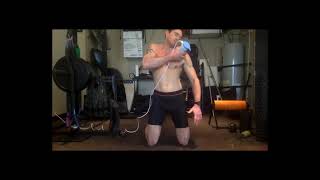
Ben Greenfield demonstrates a 30-40 minute full-body self-massage routine using foam rollers, percussive devices, and vibrating tools. The sequence targets feet, calves, hamstrings, glutes, spine, and rotator cuff to increase blood flow, break up fascial adhesions, and reduce the need for professional massage. Do it 1-2 times weekly, or use shorter 10-15 minute versions daily.
Chapters
Hello, I'm Ben Greenfield and I wanted to make a video for you to show you what I do for body self care using all these different self care tools that are readily accessible to us nowadays that allow us to, my apologies to the massage therapists watching, potentially get fewer massages and have less massage expense while kind of taking charge of our own fascial care. What I'm going to show you today are a series of different tools and routines that I do typically about one to two times a week. Now, every morning, as I've said on some of my podcasts before, I'll do about 10 to 15 minutes of just self care, breathing, stretching, foam rolling, etc. But then one to two times a week I'll do a longer bodywork session. What I'm going to show you today is typically something that would take me around 30 to 40 minutes. So this will be a slightly longer video, but my goal is to get a head to toe bodywork session in using as many different tools as possible. And I want to show you some of the moves that I have come up with or learned in different courses that I've taken or discovered in books that I've kind of found to be non negotiable specifically for self massage. So I'm going to be using a variety of tools, all of which you can usually find on Amazon. I'll try and include links for you along with this video. You don't have to have the exact equipment that I'm going to show you, but I'm just going to show you what I have and what I use. I am not doing this in my underwear because I am an exhibitionist. I am doing it in my underwear because you don't want loose clothing on for this routine just because it'll snag on a lot of stuff and you just want as much close skin contact as possible. You also get a little bit more lymph fluid circulation, almost like a dry skin brushing, so to speak, when your skin is in contact with a lot of these devices. So we're going to, we're going to start and some of this video might be a little boring because I'll show you a move, but then I'm literally going to do the entire routine so you can follow along. And so there'll be periods of time where you're just watching me do the moves. You can always hit fast forward if you say, okay, I get it, I want to go on to the next move. But you know, I essentially am setting up the computer here and recording this and just doing what I do for you to watch. So you could, theoretically, if you have all this equipment with you, follow along with me. Or you can kind of fast forward to the next move if you get tired of watching me. Do you know if you see whatever the foam rolling for the back and I do one pass and you're like, okay, I get it.
I.
But I'm there for a whole minute doing my foam rolling. Then you can go on to the next exercise. But I'll show you everything I do here. I always like to listen to a little podcast or audiobook while I'm rolling along. I think I'm going to listen to a financial lecture by Robert Kiyosaki while I'm doing this one. So.
You know what? No, I'm not going to listen to anything because I want to be able to talk to you guys. How do you like that for raw, uncut video content? Okay, so we're going to start off with just waking up the body. Waking up the body. I like to use percussion to do this.
And so what I'm going to use is one of these.
It's a car buffer like device.
This one's called a myobuddy.
It really is like an overpriced car buffer, but it's got a little cover on it here and I'm going to flip it on and what I do.
Is I just start from head to toe, just getting the entire body and essentially we're just initiating some blood flow.
If you find any kind of tight spots as you work your way up, I'm going to show you some areas. Sorry about the noise, but inside the.
Feet, the arch on the inside of the feet.
This one needs a lot of work. Sometimes you struggle with plantar fasciitis, etc. You want to do a few good passes on that. This thing feels really good, too. Just doing this alone, you'll feel amazing. Get a little bit of the shins, right, which will hit a little bit more with some other moves I'm going to show you.
I just do. I treat this as though I'm like, as though I'm painting my body, right? So imagine that you're just trying to cover every section of your body with this percussive tool. And you're trying to apply more of the pressure from doing distal, the proximal. So you're kind of working the pressure up towards your heart.
The Achilles tends to really feel this one.
Make sure you lean to the side. The calf here. The separation.
We'll go to the Other side.
Again, this little arch right here on the inside of the foot.
Paint the bottom of the feet, Paint.
The top of the feet.
Work your way up.
Really dig. If you hit any real tight spots, you kind of put it on there and hold for a little bit. If there's a knot right there, I'm just pressing into that knot, holding, kind of working it back and forth.
Get the shins.
And move up to the it band. And again, we'll hit these a little bit more deeply once we get to the foam roller. But right now this is just about lymph and blood flow.
And get up into the crotch.
Digging those adductors a little bit.
And again, I'm just painting everything. If you turn it sideways like this, get a little more pressure.
So we've kind of painted the legs a little bit. We move on from the legs. We'll do a little stomach.
Kind of dig up into the rib cage. Up in the diaphragm.
Work around the back.
The muscles on either side of the spine.
Dig into the psoas and the iliacus a little bit. Working your way up along that hip bone.
Repeat on the other side.
Work your way up to the chest.
These circles are on in here.
Dig into that crease between the shoulder and the chest.
All along the arms. Still feels really good.
Especially if you work on a computer a lot.
That's a blood glucose monitor, by the way. Get the hands.
Great for blood flow to the hands.
Get up into the rotator cuff a little bit.
Over the other side.
Same thing. You're just painting everything. Painting everything.
Another knot right there. So I'm going to hold it.
Go up to the traps.
This one feels really good. If you turn it. Turn it sideways a little bit as you're working on your traps.
Across.
The other side.
Go up and down the back of.
The neck.
Of the neck.
Jaw.
Okay. So you can see it's just basically like a. Like a full body.
Full body painting.
You could even see when I worked.
My jaw, I was kind of opening and closing like you get some pops in the jaw. So it's great for a little jaw massage as well.
So you start off with that.
Just paint your whole body.
Feels amazing, by the way. Okay, then we're going to start with the feet. And we're going to start with this tool. This is like a spiky ball you can use. This one's made by Rumble Roller. It's called their. I think it's called their.
They're.
Spiky.
Something I'll link to it. In this video, But I like this. Or a peanut shaped foam roller type of device. What you want to do is hit the feet with this one. So I'll usually do some good passes with the feet. So now we're digging a little bit deeper. And again, I kind of use like a head to toe approach. You can also keep this at your desk.
Put it.
If you have like a standing workstation and just underneath your desk, you kind of roll your feet a little bit. So this one I'm going to show you. Basically three different things I do with this device. So you get one foot and you can roll until you feel like you've worked out some kinks and some knots. In the bottom of the feet. Especially on the inside of that arch is an area that really tends to need a little bit. And then you'll go with the other foot. Same thing, just kind of rolling around. Find any tight spots in there?
Right in there on the inside of the arch. This is just great injury prevention. A lot of times. Knee pain, hip pain that will originate from issues with adhesions in the foot or poor foot structure. It's really good for kind of strengthening the feet too. And the more you do this, the more pressure you'll be able to use. Then what I do next is I move to the spine and you kind of plant it right.
In the butt area. And you just basically work from the spine all the way up, thoracic all the way up to the base of the neck. Work around the base of the neck a little bit and then roll it back down.
And I'll usually do about five passes or so. This one's really great to do when you wake up as well because it moves some cerebrospinal fluid up towards your head. So I really like to do this one when I get out of bed in the morning. It's one of my favorite things to do. I actually even throw this thing in my suitcase when I'm traveling. I like it so much as a lightweight tool to just hit a few body parts.
And this one just working up and down the vertebra. The other trick I can give you for after you do this is if you have an inversion table or something you can hang from after you've kind of worked the spine a little bit. It feels really good to hang upside down after you've done this specific move that I'm showing you right now. Okay, so we'll do one more pass here. And again I'm trying to get all the way down the spine. Now if you Find a tight spot. Let's say you're. Let's say you're thoracic. Right as I'm rolling up, I find like a little tight spot in the thoracic. What I'll do is cross my hands like this and kind of go side to side a little bit to work that area that's really especially tight. Okay, so do about five passes like that. And then the final thing that I'll do with this guy is I love to use it. I'm going to take off my watch here. I love to use this one on the arms, so especially on the forearms. If you type a lot, what I do is just like some deep compression and kind of like I painted my forearms with that myobuddy percussive device. This one just digs a little bit more deeply. And again, if you find a spot that's super tight, like for me, for example, right now, when I came over to here, it was just. You just kind of find a spot that's got a little knot in it, like my inner elbow does right here. And I'll just work that section a little more intensively. And obviously you could use this, you know, in a lot of other areas. But the three areas I'm showing you right now are where I found the most benefit out of this specific tool. So the bottom of the feet, the back.
Kind of down to the pelvis.
And then this little forearm move works really, really well for releasing some tight muscles. Again, if you type, if you rock climb, if you do a lot of pull ups, this is just a really, really great, great little tool for freeing up the arms. And there are other things. Like there's one called an arm aid that works pretty well for this. But I just, I like this one. It works really well. Okay, so just paint everything in there. And so those are the three moves.
I do with this guy.
And I forget what it's called. It's made by the same company that.
Makes the Rumble Roller, though, so I'll link to it in the video for you guys.
Okay, next up is the Rumble Roller. Now this one, this spiky foam roller that's really firm, is amazing. So the first move is probably one you've seen before. So you just do a few passes up and down the spine. And I like to go real deep with the passes. So what I'll do is go all the way up the spine, all the way until I'm just like as far forward as I can go. Stretch those hip flexors a little bit. Push your butt towards the sky, and then all the way back down. And I'll do about five to ten passes like this, just all the way up and down the spine. So you'll find this one kind of works the muscles more towards the outside of the spine and the upper back compared to that other one I was showing you. And when I'm putting my arms up over my head like this, it's also digging into my upper arms and my forearms, so I'm getting a little bit of added benefit there. So I'll do about five passes like that.
Sometimes 10. Just kind of depends how deep I want to dig.
And then what I'll do is I'll flip over and kind of do a similar move on the front of the legs. So we're hitting the quadriceps with this one, and it's kind of like you're almost doing, like, a modified push up on top of the foam roller. And I'm just moving this up and down the quads.
So I'll do about 10 passes or so like this, just kind of slow and controlled. Again, if you find any tight spots, you can kind of shear move your butt back and forth, dig into any areas that feel like they really need it on the quads. Okay. And I'm kind of a fan of moving the body as I do this routine. It can almost turn into a little bit of a workout. But once you've done the quads, I'll flip back onto my back and I'll get the calves. So the way I like to do this is both legs at the same time, and I just kind of push myself back and forth. I start with my feet turned out. You can see my feet are turned out like this. And I'm trying to relax my feet, relax my feet while the toes are still pointed out. And that will allow you to dig a little bit more deeply into the calves, because if your feet are contracted, your calves are going to be contracted. And this foam roller really won't dig as deep into a contracted muscle as it will into a relaxed muscle. So then we'll move to the front. And now my feet are just pointed straight up and down. And then I'll kind of move to the inside where the feet are kind of pointing towards each other. So we're just kind of again, painting the calves as we do this. Now, one area that you'll find may be kind of tender is the back of your knees. So what I'll do for that is I'll just get right over the back of the knees, right in that Popliteal space. And as soon as I have it centered over that, I just shake the legs back and forth for about 20 seconds, just kind of digging into any tight tissue that's in the back of those knees. So shake, shake, shake. That always tends to be a tender spot, but it's wonderful. Your knees just feel amazing. After you do this little move right here. And then once you got the calves done, what you'll want to do is kind of put one leg over the other and do the same thing on the hamstrings. But the hamstrings need a little bit more force, so you just do the hamstrings one leg at a time. And there's one area that's really hard to hit on the hamstrings. And I'm going to show you how to dig into that a little bit later after I show you this move with the hamstrings. But I'm trying to just dig up in that butt. When you get up in the butt tissue, you can also kind of wiggle back and forth the same as you did with your knee. And do a little bit of a shearing action there right up in the pelvis bone where the glute attaches. You're going to find some real tight spots up in there, but just work them out by shifting back and forth. And again, do the hamstrings one hamstring at a time, and then we'll shift to the other side. Same thing, several passes. I usually like to go about 5 to 10 passes per body section as I'm doing this. And once I've got about five to ten passes in, again, I'm going to plant my left butt cheek over the roller and just kind of sheer back and forth, digging into those muscles that kind of adhese to the bottom of that pelvic bone. Feels really good. Okay, and now we've got the calves and we've got the hamstrings. But one area that you didn't get with this is your shins. So I'll plant this right over the shins and just do a few passes right over that syndesmosis between the tibia and the fibula.
This one tends to be a little teeth gritting.
Basically, I'm just rolling kind of like the front of the legs up and down the shin muscles. If you do a lot of walking, you do a lot of running, and you tend to have tight calves or Achilles tendon or plantar fascia issues. A lot of times it's because your shins.
Are Tight and adhesive. And this just helps too, along with that other move I was showing you.
With the vibrating device.
Just kind of breaks up those shin adhesions a little bit. We'll do the other side. And again, like I mentioned, you kind of get the added benefit with this.
Routine of just a little bit of.
Training, because, you know, you're holding yourself.
In kind of an isometric push up.
Position as you're doing this.
My friend Kelly Starrett says not to.
Make a stinky face as you're doing this, but sometimes I can't help but.
Make a stinky face when I hit.
A real tight spot.
Okay, a few more passes on that calf. Sometimes you'll find one shins feeling a little bit more than the other. Okay, so before we move on to it, bend adductors, I want to show you how to hit a part of your hamstrings, kind of like up in here that tends to get really adhesive. Now, if you have like a squat rack, you can use a barbell and.
Just like plant your leg over a barbell and kind of shear that area.
But I found this cool thing on.
Amazon, so I was trying to figure out how to do this without a barbell. It's called a high roller. And so what I do with this again, to hit that section of the hamstring that I couldn't get to with the rumble roller, is I kind of plant my body over this high roller like this, and I just kind of get in that area of the hamstring that I need a more elevated roller to dig into. There's a lot of moves you can do with this high roller, but this is the one I found to be most beneficial. Although what this company needs to do ideally is develop a high roller that's.
Got more of those ridges on it like the rumble roller does.
I think it'd be even better if they were to do that. But there's a business idea for you guys.
Okay, so this is another area that again, like up there in the groin.
As you're getting in towards the genitals a little bit.
A lot of massage therapists won't work.
On that area, you know, especially on guys, because you're getting close up into the junk.
And so it can tend to be real tight, you know, especially on me.
It'S just tough for a massage therapist.
To work up in that area. So I found that if I can hit it with a barbell or if.
I can use this device, this high.
Roller, it works really well. So I'm just Getting all that upper hamstring area. It feels really, really good, depending on your definition of good. And then we get the other side here.
At the time that I'm filming this.
Routine for you guys, it's during this coronavirus quarantine in 2020. So I really can't have a massage therapist working on me anyways because everybody's on, like, shelter in place at home, orders on quarantine.
So all the better to kind of have this one in the back pocket if you don't have access to a massage therapist.
Oh, man.
That area tends to be super tight.
Good. So you may find sometimes you get to a really tight spot.
You can always come back to it later with that vibrating tool if you want to dig even deeper.
But that's primarily what I'll use this high roller for.
Okay, so back to the rumbleroller, because there's a lot more we can do with this. So next we're going to hit the adductors. So just kind of plant it diagonally like this. And now we're going to just paint that entire inner adductor region, kind of finding spots that tend to be a little bit adhesive, a little bit sore. You just kind of putting your weight over the roller, working your way up and down, up into the crotch. Sometimes you'll find a spot that's tight, and again, you can shear it right back and forth like this. So my VMO on my left side is really tight right above that knee. That can lead to a lot of knee pain, you guys, if you have knee pain many, many times, it's linked to adductors, or there's a really good book about this called the Knee Bible. It's linked to adductors, or it's linked to glute medius. So later on, I'll show you how to get into that glute medius really effectively. But we'll do about 10. Sometimes we'll do a few more passes on this adductor. So I don't know about you guys, but for me, it tends to be pretty tight. And then you'll just kind of orient the foam roller the other direction and do the same thing again, trying to hunt down any tight spots. Again, that VMO on that right side is a little tight, so I'm going to do some shearing action right in there.
Okay, a few more passes here.
Okay.
All right.
Now, one thing you can do after.
You hit the adductors I found to.
Always give, like, this nice pop is if you do a little frog stretch afterwards.
Little Yoga frog stretch. Kind of get down like this, Just.
Kind of shift those hips side to side, shimmy them a little bit.
Sometimes combining some stretches with this type.
Of deep tissue work is really beneficial.
We're doing something like this.
Before you do, say, a yoga session.
You'Ll get a lot better stretch.
All right, so next what we're going to do is hit the it bands. Same thing, similar concept. Start here.
And what I like to do, I've got a little twist. So here's how I hit my glute medius. As I'm rolling my it band. I roll all the way over, open up the spine, come back, then do a pass here, far up as I can go, open up the spine.
Good. We're going to do three passes per side on the it band.
And if you do this right as you're kind of rolling at the very top here, you're putting a sheer force on that glute medius.
Tends to be a real tight spot for a lot of people. And you can even kind of right here, shimmy and shake and do a little bit of shearing force right there over the glute medius. We'll do one more pass here.
And over.
And then the other side. Basically, it's identical.
So this entire routine I'm showing you is just great for mobility.
For injury prevention. Again, I'm hitting the glute mean on that left side now.
Little shearing force.
Now I tend to have some left knee pain. And it's interesting because for me, both that VMO and that glute knee on the left side are tighter. So it kind of tells me I've got a little, you know, it's typical to be somewhat asymmetrical.
Everybody has, you know, some type of.
Functional or anatomical leg length discrepancy or gait discrepancy or injury history that might predispose one side being tighter than the other. That doesn't mean something's wrong with you. Just the human body is imperfect. Okay.
All right, so we got our adductors and our it bands with that rumble roller. And then I'm going to go back onto my back with the roller again, shifting positions. I like to shift frequently as I go from being on my front side to being on the backside. And next I'm going to go all the way up to the shoulders, and I'm just going to rotate and dig into the rotator cuffs.
Okay, so now we're going to start.
To work the upper body a little bit. We've done almost everything I Want to show you for the lower body, there's a few cool moves that you can do for the upper body. Ok.
So what I'm doing now is I'm just digging into my rotator cuff. I'm digging into my chest muscles, and as I'm working my way up my body, I'm digging into the rib cage.
And this is more of a shearing force. So you want a real good, firm foam roller for this. And I'm working my way all the way up and down the spine, just basically rotating back and forth like this as I go.
Definitely find some tight spots. I'm going to show you how you can really get into them super duper effectively here in a minute.
And I will even go all the way up to the neck. I go back and forth on the neck a few times. Then another really good stretch is put your hips up in the air and plant. Actually, I'm going to show you this one from the side. So after you do everything I just showed you, finish up with a little stretch like this where you're just opening up the chest and force the back of the palms into the ground for 5, 4, 3, 2, 1, 1. And then push up, up, up, up, up, up. Sometimes you get a nice little pop in the shoulders when you do that. Okay, so now I'm going to show you.
Something that is amazing. I think I came up with this myself. But as far as your peristalsis, your gut, your psoas, all the way up to your rotator cuff, this is a really good one. Okay. And it's perfect as part of this routine. So what you do, by the way, I keep reaching towards my computer because the screensaver keeps coming on. Okay, so start on your right side. Dig that foam roller into some of that right gut tissue. Be careful when you're working on your gut. You don't want any pain, you don't want to dig into any organs. So no sharp pain here or anything like that. Like, don't dig too deeply into the organs. You're going to work your way all the way up the rib cage.
All the way up the serratus muscles, all the way up into the chest.
And then similar to what you did to the IT band, when you get.
To the top, you roll, rotate all the way up into the shoulder, and then you come all the way back down, down, down, down, down, down, down, all the way to the hip. This one is amazing. Especially in the morning before you go to the bathroom, it just gets everything going.
A lot of people are very tight in this rib cage and up into the chest. And this is one of the best moves for just freeing all of that up. Okay, so I'm going to do five passes here, just like this.
Good. One more.
And if you find any tight spots, same thing. You can stop and you can shear those tight spots. So right there in that rotator cuff, I hit a tight spot. So we go back and forth a few times, work that out, and keep going.
Okay. And then once I get all the way back down to my stomach, all I'm going to do is shift to my left side and do the same thing on the left side. So all the way up, up, up, up, up, up, up.
You guys are going to love this one.
Once you learn how to do this.
One, oh, my goodness, it feels so good. You'll feel like 2 inches taller. After doing five passes on each side like this.
And rolling back there in the shoulder, you're again using some of these moves to get a lot of muscles all at once. All the way down, down, down the gut. Dig into that psoas a little bit.
And pass it all the way back up.
Roll over the spine. So as you can see, we're getting total full body here with this routine I'm showing you.
Giving you a lot of kind of satisfactory pops as you do this one, too, especially around the rib cage. That's another area that I find a lot of therapists won't do a lot of work on is the rib cage area. And it tends to be a little bit at ease as well. Okay, one more time. Down.
Okay, so that is everything that I'll do with the rumble roller. All right, so we're going to set this guy aside. We got two more tools to show you, and we're almost done. So this is a little vibrating massage ball.
These things are cool. This one's called the hyperice. So I hold it down right here and push.
1, 2, 3. And you can see now it's vibrating. So this move for your hips is really good. And it's also going to hit some of the same digestive muscles I was showing you earlier. So we're going to start on the right side, and you're going to dig into all the muscles outside your right butt cheek. Find any tight spots. Ok, so roll around on that a little bit. And then what you do is you actually roll to the outside of the hip. So this one's a little more advanced. Roll all the way under, and then you're going to pin yourself this way on top of the ball. I'M going to show you this from the front and the back. I'm going to roll up my psoas.
Stopping and working into that psoas a.
Little bit.
And then all the way.
Around.
To the back. Finish up right underneath the pelvis.
Sit on top of that pelvis. Rolled around underneath the pelvis a little bit. So you can see I essentially just traced a giant circle. I accidentally pressed the button on this ball when I was doing it. So I'm going to show you this from the back now. Okay, so I'm here and then I'm rolling over the ball.
And then the ball's going kind of under the stomach, working into the psoas, tracing a path all the way up and over the hip bone, coming back.
Around.
Ending right under the hip bone here.
We'll do one more pass like that.
Find the tight spot, get that glute knee. You can also get the glute med with this move.
All the way up and over.
All the way up the psoas. You can plant on the psoas and breathe into it a little bit.
Paint around under the rib cage, back around to the back. Finish up sitting on the ball.
And then all you do is the same thing on the other side. The only weakness with this ball, with the move I'm showing you, is sometimes your butt or your muscles hit the little button that turns it off. So sometimes you got to stop and flip it back on. So again I'm going to work around here.
Hit that glute meat a little bit.
Paint all the way up into the psoas.
Come up right underneath the butt. I'm right underneath my tailbone now, kind of working into there. I'm going to paint it two more times. Again, drop this leg to the outside.
Come around.
Paint to the outside again.
Here we are. One more pass, One more pass. So again, drop the leg to the outside.
Work it around.
Giant circle.
Work the psoas.
Come up and around.
Finish on top of the ball. Okay, so there's again a lot of things you can do with these balls, but that's like the number one thing that I do with this thing.
Alright.
A lot of stuff. We have one more to show you guys. So we're pretty much done. Full body. We're going to finish with one of these. So this is really cool. This is a vibrating foam roller.
This one's also made by Hyperice.
So I flip it on like this and it's like a mini foam roller. If I press the button on this side, also vibrates. So Last move I'm going to show you is amazing. Like, this is another really good one to wake up to. It gets a lot of blood flow going to the digestive tract, but I've also found it to be wonderful for kind of hitting some of the inner.
Thigh muscles that, again, a lot of massage therapists don't get to.
So I literally.
Do it like this. Okay? So what I do is I take this, I turn it on, and I shove it basically as far as up into my crotch as I can get it. And then I squeeze my legs together so my feet are nearly touching each other, and I'm squeezing as hard as I can right here. And then as I'm squeezing, I dip forward like this.
All the way down.
Touch the toes, and then come all the way up. Maintaining that squeeze, reach for the sky, rotate to the right, rotate to the left. Okay, so again, I'm here.
Pinching that foam roller as hard as I can. So it's giving me that vibrating shearing action. So you gotta have a vibrating roller for this one. Come all the way down, touch the ground.
Sometimes I'll shimmy side to side a.
Little bit while I'm down. Come up.
Reach for the sky, rotate to the right, rotate to the left. And then what you do is you move the roller.
You move the roller just a little bit farther down. So now I put about right here. Okay, so now I'm getting the adductors just a little bit farther down. Same thing.
Squeeze, squeeze, squeeze, squeeze, squeeze.
Maintain the squeeze. Come down, touch the toes, come up. We're just going to do two.
In each position. So again, swan dive down. The important thing here is to squeeze to maintain as much pressure with your adductors against that foam roller as possible. And then the last area we hit is the vmos again, either. I tell you, this is a fantastic one for the knees. Now I'm pitching it right between the knees, and again I come down. Get that shearing action on the vmo. Shimmy, shimmy, shimmy. Come up nice and slow. Reach for the sky, rotate to the left, rotate to the right. One more pass here.
Shimmy, shimmy, shimmy. Come up.
Rotate right, rotate left. Good. Then you can flip this guy off.
Okay, so that's obviously a long time. We're going, like 40 minutes maybe. But that is a full body routine. My body feels amazing right now.
I hit every muscle.
I did a lot of the same.
Stuff I might get during a massage therapy session.
I moved, I got blood flow, I got lymph circulation, and so I'LL do that one or two times a week.
Just want to listen to an audiobook or a podcast.
Nice deep breathing, paying attention to where.
My body feels, Hunting down the knots, using all these different cool tools that we have accessible to us nowadays to be able to hit the body in a variety of different ways.
So I think you're going to feel.
Amazing when you do this.
If you do everything I just showed.
You, you'll feel absolutely amazing. And it's wonderful for injury prevention, wonderful for maybe aside from the initial investment in some of these tools, saving some money on massage therapy. And it's just really cool to be able to take care of your body in this way. And I do this so often that I thought it was high time I just share this routine with you.
So along with this video I'll include.
Links to all these different tools that you can use. I hope this has been helpful and will upgrade your self care routine just a little bit. So if you want more moves like this, check out the Beauty and Symmetry chapter of my book boundless@boundlessbook.com where I'll show you like some self care routines for your face, some different Ayurvedic tactics for teeth structure, jaw structure, some different skincare tactics I use, but ultimately that's kind of the full meal deal gold standard bodywork routine. All right, thanks for watching.
More from Jeffrey





The Solution to Aging Might Be Closer Than Anyone Realizes - With Ben Goertzel


