Heavy Rock Lifting, Building Your Own "Water Charging" Station, Biomechanical Fixes, Plant...
Ben Greenfield talks with Paul Chek about corrective exercise, meditation, and nature-based healing practices like rock-stacking and water charging. Chek discusses his patented rehab tools, his institute's clinical work, and techniques ranging from prone cobra exercises to plant vaporization and mandala therapy.
Chapters
So when I was a fledgling fitness professional, one of the first books I ever read was this book called how to Eat, Move and Be Healthy by Paul. Check. It turned out to be a very surreal experience, therefore, for me to get to travel to San Diego and knock on Paul's front door a few weeks ago and join he and his family, his two wives that he has up there. Yes, he has two wives, for a pretty epic week of conversation and workouts and nature immersion and building giant rock towers and ayahuasca and all of Paul's crazy daily habits, which you're gonna discover in today's podcast episode. So who is this dude and why would I travel all the way to the hilly backcountry of San Diego, California to interview him? Paul, if you haven't heard of him, and if you're in the fitness industry, you must be hiding under a rock if you haven't heard of this guy. He is the go to guy when it comes to corrective and high performance exercise kinesiology. He's this weird mashup renaissance man of like spiritual optimization and extreme cognitive performance. He's one of the buffest 50 plus these 58 year old dudes I've ever met in my life. He is a sought after presenter. He works like the Chicago Bulls and the Raiders and New Zealand's rugby team and the US Air Force Academy. Professional athletes travel to his house and pay him like thousands of dollars per hour just to fix their bodies and to work with them both physically and mentally. And he has his check institute, which is probably the most robust resource for health and fitness information I've ever discovered. Everything from freaking meditation to parasites to kettlebells, everything's in there. He invents stuff too, like posture calibrating and hydrotherapy and other fitness equipment inventions which we talk about on today's show. I could have talked to this cat for like three or four hours. I'm gonna actually do another podcast with him, hopefully in the near future because we only scratch the surface of everything that this guy does in the show notes for today's show, which you can grab over at BenGreenfieldFitness.com check. That's BenGreenfieldFitness.com Check. I'm include plenty of cool photos for you. Like Paul's house is chock full of books. Every time he recommended a book to me, I took a photo of it. I'll put all those photos in the show notes. I'll put a photo of the water charging stations that we talk about in the show. Notes. I'll put the information, like the lunar calendars and the Czech Institute and the way that he scans and fixes the human body's electrical field. Everything I'll put in there. Check it out. BenGreenfieldFitness.com check. This podcast is brought to you by Red Juice. That's right, Red Juice. So what I mean by that is that there is this company that makes the best tasting green juice on the face of the planet. My buddy Drew Canole's company, Organifi. Well, he just decided to launch a red juice. I actually never tasted it until I went to his house. I had some with him before we went and worked out down in San Diego. Blew my mind. Blew my body specifically. It's like a blend of acai, beet, pomegranate, cranberry, raspberry, blueberry, strawberry. But then it's all blended with these adaptogenic herbs like cordyceps and Siberian ginseng and reishi mushroom and rhodiola. Amazing, amazing stuff. So fat burning drug companies are clawing for these herbs, but now he's got them all mixed together in this red juice and you get 20% off. You lucky son of a gun, daughter of a gun, Whoever you are. BenGreenfieldFitness.com Organifi that's BenGreenfieldFitness.com organifi with an I and use discount code BEN to save 20%. This podcast is also brought to you by Atrantil. You may have heard me talk about Atrantil before. So what they do is they fix leaky gut by naturally disrupting the methane producing bacteria in your gut. They push it out of the small bowel, stops gas, stops methane, stops blood bloating. It's great for things like sibo, for digestive issues, for ibs, any inflammatory things going on in your gut. This stuff is freaking amazing. It even has quebracho in it, which I just love to say. It's a macromolecule, meaning it doesn't get absorbed by your body and cause systemic side effects. It just stays in your small bowel and does its job to stop the bloating. You just take a couple before you eat. It's crazy. You have to try this stuff. I have some. I've been using it. It's amazing. Just use it before any meal, especially like big meals, but any meal, really. Or anytime you have BL loading, you go to lovemytummy.com lovemytum lovemytummy.com Ben and use code Ben for 15% off. That's lovemytummy.com Ben & use code Ben for 15% off. All right, let's go join Paul. Check at his home in San Diego, where we hunched over a couple microphones after an amazing rock building workout and we made sweet podcast love. Listen in. In this episode of the Ben Greenfield Fitness.
Show. When you're doing zone exercises like I show in my book how to Eat, Move and be Healthy, you're using a combination of movement and breathing, but you're not using intensities that are greater than what you can comfortably breathe with. So the net effect is you actually produce more life force energy than it costs to do the exercise and you end up with a surplus because the ego does not really know how to defend itself against art. It doesn't know what it's doing. In other words, unless you're trained in art therapy and you spent years studying symbology, you're just painting whatever or drawing whatever wants to come out of you. He's an expert in human performance and nutrition, voted America's top personal trainer and one of the globe's most influential people in health and fitness. His show provides you with everything you need to optimize physical and mental performance. He is Ben.
Greenfield. Power.
Speed, mobility, balance, whatever it is for you, that's the natural movement. Get out there. When you look at all the studies done, studies that have shown the greatest.
Efficacy.
All the information you need in one place right here, right now on the Ben Greenfield Fitness.
Podcast.
So Paul, tell me about that amazing workout that we just finished doing before we sat down to our pre podcast breakfast of eggs and beans and.
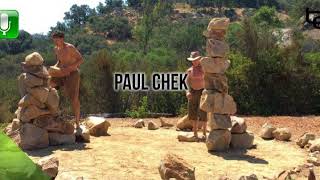
Sauerkraut. Well, I thought it would be fun to take you out into my stone circle, which is a sacred space for me where I do a lot of meditation, tai chi and stonework. And I think that being outside.
Stones, by the way, these are not pebbles for those of you listening. These are stones the size of a relatively well grown.
Child. Yeah, some of them are up to £320 or so heavy and they go all the way down to pebbles, all the way up and, and the stone, you know, being in touch with nature. And I teach people, as you just experience, to go barefoot bare handed. So you.
Are more conscious of what you're doing because there's a lot of living beings and creatures out there, from insects to snakes and whatever else you can come across up here in the wild. And.
The centers of gravity of stones are often not in the center of the mass based on the shape of the object. So it really requires a lot more Balance and coordination. And when you're stacking rocks, you have to be very conscious of where the center of gravity of the rock that you're putting on top of the rock below it is. And the higher you go, the more you have to be conscious of multiple centers of.
Gravity. That's exactly what I noticed. I mean, the first five minutes, I scraped, scraped open my.
Toe.
Yeah. And I broke my ring. And then you stopped me and you told me that I needed to be treating the rocks like. Like a child would treat or like a mother would. Would treat a child, or like a. Like you would carry your grandmother.
Up the stairs if she was an old lady with a cane. And I said that, you know, though, you can smash rocks with hammers and. And they'll accept that that would be a yang approach. But I said, remember that water is the one thing that wears stone away effortlessly. And because the stones are being treated with such love, they let go to the water and they dissolve over time. And I've hurt myself many times learning these things. And so my rule is never rush in a rock garden and expose yourself so that you have to accept responsibility for the choices you're making and learn that when the pain teacher comes, not to get upset, but to take it as an opportunity to slow down, center yourself, breathe through your belly, and get out of the work a day. Busy, busy, rush, rush kind of information, heavy world that we're in. And bring yourself right down into the earth and to the stones and be present with them and let them guide you instead of trying to force something to.
Happen. It was like meditation. You set the timer for forcing 45 minutes. And I thought, oh, gosh, I'm going to be lifting these heavy rocks, and it's going to be slog torture. Second by second. And it was kind of funny as you and I both put the finishing touches on our giant rock sculptures, which, by the way, I'll put a photo of these sculptures for you if you want to view them along with everything Paul and I talk about over at BenGreenfieldFitness.com check. That's BenGreenfieldFitness.com chek we put the finishing touches on these rock towers that Paul and I built. And the timer goes ding. And it felt like 10.
Minutes.
Yeah. Yeah. And for people listening in, if they wanted to do this for themselves, they wanted to learn how to build their own rock sculptures. And this style of rock garden meditation that you do. Can you simply just go to a quarry and get a bunch of.
Rocks? Yeah, you know, I Harvested most all the ones you see that we were working with came from the surrounding neighborhood. I mean, just on the property.
Here. But you choose different varieties for a.
Reason. Yeah, I do when I build things like a water charger, because there, there's an electromagnetic energy. So you have to kind of work with the concepts of an electrical circuit. So you need stones more toward black or lava, like black dark yin to be the feminine end. And then you need higher frequency stones that are yang, like crystals. So I saw you pick up that crystal out there that weighs over 200 pounds. That's a, that's an actual crystal. If you polish that.
Yeah. Deceptively.
Heavy. You know, you could make necklaces and healing stones out of that same stone. That's what it looks like in raw form. So you, if you're building something where you want to move life force energy, then you need a variety of colors, just like you need a variety of musical notes on a keyboard or a guitar. You have kind of monotonous, monotonic type.
Experience. Choose a variety of different rocks. And. And you, you mentioned the water charging station and I, when were talking and having dinner last night, I told you about how I take water and I put it in a glass jar and I charge it in the sunlight with salt crystals at the bottom to hydrate the body. And you explained to me your system, which is far different, and one that I'm going to try and compare the two. But tell me about why it is that you are so careful about the way that you're treating your water before you drink it. I mean, obviously our audience is aware of fluoride and chlorine, but perhaps go a little bit deeper than that. And then I want to hear about these water charging stations that you make. I find it.
Fascinating. Yeah, well, I studied the work of Victor Schauberger, who is really still today considered one of the foremost experts on water. In fact, Victor Schauberger was taken prisoner by Adolf Hitler at gunpoint and put into a situation where he was told to build Adolf Hitler a flying saucer. And he gave him a list of all the scientists he had captured and said, take any one of these people you need. And Victor Schauberger was an Austrian park ranger and he had been studying hydrodynamics. And he was always interested in how it is that fish, like trout, can swim upstream and seem to make long journeys against the flow of the water. So he studied the shapes of their bodies and how they responded to water.
And he watched water, he studied artesian wells, and he and he gathered tremendous knowledge on water. And he used that same consciousness and science to build the first flying saucer, which, which ultimately they couldn't control. It flew out the roof of the flying saucer. Yeah. During the Second World War. Yeah. And, and they, they couldn't control it, but it flew right through the roof of the building, blew the roof off and went about 1500ft and then took off and landed somewhere. But they, they ultimately could not control it. But it was based on the same principles as how fish swim upstream against the water. And one of the ways that Schauberger demonstrated his knowledge of water is they were having a hard time then with logging, getting logs out of the forest because it was very steep. So they built these log plumes to run the logs down like a waterfall, like a water park. And he found that if the water got warmer than about, I think around 44 to around 44 degrees, if I remember right. Don't hold me to the exact number, but it's cool water like that, the capacity for the water to carry the logs decreased and the logs started dragging on these wooden plumes that he'd built to carry the logs. So he identified that the water had the most working power, most life force energy and capacity to carry a load at these cooler temperatures. And in his teachings he said that water, to achieve its optimal life force energy for the human body, needs to be kept in the dark and kept.
Cool.
Right. And so it had to do with his observations and also showing that the fish that were swimming up these streams were in cold water, they weren't in warm water. And so without going into a long exotic explanation of all that, but that's really kind of the essence of, of.
It. So you want your water to be somewhat.
Cool.
Yeah. But you also want it with these water charging systems that you build, for example, out in your front yard. That combination of a frickin workout and building a, building a water charging station, which I love. Kill two birds with one stone. What's the idea behind surrounding the water then with these.
Rocks? Well, if you think that an atom of any kind be like this glass table, has an atomic structure and it has to maintain that. So for example, if you take a laser pointer or a flashlight or any energy source or sunlight, and it hits the table, it's going to energize the atoms and so they're going to share that energy, you know, through electron sharing and the energy moves through it, but it has to maintain the crystalline structure. If you put too much energy through it, then it you know, the, you know, like fire with enough energy would melt glass. Right. So what happens is when you have stones, they each have their own atomic structure, just like a crystal has a unique structure, and different crystals have different structures. So what happens is that sets up a resonant vibration. So when the moonlight or the sunlight or the electromagnetic energy, say, for example, if it's thundering and lightning, or there's changes in the atmospheric pressures, there's changes in the electrical activity, the stones pick up all that energy and it excites the stones. And so just the way each musical instrument in an orchestra has a specific frequency range and a specific body to the instrument, like a trumpet sounds a lot different, then a tuba or then a flute or then a string instrument. So each stone has its own characteristics, and the colors of the stones tell you what type of light is emanating from the stone. So a green stone is emanating green light, which correlates to the fourth chakra. So if it's got a black stone next to it, the black stone acts like a sponge, sucks that green light into it. And yin is a multiplier of power. So the yin stones, for example, a black stone's very yin, sucks that in until it overflows like a sponge that's so saturated it just starts to drip.
Everywhere.
Wow. And that energy, if you connect that to a yang stone, like a crystal, say a brighter color stone or a piece of rose quartz, it receives that energy and broadcasts it out. So where the black lava wants to suck everything in, like the sponge, the crystals, or the. The yang type stones, the higher vibration stones that put out brighter colors, that when you look at them, they actually act like flashlights or like the sun itself, and they divide the power. So yin multiplies power. So think of if you take a piece of dried toast and throw it in a bowl of water, it draws water into itself and it swells. But if you take that same piece of toast and put it in a frying pan, you will expel that water, and the body of that toast will begin to shrink, and eventually it'll turn into ash. So that's yang. The ash of the fire turns into yin, and that's the cycle. So when you have yin stones and yang stones together, the yin sucks energy in. Like a woman who's pregnant, she draws everything into herself and swells, multiplying power. But the moment that the child takes its first breath, it now enters its Yang cycle, which we call life. And when we die, we go back into the yin cycle of Drawing in again. And we won't go into after that because that's another long story. But so the point that I'm making is each stone, because it's got a different construction, a different type. So you've got river stones versus granite versus, you know, crystals, etc. And so I organized the stones so that you have one relatively yin to one relatively yang, or sometimes two yin and two yang, depending on what my soul guides me to do and what I want to do with the water. And I spiral them up and make sure I leave a doorway with an arch stone. And water has been shown to have an almost infinite capacity to carry information, and it's got an almost infinite degree of sensitivity to vibration of all.
Types. And there's. There's plenty of work that's been done on that. Everything from the podcast you and I were talking about Last Night with Dr. Thomas Cowan about how the water that you drink affects the actual electrical charge of the blood flowing through your body and allows the heart to either need to pump much, much harder or much easier. I structure all the water that goes into my house so it maintains that normal electrical charge that it'd get when it was passing under the underground springs before it hits the cisterns and the pipes and just sits stagnant and warm in the house. But what you do is you take these giant glass bottles of water. Good water. You get a. Like a.
Yeah. It's from Mount Palomar. It's 4,000 foot.
Well. Very.
Good. Mineral rich, actually. Completely free of any chemicals. They found nothing in it, which is rare. There's hardly any place in the world where you.
Can. Even my own well water from deep under, you know, the Washington rocks, that's got bacterial rich iron and manganese and things that I still need to filter out of it. But you take these glass bottles full of this water and then you surround them. For those of you listening in, you know, when you go to a quarry or when you begin to collect stones, this is. This is a fantastic idea. You surround these glass.
Bottles.
Yeah. With these.
Rocks.
Yeah. And so the glass bottles are seated on the earth, as you told me. If you wanted to, if you live in a wintry area, you could. You could put them on top of. For example, you recommended a.
Biomat. Yeah. An infrared.
Mat. Anything that would heat the.
Water. Yeah.
And. Or at least keep the water from.
Freezing. That's all you want to.
Do. And then you let the water sit out there. And when you decide it's time to drink.
It.
Yeah. Take it into Your home, whenever I run out on the kitchen counter.
When I run out, I use five gallon bottles. So when we run, replace it. So sometimes it's.
About. On average.
System. Yeah. On our, at our house, it's about an average of two days per five gallon bottle. And that gives it about 48 hours of charge. And during that time, the sunlight and the moonlight is energizing the stones. But remember, energy and information are synonymous terms in many respects. So what happens is the sun and the moon are programming the water with the energy of the season of exactly the time that you're in. And this is the basic, shall we say, software that your cells run off of, that your whole biology runs off. Just like you ever have an operational system in your Mac there, you might have OS X or OS Tiger or something like that. Our cells run on these basic information plans that come from the energy of the sun. For, you know, the sun and the moon regulate your whole hormonal system in the Earth. You got your circadian rhythm, you got your lunar rhythms, and then you got your annual rhythms, which breaks down into your seasonal rhythms. And those things are all key drivers of the entire hormonal system. And so what happens is inside water. The research shows that water has a structure called a clathrate, which is kind of like a gyroscope, where there's elements of the water that can turn inside of it. So you, like imagine a bunch of spheres rotating inside of each other. And they've shown that even one molecule of water can remember the information from every surface and every energy it's ever interacted with in the entire history of that molecule. So what they show is that these clathrates are like kind of like a circle of bells spinning inside of each other. And they code the vibration of whatever comes into contact with them into the water. And so when you use the stones in the earth, it's programming your whole biological system with the reference information of the environment. And this is nice, clean signals. It's the signals that our whole biology is built from. The sun, the Earth and the moon. And that's what structures the water and it energizes the water. And as I was saying, you can track the moon cycle and it.
Radically changes what I wanted to ask you about, because I went online last night, I ordered myself a lunar calendar. Yes, good, because you said based on the moon cycle phases, you can actually taste a difference in the way the water, that the water tastes. Why is.
That? Well, the, the, as you know, when the energy, when the full moon is when you have full moon, you have maximum Yang energy. So you're getting the most sunlight at night, so you have full yang. And yang's highly energizing. Right. Throwing.
A.
Right. Throwing your piece of wet toast in a frying pan will blast that water right out of there and dry it out. So at full moon, you're having the most amount of sunlight energy. And so that energizes the atoms in the minerals in the soil, and that causes them to sing or to vibrate like a tuning fork. And that energy right from the soil goes right through the glass and makes the water molecules vibrate. Now, we have the whole concept of energy medicine, where they can take, for example, a herb, record its vibration, and then take nothing but the vibration from the recording and inject it into water, and it carries the same medicinal properties as the.
Herb. Yeah, so that's. That's very similar to.
Homeopathy. Right? It's. Well, it's an energetic homeopathy. Yeah. You know, homeopathy uses a substance, but to begin with. But then you end up with none of the substance if you go into an X factor of, say, 10 or more. But what I'm saying here is that the substance, that is the earth, and it moves right through the glass bottle in vibration. And as I was sharing, sometimes the water will taste like granite. One. One time it tasted very much like nickel. And so I realized that it must be the moon doing this. So I bought a moon calendar. This is probably six years.
Ago. And I said, that's just basically a lunar calendar.
Right? A lunar calendar. Yep. And so what I begin doing is taking careful note of the density of the water. You'll notice when it's a new moon. So there's no light coming from the moon. The water feels so wet that it feels like it goes right through your tongue. It literally feels like it's so wet, it makes it. It feels as though it's falling through your tongue like a solvent. But when it's at full moon, sometimes the water has so much energy in it, my friends think I've carbonated the water. It literally bubbles in your mouth. And what I found is that different year, every year, it's different. And every. Every moon cycle is different. So sometimes it'll. The water will taste like dirt. Sometimes it'll taste like a metal. Sometimes it'll taste like granite. Sometimes it'll taste like.
Almost like compost smells. And I. Because I'm very sensitive, these subtle vibrations, I. Like I said, I concluded that the most likely source of that energy would be the moon. So I started tracking it on a moon calendar. And sure enough, whenever it was full moon, you got the greatest influence on the taste of the water. You could tell that it was the moon vibrating everything so.
Strongly. It's really interesting. I actually have been using since I interviewed this gal named Dr. Wendy Myers on my show and you saw this little device that was sitting over next to my computer a little bit ago. It's called a nest scanner. It allows you to do basically like acupuncture, but with a little device that scans you, identifies the areas where you might have blockages in energy flow. And then you use that very similarly to acupuncture needles. But along with that system, as it identifies areas where there are blockages in energy flow, you also are given a set of different, what they call infoceuticals. And for those of you listening in, I'll link to my podcast with Wendy in the show notes@BenGreenfieldFitness.com check these infoceuticals are actually little bottles of water that have had certain frequencies basically bombarded on them. That's why you want to keep them away from a WI fi router or any other signals, sources of electricity after you get them. But it's very similar concept how water can actually store energy and store memory. And for those of you who are listening right now who think that this is all woo, woo, and Paul's some skinny yogi sitting here drinking water and pushing a giant shopping cart full of kale through whole foods. He's actually pretty badass. And you were telling me, Paul, some of your story last night about why the airborne forces and joining up with the airborne forces when you're training in the US Military was easy for.
You. Well.
When I came into the army, I wanted to be with the badasses. So I signed up from the beginning to be a paratrooper in the 82nd Airborne Division, which is volunteer. And, you know, it's an intense training. It's, it's the first level of elite forces. Above that is the Rangers and then the Green Berets. But it's a lot of intensive training. And when I went to basic training, you know, I was a competitive boxer before I joined the military. And I ran a 438mile before right before I came in the military. And part of my boxing.
Training.
Wow. I could do hardcore calisthenics for, you know, two hours.
Nonstop. You grew up a hard life. You grew up as a farm.
Boy. Well, yeah, I was, I was getting to that. And you Know, I grew up on 140 acre sheep farm and my father is a very do not ask questions, get the job done or you might lose your teeth kind of guy. And, and what I was sharing with you is that I gained eight pounds in basic training because there wasn't enough physical conditioning to keep me fit. And I was getting frustrated, but guys were dying of exhaustion all around me because they were just so unready for the rigors of basic training. And then when I got in the 82nd Airborne Division and their, their initial training is, is more intensive. But to, to piss off the, the black hats and the drill sergeants, I would be doing one arm push ups with a rucksack on and my steel pot on my head and I just go till that arm was.
Tired. Make it.
Harder. Yeah, well, you know, they were messing with me so I thought I'd mess with them. And this battle went on, so I just got more and more fitness, but I actually lost conditioning and gained weight because I was in such good shape from working on the farm and my martial arts and boxing training and it was a competitive motocross racer and I trained very hard for that. And I just felt sorry for the guys in there because they were just so unprepared for the rigors of it. But for me it was, you know, compared to working on the farm with my dad who is one of the strongest fittest men I ever met in my life. I was telling you yesterday, you know, he, we would have like 3,000 bales of hay in a field and he could take 100 to 120 pound bale of hay in one arm and throw it on top of a trailer stacked 10ft in the air. I mean he could throw a.
Full size is hard work. I mean my, my wife, that's all she does is she, she, she gardens and she hauls these bales of hay around for the goats and moves rocks like we were doing this morning and walks around in the forest and she's an amazing, she'll go to spartan races and be right up there with the female pros doing a spartan race just from literally working out in the yard on a very, you know, we're on 10 acres of farming. But you know, in a similar way, when I compete in these training to hunt competitions, these bow hunting competitions, I'm pretty fit. And I show up at these bow hunting competitions and there's one guy there that completely waxes my ass and destroys me and he's just like a, he's like a farm strong guy. From Oregon, who bails hay and shoots his bow. And it's amazing. It's very similar to the rocks we were lifting this morning. You told me. Tell me why you said this. You told me that when you go in. I believe you said that when you're deadlifting and moving around the weights in the gym, they feel like so smooth butter compared to what we were just.
Doing. Yeah. Once you've been out in the stones for a day or two and you go back into the gym, whatever you were training at. So let's say I was doing sets of four in the deadlift with 405 off the box. After a couple of days of lifting stones and I go back to the same workout. I can probably get eight reps with the same effort because the body is working so much more efficiently and it's so much more well integrated because you never do the same movement twice out there. And your brain has to be very, very high alert to integrate the prime movers and the stabilizers because there's so many environmental factors from the sharp thorns that might be under your feet. I've had arrowhead stones go right through my foot while I was carrying a fire ant.
Yeah. And almost. Almost put my hand on a big black widow living underneath my.
Rock. Yeah. So you see. See, your nervous system's really working in the stones. As you can feel they're not. The center of gravity is not in the center of the object. So you pick it.
Up. They're very.
Unwieldy. You can have, like, twice as much load on your right arm as your brain would expect looking at the object. And then you got to pick these things up, put them overhead, balance them. I have to stand on top of stones and balance, sometimes reaching. And it's kind of like Olympic lifting in the middle of an unstable environment. That.
Bites. Right. It's. When I work out with my kids, sometimes I'll drag them up and down the driveway and haul them like sandbags. And they're, you know, like a human body is a very unwieldy object compared to a barbell or a dumbbell or a kettlebell. There's a lot of rock quarries that are going to go out of business once people listen to this podcast. Good start buying all these rocks for their yard. That if you come and visit me at any time in the next year, you're probably going to see these stacks of rocks and. And a giant rock water charger beginning to form at the base of my driveway because I'm going to go home with my kids. And we're gonna start making these. You have a lot of other very interesting habits and interesting setups. For example, in your home and up here at your office, you have these giant tables full of like a vaporizer I've only ever seen used for weed, this thing called a volcano. But then you have a bunch of different bags of different herbs and spices that we've been smoking. And we aren't smoking necessarily vaporizing. But what is it? What's this idea behind all these different smokes or these vaporizing compounds you have.
Around? Well, just like each, when you use a herb medicinally. For example, if you use ginger, it's very, very yang, it's a great anti parasitic, and it's stimulating to the sympathetic nervous system. Then if you use chamomile, it's quite yellow yin, it's more stimulating to the parasympathetic nervous system. So chamomile is quite feminine. Ginseng is very, very masculine. Hot and fiery versus yin and cooling and feminine. So you can do the same thing with any herb through vaporizing it, except it just comes through the lung channel. So it's on the, it's. It comes in on the air element, which is a higher vibration. And it's coupled. When you bring that in, it couples with your own prana or your own life force. So for me, I like to experiment with everything and learn how nature works. And because you're using a vaporizer, vaporizer, there's no fire, so there is no smoke. And these things were originally invented for cancer patients, so they could use them to deliver medical marijuana with. Without creating increased carcinogenic load on the body. So you're actually evaporating the water out of the plant which carries the information and the energy or the spirit of the plant. So when you vaporize any one plant or herb, you actually bring the life force, energy, information and the consciousness of that plant in. And through using different plants, you can learn that different ones affect you in unique ways. So for example, if I want to.
Cool myself because it's very hot up here, you know, we're out in the desert here, then peppermint or spearmint has a very cooling effect, but also has kind of a relaxing effect and an opening effect on the.
Mind. And the peppermint or the spearmint, this would be the form of tobacco that you use, the form of tea that you use, or the form of. Because you would put a little drop of essential oil on there as.
Well. Yeah, well, I mix different things, so I use some natural tobaccos that haven't been spoiled with herbicides, pesticides, fungicides and rodenticides.
So you can, you can find native tobaccos and things that shaman use and clean tobaccos. But I like the tobacco because it, you know, when you use it through a vaporizer, you're only getting a tiny amount of the nicotine that you'd get if you lit it on fire. A cherry on a cigarette burns at 800 degrees Fahrenheit and it incinerates it, the tobacco and releases the nicotine into the body, which is quite addictive and it has some beneficial effects. But it's better to go with a vaporizer. I figured you're only getting about one third of the nicotine load, but you're getting a lot of the other healing properties of the plant without the complication of the nicotine. And you do get a low dose of nicotine, which has some interesting effects. It's one of the only drugs ever in the world that stimulates the sympathetic and great.
Nootropic. I'll chew nicotine gum like a 2%, 3.5 to 5. I believe it's a milligram dose of nicotine in the gum. But vaporizing it the way that you were doing it and then taking. You take a little bit of.
The. I use. Yeah. A little bit of tobacco and then I choose the herbs I want and I put a drop of a flower essence that carries the energy. So for example, if I'm rushed and I got a lot going on, I would use. I like the Australian bush. Flower essence is one of my favorites. So I use calm and clear so I can take in the herbs. And then the, the either drops of my charged water or any of the flower essences puts enough moisture in there that when you vaporize it, it's not like you're breathing in hot, dry air. That can be stressful for the lung and too yang for the lung. The, you know, the lung's a feminine organ and it's got a mucous membrane. So by vaporizing it with a drop or two of flower essence or some high quality water, it moisturizes it. And now you're getting a really.
Nourishing, energizing, rapid delivery. And it's a very pleasurable experience. And you know, I really love the experience of breathing and blowing smoke. I think maybe, you know, it could be from past life experiences as a native or something. But I love that experience and I love.
Sharing. Very Zen. It's like sipping on tea. You know, when I've gone, I just Got back from New York City and was sipping tea with qigong master Robert Peng. And, you know, sipping this vaporizer with you. It's very, very similar. I actually want to try this when I get home. I have this little thing that I'll use to vaporize, usually something like marijuana. Sometimes it's called a magic flight box. It uses infrared. It's very small and portable. But I'd love to get a little bit of this organic tobacco that you use, because tobacco is very prone to have herbicides and pesticides on it, so you need to be careful. A little bit of tobacco and a little bit of essential oil and a little bit of some kind of a tea, like just a basic loose leaf tea that you would drink. And you put all this into the vaporizer and it's an amazing.
Experience. Yeah. One of the most readily available organic tobaccos, one of the only ones on the actual open market, is American Spirit. And so if you look.
For. Oh yeah, I'm familiar with that.
One. You know, that's a very Yang tobacco. It's very, very, very. Stimulates the sympathetic system. So it's a very hot, fiery tobacco. If you were woke up in the morning and had a hangover, that would straighten your head right out. But I can share with you where to get some of these other ones. But they're.
The. What's your favorite brand? What's your favorite brand of like a good organic.
Tobacco? My favorite one is called Northern Shag. So there's a variety of shags. There's Northern Shag, there's London Shag, there's Dutch shag, Norwegian Shag. Those are the main shags, which are cigarette cut tobaccos. But the Stockeby Corporation is the one that makes the ones that aren't.
Toxic. So.
Stockaby. Yeah, I think they're a European company. I did this research years ago, so it's hard for me to remember the.
Deal. Stockaby S T O K K. Yeah, yeah.
Norwegian. Yes. And so they really pride their quality of product. And there's a tobacco shop in San Diego here that's very high end, called Racine and Laramie. And so I was investigating this and I said, you know, who do I get these clean tobaccos from? And so they told me that about the stock of the. And how. How kind of really high end their stuff was. And. And you. You know, I'm very sensitive from years and years of tai chi, qigong and meditation and working with the earth. And when I vaporize a tobacco that's not clean, I can feel it affecting my energy field and my body and my mind very, very quickly. And I noticed that the northern shag was very, very clean and it did not give me any of those kind of negative effects. And you can feel that with, with the American spirit. It's clean, it's just very.
Powerful. Hey, I want to interrupt today's show to tell you about coffee that's been mixed with, you guessed it, brain vitamins. So this company, Chimera Coffee, they've taken regular old Fanta. Well, it's not regular old. It's actually really fantastic tasting single estate artisan coffee from the Dominican Republic, grown on a coffee plantation at an altitude of 5000ft and run by the same family for over 40 years. How do you like that? But then they add alpha GPC and taurine and L theanine and DMAE and make this like a bot brain soup that is coffee beans. And they taste amazing. Amazing. You got to try this stuff to experience it. So you go to chimeracoffee.com that's with a K K I M e r a K-O-F-F-E-E.com and use code BEN to get 10% off the amazing brain enhancing coffee that they.
Now, you talked about meditation and this morning when we arrived at your home.
I went out to your garage and was just kind of warming up in a little garage, but you were out on the porch and you were doing what you do, I believe every morning for your meditation. Tell me about your morning meditation, what you.
Do. They change. As I'm led by my soul into different types of meditation. In order to guide my students, I've made it my practice to explore many different forms of Tai chi, qigong, or what I call work in technologies. Working in means that you are doing an activity that leaves you with more energy than it cost you to do the activity. So you'll look in my book, how to Eat, Move and Be Healthy. They're called zone exercise. Those are exercises designed to stimulate the parasympathetic nervous system, the anabolic growth and repair system of the body. And because you're drawing more energy in through the act, the dynamics of the exercise, the deformation of fascia. Fascia is an electric. So it means when it's deformed, it produces electrical energy that the body, bioelectrical energy the body can use. So just like I'm sure you've noticed, if you stretch real well, you get up and you feel more energized because you've actually released energy by stress. Stretching the fascia.
So when you're doing zone exercises, like I show in my book, how to Eat, Move and Be Healthy, you're using a combination of movement and breathing, but you're not using intensities that are greater than what you can comfortably breathe with. So the net effect is you actually produce more life force energy than it costs to do the exercise, and you end up with a surplus of energy. So it enhances things like sexual performance because it strengthens your second chakra and in your kidney system because you end up with more vitality. It gives you mental clarity and it also opens the voyances for people. Many of my students after 100 day gong, which is 100 day commitment to the practice, have all of a sudden become clairvoyance or clairaudience or clairsentience and having premonitions of things that do happen in the future. And it quite scares them sometimes. But it's because we're actually calming and balancing to the point that we are no longer divided from the root basic energies of the universe. And just like you can read a book or watch television, as you practice and calm yourself, you realize that the energy of the universe and the earth is constantly moving through you. But now you become aware of the things like the influences of the moon on water, or the influences of two different stones coupled together. Or you become aware of why it is that healers know which stones to use to heal certain people, because you can literally feel those energies and pick up energy. And oftentimes they trigger information such as visions. And when I'm working with patients, you know, that same skill helps me read their energy field and get behind the ego so I can see what things are concealed within them that are actually the root of their problems. So they're not just chasing symptoms all the.
Time. You know, I hear this repeatedly, especially from what I would consider to be wise older mentors in the fitness community, that you should finish a workout feeling charged. You should finish a workout, or in this case, a meditation session. But any type of movement that you do, feeling as though you've gained energy and not lost energy or depleted your system. And it's something that I've been focusing on more and more. This idea of blending some of the. Because I've been learning qigong, I'm using these master key CDs and DVDs from Robert Peng, that same guy who I went and interviewed in New York. And I've been trying to incorporate some of those concepts in my workout. Deep breathing, a more meditative approach, rather than huffing and puffing through the mouth and using shallow chest breathing, but instead breathing through the nose, engaging the spirit and the mind simultaneous to the.
Body and using the.
Diaphragm. Much different experience. Much different.
Experience. Well, you know, the thing is, is there in general, what you just said is true, but there is a time to leave it fully in the gym. But this requires a well periodized exercise program. And you know, I have a good.
Point. If I'm trying to dig myself into a hole for there are those workouts that are just soul. Soul crushing.
Workouts.
Yes. But a lot of people are doing those every.
Day.
Right. And what I found is tapping into those on like a Saturday where I'm going deep into the whole, you know, just a couple of times a week. It's a far different feeling than just like crushing it every.
Day. Yeah. You know, think of it as spending money. When you're doing a real, as you call it, soul crusher, you're going into your reserve. So it's like using a credit card. You got the money to make the purchase, but you're in debt. So if you don't have effective work in practices with breathing, tai chi, qigong zone exercises, meditation and the use of things like charged water, cold showers, effective sleep patterns, and using things like a grounding mat to take the electromagnetic pollution out of you, which you can put right on your bed, I'm sure you're totally hip to all.
That.
Absolutely. All of those things actually are. What do the repairs so that you can have an effective anabolic rebound. Otherwise you just stay catabolic on catabolic and you just work yourself right into a doctor's office. And they're not usually skilled enough to look at your exercise program and see how you got there or your diet or your lifestyle, they'll just keep giving you pills until you're.
Broke. And this is why professional athletes I know come to you, they come to your, to your home here. And you have so many different exercise tools here that you're showing me. I find your patents, though you hold patents on certain exercise tools. Tell me about the patents that you hold on some of the exercise tools that you've.
Developed. Well, one of the patents I have is for a hydrotherapy device I developed when I got out of the army and moved to San Diego. I focused on the rehabilitation of elite athletes and triathletes and biathletes and distance runners. And I had quite a large following of athletes in many of which had had serious injuries to their hamstrings. And I identified that was due to a common muscle imbalance syndrome. You know, the knee extensors and the hip flexors of runners tend to get overdeveloped relative to the hamstrings and the glutes. And that tips the pelvis forward and overloads the lumbosacral junction, traumatizes the facet joints. And then if you've got someone.
That. And by the way, this is near and dear to my heartbeat because I've been told many times from exercise professionals who've seen me run that I overuse my hip flexors and don't use my glutes.
Enough. Yeah, you actually have quite a lot of tension in your hamstrings to compensate. So it's pulling your tail under and it gives you that kind of hip.
Flex. And, you know, we haven't talked about this. You know this just from looking at.
It. Yeah. No, yeah. It's easy to see when you've seen thousands of bodies like I have and have spent your life. I mean, I've been doing this for 32 years, so I've seen a lot of stuff. And I've studied a lot and practiced a lot. So, you know, there's. You know, when I look at somebody, there's a lot of depth to my vision.
So what happens is most runners get too much anterior pelvic tilt, and that leads to a forward movement of the pelvis, which is then causes the trunk to have to go backwards, but then the head has to come forward to counterbalance it so they can stay up in the field of gravity. So it leads to a lot of structural problems, but it changes the length of force relationships. Whenever you put tension on a muscle for 24 hours or longer, the muscle begins to add sarcomeres, which are the functional contractile.
Unit. Right.
Right. The actin and myosin filament goes from Z line to Z.
Line. Just like a bone will build in response to repetitive.
Loading. So that's a sarcomere. So just for example, if a woman did not add sarcomeres to her abdominal muscles as she grew in pregnancy, you know, she'd have to have a manhole with bolts on it to keep that kid in there. The pressure would be so high, it would just blow out of her crotch in one explosive move.
Right. It'd be.
Exciting. It might. Might. But the kid might die when it hit the wall kind of thing, you know. So what nature does is adapts. And as the fetus grows, the abdominal wall is under more tension, so it adds sarcomeres so the muscles are functionally lengthened. Now, when you have a muscle imbalance, such like I've described, where runners often get anterior pelvic tilt from too much tension in the hip flexors, the psoas, the rectus femoris in particular, because that attaches to the pelvis, the anterior pelvic tilt causes the hamstrings to be pulled longer, and that lengthens the muscle. As the rectus femoris, anterior pelvic tilt, it touches to the pelvis and the tibia is getting shorter. And then as the pelvis goes forward, the lumbar curve increases, so the deep stabilizers of the back, particularly the multifidus, gets shorter, but the abdominals are getting longer. So you have short, tight back muscles and you have shortened hip flexors. And then on the other side, you got lengthened hamstring, then lengthened abs. So what happens is now as the muscle gets longer, its length, force, curvature, where it develops, peak strength changes. So you've got now abdominal muscles that are long and back muscles that are short. So when those two need to co contract. For example, if you pick up a suitcase and stand up straight, you have to have a contraction of the muscles all the way around the spine in what's called co contraction to stiffen the.
Spine.
Right. But if you've got muscles that are firing too late because they're longer, and muscles that are firing too soon because they're shorter, it creates compression, torsion and shear, and joints begin to slip and slide, which leads to disc injuries, ligamentous stress, and spinal instabilities. And so you get athletes over time where the certain sections of their spine that are sloppy and broken down, and then there's above that and below that, you get areas of rigidity or.
Hypomobility. And you see this. This is a very common pattern among especially modern athletes who.
Sit.
Yeah. Who have a lot of hip flexor stress and shortening and who don't.
Know how to do corrective exercise to stabilize, which my books and courses teach you how to.
Identify. Yeah. Now, where does this hydrotherapy device that you've patented come.
In? Well, what I did was I.
Being a triathlete and spending a lot of hours with hand paddles on my hand swimming, I could feel how much load that put on the system. So what I did was I begin meditating about it, and I thought if I could make a hand pedal for the leg that on a gated system that only worked when the hip was going into extension, that it would actually turn the hamstrings and glutes into the prime movers while maintaining the same motor pattern called.
Gait.
Right. Right. Excuse me. So what happened was, is I built this foot sandal made out of plexiglass with a hinge device. And then I had different size paddles. So when you're running in the swimming pool with a flotation vest, like an aqua jogger vest, as you begin the extension phase, the water catches the paddle, opens it, and it creates a huge amount of resistance. But when your leg goes forward into hip flexion and knee extension, the paddle shuts so there's no more.
Resistance. Brilliant. You would use this in like deep water, running deeper swimming pool. Yeah. Has this actually been developed, like, will it ever go to go to market.
Or. No, I didn't, because. Idea one, I tapped myself out. Patents are expensive in a long process, but what I didn't realize is because this was going to be used in public areas, I had to have insurance against people suing me. And I got an order for 4,000 of these units from a company that was willing to buy it. And I had a manufacturer for it. And they said, but we need proof of insurance, liability insurance. So I said, oh, I don't have that. They said, well, you got to get it or we can't buy them from you because there's liabilities if people get hurt with these things. And I, you know, I'd only been doing this in rehab and custom designing these types of special tools for patients as they needed them and building these for people to use in controlled environments with me there as their therapist. And I found out that the insurance, the best price I could get was $40,000 a year, and I didn't have the money. So basically I've been sitting on the patent for, you know, since probably the late.
80S. There's a lot of people listening to the show who might be interested in funding that effort because I think there'd be a huge need for it. That's interesting. Leave a comment or a question if you want to. If you want to connect with Paul on that in the show notes over@BenGreenfieldFitness.com check. You had another device that you created that I found intriguing. It was like a measurement.
Tool. Yeah, I've created two of them. One is a special caliper for measuring forward head carriage because that's very critical to balancing an athlete or an individual. For each inch that your head moves forward in the sagittal plane or front to back, it adds the weight of your head again to your neck extensors and the average human being's head weighs 8% of their body weight. So if a hundred pound woman has an eight pound head, when her head's two inches forward, even for each inch it goes forward. So it, if you're in good posture, you shouldn't even have feel the weight of your head. Your body's balanced so your head just kind of balances up there. There's minimal activity from the neck. So if you have a 1 inch head carriage, which is about 2 centimeters forward head, so normal, if you hung a, if you take a necklace or a plumb line and hang it from your cheekbone, it should bisect your collarbone. So if you go forward one inch and your necklace is hanging one inch forward from your collarbone, if the necklace is hanging off your cheekbone, that means you're now constantly got eight pounds of pressure. If you're 100 pound person, eight pounds of load on your neck at two inches, it's 16 pounds. So that doesn't sound like much, but remember it only takes one half of a gram of sustained pressure to move a.
Tooth. Yeah. Well, a good way to do this if you own like an exercise mace, right? Or even if, I mean, I know this sounds silly, but like take a freaking broomstick and poke it through a, of piece, through a pumpkin or any, any large circular object, hold it straight up, right straight up and down like a plum, bob with your, with your fist and that stick up in the air and then let it tilt forward just slightly and all of a sudden you feel massive increases in poundage with that slight forward.
Tilt. Well, one of the nastiest things they used to do to us in, in soldier training is make us hold our M16s with our arms out straight, right? And they would leave you there for exercise 15 minutes, right. And your whole body would be vibrating in pain because if it, if that thing came down, the pain was going to be worse than the pain you were going through. So if you just take a small weight like a can of beans and hold it straight out in front of you, most people be lucky if they can hold that thing out there longer than about a minute and a half before their muscles are in so much pain. So, you know, when we did tested this, we found that the average person at Los Angeles Chiropractic College, they tested my device and they did over 3,000 measurements of head carriage on chiropractic students and their patients. And they found the average chiropractic student's Forward head was 6.6 centimeters, which is about 3 inches. So if you figure at 100 pounds of body weight, that's 24 pounds of load on the neck extensors. That cuts blood supply off to the brain quite drastically, overloads the facet joints, leads to all sorts of trigger points and soft tissue dysfunction, and causes a runaway imbalance syndrome. Because the more the head goes forward, the more the cranium goes into posterior tilt to keep the eyes, ears and teeth level with horizon. So then you get shortened muscles behind the neck, lengthened muscles in front of the neck, and that runaway thing starts getting worse. And then you see increased kyphosis coupled by altered patterns down in the lumbar spine, either exaggerated or.
Flattened. I think it's almost like smartphone head, because you see a lot of people on their smartphones. Right. They got their head tilted forward looking at it, drawing that head forward. I've noticed that even with myself, a lot more since I started doing more computer.
Work.
Yeah. Because I shifted from all stand up personal training like eight years ago to doing podcasting and blogging and forward head type of.
Motions. So there's.
A. There's that forward head carriage. So this measurement tool actually allows you to see how much that's.
Actually. Exactly. And that way I can design corrective exercises and stretching programs and monitor whether or not the program is benefiting the patient. Coupled with several other instruments and methods I developed, using standard orthopedic protocols to measure key indicators such as pelvic tilt, spinal curvatures, head carriage, and the range of motion of the joints throughout the body, we can isolate. And all Czech professionals are trained to do this. So their exercise programs are scientifically designed. And you never get too far off the track because you're reevaluating someone at least every four weeks or even more frequently. In a clinical environment where a lot of trainers will not change their program at all, sometimes for months and months on end. And it works people right into orthopedic disasters is what happens. And so this technology I developed allows you to get real time feedback as to what's happening. For example, I could literally measure someone's forward head carriage. Let's call it 5cm, have them go do three sets of abdominal crunches and come back. And their head would have moved forward one half of a centimeter or more. Forward.
Yeah. Which you wouldn't.
Want. No. Because it makes the whole thing.
Worse. What's, what's the best corrective exercise for someone who just wants to jump in and begin to correct that forward head.
Posture? Probably the best thing you can do Is just lay a flat on a floor, on a wooden floor or a stone floor, and just give yourself 15 minutes a day just to let the body slowly adapt so that the muscles that are short and tight start slowly lengthening under the force of gravity. Without specific skill. I don't want to give any exercises because there's too many variations in the.
Structure. I was just curious if there was some type of, like an isometric, you know, reverse head traction type of thing where you place a towel against the.
Wall. Yeah. One you can use called the prone cobra. That is in a lot of my programs, you lay on the floor. You start by squeezing your butt cheeks together, because if you have forward head carriage and too much thoracic curvature, the brain tends to over recruit the low back muscles instead of the correct muscles. So you squeeze your butt cheeks together and then you pick yourself up so your chest and head come off the floor. But you keep your head in neutral alignment. You don't let it tip back or hang down, and you turn your palms over. So into supination. So if you can hold a cup of soup in your hand, then you're in supination. If you pour the soup out, you're in pronation. So when you laying on the floor and you squeeze your butt cheeks together, that stabilizes the pelvic girdle. Then you pick your chest up and keep your head in line with your spine as you come up so you're not craning your neck. And you turn your hands over like you're holding a cup of soup. That fires the rhomboids and the middle trapezius and the scapular adductors, which are the scapular adductors and the lower traps. And that helps put tension behind the thoracic curve. And then by keeping your chin tucked slightly so your head's in neutral, not craned into extension, it fires the cervical flexors. And you need to have your tongue on the roof of the mouth or it won't work properly because those are stabilizers of the anterior.
Neck. A lot of people don't realize that. For postural based exercises. Tongue at the roof of the.
Mouth. Yes. Yeah. It's important for many reasons. Energetically as well. But if you do that and hold that isometrically for as long as you can, but use a stopwatch, and then you rest for 50% of the work time. So if you hold one minute, you rest 30 seconds. If you hold two minutes, you rest one minute. Build yourself up till you can hold that prone cobra position for Three and a half minutes. Then you've reached the benefit of the exercise and you don't need to do it anymore. You can move on to more comprehensive.
Exercises. I love it. What was the third patent that you.
Developed? Well, there's three. The, the head carriage caliper is one, the forward head carriage caliper. The second one's an inclinometer that measures the inclination of the first rib, which tells me a lot about the overall position of the rib cage and the effects that that has on what's called the thoracic outlet, which is the nerves and the arteries and veins and lymph vessels that come out of your cervical vertebra to feed the arm and chest area. And so knowing the position of the first rib tells me how the whole rib cage is responding to the person's posture and emotional holding patterns and tension syndromes in the body. And it also measures the tilt of the pelvis. So I can measure each ilium or hemipelvis and if those. There's a normal range of anterior pelvic tilt, which should never be more than about 3 or 3. 3 degrees is ideal for a male, up 3 between 3 and about 5 degrees. And then for a woman it should never be more than 7 to 10 degrees, where it puts excessive stress on the lumbar spine and leads to orthopedic injuries, mostly disc injuries and facet joint trauma.
And that if it's asymmetrical, it tells me that there's a twist in the pelvis which causes a scoliosis in the spine and sets you up once.
Again, a lot of people have, have. Who have poor hip mobility or, or SI joint.
Issues.
Yeah. And also is similar question about the head. Is there a corrective exercise you found to be applicable to the general population for all those people who have hip rotation issues or SI joint issues? You know, we have a lot of chronic repetitive.
Motion.
Yes. Folks who listen, your people who run or bike or swim or do, you know, obstacle course racing or anything like this. And as you know, just the general population's.
Gait. In my book how to Eat, Move and Be Healthy, there's a series of tests you can do on your core to identify which muscles are working or not working. And then you can use those tests to determine which exact muscles to do. But the king of all stabilization exercises, just like the deadlift, is the king of free weight exercises, the king of all stabilization exercises that I know of from my lifetime of working on this is one that I developed called the supine lateral ball roll on A Swiss ball, where you get on the ball on your back, and you take a wooden dowel rod, like a closet rod, you put one across your pelvis and just put a little diver's weight or something to keep it in place, or a small sandbag. And you hold the other one in your arm. So it's like you're doing a cross, almost like an iron cross in.
Gymnastics, but you're laying on your back, laying on a stability ball.
Right. And. And you just roll slightly sideways and hold yourself in perfect alignment. So you let your feet kind of go with you, and you just need to go just a little bit laterally. And you hold that for 10 seconds. Then you move laterally to the other side. And then you hold that iron cross type position for 10 seconds. And your goal is to build up to 10 reps on each side consecutively. So you have a hundred seconds of loading. And that loads the extensor muscles that hold the body in proper alignment. And it. And you have to have your tongue on the roof of the mouth and keep your head in neutral alignment, which then loads the deep cervical flexors to counterbalance the extensor muscles of the neck. And that puts a rotational torque, it puts a frontal plane or a lateral torque, and it puts a sagittal plane or a front to back load on your body. And if you do it as I teach it in the book or in my videos, I have several videos on Swiss ball training that go through the technique. Exactly. That one exercise is probably the most potent. Correcting muscle imbalances and postural.
By. In your book, how to Eat, Move and Be Healthy, which I have two copies of in my. I'm bringing that home to my.
Boys.
Good. I like to give my boys books to read every now and again. And your book, in terms of laying a foundation for everything that you do, is one of the better ones that I've read. I know my kids are only nine years old, but these are the type of things that we need to be opening up to the younger generation, to the things you eat. You talk about in that book because it's mind, it's body, and it's spirit optimization. That's what I respect about you, is because you could kill a grizzly with your bare hands. The way that you move these rocks around, the way that you're built. If any of you have never seen a photo of Paul, go to the Show Notes. I'll put a photo of him there. He's. How old are.
You? I'll be 56 this.
Month. Yeah, Amazing, amazing specimen. But he's smart. As you can hear, he's a voracious learner. We are surrounded by books here in Paul's home. Thousands and thousands and thousands of books on everything from spiritual training to Zen lifestyle to yoga to lifting to astrology to the lunar calendar. Everything we talk about, the list goes on and on. He's a voracious consumer of knowledge, and you would learn well to do as he does and, and have your face in a book a lot because he also studies. But then spiritual optimization is also important. And one of the things that you were talking to me about last night, Paul, that absolutely intrigues me is this idea of, I think you called it mandala. Yeah, tell me about mandala and spiritual.
Journeys. Yeah, well, I'll just quickly finish that last comment so I don't get lost here. But the. So the second instrument that I invented is the inclinometer. The third was a rack mounting system so you can do a variety of corrective and high performance exercises on a Swiss ball. So that's the.
Third. Right. You know, I took a photograph.
Of that on your.
Wall. Do you mind if I, if I put that in the show? It's.
Okay. No, it's.
Fine. Violate a bunch of patents, it's fine to share.
It. It's a very simple but very powerful system. You know, I developed the whole concept of using the Swiss ball for, for actually anything other than pure rehab and aerobic exercise. I introduced the whole concept of the Swiss ball in the gym. That was me that really pioneered that whole.
Thing. Pioneer of a lot. You also were the pioneer of putting butter and.
Coffee. Yes, I, I developed that technology as well. Many, many years ago, before anybody.
Else was doing it, you were putting butter in your.
Coffee. The only people that were doing it before me that I found about later is, is people from Siberia putting yak butter in their tea. And I, when I found out about that, I'd already figured this out, but I was doing this with athletes to help them slow the rate at which caffeine entered their body. Because if you tie it up in fat, you get more of a slow drip and it doesn't shoot blood sugar up so high, and it's not so stressful on your hormonal system. And the other thing about my book, how to Eat, Move and Be Healthy, is you probably noticed that you begin the book with a series of questionnaires, and the book's designed to guide you to creating a unique program specifically to balance your challenges. So the book can have a thousand different applications for a thousand people. So it's the only book I've ever seen in the world that customizes the information specifically to your individual needs. And when you fill out the score graphs and you score them, it's set up so that you always start with the highest score on the left. So if you have all your scores are high, high stress, you start with the column furthest to the left because whatever you do there has a knock on effect moving to the right. And so if you, for example, address the first column and you retest yourself, you may find that your scores have significantly dropped down in all the other columns because the effect on the first system knocks onto the second, third, and fourth, and fifth systems. So I actually designed it so that people could get rapid results with minimum time and energy. And each chapter has a mind map. So if you're in too much of a hurry to read, you could actually read the whole book in about an hour just by studying the mind maps, which gives you an overview. For example, you could read the mind map on sleep. And half the mind map is what you shouldn't do, and the other half is what you should do to optimize sleep. And because I hate books with nothing but text, I had a professional artist illustrate. So the book's heavily diagrammed and illustrated so the that visual learners who like to just look at pictures can get most of the message just from the mind maps and the.
Images. Tell me about the art.
Therapy. Okay, so the, the mandala therapy is an ancient therapy. It's been used in, in Buddhism.
You'Ve seen M A N D A.
L. A mandala means wheel or vortex. A chakra is a mandala. In essence, it's a living vortex. And a mandala is a piece of art done inside of a circle. And what Carl Jung was the psychiatrist and psychologist who pioneered the use of mandala therapy in healing. He was actually probably the really the father of art therapy as we know it today. And he would have people, for example, if they were going through a life trauma, like a divorce, he would ask them to draw a circle and then just draw whatever came to them. And then by understanding the different phases, the mandala can be broken into quadrants. And the phases correlate with not only the rising and the setting of the sun, but they also, the rising of the sun would be your birth and the setting of the sun would be your death. So by using a quadrant system, we were able to. He was able to now, and people like me who study this are able to look at A mandala. And so if I say to someone who's in a lot of pain, draw a mandala, I can look at the symbols, but I can also look at what quadrant the symbols in. And I can interpret the symbol by having direct conversation with them. For example, if someone puts a lot of water with a boat in it, the water is a common symbol for the unconscious, and the boat is a symbol for the ego. So depending on what the boat's doing, maybe the boat's up against rocks and it's in water. It tells me that the person is acting habitually out of their unconscious, their programmed mind, and their repeated behaviors that are not serving them or bringing them up against the rocks. So by looking at the symbols and then having an open dialogue with the person, I can say to them, for example, what does a boat mean to you in your life? And whatever they say about the boat is how that symbol correlates to them. And they might say, well, I really hate boats because my dad was a fisherman, and I hate the smell of fish. And he always made me work on a fishing boat. So now I can. Right away, I learned there's a connection between their father and boats. And so I start. What do I find? I found there's painful, unresolved relationships with dad. Dad made them work all the time. And so now they have a lot of unconscious behaviors that were passed on by dad that led them to the resent of working all the time. And I find out that they're not actually doing what they love to do. They're doing what they think they had to do to make money. And dad made him work on a fishing boat when they didn't like doing it. So there as a child, we're conditioned to do things you don't like to do to make money, because dad said that's what you got to do to make it in life. So in a few minutes, I can read the. The archetypal symbology, and I know what these things mean in the collective, but then I'm interested in what they mean to them. And because the ego does not really know how to defend itself against art, it doesn't know what it's doing. In other words, unless you're trained in art therapy and you spent years studying symbology, you're just painting whatever or drawing whatever wants to come out of you. So the ego has a almost impossible task of trying to conceal its pain or its judgments. And the art allows the unconscious to rise up and be expressed on paper in a way that a skilled therapist can Read, interpret, and then engage you. And I find I can get deeper into a person's real core challenges at a psychic level. And remember as.
A. And you're combining this in many cases with plant, but you're a certified medicine man, so you're combining this with like a kid, extremely high quality. I mean, you know, I had a taste of your ayahuasca this morning. This, this extremely fine ayahuasca that you make.
Yourself.
Yeah. And you use, you use just about every plant based medicine known to man. How many journeys have you been.
On? I've done over 400 shamanic journeys and you know, probably a hundred or more of them have been with groups or in specific healing ceremonies. That many of them are my own. Deep research into my own psyche and from my own healing and just exploration of what's possible in consciousness using the gates created by the various plant helpers. You know, the plants have a very unique consciousness. So I mix my therapy, my whole Czech training approach is a mixture of the science of exercise, the science of orthopedic rehabilitation, the science of diet, the science of soil and farming, and the science of how the soil works and the importance of organic food and farming, and the science of mind, how the mind works and how the psyche works. So I spent my whole life developing what I call a bottom up take care of the body, because the body and the mind mirror each other. So if you have an unhealthy body, you can, you can't have nearly the potential for your mind because your mind's working through your body and your body works through your mind. But also look at the belief systems. So behind every behavior is a belief. And most of those beliefs are rooted in religious ideology or some kind of a dogma that leads people to living lives that they don't really want to live. But they have been programmed often from childhood to believe they have to live, live this way or they're going to burn in hell or some kind of negative karma is going to happen to them. So I look to identify the belief system and see if we can upgrade the belief system to one that's more in line with what I call the person's dream. And having studied world religion and metaphysics and philosophy, I've developed the ability to help guide a person to increasing their freedom by choosing an ideology that is more in line with who they're ready to be now as opposed to who they think they have to be because of what someone else told them. And oftentimes when you get the mind right and you help A person develop their own myth for life, their own philosophy, and their own life story. The body heals instantaneously because once you realize that, you're not going to burn in hell and that God is unconditional love. And the answer to every prayer is yes. If you want to be an asshole, the answer is yes. But we all have to take responsibility for what we create. I say to my students and patients, remember, love is a boomerang. So whatever you put out comes back. And since God is unconditional love, the answer to every request, conscious or unconscious, is yes. So if you don't like what's happening in your life, life, I say, as Arnold Patton says, look carefully at what you're choosing unconsciously. So by upgrading a person's philosophy and becoming more grounded and more aware of what they're creating, both at the level of body and the level of mind, I see a lot of rapid healing of things that people have been going to doctors for 10, 15, 20 years.
For.
For those of you listening in, Paul and I are just beginning our relationship, and I'm going to be releasing a lot more interesting information about what you've just heard. And Paul and I may even wind up doing one of these journeys that he's just described together. And I'll certainly keep you posted on all of that. Paul, one of the things that amazes me about you is how you've taken all this knowledge. Having been with you, I realize now the value of the computer up inside your head. Having assimilated the information from all these thousands and thousands of books that are around us, and your 50 plus years of living and breathing this stuff, you've distilled it all down into an actual system of learning that I'm just now beginning to dive into myself. For those of you listening in, Paul has an institute where he teaches this stuff. He of course, has that book Eat, Move and Be Healthy, which I think is going to be a great introduction to for you. But also go over to the show notes@bengreenfieldfitness.com check, because over there, Paul and I are going to give you some goodies when it comes to kind of hooking you up as a listener with his institute and some great deals for you on getting into that and tapping more into the extremely comprehensive body of knowledge that Paul has collected and that whether you're a physical therapist. Paul, I know you were speaking with me. You have physicians, you have.
Chiropractors. Yeah, my system's multidisciplinary, so we.
Have. And people who just Want to live a better.
Life. Surgeons, osteopaths, chiropractors, physiotherapists, athletic trainers, dance and movement educators, massage therapists. People come into my system from all walks of life. We have truck drivers, we have housewives, people that healed themselves using, I mean, thousands of people have healed themselves and got off medical drugs using nothing. But my book, how to Eat, Move and be Healthy. And when they come in, they get so much joy out of the fact that they can pass this on to others. They come in. And because I have enough knowledge and have lectured in medical schools, physical therapy, cools, chiropractic schools, osteopest schools. I draw people from all these professions, but I lecture in my training programs, I lecture and teach and my instructors teach at a level that may be appropriate for a medical doctor. But I want everyone else to learn what a medical doctor should be doing and can do because they're licensed to do. But then I'm also showing the massage therapist what they can do because they're licensed to do. So everyone gets cross educated. So even if they don't have the license to do these things, they learn how to refer to to people and they know what the client.
Needs. Yeah. So that's all gonna be over at BenGreenfieldFitness.com check if you want to learn more about that. And Paul, I think a perfect place to wrap this up would be the fact that I sent a photograph of you making me a little butter espresso in your ancient, super fancy Italian espresso machine over there on your counter, you and me, sipping that espresso together, over to a few of our friends. And the response back was, I believe two of my favorite weirdos have officially met. So from one weirdo to another, thanks for coming on the show, man. And I'm looking forward to the people listening to my show learning a lot more about you and what you.
Do. My pleasure. And I'm very excited to share you with my tribe. And I just want you to know I'm proud of everything you're.
Doing. Thanks.
Man. And I think that you're a real inspiration. And as I said to you when I first listened to one of your podcasts, I had this experience of saying out loud in my gym as though you were there. Finally, someone who's got a brain and is grounded in the earth. It's about time. I gotta meet this guy. So I sent you my book and here we.
Are. I'm honored, dude. I'm honored. And for those of you listening in, prepare for a wild ride as you get more from Paul, Check going forward. All right, Paul, thanks for coming on the show. For everybody listening in, head over to BenGreenfieldFitness.com check C H E K to learn more and have a healthy.
Week.
You've been listening to the Ben Greenfield Fitness podcast.
Go to BenGreenfieldFitness.com for even more cutting edge fitness and performance.
Advice.
Sam.
Sa.
More from Jeffrey





The Solution to Aging Might Be Closer Than Anyone Realizes - With Ben Goertzel


