How Purpose Beats Profit
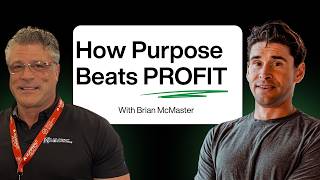
Brian McMaster, CEO of M and M Quality Solutions, describes his shift toward purpose-driven business and the biohacks that transformed his health: removing dairy and wheat fixed lifelong GI issues, while his morning routine includes PEMF, red light, hydrogen inhalation, and sauna. He also discovered mold in his home gym and credits coaching and mastermind groups with his personal turnaround.
Questions this video answers
M and M Quality Solutions
Fourth‑degree black belt
Usually 4:30 ("quarter of five")
Around 9:00 PM (sometimes 8:30)
Approximately 170 degrees (F)
Chapters
We didn't really talk about this beforehand, but do you have any problem with sharing what happened recently with your living environment?
Well, I mean, the, the way we found this was you and I were doing testing and, and the first thing I'm thinking is, man, we're clean people. It's like, what's going on here?
Howdy. Howdy O. Today I interviewed Brian McMaster. He's a guy coach, actually. And we have a wide ranging discussion on file hacking, relationships, morning routines, business, and it's a real eye opening conversation about.
How a busy executive stays healthy and a lot more. Go to BenGreenfieldLife.com McMaster that's M C M A S T E R McMaster. BenGreenfieldLife.com McMaster for the show notes. Here we go.
You guys listening in? Brian McMaster is my guest. I met Brian through kind of an entrepreneurial mastermind that we're both in. And he is super into health, biohacking optimization, peak performance, personal mastery, a lot of the stuff that we talk about on this show. But he's also the founder and CEO of a company he can tell you about. It's called M and M Quality Solutions. They do not sell M and M candy. I'm sure there's something about that, Brian.
We let Hershey's do our advertising for us.
They do a lot of fulfillment, fulfillment logistics and fulfillment, even for companies in the health industry. And Brian's also a fourth degree black belt in taekwondo. He's all over the globe fishing and going on crazy adventures. And I've seen him at a few of the health events that he and I are at. And he's also.
Over the past couple of years, we've developed a friendship and it's one of those weird friendships because Brian is also a client of mine. I train him for, for health and he's a guy I coach and I don't, you know, it's possible and maybe I should have taken more of some kind of a nootropic this morning. I don't know if I've ever actually interviewed one of my clients on a podcast, so you might be the first, Brian.
I like it.
Yeah, no pressure.
No, no worries, man. No pressure. You know, if this would have been a. If this would have been two years ago when we first started, I'd be really nervous. But now that I know you and who you are and how often spent time together, it makes it a little easier.
Yeah, yeah. And so you're an executive. Like you would definitely fit into the category, at least from my perspective. Don't let me put words in your mouth. The busy CEO executive who seeks kind of like the cutting edge of health through as many different tools and technologies as you have available. But you're still working a day to day job. You're not like.
I don't know, like I, I train some actors for movie roles. There's one at my house right now. And his like he wakes up in the morning and there's like a six hour block for him to do his training and recovery and self optimization. And that's, that's a nice chunk of time that a lot of people don't have. And you kind of fit into the executive category.
Yeah, yeah, absolutely. And, and you know, it's, it's. I know we'll get into the routine and you know, that kind of stuff, but you know, I've been listening to you for probably seven years, eight years, but I think you and I have been working together for two now. I just looked back on it this morning, it was 8:23 that we started. Yeah, it's really cool.
Yeah. So explain to people what it is that you actually do. Like, I don't even know, I guess fully what the logistics look like of M and M and how you describe to people your actual business.
Well, and it's, it's, it's kind of changing a little bit. We, we started out as. And I don't, I don't like to use the, the letters or the words 3PL because it's usually an ugly word in the industry. Everybody's had bad experiences and that kind of stuff.
Well, what, what is that? What does the P And l mean in 3 PL?
It's third party logistics.
Okay.
So basically you contracting someone to do your fulfillment for you. So we store the product for you and then whether you're ordering, selling on Amazon selling sites or whatever, then we fulfill the orders based on, you know, whatever the need is through the website or that kind of stuff. But Eminem's so much more than that. And we're really trying to, really trying to develop a brand in the industry that's different because there's tons of people out there that can do what we do, which is pallet in, pallet out, pick, pack and ship. Kidding. You know, that type of stuff. But where the direction I'm really taking my company is more towards a health and well, we do other things, but more towards health and wellness. Fulfillment supplements, medical devices, devices, you know, that type of stuff.
So this might explain why I've seen you wandering the Halls at some of the same health expos that I met.
Yeah, absolutely. Yeah. Always looking for opportunities. But you know, as we'll talk about, it's something I'm passionate about so. And become more passionate about since you and I have been working together. But I've always been passionate about my health and it wasn't until my parents passed away within the last couple of years that I really picked a direction for my company. It's like, you know, who are we? Are we just like everybody else? You know, from a 3 PL standpoint or are we different? And I want it to make us different and you know, we won't. We. I don't think we'll ever be fully health and wellness cause there's all kinds of other opportunities out there. But that's something I'm really passionate about getting into.
Yeah. So in your dream scenario, like let's say I decide I want to start.
Oh I don't know.
An energy bar company that has ketones in it.
Oh yeah, I have one over here.
Theoretically, if that ever happened I could go to you and be like okay, so you know, we're manufacturing these bars, we need to somewhere to put them and someone to actually fulfill the orders. And we want somebody who specializes in and has an interest in doing deals with companies in the health sector or the healthy food and beverage sector. And that's kind of the, the role that you're trying to play now or Phil.
Yeah, absolutely. And more than that too. So not just the pick pack and ship, we, we actually manufacture point of sale displays. And I'm in the process of working on manufacturing product itself now. I don't think I'll ever make a bar but you know, pouches and you know, filling supplement capsules and those kind of things. I'm really trying to do more service. So if you, you know the, the one of the things I found that going to these events I'll go to a supplement supplement company and I'll say hey, I'm in a warehousing and fulfillment. And they'll always say well our co packer does that for us and they don't do a very good job of it.
And what's it, what's a, what's a co packer? For people who don't know the lingo in the industry.
So co packer would be somebody you go, so you come out with a formulation and you say okay, I'm going to sell this supplement and you need to find somebody to manufacture it for you. So what they'll do is they'll manuf or the product and pack it for you. And then they'll also either do the distribution or they'll have somebody do the distribution. But if they do it out of their facility, it saves in cost, obviously. So I'm already in the fulfillment industry, so I'm like, well, what would it take for me to put a couple of machines in here and put a clean room in and kind of go from there? So that's, that's kind of the way I'm right.
So you're, you're almost like reverse engineering your way into co packing and fulfillment.
Exactly, exactly.
Yeah. Is that pretty feasible?
Let's say you did want to, instead of just receiving bottles of a supplement that someone has made, you want to start making it right there in your facility. I mean, I've toured some certified good manufacturing practices, supplements facilities. And not to put you on the spot, but there's a lot of hoops you have to jump through to fit CGMP status.
Yeah, the first, the first thing you got to do is have somebody on your staff that knows what you're doing. And we've, we've accomplished that piece of it that knows fda, usda, you know, all the certifications and that kind of stuff. And you know, really, you know, and I'm sure, I'm sure people will have lots of opinions, but really it's not as hard as you would think. It's just following a process. It's just like anything else. You just got to make sure you do what you say you're going to do and you make sure you follow the rules, you get audited, audited properly, you know, that type of stuff. So, and you know, you know me very well by now. I'm an entrepreneur, right? So I want to pioneer, I want to blaze a path through things, you know, and it's like nothing's impossible. So, you know, we already have that. The kind of, the harder part of it because really the manufacturing process, once it's dialed in, it's, it is simple, it's expensive, you know, to have the certifications and make sure you're keeping up on things. But I just happen to have a friend here in Kansas City who manufactures the machines and who also has had two supplement companies that he's built and sold. So he's helping and assisting me in taking care of that. So, you know, it's finding somebody that knows the road ahead. No different than coaching or any of.
That kind of stuff. And what about like technologies? I mean, when I say technologies, we could Be talking about something as simple as the ability to make, I don't know, like blue light blocking glasses down to like red light beds. Like how deep are you wanting to go as far as what you can manufacture?
Well, that's a, that's a. If you ask my team, the, you know, somebody comes to me and says tomorrow, hey, I want you to build a space shuttle. I'd be like, yeah, let me try and figure it out. So how difficult is it? It depends, you know, from a, from a capsulation standpoint and making tablets and those kind of things. You know, the research I've done and the things I've been looking into, it's again, it's processing equipment. So, you know, it's pretty easy to fill a capsule and it's pretty easy to have the machinery put in place. It's not cheap, but once you have that stuff in place, then it's formulation, it's making sure you're cleaning properly and those types of things. So now if I was going to go down the road of saying, hey, I'm going to build a red light bed, obviously that'd be a little bit more of a challenge. But what I'm finding is, you know, looking even filling energy drinks. You know, it's a process. It's just, it's, it's. I don't want to minimize it by any stretch of the imagination, but it's setting the things in place and making sure you do what you're supposed to do and what you say you're going to do.
Yeah. So in the middle of building this fulfillment empire, it sounds like it was your parents health problems or passing that kind of shifted you towards looking at your own health.
Yeah, well, I've always been, I started doing Tony Robbins when I was like 17. I've been to all of his events and all that kind of stuff. And I credit him with a lot of the direction in my know, if you can accomplish anything and finding the right coaches and you know, those types of things. But my parents passing just really forced me to, you know, focus on a vision. I've all, you know, I, I'd show the Rob Report and you know, always used to be about, I want to have money and yachts and you know, all that kind of stuff. And it really changed through that period of my life when I was watching my parents kind of go downhill and deteriorate. I was like, man, I gotta be, I gotta be doing this for a reason.
That's, that's kind of where I said, you know, this is what I'm passionate about. So I'm going to drive this direction. It's more fun for me. It means more to me, it means more to my team. And as opposed to, you know, most of the people out there, we stick stuff in a box, we ship it out, we label it, you know, we do that kind of stuff. It just really needed to mean something to me. And that's, that's when my parents passed. That's what really drove me that direction. I mean, I've been doing fulfillment for almost 23 years now. And, you know, we grew a business. Greenfield from, no pun intended, Greenfield from, you know, nothing to, you know, millions and millions of dollars a year. And, and it's always just been about pick, pack and ship and, you know, quality control and that kind of stuff. But I really didn't come up with a vision until a couple of years ago when my parents passed. That. That really drove me in that direction.
Yeah, when I'm using that terminology, by the way, I use blue ocean because if I say Greenfield, it just sounds too narcissistic.
Yeah, well, I know you pretty well.
So I, Yeah, I might know you better. I look at your stool and your blood and your urine and your saliva, and that is true.
You. You do know me intimately.
Most of my clients, I probably know them all as far as their, their biology, just about as well as or better than their partners, so.
Plus, didn't I hear you tell me at one point that Jessa says, when you're in the bathro times, are you on the phone with Brian?
Yeah, yeah, no, I'll be. Boxer and clients from the bathroom. And. Yeah, I mean, I'm a hyper optimizer, for better or worse. You know, I'm one of the guys who is an early advocate of Tim Ferriss's whole four hour workweek approach. But sometimes that means I'm still engaged in deep work, but often stacking some kind of biohack. Like.
One of my clients walked in on me this morning, standing there naked, writing emails, sandwiched in between two red light panels, with my hair growth helmet on my head, standing on a grounding platform. Because I figure if I'm going to fire on the emails, why not? Sometimes I'll optimize some other things at the same time.
Sometime I'll tell you the story about Amber when she first came to my house, when we were dating. That was.
I'll tell it now.
Oh, she, she tells it better than I do. But she, she stopped over the first time she stayed at my house and she Woke up in the morning and I was out of bed and she saw a red light under the door. So she, she's like, man, what's going on with this? She had no idea. You know, she goes into the other room, she's got her little chihuahua with her and she walks around the corner and she's like, he's standing there, bears than the day he was born. With my iPad up on a thing, had goggles on, red light, I had a thing in my nose, you know, V light and, and stuff on my head. And she's like, my goodness, what did I get myself into?
So she's adopted a lot of the principles now, but yeah, that was a pretty freaky time for her.
Yeah, yeah, I think. And you probably run into this too, especially from the relationship standpoint. You can get to the point where over optimizing can get in the way of relationships, like whatever, date night with the wife and hey, I gotta be in bed by 10pm so my whoop, sleep score or whatever doesn't suffer or foregoing a second glass of wine or something like that when, you know, you just want to relax and have fun with your partner. There's certain times when I think it behooves one to take one for the team and consider the fact that there's the 117 year old, gin chugging, cigarette smoking, long lived Sardinian woman somewhere who's living a long and fruitful life because she's placed a priority on relationships and you know, and that beats all the biohacks.
Yeah, well, I'm fortunate. She's, she's been a trooper and she's picking up some of this stuff. But I've walked her through my routine. You know, one, one morning she's like, hey, why don't you just walk me through what you do? And I think we were probably a quarter of the way through it and she's like, yeah, I'm not doing that. Yeah, that's, that's, that's, that's. But it's developed over time. You know, you and I've been working together for two, over two years now.
Yeah, I'm actually, I'm curious about that. What?
It's not very often I get to interview one of my clients. So what made you want to like start working with me?
Well, I was listening to your podcast for probably six, seven years and you know, as I hear things, you know, I'm starting to collect gadgets and you know, things that, that you do and you know, I noticed, you know, things, you know, changing and feeling better and, you know, just, just really just overall health wise, I was feeling good. But I'm listening to you and I, and, and I, I can't remember what it was, but on one of your podcasts you had mentioned about coaching, so I reached out and I'm of, I've always been, I've always had mentors since I was very young. You know, I, as an entrepreneur, I really, you know, I know the importance of having somebody to, to show you the road ahead, you know, and have that ability to be able to talk to that person and work through challenges and those kind of things. And, you know, when I found out that was available, I thought, you know, I'm going to investigate this. And then you and I had the, the kind of the 10 minute, 15 minute discovery call. And I think, I don't know if you remember this, but I remember saying to you, man, I can't believe I'm talking to you. And, and you're like, well, I wish I could say the same thing.
So, because we really didn't know each other at that point, which was really cool. But, but that was, you know, I just wanted to get better at what I was doing. And I, I knew health was, was absolutely because, because aside from our faith, you know, health is the number one thing we have. Right. So I just really wanted to get better at it. And I don't do anything half, you know, when I jump in, I jump in. So when we had that discovery call, I was like, wow. And the other thing too is I don't like to do things halfway. So if I'm going to do it, I'm going to do it. So VIP was the way to go and it's been phenomenal.
Yeah. And what I really appreciate about working with you and I do not, by the way, for those of you listening, this is not about to become one giant commercial for coaching. I want to delve into Brian's routines and biohacks and some of the biggest wins for him right now in the health department because he's pretty dialed in on a lot of this stuff. But I think one of the things that I've really appreciated about working with you, Brian, is you use the Q and A component really well. Like I have, I have some clients who I coach and, you know, I'll ride out their next two week block of training and all I get back from them is like, yep, did it. I'm done waiting, waiting for the next couple blocks and thanks for your nutrition plan. I'm following it. And I Might get, I might get a question like once a week, once every two weeks. And then my clients, who do the best job, I'll get a question sometimes on a daily basis, sometimes a few times a day. And we use Voxer, which is a great app for anybody who doesn't use this. I don't know if you agree with me, Brian, but for just asynchronous communication, because I used to hop on phone calls with my clients a lot and it turned into like, can you do Thursday 3pm? No. Friday at 9am okay, Friday, 9:30. Done. And with Voxer, it's literally like you have a walkie talkie back and forth to me whenever you need it throughout the day. And I use it with my employees too, and my team. And it's awesome because for the most part it can replace phone calls, you can transcribe, you can save. But back to you, I think that's one of the things that you've done really well is just ask questions. And for example, what I tell my clients is, hey, listen to my podcast please. Because that's one of the best ways to keep up to date with all the newest things that I'm discovering. But then after you listen to the podcast, use your coaching services box for me and ask me, hey, is that new supplement that you talked about right for me or should I be purchasing that piece of fitness technology you talked about? Or is what I already have already good for, you know, for the purposes that we're working towards? So I think the Q and A has been a really, really big part of the process.
Yeah. And I use now Voxer for all of my team as well. And I didn't even know about it before I met you and it is so effective. But the fact that I have that access to you and granted, because I don't like details and that kind of stuff, I probably ask you the same question three times within a six month period and you let me know that too. You're like, man, I answered this three months ago.
I'm very good at that. I do the same thing with my wife. I'm like. And in my emails I have no.
I have very few boundaries about being an asshole when it comes to say. So I'll say something like, yeah, like I told you three months ago.
Yeah, yeah. And I like that. And I need that. That's one of the reasons I'm a 4th degree black belt in taekwondo and, and I like discipline. And actually, Amber, that's something that shocks her too, is because as an entrepreneur, I Don't really like people telling me what to do. But when it comes to a coach, another funny story with you. And I remember standing at my ice plunge and I voxered you that morning. And I'm like, man, sometimes I stand there and I just look at it and I'm like, oh. And it doesn't get any easier, but you're like, dude, it's not getting any warmer while you stand there and look at it. So you just gotta shut up the inner you know what and jump in.
You can say, shut up the inner bitch. Yeah, sometimes that's a phrase I'll use occasionally with clients. I had another guy who, he was just having an issue with sugar and sweets and candies, and I told him, look, dude, shut up the inner bitch. Go shove all that stuff in the trash can, get out of your house, don't buy it again, and then just move on. And sometimes people want the 10 step protocol and the three supplements to take. So there's certain compounds. Like, I know you and I have talked about things before in the past, like Kratom, for example, where if you're using a lot of Kratom, sometimes you can't just shut up the inner and move on. You got to use a few choice dopaminergic aids and things like that to wean yourself off. But yeah, sometimes you do need a coach to just tell you, hey, just buck up and do it.
Yeah. And I even, I mean, you, as you know, I got, I got in down that road with Kratom and, you know, some of the drinks, and I was really struggling with it because I believe I do have an addictive personality. And, you know, that was another place that you were able to help me through. And, you know, to me, those things are just invaluable. Being able to communicate with you on a daily basis, sometimes hourly basis, is. It's just invaluable to me because I get. So you had mentioned as being a busy executive, I got so many things on my mind. It's like I don't have time to think about laying out workouts and looking at my labs and doing all that kind of stuff. So it's just invaluable to me.
So besides standing naked in front of a chihuahua in the mornings, what's the morning routine look like for the current executive that is Brian McMaster?
Well, so it's pretty elaborate. So I hop up in the morning, usually 4:30, quarter of five, something like that. I like to get things out of the way in the morning, early. It makes Me feel better.
Yeah. And by the way, whenever people hear 4:30, the first thing that crosses their mind is, what time's bedtime?
Nine. I'll be in bed by nine, sometimes 8:30, but I'm in bed by nine. And I think the important thing about that is you don't necessarily have to go to sleep at 9, just being in bed and turning off the screens and that type of stuff.
Then when I get up, I'll take care of my morning constitutional and then I'll hop in the ice bath and then I go right into my Zen den, which has my Pulse XL Pro. And I have a red light cocoon over top of that Pulse XL Pro.
By the way, for people who might not be familiar. That's the pemf.
Yes. Yeah, pemf. So I try to stack when I can, but I'm doing that. I'm inhaling hydrogen gas, trying to stack as much as I can.
And by the way, and I'm famous for interrupting people as they go through their routine.
Oh, no worries.
So. So while you're doing that, out of bed, using the restroom, and then moving on to things like hydrogen inhalation, pmf, kind of like biohacking and jumpstarting the day in the Zen den, are you listening to anything or is it just in the silence?
Yeah, so I'll either listen to a book of some sort. Like we're doing a Bible study right now on John Bevere's the Awe of God, so I'll listen to a chapter of that, or I'll listen to an audible Bible or something along those lines. But I try to feed my mind with something. Or I'll listen to one of your podcasts, something like that. So, yeah, I'm definitely listening to something. I try to stack as much as I can.
Yeah, I'm the same way. I do daily audio Bible.
Basically, it's about 30 to 40 minutes. So it's Old Testament, New Testament, Psalms, Proverbs, and then kind of like a little message at the end. And that typically gets me from out of bed through the bathroom, oral care, facial care stuff, through the stretching routine. And so by the time I finish my morning stretching routine, and similar to you in the Zen den, mixing that up with some PEMF and stuff, I've gotten the morning spiritual food in.
Yeah, and I'm doing those things as well. I do the facial care, I do the tongue scraping, oil pulling, you know, the. The. I have the. The what? The fino toothbrush, you know, so I'm brushing while I'm Putting stuff in my hair. You know, it's. Anytime I can save a couple of minutes, that's the. Yeah, you know, that's the ticket.
Yep. Okay, so you finish all the stretching and everything, and then what comes next?
I'll. I'll hop in the sauna. I usually try and get my workout in in the afternoon, so I'm really doing my recovery in the morning and kind of prepping for my day. But sometimes I'll skip the cold and. Because. Because I know that, you know, and I've kind of been working back and forth you. And I've been talking about that because, you know, you don't want to go into the cold and after you're working out or before you're working out or whatever. And so. So sometimes I'll. I'll work out in the morning, which, you know, you've got my workouts dialed in for me, but usually I'll hit the sauna. I hit the sauna for 30 minutes, and I have my sauna hacked with four red lights in from sauna space. And. And it pops it up to 170 degrees.
You've got a dry sauna outfitted with red lights?
No, I actually have a. I have a clear light. Infrared.
Okay, infrared sauna outfitted with. With sauna space, red light. So you're getting both infrared and red light?
Yep. Yeah, absolutely. So I sit in there for 20 to 30 minutes and sweat, and then I'll hop out, take a cold shower or dip in the plunge again. And then. Then I'm pretty much ready to. To get to the. The bar downstairs and take my vitamins and, you know, supplements and that type of stuff. I'll do hydrogen water at that point. So it's a. It's a pretty. And it took, you know, it took. Took a good two, three years to get. To get to that point. And the other thing, too, that I think is important to say is, you know, it's a lot of stuff that can be overwhelming. But, you know, one of the things I learned from you, too, is if you're just doing something, you know, just. Just get up and do something. It doesn't have to be an elaborate routine. That's what I tell a lot of the executives that I have meetings with and have groups with. You know, it's like, don't get overwhelmed. Just do something. Get up and move in the morning.
Yeah. And then particularly I find when I'm traveling, I have much more time restrictions than at home. But still, when I travel, it's get up Put on the Bible, do the oral and facial care stuff. And then typically I'll try and squeeze in 10 to 15 minutes of stretching, kind of bouncing up and down, moving around on the hotel room floor, drop to my knees beside the bed, even if it's just three to five minutes of praying in. And then I literally will stand up, go downstairs, grab black coffee from the lobby, head out in the sunshine, usually in my bare feet, and just start jamming through emails, you know, whereas when I'm at home, it's like sometimes 90 minutes after I get up, before I'm like in the email inbox already.
Yeah, and that's a funny one too. When we first started out early, I was like, yeah, I'm traveling. I didn't get my workout in. And you're like, dude, traveling is not a reason not to work out.
Yeah.
So yeah, I do that as well. Usually the hotel gyms, they're pretty equipped and pretty stacked if you do your research before you go into town.
Yeah, you can, but I mean, I know you do some semblance of this as well. Two pound travel kit is blood flow restriction bands, door frame, suspension strap and elastic band. And sometimes, and you probably run into this too, Brian. Like, it's literally like 25, 30 minutes that you have to work out. And if you're taking five minutes to get to the gym and back, that turns into a 15 minute workout. So putting on the BFR bands in the hotel room and just jamming through push ups, squash lunges, suspension strap, pull ups and elastic band overhead presses, you can get a solid workout in a half hour.
Yeah, absolutely. And an interesting point about that is just recently, you know, I was going through some sea level changes and you know, I had to really get back into the weeds in my business. And you know, I just boxered you and said, hey man, I don't have an hour to work out in the morning. And you designed my routine to do that. Just do, just do 15 minutes. And that just works out awesome for me so I don't have to think about it and I know I'm getting something done that's good. And like you said, that's it's five to ten pounds worth of stuff in your bag. And it's nothing crazy that TSA is going to, you know, stop before or take anything out.
Yeah. And to clarify for people, for Brian, when he says sea level changes, he's not talking about altitude, he's talking about corporate executive shifting and changing his role. And how about your diet? How's that Kind of changed in terms of insights or new things that you've adopted.
Well, and I think you may have had a similar experience that we talked about. But all through my childhood, I had cramps in my stomach that would double me over and just, I'd go get, get to go to the doctor and they'd tell my parents I had ibs and, you know, there's nothing they could do about it, you know, that kind of stuff. And then, you know, shortly after you and I did blood work and testing and all that kind of stuff, you're like, man, you gotta get out. You gotta get dairy out of your diet, you gotta get wheat out of your diet, you know, and, and here's all the things you need to avoid. And, and as soon as that happened, well, and I remember one of the first boxers, this was like, ben, I can't eat anything, man. What am I gonna eat? And you're like, dude, dude, you. There's plenty to eat. You, you just have to kind of stay on this. And that's one of the great things about working with you again is it's just because you lay all that stuff out for me. And then I know what I don't put in my diet and what I do put in my diet, so. So it hasn't changed. Like in a crazy fashion. It's just a couple of things that I needed to eliminate. And all of a sudden I don't have these bowel issues or these issues with my, my biome. So just having that information and I mean, it's like, like if you don't have it, you don't know what's wrong. So finding that out was. I mean, I'd been going through that for years and didn't know it was wrong. And then all of a sudden, now I don't have that discomfort. But I'll tell you what, if I enter that, if that stuff gets back in my system, I can tell right away.
Yeah, exactly. And for me, from a nutrition standpoint, there were a couple years where as a nutritionist, this was like early on in my personal training days, I thought that the best thing I could do for people was literally write out breakfast, lunch, dinner, snack, every day, do exactly this Monday through Sunday. And people would especially people have an all or nothing approach. They get super frustrated because they'd be like, well, I had a lunch meeting, I couldn't eat this, and then date dinner with the wife, and I had to skip this meal. I just can't do this. So now I generate a sample week of Eating the big things to avoid the big things to include. And then I find that once people understand what a sample day of eating looks like and have this selection of breakfast, lunches, dinners, and snacks, and then the ability to ask me clarifying questions as they go, you don't need a rigid meal plan as much as you need to know. Okay, about how many calories am I supposed to eat? What's my carb fat protein ratio? What are some sample meals? How many meals a day should I have? Should I do intermittent fasting? And are there any foods that are big, no nos or red flags for me? And once you combine that with just the ability to be able to ask me questions, I think it feels like you're a little bit less inside some prison cell.
When it comes to meal selection.
Yeah. Because it can be overwhelming. I mean, there's so much information out there. There's so many people to listen to. There's so many podcasts. And that was one of the things that was good for me, too, is, you know, and not, you know, obviously, I'm biased towards you, but it's like all of a sudden, you know, I'm just listening to your podcast, you know, and. And you're interviewing other people and, you know, all that kind of stuff. But it's like at some point you. You got to pick a direction and say, hey, I'm going to stick with this consistently so that I. I'm getting consistent results, and it's not as difficult to do. And to your point, being able to voxer you and say, hey, Ben, I'm thinking about eating this, or I had this the other day or whatever. And, you know, it's like, check your chart. It's probably not a good thing, or you shouldn't have this or whatever. So, again, it's easy and it's invaluable. It takes the thought process out of my head.
Yeah. And sometimes still the unexpected pops up. I don't know if you. We didn't really talk about this beforehand, but do you have any problem with sharing what happened recently with your living environment?
Well, I mean, the way we found this was you and I were doing testing, and I came back and I had high levels of mold in my blood.
You had, I think, think if I recall properly, it was more than six different species in very high amounts on your last mold. Mycotoxin analysis.
Yeah. And the first thing I'm thinking is, man, we're clean people. It's like, what's going on here? You know, it's not like we have a wrecked up house or anything. You know, we've a really nice house. And you know, I think the first path we went down was it's probably. It might be your office environment or it could be your other home in Indiana or whatever. And. And also my wife now, as you know, Amber, she struggles with some health issues as well. So it's like, man, what's going on? And I had Ryan come in and he finds it in my gym. And what was happening was the walls.
Meaning mold. He found mold.
Mold. Yeah, he finds mold in my gym on the back of the drywall. And what was happening was it was cold on the other side of the wall and I had my sauna in there. So it was creating the moisture and then the drywall was the food. And I just thought it looked like dust, you know. It was. And he shines a light on it and it's like this little city of stuff.
Yeah.
And I remember you sent me the photo.
It's gross. Yeah.
So. So then it's like, oh, you gotta, you gotta remediate this mold. And they'll probably have to pull the walls out downstairs. So I'm going through all that stuff and as you said, when, when you voxer me back, it's really stressful to go through that. And we're gonna get it taken care of, but we're gonna have to spend some money to pull some walls out and you know, that kind of stuff. And I'm gonna have to make sure that I don't make it happen again. But there again, then I'm like boxer and you, right, Ben, I can't go in my gym and work out. You know, I got to get that stuff out of there. And you know, just. It was, it was a. It still is a challenge because it's not taken care of yet. But I've been able to pull the rowing machine and the sauna and the, you know, stuff out and get it cleaned up so I can still use it. But it's just, it's. It's a challenge.
It's almost easier to wrap for, for. Because you're not the first person this has happened with. I find that for me to walk somebody through a glutathione charcoal binding detox and removal process, or sometimes even something more advanced, depending on what you need like a series of chelation IVs or even the blood filtration therapy down in Mexico or something like that, most people are pretty willing to pop the pills and do the IVs. A lot of people are Highly resistant to the idea of, of, wait, somebody has to come into my home. And I can't go in this specific room for X number of days. And I got to remodel this and move my gym equipment into this room. But the problem is you can do a pristine job getting rid of everything in the body. And if you don't remove the environmental exposure, you're just going to be dealing with it your entire life.
Yeah, absolutely. You'll be on that protocol your entire life.
Yeah, exactly. Yeah. Not getting better.
Yeah.
Obviously.
You and I have both kind of alluded to this fact already. Spiritual health is a big component of overall vitality. And my take on this side of things as a Christian is we don't do things like worship God or live an upright life for the sole purpose of living to 150 years old. We do it to give glory back to our creator and honor the entity that made us. But at the same time, there are also proven health benefits of spiritual practice and prayer and worship. And all these things that I think go hand in hand with and as you said earlier, are even more important than the biohacking and the supplements, et cetera. So. So what do you do as far as the spiritual piece and as things changed for you over the years?
Yeah, and you know, my wife Amber, she's always been in the church and always, you know, and as we got together, we've been together eight years now. You know, she really brought me more to faith. I've always been a believer, but I really. She calls me a baby Christian. I'm probably, I'm probably not so much that now because I've been getting more and more into it, but I make prayer a daily habit. Things. And I just feel like when you pray, things happen and things happen that just are not coincidence. So. And now we pray together in the mornings. And obviously I picked a lot of that up from you. I don't know if you remember this or not, but I still have the boxer that you sent to me. I reached out to you and I'm like, man, you're successful. I have a successful business. You're successful. Do you ever just feel like not getting out of bed in the morning? You ever have those days? And I remember exactly what you said to me. You're like, man, I'm gonna kind of go all Jesus freak on you here, but you need to read my book, Fit Soul. And I read that book in four days and it changed my life because it was a lot of scripture and it was a lot about the things that I needed at that point, and between Amber and you and some of the other people that are faith based in my life, it just really changed my outlook on things. And I, I try to do everything, you know, even. We're even praying over the business every Monday morning now. You know, just. It's, it's. It's huge. And, and, you know, obviously health is important. God gave us this meat suit to, to, you know, get us through this life on earth, and, and we should honor it and take care of it as a temple. And, and that's one of the reasons why I'm so into the, the health and wellness that I am. But, you know, prayer and my faith are, you know, they're top of the list for me. And, you know, obviously I've been to your house and, you know, we've. We've spent some time together, and I know that it's that way for you as well. So you've, You've been an instrumental part in helping me with that piece, as well as my wife.
Yeah. And if you asked me that question 10 years ago, I would have said, yeah. There are many mornings that I wake up not really wanting to go do it. I do. In many evenings, I go to bed feeling an unfulfilled gnawing in my soul. And even though I've been a Christian, I grew up in a Christian household. It wasn't until about 10 years ago when I started to learn and explore a lot of the concepts I teach in Fit Soul and the sequel to that endure that I found I filled the infinite hole in my soul, that longing for something eternal, the connection to God each day, the listening to the audio Bibles, the prayers, the bringing the family together for a spiritual meeting each morning. And once you fill that infinite hole with something infinite, all the finite things suddenly do become more meaningful. You wake up in the morning and you do feel like you have a purpose and drive in life. Even the way that you've restructured your business to fit more into what you are passionate about health, if you're making cool health products and shipping those all over the world and helping grow other health companies. Like, not to put words in your mouth, but you probably will leap out of bed a lot more readily in the morning because you've tied a deeper purpose and fulfillment to what you do each day and paired that with a connection to your creator.
Absolutely. And for me, for the longest time, I used to say this all the time. I'm an entrepreneur, and it's lonely being an entrepreneur, and it's lonely at the top and all that kind of stuff. And my faith has really changed to change that, to the fact that I'm not lonely. I. You know, I have my creator. I have prayer. I have the Bible. I. You know, and whenever I'm feeling down or whatever, you know, I turn to that, and it just changes things for me. And I really believe God put people in my life to help me, you know, spread the word. And I believe that he put you in my life for that reason and Amber in my life for that reason. And, you know, when you. When you start to go down that path, I mean, things just really change for you. I mean, you. As you know, we just got married yesterday.
Yeah, I know. Yes.
And it's. It's such a. It's been such a different feeling. It's just. It's just absolutely amazing how. How all of a sudden I look at her the same way I did when I first met her, and, you know, it's. It just. It just makes all the difference in the world. And. And when that piece of your life is in line. I've learned this, you know, really recently. It. Everything else just falls into place. It's like, I say this many, many times. In the end, we win. And when you know that nothing should really strike you down. You have bad days, but you're not promised that it's going to be easy. But in the end, we win.
And you know what? We can edit this part out if you want to. You just tell me, But I remember a couple years ago, maybe like a year and a half ago, when you and I were actually talking about Amber, and I said, look, dude, if you just want to make her feel as secure and loved as possible, and to know that just like her future with you goes on no matter what, you got to make it official. I know it feels official, but you got to make it official. Tie the knot. Do the wedding. Do the marriage.
I was on cloud nine when you told me last week that you guys were officially making it happen.
Yeah, no need to edit it out, man. She knows. I told her that when we came back from that event and you and I were talking, you know, it was. That's one of the things about her. We've been very honest with each other, and, you know, we talked each other more. So now, you know, it's. It's. It's.
It's.
Like I said, it's. It's really changed some things. But, yeah, she. She knows. And she knows that you said that, because she'll remind me of that, you know, Ben told you so, or I get the. I get the quintessential. What does Ben think? You know, so.
So, you know, my apologies to the spouses of anyone I coach.
Well. Well, without probably knowing it, you've become a big part of both of our lives. And we. We love Jessa. You know, she was. She was fortunate enough to spend some time with Jessa. She loves Jessa. We love your boys. I mean, it's just. It's all around. It's been a. It's been a godsend, man.
Yeah. And you said it's lonely at the top, and obviously, part of that is solved by a connection to God. But you and I are in one mastermind group, Jason Gaynor's mastermind group group together. You are in the Happy Hustle mastermind group, which I'm not in, but they have an annual event, like a biohacking event at my house. Talk to people who might really want to build better relationships, especially entrepreneurs. And not to get sexist, but one of the things that even research has shown about males is that going out and doing group activities together is one of the ways that males have particular bonds. And there's a lot of cool, like, male entrepreneurial mastermind groups out there. And of course, there's groups for females and mastermind talks that we're in. That's for both sexes. But.
What value have you found or what advice would you give to people when it comes to building relationships through groups like that?
Well, first of all, get one. That's the number one thing. I think it's invaluable to have a group of men, women, if you're in a women's group that can really be vulnerable, see eye to eye with you, have the same challenges. And that's one of the things I like about both MMT and the Happy Hustle group. And I'll say Happy Hustle, especially because I've developed some relationships with those guys. And when we go to these camping expeditions where there's no technology and all that kind of stuff, and really, you're around the campfire, you're learning nature things, how to build shelters and catch animals, you know, and all that kind of stuff. And if you. If you'd have told my dad, you know, three years ago when he was alive, that I built a squirrel trap on a log, he would have been like, that's not my son, you know, And I'm. I'm learning these things. But I think the most important thing is, number one, get in a group like that. But the other thing is, make sure it's curated because there's tons of these groups out there that, you know, these guys show up on Learjets and they drive in.
Anybody can get in if they write a big enough check.
Exactly. Yeah. And Carrie, Jack, he does a fantastic job with Happy Hustle. I mean, those guys are just absolutely phenomenal. And MMT the same thing. I've only been to one meeting, and again, I'm thankful to God that you helped me get into that group. And, you know, it's just the quality of people. And the other thing I would say too, is the vulnerability. I mean, these guys will sit at a table and cry about situations. I mean, these are entrepreneurs that are, you know, seven figure, eight figure, nine figure companies. And they had the same challenges that everyone else does. But to be able to sit in a group like that, throw the cell phones away and say, you know what? We're going to sit here and talk about this and have those guys be vulnerable and open up like that, there's nothing that that compares to that. And it just helps so much to know that other people and I can pick up the phone and call those guys and say, I got a challenge. And they'd be there. I mean, it is. It just. It's invaluable. But there's tons of these groups out there, but it's really, really important to get into one that's very well curated.
I agree. I agree. And the way I see it is this your church, the neighborhood potluck, maybe, you know, parents of kids who go to the same school as your kids or your homeschooling group or whatever, you can find people there. But for me, the way I see mastermind groups, and I'm in three mastermind talks and the Frontier Club and one other, the way I see these groups is that you are able to connect to people who kind of get.
Especially in entrepreneurial groups, the struggles that you go through as an entrepreneur who get the weird way you're wired up because most of us have addicted or OCD or some kind of issue that just makes us weird and unable to sit there and not fidget and want to go do something when everybody else is just watching the tube at the super bowl party or whatever. And it's kind of almost.
There'S the bonding and there's the connection. There's almost the affirmation that, oh, hey, there's a bunch of people who are wired up just like me, who I can get along with and share my hopes and fears and Struggles with, with. And we can all build each other up and have a really damn good time, you know, going on parties and adventures while we do it.
Yeah, yeah, absolutely. There's, there's just nothing like it. And, and just another funny story, you know, when we went on the epic Mastermind camping trip in Montana, we hiked six and a half miles up the mountain. And it was up the mountain, you know, I thought I prepared by wearing a 30 pound vest and walking on the treadmill was not prepared. But you know, getting up there and then spending that time for five days and then coming down the mountain and we go into Bozeman, Montana and you know, we're kind of having a celebratory drink and you know, one of the questions was, you know, what do you, what are your, what's your f. First thought when you come down the mountain? And mine was, it's really loud down here. It's, it's, it's, it's loud. It's commotion. People beeping at people, people looking at you strange. It's like I want to go back up the mountain. And we need to get closer to being real and closer to things that are more God made and less man made.
Yeah. Analog Insider tip for people subscribe to Ryan Levesque's Digital Contrarian. You remember him, Brian. He actually spoke at our last Mastermind talks event. I'd never heard of him. And I'm a weekly devotee of his newsletter now. And a big thrust of what he writes about is even in an era of AI, we need to focus upon a return to Analog. He got to the point where he literally moved and started a farm. But carving something like that into your day to day existence, just quiet time in nature and stepping away from the phone and the technology, it's critical. My sons have been in a wilderness survival camp school since they were six and a big part of it is based off of the Native American lineage and training. And so as a part of that, they have sitspot. Almost every morning since they were 6, for 20 minutes they're outside just sitting and staring off into nature. And I think more people, even if it's just in your own backyard, could benefit from a practice like that.
Absolutely.
I guess the last thing I wanted to ask you, Brian, was, and maybe this is coming full circle to try not to sound like a commercial for my coaching, but I'm going to ask you a coaching related question anyways. Was there anything that kind of like surprised you or that was unexpected.
When you decided to work with me?
Well, there was a. There. There are a lot of things, but when. When I went to your house for the first time for the Happy Hustle Mastermind, I had this vision. You know, listening to you and seeing your podcast and all that kind of stuff. I had this vision of what Ben's. What Ben's equipment and his house are going to look like. You know, envision this pristine, you know, workout area and everything matches, you know, and all that kind of. Maybe even. Yeah, maybe. Maybe even Ben Greenfield kettlebells and, you know, all that kind of stuff. And I remember I was fortunate enough to stay in your guest house because I was a client of yours and everybody else was in campers and tents and whatever, so that was really cool too, by the way, but the gym was right underneath. And I remember when you took us on a tour, the first thing I noticed was all the sweat stains around your. Your vibe plate. And like, nothing in your gym really matched, but it was all kind of, you know, it was used. It was like. And the first thought that went through my mind is, man, this guy walks the walk. He. He's not. He's not out there trying to impress anybody. He does what? And then. And then, of course, to cap that all off, we had, what, four days worth of working out with you? And I was doing the workouts you were putting together for me, but, man, you kicked our butts.
Yeah. Any of my clients who get a chance to actually train with me leave realizing that they need to turn it up a notch, watch.
Oh, yeah, yeah. And come and come back because I, I kind of, you know, the curve kind of dropped for me a little bit too. It's like, man, I. I don't. I don't have Ben pushing me, so.
Yeah, yeah, I know one of my clients, he's at my house right now, and he was. He was throwing up in the backyard yesterday. It's like, welcome back to reality.
Yeah, absolutely. Absolutely. But that's. That sets the bar. And then. And then the only other thing is just the, the. And I know, I know. Know that you have different levels of coaching, but, you know, for me, being a VIP with you and just having that access to you from. From a lot of different fronts, you're just. You're just a down to earth person that I can talk to and, and you know, I know you're always going to give it to me straight. And, and, you know, when we first started working together, I didn't really know what to expect. So you. You're the, you're the real Deal, man. That's what I tell, that's what I tell everybody.
Oh, thanks man. And I'm very picky about who I work with and who I coach.
I was at 10 people a month, now I'm down to 8 people a month that I'll actually work with one on one. I still do a good 10 to 12 hours per week of just like a la carte phone calls with people who aren't month to month clients but who I'm just going over lab work or answering questions for. But for the small group of people who I still work with, one on one, people even ask me why do you still do that? Why don't you just do all group coaching and a monthly call with a whole bunch of people?
It's almost like it keeps me growing to figure out problems like whatever someone gets mold in their home, oh, how do I help this person out and I got to do research or somebody comes down with some strange whatever growth on their right forearm or even a relationship issue and it helps me grow and, and kind of gives me that one on one touch point that I think it keeps me realizing or it gives me a realization of what people are struggling with on a day to day basis and what I need to learn as a lifelong learner to help them.
So yeah.
It'S obviously, and this is another question I get from people. Well, you're just trading time for hours when you're coaching people, looking over wearable data on the weekly weekends and riding in workouts on training peaks and answering questions on boxer. And I like that part of my job. I do a very limited amount of it. But being able to work with a guy like you, Brian, has just been absolutely fantastic. And it goes both ways. It grows me when I work with high level people like you.
Yeah, and I appreciate that and the kind words too. But, but it's like I said before and the other thing too is we've become friends and there's just. It's like I have a trust there. I know that what you're telling me is the real deal again and I never want to lose that either. And I think about it and I've voxeled you about this before, about how much I appreciate what you do. And yes, to me it's not an expense. To me, it's an investment in my health. But, but it's, but it's, it's so much more than that. Like you said, it's not just health, it's relationships. It's a relationship with God. It's There's. I mean, I could call you with a business question. You know, even though you're not my business coach, you know, it's just having that access to you is. Is. It's just invaluable. And it's been. It's changed my life in a lot of ways.
Just. Just don't ask me any crypto questions.
Yeah, no crypto investment questions. And it's a privilege for me too. I mean, it's not something I take lightly. I really do appreciate everything you do for me.
Cool, man. Well, first of all, a few reminders for people, Honestly, if you have a health product that you want to fulfill or a product you want to fulfill and have shipped in General. Shownotes@bengreenfieldlife.com McMaster this is not a paid advertisement. I don't get kickback from Brian or anything, but he obviously does a good job, and I actually am serious. I'm launching a ketone bar, and he's fulfilling those for me. M and M solutions. I'll have a link to that@bengreenfieldlife.com McMaster Even though my plate is full, if you want to get on a wait list for coaching or work with one of my coaches, I'll put a link to that. Also@BenGreenfieldLife.com McMaster and any other links or things we talk about that I'm able to link out to, to, including information about Mastermind groups and things like that, I'll put in there. So BenGreenfieldLife.com McMaster is where all the juicy show notes reside. Brian, you just got married. She should probably go, you know, do whatever married men do.
Yeah, I, I, Everyone asks about the what are you doing for your honeymoon? I'm like, I'm going back the next day. But we're, we're gonna do something, Invite some people, party next year. We're both busy, but, yeah, she. I definitely married out of my league there, but she's. She's a great gal, and. And I love her to death. And as you know, because you've met her, she's. She's fantastic. But I'm excited. I'm excited about the next chapter of our life.
Awesome. Well, God bless you, man. And everybody listening in, that's Brian McMaster, show notes@bengreenfieldlife.com McMaster Brian, until at least the next few hours when I get a boxer or we. We talk again.
Absolutely.
I'll see you on the flip side.
All right. Sounds good, brother. Thanks. All right, take care.
Hit subscribe leave a ranking, leave a review. If you got a little extra time, it means way more than you might think. Thank you so much.
More from Jeffrey





The Solution to Aging Might Be Closer Than Anyone Realizes - With Ben Goertzel


