How To Blast The Brain With Energy by Using Red Light Therapy Headsets & LED Treatment For COVID
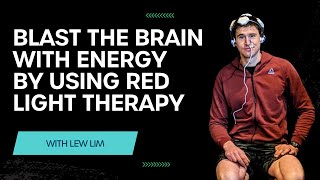
Dr. Lew Lim explains how red and near-infrared light stimulates brain cells through cytochrome c oxidase, boosting energy and nitric oxide. Vielight devices use wavelengths like 810 nm and 633 nm at specific frequencies, 10 Hz for alpha waves and 40 Hz for gamma, claimed to help with cognition, pain, and COVID recovery.
Chapters
My name is Ben Greenfield, and on this episode of the Ben Greenfield Life podcast.
One thing about photobiomodulation is there is enough in the literature to show that it reduces inflammatory factors. When you have chronic pain, it is very often attributable to the presence of the inflammatory factors. You are not fully healed, the body is there. Sometimes it amounts to almost autoimmune. Your body starts to attack itself, but photobiomodulation has been found to reduce this. But I've seen where you can literally see the joints swollen and you wear braces, and I put this photobiomodulation, we pounce it at 1000Hz and I believe that faster frequency has an inhibitory effect on the tissues. It actually helped to reduce pain almost immediately. Using photobiomodulation for pain has been around for a very long time.
Faith, family, fitness, health, performance, nutrition, longevity, ancestral living, biohacking, and a whole lot more. Welcome to the show.
All right, folks, your feet are important.
Skin on the bottom of your feet has thousands of nerves used to control.
Your movement and your posture. The more you feel your feet and the more you feel the ground, the better you move. A lot of injuries, orthopedic injuries, knee injuries, ankle injuries, hip injuries, even shoulder injuries, start with the feet. So this genius group at a company called Naboso has developed a whole line of products just for your feet. We're not talking about toenail clippers. We're talking about things like their neuro ball for triggering proprioceptive receptors in the bottom of the foot splay toe spacers you can wear while you're asleep or during the day to allow your toes to become more like ancient humankind's toes rather than the modern compressed toes we walk around with these days. They got activation insoles that keep your feet alive and turned on while you're walking around in your shoes. They allow for increased proprioception any time of the day, which of course improves athleticism and performance. They even have recovery socks that you can wear even if you aren't wearing the insoles and you aren't wearing shoes. And the recovery socks also increase your proprioceptive feeling in the feet. They even have a mat. I keep it in my sauna. That allows for better foot health and foot recovery and balance while you're doing things like yoga, for example. So anyways, Naboso has this great suite of products. I have something from Naboso on my feet just about every day. Go to naboso.comben and use code BEN for 10% off. That's N A B O S O.com BEN and use code BEN for 10% OFF.
I don't think it's any secret, especially for those of you who have read my cookbook, that I guzzle extra virgin olive oil. I use it in, like, everything. Not only is it a myth that you're not supposed to cook with olive oil, because extra virgin olive oil actually has a bunch of flavanols and polyphenols in it that allow it to be pretty heat stable even for things like sauteing, baking, broiling, et cetera. But the health benefits of this stuff, I mean, as far as, like, lowering risk of heart disease, helping prevent type 2 diabetes, certain types of cancer, high blood pressure, Alzheimer's disease, obesity, I mean, it's basically zero carb, low carb ketogenic, friendly to a paleo lifestyle, a cornerstone of the longevity enhancing Mediterranean diet. And as any chef will tell you, that's where the flavor's at. And a really good extra virgin olive oil has amazing flavor. The problem with the ones that you buy at the grocery store is they're not fresh right? After six months, the polyphenols and antioxidants and olive oil start to degrade. And if you actually look at the bottle label at the grocery store of the olive oil that you're probably buying right now, it's older than six months. It's in plastic. It's not in, like that dark glass container. And if they're already older than six months at the time that you buy them, that means they've sat in stores, then in shipping, then in a warehouse, then on store shelves, even years growing stale and rancid before you even put them in your cart. And then a lot of them have extra bad oils added to them, particularly canola oil. So I go straight to the source and get not only the world's most delicious artisanal olive oil, but real fresh, the real stuff, extra virgin olive oil. I get it from this company called the Fresh Pressed Olive Oil Club. I've been a member for, I think almost 10 years now. I get three new bottles sent to me every quarter. They're hunted down by this guy who's been on my podcast twice, TJ Robinson, the olive oil hunter, who also does vinegars now, by the way, that are amazing. I have a podcast coming out about that, if it's not already out. You're gonna hear it pretty soon. But this stuff is the best olive oil I've ever used in my life, guilt free. It's real, it's not Cut with other stuff. It's not rancid. And it even comes with this cool, like, little booklet where you could read about the farm, where it was harvested, who grew it, what it tastes like, tasting notes, recipes to use it in. Better yet, they're going to give us all a bottle for a buck. One bottle of this olive oil for a dollar. So you can taste the difference for yourself. Here is where you go for all this. Get fre.
That's like the number 38. Get fresh38.com and that's everything you need to get this extra virgin olive oil for yourself. It's one of the funnest clubs ever. So check it out. Extra virgin olive oil. It's real artisanal stuff, straight from olive oil. Hunter TJ Robinson, my friend, one of the best guys out there in the olive oil industry. Getfresh38.com. You know, I don't think it's any secret that I am and have been for quite some time a fan of this anti aging strategy of using NAD to protect the cells and to enhance the health of the mitochondria. There was a form of NAD that was mentioned when I interviewed Tony Robbins called NAD3. We talked about it. I was intrigued about it. I didn't know anybody was actually making it. But that along with two other ingredients, one called spermidine and one called resveratrol, also came up in that interview and are also kind of like the darlings of the anti aging industry right now. Spermidine, resveratrol and nad. Well, what we talked about in that podcast was how there's this very unique new form of NAD called NAD3. It's a licensed NAD ingredient, huge amount of bioavailability, and when combined with spermidine and resveratrol, this is like an unrivaled formula for anybody who wants to enhance aging using NAD and using a very unique bioabsorbable form of it. So this company called Biostack Labs formulated this stuff. It's called Nad regen. It's not Nad, it's Nad 3. So Nad regen is actually the only formula in the world to use NAD3, which is a licensed ingredient with human trials behind it. But they've combined that with a special form of spermidine along with resveratrol and niacinamide. So all these ingredients put together are like freaking food for the mitochondria and act as very unique, very effective cellular protectants to enhance anti aging and longevity. It's a pretty unrivaled formula. Very unique. Blend. So again, it's NAD3, but then it's also got spermidine, resveratrol and niacinamide in it. And they're cutting us all a deal. Basically, two bottles of this stuff costs about $134. And what happens is if you order, they're going to give you another free bottle. So that extra free bottles were $67. Pretty good deal. You go to BioStackLabs.com Ben BioStackLabs.com Ben I do about five days on, two days off any week where I might happen to get like some kind of NAD patch or NAD iv. I don't take extra nad, but, man, for an oral formula, this one's pretty unrivaled in the industry. Brand new. You can get your hands on it now. So Biostack Labs D.
Well, folks on social media and elsewhere, you may have occasionally seen me wearing this crazy laser light helmet on my head with these red flashing nasal probes shoved into my nostrils. And perhaps you've thought, what the heck is that? And why would somebody ever choose such a horrific fashion statement? But stick with me here, because there's actually something to this science called photobiomodulation. There's actually a lot of something and a lot of science behind it, because the basis of all of our thoughts and behavior and emotions is the interaction between our neurons, our neuronal networks that communicate. The way that neural electrical signals occur is via brainwaves. You're no doubt familiar with brainwaves. Well, you can stimulate brainwaves using light. That's called brain photobiomodulation. You can literally stimulate the mitochondria in the neuronal cells or the neurons in the brain. And that can increase cellular energy levels in the brain and elsewhere. And so what I do is I put on this red light technology. It's like a helmet. And three or four times a week, I'll wear this thing for like 25 minutes when I'm working in the morning. And I use this thing called a Vielight V I E Light. It is one of the devices out there that's actually been researched and scientifically shown to be able to modulate and alter your brain waves using light energy, using near infrared light. And. And they've measured this through EEG measurements. I did a podcast about this, gosh, like, more than five years ago. I've been using the device ever since. But a lot has changed in the field of brain photobiomodulation and photobiomodulation in general. So what I wanted to do was to get one of the world's leading experts on photobiomodulation and brain photobiomodulation on the show. His name is Dr. Lou Lim. L E W L I M He was on the show before when I interviewed him initially about this vielight. But like I mentioned, a lot has changed. There's these different devices now that have come out at different wavelengths and with different treatment areas. And I mean, everything from concussion to TBI to shifting the body very rapidly into a bliss meditative state, to alternating between gamma and alpha frequencies. There's so much going on here with these devices. And I think more people really need to know about this. I mean, I've even had friends who have had things like early onset dementia and Alzheimer's who have actually purchased units for. And. And they've noticed a profound difference in terms of their alertness, in terms of their cognitive performance. So there's definitely something going on here. Lou, welcome back to the show, man. It's been a little while.
Thanks, Ben. It's great to be in touch with you again.
Yeah, for sure. And I'm just curious because when I interviewed you last time, we just kind of jumped in and started talking about the lights. But for you personally, I'd just be curious what your actual background is in terms of especially how you came to understand and use photobiomodulation yourself, whether for your brain or elsewhere.
Well, the history actually goes back quite a while.
You know, I'm in Toronto now, in Canada. Believe it or not, this all started in California. I was in the Bay Area for a number of years. In the mid-90s, we experimented with lasers. And during that time, you know, photobiomodulation wasn't known at all in North America. It was kind of a Soviet bloc domain. The science of, I think it was probably called something close to phototherapy was discovered in 1967, Hungary, which was part of the Soviet bloc. And Russians were actually setting up laser centers and doing a lot of cool stuff. And the literature was mainly in Russian language. But we got wind of it, experimented with what this can do. And it came out of the idea that Russians were literally injecting red light into your vein.
I mean, when you say injecting red light into a vein, this is actually a protocol that I know a lot of, like, biohackers will do now that, like, they'll do a. Like a UV blood irradiation or infrared blood irradiation. A lot of folks will combine that. I have a doctor who combines it with ozone. They'll do like a ozone pass of the blood and at the same time irradiate the blood with light to activate the mitochondria. There was even one doctor I just was with down in Florida who combines it with methylene blue. He'll literally like do a methylene blue iv. And apparently methylene blue interacts with photons of lights to, to increase mitochondrial energy production. And so this idea of like light based IVs is something that I think is even increasingly common now amongst kind of like the biohacking and the longevity community.
Yeah, actually this is UV blood radiation. It's a little bit different from using red and near infrared light. Yeah, this is actually interesting. UV light irradiation has been going on for quite a long time. And what they do is they extract blood and get into a chamber where they direct UV light. And some ideas it was antimicrobial, it was antioxidative. And yes, methylene blue is actually a very interesting solution to add because it has its own other properties. It's been experimented with even for Alzheimer's disease. Actually there was a drug based on methylene blue. Lots of interesting things going on. But this is red light is a little bit different. They actually still do now a number of practitioners, it's not many now, they still inject lasers, laser lights into the vein. And the idea is to get a systemic effect, you know. Yeah, well, let's, let's cut it short and just going to some basic biology and physics here.
Okay.
Now the thing about red and infrared, it can penetrate the skin and membrane. So my belief is you don't have to do it to get light into your body, mainly because red and infrared can penetrate through the skin. So I try to find out, okay, where is the, to get, you know, higher success level, what, where would you find the thinnest membrane?
The nose actually is a good area because the membrane is really thin. So you don't need a lot of power to deliver red and low level.
Laser via like a light based nasal probe.
Yeah, exactly. So that's why I think the idea of getting red light into your body to work simple way is do a probe inside the nose. It goes through a thin membrane with red. Red doesn't penetrate too deep. So it's enough to irradiate a flood the vasculature in that area to get this effect. Now we also have 810 which is a longer wavelength near infrared. The idea of using 810 near infrared is to have a deeper penetration to reach the brain.
That's keeping it brief okay.
All right, got it. So basically, when we're targeting the brain with near infrared light, whether through the nostrils or I assume that since there's lights on top of this thing, almost like a helmet through the top of the head, that gets delivered to the mitochondria. And it's my understanding that the light's actually absorbed by an enzyme, an enzyme called cytochrome C oxidase, and that then uses the photon packets of light to essentially initiate things like ATP production. But then there's research on healing damaged brain cells and improving cerebral blood circulation and reducing inflammation and toxicity, even regenerating damaged brain cells. And what you're saying is that even the wavelength of light is going to influence how much is absorbed or what the actual brain experiences based on the wavelength of light that's delivered?
Yeah. Longer wavelength theoretically penetrates deeper. So if you want to penetrate deeper, you apply longer wavelength, and that's going to near infrared and then infrared. Think about the whole spectrum of electromagnetic wave. So you have really short high energy wavelengths in the gamma. This is a different gamma from the gamma wavelength in the waveform in the brain to really long waves in the form of radio waves, FM radio. So imagine when you go to that long of a wavelength, you literally penetrate anything. So the question may be asked, why don't we just use long wavelength? It just penetrates through everything. But the thing is, cytochrome oxidase and other forms of data in discussion, like water structure and all that have action spectrum, cytochrome C oxidase, respond only to certain window or wavelengths. We're talking here basically a rate around 600 to near infrared. I'd say probably below 1000 nm, although there are discussion about 1064 and all that. I think that longer wavelength acts on the water structure. That's one aspect of it. It's got to fall within that. Even within this window, there are specific wavelengths that the mitochondria respond better.
There are some blind spots that around 760 to 780 that don't seem to do anything. We try to fall within that. Also, as you go longer, you get absorption by water, so it becomes less effective. All you do. When water absorbs energy like that, you only produce heat.
Okay, all right, got it. So when we're looking at these different wavelengths, and I look at the different devices that you guys have, first of all, there's the 810 wavelength, and that one seems to be the one that most of these devices use, the near infrared light at 810 nanometers. And that's what you have in the Duo device and the gamma and the Alpha. I have the duo, which just allows me to choose gamma or alpha. But even though the wavelength of light is 810, it's my understanding that the pulse rate, meaning either 10 Hz pulse rate of the light for the alpha effects, or a 40 Hz pulse wave for the, for the gamma effect, is going to cause different effects in the brain. Right. Depending on the actual rate at which the wavelength is pulsed.
Yeah, we actually started with the 10 hertz.
10 hertz being the alpha.
Being the alpha, yeah. In fact, our first dementia study, it's a small study, used 10 hertz. That was our first prototype. We eventually moved on to 40 hertz just because.
We experimented more. And then the literature was developing to suggest that 40 hertz actually improve memory encoding. And then there was this big high impact study done by MIT with Alzheimer's markers.
They found that 40 Hertz actually, when they were in this chamber of flickering lights, actually reduced the beta amyloid plaques in the brain and so on. It got very interesting. We actually did quite a lot of experiments on 40 hertz. We experimented on healthy brains and saw the effect on the high frequency waveform, alpha, beta, gamma. Then there was very interesting. For the first time, we showed the world that we could reduce the amplitude of the slow waves. Sometimes it can be attributable to.
Inattention and slow thinking and sleepiness and so on. We can actually reduce the amplitude of these low waveforms when we deliver gamma into the brain. Now, 10 hertz is kind of like.
A default template setting for your brain, because we were aiming for the default mode network. When you close your eyes, have some introspection, do nothing, your brain gets into this default mode. When the default mode is healthy, it generally means that your brain is also healthy. When you close your eyes in that mode, you are both activating the default mode network and actually increasing alpha. So they're both kind of related. Now, there were earlier animal studies done at Harvard, at Mike Hamblin's lab, that showed that 10 hertz actually gave the best outcomes for traumatic brain injury recovery. So we thought, okay, that's a good place to start.
Okay, got it. So we've got the alpha and the gamma. I want to talk a little bit more later on about some of the effects on things like recovering from TBI and this shift into the bliss state and some even the performance implications. Like I mentioned, the unit that you guys have that I use, it's the one that allows me to choose alpha or gamma. So it's called the duo because I can switch back and forth between the two if I want to.
And.
And then it's also got the one, it's got the extra attachment that allows you to target other places in the body like the cerebellum or the thymus gland, or it's got like a second nasal probe that you can put into the nose. I have a few other usage questions though, before we get into some of the things that you guys have found in your research on this. So 810 nanometers is the wavelength that's produced by this unit that I have. But then you also have some others that are down in like the 600ish nanometer wavelength. And one uses an LED and one uses a laser. So why would someone even look into using something like that, like a laser or an LED or a lower wavelength? Are those just like earlier models or are those more for the systemic effect versus the brain effect? Or what's. How come you have these different models?
The laser deliver coherent light, so the photons are kind of in lockstep. Actually up to around the year 2000, 2005, most low level light therapy was actually based on lasers. I say it's mini legacy. It goes back to the earlier works and it was laser. And up to that point in time people were still arguing that laser is better because of this concept of having coherence light. But more and more studies are coming out showing that it's not the coherency of a laser that matters, it is the wavelength and the fact that the enzymes are receptive to photons of this wavelength as opposed to being lasers. But having said that, we found lasers to be a little bit more effective in delivering some outcomes, but not as significant as many people seem to claim. Now the problem with laser is it is regulated by the fda. They have several risk levels for lasers. And this is we use the lowest level for safety, which is below 5 milliwatts. So that's in the safety region for general use. So we have been doing that. And if you ask me, I say yeah, lasers seem to have marginally more, but by switching to led, we don't have to deal with the safety concern and stuff like that.
Okay, so like the neuro duo that I use that allows me to switch between alpha and gamma, that's using basically a near infrared LED that will either pulse at 10 hertz or 40 hertz. And you think that that's going to be sufficient for most people's needs in terms of Overall health of the brain.
Yeah, Correct. The question is when do we use 10Hz alpha and when do we use 40Hz gamma? I would say that for general health, I think alpha is good. In fact, personally, before I go to bed, I use the alpha. I use it once every two days.
Yeah. And by the way, I initially thought the alpha was just for waking you up. I described it as a cup of coffee for the brain in the morning. But then you told me at one point that it worked really well for sleep onset. And so I can keep the unit up by my bed and put it on and it almost shifts me into this meditative state. But then later on, regarding the alpha you told me, and this was just a few days ago, there's some kind of a new study that you guys have found that allows a user to be able to almost like trigger an immediate switch into what you call the bliss state. Like something an advanced meditator would only be able to achieve with a lot of practice. Is that the alpha wavelength that you're targeting for the bliss state?
No, it's not. It is something we have discovered. Actually it's gone back to about five years now, but we just trying to get studies in line and get it tested and validated. But anecdotally we have found photobiomodulation can actually shift brain waveforms, but it is not the alpha.
When we experiment with a gamma, very interestingly, some people who have brain in doing meditation reporting some altered state, some shift that got very interesting. But actually we found that it's not just 40 hertz. For some advanced meditators, the frequency is much higher. Many of them actually experience shift at 120Hz. The more advanced ones are going to 40Hz and the very, very advanced ones are looking at maybe 1,000 hertz. If you're not at advanced and you have somewhere in between. 1000 Hz may not be a very positive experience for me. For example, I'm not a meditator, so I'm actually getting information from experienced meditators and those who do regularly. Now everyone has his own sweet spot. I've got people who have their lives changed and they changed the lifestyle after experiencing ayahuasca or psilocybin, which is magic mushroom. So they got a shift and their life changed. Their approach to life is different now. They're more altruistic and so on. And interestingly, they felt that they have obtained some kind of permanent shift from their experience. Now when they tried the gamma the first time, they felt something familiar. But when we use a higher frequency, and this is only attainable to the neuropro, you haven't experienced it, Ben, but maybe we should talk about this. So this particular person I remember vividly at 400 hertz, he went back into what he actually experienced for the first time with psilocybin. He wanted to try it all the time.
All right. If you're a biohacker who's looking for.
The newest cutting edge products to push your brain and body to the total outer limits of what's possible, you gotta check out Newtopia. N O O T O P I A Nootopia. The most powerful nootropics on the market today. They're taking the industry by storm, these stacks of nootropics, because they're safe, they're legal, they're highly effective. You probably saw the movie Limitless. It's like that. You take the right formulas at the right times and you can focus intensely, block out distractions, reduce stress and anxiety, enhance your creativity, boost your memory a whole lot more. And the best is all their formulas come with a full one year guarantee. So there's zero risk for you to try them for yourself. So here's the deal. If you feel like you're not fully maximizing your potential, whether personally or professionally, then you owe it to yourself to try Newtopia's formulas. They're a total game changer and they're going to give you 10% off of any of them. Here's how you go to nootopia.com ben that's N-O-O-T-O-P-I-A.com ben and use code BEN10 to get 10% off of any order. That's nootopia.com ben and use code BEN 10 to get 10% off of any order. Do it. You'll thank me later. Let's talk about brain fuel. You probably are familiar with the macronutrients, carbohydrates and fat and protein. But there's a fourth one, Ketones. And ketones are powerful. They've been scientifically proven to support mental.
Clarity, athletic performance and metabolic health. They're 28% more efficient at generating energy.
Than sugar alone, meaning you could do more with less. And this stuff called ketone IQ made by the good geniuses at HVMN is the way to experience the magic of.
Ketones without fasting or restricting carbohydrates. And it allows you to unlock some.
Pretty key physical and cognitive benefits on demand. You drink this stuff, you don't get hungry.
I had it yesterday when I was.
Out snowboarding and didn't want to think.
About energy bars and curly cheese fries and hot chocolate. Just one ketone boom.
Done. This stuff was created through a $6 million contract from the US Department of Defense. Deep partnerships. Some of the top researchers in ketone science.
Truly cutting edge drink and you get.
20% off of it.
You go to hvmn me beng and.
Use code beng20 for 20% off. That's hvmn me beng and Use code beng20 for 20% off of anything from hvmn.
Just anecdotally I should mention because I've looked into some of this and that triggering of the five HTA receptors via psilocybin also DMT to a certain extent. Some people experience it a little bit with microdosing with LSD and then of course Ayahuasca. This seems to amplify the effects at least when I have used a microdose of psilocybin say and combined it with the first 40 Hz gamma signal it does seem to amplify the effects rather notably. But it sounds like what you're saying is your guys more advanced system which I think is called the Neuro Pro which I've never actually used that allows you to shift to even a higher hertz signal that might be even more powerful than that.
Yeah, you actually with the Neuro Pro there are actually more modules on the head and including one to the back of the head. You can actually use a phone that we provide. The interface is quite simple to use. You can actually decide what frequency you want to deliver to your head and you can do like a sweep, you know like you could decide to have say every two minutes I'm going to increase my frequency. I can start with 10 hertz. It goes to like after two minutes or five minutes I go to 20 hertz and then I go to 40 hertz and so on and you can go up to 10,000 hertz.
10,000, what's that feel like? 10,000 hertz?
Personally I don't know but I say most people will experience something up to 1000Hz and beyond that I'm not really sure what they experience. I think they don't generally feel much. But it is available for people to experiment. Once you have set this particular frequency you can use it for a period of time and then re experiment again. It's quite likely that after one to two months your sweet spot for that shift could be different. It could be today is 120 tomorrow and then two months later it could be 200 hertz. It's good to have something like that, that you can actually set the frequency.
Now again, I've never used the Neuro Pro before, but how does the. And it comes with like a little smartphone that's loaded up with the different parameters that you can run. But how does the neurofeedback part of that work? Because from what I understand, the NeuroPro actually kind of takes things to the next level and allows for some type of neurofeedback component. But what's going on with that?
Yeah, when you are neurofeedback practitioners, it's quite likely that you will be using eeg qeeg and see, you know, you could be mapping your brain and see which, which area of the brain is lacking certain waveforms. It could be deficient in, say alpha. Therefore you want to improve the alpha in your brain or you're lacking in beta. You know, some people do cross coupling between the slow wave theta and beta, say for ADHD and so on. So in neurofeedback, you try to train the brain of your client to normalize and therefore try to establish normal. Again, it's not a quick process.
You get a computer with this simulation programs in front of you and you try to train your brain. But it could take up to 30 sessions or several months, half a year.
But you could do it at home without going to a neurofeedback practitioner. Using this technique device with the phone.
You wouldn't be able to see how your EEG is changing. But if you're like a meditator, you may actually feel it or, you know, so you know how, how to, to adjust. But neurofeedback using EEG actually makes life easier. They, they can see what's happening to the brain and try to alter the waveforms. So this is what the neuro tries to do.
Got it. So back to the light. The intranasal, from what I understand, is going to be able to target kind of like the ventral frontal areas of the brain and then the transcranial that actually passes through the soft tissue and the small bones in the skull, which is the part of the lights that go on top of the head, will target the dorsal or the back part of the brain. But then you've also got, and this is something that I'll often put on when I'm using my neurodiver duo, which is the one that allows you to go back and forth between alpha and gamma. You've Got this device now that can be placed on the body, meaning there's an extra light that can go on the back of the head and then also can be used on either the thymus gland or that back of the head, that cerebellar area. What's going on when you're using more of the systemic lights versus just the brain lights, like what's happening? If I were to like place this light over my thymus or over my abdominals for example, and run it at the same time as the. As the headset.
Yeah, this is called the X plus. I actually developed this initially to boost the immune system and during the process, say, hey, you know, something like this can also add to the neuro and put one at the back of the head to cover the occipital area where you process vision and also the cerebellum, which is quite important for my opinion, traumatic brain injury. The DX comes with two modules, one for the head which does that and one to be positioned over the thymus. Actually it is both the bone and the thymus gland. Now the idea is like this. We are using actually this particular device in our COVID19 study to assess the recovery from a COVID19 severe infection. And that was the key one.
What have you found in terms of.
How it's working with COVID We did a pivotal study. We had about 290 subjects. It was a randomized clinical trial. The data is being reviewed by the FDA and Health Canada at this very moment. We'll see what happens when we have submitted a preprint.
Yeah, and I'll put it in the show notes. By the way, you did send it over. I didn't get a chance to read it yet, but I'll put all the show notes for anybody listening in who wants to dig into it@BenGreenfieldLife.com Loulim L E W L I M Lou's name BenGreenfieldLife.com Loulim so you're using this body, the X Plus for treatment for COVID infection or for long haul Covid or both.
Well, I'll tell you how it works with this particular one. So the X also has an intranasal unit. When you're attacked by Covid viruses, it goes through your nasal area first. Now one of the things that you want to be reminded is photobiomodulation actually helps the mitochondria to release nitric oxide. And there nitric oxide is often trapped in the electron transport chain which compromise its function. Photobiomodulation, you actually release the Trapped nitric oxide, the mitochondria functions better. Then nitric oxides get released into your body. And nitric oxide has the ability to inhibit the replication of coronavirus. It doesn't matter what variant it is, just coronavirus with the spike proteins in general. That's the basic idea. And it also helps. The nose actually has a colony of.
Microbes and bacteria and the delivery of red also helps. Bacteria has mitochondria as well. That helps to release nitroxide and helps to inhibit replication of coronaviruses. But once it's gone past, you're infected for a few days, gone past your upper respiratory tract and goes down into your body. Particularly with the earlier variants, the delta variant, which was actually quite a dangerous variant, as you probably know.
When it gets there, it starts to damage your tissues, your blood vessel cells, the endothelial cells. When it gets to a more advanced stage, it starts to damage the other organs or property. It causes this cytokine storm which causes your whole body's immune system to attack itself. It gets through a huge inflammatory process. Now, when we place one on a thymus, the theory is the bone marrow actually helps to manufacture stem cells. Among stem cells will go to where it is required and helps their body to heal. The precursor to the T cells actually go to the thymus gland to get matured. And then you have an increased production of T cells to help your immune system. That's the idea being positioned there. That's also close to your lung. When the lungs damage the pulmonary areas and whether you have endothelial cell damage, it helps to heal because in photobiomodulation, the mitochondria also releases growth factors and the growth factors go into the healing process. Now, the other thing that is in literature, but not really well discussed and well tested, is the production of melatonin.
The production of melatonin in response to the light produced by the X on the body.
Exactly. The mitochondria has the ability to produce melatonin. This melatonin is actually different from the melatonin from the pineal gland, which goes into your circulatory system. This is a subcellular melatonin, which actually helps the cells to stay in a healthy state. Because melatonin is also.
Antioxidant, it helps to neutralize free radicals. That is why I think photobiomodulation is pretty effective in keeping people healthy and.
Helping to deal with free radicals. That is all part of the big picture.
By the way, the X, from what I understand, even though the main neuro duo device that I was talking about does 810 nanometers at either the alpha or the gamma frequency. The X plus uses that 633 nanometer wavelength. So you're technically kind of, if you combine the two, getting both the benefits of the 600ish nanometer wavelength light plus the 810 nanometer. And then with the X Plus, you can choose to place it over either the thymus or the cerebellum or the gut, depending on which area you want to target for that day's treatment. Right?
Yeah, yeah, you got it right.
It's a very cool combo. And it only takes like 30 seconds to just like pull on and turn on, which is pretty, pretty convenient. So that's pretty cool. About the, about the COVID trial that you guys are doing and also what you found for the advanced meditators as far as triggering that immediate stress switch into a bliss state. But of course, one thing that, and I think this was initially how I got interested in you, that you guys have found a lot of benefits for this for is for post concussive symptoms and tbi. What's the latest on that in terms of the use of either the alpha or the gamma waves and what you guys have found?
You know, the one worry about tbi, particularly among high level athletes in say, football.
When they retire, the effects of repetitive concussion starts developing to cte. It's almost like it's degenerative. It causes suicidal ideation, they lose control of their behavior.
It's quite a thing. It's a very high percentage of retired football players actually went on to show signs of this tau, the markers in the brain that could develop into.
Ct, which stands for chronic traumatic encephalopathy, which is pretty much to do with the brain. I talk a lot extensively to Margaret NASA of Boston University about this. Boston University is also the hub of.
CTE research, but she's not in that particular group. But it is of a great concern. We thought we really ought to spread a message that if photobiomodulation could treat traumatic brain injury and reduce the instances of cte. And maybe.
We don't have enough data, big data with many subjects to confirm, but the case series that we've observed have seen actually retired athletes with CTE going through the neurodegeneration process of experiencing the inability to control behavior, experiencing PTSD, experiencing sleep problems, experiencing depression, they have recovered. Dr. Nazer's group, they've just published a paper and I think you could make that available to your audience as well to show the remarkable Improvement. I seldom used the word remarkable, but it's quite remarkable because I know at least one of these retired athletes quite well. And Larry Carr, he's out there advocating for photobiomodulation because he actually got his life back from, you know, from a path of, you know, disastrous path to being pretty normal. She's now an adjunct professor at the University of Utah, and he's one of the subjects in this particular paper.
Now, if someone's using this for post concussion symptoms, what if somebody had a concussion like 10 years ago, is it going to be able to cause neurogenesis in old damaged brain cells? Is this something that needs to be used acutely, like right after an injury? Is it something that would be used preventively to enhance brain health, to diminish the risk of concussion? Or what would be the practical usage for something like this?
I would say all of that. You can use it preventively because you kind of prime your brain to be able to withstand. There's some of that in the literature. You can particularly use it post concussion after your activity where you feel like you're going to knock. But even if you don't experience symptoms, your brain.
Has experienced it. And it can be shown in imaging.
Use that even though you don't have symptoms, because it's going to help your brain to recover. But if you do have symptoms, here are the papers. In fact, University of Utah is doing quite a lot of work. They, they are in the process of preparing manuscripts for publication. They have presented in conferences. I think they have a few posters out already. We are actually going to do more work with them. And the best thing for me is they did all those work independently. I had no influence on the protocol, so it was totally independent. So there's a lot more credibility to those findings. Apart from that, that area, including Brigham Young University, they are also experimenting on healthy athletes to observe the improvements in performance.
The data is out. I don't have all of it in detail. This is fully another independent study. And they found improvement in grip strength.
In response to using the red light therapy on the head. They found increasing grip strength.
Yeah, they basically used the gamma and grip strength, plus improvements in on field decision making. They actually did something called the trail making B test, which actually is a test of cognition and how it's a test of your attention following.
Trail markers. Also how you can deal with distraction and multiple elements introduced into your performance, into your decision making.
So you could technically use something like this. You could put it on pre workout, for example, put it on the gamma, the 40 Hz frequency and potentially get things like an increase in grip strength or focus or decision making. We've already established there's a nitric oxide release and that alone is going to help with the workout. And many people who might have done full body red light therapy have probably experienced that blood flow effect. But what you're saying is you could literally use this right before workout as almost like a way to amp up the body pre workout or pre competition to do something like increase grip strength or on field decision making.
Yeah, I was actually quite pleasantly surprised with this finding. I've never actually thought about before this, although I say, okay, maybe because the brain is really your control center for your whole body, you improve that, you can link the health of your primary motor cortex to the power to your muscles, your limbs and all that kind of thing. That could be part of the reason. Now improved signaling to the various parts of your body and the chiropractors can attest to that, is all about gaining power by improving the signaling from your, say, your spine to the other parts of your body. Here you're talking about the, you know, your whole brain and spinal area. Right. So they can relate to that. But I'm glad they did a study because, you know, it is kind of give validation to what we, I kind of think may happen.
Yeah, yeah. And you know, regarding the use pre workout, I noticed on your website you have a picture of somebody actually working out with dumbbells while wearing the headset. I don't think I could ever wear this thing at the gym just because I'm very active when I work out. And I suppose I could maybe ride a bicycle or walk on a treadmill or something while wearing it, but the idea of just putting it on pre workout or even in the cars or driving to the gym or something like that, that seems like pretty low hanging fruit. Now, what about the part that you had mentioned to me in an email exchange we had earlier this week about pain management, the treatment of chronic pain? What have you found as far as that's concerned?
Yeah, one thing about photobiomodulation is there is enough in the literature to show that it reduces inflammatory factors. When you have chronic pain, it is very often attributable to the presence of the inflammatory factors. You are not fully healed, the body is there. Sometimes it amounts to almost autoimmune. Your body starts to attack itself, all this complicated stuff. But photobiomodulation has been found to reduce this. We are actually doing some work to see related to our upcoming study on long Covid. But we are going by that theory. A lot of chronic pain is to do with that. And I believe the reduction of inflammatory factors help. Now, there are other things, like I've said before, when you deliver photobiomodulation, you help to reduce the presence of free radicals. You help to synthesize growth factors that help with healing and stuff. And actually anecdotally try that on retired athletes, particularly football players.
When they retire, they walk away with so much injury to the bodies and they don't necessarily experience a lot of it when they are young, but when they get older, things just set in. Your body don't recover as quickly, but I've seen where you can literally see the joints swollen and they wear braces. I put this photobiomodulation, we pulse it at 1000Hz and I believe that faster frequency has an inhibitory effect on the tissues. It actually helped to reduce pain almost immediately, which is quite interesting. We are doing separate studies to try to validate it, but generally I'm not inventing anything new in pain treatment. Using photobiomodulation for pain has been around for a very long time.
Yeah, interesting. Okay, so let's talk about the logistical usage. I know that with red light therapy a lot of times you don't want to overdo it because too much red light therapy may create reactive oxygen species. And more is not necessarily better. I've heard in the past that somewhere around like 20 to 25 minutes a day or a few days a week could be a pretty good range to target. But what do you think as far as best practices? Let's say somebody listen to this podcast and they decide they're going to get like the neuro duo. So they could do alpha or gamma and maybe they're going to get the body X to go along with it so they can and do some body treatments. Currently my protocol is I'll do it on either like Monday, Wednesday, Friday or Tuesday, Thursday, Saturday. Although after having talked with you on this podcast, I might start to just wear it a little bit pre workout on some of the other days as well. But what do you think as far as best practices go for the frequency or the length of usage?
So we have a general statement which I put out there and say ogivya, generally everything's normal for you. You're healthy, you want just maintain your good health and maybe be a little bit better. All you need is once every two days. Because of the risk of overdoing stuff. The thing before the biomodulation, you deliver a Dose and the dose stays there for depending on the state of your body and the person, you could be there for a few hours to a few weeks. Imagine if you keep doing it, you keep accumulating the dose, then every time your electron transport chain in a mitochondria is doing activity, you are also producing free radicals, reactive oxygen species which you need to allow your body to clear. Photobiomodulation helps, but too much of it may produce too much of free radicals that your body hasn't had enough time to clear. So that's why I say okay, generally for a healthy guy not doing, you know, just doing a normal, doing normal activities once every two days is enough. But you can experiment. It's not a hard and fast rule. It depends on the person. You can try once a day and see how you feel. But I think if you're doing high stress activity, you know, going through an illness is a given. You know, your cells are all going through stress. So you're probably okay doing once a day, maybe even twice a day. Now if you're doing highly stressed activity like in competitive sports, you're putting your body through a lot of physical stress. I guess you could do once a day or maybe pre and post so you can experiment with it. Because when you're doing all this activity, you actually producing a lot of free radicals and perhaps photobiomodulation can help to actually reduce that and you also producing some inflammatory factors as well and photobiomodulation may be able to help reduce that. Then you've got this building of muscles that the growth factors with photobiomodulation may be able to synthesize.
Yeah, yeah. And do you combine it with anything like we talk about methylene blue and in my opinion both chilajit as well as chlorella can also pair pretty well with photonic light therapy or photobiomodulation. You know, and so I might get up in the morning and take a little bit of methylene blue orally or use like this, this kind of like black mineral type of extract called shilajit or even like chlorella from, from like a dark green compound like algae. And I find that that seems to also amplify the effects of the red light therapy. Therapy in a similar way is like using a microdose of say like psilocybin or LSD seems to pair pretty well with the gamma 40 Hz signal. But is there anything else that you found combines well either from a supplementation standpoint or other biohacks, so to speak, that you might Combine with something like red light therapy.
Yeah. Actually, a theory was proposed a number of years back by a professor at University of Texas at Austin, Professor Gonzalez Limmer. Actually, he proposed combining photobiomodulation with methylene blue to actually alleviate Alzheimer's disease. I haven't tested it this way, but there is a theory behind it. In fact, there is a company in the height of the pandemic, there is a group in British Columbia, Vancouver, actually proposing photobiomodulation with methylene blue that's delivered into. Sprayed into the nose.
Oh, really? Like an intranasal methylene blue treatment?
Yeah, yeah. I think they patented that particular treatment. But you feel an adverse effect. Cut back.
Yeah, yeah. Well, let's talk a little bit about how people could actually use this, because I know these devices are not inexpensive. I think we have like a 10% discount code greenfield, and I'll you go to BenGreenfieldLife.com v Lite v I E light and I know you can get a discount with code Greenfield. But let's say somebody wanted to kind of like get the unit I have, which seems to work perfectly for me, even though I'm interested now in the Neuro Pro. But I've got the Duo, which is the Gamma and Alpha, and then I have that combined with the body X. I just went over your website. Looks like you've got the Duo plus the X plus three combo. So the exact one that I'm using, yeah, it's like right around $3,000 to get the duo plus the X plus three. And then I guess if you use our coupon code, you'll save 10% off of that. So you save, you know, maybe like 300 bucks or so. But that would be the one. The Neuro Dual X Plus 3 combo is what I would recommend to folks if you want to actually try this out. And I mean, it's one of those things that there's certain things I own that I use like every week, all the time. My infrared sauna, my hyperbaric chamber, my PEMF mat, my weights. And then this Neuro device is just absolutely amazing. So I'll link to all this in the show notes for people who want to try it out. And I also did another podcast with Lou that I'll link to also if you guys want more of kind of the basic science behind it, because we did a whole podcast on photobiomodulation as well. So, Lou, anything else you want to bring up while I have you on.
The call about Vielight Advanced Meditators in The Tucson area wants to be part of the clinical study. Yeah, I think there's a link on the website somewhere for this particular study and also in the Toronto area. I think it's a very exciting frontier even for photobiomodulation, experimenting with getting to a higher state of the brain.
I agree. I personally think oxygen therapy such as ozone therapy, hyperbaric therapy, exercises, oxygen therapy along with pulsed electromagnetic field therapy and grounding or earthing along with red light therapy and photobiomodulation. Basically like the air, the earth and the light. I think those three components are kind of like the frontier of performance of medicine. I think sound and vibratory medicine might be a fourth if you want to throw that in there. But the places you can go non pharmaceutically with a lot of this stuff is just absolutely. So I think this is just one of the coolest devices that exists out there. So Lou, thanks so much for coming on the show, sharing this with us and again I'll link to everything along with our discount codes and if Lou's able to get us a discount on the Neuro Pro, I'll link to that as well. Just go to BenGreenfieldLife.com LouLim that's BenGreenfieldLife.com L E W L I M Lou, thanks so much for coming on the show man.
Well, thanks for inviting me. Ben Prez will schedule another update sometime in the future.
Yes, maybe more frequently than every five years. All right folks, I'm Ben Greenfield along with Lou Lim of Vielight V I E L I G H T signing out from BenGreenfieldLife.com have an amazing week.
Just imagine a hotel surrounded by nature, vineyards and gardens. This forest classified as a historical garden in a very special country at a hotel located in the oldest demarcated wine region in the world.
Imagine this place has a state of.
The art spa, 2,200 square meters, 10 treatment rooms, an indoor pool with underwater sound and chromotherapy. Imagine a kitchen team that brings to the table not just delicious food at this place, but values. Environmental sustainability and wellness and local sensitivity and global sensibility. Imagine being able to be bathed in luxury and being able to be local, to buy local and to eat local. Not caged off as some fancy tourists, but as a part of the community and part of the terrar of the region. Well, that's exactly what you experience in Portugal at their Six Senses Luxury retreat. And I'm going to be there for a special event that you can read up on@BenGreenfieldLife.com.
It'S called the Boundless Retreat and at BenGreenfieldLife.com sixsenses you can see everything we're doing every day starts with a healthy farmhouse breakfast morning movement session with me. You get access to three different 60 minute spa treatments that you can choose from throughout the day, indoor pool and vitality suites, meditation, sound healing, an alchemy bar with kokedama and yogurts and pickles and sprouts, workshops, retreat meals, all made from locally sourced sourced organic produce, Q&As and sing along sessions with me. This is going to be an amazing, remarkable once in a lifetime experience. You get four nights full board accommodation in a deluxe room there at the facility and this thing as you can imagine, is going to fill up fast. It's in Portugal at the Six Senses Retreat in Portugal. Again, all the details are at Ben Greenfield Life.
And The dates are February 27th through March 3rd, 2023. February 27th through March 3rd, 2023. I hope to see you there.
More than ever these days, people like you and me need a fresh, entertaining, well informed and often outside the box approach to discovery, discovering the health and happiness and hope that we all crave. So I hope I've been able to do that for you on this episode today.
If you liked it, or if you.
Love what I'm up to, then please leave me a review on your preferred podcast listening channel, wherever that might be, and just find the Ben Greenfield Life episode. Say something nice. Thanks so much. Means a lot.
More from Jeffrey





The Solution to Aging Might Be Closer Than Anyone Realizes - With Ben Goertzel


