How To Get Faster Fast, The Best Shortcuts To Power, Why Conventional Speed Training Sucks &...
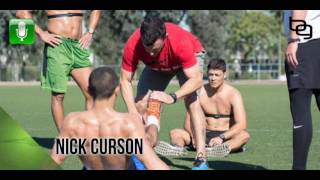
Nick Kherson argues that heavy lifting alone won't make you faster. Instead, focus on nervous system training, plyometrics, and stretch-shortening cycles. Forefoot proprioception, overspeed drills, and tools like EMG devices matter more than absolute strength for sport-specific speed.
Chapters
Hey, what's up? It's Ben Greenfield. Today's podcast is pretty cool. The guy who I interview is a specialist at making your nervous system operate extremely quickly. So this is going to be some cool stuff that we haven't delved into before. But speaking of making your body operate more efficiently and more quickly, a sponsor for today's show is actually creating this device. They're not creating it, they have created it. And it is basically two little lights which you put them in your ears and then you push the on button on the device and it blasts your brain with blue light. So the idea is that the skull of any big mammals, including humans, it allows light to pass through the actual skull and the brain to get exposed to light as the light goes through the little bones in your ears. So you've got these photoreceptor proteins on the surface of your brain and when light reaches those areas of the brain, it stimulates the brain and it can do things like help with winter blood, with mood swings, with jet lag, with sleep deprivation, with the carbohydrate cravings that go along with sleep deprivation. Pretty much anytime that you need a burst of happiness, you just put these lights in your ears. They're really cool and you only need to wear them for 12 minutes and they have all this UV free blue enriched white light that flows right in through your ear canals, through this little LED set earbud system that just fits snugly in your ears. So you can check this thing out@HumanCharger.com it's called the Human Charger. HumanCharger.com Ben and you get 20% off the Human Charger when you use code bfitness. Tiny, tiny little device fits in your pocket. Really cool. So, humancharger.com BEN and use code BFITNESS to get 20% off on this thing. This podcast is also brought to you by the best tasting greens juice powder on the face of the planet. It's gently dried, meaning that they don't blast this thing with giant torches or put it in a heat chamber room. Instead, the green powder is gently dried so you don't destroy a lot of the nutrients. And it has pretty much everything in the kitchen sink in it. Ashwagandha, turmeric, lemon, coconut water, wheatgrass, mint, beets, spirulina, moringa, chlorella, you name it. A ton of non GMO gluten free, soy free vegan ingredients that allow you to get all the benefits of juicing without the shopping and the blending and standing in line at whole foods and the cleanup, all that. Jaz. Not that I don't enjoy going to Whole Foods and making a massive, massive salad every now and again. My $30 Whole Foods salad, however, this green juice is a convenient way to replicate that at home in the comfort of your own home. So you get this stuff over at BenGreenfieldFitness.com fitlife and use discount code BEN to get 20% off. That's BenGreenfieldFitness.com FitLife and discount code BEN. The other thing that I wanted to mention before we jump into today's show is that enrollment is now open for you to join me in my January detox that's coming up in 2017. So the way that you get in on that is you go to BenGreenfieldFitness.com 2017 detox. That's BenGreenfieldFitness.com actually, you know what? Screw it. There's even a better website. It's just detoxwithben.com detoxwithben.com boom. And that gets you right in. You can check out all the details. It's going to be an amazing detox. As amazing as I guess a detox can be, if that's the highlight of your year, then you must be a complete health nerd like me. All right, so sit back and enjoy this episode with Nick Kherson. In this episode of the Ben Greenfield Fitness Show.
When we think of force, force is mass times acceleration, how much weight you can lift in a certain amount of time by simply flipping acceleration and mass. So it's force's acceleration times mass. Putting a little more emphasis on the acceleration, in my opinion, I think you can make things a bit more sports specific and you can come up with the same numbers. It's really pretty interesting. By strengthening the forefoot and strengthening elastic components of the muscles in the foot and the calf and the soleus and all these muscles in the hip will improve running time, will make you a much more efficient runner.
He's an expert in human performance and nutrition, voted America's top personal trainer and one of the globe's most influential people in health and fitness. His show provides you with everything you need to optimize physical and mental performance. He is Ben Greenfield.
Power.
Speed, mobility, balance, whatever it is for you, that's the natural movement. Get out there. When you look at all the studies done, studies that have shown the greatest efficacy.
All the information you need in one place right here, right now on the Ben Greenfield Fitness Podcast.
Hey, folks, what's up? It's Ben Greenfield And a couple of months ago I was down in Los Angeles, a city that I try to avoid like the plague due to the traffic and this and the smog and all the people. But I was there and I was recording a few different podcasts including the Dr. Drew Show. And Mike, the co host down there at the Dr. Drew show, filled me in on some guy that he said I had to have on my show. Strength and conditioning coach who works with a bunch of world class athletes, including specifically like combat athletes and extreme athletes. And he'd been on Dr. Drew's show. He'd also been on the Joe Rogan Experience and seemed like a pretty interesting guy. This guy's name was Nick Kherson. So I looked into him and it turns out that his training protocols are pretty, pretty breakthrough. He's doing some things that I hadn't heard of before that I wasn't really familiar with when it comes to.
The stuff that we're about to delve into on today's show because I finagled him onto the show. Speed and the fact that most training programs under emphasize speed, rate of force development. And if you're listening in and you're just like a freaking CEO who wants to live a long time and look good naked or you're a soccer mom who wants to fit into your bikini or whatever, we are going to delve into some things that directly influence not just performance, but also just the overall way that your body functions and neglected components that you might not be hitting with your current training or your current strength conditioning protocol. So that all being said, my guest Nick is, like I mentioned, a speed expert. He's the owner of this website called speedofsport.com he's also the head strength conditioning coach for a boxing gym in the Philippines. And he studies stuff like Eastern block strength conditioning, plyometrics, biomechanics, exercise physiology, rehab. And I know he works with a ton of different scientists and strength coaches and Olympic lifters. He's been in the field for over 18 years and has developed some really unique training systems, especially for, like I mentioned, speed. So that being said, Nick, welcome to the show, man.
Thanks Ben. Thanks for having me, buddy. I really appreciate it. You summed it up really well. Actually, one of the main things of what we're doing too is, you know, is basically longevity. Like you mentioned to some of the older athletes. I think that first and foremost any good training program should focus on longevity and not just, you know, beating the body up. And that's how I basically learned that what I'M doing is so beneficial, is I beat my body up. I did everything wrong for about 10 or 12 years, to the point where, you know, kind of like a Louis Simmons, you know, I had several herniated discs in my back. I've torn both rotator cuffs, had all these different procedures done. I won't go into all the medical stuff, but just basically beating my body up over years and lifting weights, wanting to look good, wanting to get bigger and stronger, thinking that was the answer. And I came to the conclusion that something had to change. Luckily, about eight or nine years ago, maybe 10 years ago now, I met two of my mentors, Marvin Gary Marinovich, who introduced me to their style of training athletes. It was based heavily on Russian science.
Like hard evidence studies of the nervous system and how it pertains to strength improvement. Not just strength, but also coordination and refining motor skills and complex motor tasks and the ability to improve precision and accuracy. All these things that we kind of think are natural and inherent in people.
Can actually be trained to a higher degree and just about anybody. And so. So. So to me, like, it's basically like developing super athletes or developing a higher level of athleticism, you know, rather than just kind of chalking it up to genetics and nature and whatnot.
So these two guys you said, what were their names or your mentors?
Marv Marinovich. He was the. He's the creator. His son Todd played professional football. He played for usc. Todd Marinovich.
Okay. Yeah.
He's had some history of drug problems. And Marv wasn't, you know, he doesn't have the reputation for being the. The greatest dad on the planet, but for what he lacked in his social life, he was a hell of a trainer.
And who was the other guy?
His brother Gary.
Okay, so these two guys, they. They came from, you said, a Russian background.
They came from basically professional football. And many professional, you know, many. They excel. Marv excelled at. At various sports. I mean, he was a. He was a heck of an athlete. And he was actually the first strength and conditioning coach in the NFL. He worked for the Oakland Raiders, and. Which is where a lot of what I'll be talking about later on is assessing athletes, where he developed a lot of the assessment stuff that we use to develop athletes. So he had an inside track. You know, he was the first strength and conditioning coach, really, in the NFL, and he devoted his life to it. And, you know, so I got a great mentor in Marvinovich while he was still active in training.
Interesting. Okay, so these guys, they were into nervous system development versus Say, I guess, would that be versus say like musculoskeletal or cardiovascular system development?
It's hard to put a name on what we do. You know, to be honest, the nervous system doesn't. It's as good as we can get without like really, you know, going too far into the, too deep into it. But when we're talking, I don't mind.
Going deep into it, by the way.
Yeah, that's good. I'm glad. Well, so what we're talking about basically is the inner workings of the muscle. Muscle spindles, a Golgi 10 and reciprocal inhibition, these type of things that are going on within the muscle that control the limb and control the amount of force you can produce. Where, you know, like people are essentially hooked on absolute strength training in the U.S. i mean they're constantly maxing out. I mean I see some of these football kids, they're maxing out two, three times a week. But yet studies have shown, clearly demonstrated that excessive absolute strength training impairs your ability to perform complex motor tasks, mostly in the most precise moments. So you're basically retarding your accuracy and your coordination by, by over developing these prime movers in this linear pattern. I mean, for example, most sports, in fact just about every sport is played on the forefoot. I think we can all agree on that. And then if you look at the.
What do you mean?
So nobody runs on their heel. We don't jump from our heel.
Any type of sprinting, movement, punching, fighting, whatever it is, is played on the forefoot rather than a heel oriented sport. And which brings me to many of these lifts, like squatting, deadlifting, these traditional compound lifts that they have athletes doing are training a completely wrong sequence of muscles for the sport. Does that make sense?
Yeah, yeah, it does make sense. And obviously there's a lot to cover. Just from like the past minute of what you were talking about, the first question that I have is you talked about how overdevelopment of the musculoskeletal system can actually inhibit performance. What do you mean by that? Like, like how does that actually work? I mean, obviously, right. You know, we all know big bodybuilders aren't that functional.
They're absolutely not. I mean, if the size of the muscle dictated the ability of the athlete, you know, Arnold Schwarzenegger would be like the best athlete on the planet.
But what about like football players? Right.
They don't bodybuilders, but they football players, I believe many of them are good in spite of what they're being put through. I Believe many of them have the genetic traits that can withstand a lot of these training protocols that they have the athletes put through and still perform at a high level. And even that being said, I've trained quite a few high level professional football players. Not many of them like lifting weights. They don't like the way it makes them feel on the field. Really? Oh, absolutely. I've seen tremendous benefit with what I do with several high level professional football players. They just feel. Troy Palamalu was one of the biggest advocates for what we do.
So what do you do exactly that is different than what other folks are doing?
I believe we focus on making more of a connection between the mind and the body rather than, and forcing the body to move more efficiently to gain greater control over the muscles in the body. Like imagine teaching, you know, a linebacker ballet, you know, teaching him to really be coordinated or just sticking him in the weight room and have him lift weights all day.
The contrast there, it's just, it's like night and day, you know, in a sport where the biggest plays are decided by a fraction of a second, any type of inefficiency is going to give the other, the other side an advantage.
Okay, so, so basically strength training coaches, like strength conditioning coaches or personal trainers who are working with clients or with athletes who are doing things like say, you know, whatever, you know, three sets of 12, five different exercises or you know, multiple sets of whatever, five or eight or 10. Is it because, is what they're doing wrong because they're not focused on like the rate of force development? Is that essentially what you're doing?
Yeah, absolutely. The rate of force development is, it's inversely proportionate to absolute strength training. Sports, sports rate of force development is inversely proportionate to absolute strength training. So absolute strength training is like a maximum lift, how much or maximum strength recruitment.
It's how much you can lift regardless of time. Yet. Okay, yet sports are all about time and the quicker the movement the better. So they're focusing on motor unit recruitment. Whereas sports movements are more about rate coding the sequence and frequency of firing.
What's the difference between that rate code firing and motor unit recruitment?
I would say the speed of the contraction.
Okay.
Do you know what I mean? Sure. They're recruiting more motor units or they're recruiting a tremendous amount of motor units with absolute strength training. But they're also training the muscle to contract slowly.
Yeah, well, that's what I've kind of wondered before. Like I've done, for example, I don't know if you're Familiar with, like Doug McGuff, who has a book called Body by Science. And it's all super slow training, right? You train a couple times a week for 12 to 20 minutes. And it's all about time under tension, right. Spending literally like 120 plus seconds doing a single set where you're moving the weight very slowly forward, like 30 seconds, concentric contraction forward, 30 seconds, eccentric contraction back. And you'll do just like one set to complete exhaustion for one muscle group and then move on to the next. And it seems very sustainable in terms of prevention of injury, et cetera. But there really is no rate of force development there. It sounds to me like what you're saying is that that's inferior for athleticism, which seems.
I believe it is. Absolutely. Yeah.
Which seems kind of straightforward. But what would the opposite look like, and what specifically would the opposite look like in a structured training program is that isn't going to say injure somebody or produce excessive impact or excessive rate of force development?
Well, it's interesting you bring that up because I think a program like that is going to produce more injury than what I'm doing. Because one, we train. Yeah, because we train assuming the athlete's healthy and whatnot. We train in a very ballistic manner in a lot of ways. Multiple joint angles, stuff that the athletes can run into in the sport. And that type of training that you're describing there, it's like the slow isotonic contractions or these slow type training, they destroy muscular equilibrium. Like we mentioned a minute ago, they're about the overdevelopment of the prime movers at the expense of the smaller stabilizing muscles. And the stabilizing muscles are the muscles that do all the work in sports. Like a perfect example is with the bench press and, you know, biomechanics. So maybe you can vouch for me on this. The heavy bench press, what does that do? That pins the anchor, it anchors the scapula to the bench. So essentially, which inhibits the serratus anterior. So now you're bench pressing this extremely heavy load in a slow fashion, but you're detraining the one muscle that really helps to protract the scapula and ties the obliques and the trunk into the shoulder. Excuse me. And you're detraining this muscle, and yet you're over developing the arms and the chest and whatnot. To do this pressing movement, which I believe is a perfect example, is when, if you've ever thrown a baseball or football with a bodybuilder and they look like they're throwing all arms or you've held mitts for them and they look like they're punching all arms. Because there's no coordination with the lower body to the upper body, I believe it's inhibited and the muscle groups are fragmented by this type of fixed linear training.
You know, what if you were gonna do like that kind of fixed linear training, but you were to do it with a more complex exercise? Meaning, like, what if I was. What if I were to do something that requires a lot of smaller stabilizing muscles, like, let's say, like a squat to an overhead press or a deadlift, but I were to do it super slow versus extremely fast, Wouldn't it eliminate that kind of. That neglect of stabilizing muscles that say, you know, doing something like this on, like a leg extension machine would cause?
I think it depends on the load, too. I think the greater the load, the more you're going to recruit the prime movers and the more you're going to dumb down the kinesthetic awareness of the muscle you're exercising. Does that make sense?
Yeah, it does.
And I'm sorry, they've done studies like throwing a baseball. So throwing a heavier baseball improves speed and. Or, excuse me, improves power, but it retards the accuracy. Throwing a lighter ball improves accuracy. So it's kind of like you can go the heavy, slow route, but you're going to dumb down a lot of these other qualities that you need for sports, or you can go the lighter route and maintain accuracy and speed and whatnot.
Now, when we look at bodybuilders, they actually do show a lot of signs of excessive muscle damage. Like they do a lot of eccentric training, a lot of traditional training programs used for aesthetics or looking good in a swimsuit, they are doing this type of slow training. Now, in addition to training the muscles to only move slowly and reducing athleticism.
Are there other potential health issues or deleterious issues aside from just the fact that you might not be able to, whatever, serve the tennis ball as quickly or jump as high?
Right. Yeah. One thing just before we go any further, it's important to know that when I say they'll make you slower, I'm not talking about seconds and seconds. I'm talking fractions of a second, half a second, quarter of a second.
But that can be a lot, right?
In the world of sports, that's everything. So. But no, I mean, hemorrhoids. I know that's associated with really heavy lifting. You know, herniations if you're not doing it, you know, People always chalk up weightlifting injuries to having bad form. But the fact is I had perfect form when I lifted weights and I would just go too heavy for my frame and doing stuff I didn't need to do. I weighed 168 pounds. I had a 305 pound bench press. I could squat like 425. I could deadlift 450. I was 168 pounds. So I didn't need to be doing that to get better at the sport that I was interested in. It's like the weightlifting took over and I became a worse athlete because of it.
Okay.
So it's all about, you know, for me now I'm going to be 43 next weekend. It's all about quality of life and feeling good. Like, I know I could go lift weights, put some size on and maybe look, you know, younger, but I would much rather be. I still look very athletic. I would much rather be feeling good and looking and looking good than. Than just looking good. You know what I mean?
Yeah.
No.
Now, what about doing both? Like. Like, could you have a part of your week where you're training with power and rate of force development? Some of the stuff I want to delve into here in a second with you because I want to get into the specifics of what that looks like.
Sure.
But then also have super slow training or have a time when you're just focusing on like heavy lifting or hypertrophy.
Yeah. You know, there are studies that show that you need a certain degree of absolute strength to improve speed strength. And so we can do this with isometric holds, too. This, the isometric holds, basically where you're holding, like, for the people listening, like, if you take a barbell down to maybe 6 inches off your chest and various joint angles and you hold it there for six to 10 seconds with a pretty amount of weight on that, you can mimic what you can do with slow, heavy weightlifting with isometric holds. That being said, I am starting to incorporate in my own training a bit of heavy weightlifting once a week.
And I find that that's enough to maintain certain numbers that I'm happy with, that I don't need to go above, you know, to where I risk injury or anything like that.
Yeah, that's interesting. I interviewed a guy named John Bruni who wrote a program called Neuromass. I don't know if you're familiar with this one, but that whole.
In the same workout, you're actually doing what he calls a slow grind, which he says kind of primes the muscle to Recruit more motor units. Right. So you might start with like a super slow set of squats of 10 seconds down, 10 seconds up. And then you move on to power training, right. Where you do like squat jumps or box jumps or something that uses that same muscle. And then you. And then actually in his program, you finish that up with an isometric hold. What about doing something like that where you're combining both at the same time?
Yeah, it's kinda like contrast training, right?
Yeah.
To be honest, I don't, I'm not real big on that because I think you're trying to force adaptation. You, you want to, you're trying to accomplish a training goal which is to make the muscle move a certain way and then you throw too many elements out of it. I believe it confuses the muscle. It's. You know what I mean? That to me is not, not an effective way of doing it. At least not for a long term program. Maybe for a one workout, you know, with a new client.
Yeah, yeah.
But to me that's just kind of like muscle confusion. It's like P90X type stuff.
Okay, got it. When it comes to lifting heavy weights, not working for speed. Nick, for people who might not kind of understand how this works from a physiological standpoint, can you delve into why exactly? You can't just say like jump higher by doing what? I guess a typical high school basketball strength conditioning coach is going to take an athlete into the gym and have them work on their deads for jumping higher. Why is it that that doesn't actually work?
Well, you want to know the crazy thing? Well, one, I believe you're destroying muscular equilibrium. And two, the triple extension of the leg is almost seldom worked in all of those type of exercises. Yet it's the triple extension, meaning the hip, the knee and the ankle joint are all working together and producing force and you're shortening that working range of motion by neglecting this type of movement. I think a better option would be like light power cleans than deadlifts or squatting on the heel. Something that gets you on the forefoot. As you know, you study biomechanics and physiology, it's very important to sequence the proper muscles you're going to be using for that sport.
Right?
Am I right? Like as far as intermuscular coordination goes, you know, that's another thing that's just, it's basically, it's backwards. It's like studying French to learn Spanish, you know what I mean? To speak Spanish. It just doesn't work in my opinion.
You know, yeah, yeah. So with these athletes, a lot of working with what, what exactly is it that you are doing?
So I don't know if you've seen any of my videos on Instagram or YouTube. We do a lot of plyometric exercises. We do, we have a plyometric machine that you can jump on and you can add weight to that. And so.
Plyometric machine?
Yeah, it's like a squat, like a jumping device. So you, you know, you stand in it, in the, the arm goes up on your shoulders and you can load the carriage with weight accordingly. And then, you know, you perform jumps.
Oh, you mean, is it, is it like one of those leg press machines that instead of it being a leg press, you can like jump up and down on, like a gravity machine almost?
Yeah, like you're standing. Yeah, exactly like that.
Okay.
Yeah, yeah, we can do that for upper body too. So we're working the. And that's where, you know, we're working the plyometric exercises and producing. That's where the real force production comes in. So when we're talking about force production for sports, we're talking about how much force you can produce in the least amount of time possible. And this is where, Ben, this is where I think people kind of like are too heavily influenced by the bodybuilding when we think of force. Force is mass times acceleration, how much weight you can lift, you know, in a certain amount of time by simply flipping acceleration and mass. So it's force times acceleration forces, acceleration times mass. And putting a little more emphasis on the acceleration you can make. In my opinion, I think you can make things a bit more sport specific and you can come up with the same numbers. It's really pretty interesting if not even higher numbers of force production. So take for example, like if you're throwing a medicine ball to the ceiling, compare that with a 300 pound bench press. You know, you measure the yardage, you measure the time, and then you can figure out, you know, the amount of force produced.
What you're saying is for me to do a bench press versus throwing a medicine ball with a chest pass as hard as possible that you would get if you were to have EEG electrodes placed on a muscle to measure how much of that muscle was used. You'd actually use something similar with the power training, but you wouldn't develop the same size. Right. Because you don't have the same amount of muscle damage.
Exactly. You hit it right on the head.
Okay, all right, got it.
That makes sense. That's pretty clear, right? I mean, we can calculate. I've calculated it out myself and the numbers were stouting. It blew the bench press away just because the speed of the bar was too slow.
So pretty much everything that you do when you lift weights, you do as fast as you can.
Well, we do, yeah, we do it. We want to do it exactly like the speed of sport. We want to play at the speed of sport or greater. That being said, if the speed isn't up to par and he's just not making gains in the speed or the plyometrics, then sometimes you can add a bit of absolute strength through the isometric holds. If you want to use a barbell, you can. And sometimes that will do enough to kind of stimulate the nervous, like we said, recruit more motor units to allow.
Greater speed production or force production in the quicker movements as well. However, there's some athletes that. It retards it. So it's very individual. I believe it's very specific to the person and that's where the assessment comes in, you know.
Okay, got it.
So does that make sense? I don't want to. I hope I'm not confusing.
It makes sense. I mean, you know, and I think the way that conventional strength training goes is it's got a really heavy emphasis. Emphasis on hypertrophy or muscle growth and also, you know, gradually progressing with increases in the amount of weight that you actually lift.
Right.
And what you're saying is that that's all misunderstood and said we should, we should be focusing on like, like the force velocity relationship.
Absolutely. You hit it again. There you go. You hit it right on. Force velocity relationship. So like, like I said, they're. They're inversely proportionate to one another. You know, absolute strength training and sports movements.
Yeah.
You know, like you said, we're heavily influenced by bigger is better and hypertrophy and you know, we see what we see. Let's put it this way, an interesting conversation I had the other day with one of the fighters I was talking, or actually a fan of one of the fighters I was talking to. They're like, they said, God, I can't believe how much weight these guys lift and how hard they work. And I was like, surprised because they don't work that hard. You know, we're trying to make them a better athlete. I'm not trying to kill them. Them, they don't lift much weights. It's just a lot of it comes down to editing and what people put out in the TV and they put out on like, you know, run ups to the fights and whatnot. So don't believe everything you see on tv. That's all I can say.
Well, what about like the skinny high school basketball player needs to put on size? Or even the NFL football player. I mean those guys lift heavy because they gotta, they gotta hit a guy who's just as big as them. Like they need to maintain muscle. Like, what if all you have is like fast, wiry, explosive muscle that you're talking about, but you don't have size?
Right.
That comes up a lot. But I would say it's much more important to have all the muscles of the body working as a unit rather than just to put on size. If it's fragmented, does that make sense? So by putting the athlete through certain exercises that can coordinate all the muscle groups. So imagine you're pushing into the guy's shoulder of a body. Did you play football or anything like that growing up?
No, I was, I was a total preppy kid. I played violin and tennis.
Oh, that's cool, that's great. But let's. Okay, so let's say you can imagine I played hockey, I wrestled, I did judo, I've done jiu jitsu, I've done a lot of these aggressive sports. And I can tell you the guys that had the, the guys that were the strongest in the weight room hit this were the softest punchers, the softest hitters because, because the muscle groups are fragment. My best friend, his name's Janik, he's, he's probably £150 right now. In high school, he could drive a golf ball 250 yards straight. He could throw a baseball. I mean, ridiculous velocities. He never lifted a weight in his life. You know, the key was Ben was the relaxation and the coordination of the muscles. Your muscle is only going to fire.
With as much force as it can relax prior to that. Let me rephrase that. So if the muscle doesn't relax quick enough, you will never be able to contract it fast enough because the two are proportionate. So that's where really where the heavy strength training retards speed strength. It's because it's forcing co contraction. It's forcing so many both antagonist and agonist muscles to fire simultaneously to, to, to move the load. Does that make sense?
It makes sense and it's kind of interesting. Like, like I used to, you know, in addition to tennis and, and violin, of course I played basketball. I used to be able to dunk. And once I started doing Ironman triathlon, yeah, I couldn't dunk. Obviously. It's like rocket science. I had a bunch of slow twitch muscle. Right. A lot of my fast twitch muscle got converted into slow twitch muscle. But there's also this concept of, I think back in exercise physiology, we call it couch potato muscle. Right. You have these fast twitch muscle fibers. Yeah, the couch potato muscle. It's the type 2, I think it's the type 2B fibers versus the type 2A fibers. So you've got two different types of fast switch fibers. One's oxidative, you're type 2a, and one's glycolytic, you're type 2b. And what you're saying is that if you want to be the best athlete possible in your sport or you want to move like a cat or with a lot of speed and precision, you would want to actually train these fast twitch glycolytic muscles without putting much emphasis on the fast twitch oxidative muscles.
Exactly. Unfortunately, anytime you add resistance to something, it's going to start behaving like the oxidative.
We're talking about the couch potatoes. Some of the quickest and most reactive and explosive people I've ever seen are like grandmothers and old ladies sitting on the couch. And when they're explaining something, their hand gestures are so quick and snappy. I just sit there and awe. I'm like, geez, you sit around all day and you got that speed. I mean, granted you would never last in an athletic event because you don't have the stamina. So there's kind of a trade off. You can't have it all, unfortunately. But as soon as you start adding any type of resistance training or are becoming more active, those type B's start acting like type A's.
Yeah, this is really interesting. Have you heard of the Bjornsson study?
You know, I might have actually.
Okay, so I'll put a link to this in the show notes. So if you're listening in the show notes, I'll put over@BenGreenfieldFitness.com SpeedOfSports so if you're listening, you can go to BenGreenfieldFitness.com SpeedofSports to access the show notes and I'll link to this article. But it was written by, interestingly enough, an astrophysicist named Paul Geminet, where he reported on this study in which they investigated the actual health and longevity of, I think it was guinea pigs. And the end result of that study was that they found that longevity was most assisted by, or was, I guess, best displayed in these animals that had very quick, explosive, wiry, muscles versus like the bigger muscles. They had cardiomegaly, like large left ventricular hearts, they had more health issues, they had lower antioxidant production. But the fast twitch, the ones that were trained for more power, explosiveness, they didn't have these issues. And I believe the way that Paul puts it in that particular article is like if you, if you wanted the ultimate health, like, like perfect health when it comes to, to strength, that you should go after fast, explosive, wiry muscle versus muscle thickness or muscle hypertrophy.
It's, it's interesting too. I haven't seen, I haven't read that, but I'd be interested to read that for sure. I wonder how they're training. I wonder how they're training. The fast twitch on the hamsters.
Yeah, I know exactly. They have little shuttle systems, machines.
Yeah.
Hey, I'm going to interrupt this show to tell you about socks. Not just any old socks, but these socks made by a company called Stance. So they've taken one of the world's probably most boring pieces of clothing socks and they've made them into these canvases for art and for self expression. And they're actually really, really cool looking socks. They're almost like conversation start. Just put your feet up on a coffee table at your next cocktail party and see what happens. See the conversation that ensues because they have athletes and performers and cultural influencers that are helping them design these socks. So you've got socks that basically have the NBA collection. So this means that you've got socks that Dwyane Wade and James Harden, all these guys in the NBA are wearing when they, they play. And it's just basically this incredibly comfortable NBA casual line. They've got a collegiate one that has like all the different team college logos and school colors for your college. They've got the mlb. They're actually named the official on field sock of the mlb, the Major League Baseball. So I actually even got underwear from Stance. I got Darth Vader underwear and I got my kids a bunch of cool socks with pictures, like a list and ghosts and eyeballs, all sorts of cool stuff. So if you're into socks or undies, check them out. You go to stance.com that's it. No discount code or anything that you need to use. Just go to stance.com and you'll automatically get access to their entire suite of amazing socks. S-T-A-N C E dot com. This podcast is also brought to you by Health IQ. And Health IQ is kind of cool. What they do is that they take people who have an active and health conscious lifestyle and then they fight to get you lower life insurance rates based on the fact that you're healthy. Because research has shown that people who actively exercise have, no surprise here, a lower risk of early death and lower heart risk and lower cancer risk, et cetera. They don't have a lower heart risk, they have a lower heart attack risk. I'm pretty sure that they have the same heart as everybody else, just a lower risk of it failing. Anyways, though I digress. Health IQ gets you lower rates on life insurance if you're health conscious. So why not if you're already exercising, get a good deal on life insurance. You get a free life insurance quote when you go to healthiq.com Ben that's healthiq.com Ben so check them out. Back to today's show.
So let's, let's say that I'm slow, right? And by the way, for those of you listening in who are like, you know, obstacle racers and triathletes, we'll get into endurance here in a little bit. But first of all, if I come to you and I'm slow, like I'm a fighter and I'm slow, I'm a football player and I'm slow. Do you first of all do anything to measure rate of force development?
Yeah. This goes right back to what I was saying about Marv being the first strength coach. So as the first strength coach, he had the.
Great benefit of traveling. He also worked as a scout. And this is where he traveled all over the nation to all these colleges and he did assessments. I mean, he was really big into the weights. So this was kind of a revolution for him. He did an assessment of all the athletes. And what he did is he took like certain flexibility tests, muscular equilibrium tests.
These measurements to determine like correlating factors between the best athletes. So imagine, Ben, if you've got 25 athletes and three of them are top of the food chain, all American, all solar, you know what I mean? Super varsity athletes. And they all have these similar matching strengths and numbers in like, let's say front and rear shoulder flexibility, hamstring strength, internal external rotation of the hip, and all these three guys have the same numbers on all of those. Then you go to another team and guess what? The top three guys have all the same numbers. Another team, it's all the same.
So he came up with this system for testing athletes through manual muscle tests, agility tests and flexibility tests.
Test.
And the numbers, they don't lie because I put it to use with some of my highest performing.
What's this called? What's this testing system called?
We just call it the equilibrium test. Muscular equilibrium test.
Okay. And you developed that or this other guy developed it?
Marv developed this? Yeah.
Okay. All right. Is that something like if people are listening in, they could go find like what a muscle equilibrium test looks like or do you have that on your website?
We keep this pretty low key and we use it, we use it with clients only. You know, it's not something we put out there for everybody because it's such a benefit in training athletes. How do you, how do you, you know, the world is full of these gurus and these people who claim to tell you how to train athletes. And the way they're doing, it's the right way, but how do you know unless they've actually produced the highest level athletes or worked with the highest level athletes, you don't know. They're operating in the dark. We have, we have a blueprint for elite athleticism. And that's what sets us apart from everybody else, I believe is this, this blueprint, this end result. Know what the end result of the highest level athletes are and it's just a matter of how do we get them there.
Why don't you use any of these like new wearables that are out there now that measure rate of force development? Because I know there's some of them out there that will measure like explosive force or how fast you can develop force. I mean even like a frickin, you know, like I'm wearing a device right now that I'm testing on my wrist that has a built in accelerometer. And I know a lot of these devices have that. Do you use any of those?
Yeah, I do have one for one of my machines that we test like the squat jump. Squat jump, the bench, like the chest throw offs, all these various force tests that we can do on there. And we've got a monitor on that. But as far as being able to have one, I know they make one for punching now. I forgot what it's called. You can put it inside your gloves or something and there's an app on the phone and it can determine your rate of force production. I would love to use that stuff. I think that's obviously the next phase. But a lot of the things we do too are standardized tests like 100 yard dash, 40 yard dash, things that are pretty easily measurable.
Yeah, I wish I could remember the name of this device because somebody sent me one. They actually sent me I gotta remember.
The name of the devices, dude.
Yeah, I know. They sent me a phone because it only worked on the Android platform. And then the ability to test, test my rate of force development using this particular device. And I'll remember the name of it here in a second. But while I'm looking that up, what about doing things to test.
The strength of the central nervous system or I guess the robustness of the central nervous system. One thing that I've looked at before, and I actually have this on my phone, is the CNS TAP test where you're simply looking at left hand and right hand and how quickly you can tap multiple times in a row. Have you ever used or experimented with anything like that?
We use that, yeah, but we don't, we don't really necessarily measure it because, you know, the speeds get so great. I don't even know how you would measure it without a monitor. But yeah, we do, we do exercises like that. We got plenty of exercises like that.
Okay, got it. Do you use other apps or other like wearables?
I really love heart rate variability. I have all my athletes using that. That has been such a gift and such a game changer in terms of monitoring the training level load and making sure they're not overdoing it. And also the thing I love about it is if they do start to overdo it, then you know what you can tap into to bring them back to neutral. So for people who are listening, you got two. The heart rate variability basically measures. You know, I'm sure you can delve into it more but you know, like the.
Space in between heartbeats, the algorithms and whatnot. But it can tell you if you're operating too much in a parasympathetic or a sympathetic state.
And it can give you like a numerical value of what your training load is or your sense of over training is.
Yeah, I use that and most of the folks who I work with use it as well. It's a simple five minute morning check in. So the name of this other device though I found, it's called the MPower. And what it is is it's actual EMG electrodes that it comes like this little band that you wrap around your muscle. I actually have some in the drawer, drawer upstairs in my kitchen. I haven't had a chance to test it too much, but it measures fast twitch muscle cell activation, it measures rate of force development, it measures rate of fatigue. So basically I think the idea behind it is you train with it and you can actually get alerted once your rate of Force development begins to decrease for any given set that you're doing. And then you would know that at that point you've reached your threshold, you've peaked, and so you would stop doing that set.
See that, that to me is crucial because exactly once you peak, you want to stop the exercise. Because we're always trying to build on good form, good speed. And again, like I said, it's rate coding. We're trying to increase the frequency and the sequence of the firing of motor units. And so the higher we can get that frequency, the better. And then we shut it off because we don't want to leave anything on a downward note in the nervous system.
Okay, got it.
All right, so to return, I'd love to try.
I'll link to their website in the show notes. I need to actually get back in touch with them because they sent me their device and everything and I just never got around to doing like a full meal deal test of it. But I'll link to their website in the show notes for those of you who want to check them out. It's empower-be strong.com anyways, though. So we kind of delved into this rabbit hole. When I asked you if you use anything to test and you said you used primarily this equilibrium test.
Yeah.
Once I've. Once I've come into you and I'll find out that I'm slow, or maybe I already know that I'm slow, what would you do then? Like, what would a sample program actually look like? Like, what am I doing on a daily basis when I'm training your speed of sport systems?
It's perfect. So day one, you come in, I'm going to put you through the muscular equilibrium test. I'm going to determine the weak links in the kinetic chain. Most people, it's the feet and the hips, the lower back, the muscles of the lower abdominal cavity. Many people have shoulder restrictions that will impede. And it's all biomechanics. You know, this all plays into biomechanics. Right. So if you've got not enough shoulder flexibility, you're not going to produce as much force. Too much flexibility, you're not going to produce much force. So we try to get you, we're going to try to work you into the optimal range for producing the greatest amount of force that your body can handle. The feet play such a crucial role in what we do because, you know, as the roots are, the roots are strong, so grows the tree. So a lot of this barefoot training, and I'm not trying to take credit for it. But a lot of it came about, you know, what, six, seven years ago, maybe about the time Troy Palomalu was really blowing up in football. And he did this tremendous.
This tremendous testimonial for Marv as a trainer talking about how much work we do with the feet and the proprioceptive qualities of the feet, feet and, and that was right about the time the whole foot training thing started. Now I don't know if it played into that or if it was just kind of like a byproduct or if it was just kind of like they're going on parallels, I don't know. But there's a heavy influence there, I believe with Nike and the Nike free, maybe with, you know, Troy palm oil was sponsored with Nike. I think maybe had something to do with that, I don't know. But the feet are one of the most neglected aspects of any athlete's training arsenal. I mean the feet, look at, there's 26 bones in each foot, right? You combine the muscles, tendons and ligaments. There's 136 in each foot, I believe.
Combined. Yet nobody trains the feet. I mean they hold, they carry the entire load of the body and then plus any force that the leg, the hip and the rest of the body can produce. And it's one of the most under trained aspects of physical preparation in my opinion is the toes and the feet and not just strength reasons, but what they can do for like we said, all sports are decided, you know, within fractions of a second. But what the training, the hyper training of the feet can do for the speed of reaction in sports is pretty amazing. And this is, this is, this is like PhD stuff. When you start getting into propriospinal processes and you're talking about sensory motor nerve stimulation and proprioceptors of the forefoot, you know what I mean? This is, it's, it's pretty deep stuff. When people are still thinking about strengthening the foot, we're thinking about how can we intensify the reactive signal from the sensory and motor nerves to the spinal column and back to the, to the action. Does that make sense?
Besides using, using the obvious like minimalist footwear, besides doing, you know, using barefoot proprioception training. Is there anything else that you're doing?
Yeah, we, we are using the, like we're doing, we're barefoot proprioceptive type training, slant boards, balance board, we use discs, we use, you know, foam, a lot of stuff you'll find in a physical therapy office. But also we have a machine. It's called an isokinetic machine. And basically what this does is.
It whatever force you produce, it will match your force. So it. And it moves at a steady state. It's basically like accommodating resistance. So the more you push, you know, it's gonna. It's gonna accommodate whatever force you produce. But the great thing about this machine is we do it in an inverted state. So you're laying on your back with your feet above you. So that takes the entire load off of your legs, and you're basically only producing as much force as you can. But the beauty of it is you really gain so much more kinesthetic awareness of all the smaller muscles because they're not under tension now, they're upside down. And you really have to learn to retrain your toes and your feet to work again. And it's really amazing. People get off this machine and they're just freaking out. They're like, wow, you know, it's burning like crazy. I said it's like physical therapy. You know, you see guys in the movies, they try to walk again. They get up, they're sweating profusely. It looks like they didn't even exert themselves. But to them, what they're feeling is just a whole new level of neural excitation.
Is that something that you can get for home use these isokinetic machines?
Unfortunately, no. But, yeah. Well, I have a friend who's producing them right now. A cost effective. The ones we have in my gym are thousands of dollars, but a more cost effective one that you can bring out to home. And so that'll be out in a couple months. But there are other exercises you can do that mimic the same thing. In fact, I put a couple of them on my Instagram. You can see there's like the towel grab. And then we've got some balance pipes that we really like to use to strengthen the toes and the feet while also also training that reactive neural component.
Got it. So in addition to the feet, tell me about one other thing that you do that would be unconventional when it comes to taking an athlete who is slow, who needs to work on their rate of force development, and actually getting them to do that.
I would definitely say, yeah, I definitely say the plyometric. The plyometric throw offs that we do. One of the machines we have.
And basically we're working the stretch shortening cycle there. So people, if you don't know, there's three types of muscular contraction. There's the concentric, the eccentric, and the isometric. We're really training A heavy eccentric overload. Correct me if I'm wrong on the numbers, Ben, but the strength, the difference between concentric and eccentric strength in the human body is approximately 40%. Am I right? Right.
Between concentric and eccentric strength. Yeah.
Your eccentric strength has a capability of withstanding like 40% greater force than the concentric force.
I believe it's greater than that. I think for the eccentric concentric strength ratio, I want to say it's more than like a 1 to 10 ratio.
In terms of the amount of force.
That eccentric contraction can, can absorb.
Right. And for me, I think it was like, I think it's up to 80% greater in the lower body and can be as little as 20% in the upper body. But for some reason I think people have become fixed on just a 40% number. I don't know, but that's just kind of what I, I say, 40%. But the 40% greater eccentric overload helps also to stimulate the stretch reflex, which then triggers the reciprocal inhibition. So that's the, the inhibition of the agonist muscle, or excuse me, inhibition of the antagonist muscle muscle, which allows the agonist muscle to work at a much greater capacity.
Right.
Simultaneously, you're gaining better control of your body, you're training more efficiently, and there's less muscle confusion, there's more intermuscular coordination. So this, this also helps to, to improve athleticism and coordination.
Right. Okay. So, so basically you're reducing the amount of time spent in between repetitions or reducing the amount of ground contact time spent in between steps, for example. So I'm going to do, do, obviously the stupid example, or the obvious example rather would be like, if you're going to run decreased ground contact time by increasing cadence. But what you're saying is, even if you're doing something like a series of med ball throws or squat jumps or something like that, you're also focusing pretty intensively on the inter rep rest being as short as possible as possible.
Exactly. And one of my videos that I have on my website, I delve into that with training video. And we're doing the medicine ball throws with a partner. And so we'll have one person eccentrically load the eccentrically overload the medicine ball and drop it to the chest or to the bite, like a bicep throw or something like that. You can see the pictures there. But eccentrically overload it to gain more explosivity out of the concentric action. So, and then it begins to work in unison. Like again, it's rate coding. We're trying to increase that frequency and increase that, that, that speed and that force production.
Okay, got it.
True, true power comes from the elastic components of the muscle.
Yeah. Okay. Okay, so proprioception, feet strength, reducing ground contact time, training, that stretch shortening cycle, those are the type of things that you would do. If I came to you and I were slow. Now, what about if I'm an endurance athlete? Like, is there any crossover here? Because there's a lot of people that listen to the show who are, are, you know, fricking cyclists or triathletes.
Absolutely.
You know, they're not NFL linemen.
It still goes back to the assessment. Imagine you're only, it's like a chain. You're only as strong as your weakest link. And a majority of people, especially if you're wearing these big puffy running shoes and then you're sitting at a desk all day, you've got serious. I guarantee you 99% of people out there have weakness in their feet and their hips. There's probably an imbalance between hip flexor and glute strength. And we, by simply starting to correct these things, especially the feet. The feet are like the ultimate suspension system. I mean, can you imagine running on your heels like one of these endurance guys trying to run on their heels? By strengthening the forefoot and strengthening elastic components of the muscles in the foot and the calf and the soleus and all these muscles in the hip will improve running time, will make you a much more efficient runner. Proper shoulder balance in the shoulders is going to help with your arm swing when running. It's going to make you more efficient. I mean, you really, like I said, you're as strong, you're only as strong as the weakest link in your kinetic chain. And by fixing all these little weaknesses, the body works in, in a synergistic, it becomes synergistic, basically.
Right.
It's, it's, it's, it's really. Most people get a result after about a week of this type of training and they, they feel all these muscles waking up. And if I can, I'll send you some videos too, Ben, because I'd love.
You to try it. And just in any videos you send out, I'll, I'll put in the show notes. I mean, perfect, perfect example of an endurance athlete would be my friend Hunter McIntyre, who's one of the top obstacle racers on the planet. Like, one of the key things he did this year was he started doing a ton of overspeed training. Yeah.
On the treadmill. He was in the lab of this guy named Richard Diaz, who's a running coach. And we actually. We have another podcast that we do called the Obstacle Dominator show, and he interviewed Richard about their protocols. And I mean, he would literally do, you know, in addition to like, you know, you know, running and dragging Richard behind him on a bicycle and things like that was. He would do this over speed treadmill where it was, you know, if you haven't seen this before, you're essentially almost suspended on a sling with your feet moving as fast as they can possibly move.
Far from forcing you to run supported.
Yeah, exactly. It's all turnover. Another guy who swears by this type of training, Jay Schroeder. Do you know him at all?
That sounds familiar.
Yeah, he's a guy interviewed on the pod. He's all sorts of weird things. Like he's got like a rush electronic stimulation machine called an arc wave that he uses to get the muscles to contract at a much higher rate and at a much higher muscle fiber recruitment than they'd normally be able to. But he's also huge into overspeed training. You know, like using bicycles at like 150rpm and doing things like, you know, lunge jumps with decreased ground contact time. And he's a very interesting trainer. Protocols, too.
Yeah, that's right up our alley. That's a similar. Those are similar things. In fact, Marv may be the guy who invented the overspeed training. And originally he did it with a. So we'd have three runners, if you can picture this. We have a lead runner. So there's the lead guy, and then there's a tail runner about 50 yards behind him. Then off to the side of the lead runner, there's another runner who will hold the end of the rope. So this rope will attach from the. We'll just call him the anchor. We'll attach from the anchor to the lead runner to the tail runner. So when the lead runner takes off, he's pulling the tail runner. Okay. And then the anchor will run in the opposite direction, which is then coupling the running speed. So now he's this guy. The tail runner has to run at the same speed as both the lead runner and the anchor, if that makes any sense. So it works in kind of like a triangle angle, and it literally multiplies exponentially the speed of the tail runner, forcing him to run at a much higher rate. I mean, like I said earlier, the nervous. The body is extremely literal in terms of learning. Like, you force it to move faster, it's going to learn how to move faster.
Yeah, it makes it makes sense. Yeah.
How does it know how to do it unless it's been there? Yeah, right. Yeah.
So a few other things that I wanted to run by you, Nick, just while I still have you on the show. We talked about like, you know, little wearables that can measure rate of force development and things along those lines. You mentioned hrv, but I'm wondering about other biohacks. Like, for example, one thing that I've been experimenting with is this thing called a halo. It's transcranial direct current stimulation or tdcs. Apparently the Golden State warriors used it for their training. But I was looking at. Yeah, yeah, it stimulates the motor cortex for like decreasing rating of perceived exertion or enhancing speed when you're training.
We talked about the CNS TAP test and some other things, but do you use any other wearables or biohacks like that? Have you ever experimented with like TDCs, headsets or anything?
No, I really haven't. I think if I was more in a laboratory setting, I'd be more apt to use them. And a lot of the athletes are. We're. We're working at such a high rate. I don't know how many of these guys would, you know, be willing to test all that.
Well apparent. Apparently it actually increases the excitability of motor neurons.
And see, that interests me. That kind of stuff interests me. Yeah, you know, I mean, that's basically what it is. The nervous system has a tendency to stagnate when it's not being challenged at a higher rate. And. And that's basically what all this is, is to get the nervous system to a higher rate of firing where you're doing it quicker than the other guy. So anything that plays into that, you know, I would love to check it out.
Yeah, I know the primary studies that they've done on it have been for rate of force development and then fine motor. You can use it for fine motor scale acquisition. Like you can wear it before you're going to be doing something like, let's say, like if you're a gamer and you're. Whatever plan, let's say. I don't know. Gosh, I'm so not a gamer. But you're playing like Halo or Doom or something like that. Right. So you can increase your left and right hand dexterity. But they've also looked into things like skill acquisition, like learning how to serve a tennis ball better and propulsive force. And it's really interesting. It's just like this device and it kind of shocks your head like you get it wet and you put it on it and you can feel like the shock really. And you keep it on for 20 minutes and it primes you for the actual activity. Yeah, it's really interesting.
It's super relevant because I think they just launched like last week as far as there being a consumer device, but really interesting stuff.
Yeah, somebody sent me a link to that and I did check it out. I don't know what the cost on one of those units is.
I want to say it's like 600, 700 bucks inexpensive. But I mean considering that I know.
A lot of 6,000.
Yeah, no, a lot of professional sports teams are actually using them now for like before competition or before skill acquisition or before any type of power or explosive training. So it'd probably be right up your alley.
Yeah, I'd love to check that out. That's, that's another, you know, another advantage right there.
Looking at things from like a less biohacky and a more just like natural standpoint. If folks listening in wanted to use some of your go to exercises for developers developing speed, what would be some of the top exercises that anybody listening in could incorporate to increase their speed or rate of force development?
You know, I mean, professional level or you want the professional level answer or do you want the, the immediate answer, like for the general public?
Both.
Okay, well the professional answer I would need to go through the assessment first and determine the weaknesses in the body. Like I said primarily, it's usually always the feet and the hip are the worst case scenario. So just by any kind of exercise that you can strengthen the feet and the hips in a correct manner is going to improve your speed and coordination, whatnot. But for just the general public, I would say right off the bat I would definitely. I like. For upper body exercises, I definitely like plyometric push ups which are very basic. Anyone can do them anywhere.
Box jumps, plyometric push ups just basically push up, clap your hands or let.
Your hands leave the ground or pushing up, jumping up onto a weight. I have a of lot, lot of. One of my videos is basically all bodyweight exercises you can do at home. You can do anywhere and it shows you all these different explosive exercises, but most of them revolve around like the box jump. Bounding exercises are great. I think bounding exercises which would be similar to like skipping or long running strides with a skip in between and you know, people can Google it or whatever. But I like bounding, I like squat jumps. But most importantly, I think it's the coordination of all the muscles Working together, that to me is the most important thing.
So we got box jumps, plyometric push ups, and do you want to send me some videos and I'll put them in the show notes if people just want to go look at some examples.
If you send me whatever you send me, I'll put in the show notes over@BenGreenfieldFitness.com SpeedOfSport if you guys want to see what some of these look like. So how often, how many times per week does someone train for speed? Because I know for something like a, let's say like a CrossFit wad, right? Like I'll, I'll have athletes who I work with and we test their heart rate variability or their hrv. And a lot of times musculoskeletal soreness will have subsided after a typical WAD within about 48 hours. But in many cases, if you look at HRV, right. The recovery of the neuromuscular system, it can be 72 hours plus before the nervous system is ready for another training session.
Right.
And, you know, when I was a bodybuilder, we'd have sessions where you just blast your chest on a Monday and then give it seven full days of recovery toto rebuild and to regenerate new muscle fibers. So in the case of speed, do you train speed a certain number of times per week?
Yeah, typically like three days a week. And then we'll supplement with aquatic exercise, which I really like. Exercise in the pool are amazing for restoring balance to the muscles and the joints. They also help to decompress and take the load off the joints. Anybody can do them. And I've got another video actually coming out with just pure aquatic exercises. And me, I had a car accident about maybe, I want to say, 15 years ago and basically destroyed my hips and my pelvis. And for me, the pool has just been the best thing to keep going because you maintain your muscle, you maintain amazing for reactivity and proprioception. The pool of the water.
Yeah, that's one of the, the, one of the funnest workouts that I do is when I go to Malibu, I get in on the, on the Laird Hamilton underwater pool workout. And sometimes we're in the pool from like, you know, 8am until about 10:30am like hours in and out of the pool. And you kind of like some of that time you're getting out of the pool in between your hypoxic sets and throwing dumbbells underneath the water. You'll get in the, you'll get in the sauna for like 10 minutes and then the ice tub for five minutes, then back in the pool. But the next day you're not sore at all.
Right. I don't know if I'd bring dumbbells in. Zero impact.
Oh, yeah. I mean he does like farmer's walks, holding his breath at the bottom of the pool. Like explosive jumps out of the pool with the dumbbells overhead. Crazy exercises.
Yeah. I'm not big on bringing the weight into the pool. I like just the stimulation of the water itself. Again, that's more that, that to me is more muscular than what the water, the nervous system component that the water offers, the reactivity and all the sensation you feel and all the bubbles. I reached an extremely high level point of the nervous system when I was in the pool one day and I was really using the pool a lot and I was doing these things called fly. We do like crossover flies. But it got to the point where I'm vibrating the arms in the water and I could literally feel the bone within my arm and the muscle flopping around the bone. It felt like I was on like drugs or something because it was so vivid, the feeling. And I just trained the muscle to relax so much and contract so quickly, quickly. And I was able to feel this, my, my, the bone through my bicep, like just flopping, all the meat flopping around it. I was like, holy, what is going on here? This is like super, like relaxation, like hyper relaxation, hyper excitation. And that to me, that's the highest level of that I've ever experienced in terms of the nervous system training in terms of control of the body, you know?
Yeah, yeah. Dude, I could, I could geek out with you for a long time.
Sure.
Stuff. This is, this is pretty cool. But it makes me want to be a little bit more cognizant when I train about including rate of force development and speed training. Because frankly, it sometimes is easy to just like stand over a bar or get under a bar and just push it and push it hard with heavy weight and let that be your training versus say backing off the weight. And you know, in many cases, I think most of the research is like 40 to 60% of your 1 RM or less for moving weight explosively and just focusing more on speed and explosiveness.
Yeah, I think the main thing that people need to look into is be honest, is like, what are you training for? What type of strength does your sport require? If it's a lifestyle thing and you just want to get big, then that's fine. Do your weightlifting. You can incorporate some of this stuff into it too, and it'll help preserve you and undo some of the detrimental effects. But I think you've got to be honest with what you're training for. And some guys, they light on themselves, they want to go too heavy. But, but most sports require speed strength. And if you look at what speed strength requires to develop speed strength, it's about 20% of your one rep max moved quickly.
So yeah, 20% is what you go with.
Yeah, with the speed, yeah. But you know, I don't even calculate off that. For me it's more about form and what I see in the gym. And you know, I've been doing this stuff a long time, so I have my own kind of system and way of doing things. It's really effective. So, yeah, I got like 12 or 13 world championships that I've worked on, so. So, you know, I don't know, maybe I'm doing something right. Like I had two Olympians last Olympics, almost three. Connor Dwyer, somebody, I trained Mikayla Mayer, USA Boxing, she was in the Olympics. And then Aaron Pico, who's a 19 year old phenom wrestler, he lost in the finals of the trials. It was a tie. He lost on curriculum. So we got some high level athletes, multiple UFC champions.
Cool.
They all like it.
I like it, I like it. And you've got videos, you got everything over at Speed of Sport. Yeah, dot com. Yeah.
Oh, just so you know, I put a coupon code up there too. If any of your listeners want to save a little bit of money, they can just put in the coupon code, Ben Capital bn. And then they can, they'll get a little discount or something there.
Okay, cool. I'm writing that down to put that in the show notes as well. Coupon code is Ben.
Yeah.
Okay, cool. Because you have like, like some videos of people.
Yeah. Download stuff like that program on there and they.
Okay, got it, got it. Cool. I'll put all this stuff over@BenGreenfieldFitness.com SpeedOfSport and you guys can check it out.
Cool.
And in the meantime, Nick, thanks for coming on the show and sharing this stuff.
Absolutely, Ben. I really appreciate it, man. And I'm digging your podcast too. I just started listening about a week ago, but I'm really, I'm hooked on it right now.
Awesome. Cool.
All right, buddy.
That's great. That's great. All right, man. Well, thanks for coming on the show. And again, folks, speedofsport.com is his website. BenGreenfieldFitness.com Sport SpeedofSport for all the shownotes. And in the meantime, I'm Ben Greenfield, along with Nick Kerson signing out from BenGreenfieldFitness.com have a healthy week.
All right.
You'Ve been listening to the Ben Greenfield Fitness podcast.
Go to BenGreenfieldFitness.com for even more cutting edge fitness and performance advice.
More from Jeffrey





The Solution to Aging Might Be Closer Than Anyone Realizes - With Ben Goertzel


