How To Use Boxing, Sparring & Fighting To Turn Your Body Into The Ultimate Fitness Weapon.
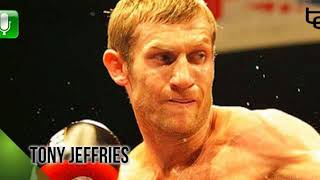
This is a transcript of a Ben Greenfield Fitness podcast episode (guest: Tony Jeffries, former Olympic/ professional boxer and founder of Box and Burn). The interview covers: the upcoming Mayweather–McGregor boxing event (discussion of odds and styles), how boxing training is structured (two-a-day sessions when pro, mix of road work, intervals, pad work, sparring; 3-minute rounds with 1-minute rest; tapering to short sharp sessions pre-fight), Box and Burn’s fitness model (boxing-based classes, education/certification for trainers), and practical fitness benefits of boxing (full-body conditioning, shoulder/endurance, coordination, mental training/visualization). A substantial portion discusses brain health and concussions (Tony’s concussion history, tests at Cleveland Clinic, concerns about headgear rule changes) and recovery/rehab approaches Ben recommends (hyperbaric oxygen, intranasal glutathione, neurofeedback). Additional topics: nutrition for multiple daily sessions (post-workout refueling when <8 hours between sessions), telomere testing/biohacking, Peak Brain Institute, and recommended resources (Concussion Repair Manual, BoxandBurnAcademy.com).
Chapters
The Money Fight is coming up. That's right. This is Ben Greenfield. There's this thing called the Money Fight. It's gonna be the biggest fight, I think of the friggin century. It's AT T Mobile arena in Nevada and it is a professional boxing match between undefeated 11 time 5 division professional boxing world champion Floyd Mayweather Jr. And the current UFC lightweight champion, Conor McGregor. It's gonna rock if you're a boxing fan. Heck, even if you're not a boxing fan, if you're just like, I don't know, history fan, you just like to watch cool stuff, you can't miss this. This podcast episode might get you kind of pumped up for it though, because it's all about how to use boxing and sparring and fighting to turn your body into the ultimate fitness weapon. You're going to enjoy this show and this show is brought to you by 4sigmatic.com greenfield 4sigmatic.com greenfield if you visit there, you will be pleasantly surprised because I have laboriously listed every one of my favorite mushroom extracts that I personally drink. We're talking mushrooms like mushroom coffee with cordyceps and chaga for morning performance, a mushroom hot cacao mix with cordyceps for energy, mushroom coffee with lion's mane and chaga for a little bit of a nootropic effect. They've even got reishi mushroom, which you may not have known. This decreases sleep latency and improves naps significantly. So you can try any of their mushrooms. They're my favorite mushrooms. You go to 4sigmatic.com greenfield and use coupon code bengreenfield that's 4sigmatic.com greenfield & use code bengreenfield when you go to that URL, you'll be able to see all my favorite mushrooms and that code BenGreenfield gets you 15% off. How nifty is that? I also want to tell you about health gains. Health gains. And I'm going down there to Hollywood, Florida next week. Actually I'm doing stem cell therapy in Hollywood, Florida and then I'm jetting over to this health gains place to do some of their innovative concierge age management integrative wellness treatments. Because my goal by the time I'm 40 is I want to have a biological age of 25 just because and Dr. Gaines, who runs that clinic, he is one of the nation's probably one of the world's leading experts in hormone replacement therapy, testosterone therapy, growth hormone therapy, and pretty much any type of therapy that assess you with sexual wellness. Your your sexual Performance, your libido, your anti aging, but it's all drug free, it's all surgery free. And they've got these things called P shots and O shots, and they're gains wave treatment, which is acoustic sound wave therapy for your crotch. This is one of the coolest clinics on the face of the planet, in my opinion. It's like a candy store for all things male and female, sexual performance and anti aging. You can go to any of their clinics around the nation. But if you want to go to the one in Aventura, Florida, which is where I'm going, pretty simple. You text the word gain to 31. 31. 31 automatically. Just walk in the front door. They give you 250 bucks off of any of their treatments. So you text the word gain to 31. 31, 31. I take zero responsibility for the fireworks that may ensue in your crotch. But.
Enjoy. In this episode of the Ben Greenfield Fitness.
Show. I remember when I was 15, 16 years old. Oh, this will blow your mind. And I'm fighting in the national championship final or even in the tournament after my win for the day of a fight, the trainers would say, you can eat anywhere you want, so let's go to McDonald's. We'd be up at McDonald's the day of a fight. So now you're seeing fighters, young boys getting cut in the eyes and the face. You're not going to put your son into a sport like that, but with head guards on, you might. So I think long term, taking the head guards out of boxing is going to damage the.
Sport. He's an expert in human performance and nutrition, voted America's top personal trainer and one of the globe's most influential people in health and fitness. His show provides you with everything you need to optimize physical and mental performance. He is Ben.
Green. Power.
Speed, mobility, balance, whatever it is for you, that's the natural movement. Get out there. When you look at all the studies done, studies that have shown the greatest.
Efficacy.
All the information you need in one place right here, right now on the Ben Greenfield Fitness.
Podcast.
So, Tony, what do you think about the.
Workout? Man, I loved it. It was something completely different to what I think I've done before to.
Clarify running around the trees like little.
Boys. Yeah, it makes it fun. You know, it takes the chore out of working out and. Yeah, it was.
Good. Yeah, I mean, it's a lot different than when I come down and visit you and we're inside the gym there.
In Santa Monica, bouncing around in your, what do you call them. What do you call the facilities? Is it basically just like the ring? Is that what you call it.
When you're in the, in the gym? In the boxing ring? Yeah, in the boxing gym. In Box and Burn. We got two boxing.
Facilities. Box and.
Burn. Box and Burn in Santa Monica and one in.
Brentwood. And it does burn. I mean, I don't know if anybody listening has boxed before, but like I'm, I'm in good shape. You know, we just run. We ran around the obstacle course just now. Right. And I run around on this thing like once a week. I go hit it for 60 to 90 minutes doing the rope climbs and the, the log weave and the walls and everything. So I have a gas tank. But dude, boxing is a whole different ball game.
Physiologically. Well, as well. Like, I can do boxing all day long, but I do a couple of laps a year and your young boys are beating me around here, you know. Yeah, it's kind of what you get used to. But yeah, boxing is a great workout. It's a full body workout, you.
Know. Well, part of it I think too is when you're boxing and this is what I feel. My hands are up. I feel like my diaphragm is contracted. Some of my inspiratory and expiratory muscles are maybe a little bit more restricted. It's almost like if you were, if you were going out for a run but you had like your shoulders out, elevated in your hands up the whole time. It's a little bit different cardio when you get, when you have your hands up versus your hands down. It sounds stupid.
But. Yeah, I mean, it doesn't. It's great for endurance in your shoulders because, like, you see, you've got your hands up and when you're throwing the punches as well. Yeah, your arms are getting exhausted, but you've got to keep your hands up because you know what happens if you drop your hands? Yeah, you gotta clip around.
There. You're hitting the.
Face. Yeah, yeah, you get hit in the face. So, yeah, I mean, it's a great workout as well. What a lot of people don't realize is how much it works out. Your brain, your brain, your brain, it works.
Out. It's like mental.
Chess. It is, it is in there and you're thinking all the time. Like I said, if you drop your hands, you're going to get hit. You've got to think about the numbers that I'm calling out. The 1, 2, 1, 2, hook. 1, 2, roll. You gotta roll. You gotta bend your Legs gotta move your.
Feet. It's essentially like more or less for a beginner. Six different hits that you were Six, six different punches, right? One, two, three, four, five.
Six. Well, it's one, two, hook, two, uppercut. Yeah. So it's probably the five punches, and then you've got your footwork as well, and then your hands up when you're thinking about your.
Defense. That's what I like about it, is because I come from a background of tennis, which is kind of like. You might think this is silly, but it's almost like boxing across the net, right. Because you're anticipating the opponent's move, you're responding to it, you're watching them, and then you're responding with either defense or offense. Granted, you're not getting hit in the face. There's a little bit less.
Pressure. Well, it is. It's like that hand and eye coordination with your foot coordination as well. You've got to be fast on your feet. With tennis, and we've trained quite a few tennis players who says boxing really improves the tennis when they're doing that. Same with football. Same with most sports. I think boxing kind of. If you do boxing training for fitness and you're not getting punched in the head, I think that really can help improve whatever sport you're.
Doing. I have a ton of questions for you about how you structure the workouts and a little bit more about the physiological and mental requirements of boxing. But the first thing, Million dollar question. Conor McGregor's trained down to your place, right? Yeah, down in Santa Monica. All right, so fill me in, dude, because this podcast is gonna come out, I think, before he fights Floyd.
Mayweather.
Right. What are your thoughts on that fight? Is he gonna get his butt kicked like everybody's.
Saying? Yeah, he's gonna get his butt.
Kicked. Are you allowed to delve into.
This? No, I am. Yeah, he's gonna get his butt kicked, but it's. I think it's fantastic. It's a great fight. It's very exciting, you know, and like you said, he comes to the gym every time he comes to train in Los Angeles. He comes and trains our box and burn in either location. We've got a great rep, a.
Great. So you got one in Santa Monica. Where's the other.
One?
Brentwood. In Brentwood, yeah.
Okay. In Brentwood. And he comes to either gym and, you know, he's a great fella, and I really hope that it does well, but I just can't see it. You know, he's fighting one of the best of all Time in boxing. He's never had any boxing fights, so he's got his work cut out. But it's.
Exciting. But he's got such fast.
Hands. I mean. Yeah, so is Floyd Mueller. That's the thing. Yeah. I mean, like, it's. It's going to be exciting because he's got fast hands and he could punch really hard as well. Yeah, like Floyd Mueller, he's so smart. His defense is. Is amazing. Are you a big boxing fan or MMA.
Fan? I like to watch it, but, I mean, I'm not. I'm not. I'm not a fan enough to be putting any money on the line, let's put it that.
Way. Right. Yeah. I'll put quite a bit of money on the line on Mayweather to stop McGregor, even though, like I said, I hope McGregor can win, but I just don't see he's got a.
Chance. He's getting knocked out like a.
First round or not the first round. I think it's going to go a few rounds and then he's going to get stopped. I think he'll get stopped. I think Mayweather will hit him with body shots because in mma, there's not very many body shots get thrown, but in boxing it's all the time. So I think Mayweather's going to hit him with some body.
Shots. And it matters that Mayweather's old, retired. I mean, I mean, he's 40.
But. He's 40. But then you look at the guys like Bernard Hopkins, who was a world champion when he was 48, and, you know, and Amiiba, he's always in shape. So I think. I think he's got to beat. He's got to beat Conor.
McGregor. How old are you? How old do you think I'm gonna say how fast you're moving out there on the obstacle course, man, I don't know. I don't know. It's tough for me for you to say that because I know you can kick my ass. Yeah, I think we're going to spar tomorrow morning too, by the way, so you'll have your opportunity, I would say. I don't know. Where are you, man? Like.
40Ish.
And that's you being.
Kind? 41, 42. I don't.
Know. Cheeky. You swear on this.
Podcast? Yeah, you can swear. We'll Bird song it.
Out. I was born in.
1985. You're born in.
1985?
Yeah. Wow. Dude, you look like you're a tough son of a.
Bitch. You're 10 years off. I'm.
32. You're 32?
Seriously?
Yeah. You've done a lot for being 32 years.
Old. I had 106 fights in my career and I worked it out. For each one of them fights, if I got punched in the face seven times, and for each one of them fights, I spoiled 10 times, six rounds. And each one of them rounds of sparring, I got hit in the face seven times. Anyway, I done the maths and I've been punched in the head over 50,000 times. Holy cow, about that. So another one where I look 42 when I'm.
32. Well, I mean, you're kind of like thick and tough looking too. I mean, you have like that kind of like weathered, beat up kind of look. Yeah, I guess that's the way a boxer.
Looks. And then as well, with the work. Now I've not. That's the first workout I've done this year. I haven't exercised this.
Year. You mean that obstacle course workout we just.
Did? Yeah, so that kicked me off. So that's why I was like a.
42. You get a little bit of a workout, like sparring with people at Box and.
Burn. Like I said, that's easy for.
You. Oh, it's easy for you. I've noticed that too, dude, with the past couple times I've been down there in LA and we've sparred like I felt totally gassed. You're just standing with a smile on your face as I'm chasing on the worrying. You gotta guess that.
Too.
36. 36? Yeah, I'm 36. You are? Yeah, yeah, on the.
Money. Oh, look at.
That. On the money. Actually, you know what? Take that back. I'm 35. The reason I agreed with you that I was 36 was I recently got. I got this test done. It's a blood test and they measure the length of your telomeres to figure out what your biological age is. Not your chronological age, but your biological age. And my biological age is actually a year older than 35. So according to my cells, I'm 36. And I talked with the cat who I interviewed and I can put a link to this in the show notes to that interview if you guys want to listen to it. It's at the show Notes for this show you can get@bengreenfieldfitness.com boxing. That's BenGreenfieldFitness.com boxing. But they test the telomeres on your white blood cells and a whole bunch of things can influence it, right? Like your diet, how hard you exercise, how Easy. You exercise? How much you exercise? Air, light, water, electricity. And I think because I spent like 10 years racing Ironman triathlon, kind of like you kind of getting hit in the face, except I was inflaming my body. I'm actually.
Older.
Right. Like, I put more years on my body than it should have put on.
It. I'm surprised with that with you because you do all of this.
Biohacking.
Yeah. I mean, just imagine. I mean, I know I have a lot of friends who are just like completely horrible, hormonally depleted, and they feel like crap and they're getting joints replaced and they're completely screwed their bodies. So I'm in okay territory. But my goal now, and I've got a bunch of stuff I'm doing behind the scenes to help out. Like I'm doing stem cells now and I'm researching all these different kinds of capsules and nicotinamide, adenine, dinucleotide injections, all these things you can do to reverse aging. My goal now is by the time I'm 40, I want to be 25. That's what I'm shooting.
For. That's a big.
Jump. Yeah, well, biologically 25. So I want to do the Benjamin Button thing. But for you, getting, getting hit that many times, dude, have you ever been. You've been knocked out like tbis.
Concussions. I've had concussions. I've had about five concussions and it's not, it's not nice. I have my first concussion as a 16 year old by getting punched in the head. It was a urgent European final. I actually won the fight against the guy who knocked everyone out. And he hit me in the second round and my legs went like jelly and my, my brain got rattled around my head and I stopped the guy in the third round. And I didn't realize when I got out the ring that I was a European champion. And I went back to my teammates and I said, what happened in the fight? And they were all making fun of me. Oh, you got beat. You got beat. I said, honestly, I couldn't remember a thing. After the fight, I got on the podium, you see the European champion on the gold medal, getting the gold medal on the top of the podium with the national anthem. After that fight, I can't remember a thing. And that was the first time we conquest and it's a scary feeling. And then again, when I was 18, fighting, I was fighting the Swedish champion, you know, got caught with a good punch and legs like jelly. I never, I stopped on my feet, but you know, that concussion, it's a, it's a.
Very. You ever see footage and see if you keep fighting after you get concussed? Because that's what a lot of guys say is though, they'll like be fighting. They don't even know they're.
Fighting. Well, that comes down to the conditioning that you're in. You're being conditioned and, and you're fighting on pure instinct, you know, And I've won. I've won the fight twice when I've been concussed in the fight, you know, because I've went through and I can't remember a thing after I looked on my phone and realized that I've got a wife. I couldn't even remember my wife's name. I've got. It's that bad? Yeah, it's. It's scary. And then you have to fight the next day as well. You know, in, in these tournaments when you're fighting for your country. I was.
Fighting. That's so bad for you. Because one of the top recommendations that they give to you when you've had a TBI is to avoid getting hit again or getting your head jarred for weeks or months.
After. Yeah, I mean, you know, it's common sense.
Really.
Yeah. You know, I fight the next year and I mean, I won again the next year, but you just know it's not good for you. And it's really scary because, I mean, this is something that I wanted to talk to you about a little bit because.
I've been worried about my brain health, about deterioration in my brain and my memory losing focus. And even with speech, I might sound. All right now, I might sound a bit funny now because of the accent, but there's a little bit of stuttering here and there and maybe that's through the.
Concussions. Yeah. I have a book you need to read. I'll give it to you. Take it home. It's a brand new book. It's by this super smart guy. Now. I met him, he's actually, I met him in the world of psychedelics, right. He's big into like microdosing, LSD and mushrooms. And my brother and I are flying down to Costa Rica at the end of this year to do iboga, which is plant based medicine. It's like ayahuasca on steroids in terms of just reinventing your entire outlook on life. Incredibly uncomfortable medicine in terms of just taking it into the deep end of hallucinating and vomiting and all sorts of nasty stuff. But what this guy specializes in is not really Psychedelics. It's neurology. He's a physician who specializes in neurology and he just wrote this book that's the most comprehensive book on traumatic brain injuries and concussions of I've ever read in my life. Like I mentioned, it's called the Concussion Repair Manual. You can't get it yet because it didn't come out. But I have got in my office. Remind me after we record, I'll give it to you. Because what he goes into is everything from hyperbaric oxygen therapy to float tanks to the correct diet and the correct dietary supplements. Things like intranasal.
Glutathione.
Right. Because normal glutathione, which is a really good anti inflammatory, doesn't make it into neural tissue. You have to inhale it through your.
Nose. Is it not too late for that now? Is that not something you.
Have? No, a lot of this stuff because it's kind of like Alzheimer's or dementia. You get neurofibrillary tangles, you get inflammation, you get degradation of the mitochondria in neural cells, but you can rebuild a lot of that. And so this is what his book delves into. Yeah, you should give it a read. I'll give it to you. And for those of you listening in, if you want to get this, go to BenGreenfieldFitness.com boxing and I'll put it in there. But that's probably the most complete manual I've ever read on how to heal concussions and TBIs. And he also goes into, for example, neurofeedback and some of these cheap apps you can put in your iPhone, but also clinics that you can go to down by you in la. There is, for example, this guy who does a really good job at rewiring your brain. That's Dr. Andrew.
Hill. Yeah, I went there. I went there last week.
Actually. Y' all the Peak Brain Institute. Yeah, yeah. So the Peak Brain Institute. I even took my kids there last week and he asked me. So I have this son who's super creative, Taran. But he's also like me when I was growing up. He's a space cadet. Right. I was filming him as he was walking through Boise with us last weekend. We took the whole family down to Boise to do the Spartan race down there. And he's just like. He's walking along the street with a book in his hand, his nose buried in a book. And you can talk to him. And he just looks up and after about five minutes say, what? What were you talking to me? He doesn't know what's going on half the time because he's just like all over the place, right, creatively. And Dr. Hill scanned his brain. He scanned his brother's brain. They're identical twins. And he says about Taran, you know, the twin who's like the more creative twin. He says, so he has a history of concussions or TBIs or what's going on with him. And I said, no, never. He's just like that creative that his brain waves are so far off into the room of creativity that looks like he's had a concussion. So there are other things that can cause the same symptoms of concussion, but, yeah, that Peak Brain Institute, for those of you listening in, again, like, really cool place to go. I don't know what you thought about it.
Tony. Yeah, no, it was.
Great. Did you fly the spaceship with your.
Mind? I drove the car and knocked zombies.
Over. That's a fun one.
Yeah. Yeah, that was.
Good. Yeah, you fly. You drive. You can drive like a Hummer and run into zombies and treat your beta brainwaves. So I went down.
Regulated. I went to a place called the Cleveland Clinic in Vegas. Have you heard of that.
Place?
Yep. Tests on. On fighters, former fighters, for their brain. And we did all sorts of tests, like balance tests, speech tests and memory tests. And.
And for. I was 31 at the time. And for a 31 year old, my results came back normal, which I was very happy with. And. But he said that I've got a split in my membrane. The what attaches your brain to your skull, to the membrane? He said, I've got a very large split in the membrane. And he said like 50% of boxes have this split in their membrane of when your brain gets rattled that hard around your skull that it splits. So we said there's no evidence that that can affect you in life. I don't know if you know anything about.
That. Interesting. No, I don't know about the.
Split.
Like. Like, that's more of like an anatomical issue, right? Yeah, I don't know about that. You know, that's my. Not something I personally run into. We should, we should connect you, though, with this. With this guy, Dr. Dan Engel, who wrote that concussion repair manual I was talking about. He. He would know a lot about it. Now, I wanted to also ask you, you know, there's. There's so many questions after me having experience, like the burn at box and burn, the training requirements for boxing. Like, like, what is a. What does a typical kind of like, training day look like when you're training for boxing, is it, is it a mix of road work and high intensity interval training? There's a lot of weight training and I'm especially talking about obviously there's like the old school Rocky movies where he's just pumping iron and running in his hoodie up the stairs in Chicago. But what's kind of like new school boxing training look.
Like? Right? Well, when I was training for the Olympics in 2007, 2008, we trained four times a day for four days a week. And we did because in the Olympics we were doing four rounds of two minutes. That's all it was. So we were training like short.
Sharp. Four times a.
Day. Yeah, four times a day. We do like interval running on the morning. There might be a full 4, 2 minute sustained run on a running track with obviously with a warm, warm up, cool down. They would do a small strength session at 10 o' clock and then 11:30 would do a spawning session, a boxing session, pad session. Kind of like what we do in boxing. Burn. And then because boxing's a lot of, you've got to control your weight. We do a long sustained run at like 6, 7 o' clock and then with diet in between. So like I think then this was back in 2007. I know like times have changed now with fitness and how to lose weight, but we used to do the long steady runs for weight loss and that was a typical, a typical day for us when we train for the Olympics. Then Fast forward to 2009 when I turned professional, I went down to two sessions a day for five days a.
Week. And then you have fewer sessions when you turn.
Pro. Yeah, but the sessions were longer because as a pro I was doing, I've got a bit. My last fight was eight three minute rounds. So the sessions went on a bit.
Longer. Eight three minute rounds. Yeah. How long are you recovering between eight three minute.
Rounds? One.
Minute. But it's more like three, three minutes on, one minute.
Off. Yeah, it's more like 50 seconds by the time you get to your.
Corner. That three minutes is hard. I mean again, for anybody listening in, who's who sparred or boxed, I'm gassed. Yeah. You know, after about two minutes and that last minute you feel like you're fighting for your.
Life.
Right. Then you get barely any recovery and you just jump into it.
Again. Yeah, well, that, that when you.
Get it again again when you're sitting.
Down in the corner, that's like the, the fastest 50 seconds of your.
Life. Yeah.
Yeah. In and out. So when I was training For a pro it would be two sessions a day. It would be running and boxing. Basically we'd run every.
Day.
Like steady state run or you do track.
Intervals. It would vary between the steady state run and the track intervals. And then with the stairs and hill sprints and short sprints and the closer the fight we got like a week out of the for the fight you'd start doing short sprints, keep you sharp and short rounds, like one minute rounds, just feeling good because in the week of the fight you're not going to get any fitter. So you just want to get sharp and feel good, ready for the fight. So yeah, I mean it was very intense. It was very intense. A lot on the body and then I mean one of the biggest things was recovery, rest and recovery because you need to be 100% or as close to 100% you can be for your next session. Because you want to get the most out of your session.
Right? You mean like the session later on in the.
Day? Yeah, exactly, yeah. I would a lot of boxers run early in the morning, like the Rocky style. I didn't like to do that. I like to do me boxing in the morning and get the best out of me boxing session and then do the run in the afternoon, you know, so I would be doing me boxing session at like 10 in the morning and then do me run at 3 in the.
Afternoon. Yeah. And that's where nutrition becomes important. A lot of people ask me about this, you know, I think that pre workout and post workout nutrition is overrated. Meaning that when you see somebody like waltzing out of the health club with a freaking like 24 ounce Jamba juice in their hands, they don't need that. Right. Or when you see somebody like dropping the bar and just boogieing straight to the locker room to suck down their maltodextrin and whey protein shake, you don't need that. Because your body when you're eating ad libitum, just like according to appetite, within about eight hours you naturally replenish all your glycogen stores and you're good to go for the next day. But if you're in a situation where you're a two day athlete and you're going to be exercising again in less than eight hours after you've already worked out, that's where post workout nutrition comes in key where you actually want. It doesn't have to be like a carb fest. It can be your body can actually restore glycogen levels or glucose from things like protein and wild caught Fish and vegetable shakes with coconut oil and seeds and nuts. The backbone of fats can be broken down into glycerol and that can get converted into glycogen for you to actually be able to replenish those stores so it doesn't have to be like Rice Krispies and sweet potatoes and oatmeal. But at the same time, that's huge. I think a lot of people, they'll hear me say, oh, well, pre and post workout nutrition is overrated, but there's an exception to that rule. And so when you're doing a two a day, like you're describing, that's where that post workout or pre workout.
Nutrition. Where were you when I was boxing? I needed you and me corner, didn't.
I? Yeah, you don't want to rely on me for the hitting advice. But yeah, I mean that's, you know, that's what I have my degree in is nutrition. That's one of the things that I see people, especially when it comes to maintaining weight or losing weight, like so many people just like they take this trickle down advice from, from, you know, bodybuilders trying to put on pounds and pounds of muscle or you know, like college athletes and football players trying to maintain 350 pounds and it doesn't.
Work. One thing about boxing, like you said, you've got your degree in nutrition, right? One thing about boxing is boxing. 99% of boxing boxers are uneducated, right. So yeah, we don't know what foods to eat. And most boxing trainers wore boxers, so they're uneducated as well. I remember when I was 15, 16 years old, this will blow your mind. And I'm fighting in the national championship final or even in the tournament after my win, the day of a fight, the trainers would say, you can eat anywhere you want, so let's go to McDonald's. We'd be having McDonald's the day of a fight. You know, because where I'm from, the north of England, like, you mean.
The McDonald's kale and apple salad? That.
One?
Yeah.
Right. No, we were getting double cheeseburgers and stuff with fries and milkshakes. This is like three hours before a fight. Yeah, me too.
Dude. That's what I roll. I played college tennis. I didn't know jack squatt about nutrition, so I'd stop in for like Big Mac supersize fries. You know, you'd get like halfway through your match and you'd be sluggish, running on vegetable oils and beef. But yeah, you don't know any better. And it was crazy because for me, like, the coaches didn't know any better.
Either. Right? Yeah, that's what I mean. Because they're uneducated as well. So it was hard, but everyone was in the same boat, I think, in.
Boxing. Well, now, if you look at professional sports, like, basketball is a perfect example. Right. If you look at the national champions this year, the Golden State warriors, they decided to go way above and beyond, just like, eating healthy and working out in a relatively advanced way, which a lot of NBA teams are doing. And they're using freaking, like, float tanks. And they're using, like, Steph Curry is using strobe goggles and transdirect cranial stimulation on his head. They're using neurofeedback. They're doing all these things kind of. Kind of like you and I are saying, well, a decade ago, we wish we had a team nutritionist telling us how to eat properly. I think you, you know, a decade from now, professional basketball players are going to be saying, hey, we didn't know about these, like, 20 different legal devices we could be using to enhance our reaction time and our speed and get to the point where folks like the Golden State warriors are just, like, light years ahead of the other.
Teams. Yeah. Times are definitely changing with that sort of stuff. And even with recovery now. Well, I always did used to get an ice bath as well, like in training camps. I think that was massive for.
Us. Give you a nice bath.
Tonight. Night. Yeah, I love that. Yeah, it was.
Great. Yeah, we did. We did the Greenfield cold plunge out in the cold pool back in the.
Forest. And I was just saying to Glenn about, like, this sort of stuff that we did here will be great for boxing, for training, because what, like, open. What we're.
Doing. Open under them, up and down the.
Hills. Yeah. And under the pools when we're climbing under.
There. Yep. That's why I like obstacle course training. Because what I tell people is there's. There's three things that you got to be able to do. You gotta be able to run efficiently. You gotta have grip strength like a gorilla. And you need to be able to lift something or move something or crawl under something and then get up and keep running without stopping to catch your breath. Right. Without walking it.
Off. Being in this lovely house here and doing this sort of training. I don't know if you're not normal or if everyone else is not normal. And you are normal because this. This sort of lifestyle, what you were living, seems like this is what everyone should be doing, but everyone's not doing.
This. Well, it's kind of an odd situation. I mean, not everybody can have like 10 acres out in the forest like we're on right now. But I mean, everybody can go out barefoot in their backyard. Everybody could take a cold shower. Everybody could just toss a few things in their home. Like, for example, the bedroom you're sleeping in and the downstairs that you guys are in, it's all lit with red lights and there's not a lot of blue light wavespot spectrums. The bulbs are special bulbs that allow your biology to function better in terms of circadian rhythm. Your entire room has. It's an organic mattress. There's a HEPA air filter that's churning out negative ions. The water is. Not only is the house all powered with solar energy, but the water is from a well and that goes through a structured water filter and then gets remineralized. There's all these little things that frankly, people can do. Just like a lot of people, people don't know. It's the knowledge component. And a lot of the podcast listeners to this show, you know, they. They know this stuff.
But.
Right. Yeah, people should.
Know. Why. Why do you need to have all that stuff?
Like. Like your body feels great. I mean, my body. Oh, yeah, dude. When I travel and I'm staying in, I mean, a lot of hotels now, you know, they're. They're adding like, you know, Marriott now has like their stay well room and they're still well room. It's like filtered structured water and a chlorine filter on the shelf shower head. And it's low volatile organic compound flooring. And the carpets are mold free and the bedding is organic and you feel a lot better. And the lighting, right, it's low LED lighting and they've moved the WI FI router out of the room. You feel a lot better when you're in that environment. But a lot of people don't know that there are brain fog or their frequent immune system issues or their sniffles, or any of these things come from their environment. The invisible variables, the air, the light, the water, the.
Electricity. So do you think, like I said there, my old boxing trainers were uneducated in nutrition. Do you think most people are uneducated in all of this stuff that you do.
Here? People are getting better and better. Right. Like, there's this whole, like, yeah, it's kind of silly because it's not really biohacking as much as just like healthy living, but there's like the biohacking movement and there's, you know, Everything we eat tonight, after we record, we'll have dinner and just about everything you eat. You know, I've either killed myself or I know where it came from. In terms of the meat, all the food is grown in this garden back behind you. And you know, people can do things like, you know, vertical gardening in their backyard in a patio in fricking New York City and they can, they can find CSAs or, you know, shares with farms or you can get your own meat and know where the meat came from. But yeah, I mean a lot of people can do this stuff, but it's just about knowledge, you know, it's about. And, and what will happen is all the people not doing are just going to die early. The rest of us are going to live a long time and eventually take over the world. And then it'll all.
Be. How long do you think I'll live.
For? I have no clue, dude. I'll probably hit by a bus when I'm 60. Honestly, that's. That's what will happen. Yeah, exactly. Drowning the swimming pool. That's right. That's what I was telling you earlier. My wife will find when I'm 80, like floating out there after doing underwater cold hypoxia and it'll be a good way to go. So in terms of like what you were doing as a pro, these eight rounds, a three on one off, two a days, I know you were lifting, you were doing road work, you were running, you were eating a crap ton of food, box and burn. Like these facilities that you have, did you design those to mimic the physiological requirements of pro boxing? I go in there and you got me warming up, you've got me doing agility ladder doing, doing like some shadow boxing and getting up in the ring sparring with you. We, last time I was there, we finished with the game where you were like throwing a ball at me and you'd throw it at my head and you'd say catch. And I wasn't supposed to head it, I was supposed to catch it. And then you'd throw it at my arms and you'd say head. And I wasn't supposed to, to catch it, I was supposed to head. So you're like playing all these little like mind games and mental tricks with me as well. How is it that you put together what you put together at box and burn? Like, like what were you trying to accomplish? And what does a typical workout look.
Like? Well, I wanted to take the best part of boxing gyms. I've been in boxing gyms all my life. Into this. And my business partner, Kevin Watson was a former strength and conditioning coach for Kentucky basketball team who stood as well. He brought his background in as well. So now we cross the boxing fitness training with cross training.
And it goes together really well. Like in a boxing typical boxing burn class, we do the mixture of like what I said when I was training for the Olympics, I did them four sessions a day. We would be mixing two or three of them sessions in one session in the box and burn workout. And like the game we played with a head catch with you and the boys, that was just good. It's a fun game and it's good for your mind and we just try and make it fun. And I mean the number one thing about coming into a boxing gym is getting the great workout, but as well having fun and enjoying it and learning, you.
Know. How long does a typical session.
Last? 1 hour. We do 1 hour sessions in there. And I mean we got named number one gym in California by Men's Fitness magazine in 2016. Yeah, I mean it's massive. The gyms have absolutely blew up. You know, we went from having a boot camp on Santa Monica, Santa Monica bluff for donations only. Fast forward four and a half year now we've got two seven figure businesses, two seven figure gyms with a amazing education program as.
Well. So we, we definitely mean an education.
Program. So we've got the boxing burn Academy where we teach trainers, personal trainers, how to teach boxing. It's, that's, that's.
Global. That's pretty sick. You need to get a personal trainer from Spokane. Because I've been looking for a place where I can just box. I had a, I had a spot barring coach for a while. My kids do jiu jitsu every Monday night like down the street from here. And I would go in and this guy would kind of like, you know, box a little bit with me and do some kicking. But he, you know, he's, he's cool. But I like what I do at boxing Bar. I would love to be able to go in and do the agility ladder and the speed work and the footwork and then spar. So you got to train.
Somebody. Yeah, we've got over, I think 1200 certified personal trainers that we've certified around America already. So I'm sure I'll be able to put it out.
There. If anyone from Spokane is listening in and you coach boxing, like go, go get, go get certified with Tony's boxing Burn. Come back up here, you'll have one, you'll have one customer at least. Yeah. And my boys. So you've got, you got your education program. People are coming and doing these workouts. How often, how many times a week do you do a workout like.
This? Like we do the boxer burn classes, which, in the gyms, which is. We, we have got like 50, 60 classes a week between both.
Locations. But like if somebody's doing this as a workout, are they coming in every day? Are they just like rising once a.
Week? We tell people we recommend three times a week or plus, because a lot of people in la, as you, as you probably know, they do all the workouts as.
Well. Because it's more cardio than resistance training.
Right? Yeah, it's a lot of cardio, but they use the resistance training as.
Well. So like, well, like what kind of resistance training do you guys.
Do? Well, we do, we do all sorts of, of different stuff. Like.
It'S a mixture of everything. We've got, we've got, we've got like 30 trainers in the company now and they all bring their specialty, whatever it may be. Like, like, like Glenn brings his speed and agility and all.
That. Glenn sitting back here behind us. Yeah, yeah, we've, we've got, we've got somebody watching us doing a little, doing a little video. Where's this video getting published, by the.
Way? I know, I get it on, on the.
Boxing. Yeah, on the boxing bird YouTube website. We'll link to it. Go to BenGreenfieldFitness.com boxing we'll show you a photo of our outdoors podcasting studio that we have set up here. But yeah, so Glen helps to coach the resistance training as.
Well. Yeah, Glenn's has stood out that stuff. Glenn trains all the high profile people that come to the gym, all the celebrities, all the actors, athletes, if they come. Glenn trains all m lot. So we've got a great mixture of trainers that come to the facility and the results, people getting fantastic. And then on the education side as well, like I said, we, we teaching these personal trainers and fitness enthusiasts how to box and how to teach boxing as a form of workout, you know, and the results that they're getting as well is, is amazing. They're telling us that they're helping, that's helped that boxing trainer is helping them earn more money. Like you said, you want a boxing trainer up here? Yeah, like it's, it's a fantastic.
Workout. And I mean anything that to me feels like a mix of playing and working out. Like what we did on the ice, I freaking love it. Like I'm kind of through with doing workouts where I've got a frown on my face the whole.
Time.
Right. Like, granted, I mean, you've seen me at the. At your gym. Yeah. Like, I'm not like, I'm not like smiling like Pinocchio the whole time, but at the same time, like, it goes by fast and I like it. And there's, there's the mental part too, because you're moving all over the place. But then you've got the 1, 2, 3, 4, 5, 6, you know, 1, 2, hook, 3, 4. So tell me about, in addition to just the sparring, if anybody out there in the boxing world is doing mental training, like at a high, like, is Connor doing things like Dynavision boards or strobe goggles or, you know, when you were doing pro boxing, did you guys use phone apps or, like, reaction speed tools, things like.
That? Not really. Like, we were old school. We used the speedball. You know the speedball, the speed bag? Yeah, we use that a lot. But.
What. I've got one in my office, but I have no clue how to use it. It's just like hanging.
There. I love to show.
You.
Yeah. But what we've done a lot of was visualization, you know, visualization before you fight. I think a lot of athletes do that now where. Where you'll be visualizing the. The getting your hands wrapped, walking into the ring, the. The full of. The full everything. Getting in the fight, then fighting and then fight and winning the fight. And then when it comes to the actual fight, you've already been there and done that mentally. So I think that was one massive thing that helped me and had a lot of boxes in the group written team, as well as the psychology. We had a sports psychologist work with us on the. On the Great Britain team, which he used to study other countries and study how they acted when they got in the ring, because they had that as well. So little things like walking around the venue with your chin with your head held high when your opponent's senior, like, you look confident. You know, things like.
That. Like power posing. That's interesting because they've actually shown that power posing can do things like increase your testosterone as.
Well. Oh.
Really? Yeah. I never knew that, like, when you stand tall, you fold your arms or anything like that. I've got a friend who I interviewed on this show, Jordan Harbinger from the Art of Charm. And one thing that he teaches, especially, like men to feel more confident when they walk into a room is they're like doing power posing, like at the door before they even walk in not only to get the hormonal boost, but, but just to be able to show. When you walk into a.
Room. Yeah, when you walk in a room, you want to look.
Confident. You're.
Confident. Yeah. And then as well, like things like before the bell went. When you're in the. In each corner, go to the center of the ring. Now your opponent thinks that, wow, he's coming to the center ring, he's up for this fight. Little things like that. What our sports psychologist used to tell us to do really went a long way and helped the help us as a team and help me as a boxer, you.
Know.
Hey, I want to interrupt today's show to tell you about something very unique. So there's this thing called quebracho. Quebracho. It's a macromolecule, meaning that it goes into your small bowel and it stops bloating from things like bacteria that you don't want in your small bowel. And then what they've added to that is something called horse chestnut and a small amount of peppermint leaf. And for anybody who gets gas or bloating or constipation or leaky gut or anything that causes that inexplicable heavy sensation after an otherwise normal meal, you can completely get rid of this methane production by using this stuff called atranto. I've actually popped it before. I've gotten on airplanes before, too. Like, you know how you don't want to fart on airplanes? It's like the total anti fart capsule. It's amazing anyways, though. So you get a discount on this stuff called a trantil. And it's very simple. You go to lovemytummy.com Ben isn't that cute? Lovemytummy.com Ben will give you a 15% discount on this atrantl stuff. A T R A N T I L It's amazing. Check it out. Lovemytummy.com.
Ben.
Did you read the book about this guy who didn't get into professional boxing, but he got. He got into the ring to fight in mma and he was a professor. He wrote this book called professor in the Cage, and he just decided, yeah, he had like an MMA gym across the street from his office at the university, and I'll hunt down the book and put a link in the show notes for it. But the dude decided he wanted to fight, and he actually trained to fight and wound up, like, fighting in the ring just as something to experience in life. And it's actually a pretty cool story. And it kind of leads up to the next question I wanted to ask you is, like, if somebody's listening in and they're like, well, I want to try. I don't want to just like, go do box and burn and try out all these different boxing workouts that Tony talking about. I want to fight. What would you say to somebody, like a man or woman who actually wants to get in the ring and fight? Like. Like, what would you do if you were just, like, total amateur, you'd never boxed before, and you actually wanted to get out there and do an actual.
Fight? Well, there's a lot of people that want to come in the gym, and I want to fight. I want to take it to the next level. They've been training for a while. Then they do, like, the sort of training that we do. Then you put a mouthpiece in them and you put a head guard on them, and then you get punched in the face in a spawn session, and then the idea doesn't seem as good, you.
Know?
Yeah. When you start getting punched in the face.
It sounds. Boxing sounds. Oh, fun. Like you're looking good on the mitts. Making loads of noise when you're.
Punching. Sucks, dude. Sucks when you hit me in the.
Stomach. Yeah. Even when you're doing the shoulder and body. But.
Now.
Yeah. No. Imagine if I'm hitting you in the face as.
Well.
Yeah. So I'm hitting you in the.
Face and you have a headgear actually work, by the way, it helps. A lot of people say it doesn't protect you at all and that it makes people hit each other harder in the.
Head. No, the good. There's so many benefits of having head guards on. Now. Now, if you think if I've got. If I'm hitting you in the head and you've got a head guard on, it's not just protecting your head, it's protecting my.
Hands. Right, yeah, that makes.
Sense. Rather than hitting a hard skull as well. If we both are wearing head guards and our heads clash just like. Like this, we're both going to get.
Cuts.
Yeah. So I'm all for head guards. There's been big studies saying that.
The worst, they do more damage than good. But I'm a big believer in head guards are really good for boxing. And now they've took it out of the amateur sport as well. So in the Olympics now, when I boxed in the Olympics in 2008, we wore head guards. Now that don't wear headguards, which I think is a big mistake. Mistake. And it's Going to hurt boxing in the long term. Because when, when do you ever watch amateur boxing? It's only in the.
Olympics. Never.
Yeah. Or if you ever did, it'll be.
There. I watch men's gymnastics. Right. Every four.
Years. Right. So. So now if a. If a parent thinks about putting their kid into boxing and they see it on their Olympics and they've got head guards on and it looks. It looks safe, but now they're not wearing head guards and there's the, the cuts all the time. People, boys are getting cut. Do you know what I mean? So now you're seeing fighters, young boys getting cut in the eyes and the face. You're not going to put your son into a spot like that, but with head guards on, you might. So I think long term, taking the head guards out of boxing is going to damage the.
Sport. So when somebody does want to fight, come back to what we were talking about. Let's say they get beat up and they still want to do.
It. Yeah, I mean, they can do it. Not at our gym. We. More the fitness gym, but the spa. But when someone gets beat.
Up. But is it like mma, where you can hunt down places where they'll actually, they'll have like amateur fights? You can just step into the ring after you've been.
Trained. There's loads of places where you can. Where you can fight amateur. I wouldn't recommend it, but there's loads of places that. Where you can go and fight.
Amateur. Why wouldn't you recommend.
It? Because I don't believe in getting punched in the face. I think it's. I think it's stupid. And I'm. Even though I've got punched in the face for a living and now I'm very successful through getting punched in the face. Well, you can see that, but I just don't think it's. It's healthy. I would never let my kids.
Box, so box and burn. People aren't getting punched in the.
Face. No, it's all for fitness.
So. So you're basically hitting somebody else, wearing gloves or you're hitting a heavy.
Bag. Getting. We call it get.
Fight. We never just like put on headgear and get into the.
Ring. No, we see fight, get fighting fit without getting.
Hit. Get fight and fit without getting.
Hit. Yeah. You like that? Yeah. But I do a spawn class.
On a Sunday, so you're still getting all the mental and the physiological benefits. You're just not fighting or getting.
Hit. Yeah, we offer a spawn class on a Sunday where people come and try it, but it's all light and controlled. You know, it's. It's so easy to get concussed, especially when you don't know what you.
Doing. You were having your students or any of the Box and Burn attendees actually get into a fight. Have you ever heard of that.
Happening? Not.
Really. And actually been able to use some of the skills they're learning.
There. Not in box. I mean, I've been in a lot of fights. Yeah, obviously north of England, like street fight. Street fights. And boxing's really helped me defend myself. But not in the gym. Two trainers have nearly fight a couple of times, but that's about.
It. Yeah. Did you grow up rough? Like, in terms of boxing? Was this something that you had to do out of necessity growing up fighting in England? Or was this something you took on as like kind of a preppy sport to get.
Into? No. Like I said by all boxers, just about all boxes are uneducated. Like. Like me. I think I'm one of the only uneducated people you've had on this podcast because I noticed everyone who comes in here is.
Doctors. I thought you were a doctor, dude. That's the only reason I had you.
On. I might look like.
One. You're.
Fired. But yeah, I mean, everyone, like most boxes are uneducated and they don't come. They come from rough backgrounds. That's why you see so many boxers when they do make a little bit money, they're wasted all. I'm a little bit different, I'm a little bit smarter. When I made some money through boxing, I invested it. Like, I own lots of properties in England now through boxing and then obviously with these gyms. So, yeah, I mean, but back to what we were talking about before, I wouldn't recommend anyone wanting to go there and start trying to fight, especially if you're. If you're a grown.
Man. But you were undefeated as a.
Boxer. Yeah, I was undefeated as a professional.
Boxer.
How do.
You. How are you not like the best if you're.
Undefeated? Because I got forced to retire. So I was defeated as an amateur boxer. I got beaten in the semi finals of the Olympics. I would have been gold medicine as an amateur. Yeah, I would have been gold medicine. I got the bronze medal in the Beijing Olympics and as a pro, I was underfeed in temporal fights. But I got forced to retire through hand.
Injuries. What happened to your.
Hand? I had a hole in one knuckle and a tear in this tech. This.
Tendon. Is that that scar on that finger you're showing me right.
Now? I Had surgery.
So I got forced to retire. At the time, I was devastated. I had no plan B. Like, I never finished school. All I knew was boxing. I had a bit of a business mind, so. So I was devastated. But now looking back, it's the best thing that ever happened to me. Like I said, I've been punched in the face over 50,000 times. If I never retired from boxing, that would have been.
Probably. You'd be in a wheelchair. You wouldn't have two seven figure businesses in LA and real estate back in.
England. I would be sitting here right now with.
You. Honestly, I write fiction now. I play music, I'm doing some singing, songwriting. When I wake up in the morning, I try and do a few things that take into account the fact that I could get hit by a bus, I could be out of fitness, I could be out of health, I could get thrown out of this industry at any point and not be able to rely upon my body. Right. Or upon racing. And so I think it's a good idea to have stuff in your back pocket that you can rely on or be able to do like you've done and be able to run a business based on your passion rather than just looking on yourself as like basically being like the face in the name of.
You.
Right. You have an actual.
Business. Yeah, that makes sense. I.
Mean.
Yeah. And I guess the business is great. And now I'm enjoying life way more now than I was when I was. When I was getting punched in the.
Face. And you also have a podcast now, the.
Bot. Is it.
Good? The Box and Burn.
Podcast. Boxing Life podcast. Yeah, Life podcast, which is going well. It's more of a hobby than anything else and I love doing it, you know, and we talk about boxing and.
Life. Nice. Who's the. Who's the. The most entertaining guest you've had on.
That? Brian.
Cullen. You know, Brian Callan. Why don't I know that.
Name? He's on the Fighter and the Kid podcast. He's a fighter and kid comedian. Okay. It's a.
Huge. Yeah, yeah, I've heard of.
This. He's always on. Yeah, yeah. Good friends with Aubrey.
Markers.
Okay. Yeah. And he's. He's a. Crazy about Gary Vaynerchuk on.
There. Gary Vaynerchuk, Yeah, yeah.
Yeah. He's a stood.
Then. That cat's pretty.
Intense. Yeah, he is. A lot, lot of boxes and, you know. Yeah, I mean, it's going good. It's something I love to.
Do.
Yeah.
Cool. Well, I'll link to that in the show notes as well. For those of you who want to listen in to Tony's box and.
We'Re going to have you on.
There. Yeah, as a matter of fact, Tony's up here in Spokane, Washington, and I think, I believe after we record here, we'll probably take a pee break and we'll record another episode and you'll hear me on Tony's podcast. But in the meantime, I'm going to take some show notes for you guys. I'm going to hook you up with this concussion repair manual that Tony and I talked about and also that telomere podcast that I did. We'll talk about Tony's box and burn gyms and put a link to those in the show notes that Peak Brain Institute down in la and also thethe professor in the Cage book that I mentioned and any of the resources I can hunt down for you guys. In the meantime, Tony, anything else you want to touch on or share with.
Folks? No, just a little bit more about the Box and Burn Academy, like the education program. If you're a personal trainer with our Academy, you get CEUs for NASAM. Well, you were a personal trainer. You were.
Right? Yeah, still am. Yeah, I maintain my certification. I actually still. I train eight people still.
Online. Oh, you.
Do? Yeah, so we do Skype and phone and I track their sleep, I track their nervous system, their heart rate.
Variability.
Right. I write out their training plans each week. So whether they're like, like there's a couple of. There's a pro poker player, semi pro soccer player, a couple of triathletes. And then everybody else is like a CEO or you know, a business.
Businessman.
Nice. Or a businesswoman. And then I also track their. Their sleep. So I track sleep, HRV training and.
Nutrition. So you're a legit.
Person. Yeah, so I still, I still personal train. I'm just taking online. I don't do brick and mortar.
Anymore. So yeah, with our education program, you get to see use for certification costs like nasam es isse.
Effe.
Yeah. And a few more. So, yeah, I mean it's great and it really helps people increase the income with that. Well, that's my little.
Plug. Yeah. On that.
We say A F, F A. I.
Get. People don't understand me. G is either G. Yeah, they think I say G. Yep. You know, this accent. But this accent's done us a lot of good living in.
America. What's it, is it called like a cockney accent or is it Cockney.
South? I'm a Macnam. For example, I'm from Sunderland in the northeast okay.
Yeah. Cool. Nice, man. Well, thanks for coming on the show and for Everybody listening in. BenGreenfieldFitness.com boxing and I'll link to Tony and everything that he does. And I definitely recommend, if anybody gets down to la, check out Tony's gym and you have a directory on your website at Box and Burn of trainers people could hook up with in their local communities who've been certified by.
You. Yeah, that'll be on the boxandburn academy.com boxandburn academy.com.
Yeah. All right. I better find somebody from Spokane. Thanks for coming on the show.
Dude. Thanks.
Man. All right, folks, this is Ben Greenfield and Tony Jeffries signing out from BenGreenfieldFitness.com have a healthy.
Week.
You've been listening to the Ben Greenfield Fitness podcast.
Go to BenGreenfieldFitness.com for even more cutting edge fitness and performance.
Advice.
Sam.
Sa.
More from Jeffrey





The Solution to Aging Might Be Closer Than Anyone Realizes - With Ben Goertzel


