Nasal Glutathione, Psychedelics, Dynavision & More - The Concussion Repair Manual: A Practical...
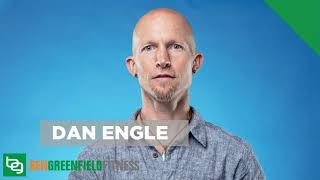
Episode of the Ben Greenfield Fitness podcast featuring Dr. Dan Engel discussing his book The Concussion Repair Manual. The conversation covers Dan's TBI history and a wide range of concussion-repair and cognitive-enhancement approaches: floatation therapy (800–1,200 lb Epsom salts; sensory reduction benefits), hyperbaric oxygen (clinic "hard" chambers up to ~2 atm vs. home soft chambers ~1.4 atm; typical course 10–30 sessions), neurofeedback/ Biocybernaut (intensive Alpha-1 training: ~10–12 hours/day for a week across levels), energy/meridian concepts (interference fields), psychedelics (therapeutic potential but need for caution), and intranasal glutathione delivery (direct brain delivery via nebulizer/fine mist). Ben mentions show notes and resources at BenGreenfieldFitness.com/concussionmanual.
Questions this video answers
About 800 to 1,200 pounds.
Hard chambers up to ~2 atmospheres; home/soft units around ~1.4 atmospheres.
About 10 to 12 hours per day for one week.
Chapters
Hey, what's up?
It's Ben Greenfield.
You're gonna like today's podcast.
Nasal glutathione, psychedelics, Dynavision, and a whole lot more. It's the concussion repair manual with my friend Dr. Dan Engel, who I met because he's a plant based medicine expert. But he also happens to be an expert in fixing your noggin when things go wrong or just getting smarter. This podcast is brought to you by ZipRecruiter. So if you're hiring, you might not know where to post your job to find the best candidates, the greatest talent, because great talent integral to a successful business, right? Well, with Zip Recruiter, you get to post your job to 100 plus job sites with one click so they automatically match up your business with the exact right candidate. And there's no juggling emails or phone.
Calls to your office.
You can screen, you can rate, you can manage all your candidates in one place with their easy to use dashboard. And you get to post jobs on ZipRecruiter for free because you're a listener. That's right, free. You just go to ZipRecruiter.com first. That's ZipRecruiter.com first. This podcast is also brought to you by the best tasting gently dried, not heat oxidized, it kills all the nutrients. But gently dried superfood powder that they made taste good. Not like cat diarrhea, which is what a lot of green powders taste like. And they did that by infusing it with coconut and ashwagandha and then putting mint into it. They also have lemon, turmeric, wheatgrass, matcha, green tea, beets, spirulina, moringa, chlorella.
There you have it.
It is jam packed and it tastes really good. Did I mention you get this stuff at a 20% discount? Just go to BenGreenfieldFitness.com Organifi that's Organifi with an I. BenGreenfieldFitness.com organifi the discount code that you use is. Discount code, Ben. Discount code, Ben. All right, enjoy today's show.
In this.
Episode of the Ben Greenfield Fitness Show.
Oftentimes, these kinds of issues with the concussion create scar tissue in the brain. That scar tissue will act as an interference field. So what we're needing to do is work at the central level and release that scar, release that fascial connection, so to speak. The brain doesn't have the same kind of fascia as the musculoskeletal system, but it's the same kind of infrastructure. You can actually measure the valence or the energy output of of a particular meridian system. You can tell if it's down regulated or up regulated.
He's an expert in human performance and nutrition, voted America's top personal trainer and one of the globe's most influential people in health and fitness. His show provides you with everything you need to optimize physical and mental performance. He is Ben Greenfield.
Power, speed, mobility, balance, whatever it is for you, that's the natural movement. Get out there. When you look at all the studies done, studies that have shown the greatest efficacy.
All the information you need in one place right here, right now on the Ben Greenfield Fitness Podcast.
Hey folks, it's Ben Greenfield. And in case you didn't realize it, concussion is a pretty big topic in the sporting and athletic world today. Particularly high impact sports like mma, football, soccer and beyond. And even if you haven't had a concussion, many people, including a ton of people I know, haven't had concussions. But due to brain inflammation or blood brain barrier leakage or neurotransmitter imbalances and many of their issues, they suffer from a lot of the same problematic brain issues caused by concussion, like brain fog or distraction or ADHD like symptoms and many other issues. You know, I personally, and I've done podcasts before about this, have had a QEEG brain scan done and you know, I've fallen off my mountain bike, I've been hit in the face a few times, I've gotten a couple of football concussions and I've shown issues with concussion like activity in my own brain. However, there are many other people who, since hearing that podcast, have gone down who are completely concussion and traumatic brain injury or TBI free, who have also gotten back to me and said, dude, I found so many issues with my brain. And so even if, let's say you're not a professional fighter listening in, or a football player, soccer player, there's a ton of things that you're going to find relevant in today's discussion when it comes to healing the issues with concussions that frankly help you get smarter and give you a better brain. That's what I really like about the topic that we're gonna delve into the book about the topic we're gonna delve into and my guest today. So there's this new book, it's called the Concussion Repair A Practical Guide to Recovering from Traumatic Brain Injuries. It's a brand new book and it was written by this guy who I originally thought was just like one of the world's leading authorities on, of all things, psychedelics and psychedelic microdosing and the use of everything from LSD to shrooms to ibogaine to ayahuasca and beyond. But I later found out that what he really specializes in is things like medical technologies for healing an injured brain and how to actually enhance the activity of the brain. And he himself has bounced back from head injuries. He's board certified in psychiatry and neurology and has this really cool clinical practice that combines regenerative medicine and something called orthomolecular psychiatry, integrative spirituality. The dude is a wealth of knowledge on everything from psychedelics to enhancing neural performance to healing yourself from concussions. He is literally one of the coolest docs I've ever had a chance to hang out with. He's the real deal. His name is Dr. Dan Engel. Like I mentioned. Dr. Dan, welcome to the show, dude.
It's good to be on with you, Ben.
Yeah, man. And this book, by the way, is jam packed with stuff. So I'm looking forward to delving into this. But supposedly, from what I understand, you yourself have been hit upside the head a few times.
Yeah, a few pretty good ones.
About a half a dozen or so significant ones that I can point to and say, wow, that really kind of turned me upside down. The last of my.
Now, was that before or after you decided to specialize as a physician in psychiatry and neurology?
Well, you know, I kind of just found medicine. I actually went to college to play soccer and didn't really have much plan after that. And halfway through looking at my options with a chemistry degree, medicine was the one that made the most sense. I was going to go into ER medicine or surgical medicine. And then two weeks before med school, I broke my neck. One of these concussions where I jumped off a pier and hit a sandbar on my crown. Crushed C5, ended up in a halo for the first.
12 weeks of medical school and then. But after that.
What's the halo again?
Halo was where you've got a titanium. It's a large titanium ring that they screw into your skull from four pinpoints. And that ring is attached to a chest plate and a back plate. So it essentially immobilizes your entire spine with only hip flexion.
Okay, yeah, I know what you're talking about. I just wanted to make sure I differentiate between that and this new. You've probably heard of it. Cause you talk about transcranial direct stimulation in your book because there's a device out there now called the halo. And it's I actually have one. It's transcranial direct stimulation for your head to activate neurons in your motor cortex before you, like, go out for skill acquisition or before a workout. But it sounds like you were actually attached to a completely different halo.
It was a bit of a different halo, a bit of a different experience. Yeah, there's nothing quite like having metal screwed into your skull and not being able to move for about three months. But, you know, the alternative shit was I could still function. And at that point, the options were external fixation or internal fixation where they cut you open and fuse your neck. And so I chose the external. But, you know, as a result, it was one of the best things that actually happened to me because it slowed me down, got me kind of more dialed into, I think, the best potential alignment that I can offer for service. And it oriented me back towards understanding head and neck injury and neuropsychological developmental course, particularly as it relates to concussion recovery. Unfortunately, at that time, this was like 20 years ago, the field of neurology didn't have any good solutions for concussion recovery. It was essentially watch and wait. Like, go home, don't get another knock on your head. We hope it gets better. Yeah, yeah.
That was the wake out. It was for me, like when I got a concussion when I was a kid. My first one was riding a mountain bike. And I remember I woke up in the bathtub with my parents standing over me and wound up visiting the hospital. And there was no follow up care. Like there was nothing. None of the things that you talk about in the book, Right? Like, nobody talked about hyperbaric oxygen therapy or float tanks or a ketogenic diet or intranasal glutathione or anything. They're just like, hey, watch the kid. Make sure he looks good after a couple weeks. Ask him who the president is and.
What year it is.
Yeah. And we hope he comes back online.
Right, exactly. So at that point you had your head injury and you realized that the care for a concussion wasn't everything that it could be. How long was it before you actually started to delve into some of these alternative methods that you talk about in the book for healing up a concussion? Concussion.
My last significant concussion was in the midst of my psychiatric and neurologic residency and I was in a snowboard park, kind of got frost over goggles, kind of tired at the end of the day, went to hit these last little set of kickers and then couldn't see the second hoop and then.
Clipped my heel, turned upside down and Went headfirst into the third. And that put about an eight inch crack in the back of my helmet. And I knew there was just this voice, you know, and I had, I had bonked around my head a lot in the last 20 years kind of leading up to that. But there was something in the, in the back of my head that said, holy shit, dude, you just crossed the line. I was like, whoo. And then sure enough, over the next probably three weeks.
Trouble with attention, focus, concentration, mood, sleep.
Motivation, follow through, all the kind of cognitive performance tasks. And that lasted for about three to four years. And so this was about 12 years ago. And then because that was just lingering for so long, I really started to dive into this as a matter of my own rehabilitation about 10 years ago. So it's gradually over the last 10 years, I've just been amassing different tools and technologies for concussion recovery and started working with professional athletes around the range of combat sports in regards to concussion, and then realized, you know, we're talking about so many of the same things for each of these athletes. Let's just try and standardize a protocol, have a one to many effect. And that protocol essentially became the book.
Gotcha. Okay, so. And then this book takes a dive into, like I mentioned, a lot of things that I would say would be considered like nootropic aids or things that would enhance cognitive performance even if you didn't have a concussion. But one of the very first things that you talk about, you have this whole section like your book is split into sections like nootropics and another thing that you call primal technologies, food type of methods that you can use, or diets, nature's medicine, personal practices, TBI assessment tools. But one of the things you talk about is a float tank. And I get the benefits of a float tank. But one of the problems, and you know, we've talked a little bit about this thing called flotation therapy on the show before. But one of the problems I think is that it can be inconvenient to go drive and find a float tank and pay for one and like just everything that goes into getting into a float tank from a logistical standpoint. So I like that in the book you delve into practical ways to get your hands on some of this stuff. But tell me about if I wanted to get a float tank, so I don't have one or somebody listening in and they want to replicate the float tank experience without getting what I've seen on the Internet, which are these cheesy little water wings that you Wear to make yourself float in water. And it comes with a belt. And you're supposed to just go to a pool and float with a blindfold on, which I think is kind of dumb compared to an actual float tank. How could somebody actually get a float tank for themselves?
Yeah, it's a little bit of a tricky situation. And let me take a step back. I think one of the reasons that you're noticing the flotation therapy and some of the other technologies being supportive is these are stackable therapies. And so that's one of the things that I like about something like flotation. You can stack that onto anything else.
What do you mean?
Anybody can flip. Anybody can float, regardless of age, regardless of their on medication, regardless of any other comorbid medical conditions. It can be used in conjunction with anything else. There really are no contraindications to flotation.
Okay.
So that's one of the benefits. One of the detriments is availability. So the options are to find a center or create your own. There aren't a whole lot of available. Really easy how to kind of manuals or schematics. There's one that I found that's pretty reasonable, and it's. These guys created something called the Zen float tent. And essentially you can think about it like a waterbed, where you cut off the top of it and you place that into like a waterproof tent, like a big tent that essentially will keep all the water in one enclosed arena.
So the tent is basically over the top of almost like a tank that you float in.
Yeah. Like if you think about a water bag, because that's about essentially what it is. It's a. It's a water mattress or something. Like a mattress?
Yeah.
Laying on the floor. And then you've got a tent that encloses the whole thing. And the reason for that is kind of like you suggested with floating in a pool. There are some advantages to floating in a pool because you get a zero gravity kind of experience, but you don't have the full benefit of the float experience, which is essentially turning off your brain from environmental stimulus. That's the actual benefit that happens in the tank.
So is it more about the turning off your brain from stimulus than it is about the Epsom salts that you're floating in or the temperature of the water?
Well, the temperature of the water allows your brain to be disconnected from environmental stimulus because the temperature in the water is the same, essentially skin temperature.
Right. It's kind of a surreal feeling, by the way, for any of you listening in who haven't floated in a float tank, from what I understand, and correct me If I'm wrong, Dr. Dan, the temperature like you mentioned is the same as your skin. So it's like you're not cold and you're not hot. It's almost like you'd feel, I don't know, I suppose if you were like in the womb, just in this perfectly balanced environment and you're floating because it's chock full of is it Epsom or is it magnesium salts that they put into it?
Epsom salts or magnesium sulfate?
Okay, yeah, got it, got it. So you also get all the benefits of the mineral absorption, right?
Ideally there's even a broader range of minerals because there's so many other minerals that are on an up level physiology. And magnesium and sulfate are just kind of two primary that we could use. So if there's a broader range, even better. But Most are about 800 to 1200 pounds of Epsom salts in a given float tank. So you have this sense of buoyancy, zero gravity. And so gravity is turned off, temperature is turned off, sight is turned off. You're mentioning the blindfold before or the tent in a completely dark, enclosed environment. You also have earplugs. And so there's no sound, right? So there's no sight, no sound, no gravity, no.
Proprioception is kind of turned off. Everything that your brain filters from the environment, which is about 80 to 90% of the information that it receives, is turned off. So you have this experience of returning to the womb, you have this experience of being kind of back into oneness or into the experience, like wherever life comes from, wherever life was born from the big void, we have the opportunity to go back into that experience. And it's essentially like meditation on steroids. If we use it as a personal development tool in that arena, if we do only breathing and kind of like centering practices and stack those over time, which is the benefit of having your float tank close to you or on property where you can float regularly. Because doing that regularly stacks the benefits over time. Just like training would, just like yoga would, just like doing anything else with the benefits gain over time. So some people notice a one off improvement, but many people notice the more they do it, the better. The float experience.
Lasts into their average daily routine and their daily life. And that would be more meditation, more of a meditative experience, a sense of being empowered, present, not as affected by the environment, more of an alpha state brainwave pattern. And when that neuroendocrine system gets reset which is what happens in the float tank. Kind of physiologically we see physiology start to normalize. So stress hormones start to normalize. Pain, either acute pain or chronic pain, starts to subside. And clients that I've had, even on long term prescription opiates for pain management are able to either lower their dose significantly or eventually come off.
This is really interesting. Now you just add water to it. Like if you have a home unit you add water and I would imagine you'd have to buy like Epsom salts to add to it too. Or magnesium sulfate.
Right, right. And you need to get a filtration system that's either able to pump that through or you just dump a whole lot of Epsom salts into that bath and have it temperature regulated. So minimum you would need is some kind of heating element and then you would just dump that out after a hundred or so floats.
Right. Now some people will use things like psychedelics or some form of supplement before getting into the float tank, correct?
Totally. That's actually how it was developed. It was developed by this guy, John Lilly, who is this crazy psychonaut, genius level intellect, worked for the National Institute of Mental Health, NIMH and was doing grant funded research on consciousness. And he developed the float tank and was using massive amounts of ketamine in the tank. And he wasn't even talking about like the potential medical benefits.
Floating as much as the consciousness benefits and the kind of the self reflected, self exploration benefits. So yeah, if you have. It takes a while for people to get the degree, self orientation and self centered.
Grounding cord, so to speak, in a tank by themselves and with altered states by themselves before you're ready to stack those two methodologies on top of one another because they, because at that point one plus one equals like a hundred.
Now my understanding of ketamine is that kind of similar to a float tank, it dissociates you like it produces this dissociative state where you have like a detachment from your physical body and the external world. So it almost like puts you into like a, like a Zen state.
Yeah, yeah. And ketamine is one of the few, you know, it's a mind altering experience. So it's technically classified as a psychedelic, although it's not classically like a psychedelic that we would think of like LSD for example, or psilocybin for example. But what it does, it's one of the few that is actually prescription available. Really? Schedule, yeah, it's actually Schedule 3 here in the states and it's used for treatment resistant depression.
I was going to say if you were to get a prescription from a physician, you'd actually have to, have to have like a clinically diagnosed depressive state.
Right?
Yeah.
Now can you buy this stuff like on the dark webs, et cetera? I mean, I know you're kind of an expert on psychedelic sourcing. Like is that the next best place to go? You just go to the dark web and buy it?
You can. You know, interestingly enough, the dark web is.
Polices itself pretty, pretty well because if you get something on the dark web and it, and it doesn't work, it's dangerous, it's, it's swag, it's whatever, then whoever you got that, it's easy to know who you got it from and it's easy to post your experience. And so that person would get blackballed. So there's a fair bit of integrity that's held in the dark web.
Yeah, that's what I found. And not that I order things frequently off the dark web where you can get friggin AK47s and hit men, helicopters, but for things like this that you can't get prescribed like ketamine or LSD or psilocybin, what happens? In many cases there are forums or there are reviews of certain websites. And so if you have a poor experience, that person, it's just pure capitalism. Right. Like that person gets shoved under the bus and so a different, more reliable source of ketamine will evolve. There's actually a really good PDF out there somewhere. It's like the psychedelic sourcing guide. I'll try and find it and link to it in the show notes. For those of you who are interested in and using something like that in combination with a float tank, just go to BenGreenfieldFitness.com ConcussionManual that's BenGreenfieldFitness.com concussionmanual and I'll keep all the show notes for today's show there. But the other thing kind of to get back onto the float take bandwagon, Dr. Dan, is this thing's like under 2,000 bucks to put a float tank in your own. It looks like they even have one of those PayPal credit payment plans. So one could actually set this up pretty affordably, it looks like.
Yeah, it's true. And if you're kind of a do it yourself or which you are. And if you. And if you like to have everything on property, which you do. I do. I like to have as many of the things that I'm recommending to people that I'm Testing out. I'm utilizing, I'm working my own side of the equation to make sure it works, to see how it works, how to tweak the protocols, how to maximize the benefit. So if that's the case, then yeah, it's easier, it's worth it to try and build your own.
Right.
For most people, like the average person walking around, it's actually going to be probably easier for them to go to a center, to have a reason and to track the results. And so anything like in the book, and I mentioned this kind of in the first stages of the book, this, these are all options and these are all tried and true tested modalities and methodologies that do help bring the brain back online. And if the brain's already online, then it helps the brain perform better because the things that heal concussion typically help brain performance even from a baseline. So if somebody is the average person walking around, they want to have a float experience, then great, see what the entry point is. And for some people's entry point is like, I just want to feel better in my mind. I want my mind to be more relaxed, more at peace, more focus. You know, while being at peace, I still want to have focus. I don't want to be like zenned out, like I'm stone on the couch. That might be peaceful, but I'm not focused, still motivated and still driving my mission, so to speak.
Yeah.
And so alpha states do that. Meditative states do that. So that might just be it by itself. Some people also go to the tank for pain recovery. Some people go for anxiety management. Some people go for personal exploration. Whatever the deal is, do it, track it over time and give yourself 10 floats.
Yeah.
Do a program so that you see the benefits. Commit to that and see what happens. Some people notice only mild improvement. Some people notice major improvement. Had one client, a veteran, who was, quote, unquote, quote unquote blown up twice, was on four different psychiatric medications, including two heavy pain medication doses, and after 10 floats was off all his medications. Wow. It was a remarkable. And he was committed. Wow. Instead of going for. He had such an amazing turnaround after his first two floats that he went from one hour floats to two hour floats.
Wow.
Two hour floats. If you have the time.
It's a lot of time.
Are. Are even better than two one hour floats because you really get into the deep stages of reconfiguring and recalibrating that neuroendocrine balance.
I, when I've floated before, have run into the situation where things cross into my mind. That I want to voice or write down. So I think that the next time that I float, and I've. I believe I mentioned this on a podcast. I interviewed somebody who, who designed float tanks at one point. It would be really cool to have some kind of a recording device in the float tank where you could voice your thoughts. Or like a, you know, I know it's dark in there, but like an underwater notepad. Same thing I've run into when I've been training for Ironman triathlon. Right. You're swimming for an hour in the water and thoughts come across your mind and you wish you could write them down down or voice them. So if I wind up getting and building one of these float tanks in my own home, which I'm actually thinking about after reading your book, I'd probably put like a little digital recorder in there to speak my thoughts totally. Whether on psychedelics or not, I think it'd be quite useful to have something like that in there. And I don't want to give people the impression, by the way, that your whole frigging book is about float tanks because there's a lot more in there. Another thing you talk about, Dr. Dan, is hyperbaric oxygen therapy and hyperbaric oxygen therapy. I know you can get hyperbaric chambers, you know, kind of like similar to float tanks. You can go out and you can, you can try and, you know, hunt them down in a hospital or an outpatient center or a private clinic, but you need like a doctor's prescription to do that when it comes to, you know, kind of similar to float tanks. And when you reply to this question, I would be curious if you could just give us a brief overview of hyperbaric therapy as well. Just so folks understand what it is. What are you into as far as like, like a way to replicate that again, like at home, if, if you know, the biohackers listening in or people, the diyers want to kind of like get all the advantages of hyperbaric oxygen therapy in their own home.
Yep, good question. And it's the same kind of thing as flotation therapy, really. You can do your own experience, although it might not be quite as up leveled as having a professional.
Protocol and a professional configuration. So the hard tanks are the ones that are typically held in clinics and hospitals and you need a physician's prescription for. And those increase the concentration of the atmospheric oxygen, like up to 2 atmospheres. And the home units are soft and pliable and have less concentration, like 1.4 atmospheres, and therefore don't have quite the same degree of efficacy. Oftentimes you'll need more sessions or longer sessions to try and approximate the same benefit. And I'm personally not an expert in hyperbaric oxygen, but have colleagues that are. And I was just talking to one yesterday who consults with many of the hyperbaric clinics nationwide, and we were having this conversation about benefits between at home use and clinic or hospital use. And his experience is that the hard chambers, the ones in the clinic and the hospitals, are going to get you improved and functioning better, quicker, more efficiently, and certainly in a clinically supervised arena, which is definitely helpful. And then the soft chambers are better at being able to help maintain those benefits over time.
Okay, got it. With the hyperbaric oxygen chambers, is this much different than, for example, I just recently in installed in my office this thing called a live O2. And what it is, is it you turn it on for like an hour before you exercise, it sucks as much oxygen as possible from the air, it fills this giant bag, and then you'll set like a bicycle or a treadmill or some other exercise device before it. And typically for this, it's called ewot, exercise with oxygen therapy. And you'll for example, do 10 rounds of 15 seconds without oxygen or very low levels of oxygen, and then 15 seconds on full oxygen. You hold this little thing as you ride your bike and put it on plus and minus to go on oxygen and off oxygen. Now with hyperbaric oxygen therapy, is it a little bit different because you're like inside of a chamber that's fully pressurized with oxygen, or is it pretty much similar, just like breathing pure oxygen from an exercise with oxygen therapy device like this?
Yeah, it's different. That ewat, that exercise with oxygen therapy, that ewot is you're going to get different physiologic effects, both beneficial. But what you're, what's actually happening with the hyperbaric chamber is you're increasing angiogenesis, which you're increasing the formation of new blood vessels and therefore you're getting, over time, increased perfusion. So increased blood delivery, increased oxygenation, particularly in those areas that are scarred, like from a concussion or from a stroke or from some other kind of traumatic event. And so the acute phase of that treatment window might be something like 10 to 20 sessions, whereas for somebody who's clearing chronic PCs or post concussive syndrome and they've had long standing symptoms, they may be closer to like 20 to 30 sessions. And so if you're looking at the benefit of Doing that over time, you could get a soft unit. But those soft shell, nylon kind of polyurethane shells sometimes are challenging for people with chemical sensitivities. Or if you have an autoimmune condition or some kind of.
Stacked microbial infection, those are much better off getting into a hard unit. And also, again with that clinical supervision, because it's not a completely benign treatment. You have to kind of know what you're doing and how to drive those protocols.
And you can do it too much. Right. Like when you're breathing pure oxygen, you create more reactive oxygen species. I Talked with Patrick McCown, the author of the book Oxygen Advantage, about this. He's a proponent of breathing as little as possible without going hypoxic and without depleting the body of oxygen. But what he recommends is light nasal breathing throughout the day because you can over breathe, you can introduce too much oxygen into the body over and over again. And so if you're doing hyperbaric oxygen therapy or exercise, with oxygen therapy, the trick is to, to give yourself the minimum effective dose. Because when you're breathing pure oxygen, you create more reactive oxygen species. Correct?
Correct. Yeah. I was working with a French exercise physiologist at one point a few years back, and he was turning me onto the same kind of thought process around nasal breathing, also with exertion. So when training, if you're able to stay in a nasal breathing pattern, this was more for the neurologic benefits and not over stressing the nervous system and being able to recover from exertion for longer periods of time and then be able to bounce back and get back on the track. This is when I was doing a fair bit of running. And I noticed that when I started that process, it was, it was harder for me to get to the same level that I had been training at for the first, probably 10 to 14 days. But then after I plateaued. And this is like running the same distance at the same level, but only as much as I could tolerate and still stay in a nasal breathing pattern. Once I was able to do that, I eventually was able to run longer, farther, and even faster over time. And, you know, long distance running is a little bit different than wind sprints, but I was also. What I noticed the most is that I bounced back a heck of a lot faster.
Yeah. And for those of you listening in, I'll link to that episode that I did with Patrick McCown in the show notes over at bengrigelfitness.com concussionmanual but one of the main things that I took out of that as well. Dr. Dan was doing nasal breathing and even using things like breath or not breath strips, nasal strips over the nose to open up the pores. And there's even a device called the turbine that I know the winner of the Tour de France wore last year when cycling to allow for that amount of nasal breathing while cycling. And you do have to breathe less. And it humidifies the air and it cleans the air. It's a very cool way to go about your day, this deep nasal breathing. Although one other thing that folks can try not to go down too deep of a rabbit hole is there's this Russian martial arts practice. I've personally been studying it. There's some really good books about it. One called Let Every Breath and one book. It's like the sequel to that. I'll see if I can hunt it down and link to it for you guys in the show notes. But it focuses on breathing through the nose, in through the nose, out through the mouth. And actually breathing in through the nose and out through the mouth rather than in through the nose and out through the nose I find to be even more relaxing. So that's what I do now is I go in through the nose, out through the mouth, and that's more of this systema practice.
Hey, I've got a quick opportunity for any of you who want to go check out the Spartan World Championships in Lake Tahoe, go on a little Tahoe vacation and see one of the most gory, nitty gritty, masochistic spectacles known to man where yours truly will be taking part. Here's the deal. I have a two bed, two bath condo totally available right there in Tahoe for the entire thing Thursday through the Monday of that race weekend. It's September 28th through October 2nd, so coming up soon. But if you want to take that condo off my hands and actually stay there, then all you need to do is just leave a comment over in the show notes for today's show and that's it. I will reply first come, first serve and the condo is all yours. Two bed, two bath vacation to Lake Tahoe. Enjoy the race. Oh, and the show notes are at BenGreenfieldFitness.com ConcussionManual that's BenGreenfieldFitness.com concussionmanual Hey.
Woof.
Woof.
I want to interrupt today's show to tell you about Barkbox. Barkbox.
They let you make your lucky pup.
The happiest pooch on the block because they send you a monthly surprise for.
For your beloved Dog.
It's a gift subscription. You get toys, you get treats and this unique theme every single month. So even if you don't own a dog, you can make this a gift to someone you do know who does own a dog. And of course, if you own a dog, your dog is going to absolutely adore you. If you weren't their favorite person already, you will be soon. So this thing's called Bark Box. They ship it to your door. It's a unique variety of toys and treats. So you're not going to find anyone else. They're all made in US or Canada. And you will get to see your dog's extreme amount of happiness. And tail wagging. And tongue. Whatever dogs do to their tongue. Panting when they really like something. My dog really, really liked all these toys. They're all over the living room now. It's amazing. And they get new ones every month called Barkbox.
Barkbox.
For a free extra month of Barkbox, you get to go to barkbox.com I'm having a hard time saying all this. Barkbox.com Ben and you get a free extra month when you get their 6 month plan or their 12 month plan. Check it out. Barkbox.com Ben so while your dog's chewing on their toy, you get to chew on this. Some of the tastiest coffee on the face of the planet, infused with 725 milligrams of brain vitamins.
So they took coffee, they added alpha GPC to it, they added taurine to.
It, they added L theanine and DMAE to it. And all of these have been proven to help you increase your focus, your mental power output and your cognition. Then they're all natural amino acids. You find them in foods, but they're not that easy to get from your diet alone. But these things take coffee and turn it into coffee. They really help to prolong coffee's dopamine feel good effect. And they're called Kamara Coffee. K I M E R a K O F F E E. So you go to chimeracoffee.com and use code BEN and you get 10% off. That's K I M E R a K o f f e dot com. Use code BEN. That's going to get you 10% off. You will absolutely love this stuff, guaranteed. Now back to today's show.
You go into, in addition to hyperbaric oxygen therapy and float tanks, everything from pulsed electromagnetic field therapy to that TDCS that we talked about, a whole bunch of other kind of like biohacks for Example that one can do at home. But then you also get into what you call interventional therapeutics and you discuss neurofeedback, you discuss stem cell therapy. One thing that you talk about is hormone replacement, and you use a term that I wasn't familiar with until I read your book. You use this term called an interference field when you're talking about that. What's an interference field and why do you mention that in the book?
It's more of an energetic medicine, Eastern medicine term when we're thinking about meridians and energetic lines of organ intervention throughout the body. So there's a reason that Eastern medicine, Chinese medicine, has been around for 5,000 years, because it's a sophisticated system that's been proven over time to be efficacious. And acupuncture is now being more and more widely appreciated here in the West. It's covered by insurance panels. It's known for injury recovery support, addiction recovery, pain management, etc. And there are energy channels that run in the body and you can think of them like garden hoses that supply water. And if you've got the garden hose completely open, then you're getting full flow rate. And if you have a garden hose that's on and you drive your car over it, like in the driveway, and you accidentally park on top of it, obviously it's going to cut down the flow rate. So injuries can do the same thing to the energy system or the energy body. So traumatic events create scar tissue that create a limited flow rate through that energy channel that is essentially an interference field. It's interfering with the optimal function, flow and output of that given energy channel. So the interference field is something that limits output and downstream over time, that's going to be limiting functional performance.
That's really interesting. I actually was just down at this place in Venice beach called the Human Garage. And in there they're a big believer that it really is the fascia that is the underlying root of issues like.
Emotional trauma being held within the body, tightness, tension, and a block in some of these energy fields that you describe. Now, obviously you'll go to a Chinese medical practitioner, which I do sometimes a couple of times a month, and I'll use things like acupuncture. And my personal practitioner, he uses a blood pulse technique where he measures my pulse and he determines whether it's weak or strong or stagnant, or a wave like pulse or a flat pulse. And then he does acupuncture to free up flow to certain parts of the body. I interviewed Dr. Wendy Myers, who has a device called a NEST scanner that does something similar. It uses, actually, it uses pulsed electromagnetic field frequency on, again, these meridian points to allow them to open up to stop that blockage of energy flow, that blockage, what we would call, you know, chi or life force or energy, whatever you want to call it. But then these folks at the human garage, they actually do deep, deep, like, painful fascial work to remove a lot of these adhesions. Like, I went in there and I had some pretty debilitating, like, lower right side back pain from a race that I'd done. And they actually went in through my mouth. They did, like, internal jaw work on the fascia in my mouth. I was laying on their table crying like a baby, and it fixed my back. It released a ton of tension. But folks, when they go there, they'll do fascia work, and people will cry and scream and release trauma and have childhood memories and all these strange things that happen, as might occur if you were on psychedelics. And all they're doing is just fascial work. So, yeah, it's pretty amazing, you know, when you talk about these interference fields. But what. What does this have to do with concussions?
What does it have to do with.
The brain and healing a head injury?
Well, if you have an injury in your brain that is affecting your brain's output to the rest of your body, then the brain's not able to tell the body essentially, how to function. So it's a central processing issue. It's kind of like getting a virus in your.
Operating system. And now your computer can't work very well. You could try and fix the hardware, but if it's a software issue, we need to start at the origin. And oftentimes these kinds of issues with the concussion create scar tissue in the brain. That scar tissue will act as the interference field. So what we're needing to do is work at the central level and release that scar, release that fascial connection, so to speak. The brain doesn't have the same kind of fascia as the musculoskeletal system, but it's the same kind of infrastructure. And so, coming back to hyperbaric oxygen, one of the things that the hyperbaric chamber is doing, not only is it improving angiogenesis, but small circulation, small vessel circulation, it's also improving the scaffolding and how the actual neurologic pathways are like, opening the superhighway back up. Like if you had a highway that all of a sudden has all of this traffic because there's an accident. Well, we know once you remove the accident at the scene, then the traffic eventually will start flowing again.
Yeah.
So we're desiring to open up those interference fields, those trauma patterns. And these are a variety of different technologies that help do that. Hyperbaric. I'd say out of the two. Well, let's say out of the three in this book that are the most specific and beneficial for opening up interference fields, we're looking at hyperbaric, oxygen pulse electromagnetic fields and low level laser therapy, cold laser therapy.
Okay, got it. And then in relation to the interference field, you actually bring them up in the discussion that you have on hormones, which I understand. I think the reason that you bring them up there is that if you have, like, physical scars in the brain acting as interference fields, in many cases, it's the brain where pituitary dysfunction or HPA axis issues are taking place. And a lot of people have had TBIs or concussions or head injuries. They actually are not producing adequate hormones. And so one of the things that you can do is hormone replacement therapy, Correct?
Right. And we can follow the hormones in the master glands of the brain as a reflection of whether or not those interference fields are opening up again.
What do you mean?
It's another baseline level, objective measure to see how the brain's able to heal. Because the brain's infinitely healable. We just need to know the right tools, technologies at the right level, and the right time to use them. So if the brain itself, we don't only have to use it exogenously, like with hormone replacement therapy, once the interference fields are cleared and the brain can start to function back again online. Oftentimes we need less and less of those exogenous hormone replacement therapy protocols because we're driving the brain's optimal function.
Got it.
Does that make sense?
Yep, got it. So ideally, you would combine, if you had a hormone issue, combine a hormone replacement, and you would stack this with other therapies, like the low level laser, like the cold laser you talk about in the book, or hyperbaric, or any of these other techniques.
Totally.
Okay.
And most of the. That's kind of the art. I wrote this book because I wanted to be a user manual for people going through the experience themselves, a user manual for their friends and family who are supporting them go through this experience, and for the scientific community to essentially see, like, from my perspective, what are all the associated technologies to consider? Most of these tools and technologies are stackable, so you can float while you do in. I mean, not at the exact same time. But you could float in conjunction with the protocol for hyperbaric, in conjunction with a protocol for low, low level lasers, in conjunction with a protocol for hormone replacement therapy, in conjunction for your own body and weight balancing practices, your own nootropic and targeted supplementation, ketogenic diets. These are all things that you can do in concert with one another. The art and the sophistication, however, is being able to assess which is the highest level intervention point, what's going to be the highest leverage protocol and therapeutics to use. Because some of these do require a fair bit of time, a fair bit of money, a fair bit of understanding in how to utilize them well and to the best of their ability. So the sophistication knows is being able to assess. Okay, now that I know, it's kind of like this. This manual is like the buffet of options on how to get the brain back online. And then some of it is about, okay, picking and choosing. What is it that's going to make the most sense for this person, what's going to give them the most experience of benefit? And then to be able to track people's core and target symptoms over time to see what is improving at the highest leverage point, and then staying consistent with that, and then kind of like dating, if you try something on the buffet and it doesn't work great, then at least now you know, but give it its due course, like floating one time. You might not get the sense of how it benefits over 10 floats, but if you do it, you choose one, you pick it, it doesn't work great, move on to the next one and keep doing that.
You talk about also in the book, and by the way, I should mention this whole idea with a multimodal or a stacked approach. You say the same thing with Alzheimer's, right? I've done podcasts on Alzheimer's before where I talk about how they're combining. In the successful case studies that have shown reversal or improvement of Alzheimer's or dementia issues, a combination of photobiomodulation for the head or intranasal light therapy combined with fish oil combined with ketosis, combined with brain games, combined with a whole host of other techniques that when stacked together, move the dial. So it's like if you're repairing from a tbi, doing a float tank might help a little bit. But then once you combine it with things like HRT and acupuncture and cold laser and some of these other things you talk about in the book, then you really start to see the dial move. It's it's like, even honestly, not to sound dumb, but right now, as you and I are podcasting, I've got rosemary essential oil diffusing right next to me to enhance my memory and cognitive performance. I've got near and far infrared light therapy shining on my back via this big light panel called a joov light. If you hear a little bit of what sounds like a gas release in the background, I'm wearing gradated compression boots. So I've got like three. Three different techniques going on my own body. Just what we're podcasting. And throughout the day, I'm constantly throwing these little things at my body to enhance it, to improvement, you know, a little bit of better living through science combined with, you know, ancestral techniques like, you know, diffusing essential oils into the air. And this is the stuff that really moves the dial, in my opinion. Not to again dive down too deep of a rabbit hole.
Totally agreed. You get this exponential effect the more things you bring on that work well together. It's like creating an awesome recipe. Cooking is the same kind of way, but you don't put all of your spices into the pot just because you can, because sometimes that creates chaos. And not every treatment and intervention plays well with the others. And there might be some need in the system to just reboot and recalibrate after doing so many things at the same time. That's where the sophistication and really the art comes in.
Yeah. There's another thing that you talk about in the book that I've done before, and that's neurofeedback. But you actually talk about a special type of training developed by this guy named Dr. Jim Hart, and this place that you went to called the Biocybernaut Institute, and you were doing like 12 hours of brainwave training for a week. You describe it as like meditation on steroids. Describe to me how that works and, and what exactly you're doing in a situation like that. And if people are interested in kind of getting to that level with something like neurofeedback, how they would go about doing that for themselves.
Yeah, I'm just laughing because I really have a soft spot in my heart for Jim Hart. He's just one of the quirkiest dudes. Genius level intellect and a really gem of a guy. And he's created the most sophisticated neurofeedback program I'm probably on the planet. I mean, I know that's a really big freaking statement. He has three centers. Switzerland, Germany, and here in North America, I think. Or maybe it's Canada, Germany and the States. Anyway, his Biocybernaut Institute is a deep dive into neurofeedback, giving you real time, live EEG feedback on where your brainwave patterns are. And it's done in a way that gives you a quantified experience of where your state's at. So he has different levels. You can do alpha one training. Alpha one training, by the way, is just one week of like 10 to 12 hours a day. He has nine levels of alpha one, alpha training, alpha one through nine, and then he has delta training or first theta training and then delta training. I think he has another half a dozen or so of each of those. So there's a very sophisticated methodology. And what it does is it trains your ability to, within a week, be able to consistently access alpha state at will.
Gotcha. The reason I ask about this is I went down to the Peak Brain Institute and I did neurofeedback, but we weren't going for like 12 hours a day. I'm just curious, like, how. How that exactly works when you're doing it for 12 hours.
It's the same kind of thing, but you're just driving the consistency in seeding that neural pathway.
Yeah, but are you, like, staring at a computer for 12 hours? Like, you know, because when I was doing, we were flying a spaceship with our minds, you know, and the spaceship would stop and go and stop and go. You're literally just like staring at a screen for 12 hours.
Well, you take breaks, okay, but essentially you're doing that. And that's one thing that Jim hasn't included at this point. His technology is extraordinarily sophisticated. I don't think there's anything quite as.
Much of a Ferrari, so to speak, as his neurofeedback program. But it's not very fun. It's not a gamified platform like the museum or. I mean, the muse is the one I'm most familiar with, but there are a bunch of others out there too, which have a gamified kind of experience where it's fun and you're able to really get engaged in the narrative of your own success over time. With his, you're essentially staring at a computer screen for, you know, 30 to 60 minutes at a time. You take a break, harvest, see where you were at, what worked, what didn't work, and then drop back in.
Is this something you would do just like once in your life to, to get yourself up to the level of, say, like, you know, a monk who has meditated for, for years and years? Or is this something you got to do over and over again?
Well, this is essentially the platform for Dave Asprey's 40 Years of Zen.
Oh, okay.
Because Dave did Hart's program and then created his own. And Jim's data showed that after a week of doing this Alpha 1 training through the Bio Cybernetic Institute, they could replicate the same EEG brainwave patterns as people that had been practicing 40 years of Zen.
Wow, that's amazing.
And you know, will it stay? That's the question. How long, Doctor?
Yeah, that's what I was gonna ask you. If it stays. Because what I did was I did four months with this place in LA called the Peak Brain Institute. I went down there for three days, right. They trained me how to use all the neurofeedback equipment and then I brought it back to my house and essentially what I did was for a half hour, three to four times a week, I would fly the spaceships with my brain. Right. And learn how to rewire areas of my brain that needed adjustments in terms of the alpha brainwave ratio to the beta brainwave ratio, et cetera. But I still do it once a week to maintain the results and to kind of keep the meditation edge, so to speak. And I do other things like transcendental meditation and, and sit spot style meditation out in the forest and I do yoga. And of course with my training, I'm doing moving meditation all the time. But this neurofeedback training, I still find I need to make sure that I maintain the edge, so to speak. By revisiting it about once a week.
Yeah, and so those are a bit different levels of intensity, so to speak. You're doing a less intense program for a longer period of time in order to achieve the outcome. You can also do a more intense experience for a shorter period of time to achieve the outcome. Kind of like, you know, if you're going through a post concussive phase and you might need a hard chamber hyperbaric unit to get you to the target outcome, then you go to a soft unit at home to maintain it. So whatever the entry point is. Yes, there's an acute phase intense level treatment that once you get to whatever your goal is, then you start into the maintenance phase. So with something like Biocybernaut, the it's a one week deep dive that seems to hold for several months. And oftentimes in order to maintain that long term, people would go for a reboot. And that reboot might just be a couple of days.
Yeah, yeah, there's a couple Other things. A few other things.
That I want to delve into that you get into in the book, in addition to what we were just talking about with the neurofeedback. And one is related to this concept that you describe about ancient man using sharpened stones as medicine. Ancient man using sharpened stone, stones as medicine. These things I think you called bian stones to drain abscesses. What does that have to do with our modern treatment of traumatic brain injuries or concussions or enhancing working memory or cognitive performance?
Yeah, those are essentially the predecessors to acupuncture.
And it used to be rocks. Really?
Yeah.
Interesting. I didn't know that. I would have assumed that they would have used initially some. Some kind of a. I don't know, needle or. I suppose you could use.
Like a pine needle or something like that. But they actually use stones. Huh?
Yeah.
Interesting.
And there's, you know, there's different levels of kind of the intervention into the fascia. You have both acupuncture and the reason they call it acupuncture is puncturing the skin. We also have acupressure. And so acupressure using something superficially, but that's still stimulating that same meridian. It's still stimulating that same energy line, since that's one of the reasons that magnet therapy, auricular magnet therapy for the ear is beneficial for a variety of things, including, like we mentioned before, addiction, pain, appetite, mood, sleep, these little ear seeds. Because when you look at the energetic imprint of the ear, just like is the energetic imprint of the brain, or the foot, because there's. Or the palm, there's reflexology that's done in the palm and the feet, because you can access all the points, same thing as the ear. And when you look at that, it's called the homunculus. And how the energetic imprint of the whole body is mapped out on these different.
Platforms. Souls, palms, ears. When you put in.
Magnets on those particular meridian points, it stimulates the downstream effect to those organ systems.
So magnets actually do work in a similar way as something like acupuncture or acupressure or some of these. You know, I talked about pulsed electromagnetic field therapy in that device called the. Called the. It's actually called the. My health device that I've got now that you can hold up against different acupressure or meridian points. We talked about acupuncture. Obviously, acupressure is something you just brought up. But if you were to use something like magnets around a certain area, that actually proves to be efficacious in A similar way as acupuncture?
It does, yeah.
Interesting.
It might not have the same degree of efficacy, but it will have the same target outcome because you're accessing the same meridian line.
Have you ever used energy medicine? Like, have you ever done any of these scanners, you can scan the body's electronics, electrical field, and then come after the areas where there are revealed to be blockages in the energy flow and actually use something like pulsed electromagnetic field therapy or a handheld device to address that area, rather than acupuncture or magnets or something like that.
Totally, yeah. When we get into the discussion of energy medicine.
This is where we're starting to interface old and new science, kind of frontier medicine. You know, the idea of energy medicine has been around for thousands of years. Acupuncture, Eastern philosophy, that's just one aspect. That's just one manifestation of it. When we look at all traditional cultures, everything's energy, right? So all traditional cultures have some degree of understanding of how to work with the energy field, the energy body. And then when we start talking about that's interfacing with Western science, it gets a little like woo woo or voodoo or. We don't believe that. But there's a reason that Reiki now, which is an energy medicine practice, is being used in hospital settings and is being covered by insurance. And there are reasons that there are entire fields and entire hospitals that are dedicated mostly in Asia, like China, that are only using energy medicine practices, like for example, Reiki or qigong or some kind of energy interface. And we're just trying to in the west catch up to that because it doesn't make sense because our science is so biomechanical, it's so hard. We want to have everything objectified. Well, energy is a little bit harder to measure using our methodologies, but when you look at like, you know, European or Asian or Russian technology that's been around 60, 70 years, that looks at energy medicine, that looks at acupressure and acupuncture and meridian channels. You can actually measure the valence or the energy output of a particular meridian system. You can tell if it's down regulated or up regulated.
That's what it's called, the valence.
Yeah, that's what it's called, the valence.
Interesting. You know, a lot of this stuff you don't hear talked about and accepted by allopathic medicine, but I was recently at this thing called the Consumer Health Summit, which was jam packed with functional medicine practitioners and some of the most brilliant minds in medicine, in my opinion. Guys like Dr. Jeffrey Bland and Dr. Mark Hyman and all of these folks were extremely open to the idea of energy medicine and swore by it as being one of the next biggest things in medicine. This concept of accepting the idea of, of chi or qi and energy flows and chakras and meridians and working on that just as intensively as we work on organ systems or just as intensively as we work on the gut or the brain. So it's incredibly interesting. My interest in it is growing by leaps and bounds. So I thought it was interesting how in the book you talk about one of the first forms of medicine was using freaking sharp stones against certain areas of the body. And it, it really hit home this idea that energy medicine has been around a while and all these modern things that we're doing, like magnets and pemf, they're really glorified modified sharp stones.
Totally. And this is. We could just bring it back to one of the original things that we talked about earlier, which was psychedelics. I had a whole chapter in the concussion repair manual on psychedelics. And the reason I took it out is because people have a lot of judgment.
Yeah.
A lot of prejudice. And so I wanted this manual to be available to the widest amount of people. So I took that chapter out, knowing that just seeing that in there would turn people off. So when we start talking about psychedelics, if we just look at it objectively, the data for psychedelic medicines in the field of psychiatric recovery is phenomenal. It's amazing. For example, some of the psychedelics have the best treatment recovery rates for things that current psychiatric medicine is really crappy at, like addiction, like chronic severe PTSD or post traumatic stress disorder, chronic severe depression, chronic severe anxiety, end of life transition. And so when we look at the therapeutic use, the sophisticated use, the artful use of psychedelic medicines for a therapeutic outcome, they're amazing. The reason I'm bringing that back is essentially psychedelics are the same thing to the field of psychiatry as energy medicine is to this, to the field of rehabilitative medicine. Psychedelics are the energy.
Manifested for recovering the trauma in the psychiatric field. That is.
That is creating all of the symptoms and we need to address it. At the core, if we're looking at energy medicine, when there's an energetic imbalance, there's too much or there's too little energy in the system, you're going to have a symptom downstream. And our biomechanical methodologies that want to try and understand everything objectively and in hard science, we're chasing symptoms we're chasing inflammation, we're chasing hormone levels, we're chasing X, Y and Z. That's just the data on a lab sheet. Well, if we can take a step back from that and start to ask the deeper question, where is the imbalance in the system? Oftentimes we get to the discussion around energy and energetic imprints and where's the energy in the system? And why is the energy in the system too high or too low? Why is it creating that downstream effect? So it makes total sense that we would, as a field of frontier medical practitioners, get more and more excited in the west about energy medicine. And most of the guys in the east or people that have known this for a long time are just kind of laughing because it's taken us so long to catch up.
Yeah. You know, one of the things that I want to point out, just to play devil's advocate, is, you know, when it comes to the use of psilocybin, a lot of these psychedelics, I have talked to some functional medicine docs who have done consults with some of these people who are using LSD and psilocybin and some of these other psychedelics regularly. And they actually talk about how they've seen some pretty severe aberrations, things like neurotransmitters and methylation pathways and liver enzyme function and kidney function function and blood sugar metabolism and sleep cycles and libido and even the mitochondria. So there's definitelyi want to throw that out there and I'll do a podcast on it soon. But, you know, I know you're big into psychedelics, Dr. Dan, but I don't want to give people the impression that I'm recommending.
The unsupervised, consistent, high dose use of stuff like this. And you do have to do your homework, right?
Totally. And I'm glad you're bringing that up. And I also don't want to give your audience the impression that I am soliciting just reckless use and kind of exploration with abandon for these methodologies, because these methodologies are powerful and they should be used as such. I come from a background, I lived in the jungle for a while, for a little over a year, studying ayahuasca, because I wanted to understand its methodology and how it worked and how it's cultivated in the healing kind of arena. And so I understand the therapeutic benefit, and I tend towards being very conservative in the therapeutic benefit and use of the medicines. And so if we're looking at people who are using them recreationally, consistently over a long Period of time. Yes. That can definitely create imbalances and more harm will come from that than good. Yeah, I'm glad you have that frame and that you're keeping that. That message very clearly stated.
Yeah. And for those of you who are listening and stay tuned to this podcast because I actually have a functional medicine doc coming on the show soon to talk about kind of like the dark side of psychedelics and the upside of psychedelics, you know, a guy who actually uses them himself, but also does quite a bit of consulting with patients who havewho have made some incorrect choices when it comes to things like psilocybin and lsd, et cetera. So another thing that you get into in the book, while I have you on the show here, Dr. Dan, is Glutathione. Why is it that you like glutathione so much? And why is it in particular that you talk about the form of delivery for glutathione? Specifically one form that really intrigues me, and this is concept of gluttony intranasal glutathione.
Glutathione is one of the.
Hallmarks of a potential concussion repair protocol because it works so well in the brain as a major antioxidant. Some people describe it as the mother of all antioxidants because it's such a powerful antioxidant and being able to decrease inflammation, be able to help resolve a lot of the downstream effect that happens after a brain injury. Glutathione is one of those phase two transporters. It's an enzyme that supports as a transferase. It supports the transport of toxins out of the system in the liver. So the brain will use it when it's available. But if you take glutathione as an IV or even orally, it tends to get used preferentially in the liver first. So it takes a while for it to get to the brain. When you use it intranasally, it goes straight to the brain, the sinuses. And this is one of the reasons that you're using diffused rosemary for the brain effect, is because the sinus cavity is actually the most direct way into the brain. And I know you're also talking about low level laser therapy too, and the V light is essentially doing that same thing. Intranasal low level laser therapy goes through the sinus cavity, through the cribiform plate, directly into the brain. So we can do the same thing with the delivery of glutathione. And when we do that, ideally it's used in a nebulizer which would be essentially the same kind of thing that somebody with significant asthma would be using for medication to get into the small little alveoli in the lungs. But you can use the nebulizer and instead of breathing it into your mouth, you breathe, Breathe it through your nose. So the fine mist that's created through that nebulizer nebulizes glutathione into a more absorbed microsphere droplet that can go directly into the brain. Not everybody's going to get on a nebulizer for 15 minutes to nebulize glutathione. So the second best thing is to use a fine mist.
Applicator that can spray glutathione into the nasal cavity.
I was able to find one form of glutathione nasal spray on Amazon. I'm. I haven't personally used it, but there is one on Amazon called CCL Advanced Glutathione. The other thing that I personally do now, because I did some tests, specifically DNA tests, and was shown to be a little bit low in my own endogenous production of things like superoxide dismutase and glutathione. So what I do, I've interviewed this guy on my podcast before, is I hooked up with this guy named Dr. Richard Gaines in Florida. And I actually went down there for what's called gainswave, which is basically high acoustic sound wave therapy on my dick to enhance things like size and libido and erection and things along those lines. But he also does. He does testing and injection replacements. So what I do now is once a week I do an actual intramuscular injection of glutathione. And that seems to work pretty well. I've actually retested since then and, and shown some pretty significant drops in things like inflammation. So that's another form, I suppose, if you just wanted to stick a needle up your butt to inject glutathione.
Yeah, well, doing.
Suppositories or some kind of implant is another way to bypass the need for an iv. And it goes straight in to the liver because the portal circulation takes it straight from the rectum directly to the liver.
Yeah, there's a form of that out there. I interviewed Dr. Dan Pompa when we were talking about detoxification. He was big into this for people who travel a lot, the same type of people who would want to do like a coffee enema for detoxification. And it was essentially like a coffee enema in a pill. And it's glutathione and coffee As a suppository, I'll remember the name of it and put it in the the show notes for those of you who are interested in sticking glutathione up your butt. But it turns out, I guess the big picture here is it's incredibly important. But delivery via intranasal, via injection or via suppository would be the way to go with something like glutathione.
Yeah. And it depends on what your outcome is. So your outcome is essentially systemic glutathione availability because you have a downregulated production. And so if you did suppository IM iv, those are going to go preferentially to the liver and get utilized well there. Which is great because glutathione helps support all of the detox pathways in the liver. And while it supports primarily, it's phase two conjugation. And if you're doing it primarily for the brain, then the best delivery system would be intranasal.
Yeah, that's true. That's true. When it comes to the brain, for sure.
There's a whole bunch more in this book. I mean, you get into everything that we haven't talked about yet, from stem cell therapy to heliotherapy to music therapy and this really cool method called the Tamatis method, like sound therapy, earthing qigong, the pump inversion therapy, and then of course, the entire dietary component that we didn't even delve into. Everything from turmeric to eggs to oily fish and beyond. So what I like about this book, again is if you read it, it'll help definitely if you or your loved one or a kid has had concussions or TBIs. But it's kind of just a cool manual in general for upgrading your brain to a certain extent. And Dr. Angle, like I mentioned, he's a smart dude. And what I like about him is he actually, like you mentioned, he puts a lot of this stuff in his home. I've hung out with him. He practices what he preaches, and he actually uses and tries a lot of this stuff on himself, which I respect. So for those of you listening in, I've been taking some pretty copious show notes over here to everything from the Biocybernaut Institute to that human garage in Santa Monica that talked about some of the podcasts I've done on breathing and that Russian systema book that I mentioned, the microdosing with psychedelics guide, some of the previous podcasts that I've done on building your own home, exercise with oxygen therapy units, and of course, a link to this book the Concussion Repair Manual. So all of the show notes are over@BenGreenfieldFitness.com ConcussionManual if you want to grab those. BenGreenfieldFitness.com concussionmanual in the meantime, Dr. Dan, I want to thank you for coming on the show and sharing all this stuff with us. Dude, your wealth of knowledge.
Thank you, Ben. It's been great to be on the show. Always, always a good conversation. So much to share. And I appreciate what you're doing too, all the research you're doing and the good information you're putting out there.
Awesome, man. All right, folks, well, thanks for listening in. And until next time, I'm Ben Greenfield along with Dr. Dan Angle, the author of this brand new book, the Concussion Repair Manual. Signing out from BenGreenfieldFitness.com have a healthy week.
You've been listening to the Ben Greenfield Fitness podcast.
Go to BenGreenfieldFitness.com for even more cutting edge fitness and performance advice.
Sam.
More from Jeffrey





The Solution to Aging Might Be Closer Than Anyone Realizes - With Ben Goertzel


