Naveen Jain and Ben Greenfield
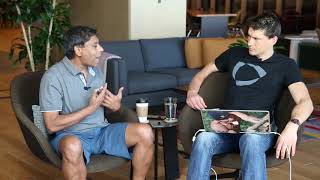
This content was created by Jeffrey Jaime, CISSP. This content was uploaded by Jeffrey Jaime, CISSP. This is a YouTube video titled "Naveen Jain and Ben Greenfield" created on September 15, 2018. It features a conversation between Ben Greenfield and Naveen Jain discussing topics such as the microbiome, human health, longevity, and the process of learning and innovation. They explore the impact of the microbiome on health, the importance of intellectual curiosity, and Naveen's approach to learning and entrepreneurship.
Chapters
Well, in addition to anti aging and longevity and kind of getting the most out of the brain and the body, one of the things that I am most infatuated with that I have been for a long time is me, the gut. Well, also my friend Navid who has already jumped into the conversation obviously, but it's the gut. And if you heard my last podcast with Naveen, you know very well that he is intimately involved with the microbiome, with the human gut and the profound impact that it has on human health and disease. I actually, and perhaps we can touch on this later on in the podcast, I mean, just two days ago I actually drank a giant cup of helminthic worms parasites from China and Thailand to induce a few so called old friends into my own gut. So if I do melt into a pile of explosive diarrhea during today's podcast.
Yes, we have a microphone to record it.
We do have a microphone to record it and a backup microphone at our feet, which could get messy. So now that we've already forayed into the wonderful world of the gut, I do want to remind you about who Naveen is because he has been on this podcast before. It was one of our most incredibly popular podcasts of last year, recorded at your house after we handled your moon rocks. Which is not meant to mean anything other than the fact that we literally held moon rocks in Naveen's office because he has had the pleasure and the ability to be able to get his hands on moon rocks from the moon. And we talked all about that in that episode, which you can go back and hear. We also touched quite a bit on biome and a lot of Naveen's past successes. His list of accomplishments are nearly too long to list, but I can tell you that just of late, he's been named as Ernst and Young Entrepreneur of the Year, been given the Albert Einstein Technology Medal, received the Ellis Island Medal of Honor, was named the most creative person by Fast Company magazine, which is a pretty incredible accomplishment in and of itself. Top 50 philanthropists of 2018, a humanitarian innovation Award. He's won a distinguished Global Thinker Award, awarded the most admired serial entrepreneur, which means that he does not have the ability to focus at all. The top 20 entrepreneurs and lifetime Achievement Award. And of course one of his latest projects that we've talked about before and that we're gonna take an even deeper dive into today, along with a lot of Naveen's keys to success that he talked about in the last episode that we did with him is Viome the Gut Meta Transcriptome and Microbiome analysis service that allows you to actually look into your gut health and is focused on changing disease around the world by looking at what's going on inside of your gut. So Naveen and I are going to hit on that and and if you want to actually look at my own biome results, if you want to access any of the previous blog posts, I have a really comprehensive article on biome and also the previous podcast with Naveen. If you want to get to know his backstory a little bit better, go to the show notes there@BenGreenfieldFitness.com viome2 that's BenGreenfieldFitness.com vome v I o m e the number two so Naveen, if you're game, I would like to jump in here. One of the things that people were most intrigued about the last time I interviewed you was how you get to know topics so well, so intimately and then actually create successful businesses serially as we've already named around that topic. You explained this process of diving in via Twitter and then reading a copious number of books and research articles on the topic. Walk us through your mechanisms for actually learning something as well as you learn something so quickly as you do it.
So first of all, as we discussed last time, once you become an expert in any field, then you somehow at that point can at most do an incremental improvement on it. That means you're more or less useless when it comes to disrupting a field that you already know a lot about. So if you want to disrupt a field, you have to be a non expert. That means you have to be able to challenge the foundation of everything that experts have taken it for granted. And I now started seven companies and no two companies that I start are ever in the same industry because you're able to essentially rethink about what the problem is. So my previous company, as you and I discussed last time, was Moon Express, where we really about how how do we create a multi planetary society? How do we save the humanities from a potential extinction? We're not just talking about saving the planet. We may be really arrogant. This planet will be just fine without us. In fact, this planet was just fine before humans came about. So the interesting thing is if we all on this spacecraft, we call lovingly the planet Earth and it's flying up in the space, if it gets hit by a large asteroid, we, the whole human species could be wiped out, just like it wiped out dinosaurs and we could be the dinosaurs. So the idea really is unless we are able to move away from one planet and to be able to distribute ourselves on the moon and the Mars and the Europa Titan and all other places, the species may completely get wiped out.
No, I don't want to rabbit hole too deeply down this hole. But what about. I've heard people talk about this before. We're spending so much time and so many resources on space. What about the sea? What about deep underneath the ocean in areas we haven't explored yet, right here on our own planet?
And the answer is yes and yes. So that means every time in life you have a choice. It's not about this or this. You should always be.
You don't have to choose between the sea and the moon.
That's right. You can do both of them. And we are doing both of them. I mean, now we are exploring the depth of the oceans that we have never seen before. And we're going to find the organism, we're going to find the lives and we're going to find the mechanisms how these lives were created very differently. And then we're going to learn about human body more than we have ever learned. And that's really the key is to be able to understand how we evolved. And that means understanding how the planet was formed, understanding how the life was formed.
And.
And someday we can even discuss the story, or maybe later today about how humans were created. And this is my tongue in cheek story of how humans were created. But it gives you an idea that despite how much we think we know about our human body, we're really a walking, talking microbial ecosystem. Hold it, hold it. Sorry. I'm so sorry.
Just keep it rolling. But we got an additional audio working here.
Oh, you didn't. Yeah, we have that one.
Which one was off your lamp? It was. I projecting enough to be able to pick that up? Yeah. Okay, good. I'd hate to have to start over. That'd be so. No, we don't have to start over. Adding clarity. Do that again. I'd have to talk about it again.
Oh, I'm not hitting, but myself. You should turn a little slighter. Your own profile complete. But then it looks odd to looking in the camera and it's not like that.
She is a professional.
Because you're just gonna be the side of your face. Yeah, the front of his face. Ooh. We can't have too much advantage.
No, but you put your shoulders toward the front. I've already got the advantage of wearing pants.
Hey, that's my advantage to people.
I don't.
Cross your legs. People love My skin.
Let's see you swept in as we were talking about the.
He said he was going to talk about how. The creation story.
Yeah, the creation story. Okay.
Yeah. I'm so sorry.
That's okay.
I wanted this to be perfect, so.
Sorry. I actually like that you did that.
Yeah. And I thought it was a good. I'm sorry. And why is that? Your dime.
Oh, my gosh.
All right.
Bear legs and bear cast.
And this is actually going to be perfect because we have some B roll of people's. So it'll just cut to another and it'll look perfect. No one will ever know.
Cool. Thank you. It'll be down. It's my muffin top.
All right.
We good? Yeah. Yeah. If we have time, I would actually. I'd love to explore a little more of that creation story. The other interesting anecdote, of course, is that when it comes to the ocean, I was recently looking into some of the longest living species on the face of the planet. There's a particular octopus species and the jellyfish species that have the ability to regenerate their own cells to live this disproportionately long period of time. I think there's a lot of things we can discover here.
Absolutely. And I think that, as you mentioned, that it completely regenerates the limb. Exactly. The young part of the limb. That means it's regrowing as if it's the first time it's growing. So it's not going back to your 40 year or 50 year or 100-year-old limb, is going back to your newborn limb. So imagine you're able to regenerate your own organs, whether it's your own heart, your own kidney, your own liver, so you can drink as much as you want. There's always a new liver ready to go.
Amazing. I don't know if anyone remembers Lorena Bobbitt in that whole incident, but that technology would have come in pretty handy back then.
It would have been a much better strategy than the glass of milk and ice. But anyways, so your strategy for learning things, Your strategy for learning.
So, you know, it's about staying intellectually curious. So to me, the day you start becoming intellectually curious is the day you die. So the only way you essentially are alive is you're constantly learning. So it's never about, you know, taking the horse to the water and making a drink. It's about making them thirsty. So the main. So the way I look at the life is that every single person, if you can introduce, inspire them to be intellectually curious. You have created a society that will always be learning and moving forward. Right. The other part that I really like is that there's never been a time in the human history where individuals and small group of people are able to make an impact. That could only be done in the initially kings and the Queen and the aristocrats and then later came by these nation states and superpowers. The same things that were done by the nation states and superpower are now being done by individuals and a small group of people. Whether it's going to space, it's no longer done by, you know, the nation states is being done by private companies. Whether it's Elon or Richard or Jeff, they're all going out and doing things that would never be done. NASA did not invent reusable rocket. It's the private companies that innovate because they constantly have the reason to be cheaper, better, faster. Same thing is starting to see in other areas of the industries. Healthcare. Healthcare is not going to be solved by Obamacare or Trump care or Putin care. It's going to be solved by some entrepreneur saying enough is enough. And we're sick and tired of the system that's constantly victimizing the humanity. When pharmaceutical companies have become parasite on humanity, humanity must come together to kill the parasite. And that's exactly what is going to happen. Our education system will have to be completely rethought and reimagined. That was designed for teaching you skills. And now we are living in the world of exponential technologies where any skill that you learn becomes obsolete by the time you actually graduate. And you have to completely rethink about learning to learn, learning to be able to solve problems, learning to be multidisciplinary rather than unidisciplinary, because problems tend to be multidisciplinary, not unidisciplinary. And coming back to how I learned is that I tend to go deep into the subject when I'm starting a company. So in this particular case, when I started on the company about human health and we really wanted to understand why is it that people get sick, why is it that people die? Why, why is it that people age? And I really comes down to is that it can't be your DNA because your DNA never changes. Your DNA is always the same from the time you're born to the time you born.
DNA is a computer program essentially made up of Alphabet letters.
That's exactly. So your DNA is really the Alphabet that can write any story you want it to write. And your RNA is really the story that's being written. So it's not the genes, the story.
That you can write, or that anyone else can write based on the idea that our own electrochemical signals that we produce based on more quantum physics principles, can actually affect the other way people think and feel and believe.
Absolutely true. So, you know, there's a whole lot more to the things. What I was trying to say was that your genes are not your destiny, it is. The gene expression is what your destiny is. And when you start to think about your gene expression, there's something that I never knew, which is if you look at just the number of cells in the human body, we have more microbial cells in our human body than the human cells. That means the cells you get from your mom and dad are less than what we essentially acquire after we are born and through this microbial ecosystem. But that's really nothing. What's really interesting is that human DNA only produces about 20, 22,000 genes. When it comes to to the microbes primarily living in our gut, they produce 2 million to 20 million genes. That means at best we are 1% human. That means all the genes that are expressed in our body, less than 1%, come from human DNA. And that's really interesting that if our gene expression is what makes us who we are and we have completely ignored the largest organ in our body and that was a big breakthrough for me.
Well, not only have we completely ignored it, but I mean, I'd argue we to a certain extent damaged it. Right. I mean, back to that old friends hypothesis I mentioned earlier. The whole idea behind that is that we have wiped out friendly species via our era of post industrialized antibiotic use and antibacterials that have rendered us microbially deplete to a certain extent.
And the EHG is right? Yes, absolutely correct. But I want to also hit on the point in a little bit more nuanced way. It's not necessary that our microbes need to be what they used to be in the past or they need to be in something. You know, if you look at the AB origins or the people who are living on the Amazonian forest, they have a very different microbes and they have very different set of DNA mutations. And we can essentially get a little bit more into science if you want. Now, for example, in the modern human DNA, we believe if you have larger copies of a DNA called Apoe4, people believe that is associated with chances of getting higher Alzheimer's disease.
Alzheimer's, yeah, to some extent. Alzheimer's and cardiovascular. You know, I'M a carrot the foe three, four. Right.
So I am four four.
So you make decisions a month but you don't need as much saturated fat.
However, what they found is very interesting. The people who are living in the Amazonian Forest have 6, 8 copies of Apoe 4 and they never get Alzheimer's. An interesting thing is that gene also tend to be extremely protective gene against infection. Since they have lot of these insects and stuff, a parasite that cause infection. ABOE 4 actually protects them from these.
Bacterial infections similar to like the sickle cell anemia gene.
Exactly.
Against malaria mosquitoes.
So sickle cell was designed to essentially protect you from malaria. And now people essentially get today obviously you know.
Sensitivity and to some extent a lot of the other comp.
Now returning back to this concept though, because I do want to delve into biome individuality and some of those things that you've talked about because since our last podcast I've actually gotten some questions about the sequencing analysis and also about how you can draw correlations. Say X bacteria allows for higher elements of health compared to Y bacteria. How does it change from person to person? And I want to get into that. But returning back to this concept of learning, walk me through the actual process. Let's say, well, is there a topic right now? Obviously you're very involved in the bio along with aging and longevity, but is there a topic right now that you are very interested in or that you would see yourself being interested in? If so, how would you become an expert on that topic?
So first of all, you know, obviously I'm spending a lot of the time not just microbiome because microbiome is a piece of the puzzle and it's an important piece of the puzzle. But you also have to look at on the host side, so you're looking at the microbial side and then you have to look at the host side that how does the microbial ecosystem releasing these enzymes and peptides and when they are absorbed in your host site, how does the host gene expression change?
How do the metabolites released by the microbiome are causing pro inflammatory compounds or anti inflammatory compound? How are they modulating our immune system? How are they modulating our mitochondria? And how they are modulating at various gene expressions that actually make us who we are? So a lot of the times what you're realizing is that even our cardiovascular diseases are not caused by the fat we eat. In fact, it's the lipids that are produced by the microbiome that lipids are the one that actually causes the hardening of arteries.
Now, just a second. Walk me through that. Because most people are under the impression that when you consume a fat, such as, let's say, a triglyceride, that it would spill into the bloodstream and if energy stores were elevated, could potentially cause excess triglycerides or fatty acid deposition. But the microbiome is rarely discussed as being a player in that scenario. So walk me through what you mean by that.
So imagine every time we think of our body as the donut, as you can imagine, so there is a tube that goes through us and there is a whole body around us. Every time you eat a food, who do you think actually ends up digesting it? So think of our microbiome. Not only is information processing unit, think of a food as the input information. So food is the information. And information processing unit is not billions, but trillions of these microbes that reside inside us. They digest the food, we feed them in turn, they synthesize them and they metabolize them. And what they release is actually sometimes can be very beneficial to us. So it could be nutrients like short chain fatty acids, or it could be harmful to us, such as lipopolysaccharide that could be highly pro inflammatory.
So the bacteria, you know, there's of course the concept of prebiotics and the idea that those would feed the bacteria. But are you saying that carbohydrates, proteins and amino acid constituents, fats in general, would also be digested by the actual bacteria and protein?
As a matter of fact. So very interesting thing is a lot of the people think that certain foods are good or that certain foods are bad, or certain bacteria are good or certain bacteria are bad. There is no such thing. There is no such thing as universal healthy food. A food that's healthy for one person can be completely harmful to another person. And more than that, if the food exactly the same food, depending on the quantity that you are eating, it can be beneficial or harmful. For example, protein is a great example. A lot of the people, at least who are listening to this podcast are in the fitness world and they believe that protein is absolutely essential to building the muscles and really keeping the body healthy. What happens is when you eat a lot of protein, the protein that needs to be digested in the upper intestine essentially starts to go into the large intestine, where it starts to feed the gut microbiome. And these gut microbiome convert these proteins.
Using fermentation. So these are called protein fermenters. And these protein fermenters when they start to ferment protein, they're releasing ammonia and sulfides and they cause massive amount of gut inflammation. Yeah. And not only they essentially make the intestine permeable, that it starts to have massive amount of gut lining being shedding constantly.
Do you think that that is why to a certain extent, in addition to excess activation of MTOR pathways, that we would see something like excess protein confirming a decrease in longevity because of the inflammation, the ammonia and sulfide based inflammation produced by the microbiome.
Absolutely correct. So you look, that's just one example. So you know, think of your microbiome again as a detoxing also. It does a lot of detoxification. So if you really think of the people who are living in say in China, they are able to eat MSG and they have absolutely no impact on it because their microbiome have essentially evolved to be able to digest, to detox msg. You and I go eat msg, we get headaches and we get all kinds of issues. Right.
I've heard that's a myth, I've heard that's a myth that was actually propagated against of all things almost like a racist myth towards Chinese restaurants wanting to limit and this could all be an old wives tag, I don't know. But the idea is that when they induce excitotoxicity in rodent models in like a lab, they give them copious amounts of MSG or glutamic acid. But if we were to eat let's say smoked salmon which would have MSG in it, or even small amounts of like Chinese food that has added glutamic acid or umami, that it all winds up being the same thing in the gut again.
Remember gut does whole bunch of detoxification. So you will see detoxification of the food that we're eating that has toxins in that. So your gut actually does a lot of detoxification. It also converts one type of nutrients into other types of nutrients. So it could eat fiber and turn them into short chain fatty acids such as butyrate. That's extremely beneficial. It's anti inflammatory compound, fixes your gut lining. It's easy, able to be absorbed in the blood and at the host side it has a lot of anti inflammatory benefits. In addition to that, what's really interesting that what we're seeing and we'll come back and describe actually how we do it as we get into wano but one of the things that we found, I mean personally to me it was just mind boggling that People who are vegetarian for generations their microbiome have evolved to convert carbohydrate into branch chain amino acids precursor to protein. So who would have thunk that vegetarians are able to convert the starch and carbs into precursor to proteins?
And is that based on their microbiome?
It's based on the microbiome. So we see them like people like me who have been a vegetarian for 10 generations and we start to see.
I remember having a wonderful Indian vegetarian carry meal at your house. I didn't miss the lamb or the goat or the chicken at all.
So interesting thing is they're able to convert them into. And we always wonder how do vegetarians got protein?
And now we know how do you not build up huge amounts of like sarcopenia and muscle loss etc from protein deficits?
It turns out your microbiome actually makes a product. And it's just mind boggling to me that you start to see that, you know, even the things that are supposedly neutral where they can be beneficial or not, allergic acid is a great example, right? So pomegranate juice and allergic acid and most people believe the pomegranate is really good for you. And the reason they believe is the allergic acid actually is neutral, it doesn't do anything. But if you have the gut microbiome that is able to convert the allergic acid into urolithin A vul a that is anti oxidative. But if you don't have the gut microbiome that can convert allergic acid into urolithin A then you at best you're pissing off your money far worse.
And a big part of that from the pomegranate standpoint is the pomegranate juice only contains a small amount of what the bacteria actually need to produce. Not only that, but the Omega 9s from pomegranate. And so if you have pomegranate, you technically want to figure out a way to eat the skin, to eat the seeds, to get all the oil and to get the juice itself because you're actually feeding those contain prebiotics, postbiotics, not the phytrients, not postbiotic. They allow the bacteria to produce these postbiotic beneficial compounds you've already alluded to. And then I think what they're called are modbiotics that you get from the skin, things that modulate the bacteria or keep certain bacteria from growing. From what I understand, I'm no pomegranate expert, but.
I read something fascinating about pomegranates and the idea that you need to eat the whole fruit, including some elements of the skin to get all the bacterial benefits of it.
And fiber too, by the way.
Yeah, well, the fiber, exactly. You're getting from the seed, the fiber and the omega 9 oils. Exactly. The thing that I want to dive into before we talk about biome technology and how you're actually sequencing the biome and then how someone can intelligently use that information. Because I know people are going to be screaming if I don't close this loop. Would be back to the concept of learning and your process. This whole idea of following certain Twitter feeds and books. I'm not going to let you off the.
I, no, no, no, I'm not going to go to. I just got a habit of just.
Going on tangent and all I got to. Really.
So first of all, when I started this company, I did not know the difference between the DNA and the RNA and I had no idea what this microbiome thing was. So first thing I did was I buy probably a dozen books. And here's why. If you only read one book, the author's view becomes your own view. When you start to read 20 or 30 books on a subject, then you're able to synthesize the information from 20 or 30 different perspectives and then you form your own opinion that's unique from everyone else because you're not looking at the things from a much farther. So all of them are looking at the trees and you're able to look at from the whole forest and say, oh, this is what whole thing is all about. And you're able to synthesize that information in a way that no author, individual has ever been able to synthesize. And then what I do is I look at every single scientific journal and then I actually subscribe to them on Twitter and that's all I need.
You subscribe to the journals feed on Twitter. What would be an example of a journal that has a feed?
So every one of them. So microbiome, there are probably 30 journals that are on Microbiome alone. And you subscribe to them. Then I subscribe to Nature, New scientists. Scientists. I mean every single, you know, if.
You look at the Twitter feeds, magazines themselves, just Twitter feeds.
Because the point is, the word of Offline magazine is gone and by the time it's printed the information is already too old. So I'm getting as of today, what papers are published this morning. So for example, I can tell you in the last two weeks alone, the latest cutting edge research that shows that mother's microbiome is now is being shown to have an influence on kid having an autism. Think about that for a second. Mother's microbiome during pregnancy has impact on the children having autism. There are a whole bunch of answers. The research now clearly shows whether the cancer therapy like immunotherapy is going to work or do not work. Does not work. Depends on your gut microbiome. Even if you do a chemotherapy, how do you recover from chemotherapy and rebuild your microbiome? And even able to recover or not able to recover from chemotherapy depends on your microbiome. Right? And breast cancer being caused by microbiome, the pancreatic cancer being caused by microbiome, the depression, the anxiety, the adhd. Interesting thing is even PTSD is now shown that people who have certain gut microbiome have a propensity or tendency to be able to get ptsd.
Now when you say the microbiome in these diseases, do you mean that a lack of.
Proper amount of bacteria, meaning a desolate bacterial profile, would cause this? Or are you saying specific bacteria in the microbiome? No matter how robust that microbiome is, the balance or the amount of certain bacteria will cause this?
I'm going to have to change the discussion slightly differently. This is why this science has never been able to be successfully deployed. And that's a big change. We did. The fact is everyone in the universe was focused on the taxonomy. What organisms are there? What organisms are here in this new gut? The fact is the organisms in themselves have very little meaning. What really matters is what is they are producing. And interesting thing is you can have 10 different organisms producing exactly the same thing like butyrate. So it doesn't matter you have this, this or that, as long as they all producing butyrate. So what matters. So what matters is not the taxa, but what actually is being done by these microbiomes.
Is there a name for that, by the way?
It's called transcriptomics.
Transcriptome. So no, but I mean is there a name for something that this part.
Of is what we call the functional analysis of microbiome rather than what used to be in the beginning. Everybody understood in the last 10 years that microbiome is responsible for almost all of the chronic diseases. There are few very rare genetic diseases that are caused by the DNA mutation and you will see them when you're born. But very few, the genetic diseases are called rare diseases. And you know why they call rare? You know they're rare. So they're. Everything else is really caused by the dysbiosis in the gut. And then when you say dysbiosis the reason we knew in last 10 years, in fact, we knew this 2400 years ago. Remember Hippocrates? What did he say? All diseases begin in the cut. And then he realized that, like we talked about, there is no such thing as universal healthy food. It really depends on the person. Is it healthy for you or is it unhealthy for you? So it's not the food that's healthy or unhealthy, it's the food healthy for you or unhealthy for you? You know what he said? One man's food is another man's poison. And then he realized the way to modulate these functional aspects of the microbiome is food. So he said, let food be thy medicine. Let thy medicine be food. Think about it. 2400 years ago, it took us billions of dollars of research, all that, to come back to the same principle, which is all diseases begin in the plant.
Amazing. Okay, so I want to know in just a moment how we would actually determine then what food is going to be healthy for us or unhealthy for us. And healthy for someone else. And unhealthy for someone else. But to go back to Twitter real quick, I know I keep kicking this horse to death. So when you subscribe, I'm intensely curious about this myself. When you subscribe to a feed on Twitter, are you then chunking those feeds into categories? You have like the microbiome Twitter feed.
And so I have a scientific Twitter feed. So I'm going to just show it to you and then you can essentially read.
Yeah, I can describe it to folks who are listening via audio.
Yeah, so look at the things here.
So you've actually chunked. You have like a health and longevity Twitter feed.
So what happens is I go there and I say, look at my list. And there's a list here and I can look at all my members. So think about the feed from mitimicrobiome, microbiome articles, microbiome movement, gut microbiome, microbiome.
These are all microbiome based journals or individuals you're following on Twitter.
And then it's nature, right? The brain facts, then neuroscience, molecular biology, microphagion.
Have you ever written an article about this that teaches people how to categorize? Or maybe I'm just a Luddite and I don't know how to categorize.
Certainly the people you follow and you can add them to your own private list. And no one else can see my private list. Different things I'm reading so you could.
Have Your own series of different cryo lists. Exactly.
And that's literally. So now in the morning when I wake up at 4am first three hours I'm going through everything. By the time the first person wakes up in our household I have now figured out every latest science research that have come out since I went to sleep and what is going on. So next day I can go and say how does it impact what I.
So I'm writing a book right now on anti aging and longevity and I could go and follow. We were talking about Peter Diamandis earlier and the Human Longevity Project and Josh Mitteldorf and Rick Kurzweil and I could follow all these people but have them not be.
Getting lumped into or confused by all the other tweets that I'm following.
That's right. And you can also start to follow whole bunch of things. So a 4M. I mean you know all the scientific journal they're talking about the things because most of the times you'll start to see if you're looking at longevity it's really the people in the longevity who is going to come up with ideas. So what I do is I follow all other tangential fields because you are the one who is going to connect the dots.
Yes.
So I am suddenly you know reading that says, you know, the mitochondria during aging changes its expression. It's not going to be showing up in some longevity journal. When I read that I'm thinking that's very interesting. Isn't that impact aging?
And you could also ask yourself how the mitrobiome affects the mitochondria.
Exactly. So most people may not realize that mitochondria is an ancient bacteria captured in the human cell. It has its own DNA. So mitochondria has its own 13 DNA different from the DNA that is from your mom and dad. And something I'm going to tell you that I haven't announced yet. Very soon we're going to be also launching just like we did the microbiome transcriptomes we're going to be doing for the host site with a couple of drops of blood we'll be able to sequence the whole blood transaction transcriptome and when you do the blood transcriptome for the first time, you'll be able to look at all gene expression from your mitochondria, all the blood cell gene expression including all the inflammatory markers. So think about just to do a cytokine panel in the blood test today. Cost thousand dollars it's going to be. My cost is going to be zero. Not.
Are you saying that this would be a way to determine whether or not you have health?
Mitochondria, healthy mitochondria, and also inflammation in the host side. So not just the microbiome inflammation or.
The gut inflammation, you can see microbiome inflammation and host inflammation.
And when I mean host inflammation, I mean all the interleukins. So IL17, IL16, IL15, IL1s. And you're looking at CRP, you're looking at TNF Alpha, you're looking at all the transcripts.
When people ask me the top two things that they can track when it comes to their longevity, I typically say mitochondria, microbiome. That's not what I typically say. Usually I say glycemic variability and inflammation, both of which are advised heavily by mitochondrial health and by the microbiome. But up until now, wearing a continuous, continuous blood glucose monitor, testing your blood glucose is not rocket science. And many people can track glycemic variability, but inflammatory markers. You know, most people are trying to do a quarterly measurement of CRP or something like that. What you're saying is a couple drops of blood, you can analyze everything from an inflammatory standpoint, but also mitochondrial health.
And here's the best part of it. There's no doubt in terms of human longevity and human health, low grade inflammation is, is absolutely the key to maintaining good health. Every single chronic disease, as we talked about from depression, anxiety, Parkinson's, Alzheimer's, autoimmune diseases, heart diseases, cancer, diabetes, depression, every one of these chronic diseases, they're just names, but they really come from low grade chronic inflammation. You don't wake up one day and say, honey, last night I was in and I think I drank too much. I might have caught diabetes today. You don't catch diabetes, you don't catch obesity, you don't catch.
You have to drink with Ben a lot.
Chronically, chronically and, but chronically low grade inflammation is what causes that. So not only understanding what is going on for hemolongevity, you have to understand both the microbial side and how the host is being impacted. What gene expressions are actually changing. So what happens is the microbiome and we'll come back to the story about microbiome are constantly working with our immune system and they're constantly working with the host side to change the host for their own benefit. And they work their job to some extent in this symbiotic relationship is to keep the host healthy only to an extent when their life is not in danger, but when it comes to protecting themselves. They would kill the host to protect themselves or they will at least harm the host because they can now move to the new host. We are purely a container for these microorganisms. Right. So they move from host to host. Right.
Fascinating. I want to ask you about biome, but the final question about your learning process. How do you read so many damn books?
So one of the things really is that I'm actually, I have to admit I'm a slow reader and I first of all I still can't read in electronic books for whatever reason it may be my age. I'm just not young enough to be able to read electronically. If it's a 300 page book, I can't read them on Kindle. I actually always buy a nice hardcover book and good thing is I travel a lot so on the plane I get plenty of chance to go sit down and read a book.
Do you ever do audio podcasts?
I love audio podcasts. I love audiobooks because that's really the easiest way of actually to be able to read the book. And you can actually speed them up at two Fs or three apps and it still makes sense.
One of the more profound things related to what you talked about regarding learning and education. I don't remember who told me this story and tell me if this is true. You actually, with your own children, when you attend a class conferences like business conferences or conferences in the sector that you're working in would bring your children along and kind of drag them to the conference and just expose them to a lot of big thinkers and like minded individuals.
That has been actually honestly been one of the key to their today.
What they are doing today is absolutely, absolutely mind blocking. You know our 28 year old is just absolutely killing it out. Not only when he was 17, he started Kairos when he went to Walton. When he left Walton he started a company, he sold that company and now he's working with eight, 10 companies that are solving the biggest problems facing humanity. He did not get sucked into building an accidental violence. He's working on how do we take care of senior affordable senior care, affordable housing, student loans. Really thinking about these problems very differently in how do we apply technology to solve these problems. How do we get rid of $45 billion that are sitting in the security deposit because they need a security deposit first last month and just simple fact he said why can't we come up with a 10 bucks a month insurance and just not have a security deposit and bring back $45 billion back into the economy?
Did he or your other children ever get bored or embettered or anything like that when you bring them around to expose them to all these ideas?
I mean, and obviously it's written, you can see that, you know, our daughter felt that she really wasn't interested in learning about science. And the fact I told her that she gets to decide her passion after she had been exposed to other things and when I took her to similar university and when she learned about neuroscience and then she learned about genetics and she said, dad, I really want to help women and the only way I can help women is to understand how their brain works, how their genetics works. And today, after she graduated from Stanford as a Stanford Stamp Fellow, Stanford Mayfield Fellow, Board of Stanford Women in Business and she's a UN Ambassador for women empowerment. She started, she's working for the head of products for a company that is focused on removing gender bias from hiring using artificial. So imagine she's still doing what she wanted to do, but she's using technology to solve that problem. And our youngest senior, that's the key, isn't it?
My wife and I were talking about this at dinner last night, about how it's imperative that you expose your child to as many new things as you possibly can because it's unlikely that on their own there are things that they would discover. From Jiu jitsu to cooking to art to science, etc. Children will err towards getting involved with that thing that they're most interested or passionate about. But that doesn't mean that you shouldn't expose them to other things, you know. And so my wife asked me just the other day, do you think the boys will just not like bow hunting?
Right.
Because I'm teaching them how to shoot the bow now, or I'm going to take them on their first hunt down in Hawaii. And I told her, I said, we'll never know unless we expose them to this. And if they go through all of this and they come back and they say, dad, I want to become a gardener and eat vegetables for the rest of my life and I never want to go hunting again, fine. But at least we try, at least we expose them.
So by the way, one of the best things I did with all three of our children, I took them to Singularity University.
And I tell you the bottom what is Singularity University?
It's all about exponential technologies and technologies that are actually on a curve where doubling or quadrupling year over year. So that means these technologies are at the curve that they going to be so far out in five to 10 years. If you don't understand their implications, you will never know how your life is going to be fundamentally changed. Right. So I took every one of our kids to Singularity University and I really believe that if ever you went, there is a Singularity University Global Summit for two and a half days in San Francisco on August 2027. Bring your children in. Just the fact they sit there, even though they're going to nod their head and they're going to say, dad, what are we doing here? The things they take away after that is going to be in their mind forever. It's going to change how they think. It's going to fundamentally change every problem they look at. They're going to think about the solution. Oh, I just heard someone talk about that. Why can't we apply this here? So every problem becomes simply an opportunity for.
I think we're going to be fly fishing on Lake Coeur d' Alene that weekend. But the next year I'll add that.
Well come to abundance.
360. A 360 is on my list. Now, vinyl, the last time that we spoke, you were using a unique form of sequencing to actually determine what the microbiome actually looks like in the gut. To do almost like a full sequencing of the gut, bring people up to speed on the technology and what you're doing right now and, and also when you do. So I've had asked to me this question about how you're actually sequencing the full genome of the gut and how this would be different than something that I think is called shotgun sequencing, where you take little snips of DNA and pair them all together. And what traditionally has been like the gold standard of sequencing technology, how is what you're doing different and accurate?
So DNA sequencing is essentially again looking at the DNA, that means everything that can potentially happen. What we do is we look at the rna. So as you know, the DNA is a double stranded thing. It's Alphabet of anything that can happen. RNA tells you exactly what is currently going on. So we use the RNA analysis, but to analyze the RNA is still the same thing. It's still the shotgun sequencing. It is identical to what the DNA sequence will be. Except instead of doing DNA sequencing, we are doing the RNA sequencing. But underlying technology is still the same, Illumina identical.
What about the argument that RNA could degrade or be unavailable before it even reaches the stool?
First of all? So rna that is only true for the dead rna, right? So what happens is when you're doing a DNA sequencing that is actually one of the Biggest problem is you see lot of the dead stuff. So if you were to look at the food that you are eating, whether it's the plant based food or the meat based food, you're going to start to see a whole bunch of DNA that's coming from the food. And by the time it goes through your digestive canal, it is all dead. But you'll see the dead DNA, because DNA lasts forever. You're going to be able to see all the dead DNA and you don't know those things are actually there or they're simply dead. RNA as you know, obviously degrades, but in this tool it's still replicating. And we are able to. As soon as you take this tool out and you put in the test tube, we preserve it right away so instantly it gets preserved. We lyse the cell, we open up the cell, preserve the RNA and it's gone.
Now a lot of people.
They might not be aware, so form them. Now biome is a poop test. Basically you send me a tube and I don't actually poop in the tube, I poop in a. I forget what it is now. Hot dog tray or toilet paper and you swab it and put it in. Another question that I've gotten is how you can say that a small sample from one daily poop is accurate versus analyzing it over selecting three days worth of stool analysis and getting all the different variables from the store.
So first of all, let me. There are two parts to the puzzle. One is can we take it from one place and is it good enough? And second part is if I do my test today versus I do my test, you know, tomorrow, is it going to be much different? So we actually did all of that. So we tested the things in different places in this tool and then we took the same person the things for 30 days in a row and then we took 20 different people for 30 days in a row and said just eat for two hours, just eat now.
30 days in a row.
Yeah. And then interesting. I mean they poop every day, right? So it's not like lock it up.
It's just so much harder to poop when you know, you got to put it in a tube.
You know, you're talking about like just touch. Anyway, let's not get there too much. But the point is we were able to say exactly who this thing belongs to for all 30 days because the microbes, even they change a little bit unless you change your diet drastically. So if you were a vegan and you change your diet to become a You know, you start eating meat or you were completely on this diet and you change it to this diet, then you fundamentally your microbes will change. Otherwise we are able to predict that these are the same people that came from. That means there is minor change, but it's very temporary and transient.
Got it. So you've actually done your own.
We absolutely have done all the studies that they provided.
Amazing. Okay, so once someone has actually tested their stool and they've sent it off to you, what happens next?
So we essentially take that stuff. And again, remember, as soon as you put in the test tube, we have now preserved this RNA. And this RNA preserver would last for at least 30 days. So you can ship it in the regular mail and it doesn't really matter whether it gets to us tomorrow or it gets us a week from now. So we get the samples from UK and it's just totally fine. And then we take that sample and then we prepare it. In the prep side, what we're doing is really amplifying, removing some of the RNA that, that we know exactly what it is, and we're able to remove what we call housekeeping rna. And then we sequence everything that's out there. And by sequencing and amplifying it and sequencing it, we are able to now see exactly how active each of the organisms are. But more importantly, now we can look at these transcripts of what is going on, and by looking at the different pathways, we can say how much of butyrate you are actually producing, how much of LPS you're actually producing, how much of flagella is going on, how much of vitamins, the folic acid or vitamin K you're actually producing, and then we look at what you're capable of producing. And then we go take all of this information that's coming from your RNA test, and then we take all of the information that you provided us and then we feed it all into the RT4.
When you see the information like surveys and questionnaires, the questionnaire answer as you.
Complete the biome and you take all of that, then you feed it to the artificial intelligence. And artificial intelligence does a couple of interesting things. We have a complete food ontology. That means we have now the nutrients in each food, what they are. And then we see if these food were to come in contact with these microbes, what this ecosystem will do. So, for example, if you say, hey, I'm eating spinach, and I say, oh, Ben, spinach is really not going to be good for you, you say, how can you possibly tell me that Popeye was wrong. Popeye was always right. You need spinach.
This happened to me, by the way, with green beans.
So interesting. Lazy, remember? So spinach has oxalic acid, oxalate. Unless your microbiome is 80 able to detox oxalate. So if you have oxylobacter that's able to detox oxalate or oxalic acid is going to be harmful to you. So we look at this stuff and say, are you actually able to metabolize this oxalic acid or not? And if you don't, you can't. Then we have to say hold off on that spinach. And then we look at your poop and say, you know Ben, you really, really need to cut down poop. Because we see a tremendous amount of ammonia and sulfite being produced in your gut because those protein fermenters are fermenting all the protein, excess protein that's not being digested. So you need to ease off on that.
Right? When these changes are then made, what have you been seeing in the follow up? What actually happens as far as either the way the microbiome changes or even the way some of those things we were talking about, about like inflammatory markers or glycemic variability changes, how do you actually track.
So let me give you. So I think you have multiple questions, so I'm going to break it down answer for you. So obviously we have people now done it one, two or three tests and when they do, what we see is the inflammation activities continue to come down. So we have inflammation activity score. In your biomap, you can see, you can start to see a metabolic impact, metabolic flexibility or the metabolic score is going up, then your digestive efficiency is.
Going up and how are you measuring them?
So all those things essentially come up with tens of underlying scores for each score. There are 10 underlying scores. Under each of those 10 scores we have thousands of gene expression. So we say these genes are over expressed four times or eight times, these genes are under expressed and then we look at these pathways and see if these genes are over expressed and these are under expressed, are they producing more butyrate or less butyrate? Are they producing more LPS or less lps?
Got it. So you can basically take the gene activity and extrapolate that to let's say inflammatory markers without necessarily having someone send in their sample along with let's say a tube of blood to test HSCRP and fibrinogen and all these other things.
Those things are on the post side and I was mentioning that instead of Testing that on the host side, we'll again be looking at the transcripts and gene expression and those gene expressions in the wound. Remember when DNA makes rna, RNA makes protein, Right. So by looking at rna we can see exactly what protein is going to be made. So by looking at the blood gene expression, we'll be able to say how much of these inflammatory markers, the cytokines CRP is C reactive protein. You'll be able to measure and say how much of CR is being made.
Will you eventually be able to take these, this new measurement you alluded to a while ago? Take those? That's a blood measurement, Right? So can you take those and then combine them with the microbiome data to actually see what's going on in the host level even more specifically?
Absolutely.
So you pair that with the microbiome analysis.
Very soon, when we launch the blood transcriptomic, it's going to call genetic intelligence test. So we have now the gut intelligence test and we're going to have a genetic intelligence test. We're going to be able to now take your microbial gene expression, the host cell gene expression, your phenotype information, and then feed that into AI along with the thing, the food ontology. And say how that feeds is going to be impacting you if you take this supplement, how is that going to be impacting you if you take these things, how is that going to be impacting you.
With the goal of reducing the inflammation? Because at the end of the day, if you can get rid of the inflammation, everything else losing weight. So what's interesting is we don't go focus on.
Diagnosing a disease or reversing a disease. The symptoms, the disease are simply the symptoms of chronic conditions. People name them these diseases. There is no such thing as disease. They are just your body is not at ease. So it's at dis ease is what disease is. So when you bring your microbial ecosystem, bring your body into homeostasis and you reduce the inflammation, what pharmaceutical companies do is they love chronic diseases. So what they do, they never want to cure any of the chronic diseases. They don't really care what's causing them. They want to suppress the symptom. So you have autoimmune diseases. What do they do? Suppress the immune system.
Don't worry about Serotonin and dopamine are heavily influenced by.
No. 90% of all the serotonin produced in the human body is produced in the gut. In the gut, in the gut, not in your brain. Almost all the neurotransmitters are either produced in the gut or consumed in the gut. So think about for a second. Your gut and a brain are connected through vagus nerve, right? And that vagus nerve is bi directional. So your brain impacts your gut and your gut impacts your brain. And that is yourself.
From the time you're in the fetus, the enteroconstructal nervous systems are neck.
In fact, even before think about from an evolution perspective, lot of the original organism didn't have the brain, they all had the gut. This is, people say this is a second.
More from Jeffrey





The Solution to Aging Might Be Closer Than Anyone Realizes - With Ben Goertzel


