Organic acids testing measures metabolic byproducts to reveal B-vitamin deficiencies, mitochondrial dysfunction, and microbial overgrowth. Specific markers like methylmalonic acid point to B12 status, while quinolinate indicates inflammation. Results can explain fatigue, anxiety, and depression.
Questions this video answers
July 3, 2015
NutraPath (Australia), Genova (UK/USA), Great Plains Lab (USA)
me@michaellanetnaturopath.com
Methylmalonic acid
Inflammation
Chapters
Hi, it's Michael from Planet Naturopath. Today I'm going to talk about one of my favourite functional pathology tests, and that's the organic acids testing. The organic acids testing measures different metabolites of cellular metabolism. It's quite a detailed test and it can be quite confusing when you first look at it. So let's jump right in and have a look at an organic acids test and I'll explain it as we go.
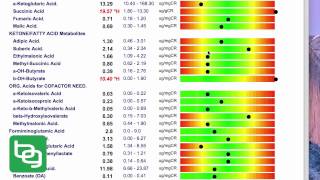
Here's a look at a organic acids test from NutraPath in Australia. These are also available from Genova in the UK and USA and Great Plains Lab in the US as well. So the first two markers, lactic acid, pyruvic acid, are due with carbohydrate metabolism, and there's a few issues here with carbohydrate metabolism. So.
This can indicate a lack of lipoic acid, B vitamins. We never take one or two markers in isolation, though. We always look at the big picture before we look at any nutritional supplementation, plus the person's signs and symptoms and how they're feeling.
All these markers are to do with the citric acid cycle, which is to do with energy production. So the low alpha ketoglutaric acid here can indicate low B12 and also low amino acids. So supplementing of branched chain amino acids. And further down here we can also see that they are low in B12. The methylmalonic acid is a direct marker of B12, B12 metabolism. So you'll be looking at adding in some methylcobalamin there. Succinic acid should be on the lower side. So high succinic acid indicates poor mitochondrial function and you look at the B vitamins and lipoic acid there as well.
The fatty acid metabolites is this section here and their body is not burning fats very well. The beta hydroxybutyrate. For a normal person, this would indicate they're in ketosis if they're eating a high fat, lower carbohydrate diet. But this person is not eating a ketogenic diet, they're just having issues with burning fat.
So this is a good marker whether you're in ketosis or not.
The next lot of markers look at B vitamins, B1, B3, B5, the methylmalonic acid which we spoke about. This is to do with folate metabolism, so these ones are to do with the methylation cycle. So as well as supplementing with B12, you probably look at increasing folate. The kynuric acid is a metabolite of tryptophan metabolism and the rate limiting factor here is B6. So once again, you'd be looking at adding in a B complex to help with this person.
This marker here, beta hydroxy, beta methylglutaric acid, they don't make any of these words easy to pronounce. This is to DO with coenzyme Q10 metabolism. So this is another factor that's going to be affecting the citric acid cycle up here.
Other markers to look at with this one are pyroglutamic acid. This is to do with recycling of glutathione. And the benzoate and hipporate are to do with phase two liver detoxification. So once again, this comes back to.
You want to see the bacterial dysbiosis markers on the lower side and also the yeast and fungal markers. You want to see them on the lower side. This would look indicate a Candida infection here.
And finally we have the metabolites of neurotransmitter metabolism. So HVA is the metabolite of dopamine production.
And VMA is the metabolite of adrenaline, noradrenaline and 5 HIAA is the metabolite of serotonin production. Quinolinate is an indicator of inflammation. So not only do they have low levels of the neurotransmitters, but there's a lot of inflammation. So this is going to be a cause of their anxiety and depression. So looking at optimizing the neurotransmitters, once again, the B vitamins can help there possibly even some 5 hydroxytryptophan. Looking at what's causing the.
High levels of quinolinate, it could be the Candida, could be an infection or even a high inflammatory diet.
So as you can see, the organic acids test is quite a complicated test, but it gives a lot of great information about mitochondrial function, how your body produces energy, fatty acid metabolism, nutrient deficiencies like folate, B12 and the other B vitamins, bacterial dysbiosis markers and neurotransmitter metabolites. So it covers a lot. So if you're someone who's feeling fatigued, has issues with anxiety, depression, this could be a great test. Or if you know you have things like MTHFR and you want to know how your methylation cycle is working, this gives you good indications of how the cells are using the B vitamins and not just what's in the blood. If you'd like more information, contact me@michaellanetnaturopath.com and just say that Ben sent you, and I'll look after you. Thank you.