Qi Gong For Athletes: How To Develop Unstoppable Speed, Conditioning & Mental Resilience With Qi...
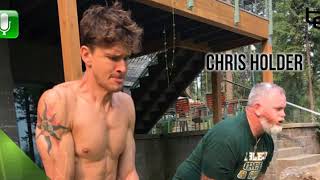
YouTube interview (Aug 31, 2017) of Ben Greenfield with guest Chris Holder, a medical qigong doctor, Master RKC kettlebell instructor and Cal Poly strength coach. The conversation explains qigong basics (purging sounds, Five Yin Organ exercises, Lower Dantian, tongue positions, 'turtle' breathing, beating/drumming), contrasts Taoist/Chinese medicine approaches with Western models, and describes two applied studies: a doctoral/clinical program with in-season athletes and an eight-week volunteer study (~110 athletes) showing improved consistency, recovery and reported performance and a reported ~20% greater strength gain in the qigong groups versus controls. Practical integration advice includes pairing qigong with kettlebell swings (intention, chi-packing, pelvic 'wink'), brief sidelines treatments, and resources (Dragon Door, Breaking Muscle, BenGreenfieldFitness.com holder).
Questions this video answers
August 31, 2017.
About 110 student athletes.
Eight weeks.
Around a 20% greater increase in strength for the qigong group (per interview claim).
Chris works with 22 Division I athletic teams and over 500 student athletes (as stated in the interview).
Chapters
Hey everybody, it's Ben Greenfield. This is one of those way cool episodes where I actually had an amazing person come up to my house here in Spokane, Washington, hang out for a couple of days, doing some amazing, in this case, kettlebell and Chinese qigong practices. The guy's name is Chris Holder. Amazing, dude. This podcast was so much fun. We sat in my office and he's this enormous like 350 + pound former football player, qigong physician and the guy is just amazing. Strength conditioning coach for Cal Poly, I believe as well. Or is it Cal Poly? Yeah, it's Cal Poly San Luis Obispo, California. Anyways, you're gonna enjoy this. All the shownotes over@bengreenfieldfitness.com Holder this podcast is brought to you by Red Juice. Red Juice, so Organifi, the same company that makes the amazing greens superfood blend that I munch every morning in my smoothie. They make red juice now. Exhausting. Now I got to put their red juice and their green juice in my smoothie. But I'm not complaining because it's like a side beet pomegranate, which is all these things are like Viagra for your full body, these red pigmented plants. And they've got cordyceps and Siberian ginseng and rishi mushroom rhodiola. Super good stuff. You get 20% off. Go to BenGreenfieldFitness.com Organifi It's Organifi with an I. BenGreenfieldFitness.com organifi Use discount code BEN to get 20% off of your order. This podcast is also brought to you by four Sigmatic Shrooms. So you can get sampler packs from these cats. And these are some of the best shrooms you'll ever have. What their sampler box gives you is pretty much everything you're gonna find in my pantry that I like to mix in coffee. I'll dump it in smoothies, I'll dump it straight into my gaping maw and just chew on these mushroom powders. They have immunity, which is chaga. They got pre workout for cordyceps. They've got brain support, which is lion's mane. They sleep, which is reishi. And all this stuff is dual extracted, super high quality. I know the guys that make this stuff, they're the real deal. They know they're mushrooms. Let's just say that. So you can try this sampler pack pretty easy. You go to4sigmatic.com sampler it's a good option to be able to try out all their stuff. You can get discounts on anything except the sampler pack with code BenGreenfield. By the way, unfortunately, the sampler pack the discount code doesn't work on, but it works on everything else. So go to 4sigmatic.com sampler and use coupon code BenGreenfield if you decide to get something other than the sampler. So enjoy. In this episode of the Ben Greenfield.
Fitness show, most of the strategies that Western doctors use to address those illnesses are more about eradicating what's there. And we don't get into the thinking of, okay, what started this? And it helps you kind of keep things consistent. It goes back to consistency. Intention and consistency is the secret to all things good. There are studies all over China that shows that one of the main things that Qi Gong does for cancer patients is gets their inflammation markers way down.
He's an expert in human performance and nutrition, voted America's top personal trainer and one of the globe's most influential people in health and fitness. His show provides you with everything you need to optimize physical and mental performance. He is Ben Greenfield.
Power.
Speed, mobility, balance, whatever it is for you, that's a natural movement. Get out there. When you look at all the studies done, studies that have shown the greatest efficacy.
All the information you need in one place right here, right now on the Ben Greenfield Fitness Podcast.
Hey, you guys, welcome to the Ben Greenfield Fitness Show. I want to to actually read you a quick quote here that I happen upon on this website. It's a fantastic website. It's called Breaking muscle over@breakingmuscle.com and the quote I came across was, was the following as I was reading it, an article about qigong and qigong for athletes. That quote says, what separates us from the rest is something that happens every morning around 11am I walk over to the stereo, change the music to either Enya or Llama Guillerme. And the room stops. Those athletes who have been involved with this process all gather around, we walk over to a central space in the room and we begin a practice that has been performed for thousands of years. Now, that practice that the person who wrote that sentence is referring to is something that I personally just got done doing in my own backyard here in Spokane, Washington. And this guy is the head strength conditioning coach at Cal Poly in San Luis Obispo, California. He works with 22 Division 1 athletic teams and over 500 student athletes there. And he's actually a doctor of medical qigong. His name is Chris Holder, and he came all the way up to Spokane to not only train me on kettlebells and qigong for athletes, but to fill my head with the host of knowledge that he has on this blend of western strength training practices in Eastern medical and spiritual practices. He has actually co authored a study looking at the effect qigong on strength gauge in collegiate athletes specifically. And he's one of the few guys I know who has merged badass kettlebell strength training and extreme athletic performance with what many people consider to be Eastern woo woo mysticism and qigong. Chris is one of the only 13 master RKC kettlebell instructors in the world. He's known in many strength training circles as the first person to introduce kettlebell training to collegiate sports. And he works with people in the NFL, the NBA, the mlb. He writes, like I mentioned, for breaking muscle train, heroic for dragon door. He's a wealth of knowledge. He's right here in my office with me. So Chris, welcome to the show.
Man, that was quite an introduction.
Well, I worked hard on it.
Yeah, that's good.
How'd you like that smoothie I just fed you?
It was good, very good. Lots of stuff in it.
Yeah, there was a lot of stuff in there.
Yeah.
I gave Chris my superfood smoothie comprised of. We had nettle and mints that the boys went out and picked yesterday. We had chocolate powder and cacao nibs and green juice powder and turmeric anti aging tea, little fish oil.
That's the main reason I'm here. I wanted to get it made by the man himself.
You just wanted the smoothie? That's right, the smoothie and last night's homemade tacos.
That's right, yeah.
So Chris, that quote that I started things off with as I was explaining that practice that you do with your collegiate athletes and exactly what you took me and my boys through in the backyard just now. Tell me about that. What do you do with those athletes each morning? What did we do this morning?
So what we ended up doing was.
The study that you had mentioned in the introduction. We took about 110 student athletes, college student athletes, through an eight week sort of experiment on qigong and its effects on strength gains at college age. Of course, people. And we had such a phenomenal result from the kids that ended up doing it that when we were finished, everyone was like, okay, are we done? Are we gonna continue on with this? And so I was motivated to keep the practice going. So we picked a kind of a neutral time during the day for the athletes to come through and when they're away from class and the kids that were there that knew the practice, we would literally just turn the stereo off and they knew that we were going to start. And the kids that wanted to participate did. And the ones that didn't would continue to train and do what they needed to do. But that practice we put together is something that's been used for, like I said, very long time. And it's got some accents of things that I wanted to add to it that would be very beneficial for athletes for recovery and for their sleep and focus and all the things that go along with being a full time college student and an athlete playing, you know, Division I athletics. And so we would just get together and it takes about 20 minutes. You saw this morning. We went a little bit slow this morning because I was explaining kind of piece by piece. But once you do it, you know, a handful of times, it's very smooth, there's no talking and it's just, it looks like a Tai Chi class to anyone else who's like walking by now.
We went out there and we stood with our feet wide in the grass and there was, for example, like chanting and humming that we did for certain organs. What was that all about?
So we call those purging sounds. And.
If you look at Chinese medicine and you kind of understand what they're trying to do, and we talked about this a little bit before outside, but there's a big purging time that you do when you're working with anybody who's going to do, whether it be acupuncture and that stuff, and then there's you tonify and regulate. And that's the three sort of big health benefits of Chinese medicine. The toning that we were doing was helped to purge various organs. And those sounds are very specific to those organs. So very much like tuning a guitar or a piano. And you're looking for a very specific result and you're trying to target something. Those sounds will zero in on a specific organ and purge out anything that's dank or sort of stagnant energy.
Now when you say purge, you mean when you're making a certain sound like, like what was the sound that we made for the liver, for example? Because I really actually felt like I could feel key like coming or chi, whatever you, however you pronounce it, coming out my liver. When, when we were doing this, what was that sound?
So it was guo, so it's G, U, O. And we, we dropped that sound. So it was gwo. And we would kind of hold that O sound and you could feel the the actual organ vibrate. And the idea is that the entire body, if you look at it like through the matrix of it all, everything's energetically got a. Got a shell to it. And as the, as the body goes through the day, as the body goes through all the experiences that it has, you know, your relationships, the environment you're in, your diet, your, you know, whether you're sedentary or you're full of, you know, do a lot of exercise.
Chi gets caught up, gets hung up, gets kind of blocked and can stagnate there. And if that qi is moved around or purged out, then you, you know, over time, that's when you start to see some of these funky disease patterns begin. And so for what we did, the practice that I did with the athletes call is called the Taoist Five Yin Organ exercises, okay. And the yin organs are kind of the primary focus for the. The medical stuff that I do. And one of those organs is the liver. And with that purging sound, we're able to get some of that stagnant energy. Some of that stuff that's kind of sitting there like pond water. Think of like a pond sitting there that's got flies and just sort of garbage just kind of gathering up or moving some of that Qi out. And then later on in that practice, we, we tonified and sort of replaced what we, what we got rid of. And so the purging is a really essential part because it's like pouring dirty water in or pouring clean water into a dirty pool. It's still dirty. And the idea to go in and clear out what's not helping, clear out the things that are unhealthy, and then replace it with clean and move forward from there.
So we did liver, we did spleen, we did kidney, we did heart and lungs and lungs. Those are the five major organs that you focus on with this practice?
Yes, it's called the five yin organs. Now they have their Yang pairing, and we'll get into the whole yin and Yang thing later on. But those are kind of the drivers to the human body as it relates to Chinese medicine and kind of how we look at things.
When you got to my house last night, you laid me on a massage table. Actually had my massage therapist swing up to the house yesterday and drop off the table so it'd be ready. And it was kind of funny. My kids started a fire while you were working on me with the little palo santo incense stick they were burning. You put on some massage music and you had me lay there on the table. Tell me about what you did on me last night.
And also if that's something you do with the athletes that you work with.
So that's kind of a long story.
And for your listeners, it's, sorry, we got time, dude.
I know we got plenty of time.
So medical qigong is about me moving the energy on you. Okay, so what we did last night, you were getting in a clinical setting, you were getting basically what a sick patient would get. You come in, lay down on the table.
The idea is for you to relax as much as you can and kind of forfeit to the process. And then the doctor, me being that person last night, stands over you and goes through the whole process of the purging, the tonification and the regulation that right there. Like I said, it was a very clinical setting with the athletes. We have done some of that. I've had to create protocols that allow us to move them faster through. There's some, you know, some interesting sort of situational things where me being alone with an athlete is not looked highly on. So we had to figure out ways to do it where around the other. What do you mean?
Why does that not look tightly on?
Well, you know, if I have a female athlete on a table and I'm.
Alone in a room, waving your hands over. Okay.
Right. It just gets. You can get into some sticky perceptive things. And so we've created a standing protocol that we do right in the middle of the weight room. And everyone in the room can see it happening. And everybody's so used to it now that the athletes can come through. And it helps cut my time down because what we, what we did last night took about 20 minutes from start to finish.
Right.
And it was, you know, fairly thorough. I was giving you one of the protocols we put together for sort of athlete, like a performance based protocol versus a protocol for, you know, Ms. Or a protocol for bone cancer or something like that. And we went through and just did basically what you did this morning, but I did it for you. And that's where we get into more of the esoteric kind of the woo woo stuff.
You're using like, like your hands and energy medicine to do the same thing.
Correct.
Lungs, my spleen, my. My liver, my heart. And what was the last one again? The kidneys.
Kidneys.
And you were just, you were walking around me. You're moving. I could feel the energy coming off your hands. It's kind of freaky, right? And I mean, like, in a very intense way. I had my eyes closed and I could tell exactly where you're at. Because I could feel this intense energy coming off of your hands.
Sure.
And there were a few times when you, like, grabbed my head and when you slipped your hand under my back, you were just basically hitting some of those same organs.
Yeah. And accessing them from different sort of places. So, like, when I go to access your heart to. To do the heart work, I go through your back to sort of set a. Imagine me spraying a hose from your back to the front and sort of pushing out anything that's there that needs to get moved out. And.
The various hand placements. A lot of that has to do with just getting your body in position so that I can access what I need to access.
Versus, like, what we did today, where your intention and a lot of the movements and just sort of that practice kind of carries us through all the work.
So you can do this work on someone, or you can teach them how to do this work themselves, like we did in the backyard today.
Correct. So the medical side of it is like, again, me doing the work for you. And then.
We have tons of practices. So when I was going to school, the first year of our schooling was basically us cleaning ourselves up so that we would be in a place ourselves to work on someone and not introduce sort of our own garbage to the receiving patient.
A lot of what you did this morning was some of those practices that we did during that time for our own cleanup. And then when you're on the table and I'm working on you, I can go as deep as I need to go in terms of investigation and working through some of the stuff that we need to kind of work through, whether it be traumas or old energetic patterns that we're trying to break.
A lot of this stuff is stuff that seems like you could actually talk about, but have it be a little bit more kind of. Kind of woo and invisible. You can't see the energy moving.
Right.
You can't see the stagnant chi coming out the liver. You can't actually witness a lot of this stuff or even really quantify to the same extent that you might be able to quantify, like the swings we were doing this morning progressing from a one to one and a half pooed kettlebell, for example. Tell me about any investigations that you've done, because you said you had kind of looked into this with some studies on how it actually affects performance. So what have you actually found when you look at this from more of an analytical study perspective, as far as the efficacy of this stuff for, say, improving performance?
The Issue that we have with qigong, and if you do any sort of real heavy research is the Western scientific model has some pretty stiff and very rigid things that qualify what we consider to be science. And when you look at a lot of the Chinese medical studies, especially when it comes to things like qigong.
Our Western model won't necessarily support the way they do it. There's some looseness to what they do. The sample sizes are small. So my goal when I was going to school and finishing up my doctoral thesis and then the study that we did afterwards was to try and marry the two together, get enough.
Of what I needed to get done in terms of the qigong piece and then back it up with all the, the rules that we have with, with, with standard, you know, Western scientific regulations and all that good stuff for getting published. And so the first big study that I did again was my doctoral thesis and we took three full teams. It was football, it was women's soccer and softball. And we.
Broke the teams basically in half. We took volunteers, anybody who was willing to participate in this. And then those teams, when they were during their, during their in season time, we brought doctors in from the school that I was attending and myself. And we would do two medical qigong treatments, very much like what you received last night on those athletes participating. And then we put together this, you know, for pretty thorough questionnaire and both the qigong interventions group and our control group, who were just other athletes playing on those teams, filled out questionnaires after every game. And what we were trying to do is we were trying to get some footing and understanding how they were feeling during competition, how they were sleeping. Some of those kind of arbitrary variables that we don't really consider when we talk about performance. So and so rushed for 250 yards and so and so passed for. We were looking for well how, how well did that running back sleep before than the game? How were they feeling in terms of their nerves before the game? Where when at the end of the game could they have gone another quarter? How was their energy, things that they could sort of quantify and what we ended up seeing with that group. And it was pretty amazing. We were run this the statistics is you would see both groups would have great days, they would have great games, you know, so and so would have, you know, great sleep at night, all that other, you know. But when we got into really looking at the information over time, the qigong group was on a really steady incline and they stayed in really high, what we consider to be high positive numbers. The whole way, we didn't have a lot of fluctuation from good days to bad days, whereas the other group would experience those bad days and you'd have these radical swings left and, you know, up and down. And that was one of our first tells, that consistency with qigong, just like anything else, it's like getting strong. If you're going to plan on getting strong, you can't just sort of whimsically train. You have to be very consistent with it. And.
Continual exposure to that stimulus. Qigong is the same way. And when we were consistent with it, you could see a really clear pattern with the groups that we're receiving. And then the next study. So I had a buddy of mine who came to work for me at Cal Poly, was getting his master's degree. He's now at lsu and he's taking some of these things with him to lsu. When he was finishing his master's degree, we were putting together his thesis. And what we ended up doing was again, what we showed you this morning. We took three teams again and we asked for volunteers and it was just, you know, all comers, whoever wanted to come, and they had to basically sign up for eight weeks of getting up at six in the morning and attending very similar to what you went through this morning as a big group and teach them the whole protocol.
So I died at 8:30am instead of 6:00am thank you.
And with two kids, two young kids, it was perfect this morning.
And what we ended up seeing with that we were looking for can a regular qigong practice actually impact strength gains? So we took those three teams, we broke them up, we put everybody on the exact same lifting schedule. So they're, whether you were volleyball or you were football, we were all doing the same sort of kind of gpp, general prep stuff. We tested them at the beginning of the eight week study and then we tested them at the end of the eight week study. And again, what we ended up seeing was the strength gains were they weren't close the differences. And off the top of my head, I can't remember percentages, but we're talking about probably a 20% increase over what the other people were receiving from their training.
You mean the qigong kids were getting a 20% strength increase compared to the others?
Compared to the 15 to 20% that, that the. Every day they were doing this, Monday through Friday.
Okay.
And 20 minutes less than that because when you, when you kind of get, you know, kind of humping through it, once you know it, you can kind of fly.
Okay.
So we would Be in and out in probably 15.
Wow.
Yeah.
It was exactly what we did in the backyard.
Exactly what we did. But imagine now picking up the pace a little bit and we don't have to talk. Got it. And you just. The kids knew. I mean, we spent about two weeks probably, you know, letting them know what they needed to be thinking about, kind of where their intention is. They knew what to do. And then at about two weeks, I stopped talking.
Right.
And we just kind of roared through it. We had guys put on like a. Like a front squat, max over £100 in eight weeks, which is. Those numbers just don't.
Crazy.
It doesn't compute. Those are like PED numbers. You know what I mean?
Yeah.
And we had lots of guys have.
That type of performance enhancing drugs.
Right. And it was. It was phenomenal. I have kids. We have a guy right now who's in camp with the Green Bay packers. And, you know, he's a freak athlete. He's a linebacker for them. And he'll tell you. And this was during his. It was his sophomore campaign. He felt the best, he felt the strongest, he felt the sort of the most together during the time we were doing that study. And I've heard that actually several times from the kids who are involved with.
Was quite pretty remarkable. And we're in the process right now of getting all manuscripts together for publication.
That's crazy. Yeah, you'll have to send it to me and I'll tweet it out once you guys get that manuscript published, because that's crazy. Now you're a big dude. I mean, you're sitting here in my office and you look like a freaking linebacker yourself. But your bio says your medical qigong. Doctor, I know you played football, right?
I did, yeah.
Back in college.
Eastern Kentucky.
Okay, cool. Linebacker.
No, I was a center.
Okay. Yeah, yeah. All right. Yeah. Same size, right? Or bigger?
Bigger.
Yeah, exactly.
And a little softer too. But.
So how did you go from playing football to become. I don't even know what a medical qigong doctor is.
So football led me to the strength conditioning. So I have sort of two hats that I wear. I'm strength conditioning coach at the college level. And then.
I was working. I used to work at San Jose State and I was working with a couple of yogis as like private training. And they were very into, you know, everything spiritual.
You were training them or they were training you?
They were. I was training them.
Okay.
So what would happen is they were coming to me because. Because of the hyper flexibility. They were starting to get injuries and they had come to the conclusion, okay.
So you weren't working with them to train them with yoga, you were working on to train them, strength condition.
Right. They came to me for kettlebells, like the stuff we did this morning.
Okay.
And developed a great relationship with them. They're phenomenal people. And about a year into that.
Our personal training sessions that we were doing, they came to me and they're like, hey, this legendary guy in Monterrey. So for those of you who aren't in California, Monterey and San Jose are about an hour and a half away from each other. This legendary kung fu master, Qi Gong Master, is going to be coming out of retirement to teach this program one time. And it's a doctoral course. And the two, these two individuals that I'm talking about, one of which was a doctor also of, he's an anesthesiologist. He knew my background. We actually did some studying together in terms of performance stuff, sea health and those things. He's a kettlebell guy now also. But he was like, this is something that would really round out my toolkit. And to be perfectly honest with you, Ben and your listeners, when it was first mentioned to me, I was kind of like, I have. I don't even really know what this is about. I don't know if I have the time and the money to invest in this type of thing. It's going to be a four year thing. I don't know if I want to do this, especially just purely, just off of a recommendation, someone's goal recommendation. The only other time prior to this that I had had any kind of qigong experience was my RKC in, I think it was April of 04.
What does RKC stand for again?
Russian Kettlebell Challenge.
Right. Which I'm going to go do with you in February.
You better be there.
I'm expecting the kettlebell master dude.
That's right. On Sundays, John Duquesne, our CEO, he's a qigong guy also. He took us through a recharge, which was a morning thing, very similar to what we did with you this morning. But his style. And that was the only time prior to this discussion with these two personal training clients that I had that I remember being. Had been exposed to qigong so long.
And John Duquesne, he's. He's the chief editor at Dragon Door Publications, which is where you write.
He's the CEO of owner. Yeah, he's the, he's the top dog.
Good, good guy. If you guys, if you guys want to go listen to the podcast That I did with John Bruni, who's another Dragon Door author along with Chris. Or just go over to BenGreenfieldFitness.com DragonDor and do a search for some of Chris's stuff over there. But Dragon Door Publications has good stuff like, that's Pavel Zatzolin. That's a lot of these old school kettlebell guys. Russian martial arts training. Very cool website.
When John started that publication, Duquesne, it was a martial arts thing. So all his books. He actually published My Sifu, which is really interesting if you go way back into the archives. He published what? My Sifu. So my teacher, my qigong teacher, Sifu was like, master teacher.
Okay, gotcha.
It's sort of that honor, respect thing. But I found out years after getting involved with Dragon Door and then meeting My sifu, I was like, he knew who John was just in passing because he published him before.
Wow. Okay, so you were training these two yogis and you were teaching them kettlebells, and at that point, all you'd known about qigong was some of the stuff that John had brought you through.
Right. And it was like, again, one time. And so, trying to make a long story short.
You have to make it short.
Yeah, the, The. They were pushing me to, To. To join them with this. We had become very close, as you know, with some of your clients. Yeah, that just happens. And.
They, they, they continued to, To. To push the agenda. I was like, I don't know. I don't know. I don't know if I want to do this. And so after about two or three weeks after the program began, I was like, listen, I don't. I'm not into this. You can go ahead and drop it. And so they started going to these classes and they were doing their stuff, and then it came up again, and I had finally decided that I was going to go give it a try. And the way that the school worked, it was fairly loose in terms of requirements about.
Getting in and those types of things. It was different than what you consider to be, you know, applying to medical school. So anyways, I was approached on a Tuesday. That Thursday was going to be the last time they were going to accept new people to come in, and the class was closed for the rest of the time and you can't come. And so I was all geared up and ready to go, and I changed my mind at the last minute. And Ben, as sure as I'm sitting in front of you here, when they drove away that day.
My gut told me I just made a gigantic mistake. And so they left. And I spent, you know, a couple days just sort of reeling over my decision, even though I wasn't 100% sure what I was saying no to. And then they came back for their following personal training situate or appointment that we had. And I was like, listen, I think I'm going to change my mind one more time. And I'd love to give this a try. Can we, can we, can we call the director of the program and see if we can get me in? And they were like, well, he's closed it, and we're not sure. They made a phone call and got me into the program. And I drove up that day, sat out in front of the school. I was sitting there waiting for the first course to begin, not knowing exactly what I was supposed to be doing. There's some guys out playing hacky sack. I'm thinking to myself, why the hell am I here and go upstairs? And the moment I walked in the door, I knew I was supposed to be there. It was this weird kind of a spiritual moment for me. And I walked through the doors and it was just like, I'm home. It was great. And. And I never looked back.
How long of a course does that take to become a medical qigong doctor?
Well, they're the. My school's closed now. There's another school that's open and it's a. It's a offshoot of what we did. The doctoral program was a little over three years. We did pre stuff and martial arts, because in the Chinese systems, martial arts, the medicine, and then the mysticism piece of it kind of all run together. We don't. They don't separate things, kind of like we Westerners do. And so we started with the medical stuff and then quickly picked up the Marshall and then the mysticism and that went. The mysticism stuff went on for like six years.
Oh, wow.
Yeah. And I actually had to drop out early with that group after becoming priest and all that good stuff because I took a job away from the Bay Area and had to, had to move away. So they, they actually went on another two years before the, for everything wrapped. Wow.
But, but this particular practice, this is like 5, 000 years old. Like, this has been going a long time.
Yeah, the qigong part of it. Yes.
Okay, so.
So for your listeners that don't know qigong, herbs, acupuncture and massage are the.
Four main pillars of herb qigong, herbs, acupuncture and massage. Right, okay.
They're the four main pillars of traditional Chinese medicine. And so when you go see a traditional Chinese medicine person, they are going to do one of those four main things as part of your treatment or part of the intervention that they're going to use for whatever you them for.
Yeah. My newer physician here in Spokane, his name's Sia S I A H. I wish I could remember his website. I give it to you guys listening if you live near Spokane. But when I go in, he'll talk to me about like stagnation of qi in the liver. And he does acupuncture and he does a little bit of massage. He does some herbs. We haven't done much qigong together, but in a typical Chinese medicinal situation, it's herbs, acupuncture, massage and qigong. And qigong stands for the, the qi and the gong both mean different things, right?
Right. The qi is like vital energy or breath, and the gong is like practice or skill.
Okay.
And I'm, and I promise you, Ben, when you're, when you're, when he's needling you, he's doing qigong on you.
Okay?
He's gotcha. He may not talk about it, but he's move. He's helping things move.
Okay, I got you. Yeah, I mean, I've, I, I've been combining that with, with that device I was showing you last night. I think it was sitting on the table or somewhere where you can actually using this device called the NEST scanner. And I interviewed Wendy Myers about this. It's almost like energy medicine that you use a handheld device for. So you place your hand on a scanner. It'd be cool to do this with you in the office maybe later on today. Put your hand on a scanner, identifies areas where there are like restrictions in flow, you know, through your meridians or through your chakras. And then you go through with this handheld scanner. And you basically hit those areas with the scanner and it emits a frequency associated with the, that specific channel.
Right.
And so it's almost like you're doing your own acupuncture with electricity. Sure, I've been doing a lot more of that. And that's, that's super interesting stuff. But, but for you with this, with this whole idea of qigong, you know, you said it was like a performance enhancing drug almost. With what you saw in these strength and these power athletes. Why the heck aren't more athletes or fitness enthusiasts and exercise enthusiasts doing this? Like, what is it like? Why does there seem like there's, there's some kind of like a resistance to implementing this in like a modern strength training Setting, truthfully, because it's too.
Woo. It's, it's, it's probably too weird for most people. I mean, for those of your listeners, it looks, when we're doing like a group, like a class setting type thing, it looks like a Tai Chi class. And so they relate, they being anybody who's watching related to sort of that and it's how far are they willing to go to sort of try new things. I think in a lot of respects too, because it's so tightly woven into the martial side of things. You get more of the, the, you know, the karate Gi looking uniforms, the guy with the long ponytail. It's, it's, it's not what a strength athlete's looking for.
It's very, it's very. So I was telling you this on the table last night when you're talking to me because after we finished, I'm pretty connected to my feelings. And you told me that that's more of like a Yin. It's almost like a female type of energy, you know. And I feel like I'm pretty connected to my feelings and my emotions and I'm okay with it, with expressing that Yin part of my energy. But then the opposite of that, like a crossfitter, for example, that's very Yang energy, right?
Completely, yeah.
So there's like an excess of Yang energy in traditional sports.
Completely. Say that the thinking with that is, is weight training and all these really just sort of high effort, high intensity, you know, blow it out every workout. That's a very, very young type activity.
You pronounce it Yong.
Yeah.
Young. Okay. Like Yin Yang.
Yes. So white people say Yang. We Chinese people say, y', all, you're not Chinese.
You're like a freaking like 350 pound white guy with a beard.
It's true, but it's Yang for those people who care. But all those things that they're doing are so high effort, high, very Yang practices. And the problem that we see, and I think with CrossFit in particular, and I'm a giant fan of CrossFit, I think what they're doing is awesome. They don't come down, they don't sort of marry that Yang effort now with something very Yin coming behind it. And this is where the qigong and these type of meditative practices where you're taking the nervous system and you're downgrading everything, are really, really important.
And that's where you would get sick. That's where you'd get like adrenal fatigue or overtraining, like being too Young or injuries.
I mean, you see, you know, CrossFit, especially in the beginning, it's, it's, it. I think it's leveled off a little bit more now. And there's a lot of really smart people that are involved. But in the beginning, you were just seeing all these people just breaking down. And the problem was, is a lot of them didn't have any recovery sort of strategies. They were probably trying to do something nutritionally that made sense, but. But for the most part, they weren't doing anything to really actively pursue recovery. You were just going in, banging weights, you know, grabbing some sort of high calorie protein shake at the end of it, and then going on with your day, Right? And what people don't understand is our.
Kill cliff and kettle all swings, baby, right?
And people don't understand that not only is weight training a big Yang activity, but so is the stress in our lives and our jobs and, you know, challenging relationships. I mean, these are things that are. You're running redlining the whole day, and if you don't have something that can bring you down and sort of melt you back out, sooner or later, something's going to give. And typically it shows up in the form of adrenal fatigue or some silly injury that people just, you know, you didn't. Out of the blue, you know, their bodies just can't tolerate it anymore and it starts to break. And so my whole thinking during my entire time going to school, because the program that I was studying was an oncology program, my entire thinking was, well, if these people who are suffering from these really horrible insidious diseases like cancer, which are, you know, if you do your research and you look at it, a lot of most cancers are related to, as far as Western medicine concerns, to an inflammatory state. If I can get inflammation down with qigong for cancer patients to help them in their recovery, this would be perfect for athletes. I mean, it's just, it's different because it's not alive in their body, but they're manufacturing that inflammation themselves. And there are studies all over China that shows that one of the main things that Qi Gong does for cancer patients is gets their inflammation markers way down. And so as I was doing all my research, I'm like, well, shoot, man, we should do this with the athletes because it's perfect. It's a perfect marriage for what they're doing.
When you say inflammation markers, you mean like HSCRP and cytokines and things like that?
All that stuff, yes.
Okay, now what about this idea that cancer is A result of pent up emotions like bitterness and anger and shoving stuff deep down inside. Like you told my kids last night, we had a little bit of a discussion about this, that if they feel those emotions, that they should just let them out and not suppress them. What does qigong do for those type of emotions? When we're getting rid of stagnation in the liver and the spleen, or standing in my backyard like we were this morning and we're sweeping different energies out from the body, is that doing the same thing? Is that clearing those type of, of emotions that would then lead to physical manifestation of things like inflammation that would then lead down that long road to cancer?
Yes. And.
When you think of cancer, cancer is sort of the end of the road. The cancer itself. It took a long time for the theoretical soil to be rich enough to grow something like that. Traditional Chinese medicine looks at the emotional state of the, of the patient very closely. Because in a lot of respects, we believe that that's the root to all chronic illness. Okay? Not nothing, nothing acute like shin splints or you know, the rain. You gotta get out of cavity, go to a dentist, get it taken care of, a broken bone, head to your western doctor if you have something chronic. Now.
It'S a wise decision to get an eastern medical minded person in the mix because what we're looking at is again, the cancer itself or anything that's sort of been ongoing for a while, has been there for a while. And most of the strategies that western doctors use to address those illnesses are more about eradicating what's there in terms of the flower, I guess we could say whatever a tumor would be or what have you. And we don't get into the thinking of, okay, what started this, what.
What enriched the soil so this could actually take place, right? And so when we talk about emotions. So like we did that 5e and organ exercises today, those emotions, we classify several of those emotions to specific lung or specific organs. Like for example, grief and sadness reside in the lungs. Anger and rage are in the liver.
Anxiousness and nervousness, all that stuff's in the heart. Worry is in the spleen and fear is in the kidneys. Well, those things, if you, if you, if you find a person who's like a rage aholic, they will tend to have liver related, gallbladder related stuff. And when I mean rageaholic, I mean someone who, not even someone who expresses themselves well, somebody who is pinching it up, holding it in. My father, for example, one of the reasons that I'm so Heavily into the whole qigong thing is when I was going to school, he developed something called polymyalgia rheumatica, which is a really terrible term that says his entire nervous system is inflamed. They don't have any solutions for it. It's just an umbrella term. And there's. There. Here's a bunch of prednisone. Rest of your life, walk around, you know, using prednisone, which is. It's a miracle drug in some senses, and it's an absolute nightmare in other ways. And when he was going through this.
It was funny because I was living in San Jose at the time. He lives in a town called Tehachapi. It was like three hours away. And this poor guy would drive in to come see football games. He's on this prednisone, so he's feeling better. Okay? He would. Before he was diagnosed and before they started putting him on the drugs, he would have such severe leg pain that he couldn't walk on certain days, or he would bend over. He thought, he's a rancher. We raise horses. So he would bend over to pick up a feed bucket and, like, double vision and go blind. And it would be for a day at a time. And so he was having all these tests run, and they were like, you know, we don't know what the hell this is. So we're going to call it this. Here's prednisone. Good luck. And so when he was going through all this, we brought him in when we were doing our clinical rounds, because we went through four major phases of my program. Practitioner, therapist, master, and doctor. And during my therapist rounds, I was like, hey, why don't you come try this? It can't hurt. It's certainly not going to. The great thing about the medical qigong practice is it's a do no harm. We can't really set you back. We can only help you sort of edge forward. And he came and got seen, and he had a wonderful experience. He's an old Vietnam vet and never talked about it. And so he started making regular trips up to see some of the senior students that we had and some of my sifu's most trusted people and doing, like, paid visits. And basically what it amounted to was this old guy is. He's a wonderful man. He's my hero, but he's a guy, Vietnam, and went through a divorce and had all this stuff going on in his life, and he never expressed himself okay. And he put on a good face for everybody, always smiling. He's Just the greatest dude ever. But inside he's screaming and he wasn't getting it out. And so the gentleman who started working on him gave him a simple exercise called Beat the Bag, which is a funky, weird. Get a couple dowels, get a bag of 10 pound bag of rice covered in duct tape, and you go outside and just beat the crap out of it. And you're using specific sounds and you're just pounding away. And what he's doing is giving amazing.
I do, I do that with, with, with my, with my on it mace and my big tire that you saw out there by the pickup truck. I got out there and just bang on that thing sometimes.
Yes. And what it did is it gave him an outlet. It let, let them release stuff. And he went from needing prednisone to being weaned off prednisone. And fine, he's good to go now. And it's again, it goes back to, here's a guy who, he's lived a very good life and he's been, you know, a phenomenal father, he's been a phenomenal husband, he's a phenomenal soldier. He just needed an outlet and his body was basically being torched by the anger and sort of all the stuff that was in his, in his system. And once he was given a release valve, all his stuff went away. And this is just one example of how the emotions drive what's going on in the physical tissues.
Wow. So Yang would be like overexcitability and people would just amped up nervous systems. That eventually leads to things like overtraining and adrenal issues and stagnation of qi. And that's where qigong for the athlete and for the exerciser and for the hard charging high achiever would come in pretty handy.
Yes, absolutely.
This podcast is brought to you by ZipRecruiter. With ZipRecruiter, you can post your job to a hundred plus job sites with just one click. Count them one. That's why ZipRecruiter is different, because they don't depend on candidates finding you, it finds them. Like 80% of the jobs posted on ZipRecruiter get a qualified candidate in just 24 hours. Plus there's no juggling emails or calls to your office. You just screen, rate and manage candidates all in one place with their easy to use dashboard. And you, you lucky duck, you get to post jobs on there for free. Absolutely free. You just go to ZipRecruiter.com first. That's ZipRecruiter.com first.
Now Last night.
For example, like, like after we finished, I felt amazing.
Good.
I had great sex. You opened up what you called my Lower Dantian and you talked a lot about this Lower Dantian and how much importance that you place on it. And I notice on some of your articles on breaking muscle, you talk about the Lower Dan Tian in relation not just to sex, but to speed and to power and the movement. What's the Lower Dan Tian and why is that so important?
So we look at the body a bunch of different ways. When I say we, I'm against.
Oh, and by the way, I'm going to interrupt you because when you guys hear me drop drop knowledge about Chris's articles online, I'll link to his dragon door stuff and also his breaking muscle stuff. If you just go to BenGreenfieldFitness.com holder that's BenGreenfieldFitness.com h o l D E R which is Kritch's last name. So BenGreenfieldFitness.com holder okay, so fill me in on the Lower Dantian.
Okay, so Chinese medicine people look at the body in a bunch of different ways. We look at the physical body like the tissues.
That'S considered to be jing and then the emotional body, which if you, if you want to get real woo woo and esoteric, it's maybe kind of sim ideas like your aura, okay. For those people who kind of understand that language. And then your spirit body, which is this gigantic version of you that's connected to the divine and all that stuff for those people who are in, who are familiar with like the chakra system. Depending upon which group you follow, there's you know, 7, 9, 13, whatever you want to, you want to consider it. The chakra are these major energy centers. Okay. In the, in my world we look at the lower, middle and Upper Dantian. Okay. The Lower Dantian is, is this major energy center. Think of like this fire that burns in your belly, this cauldron of just white hot light that is situated, you know, behind your belly button, just south of your sternum and just north of your perineum. It's this big container of energy.
And you have the upper, the middle.
And the lower upper, the middle middles and the chest kind of in the heart and the upper, the middle is in the chest and then the uppers up in the head.
Okay.
And they're all sort of related to specific sort of qualities of that person.
Okay.
I know you're very much into the mind, body, spirituality piece of everything you're doing. This plays Right into that. Well, the lower Dantian is in charge of a lot of things, but mostly in charge of your physicality. So when we're talking about like the physical tissues and when we're talking about an athlete like yourself or a football player or somebody who's training with weights, the more robust that part of them is, the more that cauldron is full, the more that you can pack as much energy in there, the more the physical tissues are going to be enhanced.
And that, that's when you hear the. You hear that word like jing or essence. That's where you hold all that jing in your lower Dantian.
Exactly. And when you think of thing about jing, when we talk about sex and stuff, when a man ejaculates, you're giving your jing away.
Okay?
So when you talk to like hardcore.
That'S why there's, there's a lot of times like that, that, that superstition that or that, that practice, a lot of times that you shouldn't have sex before you go out for like a hard race or a hard or hard workout. You're getting rid of some of your jing. You're giving away some of your jing.
They're giving some of it away. And ultimately, I mean, that's, you know, that's what.
No matter how much it helps you sleep the night before the race, sometimes it's not worth it.
Every once in a while you should just retain a little bit. And so building that out is going to allow your body to become, I guess the best word is robust. I like that word because. Because it sort of fills in a lot of place.
That's even that whole idea behind ayurvedic medicine and that concept of not ejaculating every time that you have sex or ejaculating only at certain times during the month.
Sure. And again, the more you build that. And what we saw in the studies was you had these athletes who.
We only had a few rules with them and none of them were, you know, in terms of you can, you can't do that. We never talked to them about sex. Even though most of those athletes are probably having some sort of relationship, whether it be with a partner or themselves. We spent a lot of time focusing on building out the Lord Anxien. So when we were working today, we were doing the. We call it the beating, drumming exercise. That's to build and fill that back up. And what you'll find is, you know, and I'm not 100% sure how old you are, but as we get older, I'm 35. 35. So I'm 42. As we get older, you know, as your sex drive declines, a lot of that's just because the lower dantian is starting to disperse and they're not doing anything to feed that. And so a lot of the exercises that we showed you, you know, outside and some of the stuff that I did for you last night when you were on the table, you can take a man who's in his 50s who should be. Libido's dropping off the, you know, the cliff. And they just. They erections are whatever. You build that lower Nancy on it, and then now what you're doing is you're turning back the clock for them. And I've seen, more often than not, a lot of my male patients who've come into the clinic to see me. Even young guys, it's kind of crazy. They'll come in and they'll. One of their chief complaints is they have stuff with, you know, erections. And for. For me, understanding this stuff the way I do, it's a very simple fix. And a lot of the, you know, getting completely geeked up on Viagra and things like that, you wouldn't have to do that if you would just spend a little time nurturing that part of.
Who you are, right? And a lot of times you'll hear like, erectile dysfunction is related to poor vascular function or endothelial dysfunction or poor production of nitric oxide. And what you're saying is that, you know, that might be the case for a lot of guys, but for, like, a healthy young dude like myself, you know, if I were experiencing something like that, it would be like stagnation of. Of chi and.
Or lack or lack thereof in lower.
Dante or too much yang and not enough yin could be.
Yes, we're talking about that. You're talking about this. That disharmony piece, right? Because you're talking yin yang. It's all about harmony. It's all about balance. You had talked about. And I. Forgive me for not knowing, and I know you'll fill in the blank for me, but you went to Florida to have special treatment done.
The acoustic sound wave therapy for your dick, baby.
Yeah. And. And you know what? Another way to do that, the poor man's version of that is beating and drumming. Because what you're doing is you're waking.
Those tissues, eating and drumming like we were doing outside earlier.
Got it? And you're. You're.
And by the way, for those of you who are. Who are listening and it's not beating and Drumming your crotch. You're, you're, you're not actually out there beating on your crotch. You're just moving energy around.
Right. And what we're doing is we're using kind of the energy of the earth and the heavens and all that stuff. And we're very specific movements and sort of intentions to draw energy to that area and start to pack and sort of fill that area out. So what you were receiving with that therapy that you received, the beating and drumming, does a very similar thing because you're filling that up and you're dilating all those tissues and you're waking those things up. It's also great for digestion. And most people who know and have done any study know that the stomach in that area is the second brain, and it has a lot of communication with all the good stuff that goes in the gut. And those exercises and building the lower dan tien out help all those things.
Yeah. You have an article on the lower Dantian on breaking muscle, and embedded in that article is a whole video on beating and drumming. So I'm going to link to that one in the show notes for those of you who want to just try this beating and drumming exercise. Same for women, too. Can they increase their sexual performance by doing something like that?
100%.
Cool. Okay, so you also, you're obviously an RKC instructor, so you do a lot of kettlebell swings. You were training me like our workout this morning. We did 10 by 10 kettlebell swing. You and me and my boys. And then we did our qigong practice after that. When it comes to something like performance, not sexual performance, but physical performance, speed, power, strength. How could one harness the Lower Dantian in activities like that? Because, let's say I want to make my kettlebell swing more effective, for example.
Well, the thing. This isn't gonna be a super lame answer. This is where the interview gets just super lame.
But come on, man. I gave you like a whole cup full of cacao nibs before this.
You did? I'll have to reach deep. It goes back to making sure that that part of you is just topped off. The idea is the more limitless from an energetic standpoint that you are, especially in that area. When we're talking about being an athlete or we're being about talking about being a strength athlete, the more robust you are in that area, the more go you're going to have. And in order to, you know better than anyone when it comes to training, it's about consistency, it's about hitting certain, you know, intensities that you need to hit at various workouts to make sure that you're getting the adaptations that you're looking for. What you can't afford to do, whether it be through diet or lack of sleep or you're putting crap in your body in terms of like alcohol and those things during major training times. If you're going into a workout and from my vantage point, the lower dantian is not topped off or you're kind of lacking there. Something's gonna. You're going to.
You wouldn't have a lot of chi in your lower dantian.
Correct. You're going to have a sub standard performance. So you'll see. I have a handful of guys that I'll treat, do my standing treatment. So very similar to your laying down treatment last night. I will treat them on the sideline before the football game. I literally will pull them aside and we'll do a five minute to sort of recharge. The vast majority of that work is clearing their head for them and then building the qi out in their lower dan tien so that they have just a, A, you know, a second gas tank, basically.
Is that what you called just a little bit ago when we were outside doing this, the chi packing?
Yeah, you're packing the chi and the belly.
And how's that look in terms of.
What in just when someone's.
We were doing like it, like it was almost like we were putting on a belt I think is the way.
Oh no. So we were doing. That was the, that was when we were, we were tying off. It's called turtle breathing.
Okay, so the cheap hacking. What's the cheap hacking?
So is it. It's, it's building that area out. Okay. And do you remember what was. Do you remember my cue to you when we started doing the, the turtle breathing? What was the one thing that I told you to do before we started? Do you remember?
Oh dude.
It was one of the weirder things that I've said to you this weekend.
Were you talking about breathing into my perineum and my anus and closing your anus? Yeah, closing my anus.
You'd be surprised how many people walk around who are just sort of open and oh yeah, this kind of like loose and everything's sort of spilling out of them from a chi perspective. So when we were going through school and we were learning all this stuff and especially with the martial arts is you're building the energy for, for martial purposes we hold this sort of continual wink. So when I say wink, it's like you're closing your eye and you're not squeezing hard, but you're holding this wink at all times downstairs. And you get used to it. I mean, I'm like, right now I can feel that I'm pulled up and I'm holding. It's to pack and hold everything.
And that's a good thing. You want to be not, like, consciously clinched, but tight down there.
Don't even need to use the word tight. Think of, like, how you would like you were going to wink to your girlfriend. It's that level of tension. It's, you know, a.
That way a lot of people, a lot of athletes, for example. Well, not a lot of them, but I. But I know many struggle with things like incontinence or prolapse, you know, especially women. But I know even some men get this as well.
100 they do. And a lot of it's because they're not pulled up. And as they push, they're there. There's a. There's the anus becomes this opening, and you're. You're leaking life force, basically.
And they're not packing the chi.
They're not packing and holding the chi in place. So when we. We did the turtle breathing, we were closing up. We should have been closed the whole time. But I really made it a point to tell you that then. And part of it was because we were going to hinge over. And when you hinge over, you naturally kind of release your pelvic floor. And we don't want you to do that. We want to continue to pull up on that. And then we were just tying off any excess qi and rooting it down into the lower dan tien to just store it away. We're packing it away. And again, the idea is that you're going to have it for use for later on down the road, whether it be the next workout or the next bedroom encounter or whatever you might need it for. It's ready and it's there and you can use it.
So when we're doing like the 10 sets of 10 kettlebell swing that we did this morning, I could literally imagine energizing my lower dantian, packing my chi, having that little wink in the anus. And as I'm doing my swing, those are really a couple of things that you had me focus on, right, Was the squeezing of the glutes and the hips a little bit, and then the hollowing. You had me kind of like holding almost like a front plank kind of posture, top of the swing. So you could take a lot of these concepts and even if you're not doing a qigong practice, just incorporate them into something as simple as like a. A 10 by 10 kettlebell swing workout.
Exactly. And, and, and I wrote a piece on that about intention. So a lot of your guests from, from former podcasts have talked about intention and how really pivotal that is and to make it more user friendly.
Mike Bledsoe.
Mike Bledsoe, I think.
Was it Mike who introduced us to the Attention piece? No, Mike Bledsoe, was. It was he who introduced you, Dave.
David Weck.
It was David Weck, yeah. David Weck, who I'm also interviewing in a couple weeks.
Yeah.
I was trying to come up.
With a way about who invented the Bosu ball.
That's right. And your listeners, you guys, make sure you tune into that one. It'll be a riot the whole time.
The kettlebell swing. If you think about the way the beating and drumming was working and the kettlebell swing, they look similar. Even though one, you're holding a weight and you're hinging a little bit more, they have a very similar motion. And so what we've talked about in some of the things that I've written was taking the intention of packing chi away and like using one of the, the terms I used with you when we were starting the beating, drumming was made the reference to the old, old time water pumps. You know, you pump the handle and also the water comes to the surface. That was, that was the motion that we were going to use for that exercise. Well, kettlebell swings have a very similar style, a very similar motion. And if you go into that exercise with the idea that not only are you going to be getting the fitness benefits of it, but we're going to be circulating QI and packing into the belly. You can start to actually do qigong while you're training and kind of double down. And so that's where that those ideas come from.
What about exercises other than the kettlebell swing? Like, are there a few other good exercises that you could use to practice something like this? Just get bored with Kettlebell swings.
The only exercise anyone should do, Ben, is kettlebell swings.
No, it's not true. Because the rkc, the certification, you were telling me this today, It's Kettlebell swings, Turkish get ups. Clean and press.
Clean and then press.
Clean and then press. Snatch and goblet squat. So those are the five basic kettlebell exercises that you think are six?
Yeah.
Clean. Oh, yeah. Because clean and press are two separate exercises.
And for that certification, those are the six sort of bread and butters. Once you own those six, then anything that comes after that is some, you know, derivative.
I dig it. Like, I mess around with all six of those, and I feel amazing when I do any of those exercises. I can't wait to learn them. Learn them really, really well to go to this cert.
We'll have a great week.
Yeah. Okay, cool. And by the way, you guys, I'll link to the. To the Dragon Door website in the show notes. If you guys want to go hunt down one of these certifications. They have them all over the world. I think yours is down in San Luis Obispo.
No, we're doing. So the one you and I are going to do, it will be in February, and it's in Pleasant Hill, which is Bay Area. We're going to be at the Diablo CrossFit, and we're going to want to sell this one out and have a great experience. So if any of your listeners are looking to do kettlebell stuff, that's the cert to come to.
Okay, got it. So when it comes to kettlebell training and qigong, it sounds to me like these are. These are kind of like bread and butter.
Sure.
If people. Could people learn both at the same time, you could. Okay, so you'd go to an RKC cert to ideally learn how to really, truly do kettlebell training the right way.
Right.
How about qigong? Like what? Like nobody's gonna. Well, not nobody, but a lot. You know, nobody's gonna go and be a doctor of qigong.
Sure.
At least not. Not a lot of folks are gonna drop everything and go do what you did for nine freaking years or however long you were in school? Best place for people to start if they just like, is there a certain breathwork practice that they could learn even without going to some class? Is there some kind of a video or an article that you've written? Walk me through. And just like a basic qigong exercise that people could start with to tap into what this feels like.
My first recommendation to anybody who wants this because it is a little abstract and hard to find find especially quality stuff, would be the. The twin sister of qigong as Tai chi. And so if you're looking to do any kind of energy work that's fairly mainstream, you're going to get a lot of that from a tai chi class. So taking tai chi and, you know, getting involved with that, if you're looking specifically for qigong, you're going to have to search a little bit harder. There are videos out there. There's a lot of people Who. Who've produced videos that are. I've seen a lot of stuff. Of course. John Duquesne has his videos and everything.
He does, And John Duquesne has videos?
Oh, yeah.
The only ones I've done before is Robert Key. I actually went back there and interviewed him in New York City, and actually, by the time this interview drops, I think that one may have already come out. But he does this thing called the Master Key, The Master Key Book and the Master Key videos. Sure, you look like you could probably crush him with your pinky finger, but he's a very interesting guy. He's graceful.
If he's a G, I'd. Trust me. Don't, don't, don't. Don't sell him short. He's probably got a ton of power.
Yeah.
My Sifu, the guy that I learned from, he's got an old video out, and it's called Qigong the Healing Workout.
Okay.
And it's. A lot of the elements that you did with me this morning are on that video. Problem with that video goes back to some of the things we've already talked about, which is it's a kind of a campy video. It's got some Star Trek feel to it. It's a little goofy.
Sorry. Robert Penk videos are.
And so you're like, oh, yeah, you have like, the.
Oh, he's like, teaching the video. And there's the overlay of, like, the light pearls coming out through his body. And it's. And it's. It's really poor cgi. It's pretty crappy. But you get the. You get the basic concept and not bad.
My seafood video is exactly the same type of stuff. They're all dressed in the same weird kind of Star Trek outfit. And there's these. You know, they're in front of the green screen, and there's waterfalls and then a mountain setting that flips to. And it's. If you can get past all that, the information, the exercises, the ideas on those videos are priceless.
And who is your sifu's name?
His name is Dr. Jerry Allen Johnson.
Jerry Allen Johnson. Is that stuff on? Unlike Amazon, If I were to find a link for people on Amazon.
If you were to jump on Amazon right now and put in Jerry Allen 11 L. Johnson that Cheong, and then his doctoral books will show up.
Okay, cool, Cool. Yeah, I actually see it here. Awesome. I like it. Okay, so in terms of Chinese.
Medicine, there's qigong, there's massage, there's acupuncture, and there's herbology do you take herbs? Do you take like, like specific Chinese herbs that, that help you with everything from kettlebell swings to sexual energy to packing your chi?
I personally don't actually do, to be completely frank with you, I don't. And I don't get needled very often and I don't get massage very often. I, I lean on my qigong practice a lot for all the energetic stuff. And again, it goes back the, to, to me being somebody who spent a lot of time really focusing on that part of the traditional Chinese medicine side. The herbs are great, but you know, probably from people you've been around, people who know herbs, have spent their entire lives learning about herbs. It's not something that you can take a weekend course on. I mean, good people who know the herbs and especially the Chinese herbs in terms of.
Giving you mixtures for certain ailments and certain disease states. I mean, these people study their entire lives to get the level of skill to put the right combinations together. And so the fancy answer to your question is no, I don't do a lot of herbs. And I, and I lean on my qigong practice a ton.
Yeah, I was just curious because my, my Chinese medicinal practitioner here gave me one bottle of these, these powdered herbs that were designed specifically to influence, improve, I believe, or help get rid of stagnation in the liver. And he combines this with acupuncture and then he encouraged me to do qigong along with it. But it sounds to me like herbology seems to be an important part of this. There's another guy who I've interviewed on the show before and probably one of the best selling products on my website because it's so freaking efficacious. And he makes it in his little spot down in Portland, Oregon. It's called Tian Qi. It's just a collection of, of all these different Chinese herbs that help with flow of qi through the body. And it seems like it's pretty powerful stuff to include along with this completely.
And think about it like this, Ben. It's a qigong practice. The stuff that we did today, it's going to carry you through the next, say 24 hours and then emails and plane flights and sort of the headaches that go along with being.
I don't do any of that stuff.
Yeah, I know, but just imagine if that's the way it was. Those, all those things are going to just start to move the energy and situate things, you know, in a different way than what we reset for you when we were together. If you don't do something about that, then that new pattern sort of takes hold and it becomes who you are. And then if there's anything, any sort of kickback on that negatively, it's going to then start up for you. What the herbs do is it helps fill in the gaps in between. It allows you to carry a certain energetic state for a longer time because the herbs are alive in your system and they're sending off energy for wherever they need to be, whether their specific sort of assignment is. And it helps you kind of keep things consistent. It goes back to consistency. Intention and consistency is the secret to all things. Good.
Okay, got it. What's Taoism have to do with all this? Because you describe yourself as a Taoist Daoism.
So Taoism is one of Taoist, Christian.
Buddhist, pagan, pagan, little, I think, think you're a little mix of everything.
A little bit of everything. I'm super mutt when it comes to religious spiritual stuff. So the debt for, for those of you don't know, Chinese have three main religions. Daoism, Confucianism and Buddhism. Those are the three kind of primary religions or original, you know, Chinese related religions there. My sifu was a Daoist priest, he's a Daoist bishop. And so much of the esoteric practice and a lot of the more mystical shaman, shamanic stuff that we did came from the Taoist lineage. And so you can't do qigong and those types of things without there being a spiritual element coming in. So one of the things that you and I talked about when we started last night was, you know, we can go, we can lean any direction that we want. Just tell me what your religious background is so that I have a little bit of foundation. So when we're doing this work, I know what to avoid. And you know, which potholes not to step in.
Yeah, you asked me that last night. I told you my background is reform. So Baptist, Christian, North Idaho, homeschooled conservative.
Exactly.
Libertarian.
There you go. Probably we were meant to be who.
Now is very into Eastern medicine too, of course.
But the Daoism has its footing very deep in the old practices because the shamanic Taoists were the ones who were doing the, the guys in the caves and they were doing the mystical healings. And the qigong kind of stemmed from a lot of those times. So daoism is a very firm footing in qigong. And the more authentic you can get down those roads, the more powerful the practice becomes. So I studied, like I said with Dr. Johnson or my sifu and he's a Taoist bishop. And so we did, you know, I did years of Taoist training with him and was ordained in November of 2012 in Long Hang, China. And it was, you know, one of the most amazing things in my life.
But it's more of the shamanic, mystic side of things. Less staying at the pulpit and pounding the pavement and preaching the word. It's more of the shamanic side.
Okay, interesting. So. So that's one of the three major religions in China. You have Daoism, Confucianism and Buddhism.
Yes, sir.
And you're more of a Taoist?
I'm a Daoist.
Okay, got it.
I'm a Daoist Catholic.
Got it. Okay.
Pagan.
Cool. I got a couple more questions for you.
Give them to me.
Why do you put your tongue on the roof of your mouth when you do this stuff?
Well, you. Depending upon where you put them. So these are tongue positions and they are going to access very specific qualities. So the fire position, for example, is related to the heart and it's more of a neutral tongue position. And that's where your teeth and your gums on the top meet. So when you're doing any of these practices, if you don't know where your tongue's supposed to be or if ever it's been brought up to you and you're not sure, that's sort of that neutral, safe place when you take your tongue and you put it straight up. So on the roof of your mouth, that's the wood position. It also helps you access certain levels of the Upper Dantian. And we're getting more spiritual now. You can fill your head open and all that stuff. You work your tongue around certain aspects of your mouth and you access certain qualities. If I need water, I put my tongue up and back. If I need, you know, metal down below beneath my teeth and where the gums meet. It's tongue position plays a big role when you get really deep into the practices. It's nothing that I would probably recommend to just the novice. And if we're going to do anything, we're going to put it in the fire position, which again is where the teeth and the gums meet on the top. But you can amplify. Just think about plugging into ways to amplify the practice by moving your tongue around. So when I was working on you last night, so I'm more with your liver, for example, and I'm tonifying your liver, so I'm adding chi, I would roof my tongue so I can amp up what I'm Pulling in and giving to you. Or if I'm doing your kidneys, I go into the water position and you move your tongue in certain spots.
I was just curious. You feel so much different as soon as you do that. It's like this little electrical charge.
Take your tongue and stick it straight down. Okay. Take your hand and do this and feel yourself root.
Oh, yeah.
I feel that you completely drop into the ground.
That's crazy.
And it's just. It goes back. And these are hand seals that I'm giving you too.
But yeah, I'm as in here Chris, basically. Or those. You can't see. Chris took his. His fist and he kind of grabbed his thumbs and just got pointed his fist towards the ground a little bit.
And you can feel everything pull down to your feet.
Yeah. Yeah. So let's ground yourself. Interesting. Yeah. The other question that I had for you was you had mentioned a book last night that you said would completely blow my mind. What was the name of that book?
So this has nothing to do with qigong or daoism?
Oh, really? Okay.
This is. I'm on a little bit of a Bob Frissell tear right now. I'm a big. The band tool. A lot of their stuff, one of their albums primarily, was a lot of the information and the lyrics that were written for this were taken from. Or at least reported on the Internet. We was taken from a book called Nothing in this Book Is True, But It's Exactly How Things Are. And it's one of those books that, you know, it's a funky read. It's kind of a campy read. But there are pieces in this book that just blew me away. And as I was reading it, you can, you know, we chi people, you know, I could feel myself light up and I could feel my hands humming and that type of stuff. As I'm reading this stuff, it's like my body's telling me what you need. Yeah.
And I think you'll Bob Fristle.
I think it's F R I S S E L L and the book.
Is called Nothing in this Book Is.
True But Everything But Exactly How Things Are. Sorry. Nothing in this Book Is True but Exactly How Things Are.
What's it about?
It's about Merkabahs and aliens and Atlantis and.
Global warming and all kinds of stuff. It's a. It's a kind of a take on his life and what he's experienced, who he's studied with, and some of the phenomenal things that he's learned.
That's crazy, man. You. You Know, you look like a freaking football player. Big old strong meathead who just crushes people. But you're really tuned in spiritually. It's amazing. When you showed up at my front doorstep, I was like, this dude's a qigong master. It looks like he's just like a freaking. Like, like, like what, what, what are those, those outdoor games, the Scottish games, the Highland Games. You look like you stuff on a kilt and be throwing around logs in.
The Highland Games, which, which I'm hoping at some the road someone like myself could package this type of stuff and it appealed to the more weight.
Well, that's, that's why I want to interview because you're this perfect blend of Eastern mysticism and western strength.
Right.
I dig it. That, that's, that's exactly the type of thing that I think is super important. You know, being a, being able to tap into qigong and swing a heavy kettlebell at the same time.
Right.
I mean that, that's, that's to me a really cool way to live is to have one foot in each camp. Right. Ancestral living and modern science, Western strength and Eastern mysticism. I think it's great.
Most guys who are doing this type of stuff are again, they're more martial, they're, they're more slight build.
They're right.
Just a little bit different. And they're not going to appeal to a weight training club. Yeah, maybe. And they probably can kick total ass.
Yeah, that's true. They, they can do the one inch punch like Bruce Lee.
Yeah. And, but we need someone, whether it be me or someone, you know, like what I'm doing to, to make it a little bit more accessible to those groups.
Right, right. BenGreenfieldFitness.com Holder is where I'm gonna put all the shownotes for everything that Chris and I talked about from the books that he recommended to his articles on breaking muscle to dragon door. If you guys want to go get an RKC cert. And that's also where you can leave your comments, you can leave your questions. I will also put there a big album of photos and videos of Chris not only doing the work on me last night on the massage table, the chi gong and the kettlebell swings we did this morning. If you want to kind of see what Chris looks like and see some of the exercises that he put me through, there'll be plenty of bonus photos and videos and all that good stuff over@BenGreenfieldFitness.com holder Chris, thanks for coming all the way up to Spokane Washington, hanging out in the property and showing me all the crazy knowledge up inside your head.
Dude, thanks for the shake.
All right, well, folks, thanks for listening in. Until next time, I'm Ben Greenfield, along with Chris Holder signing out from BenGreenfieldFitness.com.
You've been listening to the Ben Greenfield Fitness podcast.
Go to BenGreenfieldFitness.com for even more cutting edge fitness and performance advice.
More from Jeffrey





The Solution to Aging Might Be Closer Than Anyone Realizes - With Ben Goertzel


