Sports Massage - What You Need To Know
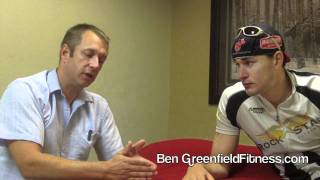
A short recorded interview (Ben Greenfield with massage therapist Tim Gilreath) explaining practical guidance about sports massage: how to find a therapist (referrals, AMTA lists, ask health professionals), what to expect during a sports massage (may be uncomfortable but should improve function afterward), state-licensing and insurance caveats, and how triathletes should prioritize waist-down muscle groups (calves, hamstrings, glutes, low back, feet). The piece frames massage as maintenance complementary to proper biomechanics and training.
Questions this video answers
September 25, 2011.
Jeffrey Jaime, CISSP.
Chapters
Hey, folks, it's Ben Greenville here.
And I am at the place where.
I go every week to get a massage with my massage therapist, Tim Gilreath. And basically what we want to talk to you about today are kind of the questions that you always wish you could ask your massage therapist, but maybe felt too stupid to ask. So these are some of the things that you need to consider when you're thinking about kind of making massage a regular part of your exercise routine or your recovery routine. So, Tim, my first question for you is, let's say I'm sitting at home on my couch and I get the bright idea that, hey, I want to go get a massage. What do I do? Do I go Google somebody? Do I go to the yellow page? I mean, how do you know that you're going to get a good massage therapist, especially for something like sports?
I think that is a very difficult question. Just like if you were to be working in one area, maybe you worked in Chicago, all of a sudd, transferred to Los Angeles, and you got to replace your entire medical team. Your doctors, your chiropractors, your dentists. It can be very tricky looking through the web pages, yellow pages, stuff like that. You can kind of get a rough idea of what people claim to do, which can be helpful, kind of get you steered in the right direction. I think there are national lists, too. The amta, the American Massage Therapists association, has a list as well as all the other.
National massage association. So you can, you can go off that. But realistically, I think just as with everything, if you're looking for a good mechanic for your car, you want to know, if you ask your friend, you know, where did you get your car fixed? Where do you get your sports massage? That's probably going to be your best idea. Other triathletes, for instance, they have the same kind of problems you do. They have the same challenges. So more than likely that same group of therapists or therapists are probably going to be your best resource overall. I know that's kind of hard because it's.
But that's how I found Tim was through physical therapist and a sports medicine physician. Because health professionals respect other people who are respectable health professionals. So that's another good way to go, is like talk to your doctor, right?
Yeah, absolutely.
Now, are there actual certifications that you should look for or is that not as important?
There are certifications. One thing in the United States, though, all states are different, and all states have different requirements. Washington, for instance, has a very high requirement for their massage therapist. There's a massage therapist license.
I.D. on the other hand, if you want to call your Southwest.
Yeah.
If you want to call yourself a massage therapist, you just hang up your sign and what do you know? Now you're magically a massage therapist. So. So those kind of credentials I don't really think are necessarily that important. Now if you plan to use your insurance, for instance, you're going to need to go see a licensed credentialed massage therapist for them to pay for it. So different things like that might sway your decision, but overall, I don't know that the credential is necessarily that important.
Gotcha. Okay, let's go on to the actual massage. When you're working with your massage therapist, especially for something like sports or exercise or fitness massage, what's it supposed to feel like? Should it hurt? Should it be light, should it be deep? I mean, what can somebody expect when they go in to get a good massage therapy session?
I think if you're not using massage therapy currently, even when we say the word massage, certain things might pop into your mind like candles and incense and quiet rooms and, you know, I don't know, raindrops or something. And I guess that has a place in like a spa type setting. But what you're looking for is not spa massage.
Sports massage, as far as how it should feel is going to be different for everybody, of course, but it's not necessarily going to be the most enjoyable hour of your life. I know I've worked on you plenty and I think there's many other people that can say that they probably look forward to leaving my room more than they look forward to coming to my room. And I can say that personally.
My goal is not that you like being here or that you necessarily even enjoy the work that I do. It's that you function better, you perform better, you race better when you're outside of here. So going for long term results in a short period of time can be rather painful. And when you got to take into consideration too, if you have an existing injury, calf injury, something like that, it's painful right now. It's painful when you run, it's painful when you walk around. Chances of me working on that deep enough to affect the muscle and have you thinking it feels good, Highly unlikely. The area is already injured, working on it, manipulating it, not going to feel all that good. Now. There is one thing though. You should feel better when you leave. If you notice that, God, that massage just hurts. It's kind of hard to tolerate. And then you walk out and you still have that pain, then probably the therapist being a little too aggressive, something like that, you know, so the pain is while you're on, which I've actually.
Experienced before, you know, like I've raced in Thailand, and they crack you and snap you and it's almost like a chiropractic massage session. You walk out of some of those. I walked out of one and my back felt out of place and it hurt for like three days after the massage. You know, if that's the case, that would probably indicate that your massage therapist might be too aggressive.
Too aggressive. Just like if you were to start a training regimen and you'd never even ran before in your life, or maybe ran one or two miles, you don't go out the next day and run 20 miles. You start slow, you kind of build up. So your massage therapist, given wherever you are in your training schedule or with an injury, you should do the same thing. Gradually increase what they do to they kind of find where it really works for you best and then they stay within those boundaries. Very personalized, though, once again, there's no protocol for that.
So one more question for you, and that is for a lot of the audience watching this video, they're people who swim, who bike, and who run. You get a lot of triathletes, marathoners, cyclists, swimmers for those type of people when they go into their massage therapist. Obviously, massage therapy costs money and you want to prioritize your time. So when you show up at the massage therapist and you're somebody like a triathlete, what are the muscle groups that you should tell your massage therapist, Hey, I really want to prioritize this stuff to make me a better triathlete.
I would say with triathlon, anything from waist down is probably primarily where I see the greatest amount of dysfunction. I think most times it does seem that if people have a good swim technique, coaching or whatnot, I really don't see a lot of problems coming from that. Rather low impact, obviously.
But the flip side to that, obviously is like with running, your legs, your calves, your feet, hamstrings, really common low back pain, all just get hammered. And while the bike is probably.
It doesn't contribute as much, still, it does too. Especially if there's any mid back, low back glute pain, pretty common among cyclists. So I would basically make them aware of your most troublesome spot first. And keep in mind, it's kind of like working on a car when you're a massage therapist. If your tires are all out of alignment and they have a little bit of wear on them doesn't appear to be that important. If somebody rear ended you last week and your bumper is all jacked up, but your bumper doesn't make your car run better, the little alignment issue would be more important. So you kind of have to think outside the box a little bit. Old known injuries could possibly contribute less to your discomfort lack of performance than things that seem more subtle or that come along as you start to train.
Gotcha. So take the areas. Essentially sounds like what you're saying is think about the areas in your sport that get impacted the most and those would be the ones to prioritize, like in a runner glute quad, hamstring, calf and feet. Right, something like that. And I think you really brought up a great point there and that is that massage therapy is not supposed to be like a, like a band aid for poor form or poor biomechanics. If you constantly are getting hurt and injured, it's not necessarily something that you should try to cover up with massage. Right. It's something that you should address biomechanically and then use massage as your sports performance aid.
Yeah, the massage is complementary to a good training program. It's not going to get you through an event that.
You haven't properly prepared yourself for.
But at the same time it's very crucial for performance in my opinion. I'm reading a book about illegal performance enhancing drugs in cycling right now. And in that book they talk about how all these cyclists, the champion cyclists of the Tour de France, they swear by their team massage therapist. I mean that is what gets them day to day through their race, through that multi day tour is the fact that someone is constantly working the muscles, getting rid of adhesions, tending to the fascia. I mean it really is very, very important in my opinion, almost crucial if you want to be in a sport long term to develop a relationship with a massage therapist.
Exactly, yeah. Just like, I mean I use the car analogy a lot. Just like if you buy a two million dollar race car, you don't just race that car on the weekends, park the thing in the garage and then take it out the next weekend and race it. For every time you go down the track or around the track, you might have a couple hours of, of maintenance on that car. And many people will put a great deal of maintenance into their bicycle or buying new running shoes or buying the new, I don't know, lightweight sunglasses and then totally neglect the fact that their calves and hamstrings hurt after every run. So yeah.
It'S basically about maintenance, right?
Exactly. It's like buying good food. You're taking care of your body.
By the way, for those of you who are around where I'm located, Spokane, Washington, if you want to hook up with Tim, shoot me an email or go to his website which is therapproach.com which is T H E R R. Actually no T h e r approach.com yeah, theraproach.com or just email me and.
If you spell it wrong in the little search bar, usually it'll pick up the right one.
I'll hook you up. And we've had them on the BenGreenfieldFitness.com podcast before there. Just go there and do a search for massage and you'll find more good information. We didn't talk too much about why massage works, but we've done podcasts on that before. So go to BenGreenfieldFitness.com do a search for massage if you want to find out more. And thanks for watching.
Thanks for your time.
More from Jeffrey





The Solution to Aging Might Be Closer Than Anyone Realizes - With Ben Goertzel


