Transcript of a conversational video discussing non-invasive cardiovascular screening—particularly abdominal aorta ultrasound to detect abdominal aortic aneurysms (AAA)—alongside echocardiograms and carotid imaging. The speakers note Medicare offers a one-time abdominal ultrasound at age 65 under certain risk conditions; they emphasize ultrasound’s non-radiative nature and include a side discussion about possible hormetic benefits of low-level natural radiation and EMF-avoidance practices.
Questions this video answers
Age 65.
If the person has ever had one in their family, has been a smoker, has had high blood pressure, or meets about seven or eight specified parameters.
Chapters
All right, all right.
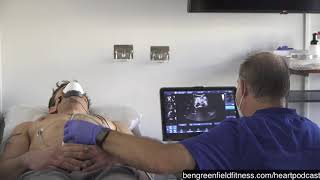
So as we've talked about looking and identifying areas where there's risk in the heart, with the valves, heart enlargement, cardiomyopathies, cardiomegaly, etc, that we look at for with the echocardiograms. We looked at the carotid, so looking for plaque and disease. So the other big one that we like to do is looking at the abdominal aorta.
Okay.
That's where we unfortunately hear about aneurysms and elderly folk who, you know, not been able to survive it because if it doesn't really happen in the parking lot of the hospital, it's a tough one. So we actually Medicare has a great privilege that anybody over the age of 65 can actually go get a one time only abdominal ultrasound if they've ever had one in their family, if they've ever been a smoker, if they've had high blood pressure. There's about seven or eight parameters that Medicare will actually gift you one at the age of 65, which is great because it really is truly one of those silent killers. So. But it's nice again, you know, here that we have that as part of our packages, looking at folks, that's interesting.
That's not one that a lot of people talk about is the incumbent a.
Lot of people talk about. And again, it is a silent killer. So, you know, it's important to have that evaluated. So again, and the great part about all of this and everything that we'll be doing to you today is it's all non invasive, all done with ultrasound or pneumatics.
And no radiation.
And no radiation.
That's fantastic.
So you're getting a lot of testing with little essentially to no risk. Yeah, you know, the highest risk was the treadmill.
Yeah.
I'm not afraid of treadmills, but too many time on those things.
Not the judgment you have to worry about. It's the guy operating.
Yeah, exactly.
Although I just interviewed someone on my podcast who swears by the hormetic benefits to low amounts of radiation. Oh, wow. What was his thesis? Her name was Jane Goldberg and she was talking about everything from radon exposure to the fact that in rodent models living around Chernobyl, you're seeing extended lifespan to UVA and UVB radiation from sunlight in low amounts having a hormetic effect. There might be something to that low level natural radiation we get from the earth or the sun.
However. And what's the idea? That it would stimulate your innate. Yeah, it would stimulate.
Endogenous antioxidant production, some amount of DNA repair, up regulation, etc.
You know, I don't necessarily plan on.
As she does in her book in certain places, eschewing the benefits of, say, the atomic bomb or something like that, But I think there's something to be said for these. I think they're called geothermal hotspots, or in alternative medicine, they're called energy vortices. These areas on the planet where there's natural radiation emitted by rocks and geological formations. And you'll find a lot of Native American hot springs and healing spots actually built up around those locations, like in Sedona or Big Sur. And then also, you know, some of this idea. There are certain rocks and stones that emit low levels of radon. For example, you know, she'll find a lot of rocks that they would harvest from, say, King Solomon's mines over in Israel. And.
She got some interesting data on increased lifespan or at least increased cellular resilience in response to some of that.
But I generally try to limit my exposure to radiation from a lot of more modern sources.
Where my EMF blocking underwear on the airplane and all that good stuff.
Hopefully they're still not red.
The underwear.
Yeah, all the EMF stuff's always red. It's like always the most.
Yeah, mine are blue. And then some. Some company out of Germany actually sent me this slick kind of like travel suit that's. That's all essentially comprised of almost like Faraday cage material. Like a full body. Yeah, yeah. But it's not unsightly. It just looks like a more, you know, some nice slacks and.
Yeah.
It's a lot less labor intensive than wrapping yourself in tinfoil too. There's.