The Broccoli Compound That Flushes Microplastics Out of Your Cells
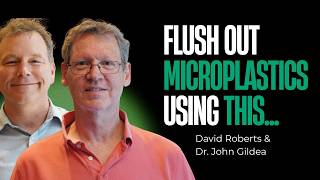
David Roberts and Dr. John Gildia of Mara Labs discuss sulforaphane, a compound from broccoli that activates detox pathways in cells. Their stabilized form, Brock Elite, claims to mobilize microplastics for removal through the gut, and may help with inflammation, blood pressure, and joint pain. They recommend morning and evening dosing and warn against doses above 350 mg.
Chapters
Have you had vivid dreams recently? And he's like silent. He's like, no way, that's this stuff? And so about a quarter of the people take it can have vivid dreams, and that's the BDNF. Users are definitely like—
My first guest is David Roberts, who co-founded Mara Labs. They make supplements including the world's first naturally stabilized sulforaphane supplement called Brock Elite. And my other guest is Dr. John Gildia, who advises David as the chief science officer and co-founder of Mara Labs. Just the biological impact of this is something that deserves more exploration. I'm super curious about it. So walk me through the moment when you realized broccoli was going to be your career. My guests on today's show figured out how you could get a lot of the benefits of eating like 5 pounds of broccoli a day without actually eating 5 pounds of broccoli a day, plus a way to get rid of microplastics not just in the gut but in the tissue. And we go way beyond that. Had all sorts of questions for these guys. So all the show notes are at bengreenfieldlife.com/MARA podcast. That's bengreenfieldlife.com/MARA podcast. Let's dive in. All right, you guys, uh, you ready to talk broccoli?
Oh yeah, always.
Yes. Yeah, I mean, obviously— well, maybe not obviously. I think the first time I heard about sulforaphane and, you know, all antioxidants from broccoli was maybe Rhonda Patrick talking about frozen broccoli sprouts or something like that years ago that she would dump into her blender. And, people talk about broccoli sprouts, broccoli seeds, but then a lot of it seems to be based around this compound sulforaphane. And, I think just the whole science and the biological impact of this is something that deserves more exploration. I'm super curious about it. David, I mean, I met you, I think somewhere, it was at a health event and then later you were at an event at my house. I know you've been interested in broccoli for a while. So walk me through the moment when you realized broccoli was going to be your career.
Yeah, I mean, it came about from my wife's cancer journey. So she was diagnosed with breast cancer in 2012 and, and wanted to treat it integratively and wanted to look at the different phyto molecules to take. And pretty early on I met John and, and, and read about sulforaphane and we ended up grabbing some of her cancer cells from her tumor and growing them in our lab and, and putting 60 different things on them, 60 different supplements. Porophane was number 3 in directly killing her type of cancer. And I think that was when I knew it was important. But it wasn't until a couple of years later, we actually grew lots of broccoli sprouts and I would juice them for Maura and she would drink the juice almost daily. But it's kind of a pain in the butt, right?
And Maura is your wife?
Maura was, yeah, my late wife. Yeah, she passed in 2017.—
I'm sorry.
So yeah, basically we were growing up, my kids were 1 and 3 at the time, and it's summertime, they get moldy, and they're tough to travel with. So I think over lunch one time I was like, it sure would be nice— kind of bemoaning, like, it'd sure be nice to have a stable form of this because all the broccoli supplements on the market are the precursor molecule except for 2, ours and one from France, which is— so basically 2 years later, After that lunch, John kind of matter-of-factly is like, yes, stabilized sulforaphane. And Mara and I are like, what? And so we tested it. Sure enough, he had. And so she actually started raising the seed money for the project to bring it to market. And then she took a turn for the worse and died. And so after that, we took the seed money and started the company.
Well, I actually— so I knew that your company's name is Mara Labs. I had no clue that it was named in honor of or after your wife?
Yeah, well, her, her name was, um, was Mora. Mora, that comes from the Bible. They're the bitter, the bitter waters of Mora. But, but like the, like myrrh, uh, when you break myrrh and grind it up, it can turn sweet. And so there's some, some symbolism there.
So yeah, okay, super interesting.
Okay.
John, you're probably the guy to talk about the nerdy biochemistry behind this. It sounds like David already mentioned the word sulforaphane, so did I. Walk me through exactly what it is and why the— from what I understand, the way that it's converted or assimilated in the body here is important.
Yeah. It's a very unique molecule even in the context of, you know, whole bevy of other natural compounds, it doesn't have a problem with bioavailability. So that's the first thing. So if you, if you asked me that question about what, when did I become interested in it, uh, so my wife got breast cancer in 2003, and right within a couple years of that were the first papers where it really got my attention. And it was a series of two papers that make this really cool connection, and that is that the first, first one was a study done at Hopkins where they, they took this broccoli beverage where they, they grind up broccoli sprouts and then gave it to women right before they had breast reduction surgery. And then they gave it, and 1 hour later took out that breast tissue that they had removed and measured sulforaphane in the breast tissue and found it to be in between 1 and 2 micromole. So it's a really high concentration. And the, the follow-up paper was that they developed an assay. I don't think it was the same group, but they developed an assay for mammospheres where they, they grow breast tissue in a dish that selects for cancer stem cells, and they're really difficult to treat. And so they showed that basically these cells that are the ones that go on to metastasize, they were killed by that same concentration. And so up to 80% of the cancer stem cells in this Mammosphere assay were killed by that same 1 to 2 micromole dose. And so those two pieces of information put together just put it on a completely different level for me. Like you can, you can put curcumin on cells and see killing. But you know, it's in between sometimes 40 to 100 micromoles, and you just don't get that concentration when you take curcumin just in general. So just to sort of compare the two things, whereas when you take sulforaphane, it doesn't have a problem with bioavailability. It goes to the tissue, and then that tissue responds to sulforaphane by activating this transcription factor called NRF2. And I don't know how granular you want to get into that, but it's a— it's the master.
I would love to dive into this. Okay, so sulforaphane When I consume that, whether in supplement form or it sounds like in broccoli sprout form, for example, that's activating a pathway called NRF2. That's actually what's going on mechanistically. And then, what is the NRF2 pathway?
Yeah. So, NRF2 is a transcription factor that is held in check in the cytoplasm of cell, meaning it's grabbed onto by a protein complex and degraded. So the baseline default status of it is, is degradation. So it's gone, it's not there, and it's sitting waiting for to be activated. So it's a transcription factor. So as soon as sulforaphane goes in and binds to its partner protein called KEAP1, it releases NRF2 to evade being degraded. So that's the step that sulforaphane does, is it, is it releases it from being degraded. And then that NRF2 can then go through a number of other steps to get it into the nucleus and then bind to partner proteins and turn on a whole bunch of genes downstream in the nucleus. And so, you know, there's like 12 steps of regulation in NRF2 after KEAP1 releases it. So it's complicated. And we can talk about some of those, some of those other interactions that make it, you know, functional. Downstream. But basically that's the, that's the mechanism, is it, it separates KEAP1 from NRF2 and releases it to become a transcription factor and then turn on a whole bunch of genes downstream. And sort of the history of sulforaphane comes into play there, is people didn't realize that the first study by Talalay was to induce phase 2 detoxification genes. So they wanted to, they wanted to prevent cancer. And so they wanted to find compounds that turn on this detox pathway. And it turns out sulforaphane was the best inducer of that. And they were just looking at that and they didn't know anything about KEAP1 or how it's regulated. They just knew it turned on these genes that got rid of toxins. So that's sort of interesting history is that everyone says it's the best You hear sulforaphane, best inducer of Nrf2, but that actually came much later. They actually knew that it was a detox compound at first. So yeah, so there's a lot of other things. They actually found out that it was bound to transcription binding site in the promoter of a bunch of genes and was called the antioxidant response element way before it knew this keep stuff that was '98. And so the— this turns on a bunch of genes that are actually antioxidants. So they're enzymes that are turned on and those enzymes are very processive. So instead of the classic vitamin C binds to a reactive oxygen species and then activates it, it turns on both the glutathione system, which is, you know, what binds the major antioxidant in the body. And then it also turns on all these enzymes that deal with reactive oxygen species, you know, a couple hundred of them. So every, every single form of reactive oxygen species is dealt with by an enzyme. And those enzymes turn on, you know, tens of thousands of reverse reactive oxygen species, you know, tens of thousands of them per second instead of a 1-to-1, you know, ratio to an oxidant antioxidant. So there's a kind of one-two downstream.
And that system stays on for about 72 hours with one survey. So once it's turned on, it stays on.
Got it. Okay. So, so to summarize the way I guess the way that I understand Nrf2, so that, that stands for, for people who want the really nerdy cocktail party science, nuclear factor erythroid-2-related factor 2. That's, that's NRF2, N-R-F-2.
So— Say that 3 times fast.
Yeah, exactly. So, we often hear people throw around the term like, "Oh, glutathione is the master antioxidant." Well, that may or may not be true. It certainly is a powerful antioxidant, but NRF2 would be the master regulator of the antioxidant response. Now, KEAP1 is not something I've really talked about on the podcast before, K-E-A-P, KEAP, KEAP1 that holds Nrf2 in the cytoplasm and then tags it for degradation. And, what sulforaphane is doing is it's modifying KEAP1 and allowing Nrf2 to kind of translocate to the nucleus and then activate all of these antioxidant response elements or ARE genes that you're referring to like glutathione synthesis or these phase 2 detox enzymes. There's other things like hemooxygenase. So basically, what sulforaphane would be doing is causing this downstream kind of shotgun response in terms of antioxidant activity.
Yeah, that's a great description.
Yeah.
Cool. So, my understanding also is that Nrf2 activation is kind of like a hormetic response, meaning like sulforaphane, like many other elements in the plant kingdom, would be mildly toxic and that's triggering this endogenous antioxidant response. Would you classify sulforaphane as a hormetic stressor in that regard?
Yeah, for sure.
Okay. So, same as exercise or cold exposure or fasting or other plant toxins or some would even say alcohol.
Right. Yeah, the connection between the two— I mean, I don't know how precise you want to get, but the— like, when you exercise and you make a bunch of reactive oxygen species, you change the redox state of the cell, and then that can be responded to by the same system. But sulforaphane is a little bit more direct. It actually covalently reacts with those reactive cysteines that are in KEAP1. So And it's a one-two step with reactive oxygen species. You have to, you have to change the redox state, which means the, the state of glutathione, GSH to GSSG. That's the redox state, the readout of, of reactive oxygen species. So it's indirect for reactive oxygen species but direct for sulforaphane. And the only reason I bring that up is because you probably know this, is that in a young person, if you exercise, you get you get an induction of NRF2, and in an old person you don't. And so in an old person who normally has to exercise extremely hard in order to get NRF2 induction, you can get an NRF2 induction just with sulforaphane. It doesn't have a problem responding to that. So that's a kind of a key distinction there because, you know, if you ever worked out side by side with someone my age versus your age, I'm going to be sore for 3 days and I'm not going to be able to sit on the toilet or anything if I overdo it. And that's because I'm not recovering because Nrf2 is not being induced.
Interesting. So basically, as the hormetic stressing benefits of exercise decline with age, you could potentially use other elements such as sulforaphane to get Nrf2 activation to kind of keep up with what exercise might have done for you at an earlier age.
Yeah.
And we have people doing that and we have people taking it for recovery who are athletes. A small subset of our users are definitely like, "This is amazing. I can recover and work out the next day." Okay.
I definitely want to talk about timing and dosing later on as even relates to exercise, like before, after, et cetera. But before we do, I want to dig into the broccoli piece a little bit more. Again, I think I first heard this from Rhonda Patrick that broccoli has this glucoraphanin in it and that's kind of like the precursor. And then, when you chew on raw broccoli, there's an enzyme that converts it to sulforaphane. But from what I understand, and maybe this relates to what you were talking about, David, about how you were glad when John told you he'd figure out a way to stabilize sulforaphane, that whole conversion is somewhat fragile. Like, if the broccoli is cooked at too high a temperature, you could kill the myrosinase enzyme, which would allow that conversion to occur, that there's high variability in terms of conversion in the gut. So, talk to me about kind of like the comparison between trying to get sulforaphane from glucoraphanin sources like broccoli or supplements versus figuring out a way to stabilize it and have it available in something like capsule form.
I mean, I think the main thing to— there are a couple of things to keep in mind. First, that not every broccoli seed has glucoraphanin in it to produce sulforaphane. We, back in— it's been about 5 years now that we were testing a bunch of sources and we were shocked to find that not all of the sources that we were— in fact, most of the sources we were getting couldn't and we're getting some from Amazon. We're looking for organic brands and trying to figure out sourcing for seed. And I think we got 6, and 5 of the 6 or 6 of the 7 couldn't make sulforaphane. It didn't have glucoraphanin. And then waited 6 months and then bought like 9, and 8 of the 9 could. And so at that point, we're not a seed company, but we do offer, because some people like the seed, we offer the seed that we know will, uh, half a pound will create 400 milligrams of sulforaphane. So that's one thing. I think the other thing is, um, you know, we, we, we've kind of touched on it, but like, so basically, like you said, you have a head of broccoli, you start chewing it, it breaks, uh, you break the cell wall, which releases the enzyme. The glucoraphanin in the broccoli is stable, and that's why the, all of the supplements on, on the market except for ours and one other have the stable form of glucoraphanin because they can't. And now if you chew it, the myrosinase converts the glucoraphanin into sulforaphane, you swallow it, you get the benefit. But if you try to put it in the capsule, it degrades, you know, hours to days. It's not shelf stable. And so what— I mean, we don't do— we do some research on sulforaphane, but there's a lot of research on sulforaphane. All we do is we show we have stable— the stable form of sulforaphane in the capsule. Now, the other thing is it's not just sulforaphane. In broccoli, there are numerous other cousin molecules. Uh, the family of them are called isothiocyanates. And so we extract all of them and we add an additional one called PEITC from watercress. And we do that because there are a couple papers, uh, in the literature, and we've shown it ourselves where it actually induces— if you— there's a synergistic effect with sulforaphane. So by synergy, if you think of additive effect, it's 1 1 2. Synergistic effect is 1 1 5. So you get a 5 times induction of Nrf2 versus just doing PITC alone or just doing sulforaphane alone. And so all of those isothiocyanates work together to, to bring sort of the magic of broccoli. Plus the plus is the PATC. But when you're doing a glucoraphanin supplement, you're just— and let's say it converts perfectly— you're just getting sulforaphane. And so you're not getting the synergy of the other isothiocyanates.
Okay. Kind of begs the question, John, how do you actually stabilize it? Is this like secret sauce data, or are you guys able to share how it's stabilized in capsule form?
We thought of patenting it, and I think just because— it was so early in our development, we thought it was so complicated that people wouldn't be able to figure it out. And so far, it's been true. So they don't let me talk about that even though I want to.
No, it is the secret sauce. So basically, it's pretty backbreaking to make, and there are cultures that rip off patents, right, that have cheap labor forces. So we're just like, we're not doing that.
Okay, got it. So It's stabilized, but you can't share exactly how.
Yeah. And it's way more stable than sort of a lot of people think. We just got data back from bottles that were opened 5 years ago and, and then kept at room temperature and they were stable for, there was only 2% loss in 5 years. So it's even more, it's even more stable than we originally thought.
Okay, cool. All right, let, let, let's dig into some brass tacks here. First of all, If we would classify sulforaphane as a hormetic stressor, I even refer to it as a mild toxin. A lot of plants have plant defense mechanisms that I suppose some people like pure carnivore enthusiasts try to avoid entirely. My take, and I would imagine since you have a sulforaphane company, possibly your take also, mild hormetic stress actually is a good thing because we get this antioxidant response. And so, I don't avoid hormetic stressors altogether. However, the idea of hormesis is you're trying to get a little bit of what we might call a bad thing to induce a good response. So, could you overdo it with sulforaphane, I guess is my first question as far as it being a hormetic stressor agent?
We thought so, but we've had some crazy people ordering product of ours that took unfathomable amounts of sulforaphane on a daily basis for years. And so, you know, even, even after warning that, you know, the clinical studies say that you shouldn't take more than 350 milligrams, which is, you know, the safe upper limit that they say you should take. But, you know, ours is around 10 milligrams. That's a long distance away from that. We wanted to show that the small dose that's in our capsule induces Nrf2. And as far as I know, anywhere in the literature, that's never been shown.. But I showed it in, in, in our lab that you just take 2 normal dose of it and you get NRF2 induction. That's the equivalent of 5 micromol, which is also higher than has ever been shown in the bloodstream. So I would say that the, the mixture that makes it safe is that it's this whole bevy of, of isothiocyanates. And we ran into that really early. Because we took purified sulforaphane that you buy from Sigma. It's just, you know, 99.9% sulforaphane and put it on my favorite cells, which are kind of like the canary cells. They, you know, you, you determine how much chemo a person can take by whether they kill this cell. It's the proximal tubule cell in the kidney. And, um, you can put sulforaphane on it and start killing cells at you know, around 10 micromole. And so we were worried about that, you know, whether, you know, there can be damaging effects of, of taking too much of this. And since ours was at 5 micromole, we were worried. And so I started taking our own product and putting on those same cells, but I could put up to 20 times as much and still not get any cell death. So there's some magic in the mixture that makes it safer. And yeah, that's just one of those things that I don't exactly know how to get that out into the world, but we were so convinced by it that sort of a bunch of us went back there and took, you know, gigantic doses of their, you know, a brick of it basically of the solid material. And, you know, we were fine. And yeah.
And it not only doesn't kill the kidney cells, and we saw them growing new kidney cells, which is sort of, completely not intuitive.
Interesting. Okay. So, that's actually kind of related to what I was going to ask next. No damage, but what about, I guess, what some might refer to as anabolic inhibitions? What I'm getting at is post-exercise, a lot of times it's recommended to not take high doses of, let's say, vitamin C or vitamin E or do an extremely long cold plunge because you might blunt the natural antioxidant, natural anti-inflammatory response that you want the body to mount because it's that response that allows for things like mitochondrial biogenesis or satellite cell proliferation or something like that. If I were to take sulforaphane or something like broccoli post-workout, would that be a bad idea because it could potentially blunt the natural hormetic response from exercise?
Yeah. My understanding from reading the literature is that the majority of the papers using vitamin E and other direct antioxidants is during the, during the exercise itself, it seems to be you have— if you blunt the actual ROS production, then you, you blunt the response to it. But that afterwards, that, that signal has already been sent to your muscles and you're getting, you're getting that response. But the, the damage from the reactive oxygen species and the damage from the cells, it's beneficial to take it afterwards. So What you were saying there, I think it could, could be true. And we actually have exercise physiologists right now at Thomas Jefferson answering that question. They're doing the studies and we're supplying the, the sulforaphane for those studies. So those, those will be known in the near future. But I would say I don't think that's really known, but the, the, at least the long distance athletes that are tracked by tons of people, they, they don't see that. They see the repair being faster. So I think the inducing of mTOR with, you know, say, branched-chain amino acids and the actual stress happens from the exercise itself, and then, and then the recover is, is, is cleaning up the mess. And so that's at least how I understand it. But until literature is clear on that. I think it's still a question mark.
Okay. Yeah. I mean, maybe to play it safe, don't take it right before workout or during a workout, save it for after. But related to timing, just based on my own understanding that a lot of the liver's antioxidant pathways are upregulated in the evening and during a night of sleep, I've been taking a couple capsules before bed of the broccoli. And this is a new thing for me in the past month, since I got some bottles from you guys. But as far as what you know, how would you approach dosing and timing? Would you do it a couple times a day? Would you save it for the evening? Or how would you guys approach it?
I'll give my little blurb, but David's really good on the angle with sleep. But I'm interested in circadian rhythm, specifically in the morning, getting your period and clock genes synchronized to the start of the day, and then at the end of the day is BMAL1. Those are circadian entrainment. Those are the, the factors that, that, um, entrain your circadian. Well, there's an NRF2 pulse at both of those points. So if, if you want the optimal time to take sulforaphane, that's what I usually say is first thing in the morning and last thing at night, and that'll be entrained to your circadian cycle. But in terms of sleep in general. David probably is really good about talking about the, the benefits of, of broccoli at night during sleep.
Yeah, I mean, um, the main benefit is that it upregulates BDNF, brain-derived neurotrophic factor, um, so which is at the heart of brain health. It helps grow new neurons, protects existing neurons. And so, um, one of the, you know, one of the ways I mean, most people don't walk around and say, oh, my phase 2 detox pathway is engaged right now, you know, or— but they will say like, hey, my hip doesn't hurt anymore. And so it, it, it, um, and that was what we— they all— the other— we can talk about the anti-inflammatory aspect from the sleep aspect. You know, we have a 100-day unconditional money-back guarantee. And so early on, I was doing the everything. I was doing the calls and this customer service, and this guy was like, stuff doesn't work. I want my money back. I'm like, fine, let me just ask you a question. Have you had vivid dreams recently? And he's like, silent. He's like, no way, that's this stuff. And so about a quarter of the people take it can have vivid dreams. And that's the BDRF. So it's the— so sulforaphane is in our sleep supplement. We have a sleep elite. We put the broccoli in there specifically for that. And then berberine too is great for sleep. It upregulates— in fact, one of my favorite papers is how berberine outperforms Ambien. No, that's not for volume as a sleep aid. It increases serotonin 30% and dopamine 25%.
And you're talking about berberine, what people would normally use as something like a blood glucose management agent.
Yeah, I, I I, we created ours to be, to, uh, our berberine product to be like bioavailable. So instead of like, usually it decreases, regular berberine decreases your blood glucose in about 2 to 3 weeks. Ours does it in like 4 hours. You can get into light ketosis. But when I went out to ask for, early on I was asking for testimonials and thinking blood glucose, you know, but 75% of the people who came back were like, we take it for sleep. I'm like, what? And so that's when I found this paper. So that's in our sleep product too, and some serotonin precursors. But yeah, I mean, going back to broccoli and inflammation, that's mainly— we mainly get people saying my joints don't hurt anymore. And so we did one of the— we did a preclinical study early on because our joints stopped hurting. We're like, this seems to be working quickly. And so we did, we showed that it decreased IL-6, which is an inflammatory marker. It decreased it 28% in 24 hours just taking 10 milligrams. So that's, that's enough so you can feel the difference.
Yeah, that actually relates to something I wanted to ask you guys. You know, it's the kind of like the elephant in the room question for a lot of people taking supplements beyond qualitative response, such as perhaps, you know, sleep parameters, or maybe even blood glucose response for people using a CGM. Would there be specific labs like blood or biomarkers that you would track to see if upregulation of these antioxidant pathways was actually working? If you wanted to do a pre-post test, in a perfect world for you guys, what would you be testing?
So, in my world, do a lot of work on kidneys. And so when you activate this pathway that we were studying that produces reactive oxygen species called ANG2— and ANG2 is a peptide that's associated with hypertension— and so in the kidney, if that's on high, you make reactive oxygen species. And there are urine markers, 8-0 HG, but there, there's two different markers. There's a DNA marker and RNA marker for oxidative stress. Both of those would be reduced by sulforaphane. So those are relatively easy. And then David already mentioned IL-6, so that's an inflammatory marker that is dramatically changed, you know, in 24 hours. A 30% drop in IL-6 is gigantic.
So IL-6— sorry, what were the other two kidney markers you mentioned?
John? Yeah, they're the oxidized version of RNA, 8-OH uracil, 8-OH G, something like that. We can send you the names afterwards. I haven't talked about that. Yeah.
And would those be like lab tests that someone's doctor would know how to order or do you need to go to like Direct Labs or Rupa or something like that to order these tests?
Yeah, I don't, I don't know if those are ever part of normal testing, but you can get them tested for sure. They're, they're part of a lot of organic acid tests that are urine-based. Um, so it's, it's not an expensive test, that's for sure.
Okay. All right, send those ones to me. And by the way, it'll be bengreenfieldlife.com/mara-podcast for those of you listening in. M-A-R-A podcast. What were you saying, David?
You know, as far as normal markers, you know, uh, John, so you kind of allude to this, but —people's blood pressure would actually go down.
Yeah, there's, yeah, there's a, there's a quite a few papers on, on sulforaphane and calming down the immune system in a lot of different ways. So there's a huge number of people that take it for autoimmune and then also for this angiotensin-dependent hypertension, if that's how, how basically your blood pressure is high.
That's also another metric is blood pressure. Cholesterol is another way you can see that it's working. Your cholesterol profile will improve.
And then— I'm David, I'm going to stop you there for just a second. So, so the cholesterol piece, do you know like which, like is it an ApoB balancing, Lp, LDL, oxidized LDL? Do you know any details on the cholesterol piece?
The major papers that show it for sulforaphane and berberine is by increasing the LDL receptor in the liver, so it increases reuptake.
Okay, so you'd see a decrease in overall LDL.
What else were you saying, David? And just, um, general inflammatory markers.
Okay, okay. So like IL-6, CRP is another common one you'd see on a blood measurement, those type of things. Yeah. Okay, cool. You guys see anything on, um, uh, just throwing this out there, not to, not to toss a curveball at you, But HRV, like nervous system sympathetic, parasympathetic nervous system balance, anything like that, obviously it's going to be affected by sleep quality. So, indirectly, if it's helping out with sleep, it could influence that. But have you seen anything else related to HRV?
Yeah, nothing jumps off the top of my head just because I haven't studied it, so I don't know those pathways.
I mean, anecdotally, not HRV specifically, but overall sleep, people will have wearables and just start off taking broccoli. This definitely helped my sleep score.
I'm just curious from, I guess, just a fun visual standpoint. Like I mentioned, I've been taking a couple capsules. I've been taking them before bed. How much or how many or what amount of broccoli sprouts or seeds would I need to eat for a comparative amount of what I'd get from a couple of capsules of broccoli. Yeah.
So there's some subtlety in there, which is interesting. Just sulforaphane, it would— the classic is 4 ounces of broccoli sprouts is equivalent to our product, 2 capsules. And then that's equivalent to 5 pounds of adult broccoli. But the, but the, the thing that throws that off is the synergy that happens between PEITC. So when I looked at NRF2 induction at the cell level, it was equivalent to 5 micromoles sulforaphane. But sulforaphane, no matter how much you take, never goes above 2. So if you want to get a bigger induction than taking, you know, 16 ounces of broccoli sprouts, the way to get at that is through synergy, not because the metabolism and how, you know, these, these natural compounds are processed in the body, it rarely gets above 2 micromoles. That's very potent. Um, you know, not to diss that, that's what all the studies— the amount that they used for, you know, the thousands of studies that showed effects on almost every chronic disease that's out there. But the, but the actual functional dose of it is equivalent to 5 times that. So if you do that, it's not equivalent because you can't eat 5 times as much broccoli sprouts to get the same induction.
And I think that's important. It's important because like, I can't tell you, Ben, how many times we're at conferences and we, you know, John speaking, and he always says, you know, glucoraphanin supplements don't necessarily convert to sulforaphane so that you get all the benefits that you read about the literature. And then people will come up, especially physicians, and be like, what about this? This is what I use. And I'm like, it'll read that it says glucoraphanin, and sometimes it says sulforaphane glucosinolate. The glucosinolates are the precursors, and so that throws people off.
Okay, so even if it has the word sulforaphane in it, if that precedes the gluco— what'd you say, glucosinolate? Okay, that indicates it's still a glucoraphanin precursor, not sulforaphane itself.
Yes, it's— okay, sulforaphane glucosinolate literally means precursor of sulforaphane.
Those bastards.
Okay, well, I don't want to get sued, but we've had, we've had a couple of people, a couple of companies try to take us out. But, but yeah, I mean, so it's really important to, if you want the benefits of sulforaphane, just grow broccoli sprouts or take our supplement, but don't take a glucoraphanin supplement because you're not going to get the benefits. The whole conversion thing. Oh, we have myrosinase in the capsule. Well, I mean, maybe. Maybe, but the myrcinase isn't stable. And even if it is, you have to deal with the stomach acid denaturing the enzyme. And so it's just you take the guesswork out of it by doing the conversion and putting it in the capsule and then taking our supplement.
Got it. I'm tracking. Talk to me about just very, very simple logistical question, fasted empty stomach, with a meal, any difference or superiority in terms of timing with other foods? Yeah, we haven't seen any difference between that.
I've done the NRF2 assay in both states and they seem to be similar. So I think food matrix doesn't have that much of an effect on sulforaphane. It, it resides really well in both aqueous and hydrophobic, the membranes. And so it's just this weird molecule that just happens to be perfectly happy in both of those. It slightly prefers hydrophobic. Its log P value is, is 1. It just means that it, in this octanol-water phase system, where, where does it prefer to go? Whereas PEITC, the other compound, has log P value closer to 3, so it prefers the the lipid environment a little bit more. And so we think that that's probably why the combination works really well for inducing NRF2 and especially some of the other known targets of, of, of sulforaphane, which can be a whole nother conversation. But there are other targets other than NRF2. So in KEAP1, it's known that PEITC, because it prefers the hydrophobic domain a little bit better, there are reactive cysteines in KEAP1 that are preferentially activated by PEITC because it's more in a hydrophobic pocket where that target is. And so if you get sulforaphane and PEITC together, you get a larger bevy of this redox-sensitive domain of KEAP1 activated. And it also plays out in these other these other direct targets.
Okay, got it. Nrf2 activators, I guess for the real nerds out there who may have been paying close attention, is a label being given to a lot of things, curcumin, resveratrol, EGCG, like green tea extract. These have all been labeled as Nrf2 activators. Where does sulforaphane kind of rank on that list in terms of what you guys have found?
Yeah, as, as solitary compounds, all those other ones, you know, we, we sell bioavailable versions of that, so they're very high bioavailable. But as sole compounds, they don't activate Nrf2. I've never seen any of them. And I've tested other products that claim Nrf2 induction and, and worked with their scientists. And, and because I have this super sensitive Nrf2 assay, I never saw it inducing. So the way we think about it, and actually it's the, the sort of ordered addition of products on our website, is that sulforaphane is able to induce NRF2, but all the other compounds that we offer are synergistically working with sulforaphane to induce it more. And we can talk about all the, the different steps where those can intervene. But like, just as a, as an example, curcumin, the way that it activates NRF2 is, is it activates this pathway called PKC delta, and that is what phosphorylates NRF2, allowing it to go into the nucleus. So there's a baseline amount of that activity in a cell. And then if you take curcumin, those two together, you get even more going into the, into the nucleus. And that's an example. There are two different places, mechanisms where you get NRF2 induction. And then together, even though curcumin is going to only end up being less than 10 micromolar equivalent at the cell, which is not enough alone to induce NRF2, the two together makes it even stronger. And so that's sort of our lineup is quercetin inhibits proteasome. We can go down the whole line if you want to, but every one of them has an effect on Nrf2.
When you say every one of them, you mean every one of the ingredients that you have in Broccoli?
That does also, but also the other things that we're offering at Mara Labs. So we offer a curcumin product. That affects the Nrf2 pathway in a particular mechanism. Berberine is through AMP kinase activation. That is, you know, a connection to another pathway, GSK3 beta, which is nuclear export. So it slows it down, you know, and you can go down the line. But so there's quercetin and EGCG has its own effect. They all are known inducers of Nrf2 in cell culture, but that doesn't mean they do it in you. They have such a huge hurdle inside the body to get to the cell at a concentration that's equivalent to cell culture studies that they just don't. And so that's why we, we always say, you know, our flagship product is sulforaphane and you should do that because it has many targets and it gets to the cell. Therapeutic dose. But if you want to enhance it and then also have some of the other side effects of, say, like curcumin— curcumin is amazing at NF-kappa-B, like inflammation, but it's by a different mechanism. And so when you put them together, it's synergistic at Nrf2, but it's also synergistic at NF-kappa-B. So that's sort of the, the logic and how we added compounds to, to our SKU.
And I think it's important to say I mean, you know, when, when we were treating Mara, we're reading all these papers about just these amazing compounds. Curcumin was— when we put curcumin directly on her cancer cells, you know, it was— think it was number 2 in directly killing her cancer above and even ahead of sulforaphane. But, but then like, how do you know when you take these capsules that enough is getting to the cells. Well, it's— they're just not. Even like the— they have— there are more bioavailable ones like Meriva that— so they attach— they— they're phytosomal or liposomal forms, but that, that only gives you a 3x, and that's not enough to— because, you know, less than 1% of curcumin gets through the gut barrier. And so all of these fat-soluble, lipid-soluble molecules that John was talking about are very difficult to get through the gut barrier and to and into your cell, you know, so get— getting it to the cells in a biologically relevant way. And so what we do is to make sure if we're offering it, it is getting through the gut barrier to the cells in a biologically relevant way to turn these pathways on. John was talking about—
now, now, one thing that I came across as I was just like looking into sulforaphane and Nrf2 pathways in preparation to talk to you guys is that tumors might be able to kind of hijack Nrf2 to protect themselves from the effects of chemo or radiation. Is that something you've come across? Is that a concern? Should people who are undergoing chemo not use a product like this, or can you speak to that at all? We've had this question numerous times.
Okay, good.
I'm not the first one. All right, good.
Yeah, they're from consumers. But I've never talked about it, I think, openly on a podcast before. So I'm actually really happy this came up because in review papers they make these two gigantic semantic leaps. And it is when you have a cancer and then you are treated with chemotherapy, that's the, that's the, the impetus for that cell to change.. And so the way that you get over that hurdle is by inducing NRF2. And the way that that cell bypasses that harm is by selecting for cells that have mutant KEAP1. And so in those cell types, the NRF2 is on all the time, and that's how it survives chemo. So it's, it's, it's due to the selection pressure that's part of all cancer treatments. So just because that happens doesn't mean that if you take sulforaphane that it does the same thing. There's no paper showing that.
Okay, so there's a difference between— there's a difference between exogenous administration of sulforaphane and endogenous upregulation of Nrf2 pathways via something like a cancer cell.
Yeah, and our direct proof of that is actually really interesting, is that is that actually that paper that we talked about earlier is, um, the breast cancer cells that were killed by sulforaphane in that Mammosphere assay. That's a stem cell. Stem cells have that characteristic of being able to pump out using multiple drug resistance. They'll pump out any chemotherapy. And so it selectively kills the cell that is a cancer stem cell. And so the irony there is that it's being warned that you definitely don't want to take sulforaphane if you have advanced cancer. But in our own hands, when we take a cell that we know has a KEAP1 mutation and has NRF2 on all the time, you can think about it logically as if NRF2 is on all the time, taking sulforaphane doesn't turn it on any harder. So, so it doesn't, doesn't make it worse. But interestingly, those cells are way more sensitive to sulforaphane. And the mechanism is that when that cell that has that ability, it's kind of working on the razor's edge of the amount of ROS that is in the cell. If it goes above that, it'll die. But it has this razor's edge of how much ROS is in the cell and it's upright, you know, it has this NRF2 that's making it barely survive. But if you take sulforaphane and especially PEITC, you get this transient, uh, use of glutathione where it binds to it and glutathione goes down just a little bit at first, and that kills them. And so these cells are much more sensitive to sulforaphane or PEITC than an average cell. And then I like to always buttress that with every other cell in your entire body you want to be higher functioning. And so, um, if you want to support the every other cell in your body with sulforaphane, it's going to help them, help your immune system, help so many other different systems. So I think even though you can't listen to me because I'm not a doctor, um, that for treating cancer, um, I would say a summary of the research on the topic would not indicate that.
Okay, not to be taken as medical advice for those of you listening in, this is not prescriptive, but Sounds like it's not a concern. Were you going to say something, David?
Yeah. And on the bottle, we're required, all supplements are required to say that the product doesn't treat or prevent or diagnose any medical condition including cancer.
Thank you for saying it. And ROS, by the way, when you guys hear John say ROS, he's referring to reactive oxygen species. So, of course, for anybody listening in, if you've got your curiosity piqued about this, John and David gave us all 25% off any of the Mara Labs products. The main one we've been talking about is broccoli, but their other products are on there as well, the curcumin product, the bearberry product. So, if you go to bengreenfieldlife.com/mara-labs, M-A-R-A Labs, the code is BEN. So, for a week after this podcast comes out, it's 25% After a week, it drops to 15%, which is still good, still substantial. But if you get your hands on some within a week after listening to this, you'll get an even bigger discount. The show notes are at BenGreenfieldLife.com/MARA Podcast, M-A-R-A Podcast. David, John, this is super fascinating. And now, I feel like I've got all my questions answered about sulforaphane and I know a little bit more about how to use this broccoli effectively.
I do want to just interject one thing that John just— he basically, he and this other researcher out of North Dakota, this researcher showed that broccoli mobilizes microplastics for excretion. And John was able to do a follow-up study showing that it basically comes out in your poop.
For people getting oral exposure to microplastics, which is considered to be one of the major sources, you're saying it can act as a binding agent? For that? No, it doesn't act.
It, well, it doesn't bind it. We use it basically, the microplastics get engulfed in lysosomes in the cells and the sulforaphane causes exocytosis where it spits out the microplastic into the extracellular space so that your, your, your bile can help get into your bile system, your lymph and excrete.
Wait, are you saying that based on that mechanism of action, it could work systemically beyond the gut? That was the—
that was the inferences. We knew that. Oh wow, that's kind of— yeah, he, he, he did a self-experiment and, and ended up with the highest, um, count of microplastics in his blood in history from the website that measures microplastics. So His name's John Budwig.
He's out of North Dakota. Yeah, he has a Substack. You can read about his research.
And then we, we wanted to know whether it makes it get out of the body. And so we found that, that we measured saliva, urine, and feces and blood. And so when there's the big bump in blood microplastic mobilization, we see the same signal shows up in, in feces and not in urine or, or sweat. So even though we found them in sweat and urine, so it is how they're being gotten rid of, but our sulforaphane-induced release ends up in, in feces. Cool.
Got to change the name to the microplastic pooper or something like that. That's actually really good information, obviously. I don't know if you guys saw the recent documentary on Netflix called "The Plastic Detox," but it's a concern. It's a growing concern. There's a lot of people suggesting gut-binding agents, others suggesting plasmapheresis or ionophoresis or some kind of blood filtration, which is expensive and difficult to get sometimes. This sounds like an interesting solution. I do my own microplastics assay salivary. I use a company called Lumati once a month. And, just based on continuing to get rid of plastic exposure in my home and also a pretty darn robust sauna practice, I've been able to continue to make dents in it. So, that will add to my list of things to track, something I can monitor while taking broccoli. So, that's interesting.
We have a microplastics detox bundle. So we pair it with our bioavailable resveratrol called ResverElite. Because if you think about, like, the broccoli— if the broccoli unclogs the sink, essentially, but the resveratrol, it makes the plumbing wider, and so it allows more to get through because it's pushing on the pathway.
And this Clear Network, so we added it because of transcription factor, kind of like NRF2. It turns on a whole set of genes for a purpose. TFEB1 is called the CLEAR network, and it's all the genes that make lysosomes function better. And so resveratrol induces that, so it makes basically the lysosomes more competent.
Super cool. Interesting. Well, this is, this is actually good news. I, I did not know about that. So, for those of you who have questions, comments, feedback, or your own experience, go to BenGreenfieldLife.com/MARA Podcast, M-A-R-A Podcast. I'll include a link to the discount code as well over there. John and David, John or David, remember to send me over a couple of those kidney markers that John was referring to. I'll put those in the show notes as well. And, thanks for doing this, guys. This is great information. That was super fun.
Yeah, enjoyed hanging.
How many steps did you get in? I don't know. I don't track. I probably get 20,000 steps a day and many of them are on Zooms, podcasts. Yeah, I think it's great for the brain and great for the body to not be sitting in a chair all day. So, yeah. Yeah. Alright, folks. Well, thanks for listening in. BenGreenfieldLife.com/MaraPodcast is where the show notes are. Until Until next time, have an incredible week. Do you want free access to comprehensive shownotes, my weekly roundup newsletter, cutting-edge research and articles, top recommendations from me for everything that you need to hack your life, and a whole lot more? Check out BenGreenfieldLife.com. It's all there. BenGreenfieldLife.com. See you over there. Most of you who listen don't subscribe, like, or rate this show. If you're one of those people who do, then huge thank you. But here's why it's important to subscribe, like, and/or rate this show. If you do that, that means we get more eyeballs, we get higher rankings, and the bigger the Ben Greenfield Life show gets, the bigger and better the guests get, and the better the content I'm able to deliver to you. So, hit subscribe, leave a ranking, Leave a review if you got a little extra time. It means way more than you might think. Thank you so much.
More from Jeffrey





The Solution to Aging Might Be Closer Than Anyone Realizes - With Ben Goertzel


