The Future Of Stem Cell Therapy and Making Fancy Stem Cell Protocols Affordable To More People
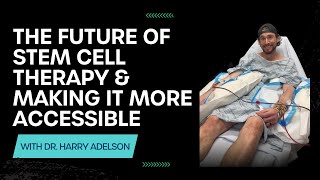
Conversation (Feb 11, 2023 YouTube) between Ben Greenfield and Dr. Harry Adelson about current stem cell therapy practice, recent U.S. legal developments, and efforts to make advanced protocols more affordable. Key points: (1) regulatory history — FDA sued Kristen Comella in 2017 (summary judgment) and later pursued other clinics, while a separate California case recently ruled that autologous (patient-derived) stem cells are not drugs (creating a circuit split); (2) stem-cell sources — autologous options discussed: bone marrow (long clinical use), fat-derived SVF (enzymatic digestion controversy), and VSELs (very small embryonic-like cells activated in PRP via a laser/holotropic filter); allogenic (birth-tissue) sources: umbilical cord/placenta/amniotic products and their possible roles; (3) mechanisms & indications — pain framed as a "non-healing wound" (disordered collagen + neovascularization → aberrant nerve growth), where stem cells can re-establish organized collagen and vasculature; (4) protocols & access — full-body stem-cell "makeover" (autologous bone marrow + VSELs ± fat) is resource-intensive and costly (~$40–60k range cited); Dr. Adelson plans scaled "STEM clinics" (menu-based, joint-by-joint, lower-cost options, launching in Salt Lake/St. George) plus a monthly tithing program offering free care to qualifying underserved patients.
Chapters
When you have one of these non healing wounds, you inject the stem cells, you lay down new collagen, you lay down new regularly formed blood vessels, and then you grow skin. It's the same concept if you've got low back pain or neck pain or hip or joint pain, whatever it is, those joint surfaces are like chronically irritated. We inject the stem cells, tricks your body into thinking that you've undergone a new injury or launching the body's natural healing cascade without actually having caused any tissue damage. You get all the benefit of a healing response without actually having been injured.
Well, Harry, we've done a lot of stuff together in stem cells, and by a lot of stuff, I mean like, you've gone up and down my whole body multiple times with many, many millions and billions of stem cells. But in the, in the past few months, even since the last, you know, full body makeover that I did with you, apparently, at least as far as you've kind of clued me into, there's been a lot going on behind the scenes in, in the whole stem cell industry, for better or worse, I don't know. But, but what exactly is going on right now when it comes to stem cells, People's access to them, the legal regulations, and some of the stuff you want to tell me about?
Well, there's been a major development bed. And so first of all, I have to give you the backstory for it to.
Mostly for your listeners, because, you know, most of this stuff. So, you know, when I started doing this back in 2010, like, there was very little attention paid to the stem cell industry by the FDA because so few people were doing it and there was so little known about it. And we were all just kind of learning as we were going. And then you worked with Kristen Comella. You remember Kristen.
Yeah, down, down in Florida. Right, The US Stem cell clinic. My wife and I had both gone down there.
Yeah, she was the, she was the one really who figured out how to isolate stem cel fat, how to process it in a doctor's office safely, easily. And so she started teaching a lot of doctors, she started treating a lot of people. And in 2017, the FDA sued her. And what that did is it essentially completely shut her down.
I think that was like right after I went down there and had a protocol done, because it was not soon after that I heard some rumblings about that helicopter flack in their clinic or something like that.
Yeah, that's right. That's right. So the FDA sued her. What they were saying was that stem cell Your own body are a drug. And if there exists anyone in the world that can really convince you otherwise, if there's anybody who can really explain it in a way to show how ludicrous and absurd that is, it's Kristen.
I mean. You mean ludicrous and absurd that they're a drug or that because they're from your own body, they should be illegal or whatever.
So the FDA was claiming that stem cells from your own body is a drug.
Okay.
And Kristen, more than anybody, is the. She's the most qualified person to really explain how that is just completely untrue. Taking stem cells from a person's body and preparing them for injection resembles in no way drug manufacturing.
Oh, so they thought that. That, like, if somebody goes in and they do, like the. It was almost like. Like a liposuction thing I did to my back. They suck the fat out. They get the stem cells. That. That was the equivalent of, like, drug manufacturing.
Yes, yes. So they were saying, wow, you know, because you have to process the fat slightly, you have to manipulate it somewhat. They were saying that was more than minimal manipulation.
Hey, I drug manufacture every morning when I pee and poo.
Based on that logic makes no sense. So Kristen, who's this little, you know, Joan of Arc, She's. She's tiny, but she's just tough as hell.
Yeah, she's cool.
Oh, yeah. I mean, she was actually looking forward to her day in court. She was relishing the whole concept of being able to argue her case and go toe to toe with the fda. The judge in that case issued a summary judgment, and a summary judgment basically means no trial. You know, in this case, it was if the FDA says what you're doing is illegal, it's illegal. They get to interpret the rules.
They.
So no trial. Guilty. So she was found guilty with no trial. And she was devastated, understandably, because she didn't get to argue her case. Well, what's super creepy?
Guilty. Basically being like a drug dealer, drug manufacturer without a license by just taking people's stem cells out of their body.
Saying that she was drug manufacturing a drug that is a non FDA approved drug.
Okay, I don't want to derail your story, but what about. Because I think you briefly alluded to this, the idea that when you take them out of the body, if you do something with them, like expand them, that that makes them different or could somehow be making them into a drug. Like, don't you kind of have to do something with them to increase the mesenchymal stem cell count or Whatever.
Well, that's another conversation. So what she was doing is she was just isolating the stem cells from fat because the stem cells are, like, embedded in the fat. So you can't, like, give them into someone's vein, for instance, because you're going to put the fat in the vein, cause an embolism. There's all sorts of problems. So basically, it's just a way to tease the ste off of the fat cells.
Okay. So, you know, burger of tissue and somebody did that liposuction on me. They did. My wife, too. And we're both skinny, so it took. Took a while to get enough fat. But you can't just take that fat and then hand to somebody in a paper cup and say, okay, here's your stem cells. You got to then isolate the stem cells from the fat. And that's what Christian was doing. That later was deemed to be a criminal offense or whatever.
It's called enzymatic digestion.
Okay.
You soak it in collagen, is that loosens it up. You incub, bring it up to body temperature, centrifuge it several times, filter it, and then you get this nice aqueous solution that is loaded with stem cells.
Okay. All right. Got it. So when that happened with Kristen, what happened to the rest of the industry?
Right. So what was super creepy about how that whole thing played out is this judge issued this summary judgment, and about two or four months later, the judge resigned from a lifetime appointment as a federal circuit judge and took a job with a stem cell company.
What?
She took a job on the advisory board for a stem cell company based in South Florida. The guy who opened that clinic is the director of the stem Cell Institute at the University of Miami. And that's the group that called in the complaint against Kristen.
Oh, my gosh.
It's super creepy.
So the stem. I assume the stem cell institute in Miami or wherever this person went to work for after they made that ruling is not doing the same thing Kristen was doing. Well, okay, so otherwise it's totally the pot calling the kettle black or however it goes.
Well, so this group, what this group, this company is doing is they are putting a stem cell line through the FDA pathway to have it become an FDA approved drug.
Okay.
And that's the big issue with stem.
Cells from your own body, like pharmaceutical money?
Yes. It's. You know, there's all these companies that are paying, you know, millions upon millions of dollars to go through the FDA pathway. And when you use cells from your own body, you're sort of Just sidestepping that whole thing.
Yeah.
And that was, that was the issue, and that's where. Where Kristen got targeted. But the good news is, while that was going on, the FDA also sued my friends in California, the California Stem Cell Treatment Institute.
Okay.
The Bermans and Elliot Lander. And that, that judge, that, that trial lasted, you know, it went on for like, five years. The judge in that case just issued his ruling, and that's what the big news is. That's what we're talking about here. He issued in favor of my friends, of Sean Berman and Elliot Lander. So he actually said, no, stem cells from your own body are not a drug. And you. The fda, have overstepped your bounds because you don't regulate medicine.
Oh, wow.
So it's huge.
Could keep doing what they were doing.
Well, Kristin was found guilty because with that summary judgment, so she's going to have to appeal. And it's different circuits. The way it works is we have these different circuits in the United States that are responsible for different territories. And the one circuit judge ruled against Kristen. This other circuit judge ruled for Cell Surgical Network in California. So now we have a split judgment. So if Kristen wants to appeal, it's. It's essentially going to go to the Supreme Court.
Oh, wow. Okay. So. So 2017 to 2022, all this stuff is going on behind the scenes. This new ruling was made just a few months ago. Now, during that time, probably even before then, a lot of people would go overseas to have stem cell protocols done or feel as though they weren't able to get what they wanted to get in the US does that change any? Like what. What does this do for STE. Procedures, particularly in the U.S. so essentially.
What it did, like for me personally, it didn't change anything as what. As far as what I was actually doing, it did change my ability to talk about it. Oh, because you just, you. You didn't want to, you know, get on the wrong end of a lawsuit from the federal government.
It's not because you were doing anything illegal, like with your full body stem cell.
Well, it was unclear. It was. It was unclear.
I mean, murky.
And it still is to some degree. It's a, It's a bit of a gray area. After Kristen's. It seemed like a dark gray area, but now with this new ruling, I feel comfortable talking about it again.
Okay. Because you did, like, you. You did this procedure on me twice. And I'll link to the other podcast that, that, that we did on that in the show notes for this one. But you Went into my hip bones. I know you, like, you took a little bit of marrow out and that wound up going back into me, right?
Yeah. So with multiple. With your treatment.
I'll let you explain.
Yeah, with your treatment. We did bone marrow. We also did stem cells from your blood, the vsels, which we're going to talk about later with you. I did not take any fat because you don't have any fat, bro. Yeah, so we skipped that part.
Yeah.
So, yeah, we did bone marrow combined with the vsel from the blood.
So technically, judge could have ruled that you were turning my own tissue into drugs and injecting them.
Well, not so.
Not so much with that with Kristen.
Not so much with the bone marrow, because the bone marrow is considered safe with the bone marrow. You're just centrifuging it. Okay. So you're concentrating the stem cells now with. And so that's considered, you know, because that's been used for so many years with cancer therapies, it's essentially an off label use.
Okay.
The issue with the fat specifically was the enzymatic digestion because the, the FDA was claiming that that was more than minimal manipulation thereby. Drug manufacturer.
Okay, gotcha. Because you weren't having to deal with the marrow or anything like that.
Yeah.
But the marrow, and correct me if I'm, if I'm incorrect on these terms, the marrow would be considered autologous.
Yeah.
So that was my own. But explain to people the difference between autologous and whatever you call that, the non autologous.
Allogenic.
Allogenic. Explain that to people.
Sure. So there's two main categories when we're talking about stem cell therapy. There's autologous and allogenic. The word autologous means donor and recipient are the same person. So that means taking stem cells from your own body. Allogenic means donor and recipient are different people. So usually that's birth tissue products, does not involve dead babies, does not involve.
The umbilicus, things like that.
Right. It involves the extra stuff that normally just gets thrown in the trash.
And you made a good point. They're not dead babies.
No.
Like I have some Christian friends and I'm a pro life guy myself, and they freaked out. They've been like, hey, killing babies for your stem cell.
I don't think that's how it works. No, it's complete. No, there's no truth to that. So. Well, let's back up. Let's talk about the autologous first. So when we're talking about stem cells from your own body, there's basically Three categories. There's your bone marrow.
Okay.
Bone marrow has been used in cancer therapies. Bone marrow stem cells have been used in cancer therapies for, you know, since the 1970s. So that is any. Anytime we use it for treating like low back pain or something like that, it's considered an off label use. I started out when I started doing stem cells in 2010, it was bone marrow. And I was very happy with it. It was very effective. Sometimes, you know, usually took a few treatments. We wouldn't just do one and get great outcomes. We'd have to do a sort of a series of them to get people where they wanted to be. And the older people got it seemed to be a little less effective. But overall, you know, I did it for just that, for three years and was very happy with it. Then I met Kristen and started doing. Started you. I learned how to isolate stem cells from fat.
Okay.
And in the beginning, what I thought was, you know, my initial instinct was to combine the two. Because if.
Combine the fat with the bone, right?
Combine bone marrow with the svf, the stromal vascular fracture, the stem cells from the fat. And I thought, well, you know, rather than just jumping into that, why don't I see. Use them, you know, do it for a period of time individually, and maybe one does work as well as or better than the other and there's no need to do the other. So for the first four months, what I did is I would. People would come to me and I'd say, well, okay, so we can do bone marrow, which I've been doing at that point for three years, and have quite a bit of experience with, and there's scientific data to support it. Or we can do fat, which I at that time had very little experience with. There was very little in the scientific literature on it at that point. This is back like 2013, 2014.
Which would you rather do? And people would self select. They would either do bone marrow or fat. I did that for four months. Then my dad came in for treatment and I thought, I'm just gonna do both because I don't. I don't know at this point which works better. So I did both. And after that, my dad.
What could go wrong?
Well, you know, I think we should change the Hippocratic oath to do unto. Do unto others as you would do unto dear old dad, especially parents.
Yeah.
So that was it. So I thought, well, if I'm gonna do that for my dad, I should start doing with everybody. So for that first group, whereas bone marrow or fat Only I waited a year and then I checked back in with them. And the outcomes with the bone marrow group were those people got consistently good results. It usually took two treatments to get them where they wanted to be. But I only had like a 10% non responder rate. Everybody else did quite well in the fat group. When it worked, it was more effective than the bone marrow. One treatment would usually get people where they wanted to be, but there was a much higher non responder rate. It was like a 30% non responder rate.
Okay.
And so when I started combining them and I checked with those people 12 months out, what I found was that I got the consistency of the bone marrow with the augmented outcomes of the fat.
Okay. But there was. There was the bone and there was a fat. But the last time I came into your clinic and did the full body thing, you talked to me about this other kind of stem cell. It was like a.
Like a V. Oh, that's right, yeah. Vsel. So that's.
So where's that fit?
Right, so we've. So we're. Thank you. We're getting back to our list here. We got bone marrow, we got fat, and then we have the Vsels.
Okay.
So VSEL stands for very small embryonic, like stem cells. These are stem cells that exist in our blood in.
In large numbers, not in bone or fat and blood.
It. It. Well, it exists in your bone marrow too, because your blood is produced in your bone marrow.
Yeah, good point.
But it's also in your peripheral blood. Okay, so what these cells are, they're called very small because they're slightly. They're slightly smaller than a red blood cell. They're called embryonic, like, because they're almost as primitive as embryonic stem cells. These stem cells exist in our blood, but they're completely hibernating. They're quiescent. We say they're just inactive. And in order to activate them, you usually have to do these sort of extreme measures that sound like biohacking techniques. You have to either have and thaw the blood. You have to stress it out. You have to stress out the blood. And I had heard about it for a number of years, but I'd only heard of this, like, you'd at freeze and thought several times it would take like 10 hours. And I just couldn't figure out how to work that into my day. And that's when I found out about Todd Ovocites, who's the doctor in Southern California who's developed a laser to activate.
These vsc, which is super Interesting, because that's all I had heard in the past. I had one friend, a Dr. Holland Chen, who was doing some of the V cell procedures and showed me in New York, who's like freezing, I mean, take him out, look like, you know, doing Han Solo in Star Wars. You know, they take him out on the dry ice and all the, all the steam coming off him or whatever, but then it doesn't, it's like hormesis, right. We can stress ourselves with cold, we can stress ourselves with pressure, we can stress ourselves with heat, we can stress ourselves with light. And this Dr. Todd guy, he's actually stressing the V cells with lasers to activate them.
Right. So that's super cool. So instead of this multiple freeze thaw, which is very time consuming and labor intensive, he's develop laser. And it's not even the laser so much as this. He calls it a holotropic filter through which the laser passes that. He has peer reviewed published data showing that when you zap platelet rich plasma, because that if you do a, like a PRP, a platelet rich plasma, you're concentrating these VSCLs, but they're, they're hibernating. If you zap a PRP and do the before and after measurement, the VSCLs increase like 100x.
And so if somebody's in your clinic and they do the, the full body makeover and there's some other protocols you do that I want to talk about later on. They, you can literally right before you do the protocol, can you do the laser thing on the V cells taken from somebody's blood right, during the clinic?
Yes, we do it immediately. So we just do a blood draw. We spin down platelet rich plasma, we zap it with the, with the laser. It takes three minutes.
Yeah.
And that's our vscl.
Wow. Okay, so, so that's the, the bone and the fat and the V cells. I think it's gonna be very helpful for people to wrap their head around this before we talk a little bit more about the different protocols you could have done. But then those are all. You said autologous, from your own body allergenic to the other ones. And what about those?
So that's usually birth tissue products. So just embryonic. Put it out of your mind.
Okay.
Fetal. Put it out of your mind. Nobody does that. I mean, there are some places in the world that do it. Most of them are, oddly enough, in Russia and Ukraine, neither of which are particularly hot spots for.
But Sarah just lost all our Eastern European listeners.
But you Know that really nobody uses. The reason nobody uses embryonic is because that's the type of stem cell, when you hear about them turning into tumors, that actually those, those embryonic stem cells, because they're so primitive, they tend to turn into tumors. So, you know, on the one hand you've got this issue of it, you know, potentially being unethical. It's very easy to argue that an embryo is a human life, but on the other hand, like, it's not even a good cell to use because that's what turns into tumor. So that's kind of.
Because I know of some doctors who are like, you know, prescribing like intranasal allogenic stem cells. Well, that TBI and stuff like that.
That's umbilical cord. Yeah, that's umbilical.
Okay.
Yeah. So embryonic is. That's where, you know, it's a ball of eight cells. That's what becomes the baby. Nobody does that.
Okay.
Fetal. Nobody does that. So let's talk about.
You're not talking about like umbilical or placental as being the cancer causing ones?
No.
Okay, got. I was concerned there for a second.
Yeah. So that's the embryonic and the. And the fetal. Okay, so now let's talk about what people actually do use, which are the birth tissue. So that's umbilical cord, placenta and amniotic membrane. And those are very rich in stem cells. And those are things that, you know, a woman gives birth in the, you know, for instance, in the hospital, if that's where she does it, then these, these birth tissues, she gets to decide what to do with them, she gets to keep them, she gets to throw them in the trash or she gets to donate them.
She's a hippie. She'll eat them.
That's right. Try it out. Yeah, yeah, we did that.
A hippie or just a super forward thinking alternative health enthusiast? Yeah, exactly. Okay, so then if they wind up in the medical community to be used as an allergenic source of stem cells, in what type of situations do you think that those would be efficacious?
Well, that's a big question. I mean, that sort of brings us to the whole idea of old versus new because, you know. Right.
So.
And this kind of gets back to the whole conversation about what happened, you know, in 2017. And Kristen, the FDA essentially put a muzzle on the entire industry in this country from about 2017 until just recently in 2022, and people stopped talking about it. During that time, all these international clinics were going crazy with their Marketing. And a big part of their marketing was use umbilical cord stem cells because they're new and more robust. Well, where did that idea come from? So if you look at the area of tissue engineering, where you're like, growing a kidney in a laboratory, for instance, in that situation, yeah, you do want to use umbilical cord stem cells. They are more robust than bone marrow stem cells, you know, for growing an organization. Now, my own experience, because in those early years, I used to commute to South America, and for my patients who wanted culture, expanded umbilical cord cells, I went to Bogota, Colombia.
Oh.
But I was treating the same stuff I treat here. I was treating low back pain, neck pain, joint pain. And, you know, I did it for about three years, and I didn't really see that much of a difference between what I was doing at home and what I was doing abroad. So when you're talking about like, musculoskeletal pain, low back pain, neck pain, joint pain, that sort of thing, I don't know that there's really that much of a difference. I mean, you say like, what's more powerful, a supercomputer or a hammer? Well, it, you know, it depends on what your job is. If you want to design a bridge, then the supercomputer, but if you want to drive a nail, I want a hammer myself.
Do you think any of these international doctors are aware of this idea that you could, like, take the stuff from the world, blood like, like you're doing now, and laser activate it like that? To me, that's. It seems like it could be better than umbilical or placental, but I don't know.
You know, they've just like anything, any industry in the world, there's. People take a route and then they have sunk cost, and that's what they're doing, and so that's what they promote.
Okay.
So I, I don't know if they're interested in that.
Okay. So. So in terms of just like, the overall perspective on anything else related to freedom over our bodies or health freedom in general, does this ruling, like, spill tendrils into any other areas of health, in your opinion, especially in our country?
Yeah, I would say absolutely. Because now guys like me can actually start talking about what we're doing again. You know, the, the, the.
I think you like, the conversation that you and I are, are having right now would have been a very difficult one to have. Like, say, eight months ago, I wouldn't.
Have agreed to it. Yeah. I mean, just saying that I use stem cells from fat tissue. I wouldn't have said that. Yeah, I wouldn't have said that three months before the ruling.
Okay.
Yeah. I mean we had to, we had to be sort of very hush hush about it. And now I feel like instead of an FDA issue, now we're look turning into an FTC issue because what we're seeing now is state attorney generals are suing doctors in conjunction with the FTC for sort of truth in advertising type stuff.
So basically, so when it's an FTC issue, it's more how you're marketing, how you're advertising what you're saying. It's like me in the supplements industry, I can't say cures this. I have to say whatever supports healthy blood sugar levels instead of like cures diabetes or something like that.
And I think that's perfectly appropriate. Yeah, you know, there were people who were abusing that. The people who are the targets of these lawsuits that are happening right now, these state attorney generals with the ftc, they are going after mostly chiropractors who had these very aggressive marketing campaigns saying, oh, you know, they were holding dinners and inviting people, giving them a free dinner and telling them all the wonderful things that could happen to them. And, and with stem cells. Well, yeah, yeah, yeah. Oh, and so those guys are the.
Chiropractic docs were doing stem cell protocols.
Most of them were hiring nurse practitioners to come in the, to come in the office and do it and do the actual sexual injections. But you know, this, this is, I, I sort of feel like those, I'm the last person in the world is to, you know me. Like, I don't trash talk other docs, but it really sort of put a dark shadow over the entire industry. So you know, these guys, unfortunately, I hate to say it, but I think they're, they're, they're, they're getting what they deserve.
Yeah. Well, I have a question about the full body stem cell makeover that you do and whether this, this changes the things that you do with that. But actually before I ask you about that, I have had this question in the back of my mind regarding stem cells because they're considered to be like regenerative medicine, regrow tissue, you know, deal with, with, you know, everything from like, you know, cartilage to support, you know, a lot of people do it for anti aging and longevity and skin health and sexual health. But what I have yet to wrap my head around is the pain component. Because you have told me so many times, people come in, they've got like debilitating pain like low back, back. I know you do a lot with back pain, neck pain, joint pain, etc, I don't understand how stem cells would actually shut down pain. Like I get how they get help with regrowth of tissue or, you know, anti aging usefulness, et cetera. But where's the pain part come in?
Right, so this is where people in my area in regenerative medicine for the treatment of pain, where we believe the pain generation is coming from, the actual cause of the pain is not what you see on the mri. Because the trap that we fall into is we're so conditioned to like, oh, what does the MRI say? Well, the scientific data shows us that if you look at 100 people with no low back pain, people who've never had low back pain, and you look at their MRIs over the age of 45, 60% of them are going to have abnormal MRIs, 15% are going to have abnormalities so significant that if they had corresponding symptoms, they would be candidates for immediate emergency surgery. Alternately, if you look at people who have lots of back pain, frequently, their MRIs are perfectly normal. And this has all been very well documented. I mean, this is to the point where the American College of Surgeons in 2011 issued a position paper discouraging doctors from ordering MRIs for low back pain at all. Because all it really serves to achieve is increase the cost and the risk of treatment. It doesn't do anything to improve the outcomes.
Unnecessary and expensive diagnostics.
Right.
That results in a lot of false positives.
So in regenerative medicine, what we think the actual cause of the pain is changes in the microscopic connective tissue. So if you have what you know, if you have suboptimal healing, either you've had a single traumatic injury that doesn't completely heal, or you have multiple micro traumas or repetitive type injuries that just don't completely heal. Two main things happen. One, the collagen matrix, which composes sort of that, that's what makes the miracle fabric, that is your connective tissue. You know, it's supposed to stretch just the right amount in each direction and the nerve fibers pass freely through it. That's one. The other is you. You generally have just the right amount of microcirculation capillaries to the area, bringing nutrients to the area and metabolic waste away. When you have suboptimal healing, both of those things change. Change. Your miracle fabric loses its miracle properties. The collagen fibers become chaotic. They pull too. They open too much in one direction and not enough in other directions. The nerve Fibers that pass through them get caught up and fire pain signals. At the same time you grow, you, you undergo this phenomenon called neovascularization, which is the growth of new irregularly formed blood vessels.
Okay.
And every time you grow a new blood vessel, you also grow a nerve fiber or along next to it. So now you have a hyper concentration of nerve fibers and you have these irregularly formed blood vessels. So you actually lose the ability to bring nutrients to the area and metabolic waste away. So essentially, when you have a painful area from a, you know, from one of these suboptimal healing areas, whether it's in your low back or your neck or whatever, you can consider it really like a non healing wound.
Yeah.
And the area in research that enjoys the best support for stem cells is non healing wounds. And non healing wounds are great to study because you, you know, you look at somebody, they have an ulcer and you perform an intervention and either it gets better or it does.
Would that be like a bed sore, like that type of stuff?
Yeah.
Okay.
Really easy to study because it's 100% objective. You can see it like you say, hey, I've got this sore here, it won't get better. And then you, you inject stem cells and either it gets better or it doesn't. Well, consistently it helps.
Yeah.
And the reason it helps.
Never had a bed sore, but they sound horrible. Just the name itself.
Oh, yeah.
Oh, very disturbing.
Yeah. And a lot of people who are, you know, living in wheelchairs. Yeah, it's, it's. Yeah, it's terrible. So.
So, so, so, so it's like.
A non healing wound.
Yeah. So essentially, so when you have one of these non healing wounds, you inject the stem cells, you lay down new collagen, you lay down new regularly formed blood vessels, and then you grow skin. It's the same concept. If you've got low back pain or neck pain or hip or joint pain, whatever it is, those joint surfaces are like chronically irritated. We inject the stem cells, tricks your body into thinking that you've undergone a new injury, launching the body's natural healing cascade without actually having caused any tissue damage. You get all the benefit of a healing response without actually having been injured.
So would this be one of the reasons why people would do things like foam rolling and deep tissue work for the collagenous component? Right. To get rid of a lot of the cross linking of the fibers. I interviewed a guy in Joel Green. He calls it maintaining young muscle because theoretically, if the collagen cross linking and fascial Adhesions are, are too aggressive, then what you'd get underneath that is neovascularization. Lay down of nerves that follow those same abnormal pathways and potentially increased pain with age just from not keeping up with your deep tissue mobility type of work. Could that is, is that fair to say?
Absolutely.
A little bit of that.
Yeah, absolutely. So for instance, the worst looking x rays and MRIs that I've seen are dentists. Think about dentists. You know, most of them are very active people. On the weekends they're like in a hockey league and so they're bashing themselves up. They're weekend warriors. They're bashing themselves up on the weekends.
So funny you say, because I like no. 2 dentists to play hockey.
Yeah, I mean they, you know, they're, they're into extreme sports. And then Monday through Friday they sit in one position in this sort of awkward, weird position for like 10 hours at a time. And so on the weekend they break everything down. And then during the remodeling phase during the week when you're supposed to be, you know, because you're constantly remodeling your tissue issue. And that's why, you know, that's why we say sitting is the new smoking. Because if you sit in one position for long periods of time, it grows in weird ways. So the. So my dentists and also to an extent truck drivers, I've seen that a lot. They just have the worst looking X rays because they do this heavy lifting or something and then they sit for eight hours.
I have a family member, a very close family member who sits and plays the piano a lot lot, who's developed over the past three years fibromyalgia. Right. Just like this unexplainable pain, chronic debilitating. That won't go away. Do you think that in somebody like that, like, like, is there a link between neovascularization and fibromyalgia there?
You know, the long periods of sitting. I mean, this is why in. When I was in naturopathic school, I stood in a box of sand barefoot, which, you know, people thought was weird, but I you sitting for long periods, it does bad things.
Stood in a box of sand barefoot?
Yeah.
Why?
Because we had to endure like eight hours a day of lecture. So I had this Rubbermaid box that I put playground sand in and I just had bare feet and I would just dig my feet into the sand.
During the lecture.
Yeah, for eight. Because we'd have to.
You were like early adopter. The whole standing workstation thing in a sandbox.
Pretty Much, Yeah.
Wow. But the cats loved you.
Well, yeah, on the lid I had a picture of a cat with an X through it.
Oh my gosh, that's funny. Okay, so a lot of the pain, especially in the spine and the joints, those are results of a non healing wound. And that's a lot of the protein protocols you find yourself doing.
That's right. That's right. That's exactly right. So you know, and that's that the idea with, with, you know, with, with dose clinics we about half the treatments we do are site specific was meaning like someone has low back pain, they have neck pain, we do their neck, we do their low back, we do their neck. You know, we just do the areas that bother them. But that was how full body stem cell makeover came about was it started out because I was doing these big treatments on these busted up old cowboys who had arthritis through their entire. And then I started getting biohackers who are like, well can't you just do it preventatively? Like I want to do my whole body because I don't have for instance hip pain yet, but who's to say that I won't in 10 years? And yeah, you know, it made sense to me because if we're turning back the hands of time and restoring health to the joint surfaces, I, it makes sense to me to do it preventatively in addition to doing it when somebody.
That'S kind of been like, I've had a lot of pro athletes since I, I did the full body makeover with you who have contacted me and been like, well, I don't have like any serious issues. Is this something that would help me? And I tell them kind of the same reason that I got, I'm like, well if it extends your career, your longevity and keeps the pain that's going to take you out of your career from happening in the future, it's a good idea. I mean that, that's why I did with you as you know, like I was racing Spartan racing the first year we did I wasn't super messed up, but I did it as almost like this anti aging hack. Granted, back then I was probably almost infatuated with do I want to stay 30 years old forever? Or whatever. And now I'm, I'm gracefully embracing aging. But I did another protocol last year. Again, just because this idea of hey, my joints can be around like some whatever, 80, 90, throwing around football with my grandkids, I think it's a great idea. So the idea is either people who have pain in a Joint or joints or people who just want joint longevity or not to be in chronic pain when they age, those would be the two primary people who would come to you for a full body stem cell maker.
And I can't say that it prevents arthritis with any scientific certainty, but it makes sense to me that it might.
When I did it, you did the bone marrow like we said, and you did the V cells. Now that, now that you're free to talk about what you're doing, you're going to change anything, like, as far as the way you do the protocol.
Well, I actually am going to start experimenting with the allogenic. I finally found a laboratory that I feel comfortable with and I just have.
So again, for the allogenic, for people who need the reminder that's a placental.
The umbilical ET and it's so, it's, you know, they have some products that are actual cells, they have other products that are growth factors. And I just have so many people asking about it, you know, I don't even necessarily want it for me. But, you know, when I last did a deep dive into it about three years ago, I wasn't satisfied with the safety literature, but there's been so much published in the last three years that it really appears to be completely safe.
Safe. What is it about that you think might be better? Like if it were better, would it just be the, the ability to have a higher stem cell count or something like that from the allergen?
I think they probably are, in a sense more potent. Okay. And so now I only treat musculoskeletal pain. But if somebody is, you know, for instance, say they, God forbid they come down with Ms. Or Parkinson's or something like that, those people probably should do, you know, those, those are the people who might want to go abroad to, to do culture. Expanded umbilical cord stem cells, because they need massive doses like every month or two months for the rest of their lives.
All right, so kind of an uncomfortable question because a lot of people, you know, ask me, like, when you did the stem cell injection into your generals, were you afraid you're gonna get dick cancer? And I told them, well, I actually did go and read a lot of the PubMed research on how this has been used for years for Peyronie's disease or erectile dysfunction or things of that nature. I wasn't just going and cowboying it with zero data. But it begs the question, like with you doing the autologous with the option of the birth tissue growth factors, the allergenic Component like, are you literally going to be like guinea pigging on people and then just seeing what happens or you have little baby mice in there or how you plan on doing things?
It'll be guinea pigging in the. In that I don't. I personally don't have much experience with it. I did those cases in Colombia, but I mean, that was a number of years ago and it wasn't a huge number of cases.
Okay.
But if you. There is, I believe, sufficient data at this point to, to at least, you know, show that it is safe. So I feel comfortable doing it.
Yeah. Yeah. Interesting. You think you would do it? My full body stem cell makeover?
Oh, I've already. I have had it done.
Oh, you have?
Yeah, I do.
Like, Harry does this on all sorts of people. But I didn't know if you trained somebody to do what you do on yourself.
I had an associate for a while. I trained him to. To the point of doing a full body. He did it on me.
Okay. So you know what it feels like.
Then he. Then he demanded that I don't triple his salary, so I let him go.
I do warn people afterwards. I did a spartan race, like five days after I did the first one, and I was kind of taped up and my joints were a little sore. But you're sore for like a good week or so after.
Yeah. Yeah, I beat you up. I mean, it's a. It's a big treatment. It's not. It, you know, it. It needs to be respected.
Friends who I've had do it, they. They like call me up the next day, like, ben, I think I made a mistake. I can't move. I'm like, just. You'll be fine. Just take a couple days walk, you know, go easy. Don't go swing the kettlebells. And you feel pretty. Within about like three days, you start to feel mobility come back. And at least in my experience, in like a week, you feel pretty good. Might depend on your age.
Yeah. I say hate me now, love me later.
Yeah.
It's rough in the beginning.
Yeah.
But, you know, exactly. It was for me when I had it done, I was. Felt like I was hit by a car for a couple of days. But then, you know, about six months later, I realized I just had no pain in my entire body.
The procedure itself. You're asleep the whole time. Time.
Oh, absolutely.
Yeah. Yeah. So I don't remember what happens for like an hour after. I remember counting down and then waking up in your office and. And yeah. Then walking across the street to the beautiful Hotel. Okay. So the stem cell makeover, the full body makeover is expensive. People know that like you're paying with like 45,000 or something, depending on which. It's 40 or 60, but either way, expensive.
Yeah.
So you recently had an article that came out on my website about this thing called STIM S T Y M. I don't know if people read that, but it was essentially like, like how to get a lot of what you're getting from the full body protocol, but for people who maybe aren't like, you know, elite rich biohackers or pro athletes or something. Explain what the STIM is.
Yeah. So Doseri clinics. You know, it's been cool, the evolution of how I do things and it's been, you know, I love what I do, but it has gotten very expensive. And the reason is it costs a fortune around my place and all of this stuff costs money. It's, you know, I'm not gouging. It's just like the product is very expensive. So, you know, I realized that it's beyond the reach of many. And, and even just on that, the article that we did on your website, there was a lot of, you know, feedback of people saying, how is this going to become affordable, like to the.
Rest of the world?
So I've partnered with a friend, a new friend, Dr. Josh Red, who some of your listeners might know. He's got like 200,000 Instagram followers.
Yeah, I've never hung out with him, but we met brief. You introduced us over the phone. I haven't, I haven't actually met him, but he seemed like cool guy.
Yeah. He's got a chain of autoimmune clinics here in the US and so he has a lot of experience scaling businesses, which I don't. I mean, I only have experience doing stem cell medicine. So we are going to together create STEM clinics. So STEM clinics. I'm currently in the process of training the nurse anesthetist that's worked with me for almost five years in how to do a lot of this stuff. Sort of like the, the, the, the 20% of the injections that I do that work 80% of the time. And once he gets fully trained and we're going to open a series of clinics around the United States that's going to offer the same sort of, I call it the kitchen sink approach. We're using bone marrow and we're using fat, we're using vsel potentially. We're going to use these birth tissue cells and we will. It's instead of the sort of 20,000 and up range. It's going to be more or less.
Like 2 to 10,000, but joint by joint meaning.
Right.
It's not going to be, let's say I'm like, well, I don't want to do the full body thing. Maybe it'd be cool, but I don't have the money. But man, my knee and my elbow are beat up. Do, do everything you do in the full body, but just do my knee and my elbow.
Right. So stem clinics is not going to offer full body stem cell makeover, but they'll do, you know, if someone wants to have their low back and their hips and their knees done, then they'll be able to have that done.
And then right now Park City is the main place where people do the full body. Body one.
It's the only place.
The only place. Okay. Yeah. But the stem clinics are going to be around the US STEM clinics, we're.
Going to start in Salt Lake. The second one will probably be in St. George.
Cool.
And we'll just, you know, do some market research, decide where to go next.
I probably know like 50 people who want to do something like that. Who, who aren't doing the full body just basically because the price tag. Yeah, yeah. Okay. Now, now do you also have the tithing thing? Because I thought I should mention that because it's kind of cool. I like that you did this. Yeah.
So. So tithing has been going strong now for close to five years. So for one day per month at Doceri clinics, we offer treatment at no charge to the medically underserved. So first people have to demonstrate that they're in fact living below poverty line. Once they have, you know, once we determine that, there's two pathways for enrollment. One is for combat service veterans. If you've served this country in combat, I'll do the treatment for free. Like I'm happy to do it. If you're not a combat service veteran, I will do it in exchange for documentation of community service hours. So we've essentially got, you know, Doseri Clinics, which is the Cadillac. It's, you know, it's expensive. It's, it's, you know, if you look, if you shop around in the United States, we're quite a bit more expensive. But if you look at the value, you know, we're doing all these different bone marrow and fat and vscl and everything is under IV sedation from a board certified anesthesiologist. And so I mean there's all this like added value. So that's dose Harry Clinics, then STEM clinics is going to be sort of a simplified version. It's going to be, you know, treatment of low back, treatment of neck, hips, knees, that sort of shoulders, that sort of thing. Using. It'll. We'll have menu items. You know, some people can just do V cell. That'll probably be the least expensive. We can do V cell and bone marrow, which, you know, we'll have, like I said, menu items. And then the tithing program is for people who can't afford any of it. I need to be treated for free.
Got it. So what I'm gonna do is I'm gonna put@bengreenfieldlife.com stem S-T Y M all of. Well, what I'm going to do is put all the show notes for everything you heard today, where you can also leave your comments and your questions and your feedback. Usually me or Dr. Hare will jump into one of those. Those. But then what I'll also do, because we, we probably like, scratch the surface of everything that happens during the full body stem cell makeover. I'll link to the other episodes that we did on that. And I, I don't know, is his video still hanging around on YouTube of you doing that protocol on me, or did they have to take it down? We played that on the, on the Joe Rogan show that, that you. It was a cool, it was a cool clip.
Oh, do you mean this? The time lapse video?
Yeah, the time lapse. Me getting the protocol.
Yeah, that's still up.
Okay. It's still. Okay. So I'll link to that. People want to see the time lapse video. Not safe for work or at least the dinner table. But it's me getting the whole stem cell protocol done. I'll also link to the article for those of you who are more visual that Harry wrote that kind of details the STEM protocol. And so you can leave all your questions and your comments and your feedback over there. And again, like, like the stem thing is going to start off in Salt Lake, but I, I think it's cool. This is going to be available in the ocean. Just pop in, wham, bam, thank you, ma'. Am. Get a joint. Done. Done. And use all the, all the stuff that you've talked about. I guess we'll. You'll just keep people posted on how it goes with the autologous combined with the allergenic. Yeah, but if, if that works out, you can start doing that in the STEM clinics too.
Yeah, I believe so. If there's, if there's interest because we've just had so many people asking about it.
Yeah.
So.
Yeah.
And STEM clinics, by the way. We're already functioning just out of my clinic. And once we sort of get up and going a little more and get everything more established, then we'll move him down to something. Okay.
All right. Got it. It cool. Anything else you want to cover, Harry? I think. I think we got through. I. I didn't know about this. This. You told me you want to talk about the ruling, but I didn't realize how recent or important that is, so that's super cool. And congratulations because it sounds like it's actually good for you, too.
Yeah. Well, congratulations to Sean Berman in, in Los Angeles, who's the one who, you know, went toe to toe with the FDA and, and won.
Yeah, I don't think I know Sean, but. Hi, Sean. And then, then for everybody listening, BenGreenfieldLife. Com Stym Harry, thanks once again for coming on the show. You're always a wealth of information, man.
Thanks, Ben.
More from Jeffrey





The Solution to Aging Might Be Closer Than Anyone Realizes - With Ben Goertzel


