The Most Comprehensive Blood Test You Can Get
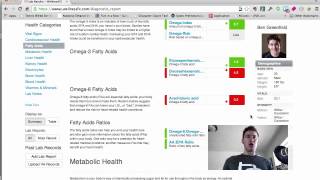
Ben Greenfield narrates his experience receiving a comprehensive WellnessFX "premium" blood panel, walking through results and interpretation for lipid profile, omega fatty acids, metabolic/thyroid/hormone markers, liver/kidney function, electrolytes and bone health, and describing how his high‑fat diet and training history relate to those values. He highlights notably high HDL and DHA, low triglycerides and inflammation, some thyroid suppression (low T3, elevated TSH), and plans to investigate gut health and adjust diet/supplements.
Questions this video answers
18 vials
About 450 milliliters
129
97
233
Chapters
Hey folks, how's it going? It's Ben Greenfield here coming at you from my standing workstation in Spokane. And today we are going to take a deep dive into one of the most comprehensive blood panels that you can get. It's called a premium panel from WellnessFX. And the way that I think about a panel like this and the reason that I would consider testing my blood on this comprehensive level is the fact that I'm a big believer in checking on and maintaining your engine before it begins smoking and before the car breaks down. So the other thing that's very cool is of course, when I guinea pig myself on tests like this, I can actually show you some of the values so you can learn some things and so that you can, you can pick up some lessons as I pick up some lessons because I certainly learned a lot in the post that I'm about to show to you. So.
This particular panel was again done through WellnessFX. And what you're looking at right now is my personal WellnessFX dashboard, which basically shows all my values and all the previous tests that I've done with WellnessFX. This panel began by me ordering the test through WellnessFX, after which I was immediately given a PDF that I downloaded, printed off and brought to the lab, which is about a mile and a half from my house. And there they drew the blood and it took about 15 minutes to do. The blood draw for this particular panel was 18 vials. I took my kids with me. I actually put a picture over on the post that accompanies this video@BenGreenfieldFitness.com but my kids both commented that there was certainly a heck of a lot of blood because there was 18 vials of blood. It's actually not that much blood though, to tell you the truth. I think it comes out to around 450 milliliters or so. So the tubes are not huge. There's just a lot of tubes because there's a lot of different panels that they're running. So let's go ahead and jump right in and we're going to start with the basic lipid panel, which is right up here at the top. Now, just a quick background for you. I personally eat a high fat diet and so some of the variables that you're about to see are pretty typical, something you would see from someone who's eating a high fat diet. Meaning I have a lot of olive oil and avocados and I just had lunch and actually ate a bunch of chicken skin with chicken and bones left over. From my wife making bone broth for lunch. So I'm certainly not fat phobic and it certainly does show in my lipid panel. So what you can see here is that my HDL is at 129. This is very, very high for high density lipoprotein. Now, high density lipoprotein is, is a negative cardiovascular risk factor. And generally in high amounts, it is a good thing. Now, one of the caveats to that is that you occasionally do see HDL elevated in folks who have gut inflammation or some type of underlying gut infection. So whenever I see high hdl, I do want to make sure that I don't just look at it and say, hey, okay, great. But I also ask if there's any gas, bloating, indigestion, or if someone's actually done a gut panel. And as a matter of fact, tomorrow morning I'm doing a gut panel just to check up and see. I'm doing what's called a GI effects panel that I order through a company called Direct Labs because I want to test my poop too and see what's going on. But generally high HDL is a good thing. You can see my LDL is 97. So it's amazing that I'm personally eating a diet comprised of 60, up to some days, 90% fat. My LDL is at 97. Not that LDL is a bad thing, but it's extremely low. So you can see that this gives me a total cholesterol of 233. Now this flags orange on the WellnessFX panel because.
Cholesterol above 200 is sometimes considered to be unfavorable when it comes to cardiovascular risk. But that's only something you really need to worry about in the presence of things like high inflammation, high levels of very low density lipoprotein cholesterol, the small oxidized cholesterol that's likely to dig its way into your endothelial cell walls. It can be dangerous in the presence of high triglycerides, low HDL. But when it is above 200 and it is good cholesterols that are driving cholesterol above 200, that's generally a very, very good thing, especially from a neuronal and a nervous system standpoint. So I'm, I'm very happy my cholesterol is above 200. That is a good thing. And you can see here, this is kind of interesting. You can see that once I quit training for Ironman Triathlon, my APO B levels, which are, it's a protein that adheres to the surface of LDL cholesterols and a lot of times it is elevated. I find it elevated a lot of times in endurance athletes specifically I suspect because it's being used as some type of an anti inflammatory measure as LDL cholesterol particles are used similar to HDL as one of the ways that your body fights inflammation. And APO B you can see here dropped. I'm actually quite happy about that. So I have a low particle count probably because of a little bit lower levels of inflammation. I have low levels of another particle called L.P. and I have rock bottom levels of my small oxidized cholesterol particles. Very happy about that. So overall, this lipid panel, oh and by the way, triglycerides, very low at 35. I like to look for an HDL to triglyceride ratio in the athletes and the people who I work with. That's generally close to one or even triglycerides that are lower than hdl. Although that's actually.
Extremely happy here that my triglycerides are rock bottom. VLDL is rock bottom. HDL is high, LDL is high, VLDL is again low. So all good stuff there. Now.
You can see a few other markers here when we drop down to HDL particles and inflammation. First of all, I have very high levels of HDL particles, which is no surprise because since Apoa1 adheres to the surface of HDL particles and I have a very or adheres to the surface of HDL cholesterol and I have a very high level of HDL cholesterol, it makes sense that HDL particles are high, which is again good because that's a negative cardiovascular risk factor. Now one interesting thing here that may have jumped out at you. First of all, there is a big red sign here on HSCRP from a test that I took three tests ago. That was right after I did back to back triathlons and one of the toughest triathlon courses on the face of the planet, the Wildflower Triathlon. That was exactly one year ago today actually. That's why HSCRP is very high there. But in general my inflammatory markers are rock bottom low, below 0.2. That is for an athlete. I'm extremely happy with that. Now I don't use a ton of anti inflammatory drugs or anything like that, but I do eat a diet that's very low in vegetable oils, processed sugars and very high in natural anti inflammatories. And you're going to be very interested in the omega 3 panel that I show you later on because omega 3 fatty acids are important for fighting inflammation. And my omega 3 fatty acid score you may think is really interesting. LPPLA 2 is a marker of inflamed vessels. This is a cardiovascular risk factor. And shocker, it's through the roof on me. It's at 393. Well, this is actually, there's one situation in which you don't need to be concerned about high LP PLA2. LP PLA2 is, in addition to being a marker of inflamed vessels, also something that is used by HDL cholesterol as one of the ways that HDL cholesterol oxidizes particles, one of the ways that HDL cholesterol fights inflammation. So a person with a very high HDL and very high HDL particle count is generally going to have high LP PLA2. And in that case it's not a bad thing. Okay, so LPPLA2 in someone with normal or low HDL would be something that you kind of want to turn your head at. In someone with high hdl it's not a big deal. And so if you test high LP PLL2, but your HDL is very high, also not a big deal. Okay, so so far I'm, I'm happy with my panel. Even though like I mentioned, the very, very high levels of HDL do indeed inspire me to test my gut just to check and make sure there's not any underlying bacterial overgrowth or parasite or anything like that in the gut. Just to make sure that HDL isn't high because it's fighting a huge amount of gut issues. Next are free fatty acids. Those are oily substances that help you to build cell membranes.
But in excess they can lead to increased deposits in blood vessels and that can lead to cardiovascular disease. You can see my free fatty acid count is very low. Again amazing with the amount of fat that I eat that it's so low. But I have. This is an incredible panel. This omega index and the ratio of your omega 3 fatty acids to omega 6 fatty acids. Remember, just a quick primer here. Omega 3 fatty acids are generally anti inflammatory and a very good essential fatty acid.
Omega 6s are not bad, but in excess are definitely pro inflammatory. You would get these from like seeds, nuts, heated vegetable oils, etc. Arachidonic acid is one of the inflammatory components of omega 6 fatty acids or it is an inflammatory omega 6 fatty acid. And then another thing is DHA which is incredible brain building fatty acid and it's found in Very, very high amounts of neural tissue and is generally in low concentrations in most folks, especially vegans and vegetarians. But most people's eating a typical western diet. Their omega 6 to omega 3 fatty acid ratio is skewed towards omega 6s. They are living in an inflammatory state. Well, you've already seen that my HSCRP is rock bottom. You can see here that my DHA to EPA ratio is through the roof, meaning I have very high levels of dha. I have an extremely low omega risk, meaning that any type of cardiovascular health risks related to omega fatty acids is very low. My arachidonic acid is extremely low. Off the charts low. It flags red at so low, meaning there's pretty much almost zero inflammation going on, which with my hard and heavy training is very pleasing to me to see that I have this low level of inflammation. Omega 6 to Omega 3 ratio again, fantastic here. High amount of Omega 3s to Omega 6s. DHA so high again that it's off the chart. It flags red. The only situation where you would be concerned about a DHA this high is if someone was megadosing or with fish oil and that might indicate they would be at risk for something like blood thinning. I don't megadose with fish oil. I take four capsules of this stuff called super essentials fish oil. And I don't even take that every day. I take it on days on which I don't eat fish. And that's it. That's just my rule. And I think that generally my good omega 3 to omega 6 fatty acid ratio is based off the fact that, that I eat a healthy high fat diet. Generally grass fed, organic beef, wild caught fish, good raw seeds and nuts in moderation. I don't do many seeds and nuts at all. About three Brazil nuts a day with a very small handful of raw almonds and then just generally olive oil. I eat a lot of avocados, I do a lot of coconut milk, but I don't do a lot of seeds, nuts, nut better nut butters, vegetable oils, etc. Which really, really helps us out. As a matter of fact, I avoid vegetable oils like the plague.
Okay, so let's jump down to Metabolic health. So here on Metabolic Health you can see that my insulin levels are extremely low. This is probably due to my very low carbohydrate intake.
Insulin levels that are extremely low. Technically, in someone who is trying to like build muscle and get a lot of muscle gain, very, very low insulin levels and very, very low levels of insulin, like growth factor are not necessarily something that's extremely favorable, but most people you know. For example, I've done genetic testing through 23andMe. I know I have a higher than normal risk for type 2 diabetes based off genetic factors. For me, low insulin and low blood glucose and low hemoglobin A1C has more pros than cons. You can see that my hemoglobin A1C, a three month snapshot of my facet blood sugar levels is low. My fasted glucose is 87. I would be happier if it was below 85, but it's generally low, so I'm happy with that. So diabetes and insulin resistance markers look good.
You can see. And this is an area that I've talked about before in the podcast, probably related to all of my experimentation with low carbohydrate and ketosis combined with high levels of physical activity. My thyroid panel is not as favorable as I'd like. Specifically, you can see here that I have very, very low T3. And when you see that you have very, very low levels of your most metabolically active thyroid hormone, T3, you need to dig a little bit. So, first of all, my thyroid stimulating hormone is high. Generally it's going to be high. And I like to see it between 0.5 and 2. Mine's at 3.21. And you can see that I had it down for a while and then it started trending up. Well, usually it is high when your pituitary gland, your hypothalamus are trying to send a message to your body to upregulate your thyroid production and that's not happening, so you produce more tsh. And long term, that can be a bad thing. Well, these two previous times that I had my TSH taken and that my T3 was starting to rise, I was on a desiccated thyroid gland supplement called Thyro Gold. I quit taking that because I wanted to see if my body was kind of back into the mode of generating its own thyroid hormone. Because I don't like to have to rely on something like a glandular extract for thyroid production. It turns out that my T3 is still pretty low and my TSH started to rise again. Now, it's not necessarily because my T4 is getting converted into what's called reverse T3. That's one of the things you see a lot. But if you look down here, my reverse T3 is actually low. And the other thing that's happening is when you look at thyroid binding proteins, which is going to be my free thyroxine index Here is going to be a pretty good indication of my thyroid binding proteins as is my T uptake here. I actually have decent levels of, or I'm sorry, not extremely high levels of thyroid binding proteins that are, that are binding up my T4, my T3 and somehow keeping it inactive. So there's something here that is basically keeping T4 from getting converted into T3. Now some of the things that can cause that to happen are very, very high levels of blood fatty acids. We've already seen my blood fatty acids are low. Another thing that can cause an adequate conversion of T4 to T3 is low glucose, high cortisol as well as gut infection or bacterial overgrowth or something along those lines. All three of those factors are potentials for a guy like me. Okay. I'm a hard charging athlete, I am a businessman. I have a lot on my plate and I know that my cortisol levels are kind of high. You're going to get to see them in a second. I also know that I am taking in less glucose than the average hard charging athlete would consume and that may also be unfavorable for my thyroid right now. And then the other thing is I may actually have some type of bacterial overgrowth in my gut and that's something I'm going to be looking into via a gut panel. So ultimately looking at this big picture, I will probably start back onto the thyro gold while I look at my gut. And I'm also going to increase not only my total calorie intake, but also I'm going to slightly increase my carbohydrate carbohydrate intake because I have been limiting it quite a bit lately. Probably more than I should be doing with the amount of training that I'm doing to prepare for things like Spartan and seal fit. So I'll probably be increasing carbohydrates a bit more primarily with dinner. I'll be eating more rice and sweet potatoes and yams and things like that with dinner. And just as an n equals 1, I'm going to see if that increased carbohydrate intake has any effect on on thyroid. But again I probably will. Just for my short term kind of health and well being and energy levels, I'll probably get back on something like thyroid gold because again these levels of T3 are pretty low. You can see that they dropped extremely low when I was in the throes of training for Ironman Canada. They got down to the levels where I was concerned about my mortality. They were so low, but they're Dropping low again now, so I'm gonna need to get those back up. You can see that my cortisol has trended down. I peaked at about 23.7. I'm down at 18. My goal is to get my cortisol below 10. Okay. So gradually each time I test, my cortisol is getting lower and lower. I've been focusing a lot on stopping certain aspects of my business, on more relaxation, more deep breathing, more sleep, kind of giving up the concept of just like living life at a very fast pace, pace to instead live life at a slower pace. And I think that's made the biggest difference in cortisol levels. And I'm also not doing Ironman triathlon training anymore, which probably helps out a little bit as well. But cortisol is starting to drop. It's still not as low as I'd like, but it's good that that's going down. Insulin, like growth hormone, you can see here, flags red. Remember, insulin like growth factor is anabolic. When you have low levels of insulin, low levels of blood glucose, insulin like growth factor is going to be low. But again, if I were like an athlete trying to put on a lot of muscle or a lot of mass, I would actually want that to be a little bit higher. You'll tend to see things like insulin like growth factor low, along with some of your other anabolic hormones like dhea, testosterone, stuff like that. In a case where someone is also restricting calories, trying to maintain a certain body weight, restriction of carbohydrates can cause this to a certain extent, generally sending your body the message that it's in a slightly more catabolic than anabolic state when it comes to energy intake can cause this. And again, I am a guy who does a lot of like, intermittent fasting, high levels of physical activity, carbohydrate restriction. And seeing my hormone panel, I'm still looking for that balance between longevity energy levels, low blood glucose, low inflammation, but also enough food to kind of keep my hormones elevated. And I'll talk to you a little bit more about, you know, herbs and things like that for hormones as well. And here we are at the hormone section of this panel. So a few things. You can see here the red flags. Luteinizing hormone, for me, it's very low. Now, luteinizing hormone is the hormone that my brain is going to send down to my testes to tell my testes to produce testosterone. If luteinizing hormone is low, it's not necessarily a good thing. Now you see, luteinizing hormone to Be low in a variety of different conditions. Sometimes even something like a pituitary tumor can cause luteinizing hormone to be low. I haven't screened myself for a pituitary tumor, thought about it. But basically the other thing that's probably a bigger issue here is that you tend to see low luteinizing hormones and things like anorexia, female athletic triad syndrome, hypocaloric intake, malnutrition, things of that nature. I suspect that for me, I need to, as I've told some of my clients that they need to do, eat more damn food. So I think that, that I do actually probably need to bring my caloric intake up, maybe even do less fasting than I do if I really want to send that message to my brain that there are, there is enough calories present to generate luteinizing hormone to send that message to my testes. Now, there are also herbs that you can use for something like this. So for example, there's an herb called bulbous that will tend to increase luteinizing hormone. There's another herb actually called stinging nettles that will simultaneously decrease sex hormone binding globulin. And you can see here that sex hormone binding globulin, which is going to be something that can bind to my total testosterone and keep that from getting converted into free testosterone, is also high. So you tend to see high levels of sex hormone binding globulin when someone has had high cortisol. And I know that that's something I'm controlling, but it appears that I still have enough cortisol circulating to keep some of my sex hormone binding globulin elevated. And it appears that my luteinizing hormone could use a little bit of a jump start here as well. So one of the supplements I'm going to start taking is actually made by one of my friends, Mike Mailer. It's called Aggressive Strength. And it's a combination of bulbous to increase luteinizing hormone and stinging nettles to decrease sex hormone binding globulin. Because believe it or not, there are other athletes that deal with this issue. Athletes who charge hard, don't possibly get enough calories and have a lot of cortisol. So that being said, I will start onto that not as a crutch to keep hard charging and not eating enough food, but to jump start me. And I don't have any issues, you know, in the bedroom or anything like that, and, you know, feel great from a sexual standpoint, but I could probably feel better if I were to take care of Some of these issues. So you can see here, my total testosterone is okay, but it's just not getting converted into free testosterone as much as it should be. So we want to elevate that. And in conjunction with continuing to decrease cortisol, that's one of the things that I'm definitely going to be working on, is getting stinging nettles and bulbous into my system here. Okay, next we get into the liver and as you can see, a few things here, flag on the liver, but none of these are concerning to me, and here's why. All of these things, alanine aminotransferase, alkaline phosphatase and aspartate aminotransferase, these are liver enzymes. When elevated, they can indicate that the liver is in need of a detox, is overworked, is not producing adequate enzymes. And in many cases I'll see elevated liver enzymes. And so someone who's living a toxic lifestyle, and in that case, you know, they'll want to start on something like glutathione or N acetylcysteine or something like that. In my case, I'm not concerned because very low liver enzymes are actually not a red flag. It's just an indicator that your liver isn't needing to produce a bunch of enzymes necessary for enhanced detoxification or something like that. So low liver enzymes, I'm not concerned at all about that. I actually take something called. Well, I take. I take a supplement called MPX100, which is a combination of rock lotus extract and bitter melon extract. I take that a few times a week. And the reason I do is because A, it controls blood glucose, but B, it also is a great detox or supportive supplement for the liver. And so that's probably contributing to these scores as well, because I do drink alcohol. You know, I drink red wine and things of that nature. So ultimately I'm happy with my liver panel and I'm going to keep doing what I'm doing from that standpoint. Okay, next we get to the kidney health. You can see here that one of the kidney markers, blood urea nitrogen, is elevated. And that is no surprise in someone who exercise anything from 24 to 72 hours leading into the test, because you do see higher levels of nitrogenous waste buildup from muscle breakdown. And I indeed exercise the day before the test. The night before the test, actually. So generally in someone who's testing and has exercised the day before, you see borderline or high levels of creatinine as well as high levels of blood urea. Nitrogen. If exercise wasn't a contributing factor, then you start to look into whether or not someone's hydrating properly, etc. But in my case I'm happy with my kidney panel and it looks just fine. You can see here my electrolytes. Now one of the things I look for in electrolytes, you know, this tests sodium, potassium, chloride, CO2 and calcium. I look for high levels of CO2 or low levels of CO2 which can indicate an acid alkaline imbalance. And I also look for very, very high levels of chloride which can indicate kind of a net acidity. Now in both cases I'm just fine from an acid alkaline balance standpoint. You can see the one time when I tested very, very low on CO2, that was again right after those back to back triathlons that I did. So I was in a pretty acidic state at that point, but acid alkaline balance. And I eat a very alkaline diet. Lots of fermented foods and dark leafy greens and you know, I do a lot of lemons and lemon juice and very, very alkaline foods. I don't do a lot of acidic foods. I don't overdo it on the meat, I don't overdo it on dairy. Generally about one serving a day on those. All of that probably contributes both to my low inflammation as well as my good acid alkaline balance. Okay, next we get to bone health. Now from a bone health standpoint, you can see my vitamin d is at 52. I. I like to see levels between 40 and 80. Now the last time I tested my vitamin D was at 63 between the last time I tested and this time I quit taking my vitamin D supplement. I was taking 2,000 international units of vitamin D a day. I quit taking it just as an experiment. Now I was taking some vitamin D complex that was combined with high levels of vitamin B12. And incidentally, if we scroll down here real quick and look at my vitamin B12, it also fell from very, very high levels down to normal levels. I'm not concerned at all about either of these values. I don't see any need for me to be taking vitamin D and vitamin B12 above and beyond what I'm getting in food unless I were to see values that were below normal for both of these parameters. So I'm happy from that standpoint. The low alkaline phosphatase, again, that's the liver enzyme that's low. So happy as far as that goes, my blood platelet count is good. You can see here also my white blood cell count. They all look great. I don't have a state of hyper immunity where I'm producing way too many white blood cel. You can see here where this flaked red where I was producing a lot of white blood cells. That was again after a race. That's when you reach that state of hyper immunity a lot of times that's why you get sick after a race or a big workout. But my white blood cell count is all fine. I'm not concerned here at all about any of those values. Red blood cell count, from my hematocrit to my red blood cells to my hemoglobin, they've all actually risen since I quit doing a lot of chronic long cardio endurance training. Even though I was still doing minimalist training when I was training for Ironman, there were still those three hour bike ride days and those hour and a half long run days. Now that I'm not doing that, my red blood cells seem to be looking really, really good. And I'm happy about everything there from the hematocrit to the red blood cell to the hemoglobin. That all looks great. And if we look down at iron, you can see also my iron has risen pretty dramatically and continues to rise since I stopped endurance training. Ferritin, my body's levels of iron storage protein are good, my total iron binding capacity is good, iron saturation is good. So no need for me to be using an iron supplement or a ferritin supp.
Ferritin supplement. So I'm happy from a red blood cell and a white blood cell standpoint. And again, these are things that if they were out of whack, you know, you can definitely do things about like white blood cells, you can use astragalus and echinacea, red blood cells, you can eat more red meat and more heme rich iron sources. And there are even supplements like iron bisglycinate for iron and fluoredex for ferritin that you can take. But not a need here. In my case, folate, really important for methylation is fine. My vitamin B12, we already talked about that, RBC, folate, you see a one off here, it was super duper low. This was just a lab error. This was not even supposed to be tested. Back in August when I tested it, for some reason it just randomly showed up on the panel. So we can, we can pretty much ignore that one. And then red blood cell magnesium and calcium also look good. So good levels of magnesium, good levels of calcium. So I'm fine from kind of a mineral and electrolyte standpoint. So that's actually the end of the panel. The end of the most premium panel on the face of the planet. I know that you guys probably have questions about some of this stuff and I'm happy to reply to them. If you're watching this on YouTube, the actual place to comment would would be where this post appears over@BenGreenfieldFitness.com I believe the title of this post will be something along the lines of.
Most Comprehensive Blood Tests on the Face of the planet or something like that. Anyways, though, if you do have questions or comments, leave them and I will put a link to everything I talked about from the testosterone stuff I'm going to use to the gut panel. I'll get this particular panel, the premium panel from Wellness fx, the Thyroid Gold supplement. Just some of the little things that I mentioned there. And yeah, I'm happy to answer your questions. I hope that helps you become healthier and fitter and live a longer life. And thank you so much for watching. Until next time, I'm Ben Greenfield signing out. It.
More from Jeffrey





The Solution to Aging Might Be Closer Than Anyone Realizes - With Ben Goertzel


