The Mysterious Micro-Workouts, Turning On Your Butt, Overdosing With Melatonin & More With The...
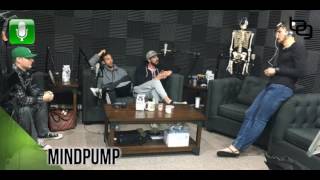
Podcast episode (Ben Greenfield with Mind Pump: Sal DiStefano, Adam Schaefer, Justin Andrews) covering frequency-based micro-workouts ("trigger sessions") as short, low-intensity sessions to complement heavy training; a stick-based force-measurement mobility tool; sleep aids and strategies (melatonin dosing, Brain.fm/entrainment, blue-light blockers); and practical low-back rehabilitation tips focused on glute activation, hip-hinge/bridges and correcting recruitment patterns. Episode mixes product sponsor reads with Q&A from listeners and anecdotal experience.
Chapters
Hey, what's up? It's Ben Greenfield. I'm in San Jose, California. Or it might be San Jose, I don't know. They don't teach us these things in the Washington backwoods. But either way, I came down here to hang out with some really interesting guys called the Mind Pump guys. I'll introduce them to you in just a moment. They've actually been on the show before. If you go to BenGreenfieldFitness.com mindpump you can listen into them. Their names are Sales, Justin and Adam and they're a very fun group of guys. This podcast gets like slightly explicit in a couple places, but hey, what can you expect when you throw four full grown red blooded American males into a room together to talk about things like biohacking and sleep and sex and beyond. So this one ought to be an entertaining episode for you. Before we jump in though, a couple of things. First of all, socks. Yes, socks. So there is this company called Stance and I actually own now about 10 pairs of socks from Stance. They're some of the coolest canvases for self expression. I bet you never thought about using your foot as a canvas for self expression, but they're some of the coolest canvases for self expression that I feel you can find anywhere.
Why?
Because they have socks such as Lundi, which are these cool collections of flowers and leaves on your socks. They have one with fireworks all over it. I have Darth Vader. Under I have cherry socks that I got from them. For the women they have the Sagittarius, the Makame sock, which is perfect, I suppose if you were going to do yoga in your socks. I haven't bought my kids a bunch of socks. I bought them the camo socks, the Surfin Santa socks for Christmas. They're camo trip socks. So all sorts of different things that you can find at Stance for awesome gifts or for yourself. It's just stance.com, s T-A-N c e.com and if you order by the 20th, if you're listening to this in tat, if you're really on top of things, they can still get them to you by Christmas just in case you need some extra Christmas stocking stuffers or heck, just a stocking to stuff something in. So check them out. Stance.com this podcast is also brought to you by a company that makes some kind of weird bars. Now these bars come in a variety of interesting flavors like cacao nut and blueberry vanilla and apple cinnamon and one of my favorites, peanut butter and Jelly, although pretty much anything peanut butter and.
Jelly flavored will be my favorite.
But that's not what makes them unique. What makes them unique is that they're made out of a dried cricket protein powder. And not only that, but they're delicious. They're designed by, like a five star Michelin chef. And the cool thing about crickets is they have all the essential amino acids in them. They're a very complete source of protein. They're actually 65% protein compared to like 33% for beef jerky, 20% for salmon, 12% for eggs. And crickets also have two and a half times more iron spinach. So you can actually try any of these cricket protein flavors. If you go to xoprotein.com Ben, you get a sampler pack with all of their most popular flavors for less than 10 bucks and free shipping. So it's a 33% discount and it's exoprotein.com BEN. So get your cricket bars fast because they're a small and nimble startup, meaning they sell out of their cricket bars all the time. So you got to get them while the getting's good. All right, let's jump into this episode with the mind pump, guys.
In this episode of the Ben Greenfield.
Fitness show, you want to look at muscles that are tight and improve extensibility in them, but you also want to look at muscles that are loose and weak and strengthen those as well.
I think the biggest mistake that people make with micro workouts or trigger sessions is mirroring the full workouts. We're still intensifying just sitting up and.
Down without using momentum to get out of it. Basically, like you're emulating a squat, but you're really just focusing on connectivity and posterior chain. So I'm trying to make sure that I'm properly recruiting by utilizing force more through my heel and getting my hamstrings and my glutes to fire.
He's an expert in human performance and nutrition, voted America's top personal trainer and one of the globe's most influential people in health and fitness. His show provides you with everything you need to optimize physical and mental performance. He is Ben Greenfield.
Power.
Speed, mobility, balance, whatever it is.
For you, that's the natural movement, get out there. When you look at all the studies done, studies that have shown the greatest efficacy.
All the information you need in one place right here, right now on the Ben Greenfield Fitness Podcast.
So a couple of months ago, these guys showed up at my front door, and you may have heard the episode that ensued when we sat down in my studio out in the forest in Spokane, Washington, after I'd forced them to bail hay for me, which they all enjoyed thoroughly. That episode was actually probably one of the more entertaining episodes that I've recorded in the past couple of months. You can listen to it if you go to BenGreenfieldFitness.com/MindPump2. That's BenGreenfieldFitness.com mind pump the number two. I'll put a link to the original podcast that I did with these guys who are the three men who make up Mind Pump three amigos. What is it called? Mind Mind Pump Media.
Well, the show is Mind Pump. That the actual company is sales Mind Pump Media.
How come you didn't call Mind Blow Mind?
Because it. Well, for obvious reasons. You don't want to Google that by the way.
Yeah, we check with blow in there.
Urban Dictionary flag.
I think we went around and around for a while on the. On the name, didn't we? We couldn't, we couldn't settle on the name for the longest time.
The Bro Show.
No, I, I was not gonna be. I was sold pretty early on Mind Pump though. I wanted mind in there.
Is this, this is, this is the bad. See what's going on solo is everything that you accomplish in your business, you get all the credit. Sal has this beautiful thing that he does that. No, we all come up with these great ideas, we do things and then somehow it comes. It turns out to always at the end of it. Wait a second, Justin, didn't you.
It had to be.
Didn't you say Mind Pump? I can't remember like no, no. Sal's like, no, I'm certain it was my idea.
Well, that's like the Three Stooges. Larry, Larry, Curly and Mo. Right? It was, I think who was the mastermind? It was like Mo was the mastermind, I think. So you were. You're the guy with like the black crew cut.
Did you just, did you just compare us?
Well, actually, actually just, just so folks know who you guys are, actually let me continue to, to lay down the scene here. I came down to San Jose, I'm now down in San Jose on these guys turf in their studio. We just recorded a podcast for their podcast feed. And what you're listening to now is a little bit more insight into these guys and also some fabulous questions that we had come in on Facebook that we're going to delve into on lower back and sleep hacking and something called micro workouts. But just real quick, 30 second intro of you guys, I've got to my. Right here. Adam, what's going on?
My name is Adam Schaefer. Yeah, you know what? I don't know if I even like being called a bodybuilder. I did do it, though. I did do it for a couple years. I got into it. But the main.
Now you just sit down, eat nuts.
That's.
He's got. He's got a canister full of. Of nuts here. And by the way, sorry, I want to let you get back to your intro, but I just got to throw this out here live on a podcast for all the world to hear. Your guys's chairs suck.
Really? You don't like it?
These are big old couches. Yeah. What you need are, like, the. Like the chairs that are shape like a pelvis that you lean against. Oh, God.
This comes with a guy who stands.
Up like a topographical mat. Hold on a second.
I'm on a pogo sticker.
You're not going to have low back pain.
Someone do me a favor and take a picture of him right now, because I know why you think the chair sucks. Because you're sitting on it like you're a flamingo. Like, I don't know how. This is my have your legs.
This is my take a dump in the woods pose, because, well, no wonder it's uncomfortable. I don't want to kink my hip flexors and turn off my glutes the rest of the night. You never know on a typical evening in San Jose when you're going to need your glutes. And I don't want to sit here for two hours with my hip flexors or.
I think there was an acoustical strategy to Doug getting these big cushion. These big cushiony seats. Right. I mean, it absorbs some of that. So you. Your voice sounds so much better.
Adam has a lot of gas, so this helps.
That's true. It absorbs. So. So, Adam, anything else?
Not really. I'm pretty much the least important guest or host that we have on this show. I am the better looking one of the three of us. No, I kind of represent the meathead side. I did do bodybuilding. That was kind of how I made my social media name, if that even makes sense. I. I started with men's physique and bikini. Yeah, men's bikini. Worked my way all the way up.
Eventually stripped the pasties off.
That's right.
Right.
And I worked my way all the way up to the professional level. And the main thing that the. The main thing I was trying to get across to people was there. There's a. There's a better way to do that. And I didn't do it with a coach, I didn't do with the team. And I really did it to show people that there you. There is a healthier approach. And I feel like there's a major problem in the. In the bodybuilding industry or the bodybuilding world right now with these extreme ways of dieting, these extreme ways of training, and it's turned into, like, people just trying to become a martyr and. And hammer themselves and put themselves through misery to get up on stage, which is such a small. You get handed a plastic trophy, you know, so.
Oh, yeah, I remember when I was in bodybuilding. I don't know if you've experienced this when you go to the. To the shows, to the expos where all the bodybuilders are walking around backstage or front stage or at the expo, you know, in between the judging, you look at them and from a distance, they are cut, right? They're like Adonis. They're like, you know, just like they stepped out of an Avengers or Marvel Comics movie or something. Then you get up close and their skin's like the grandma from Something about Mary.
They're just unhealthy.
It's just like pitted, like connective tissue, inflammation, acne. And of course, you know, like, if there's connective tissue inflammation on the surface, it definitely goes muscle deep because muscles are connective tissue as well. And these people are just walking around in constantly inflamed states.
I remember going to Adam's competition, the last one that he did, Me and Justin were hanging around.
We wanted to give them food.
There were. There were girls that were obviously competing that day that were sitting on the floor. I mean, they look like they were dying. They're sitting on the floor and they're eating like Rice Krispies or sexy. They were eating like, you know, gummy worms. And they were. And it just. It looked. And you looked at their faces, and these are young girls, you know, they're like in like 25.
They bummed me out, man. I'm going to be honest.
It looked bad. Like, if I didn't know any better, I would be like, well, they.
They could have easily got on the COVID of Cosmo, though. Just imagine. It's all worth it.
No pain, no gain.
Actually, when I was bodybuilding, it's a.
Really crazy sport, really.
When I was bodybuilding, I was like a piece of. I was a student, so I was studying, and then I'd come home And I'd work out for two hours after having worked out an hour in the morning. And then I just lay on the couch. I didn't have hormones enough testosterone. Oh, it's so like a piece of meat laying on the couch.
And it really, that's why, you know, I'm just teasing Ben. I'm really offended that he said that or anything, but I was a trainer, I've been a trainer for over 15 years and I was, I became very fascinated with, you know, bodybuilding. Not because I wanted to become a bodybuilder, because I saw that these were the people that were, were influencing the fitness market more than anybody else. They're the ones that are on the COVID of the magazines, they're the one doing the interviews. If there are any, any of them on tv, they're these, these big bodybuilders or women's bikini girls and they're giving all this advice out and I'm just cringing at what they're telling people is good or healthy or the best way to get in shape. And so I knew that if I was going to come out as an authority and tell people otherwise, I first had to show them that I could get in that shape or else I felt like I would never get the respect because I don't have a PhD. I, you know, I didn't even finish college and started as a personal trainer when I was 20 years old and pretty much self taught and self educated all the way through my entire career. So I knew that I had to first show everybody that. And that was the whole mission was to show them and then I could come back and just kind of shed light on all these, the ugly secrets of the bodybuilding world.
But now all you need, you don't have to be big anymore. That's not even in.
No, it's not.
It's the Justin Bieber, Cameron Dallas skinny jeans, Converse shoes, stringy arms look.
It is, that is what's.
If you put the Converse on, you would hit that little.
I probably would have skinny jeans. I've got out all the COVID except my Jesus sandals. So Sal, that voice was the voice of Sal. And you're like, well, you're the mo Three Stooges person who takes credit for everything.
Yeah, no, I don't know what that means.
Stop calling us Three Stooges. I'm gonna reach over there. Grandmother's neck.
No, I. So I've been in the industry for a very, very long time as a professional trainer since the age of 18. Then I managed health clubs at very young age, I've owned some gyms, owned a wellness studio more recently. But I really have a place.
What is the difference between a wellness studio and a gym? So we understand this so well.
You have your big box gyms, which is like your 24 Hour Fitness, your Gold's gyms, your. Where you've got, you know, equipment like cardio weights. People go and they work out on their own. Sometimes there's trainers in these gyms. Sometimes, sometimes there isn't.
Zumba.
Yeah, Classes. Then you have your personal training studios, which are much smaller, where you have personal trainers and their clients and that's it. There's no, like, public workout. You know, there's no, like, I pay a fee and then I work out on my own. A wellness studio. Our approach was much more holistic. So I did have. It was a small facility. I did have personal trainers, but I also had physical therapy. I had acupuncture, I had, you know, body work.
I had somebody massage therapist, chiropractor.
I had people who tested for, you know, food intolerances. And the goal was really to be a place where, you know, people could go to that maybe modern medicine didn't help them or they have lots of pain or even if they just want to get in shape. But we have everybody there under, you know, under one roof that can help that person get there with ways that are not, you know, typically done, you know, not the.
Not the Western wellness studio. Sounds way better than a gym. Well, did you guys do gastric bypass or stomach stapling?
None of that stuff.
What about the cool. Have you done the cool sculpting?
No.
Into that?
No.
Or use like a freezing cold laser to cause fat cell apoptosis.
Have you seen that?
It actually works. They did a study in, like Yucatan pig and they found that it actually reduced fat. I'm not kidding.
Yeah, you can.
You can Google Yucatan pigs cold surgery.
Ben's audience has no idea right now. He's totally prodding Sal and everything that he's throwing at him right now because he knows this is the stuff that we talk shit about all the time.
You know what trips me out about that is that people don't think that there's a problem with killing your tissue with a laser.
Well, how's that different than doing, like a cold shower? You're reducing fat cell apoptosis when you're.
I don't know, one's cold and one's a laser.
Laser. It's called cool sculpting surgery. Yeah, there's like, Banners and ads.
One thing I've learned with. With medical, like, you know, cosmetic stuff, the more it sounds harmless, the worse it typically is. It's cool. Sculpting, like, oh, it's harmless.
Yeah, that's right. Just like foam rolling. Hurts like hell. Yeah. Foam rolling.
Yeah. Who wants to roll on foam? It sounds like a party. No. So just did all that and then started this podcast with these three gentlemen in the room. And I, you know, fitness and health are minor passions of mine, and my major passion is people, and I love communicating quite a bit. And so podcast is just. I was, I mean, getting paid to talk. Are you kidding me? I can't believe that's. That's. That's. That's my life now. It's pretty awesome. So I really enjoy talking the podcast, talking about fitness, wellness, and whatever.
Whatever else is on my mind and sharing our journeys. Well, a lot like Ben, I think that's what is. Definitely. We all hit it off. I think he. A very similar approach where, you know, we're all kind of going through this journey together of health and wellness and trying to find out the. The best path for each of us. I think we do a lot of that on our show too.
How about you, Justin?
I guess I'm Larry then.
Is that.
Is that what I am?
Yeah, I wasn't gonna say.
It's all right.
You said it. You'd say, you can say it.
I'll own it. Yeah, for me, I guess I'm. I'm probably more. As far as, like, my contribution would be more like sports performance based, like, strength coach. That's sort of more of my background. Not exclusively. I've worked with a ton of different types of clients. Like, I'm a trainer at the core, so that's what I'm passionate about.
You're into sticks, Dude, I am into that. So. So I want to paint a picture for you. These guys have their studio in kind of like this. This crossfitty gym space, and there's these, like, flexible sticks. Crossfitty wellness studio Stick mobility. Yeah, they're these sticks. And Justin, you've like, invented. Invented some kind of a stick that measures force production.
Yeah, force output. So, yeah, it was interesting. Like, some of my buddies that I. That I actually worked at this gym with, they went through this course from Dr. Fagenholtz, I believe his name is, who does stick yoga. And going through that process and with their background, they also had a sports background where they were like, heavy into strength training and performance. And what they did was they basically Branched off and created their own version of that, which was stick mobility and stick mobility. I went through and worked through the concepts that they are working through to really enhance their experience as far as mobility is concerned and how to apply muscle tension to these specific poses. And it was a really very simple concept, but it was so effective. And so it just sparked this idea for me, going through a lot more of the isometric type movements that they did and. And how they were really able to use the stick as a tool to apply more muscle tension throughout their body.
Stick, like a big long. It's all like a PVC pipe with handles.
It's it. I mean, and they actually. Theirs is flexible. So when they actually.
Yeah, that's what I noticed. It flexes, but it's super strong. Like really strong flexible PVC pipe. Exactly. Yeah.
It's some kind of special pvc. But anyway, so that, that kind of spawned. Sparked this idea for me as far as, like, we would do these specific pos and I would apply all this pressure. But I was thinking, man, I have no idea how much pressure I'm really applying here.
Are you progressing?
Am I progressing?
Yeah.
Do I really have the type of connectivity and recruitment that.
I optimally could? And what does that look like? And so my brain kept kind of going with this. And then I started to develop with one of my partners, who was a client at the time.
This concept with the stick. And then we kind of found an engineer and. And started building it. And we're pretty close, but it's.
It measures your central nervous system.
Yeah. So basically just whatever. Whatever the output is for the specific movement.
So. Okay.
Yeah.
So give me an example. Like, what would a movement be that you do holding a stick?
Give them the therapy. I think it's a good way for most people. When you explain that to people, I think that's the best analogy when you talk about like somebody who's rehabbing and if you were trying to go through therapy, how you would use that tool.
Yeah. So let's just say like they' no muscular connectivity adducting. So I'm gonna. I'm gonna place the stick in a specific spot to. To test that. So I want to see how hard we. You could actually move. Isolating the specific movement. And so applying that force into the stick, you'll be able to measure the. In quantity quantitatively speaking. So you'll be able to find like the actual number to that. So you can see progress later on. So it's gonna be really helpful for physical therapists. Chiropractors There's a lot of different elements there.
Athletes.
Athletes.
Does it have like a. Like an app that you can look at from your phone to see what kind of force you're producing? Like, there's like a. An actual force. What's it called? A. Yeah, like a force. It actually will have accelerometer.
Yeah, it'll actually have program display on the stick. So you'll be able to see real time, you'll be able to capture all this data. So what's cool about it is it's all of this is a new metric and, you know, nobody's really capturing this type of information yet. So, I mean, it's experimental. Like, I honestly don't know where exactly it's going to go. And that's what's exciting because I want to see how fitness professionals use it, how chiropractors are going to use it, how, you know, there's lots of different applications for it.
What are you going to call it? Axon the Saber.
It's definitely inspired by the Axon.
Axon.
That's kind of cool, you know.
You know, this was a game changer for me because I had when. And tension is a concept I've understood for a long time as a trainer, but a lot of it's intrinsic. Like, you tell a client when they're doing a stretch or a position, create this tension in your body. And it's hard for a lot of people to be able to do without actually moving. You know what I'm saying? If I'm holding a stationary pose or stretch, you have to tell people stuff like push your energy outward or push down on the floor, but you're telling them at the same time not to move. They're just kind of creating this tension. Well, this is a device that kind of helps to measure that. And I'll tell you what, moving through mobility, positions and stretches and applying tension in the right way is a. Was a game changer for me because for the longest time, when I'd improved flexibility, it would be dynamic stretches, it would be sometimes static stretches. But learning how to apply tension within certain positions, I'm getting strength within that new mobility. And it's a real usable mobility. It's not just, you know, larger range of motion.
Yeah. There's a guy who I interviewed a while ago named Jay Schroeder. He works with some NFL athletes and I think some other pro, like speed and power athletes. He uses like high, high end, like Russian electro stem, this thing called an ARP wave on his athletes. He does A lot of isometrics and he does a lot of tension holds to improve range of motion and mobility instead of just stretching. Jay Schroeder. I forget the, forget the name of the episode, but if you went to my website and searched for his name, you. You'd, you'd find it. I'll try and put a link to it.
Mark my words. You're going to see that. A huge trend in fitness.
Dr. Spinner too.
Does he do that?
Yeah.
The concept of irradiation and to be able to ramp up at, you know, and max attention for that specific pose will. You'll increase a range of motion.
Have you guys ever done electrostim? I have like, like the high, high intensity stuff.
Not the high intensity stuff.
It's crazy. At Paleo Effects One conference that I go to every year, they have one of these ARP units that you can test and you can roll in there and tell them, hey, do a session on my quads, do a session on my hamstrings, do a session on my abs. And with 10 minutes of STEM, you'll wake up the next day feeling like you did like 10 sets of 30 reps of squats.
It's got to be painful.
Some kind of crazy hypertrophy. It's not.
It's like a gnarly muscle cramp.
It's not like those vibration platforms that the women at the gym stand on with their Jamba Juice in one hand, shaking the body like it's full on, like teeth, gritty, it makes tingly, it hurts. It must be doing something, though. That's my philosophy. So your guys format on your show is typically you do Q and A and you have a few questions that people write in and ask you about nutrition, fitness, injuries, etc. And I was looking at some questions that actually came through for you guys on your Facebook page, and I figured I'd put you on the hot seat. Do your podcast, your podcast style on my show. Although you're not in the hot seat, you're in the plush chair that absorbs farts.
The questions that I have chosen are going to challenge your mind and your body. So prepare yourself. Hope you use your axon.
My body's ready.
I saw what you did there.
We have a question that came in from Ian. Ian wants to know about the efficacy of something called micro workouts versus full workouts. And I'm going to tell you guys right now, I have no clue what a micro workout is. I don't, I don't know exactly who's referring to so you're going to need to set me and, and my listeners straight on what a micro workout is and how it differs from a full workout and how you'd actually use something like that.
Well, this is, this is definitely something that I think is the fun part about Q A for us is half the time we try and figure out what exactly. I know what they're asking.
Not a normal term.
Then do our best. I, my best guess would be he's referring to like our trigger workouts.
That would be trigger sessions.
Yeah, yeah, I would, I would, I would think he's referring to the trigger concept that Sal created in the first MAPS anabolic program.
And what, what is that? What's a trigger session?
So a full workout. So if you look at the whole concept of exercise and resistance training, the, the idea is to create damage, elicit a healing and then a over compensation or super compensation response and an adaptation response. And the main stimulus for that is damage. But a while ago I identified that damage was not the only signal that told the body to build muscle. An easy example to understand that would be just to give somebody, you know, elevated levels of anabolic hormones and without any additional damage to their body, they'll probably, and they usually do build muscle.
Get a needle poke.
Yeah, damage, right. It is, but not, I'm talking about muscle damage tends to be the main.
So, so here's the problem with that though. The problem with that he becomes a.
Smart ass when he gets in the driver's seat.
I love it.
Roast them.
When you're. The problem with that, that constant, you know, always focusing on the muscle damage aspect of stimulus for, you know, muscle growth or for change in the body is you become limited by your body's ability to recover. Not only that, but if you constantly hammer the body, the body will prioritize recovery over adaptation. So you end up up getting sore from a workout, recovering, working out, getting sore, recovering and never really adapting, not getting any stronger. You're kind of stuck in what I.
Call the recovery trap.
Yeah, the breakdown recovery trap. And so a micro workout or a trigger session is what we call it, are very low intensity small workouts that you do on the days in between your hard workouts and you do them frequently throughout the day. So I may take some resistance bands and do five or six exercises, two, three sets each. It's a grand total of 10 minutes. Very low intensity. I'm getting a little bit of a squeeze, I'm getting a little bit of a burn, a little bit of a pump, but nothing intense.
This Is like greasing the groove. Is that kind of where if you want to get really, really good at pull ups. Like I did this when I started getting into obstacle course racing. Every single time I walked under any bar or any object, I could do a pull up from like a door frame, whatever. I would have to do three to five pull ups and got to the point where on a typical day I'd be doing 50 to 60 pull ups, sometimes more.
And you get a lot stronger.
Yeah, or when I'm at it, when I'm at a conference where I know I'm not going to get a chance to work out, I just have like a rule where I'll do 30 burpees every hour and by the end of the day I've done 240 burpees and gotten a lot of these. I guess what you call, I mean, would that qualify as a trigger session or does a trigger session have to be like more therapeutic?
Well, so that's definitely a micro workout. A trigger session is much more specific because we include this. So the principle of this has to do a lot with the body, that the body responds very, very well to frequency, frequency of stimulation. And we forget that with resistance training in particular because we focus just on damage. And it becomes this, hammer yourself real hard, hit your chest really hard on Monday, and then don't touch it for a week. And they miss out on the fact that frequency really does a fantastic job of eliciting adaptation. And so what you're talking about is kind of a version of that. On our other maps programs, we have other versions like, like focus sessions or mobility sessions in our other programs. But with the original maps it was the trigger session, which is the one I was explaining. But when people apply this principle, especially people who are natural, who rely upon that muscle building signal to come from working out, and really nothing else, when they apply more frequent, smaller workouts or trigger sessions, when they break the whole instead of breaking the body up into body parts, train the full body three days a week instead of the results, blow them away.
But you have three. Let's say you have three hard full body sessions per week. But on the off days in between those sessions, what would a trigger session look like?
So let's say today's my off day. In the morning I would wake up and I would do five or six band or body weight exercises, low intensity. All I'm doing is trying to feel the muscle get a little bit of a squeeze, maybe a little bit of a pump, a little bit of a burn. Not anything high intensity because I don't want to cause damage. I just want to send a signal for a grand total of 10 minutes. I'll do that again at lunch and then I'll do it again before bed. And so I'm sending this signal throughout.
The numbers that he's even using right now are not, you know, it's not like it's 10 minutes, this magical number or whatever.
You just don't want to do it for a long time.
It's very short. I really. You're the greasing. The groove, I think is probably the best example of something else that's similar to that concept.
I feel like I dig that concept too, because you don't have to get sweaty and go to the gym.
No, it's, it's.
It facilitates recovery, which is trippy too. You'll find that your body will recover faster and faster from your hard and heavy workout. Things like sore joints start to feel better. It's one of the most.
It shattered all of our paradigms. I remember.
It's a game changer.
I am interrupting today's show to tell you about this magical oil. So the idea behind oil is that usually it doesn't dissolve very well in things like teas and coffees. And that's why if you are one of those people who say, puts a stick of butter and a bunch of MCT oil in your coffee, you get like this nasty oily lining on the top of the coffee. Well, there's this company that's figured out how to emulsify MCT oil. So you just stir the oil into your coffee and go. And not only that, but they've taken their MCT oils and they've given them amazing flavors. My favorite, by the way, that I've been using this fall is pumpkin spice. Yes, you can get pumpkin spice MCT oil. So you can not only get all the advantages of shoving your body into ketosis and staving off appetite cravings, but you can also make delicious, tasty pumpkin spice teas and pumpkin spice coffees. They've also got a coconut flavor, a vanilla flavor, a strawberry flavor. You can find all this and much more goodness, functional food goodness over@onnit.com o n n I t.com here's how you get a discount. Go to onnit.com ben10 that gets you a 10% discount on anything. O n N-I-T.com Benten and add that pumpkin spice MCT oil to your order. You won't be sorry unless you use too much of it, in which case you will get diarrhea. But don't do that. Don't exceed like whatever they say on the label. Tablespoon 2 tablespoons. Act wisely and with responsibility with your MCT oil. This podcast is also brought to you by something I probably haven't been using enough lately because my face is covered in hair. I decided that I wanted to look all manly and lumberjacky for this Christmas season. So I've got a beard and so I have not been using as much as I had in the past. My five blade razor. Yes, I have a five blade razor. Call it razor envy, small razor syndrome, whatever. I'm into razors with a lot of blades and this particular razor has a soft flex hinge, it has a lubricating strip, it has an ergonomic textured handle so you can hold it better when it's wet, in case dropping a wet razor is a pain point in your life. But perhaps most importantly, they cost just a fraction of what you'll pay at the drugstore. And you get these high quality German engineered razors, including this new generation two shaving head that they have that has all those features, those five blades and the lubricating strip and the trimmer blade for hard to reach places. Everything comes in a beautifully designed gift box and you can get it over at Harrys.com, H-A-R-R-Y-S.com not only that, but when you get their limited edition shaver set, which is, did I mention, a perfect Christmas gift, you get their foaming shave gel. It smells amazing. Their gift box, which I mentioned earlier, three of their German engineered five blade cartridges and a midnight blue chrome razor handle. So this company was started by these guys named Jeff and Andy who were fed up with being overcharged for razors, so they started their own razor company to give people a great shave at a fair price. You get a $5 discount on any order from Harry's when you go to Harry's.com H-A-R R Y-S.com and enter code BEN at checkout. They have free shipping for just a little bit longer, so be sure to act soon if you want to get that free shipping. Harry's.com H A R-R-Y-S.com Enter code BEN at checkout for $5 off.
And there's that concept that they've shown in research when it comes to some elements that influence mortality, that no matter.
How hard you work out at the.
Beginning or the end of the day if you are seated for eight consecutive hours, and in some cases for even just two consecutive hours, you have a really increased risk for mortality. And you know, something like that. This whole like grease in the groove or micro workouts or trigger sessions almost like forces you to take, you know, use that pomodoro technique, but in a slightly more structured format.
And you want to talk about an energy boost. Nothing, I swear to God. You know, midday when you're tired or whatever, maybe you didn't get good sleep the night before. You get up and do an eight minute, you know, trigger session and you're. You feel energized.
Well, wouldn't you say the closest thing, and this reminds me of the takeaway I had from when we hung out with Ben last time was, you know, he got me into doing the freezing cold showers. That same surge of energy.
Yeah, you get that from a trigger session.
Very, very similar. The same feeling I feel when I do like a little trigger pump.
You know, that's when I wake up.
At night and can't get back to sleep.
I do a trigger session.
That would count. Ten minute trigger session, that would count.
Actually that's like three times.
Ian's wondering, Ian's wondering in his question if you can just use those micro workouts as a replacement for a full workout or if you still need to do the full workouts.
No, no and yes.
Well, okay, so here's a thing.
Yes, you could, but is it as effective? Absolutely not.
Because you get benef. You get specific benefits from the heavy hard workouts that you're not gonna get from the trigger session type sessions. And the trigger sessions complement the other ones, the full hard workouts, quite well. You gotta do both. I mean, it's like you're sending the loud muscle building signal with the hard, heavy workouts. And then you're just kinda keeping that signal up and keeping that volume on it high with the trigger sessions without causing too much damage. So they really do work great together. But if you're pressed for time or you're traveling and, and you can't make it to a gym or whatever. Yeah. Do three trigger sessions a day. You won't lose muscle, you'll maintain your strength. You might even get a little stronger because it's different. Do it on an everyday basis. I mean, I could definitely see there being benefit with that as well.
Yeah, nice.
They're like the perfect partners like Larry Curley and Mo. Actually, you know, I'll switch to the three Amigos.
We can go to the three Amigos.
I like that.
Can you guys sing?
My Little.
Buttercup?
That's the best.
It's a sweater.
Probably fill up the rest of this show.
You know, I think the biggest mistake that people make with the micro workouts or trigger sessions is, is mirroring the full workouts or still intensifying them. I think.
No, it's.
That's why I hate calling them workouts. It's a trigger session.
Yeah. And I think that's, I think that's the, the thing to make sure that people understand that the, you know, the idea behind it is you're not trying to create damage, which is tough for people to understand that, you know, you're.
Just, you know, really, you want to keep going, but you gotta stop yourself.
Katie Bowman, who wrote a really good book called Move youe DNA, she's a biomechanist. I think she calls them movement bites.
You do throughout the day.
Yeah, it's a cool concept. So we do have a couple other questions though.
Yeah, let's go.
I want to make sure we get a chance to delve into. So Sal wants to know what you guys think about melatonin as a supplement. And I'm actually really curious about this too because I have my own thoughts on melatonin. But I'd love to hear not just your guys thoughts on melatonin as a supplement. But I know, for example, when we were at dinner last night, you were talking about how you've used binaural beats and specific forms of binaural beats to get very, very effective naps or to enhance sleep or creativity. You guys seem like you're kind of into this concept of things that could help one with napping or sleeping or sleep cycles.
Absolutely.
So do you each have. And Justin. And I'm curious since you've been a little bit quiet over there, give you a chance to pipe in. Do you do anything special for sleep, Melatonin or beyond?
Well, really, this is experimental for me. So with these beats and what he's talking about with the Brain fm, which we just got introduced to, which by.
The way, is not Binaural B, it's Brain fm.
It's not very different.
That's a website I tried to explain. Brain fm.
Yeah, Brain fm different.
We've actually created the scientist and the CEO will get mad when you.
I know.
I already offended him a couple times when I. I was like, well, our buddy Ben, he talks about binary beats. Is that the same thing? And they're like, no, it's not that.
Yeah, I guess there's a Little bit.
I just thought it was binaural beats.
That's what I thought it was too. Based off of what you had shared with us, with your experience. And then when they were explaining they sound similar but supposedly they're further along with, with the science. Yeah, it's music, but.
Well, my, my takeaway with it is that like just using it and I've used it for naps and for sleep and I mean they even have like specific types of beats for focus and to, you know, like stimulate that. And so for a lot of it for me is like my brain doesn't shut down very easily at the end of the day. And so just putting these on, it's almost like you just get immersed in this, in this sound and it moves and it travels and so it almost distracts your mind a bit to let it relax and just really kind of take in the environment.
It's like white noise. I'm looking at their website. They call it artificial artificial intelligence. And if I recall properly or if I recall correctly, when I went to their website, I like had to answer a bunch of questions about what I wanted the session to actually do. And then you, you play sounds right.
I don't know. I don't think it's like that anymore. This was when you did it a year ago.
Yeah, you were, I remember, on the mobile version.
Yeah. No, it's very straightforward. I mean they, they have like specific sections where you just, you pick like, okay, I want to do a 30 minute nap, nap. And that's actually what I did today.
And it, you just, you just, you fall asleep.
It's hard to describe it. Yeah, you fall asleep and you wake up, you feel refreshed and you're like, did I even sleep? It was, it felt like it was five minutes.
Well, I like that that Ben took it to that direction because I actually would compare it to a very, very similar feeling that I get when I take melatonin. So I, I actually do use melatonin occasionally and the reason why I only use it occasionally is I, I see how quick my body gets used to it and I have to keep, keep upping the dose to get that same.
Really? That's what you find?
Yeah, I feel like after I've, if I've done it, like I remember I went, how much? What's the, what's the, what's the typical milligrams?
Well, five or ten.
Usually it'll be like three to five.
I think five milligrams is what mine are that I have. Right. I Literally have them right next to my bed. I took to. Took them last night because we were just all of us entrepreneurs in the same room, man.
I was feeding my entrepreneurs oysters.
Yeah, dude, we were, we were buzzing all night long with all that energy. So it took me a lot to come down down and, and that's kind of how I'll use melatonin when I need that. And I actually use the. The Brain fm. So I took my. My two melatonin, put the Brain FM in and then went to. Finally went to sleep. But it did take some time because I feel like they're the same. But I try and not use the melatonin if I don't have to, just because I feel anytime I have to take a pill that I notice my body adapts to really quick and I have to keep upping the dose to get the same effect effect. And if I can find something like a Brain FM type of tool, that's a more natural way of doing.
Except for coffee, cough coffee. Just. Just keep on drinking more. Well, get to the point where you're 50 years old. Well, let's be 60 ounces.
Well, let's be honest. Something like coffee, which I'm actually interested to hear you and Sal probably geek out a little bit on the melatonin because I, I don't know how adverse it can be when you start getting up into higher dosages of it. And if it is something that could be bad for us because caffeine. More and more we keep learning about caffeine.
I mean, you could have.
Have quite a bit of it.
You have a high tolerance depending on.
Your 60 cups a day. That was the philosopher Voltaire. I want to hear your thoughts on melatonin 2 Sal, but really quickly, I went to the Brain FM website. They call it neuronal or oscillatory brainwave entrainment, where apparently the oscillations that you hear in the sound entrained your brain into specific brainwave frequencies like alpha or theta. They have a really interesting scientific white paper on their site, and up until this point, I have used something called Sleep Stream, which is almost like a DJ with a bunch of binaural beats and piano tunes and white noise and stuff like that that you can use. But it seems that what they're saying on the Brain FM website, maybe I'll have to get them on the podcast at some point for a little bit more detail, but they say it's not binaural beats.
It says it's completely unrelated to binaural beats. It is instead auditory beat stimulation. I don't know.
I would love to hear you grill. You would be a great. We had them on the show and they were great. And we did ask.
Oh, they're great guys, too.
They are, yeah. And I love what they're doing and where they're going, but I would love to hear you pick on them and kind of dive into. Especially since you've been using. Is it binarial or binary. How do you say it? What's. What's the proper way of saying that?
By.
By noral.
Binaural.
Yeah.
Nor bisexual.
Yeah.
I'm sorry, Is it. No.
Biolar. Yeah, by. By areola.
Entering my ears, so I'm a little worried.
By Volvo.
Yeah.
No, I would love. I would love to hear you. I would love to hear you interview them. I think that would be great, actually, you know, to dive into that stuff.
Yeah. One of their lead scientists or whatever was at dinner with us last night. Yeah, I just need to get his contact information. Yeah, we'll talk to him. So, Sal, melatonin, what's your take?
So melatonin is interesting. It is classified as a hormone. Up until recently, it was theorized that it was coming from the pituitary. Now I think we've pretty much established that at the pituitary gland is what releases melatonin. Here's the interesting thing about melatonin. We know having low levels of it is very bad for health. We know melatonin has got antioxidant properties, it's neuroprotective. As you get older, the production of melatonin tends to decline. In fact, melatonin is being studied as a potential cancer treatment. I know they're testing it on animals right now because it's got some anti cancer properties. Here's the problem. Melatonin initially was set up as a medication at a particular dosage. And when you sell it over that dosage, they can sell it through some loophole as a supplement. So when you buy melatonin at the store, even 1 milligram, which we think is a low dose, is a high dose of melatonin. When you talk to the melatonin experts and scientists, they think that you should take something like 0.1 to 0.3 grams of melatonin max per night.
Actually, by the way, just a complete Aside, I take 0.3 every night.
They say between 0.1 to 0.3. Because when you take the big doses, like Adam did, which five, you know, five grams doesn't sound like much, but that's a big dose of melatonin. You may in fact suppress your body's own melatonin production. Like most hormones, there's probably a negative feedback loop where if I'm taking melatonin and my body senses this massive amount, it's probably gonna reduce its own production and maybe reduce or down regulate some of the receptors that it attaches to. So when it comes to supplementing, I.
Think in the absence of microdosing, that. That's true.
Yeah, maybe.
However, the other thing is that I've found for jet lag, like when you cross multiple time zones, like when I came back from Finland. Yeah, I do like the hot cold and the sauna and everything, but I do a lot of melatonin the first couple of nights. I mean, 50 to 60 milligrams of melatonin and I mean, this is about the amount that. For example, I have a naturopath physician. He'll give this to cancer patients for pain at night, that dosage of melatonin. But if you're jet lagged the first couple times that you get back, I mean, you can hit the reboot button on your body with exercise and cold and bright light in the morning and absence of light at night and all these other techniques. But huge dose of melatonin can help a ton.
And that's more of an acute like, okay, here's this. You know, I'm jet lag. I'm going to use it for this particular purpose. But I think a lot of people are buying melatonin and using it, you know, on a, on a nightly basis. And they're taking 5 grams every single night or 10 grams every single night. Well, that's what I'm finding that, yeah, they get less and less results.
Yeah, that's why I was, that I, I noticed that that was me. I've definitely noticed that, you know, because I, man, the first time I did, I definitely got great sleep and I got great sleep again. And then I found myself every night doing it where now it's more intermittently. Like last night was a very rare case where I felt like we were just zinging, you know, and I could not. Typically, if I take, you know, two or three hits off of a joint that normally is going to put me right to sleep, no problem. And that's what worked last night.
A melatonin joint.
Joint.
For all the kids will sing.
Yeah, normally I'm utilizing CBD to help me sleep at night.
So that's what I do. I use melatonin. The microdosing. I get is from actually a guy who I'm going to be with this weekend because I'm headed down to San Diego. Dr. Kirk Parsley, who is a Navy SEAL who makes this stuff called Sleep cocktail, and it's gamma aminobutyric acid in a very small form that crosses the blood, brain barrier barrier, micro doses of melatonin. And there's some little things in there that have been shown in research to help with sleep, like vitamin D and fatty acids and a couple different amino acids. Maybe some magnesium, some HTP and some magnesium in there. Yeah. But it's in very, very small amounts. So it's.
Well, that's the thing. Like 5 HTP. I remember when 5 HTP came in the market, and everybody's like, oh, take this. It'll help you relax and sleep. And I did, and I could not sleep when I took it. Same thing with melatonin. If I take a big dose of melatonin, I will fall asleep and then I'll wake up in the middle of night. I'll have crazy dreams.
Oh, if you. If you don't take enough, you wake up like clockwork at like, 2 or 3am Exactly. Yeah. And you can't get back to it.
Or if you don't get, like, the extended release. I remember listening to a scientist who. I can't remember his name, unfortunately, I can't remember the names like you do. But he, again, he was an expert on melatonin and how to use it. And he said, like, he said 0.1 to 0.3 grams. Extended release is what he recommended.
Yeah, but none of you guys were the blue light blocking.
I actually have.
We got to get into that.
I actually have some at home.
Yeah, Sal's doing that. I got to get into that.
I. I changed mine.
That's like birth control for your face.
Well, I changed all my. I started. I changed all my. My phone, computer, all that stuff to do the, you know, the whatchamacallit, the.
The lower, like, F lux. Actually, there's a better one now. It's called iris. I interviewed this Romanian computer programmer who developed this one called Iris that goes like.
It.
It. It reduces, like, flicker and temperature and all these things, like flux reduces just blue light, but there's still flicker on your screen, and there's still what's called increased temperature that they measure in Kelvin. So IRIS lets you basically just like, hack your entire monitor. Yeah, you should listen to the podcast I did with him anyways, though. So you don't wear blue light?
No, I don't, but it's something that I know that I want. I do want to experiment with because I. I mean, I noticed a difference. Just like, literally cutting out the. The TV and the computer screens and the phone.
Like.
Like, if I do that a couple hours before I'm trying to settle down, my ability to get into sleep is so much easier than it is if I'm, you know, looking at my phone right before I go. So I. I do want to play with the blue blockers and walk around with them at the. But I feel like. Don't you feel like in the order of operation that would probably be more important is to cut out the. The small screen interface?
No, no. If. If I could pick one thing at night.
Oh, wow.
I do the Bluetooth. Because when you're at a mall or an airport or driving down the road with the bright fluorescent lights from the car shining in your face or looking on your phone or your iPad or your computer, the blue light blockers pretty much cover them all. Like, they cover any scenario in which you want to avoid modern artificial lighting at night so you naturally produce your own melatonin later on in the evening. And so you could have no special pieces of software and no special expensive bulbs in your house and just at least have something like blue light blockers on.
See how you just sold? I know you see how you just sold.
Are you sure that wasn't an infomercial right there?
This podcast is brought to you by the blue light blockers I just invented.
Yeah, no, I absolutely will then, because I felt like that to me, you know, I felt like I'd be an idiot. I'm wearing these, but then I'm still doing the. The TV and the computer screen, like till midnight. Like that. For me, I felt like that defines.
But. But the weird thing is you get like, I had them on at the restaurant last night, and I was getting sleepy at about 8, right? Because if you have them on, your body starts to get sleepy at about the time it would when you were be camping. Camping in the wilderness. So it's. It's really interesting how it can work in reverse, where you become like a social isolate, you know, around. Around the time the sun goes down when you're wearing them.
Dude, Moscow Mule.
Which is why biohackers never get laid.
Moscow Mule. Was that what we had?
Yeah.
Yeah, we did have a Moscow Mule.
That was the first time I ever had that. That was amazing.
That's a very.
You're talking about the copper. Something about the mug with the copper.
Yeah.
Why do they Serve in a copper mug. Do you know this?
It's some special tradition, but there's also a pretty serious issue with like copper toxicity in people who, who drink and use copper. Eat out of copper like that almost like plastic or cast iron. Like cast iron. That's a non absorbable form of iron that can cause like hemochromatosis from. But I mean like having an occasional Moscow meal or cast iron skill at steak I don't think is a big deal. But you may want to test your.
Like, hold on, pass me that alcohol.
I really enjoyed that. I'm not a drinker at all. So to have that I was like.
Man, it was delicious.
No, it was awesome.
That's amazing. Ginger beer, it's anti inflammatory so it must be good for you. I see. It's like putting vodka in kombucha. That's the drink that I tell people. It f up your liver and heals at the same time because kombucha has glucuronic acid and gluconic acid in it, which is great for liver cleansing. And then you throw a little vodka in there to put some fire or put some fuel on the fire so.
You end up in the middle counters baseline.
Baseline psoriasis. We have a question that you guys had a lot of questions come in about low back and I personally used to struggle with low back pain all the time. Especially when I would race triathlon and spend a lot of time time in the saddle. I've learned a lot about the low back over years of training.
And also not sitting like a normal edge, wink wink like a normal person. But I'm curious to hear your guys take on back. Bryce is curious because he has ruptured herniated slipped disc issues. He wants to train his butt and his glute and his hips and get mobility in his hips and get his hip extensor strong which, which frankly those are two very important things for decreasing low back pain versus just getting the hands of serenity massage in your rector spinae. Yeah, I mean but what, what do you guys, what do you guys think? Like how do you train the back without re injuring the back?
Well, okay, so probably this is probably.
The most common thing that I think we deal with. Right. I think low back, low back and.
The knee is probably second knee and shoulder, second, third, close. Here's the thing with. If you, if you picture the spine, if you take the spine out of the body, body, it can't obviously can't support itself. It goes in whichever direction it wants to. So it follows the direction of the muscles that pull it or that are tight or maybe loose.
Do you actually take spines out of.
People'S body like the Predator?
Freaky.
Yeah. So if so, you know, besides the ruptured, herniated, or slipped disc, there's not much you can do without with the disc. But what you can do is create an environment around the spine that keeps it. It stable so that when you move in different ranges of motion, you're not relying on ligaments to support you. You're not moving in ends of range of motion. Like, if I'm bending over, I want my spine to be able to move, but if I have issues with my disc, I want to avoid getting to.
Ends of ranges of motion. And what supports that is muscle. So it all goes around correcting muscle imbalances, producing recruitment patterns that are favorable. You want to look at muscles that are tight and improve extensibility in them, but you also want to look at muscles that are loose and weak and strengthen those as well. You want to get.
But, but how do you functionally do like. Like what kind of. Well, yeah, exercises. What kind of movements do you.
Let's get into that and let's. Let's talk like. Okay, so.
Well, okay, here's a couple.
Ben brought up sitting down, right. Like, which is. That's. And the reason it's very, very intelligent of him to stand. Why he podcasts, even though I would never do that.
That.
But it. It's smart because one of the worst things that we do is sit down. You know, sitting down is people don't realize that you're. You're in this contracted position and we're creating this recruitment pattern that is totally unfavorable for the low back. And if most people, it forces them into this anterior pelvic tilt, and that's what puts all that stress on that low back. So learning to correct that in and get those favorable recruitment patterns like Sal said.
So have you read the book Desk Bound, by the way? Kelly Starr.
Kelly Starr.
Oh, dude. One of the.
The.
Because a lot of people, they stand in the wrong position too. They hear. They hear, stand up, get rid of your chair so that your low back gets fixed and you stand the wrong way and create the same thing, like, you know, lumbar lordosis and hunched over, back over, because you don't have your desk heights or hot chick stance.
This is what I have. This is the problem that I have with actually people. A lot of people that run is, you know, they already. They have these poor recruitment patterns. And then, you know, they think that running is going to get you in shape, which it can. Right? You can burn a bunch of calories and lose body fat that. But they have a lot of stuff going on that they're not fixing, and they're really just kind of cementing it.
They're just consistent. They're just training that bad recruitment, which.
Is the same thing as the people that are standing that you're saying right now that are still having the issues, because standing just doesn't do it. It's like standing in a favorable position and understanding what, what like a neutral pelvis looks like. So talking about things where I would take someone like this and. And we actually just did a video on our. Our Mind Pump TV, so we have a YouTube channel where this is what it's kind of, kind of geared around is we take little things like this that we feel like a majority of our clients we've dealt with or had had to help them with an issue like this. And I, I think each one of us went around and gave like a tip, like, as far as an exercise or movement. Mine was a basic floor bridge, but I was very detailed about how you do a floor bridge, because a lot of people see a floor bridge and go, oh, yeah, you know, my physical therapist or someone told me I need to do these floor bridges. But. But then they still are not getting the pelvis neutral before they go into that. That movement. And it's really a movement to help teach you to hip hinge properly and teaching someone how to do that. So we got.
You could do that when your low back is hurt. To get to Bryce's question, obviously deadlifts are great for protecting the back and building a strong back and stabilizing the core. But if your back is already hurt, what you're saying is you hit bridge instead of deadlift as an example.
Well, I want to regress. I want to regress you all the way to there first before, because ultimately our goal would to be to get back to deadlifting, because nothing is going to strengthen that. That whole area out more than doing a movement like that. But a lot of clients are like this. They're in this position because whatever, either an accident has happened or over time. So I would regress someone all the way to something as simple as a floor bridge and get them to. To perform that correctly, which teaching them how to fire the glutes. And so the YouTube video that I did on this was just really breaking down the floor bridge and getting people to understand what they're trying to do on a neurological level, how they're trying to connect to the glutes and get them to fry.
That's the key. That's the key right there. The key really is before you get into these exercises where you're trying to strengthen things, you have to correct and create recruitment patterns that are favorable. Because if I focus on strength, even if I do the right exercises, even if I do all the right exercises, all I'm going to do is strengthen the wrong recruitment patterns. If I don't change them and correct them to begin with, well, the body.
Is always going to choose the easiest path.
It's just. It's just the way you move. You know, if you had, like, a real common one that caught that, you know, leads to, you know, low back pain is hip flexor dominance. What if I have hip flexor dominance?
Is he sad as he sat in the couch?
Exactly. If I have hip flexor dominance. Now here's the thing, though. Sitting down long time without training, other recruitment patterns. Patterns will cause that. But if I'm. If I understand these things and I train my body to move the way I want, then sitting in a couch or sitting on a chair isn't going to cause as much problem or maybe cause no problem at all with it. With a hip flexor dominance, I can train somebody to change the way they recruit their core so that the core stabilizes more than their hip flexors do, and then, boom, we don't have a problem anymore. But if I don't do that and I have them do a bunch of core exercises without teaching them how. How to change that recruitment pattern, all I'm doing is make their hip flexors even more dominant and cause more problems. And this is why you get people who say, how come my low back hurts every time I work out my abs or my core? It shouldn't. It shouldn't hurt. But the problem is, is they're doing. They're doing most of the exercises not getting proper connectivity.
So in terms of exercises, just. Just to give Bryce a few takeaways here, hip bridging and then standing instead of sitting were a couple of things that you brought up.
Yeah. What were the ones, you guys, what.
Were the other exercises? Exercises that he could do? If he can't deadlift, he can't squat. What are a couple others?
Just get ups off of. Off of the bench?
Yeah.
You know, even if it's with a single leg or just getting.
What do you mean, get up?
So what I mean is, like, just sitting up and down without using momentum to. To get out of it. Basically, like you're emulating a squat, but you're really just focusing on connectivity in your posterior chain. So I'm trying to make sure that, like, I'm properly recruiting by. By utilizing force more through my heel and getting. Getting my.
My.
My hamstrings and my. My glutes to fire when I come up.
That doesn't involve expensive equipment.
Nothing.
Can't work.
Yeah.
I mean, there's no way that works. Yeah.
Yeah, exactly.
Yeah.
Where's the tool I buy?
One of mine is, especially if it's in the low back, that. That seems to be the more common one, is to teach someone to deactivate their hip flexors through a process called reciprocal inhibition. And then working and strengthening, embracing their core. And that's a very effective way to do what I talked about earlier, which was change the recruitment pattern. Easy way to do that. You lay on the floor, on your back. You can place your legs, knees bent, heels up on something. So a chair or a table. You want to press down with your heels so that you elevate your hips off the floor just a little bit, just maybe an inch off the floor. And what you're doing by doing that is you're activating the glutes and the hamstrings. And by activating the glutes and the hamstrings, they inhibit the opposing muscles, muscle, which happens to be the hip flexors. It's called reciprocal inhibition. So hip flexors are relaxed now because I'm keeping my hips slightly elevated, squeezing my glutes, and then I go into my slow, controlled crunches to work my core. And that helps teach that recruitment pattern, the proper recruitment pattern that you want. Then when you go, we can progress from there to the heavier, more complex exercises. But now you're not. So hip flexor.
I think it's important to note, though, and I mean, Ben even, you know, made a jab about it a little bit, because it's true, though, people want the sexy exercise or the tool or like, you know, just give me what I'm supposed to do. And what you're supposed to do is it's a. I need you to connect. And it's on a. It's on a more of a mental level than it is actual physical level. And, you know, people want the. They. They want the thing, the tangible thing. They want to just give me this thing that I need to do or just tell me to do that. When it's.
Give me the machine that's going to provide this for me.
And I think.
Right. No, not.
Not any of the vibrating foam rollers in the world are going to replace being able to sit down on a bench using your butt properly.
Absolutely true.
Yeah.
It's. It's. Sometimes it's the simplest. It's some of these simple movements that. And I. And I. And I did this YouTube video. I remember what.
Well, it was about. It was about the glutes. We did it specifically about building the butt, I think, was this video.
Yeah. And it was. And why we went into it. I remember I had just got to. I just saw a trainer. I was in the gym, and I saw a trainer teaching the floor bridge, and, you know, which is a great basic exercise. And it's one that I've regressed many clients to, to just to get them to teach the hip hingement movement properly. And I'm watching him do. Do it with her, and she's just kind of thrusting away and with no rhyme or reason. And I'm like, you know, the whole purpose of that movement is to really get people to understand how to connect to those glutes and to have control of their hips.
Hips.
And, you know, just going up and down, like, oh, I mean, she's burning some calories, she's working some muscles, but you're really not working on the. The root cause of her issue. And I think getting people to understand that, like, when they have issues like this that, you know, hey, nothing would be better than building or doing a deadlift. That would be awesome. Is because that's what we want to work to, but we got to lay the foundation first. And you got to do those boring movements. You got to do something like getting up off of a bench. You know, I know it sounds lame, but doing that correctly is. It's tough for some people.
The. The.
The two most potent methods that I've personally ever discovered for reducing low back pain and joint pain in general and turning on the glutes. One is a program by Dr. Eric Goodman. There's a book that he wrote called True to Form, and his style of training is called Core Foundation Training. And it's all a combination of stabilized breath, elongating the spine, and contracting the glutes. And there's like 10 different moves in the program. I do all 10 every morning, so it takes me 10 minutes to go through all of them. I have them all memorized. While the coffee water is boiling, I do each of those exercises. It completely eliminated my back pain after cycling. And what I've tacked Onto that since then is something I made a podcast about soon called Eldoa Training. E L D O A. It's a form of myofascial stretching. We're gonna have a class.
We have a class. We have a class in like self.
Traction to high hydrate tissue to reduce pressure on discs. You. You literally feel like 2ft taller after you finish doing it. And, and I'm all about the 8020 taking the best moves from these programs because I don't have the freaking time to do the full program. So I, I just took three of the exercises I learned in eight hours of training with this Aldoa guy and I do those three at least once a day, especially if I've been sitting.
Can we just, can we just elaborate on what he just said? Because I think that's, that's such great Advice is the 8020 approach with. When you're. You're finding these new things because one of the biggest pet peeves. And I talk about this on our show a lot that I have with Google.
Becomes dogmatic.
Yes. Becomes very dogmatic. Somebody says like, oh, this and then they get, they get, they feel great. They have back relief and then now it becomes their, their everything. That's all they do, you know, and they, they immerse themselves in that and then they become. It becomes a camp. And it's all about this way of working out. It's superior than no, take. Take what you found works really well and that you've noticed from that there. And then continue on in your journey of finding, piecing this together. I think that's great.
It's like any of those resources, like whatever. Kelly Starrett's Becoming a Supple Leopard book. Great book, great manual for deep tissue work. But you'd go crazy and wouldn't have any hours left in the day. If every day you decide you're gonna get better knees by going through the 40 pages of the knee exercises and doing every single one. No, you grab the one for me. It's smashing a lacrosse ball right on the inside of the vastus medialis. Holding it there and twisting if you. A few times, right? And that's it. That's the one thing I took away from that chapter that I know gives me the most bang for my buck. So. Yeah, there is no rule that when these books come out and these diets come out that you have to drink every smoothie in the diet book or you have to do every exercise or workout in your 40 of the best high intensity interval workouts book or it's you got to cut through the clutter and simplify.
Did you have a back injury or was it just overall dysfunction from the.
It was exactly what you went into, Sal. It was overactive hip flexors, a turned off glute, some sacroiliac joint dysfunction from the fact that when you're, say, doing thousands and thousands of repetitions a day on a bicycle or running, if you have just a normal anatomical abnormality, like a difference in the length of your femur bone or a difference in the rotation of your hips from one side to the other, you pile thousands and thousands of repetitions on top of that.
That's a problem.
Then it becomes a problem. So, yeah, it was certainly something that took me a while to fix after I got out of chronic repetitive motion activity.
And that's the thing people need to understand when they do that type of activity or sports or these, these endurance based sports that they are constantly, you know, for long periods of time, you know, days during the week, they are training a particular pattern over and over again. You're literally practicing to move a certain way. Way so much that your body becomes very good at moving that way and it prefers to move that way, which can cause a lot of problems. And that's why changing it can be so hard. Like, we'll get clients like we, we put a, we did a, a build your butt. We call it a build your butt bundle with this modification, teaching people how to turn on their glutes. Because we had saw, we had seen so many people, especially women, who wanted to build their butts with their, with their squats and deadlifts and they just weren't. And they were doing the right exercises. You know what I mean? They were doing the lunges and the squats and the deadlifts, but they weren't.
They were so hip flexor and quad dominant, which is what we came across. We've came across this with, you know, hundreds, probably thousands of clients.
Yeah.
That we've trained. And, and they come in and they're like, man, I just want to build.
I do all the squats, I do all the deadlifts, but my butt's not growing. It's like. And then you watch their form.
Oh yeah. You watch the mechanics and they're, they're all, they're all dominant.
Why you should have called your, your, your podcast the butt growers. This is also why there's very few Instagram accounts with bootylicious traffic triathletes. You just don't really see.
They run their butts off.
They have nice quads, but the booty kind of disappears.
It's a very short range of motion.
Yeah, well, if you guys send me those exercise videos, I'm going to put in the show notes so folks can see some of these moves you're talking about.
So.
BenGreenfieldFitness.com mindpump2 BenGreenfieldFitness.com MindPump the number two. Not only that, I'm going to link to the previous episode that we did with Sal and Adam and Justin up at my place in Spokane, can and some of the things that we talked about in today's episode. Except melatonin. I don't want anybody going out there and buying 60 milligrams of melatonin. Do as we say, not as we do. Guys, thanks for coming on the show and thank you for letting me invade your podcast studio.
Yeah, anytime, man. You're always welcome.
Always a pleasure, man.
Next time I show up, I want to see those little, like, horsey saddle chairs in here and blue block and blue blockers everywhere.
Don't worry, we got you.
All right.
You'Ve been listening to the Ben Greenfield Fitness podcast.
Go to BenGreenfield Fitness.com for even more cutting edge fitness and performance advice.
Sam.
Sa.
More from Jeffrey





The Solution to Aging Might Be Closer Than Anyone Realizes - With Ben Goertzel


