This Simple Blood Test Reveals Your Health!
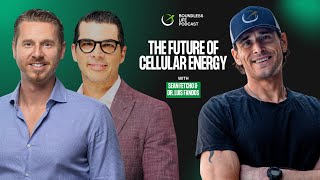
Shawn Fetzerl and Dr. Luis Fandos discuss the Me Screen, a finger-stick blood test that measures mitochondrial function across four domains and assigns you one of 17 metabolic profiles. Results guide recommendations for supplements like CoQ10 and ALA, plus specific exercise protocols to optimize how your cells produce energy.
Chapters
And then we stepped in to develop this super easy to use process of a finger stick, blood draw, and using serum as an adoptive transfer technology into our assessment tool that assesses four key subgroups of your mitochondria.
All right, so maybe you've always wondered if you're taking the wrong supplements or too many of them or doing too much ice bathing or eating the wrong diet or. Well, it turns out that you can actually test for this stuff now via your mitochondria. In this episode I reveal some crazy facts about your mitochondria and how you can now use precision to figure out whether or not you're optimizing things like your mitochondrial health efficiency network, et cetera.
Go to BenGreenfieldLife.com Versaya for the show notes.
It's VR SEA and let's dive in. Modern day infatuation with mitochondria is, I think, justified because the mitochondria is so important. And a few months ago I actually did an episode about how you can test your mitochondria shockingly, and I got a lot of feedback from many of you who listened. There wasn't really a good way to test things like mitochondrial health and mitochondrial efficiency until I talked a little bit about this new test on that original episode. And I will link to that original episode about this test called the Meat Screen. If you go to today's show notes, those are going to be@BenGreenfieldLife.com versia like V E R S E A Versia is the company that designed this test called the Me Screen. I've gotten so many questions about that test, about how it works, about the technology behind it, but also just about mitochondrial health and efficiency in general and what you can find and what Versaya has found via some of this testing. So I have two podcast guests today. Shawn Fetzerl is the co founder and the CEO of Versaya Health and he's the guy who kind of introduced me to this new method of testing your mitochondria. And then I also have Dr. Luis Fandos on the show. He's an MD, very respected interventional pain management specialist, the founder of a company called Alluring Age, and he also works with Vercea on some of the science behind this mitochondrial testing and mitochondrial optimization in general. So fellas, welcome to the show.
Thanks Ben.
Thank you for having us.
Yeah. And between the two of you, I would imagine you have some pretty mind blowing facts about the mitochondria. I'll admit it's annoying to me when people are Just like the mitochondria, the powerhouses of the cell. And I'm like, yeah, I've heard that a billion times. So one thing to say that. But I'm curious, you know, for you guys, what are some cool things that people may not know about the importance of or the magnitude of the kind of the cool science behind the mitochondria?
Well, listen, I can Sean here, but we could go on and on about how important it is in the overall lifestyle of any individual on the planet. You got 8.2 billion people on the planet. Just to put this in context, all of us have over 37 trillion, give or take, mitochondria in our body. All right, every cell in your body has it, but red blood cells, your heart. As Ben is on the treadmill right now and Lewis and I are talking, each of our hearts have up to 40% filled with mitochondria. As we're talking and listening to this podcast, you have every non communicable chronic disease, things like diabetes, heart disease, cancer, neurodegeneration with Alzheimer's, Parkinson's, als, fertility issues, traumatic brain injury, inflammation, the list goes on and on. Every single one of those non communicable chronic diseases have some sort of tie to mitochondria. So whether it's a dysfunction or a deficiency in your mitochondria, another mito fact that I always tell people, whether I'm at a bar or having a coffee with someone, is that you inherit it directly from your mother. Your mitochondrial DNA comes right from your mom. So these are the types of things that people don't realize. And when you think about cellular health, everybody out there claims cellular health. Everyone, right? Things from peptides, NAD supplements, exosomes, stem cells, you know, red light therapy, magnetic therapy, hyperbaric, oxygen chamber therapy, cold plunge, infrared sauna. All of them are claiming enhanced energy, enhanced mitochondria, enhanced cellular health. And it's like. That's like me giving you a cholesterol drug and not having any idea of what your cholesterol is.
Yeah. Okay, well, I have two questions. I have a. I have a mom question, and I have a red blood cell question. Doctor, find us. Why don't red blood cells have mitochondria?
You know, when their cells are forming at the beginning, they don't really have that many. But in general, red blood cells are poor when it comes to MIT levels. They don't really. They utilize energy through a process called glycolysis. And glycolysis is basically the burning energy through the use of glucose without utilizing the mitochondria, which is a very inefficient way of creating energy. So glucose is really available in your blood and that's what the blood cells use, that. But if you want to produce, if you want to produce energy in a very efficient manner, you got to utilize the mitochondria. So just think about for a minute, so one molecule of glucose through glycolysis, the process where you create energy without the mitochondria produces 2 ATP. Only 2. If you use one molecule of glucose and you put it through the mitochondria, you're going to get 38 to 40 ATP.
So basically anaerobic energy production, not aerobic, respiratory ATP production is what occurs in the red blood cells. So they don't need or have mitochondria because of that, because they've just got ample glucose in the blood to burn.
Correct. And the only purpose that they have is transport oxygen. Right. And that makes it easier not having the high amount of mitochondria to glitch.
Just latch onto the oxygen molecules and transport that to the tissues.
Okay, so kind of like a little bit of a rabbit hole here when people say, well, because I've heard this right, if you have better mitochond density or proliferation, you're going to be.
You'Re going to have higher VO2 max, better oxygen carrying capacity, better performance. And I think some people might think that means you see an increase in red blood cells. But I'm assuming that the reason you might become a better athlete, let's say, or a better performer if you have healthier mitochondria is due to something beyond just red blood cell optimization. Correct.
Now that's because of the tissue level, you increase the utilization of the oxyge red blood cells. The red blood cells has the same current capacity. Unless your oxygen tension, whatever oxygen you're breathing, is low, then the capacity is going to be lower. But once you breathe and the exchange happens at the lung, the red blood cells carry on the oxygen to the tissues, but the whole respiration happens at a cellular on your muscle, on your brain, in the actual tissue, not in the red blood cell.
Okay, so the mom thing, obviously, as you established, Shawn, the mitochondria in terms of their role in chronic disease and health, go way beyond just physical performance. But does that mean if, let's say my dad is a really good athlete and my mom is a crappy athlete or vice versa, I'm pretty much going to have the same athletic potential as my mom and my dad has nothing to do with it.
In reality, it is true that you may inherited, you know, all the DNA, the mitochondrial DNA comes from your mom, and you may have deficits. And it is true that you cannot change your DNA. It is what it is. But what people don't understand is that you can actually modify the behavior of that DNA so you can actually do things to those genes to behave in the way you want them to behave. So if some of your genes are sluggish on the mitochondrial production, there are things you can actually do to change the behavior. You're not changing the genes, but you're changing the behavior of your genes. That's called epigenetics. And all our genes respond to the environmental factors. They respond to what we eat, how we sleep, to the stress, to either workout or lack of thereof, and everything that we do. So the genes respond to our decisions, to the environment. So even if everything comes from your mom, and you may not have the best genetics when it comes to mitochondria, you can do things to make it better.
Yeah. And you guys have a unique take on that.
I know.
Just because you've already got access to a lot of big data from all the people you've seen tested. And I know there's. I just did my. I think it was my second or my third test last week. And when I do it, I go online and I fill out a questionnaire. So I know you're gathering data about what kind of things people are doing from a lifestyle and a diet and exercise standpoint that epigenetically affect the mitochondria. And I want to get into that. But before we do this test.
Especially for people who didn't hear my original episode with Dr. Patel where he did a screen share walkthrough of all my personal results, walk me through what this test actually is. I mean, not only how it's done, but what it actually looks at.
Yeah.
Before. Before Louis goes into the four subcategories, I just want to explain, I think it's important to know the context of how this came about. Right. Because the test is 25 years worth of research to get to this point. And when you look at epigenetic testing and biomarker based testing, this is not that. Right. We are a function test that's looking at real time, functionality and efficiency of your cells. And so there's no test in the world that we are aware of that can do that. Right. And I use the example to explain to the masses. It's like if Ben Lewis and Sean went out all night tonight Drinking, then decided to eat Waffle House at 4 in the morning. If you decide to go to Waffle House and then, you know, who knows, you end up doing some drugs and then you go take a biomarker based test that morning, I can almost guarantee you your results are going to be skewed. Right? Because it's against environmental conditions. And if you were to take an epigenetic test, take it four different times, at four different times of the day, the same test, or four different tests, you're going to get variation in the results. With our test and what we've created and Louis will get into the areas that we're measuring, it doesn't change hour to hour or day to day. Your mitochondria take 90 plus days to see any substantial physiological change down at the cellular level.
I was actually wondering that, by the way, Sean, because I think before I did the podcast with Dr. Patel, I did the mean screen test and I'm pretty sure I just like woke up, fasted in the morning and did it. And then when I did it last week, I did it post workout and kind of thought that was going through my head. I almost texted you. I'm like, I wonder how much this would affect the results. Sounds like it wouldn't.
Yeah, it wouldn't. Your cells take a while to change it. You know, it's like people, if you get off alcohol and you think two days later you're going to feel amazing and your whole body's going to be recovered in a different, you know, aspect. It's not. It takes time, diet takes time, supplementation. You don't take a supplement for six days and like, yay, I'm great now. Right? Things take time to see impact down at the cellular response in mitochondria. So that's why our test differentiates from the other types of tests out there that are biomarker based assessments. And I'm not discounting the validity of using some of those tests, but I just warn people that if you're going to run a biomarker based test, you might want to do it multiple times.
Right. So what you're saying is basically like this would be the difference between, for example, I know to a certain extent, let's say like mitochondria or magnesium, I'll pull that one out of the hat. Like, we know that magnesium levels can to a certain extent affect mitochondrial health, but you're not saying that this would be a test that just looks at something like magnesium levels. Instead, you're going direct to the mitochondria bypassing all these other things, whatever vitamin D, cholesterol, magnesium, everything else, people are testing from a biomarker standpoint and instead looking boots on the streets at exactly what is going on in the mitochondria.
So correct. So when you're looking at biomarkers, those are indirect markers of what you know, that shows what goes on in your body. So and many things can affect that. The difference with this test is like you're actually are opening the hood and looking inside the cell and you can see exactly what's happening at that time in your cells as opposed to any biomarker testing that is an indirect marker and it may not be specific and there's so many different things that could affect it. But utilizing this test, you can actually see exactly what your mitochondria are doing is looking under the hood as opposed to just reading some tests from blood work markers where so many different things could affect it and not tell you the true story.
Yep. Okay, so blood spot card. I just did it, so I know how this goes. Fill up both blood spots with a little finger prick from your finger. Takes five minutes, let it dry, put it in the envelope, send it back. Then what happens? What are you guys looking at?
So along the way you're going to get a content library that'll educate you on what's happening and the updates of the test as well as the mito facts and resources to be able to learn more about your cellular health upon the lab, which were the first ever standalone cellular health mitochondrial research and commercial lab in the world. And that lab is based outside of UC San Diego, about 10 minutes drive from the medical campus there. And it arrives in that lab anywhere from around the world. We can hold the stability of that sample that you do up to 60 days. We're doing validation studies to take it out to 120 days, which means that anyone in the world can run a test and get it to our lab in San Diego. I think that's a big deal. And you don't have to go get a blood draw, you don't go to a phlebotomist. We've done intravenous blood draws versus finger stick blood draws and we've shown validation studies that it's the same. So it's that ease of use to be able to get this delivered to your doorstep, do it with a return label, drop it in the mail, and then when the result is ready, you get a full blown report, a very detailed report that outlines each of the areas of assessment within your mitochondria there's 11 core functions that we're looking at. From the 11, we break it down into four subcategories. Louis can explain each of those four categories and when your result is ready. The key to this whole thing is that you schedule a clinical consult and one of our providers, like Dr. Lewis or any of the other providers will get on with you and walk you through a telehealth visit to interpret your results. And the algorithm will pull out any peer reviewed literature. What that means to the masses is that anything that's been indexed. Right, which means it's been scientifically validated through research. We pull that through PubMed and any other sources out there on what would be useful for you to help optimize the areas of improvement within your cells. And we focus on diet, nutrition and supplementation. Unfortunately, a lot of the other things out there that claim cellular health, and I'm not discounting some of them, I think there's a lot of great things out there, they just haven't been validated in the scientific literature yet.
Well, are you talking about like red light therapy and PEMF and stuff like that?
A lot of the biohacking and health stuff out there, right?
Yeah. Why wouldn't you consider, I don't think you asked this in the questionnaire, but why would you guys consider just like starting to get that data yourself? Like when people are testing on their pre intake questionnaires, like hey, are you using, because I know right now on the questionnaire you asked me like, do you use like urolithin, magnesium crease, like there's a bunch of stuff listed on there, but you could add on like red light therapy, frequency dosing, PMF frequency dosing, hyperbaric. You just like start to kind of like whoop does with the wearable data, right? Start to generate some of your own internal user data.
That's exactly where this goes. Ben, think about us like over time, your true personalized medicine approach to your cellular health over time. The test value is not the first test. That's just your starting point. Just like getting your testosterone done or your sleep score done or your, your blood work done. You have to start somewhere with a baseline. So the first test is meant for that. That's where you are today at 45 years old. 40. I'm 42 years old. Guess what Lewis is, you'd be shocked. But when you look at age, right, that's your cellular health journey. Your cells are aging every day. That's aging, right? That's mitochondrial change. And so we look at where you are today in your mitochondrial health and then interventions, whatever you're doing in your life, think of us like another tracking tool specific to your cellular health. You know, whoop is great. It tracks your sleep, your eye health is great. It traps, tracks how many steps you've done today. Ben's going to knock out probably a few thousand steps on this podcast. But how are you tracking the interventions you're doing in your life and what is happening to your mitochondria and your cellular health? And that's a very, very big deal. And it's, think of, it's like a new vital sign. Right. Because never before has this been able to happen. The only way to do this for decades around the world is a six inch needle. It's called a muscle tissue biopsy. Lewis can explain it further. It's super painful. Imagine getting real live tissue pulled out of your leg.
Yeah, I've got, I've got tissue biopsies before, as a matter of fact, I did one prior to a three hour treadmill run test. So I got the biopsy, then I had to just like hammer for three hours on a treadmill. Bilateral biopsy in both quads. So it felt like a little Chihuahua eating my quads while I was running on the treadmill.
Exactly right. And imagine being a professional athlete who's going to do that.
Yeah, that's brutal. And you know, it's very expensive. And also when you do the biopsy, mitochondrias and cellular health tends to decline very quickly. So it's very hard to maintain those mitochondria as if they were in your body. Right. Because they have to be shipped to a lab. And it's just, it's very inconvenient and it's difficult and it's expensive and it's not scalable. So it's very difficult to utilize in clinical practice. That's where this test becomes, you know, an amazing tool where now you can just do a little finger stick and ship it to the lab and it's very stable for up to, I think, 90 days. Right, Sean?
Yeah. It's really, it's really important for everybody to know that's listening is that we didn't invent a test. We created an easy to use process of running the gold standard of assessing mitochondria worldwide for decades. And I want to make sure everyone understands that. We took the archaic way of muscle biopsy, which cost several thousand dollars. There's only a handful of labs that can do it. To Louis's point, You have to be on site in that lab because they have to process the sample right away. And it's not a scalable model. Who's going to drop 2,000, $3,000 each time when this is meant to be a tracking tool to assess every 90, 120 days? Maybe if you're Ben and you have a perfect score every year or six months. But, you know, you really look at how this thing has been developed. It started out at NASA, right, where we started to look at blood and assessment of cellular health in space. And when I say we, I was not part of that study. There were 10 institutions involved in that study. It's a very famous study you can Google. It's called the NASA Twin study. Senator Kelly and his brother. Right. And assessing what goes on in space. Well, Dr. Patel and some other labs at UC San Diego were part of that study. And that was a decade ago. From there, we got involved in 2019 to take that way. And that methodology of assessing mitochondria, which was better than the gold standard of muscle tissue. They were using plasma. And then we stepped in to develop this super easy to use process, which is the patent that we filed around that is protecting the process patent of a finger stick blood draw. And using serum as an adoptive transfer technology into our assessment tool that assesses those. Back to your original question. Four key subgroups of your mitochondria. And that algorithm pulls those four subgroups into one final score. And we call that ME score. And it stands for your mitochondrial efficiency score. So ME score would just be like your testosterone score or your sleep score or your glucose score. ME score is your cellular health and mitochondrial score.
Okay, guys, is it like a. I don't even recall because it's been a couple of months since I saw my original test results. Is that like a 0 to 100 score?
Yeah. Think of it like we all have. Many of us listeners probably have children. When you take your child to the doctor and they say, hey, your kid scored in the 70th percentile for height, and they're in the 60th percentile for weight, well, that's against the norm, right? So, hey, your kid's two, and this is where they are. Well, what we're doing is taking the weighted average of where you fall in your cellular health and mitochondrial health score. And that's on a percentile. So actually scoring a 60 is good. Right. Unlike taking an exam a 60, you would fail. Right. With our assessment, a 60th percentile means you're in the 60th percentile of your mitochondrial health, you're above 59% of the people out there. In your realm of demographics, of what you are, how old you are, the input of the data, all that feeds into the algorithm that provides back your data set.
Yeah. So are you just like at the top of the chart, Sean, knowing everything you know? Or is it Louis who's winning?
No, actually, you are, which is crazy. You're one of four people. Yeah, you're one of four people out of the thousands of samples we've run that fall into profile 17.
It's all those bananas and peanut butter. My morning smoothie.
That's it. That's what it is. I think it's a mind, body, spirit combination, to be honest. I think it's a combination of all three that our overall health and wellness is predicated on. But when you look at each person on the planet, I go back to the 8.2 billion, I think it's probably a little bit more. Now, every single human on the planet falls within One of these 17 profiles of mitochondrial health. And so we classify that based on your score. You land on one of those profiles. Ben actually is one of four that scored on profile 17, which is the most superior mitochondrial health you could have. Which is pretty mind boggling, to be honest, because for your age bracket and where you are in your life, I mean, that's pretty impressive.
All right, well, yeah, after 20 years of destroying my body in Ironman and Spartan and adventure racing and every other masochistic endeavor known to humankind, I will totally take a profile 17. But more importantly, you've alluded to it a few times, Sean. There's these metrics that get measured. Like these four core metrics. Yeah, I'll attach. Because you guys have kind of generated even a newer, fresher, cooler report than the original one that I did with Dr. Patel. And I'll attach that in the show notes. If anybody wants to download it and see what it looks like, just go to BenGreenfieldLife.com Versaya V R S E A But I would love to hear, maybe you could do this, Louis. Just walk through what each of those metrics are.
There are multiple things that we look at, but in order to make it a little bit easier for people to understand, we kind of group it in four categories. The first one is baseline respiration. Baseline respiration is the amount of energy that your body utilizes when you're at rest. Just think of a car. You have the engine running, but you're parked, but you need the engine to run the AC heating or to run the electronics in the car. So you have that minimal amount of energy that is necessary to keep the car in function even though you're not moving.
Okay, so real quick, when people hear like bmr, basal metabolic rate, like your resting metabolic rate, that's equivalent to this basal respiration that you're talking about. Just like the basics that you need to sustain life, correct?
Exactly. So the basic energy that you need to keep your heart pumping, your kidneys and liver functioning well, and just have minimal brain activity, you know, take it. Obviously, in order to measure that, technically you're not supposed to be thinking of anything. You got to be relaxed and lying down, not making any effort. So that's your baseline respiration. And that's very important to know because if there are any leaks in the system, you're going to have either. It could be much higher than what it needs to be.
I have to clarify, not that we need to get too nerdy, but leaks in the system sounds kind of vague. What's that mean, leaks in the system?
So the energy is being produced in something called the electron transport chain, which is a little.
Mini factory energy factory that is within the mitochondria. That's kind of the assembly line of energy.
Mitochondria has multiple stations inside that transport chain where one molecule is transported to the next station to be transformed into energy. Now, this needs to be an airtight system. And if there is a leak somewhere in the system, you're losing some of the protons, some of the electrons. And if you're doing that, you're losing some energy because you're not utilizing those protons to go down the line the way they should and make ATP. So if you're losing protons, somewhere along the line, you're losing energy. You know, you're losing ability to produce that energy. And which means that if you. And that's at rest, imagine if you are really, you know, need to run or, or climb or do something else. That means that that problem can be really exacerbated and you can lose more.
Yes. Like, think of it, think of it like a fight or flight mentality, right. That you're. You, you perform better. And this is where I think a lot of people are over hacking their body. They're overdoing it, Right. They're doing too much. I mean, you have UFC fighters or people that weight train or work out seven days a week. I'm like, what about resting? Right. Recovery is just as important. And I think, you know, that fight or flight mentality is a way to think of, you know, your body under an adrenaline state. Can it perform? Can it perform well?
Yeah, and we should clarify, by the way. I mean, you said I have a good score. I do walk 15 to 20,000 steps a day. I lift weights four times a week. I do HIIT cardio two times a week. And I play pickleball or tennis sometimes in the evening. So I am not by most standards an inactive guy. Some people might look at me and say I'm exercising too much. I think it's very reasonable what I do, but hopefully that gives people an idea of, for me, having a decent score, what my physical activity levels look like. The hiit Cardio is about 20 to 25 minutes long. The weight training sessions are about an hour long. I'm walking for an hour to two a day, and I'm playing some kind of a sport a few nights a week for anywhere from 30 to 60 minutes.
Well, I'm no scientist. I'm the least scientific person on this call. But what I'll tell you is that Ben Greenfield, and what Ben does is what Ben does. And I think this is where biohacking gets screwed up. You've been doing this your whole life. You've been training. And so for you, that's normal in your body because that's your life. That's what you've been doing every day.
Yeah, I've been a very competitive athlete since I was 14.
Exactly. So when you look at the biochemistry of who you are as a person, every single person on the planet is. Is different. And this is where medicine will go in the future. Personalized medicine is the future. I don't care what anyone says, it's going to happen. AI will monitor you. That's what whoop and oura ring and testing and all these things that are being developed alongside of AI is going to produce an output and algorithm for you. The days of a, you know, a primary care doctor tapping underneath if your leg moves and having a four minute constant old, that's over. Right. And I don't think primary care even exists in five to ten years.
Yeah, careful. You got to put those little rubber hammer companies out of business, Sean.
I know, but think about it. Everybody is different. So yes, Ben, that works for you because you're Ben Greenfield and that's your biochemistry and you've lived a certain lifestyle that has been to a point where you can do what you can do. I was mentioning to you guys earlier that I get stretched once a week. Okay. I was looking around the room There are people that are older than me that were so much more flexible than me. Right. Everybody is different. And it depends on your biochemistry and your makeup as to what treatments or protocols or diet or supplementation or how many steps you should take or how much you should work out. So it just depends on the person. And I think that's where true medicine goes, is this personalized approach.
Yeah. Okay, so you were talking about basal respiration, Louis. Is basal respiration the first thing that you look at?
Yes, that's one of the first parameters, because that's kind of easy right there. You just, you look at the mitochondria under the analyzers and without pushing them, because with this test, we have the ability to put the mitochondria at different levels of activity to see how they respond. So the next one that we look at is mitochondrial efficiency, which is the ability to store energy while you're at rest, so that when you actually add in need of energy, you can utilize it. And that goes back to that electron transport chain and the ability to take those protons through the assembly line and produce molecules of ATP, which is the energy unit. Right. So we are able to measure.
Compared to controls of your same age and group and how much energy your mitochondria able to store and save for when you really need it. So that's called the mitochondria efficiency score, which is very important too, because if you have, like I said before, you have leaks in the system, if you have areas where there is inefficiencies and the protons are not transporting in the appropriate way and as fast as it needs to be, then you're not making ATP at the rate that you need to.
Super quick question about the efficiency piece. Some people use a term called mitochondrial uncoupling, which I've heard defined before as the ability of the mitochondria to utilize oxygen and nutrients to generate heat instead of ATP. And I've even heard that described sometimes as almost like kind of a leaky phenomenon. Is that different than what you're talking about? Like when you see, say like brown fat tissue that someone might develop from a cold plunge protocol causing this mitochondrial uncoupling, your generation of heat?
That's exactly, that's exactly what I was alluding to. Because if you're generating heat, you're not generating ATP. You're. You're utilizing that energy for the heat, which you know, you're not really, unless you are in a cold situation, you don't really need, you know, you need to have when you're making energy, you're generating some heat. But that has to be within the parameters. Remember, everything in our system has to be balanced.
But aren't babies born with a bunch of brown fat and mitochondrial uncoupling?
Yes, but that is corrected as soon as they start after birth. Because remember, they're living in a water environment for nine months. So then once they are born, the coupling starts to become more efficient as they, you know, as the days go by.
Okay, so this of course begs the question that I'm sure some people are wondering, like, have you seen or do you know if something like excess extremes of temperature, like too much cold plunging could cause enough mitochondrial uncoupling to the point where you reduce mitochondrial efficiency?
Absolutely. Like everything that we do. Again, this is, this, this is called homeostasis. So you want a state of balance. You know, too much of something is not going to work. Too little is not going to work either. You have to find that happy medium that is right for you. Now, like Sean said, you are an athlete. So what you do every day is good for you and it's good for your mitochondria. You know, you have an amazing result on the test. But if someone your age but is not well trained does the same thing, it may push the mitochondria into decoupling and then they lose energy. They develop reactive oxygen species, which is a lot of those protons that come out of the mitochondria and they create inflammation and that generates stress hormones like cortisol, and that creates a completely different.
Situation that is not really productive for you.
Okay, got it. And just to put this in context for people, again, Sean, you very astutely noted, I'm not everybody. And everybody's personalized. I cold plunge one to two times a day for two to three minutes, typically in the afternoon as a substitute for a cup of coffee and typically pre workout in the morning. I can't tell you the last time I did a cold plunge longer than five minutes. So mine are pretty quick and frequent and that works well for me. I don't think I'm getting excess mitochondrial uncoupling from that. I doubt it.
No, you're not, because the test shows that you don't. So then you have the results. That's the beauty of this test. How many things are we doing that we think it's working for us, but we're not sure. The beauty of this test, that you can try supplement, you can try exercise, you can try different diets. So intermittent fasting is not for everybody. Some people really benefit from it, some others don't. And the best way to really know this is by doing the mitochondrial testing.
I was going to mention this earlier. I had mentioned all the things that claim cellular health, right? Cold punch, sauna, peptides, NAD supplements, red light exosomes, stem cells, et cetera, et cetera. All those companies are coming forward to us, the legitimate ones, and doing full blown outcome studies. We come from the Western medicine world. All the founders, the PhDs, the MDs on our team, we all come from western medicine initially. I've spent 20 years of my life in western medicine, and you look at validation and I think health and wellness needs to bridge the gap between Western medicine and health and wellness through validation. And we do need some science put behind some of these things. So there's a lot of companies coming forward that are doing these outcome studies. And let me give you an example. Say I'm a. I'm. I'm a peptide, I'm a supplement, I'm a red light therapy company. We're doing a study with an infrared sauna company. What is the protocol? Right. Well, how do you, how do you establish a protocol? Well, you have to look at safety and efficacy and dosing. Right.
And you also need a certain subject size, you know, sample size, so that, you know, you, you can't account for The n equals 1 or the factor of personalization.
Correct. And so a lot of the people that are coming or the companies or products or services coming forward, they're doing 30, 40, 50 subject studies. I mean, we're doing a study with MD Anderson right now, 75 subjects on a rare leukemia. We're doing 140, I believe, subject study at a major academic institution looking at a D1 football team in traumatic brain injury and concussion, because that's a mitochondrial issue. So research can be done throughout all facets. We just submitted a major federal grant for a massive Parkinson's study because neurodegeneration is a mitochondrial issue.
Okay, well, I have to interrupt you and I do want to get back to Louis just to make sure we squeeze in all the components of the mitochondrial test. But I have a lot of clinics, physicians, universities, et cetera, researchers who listen to this podcast. If they're just thinking right now, hey, that would be cool to do a study. Do you have like a contact form on your website or what's the best way for them to get a hold of you?
Absolutely, yeah. They can reach out. We help clinics do protocol studies. So if they have a unique protocol of what they're Doing. Let's run a 20 or 30 subject study on that and test day 30, day 60, day 90 to see is there physiological optimization taking place down at the cellular level.
We're doing that with MOT C right now. We have a study on patients that are taking MOT C. We're doing a mis screen on day zero, and then they're taking MOT C 10 milligrams twice a week. And then we're testing them on day 30 and day 45. And just we're going to see what their response. High mitochondria. Because MOT C, as you know, is the mitochondrial peptide. But everybody talks about it. But not until now. Nobody really had any validation studies short of saying, oh, I feel great. I feel so much better. But we never had anything in writing showing exactly how much improvement you get at a cellular level.
Yeah, that's pretty cool. Now we're going to find out. All right, so we got. We got the basal respiration, we got the mitochondrial efficiency. And what else is this looking at?
We're looking at another one is the mitochondrial potential. So that's where you want to push your mitochondria to the limit. And you want to see how fast your mitochondria gets from 0 to 60 and how the response. So we can do that.
On the lab and push the mitochondria to the limit to see how well they are responding to stress and maximal activity.
What do you have little miniature treadmills in the petri dish? Or how do you do that?
They add a special.
Component. I don't remember the name of it. This is where Patel knows exactly what the name of it, but they added substance that makes the mitochondria boom. Run, like to go at the max.
The imagery of it is actually quite fascinating. So you can actually see your mitochondria. I want to create art out of it where you can have an art piece that would be your mitochondria on that art piece. It looks mind blowing. I got to do a video in our lab to show everyone.
Yeah, and it's great because they all light up. They respond to this product when they put it on the dish and they, boom, the whole thing lights up.
You gave me a new Christmas gift idea, the ultimate narcissism gift. Your own mitochondria frame to hang in your office.
Kind of neat, right? To have that.
That is kind of cool, actually. All right, so you get these little. You get these little guys running at maximum pace. And you said that's called the. What mitochondrial potential. Potential okay, so you find out basically just like how hard you can push your cells.
Correct.
And how well they respond. Oh, how, you know, so they look at the.06 to 60 in a way to look at how many seconds it takes you to get here compared to other people your same age and group. So that's basically, that's important because that tells your ability to recruit a lot of mitochondria that are not working all the time. So remember, not all your mitochondria are always functioning. Some of them are at rest while others are working. But when you need maximum response, then everybody's recruiting at the same time.
So.
So then you can get the maximum amount of energy throughput.
But isn't a side effect of maximum energy throughput in the mitochondria the generation of reactive oxygen species? I mean, couldn't that be a bad thing if your mitochondria are constantly moving too fast?
If you're going for too long. Yes. And that's why, you know, that's one of the problems of over exercising. If you are exercising more than what your body is trained to or able to do, then you're going to go into stress mode and that's going to be counterproductive because you know, Rosss are going to build up, reactive oxygen species are going to build up. You're not going to be able to clear them at the same rate that you're producing them. And that creates inflammation and that inflammation brings the stress hormones. And you know, now everything is going, you know, upside down because now you're, you're going to have an anti stress response.
Okay, but do you look at the potential of someone to be able to modulate that response, like how much antioxidants they're making or how many reactive oxygen species are accumulating or anything like that?
That is exactly what we're able to do. So we can tell the score comes in, tells you where you are on the spectrum and if you are low on the spectrum, it tells you what are the things you could do to improve that in terms of different, either diet, exercise or supplement. It looks at multiple different parameters that it can tell you, you know, based on your history and what the information that you provided and the scores, it will give you a roadmap of what you can do to bring that potential to the max.
Okay, all right, got it. So so far we've talked basal respiration, mitochondrial efficiency, mitochondrial. Was it the speed, the throughput, How'd you describe that? The mitochondrial potential potential and what else is there?
And then the Last one is the mitochondrial network.
Okay.
And that's very important because all the mitochondria, they're all connected. They are acting as, you know, it's like if it's AI, you know, they're all connected and working together. Even though you have, you know, mitochondria in your brain and in your liver, they actually connected through the mitochondrial network. And then they can make adjustments depending on what the metabolic demands are. You know, so if you're, for example, you have an infection on a certain part of your body, you're going to need mitochondria that will have to go to that area to help the immune system fight that infection. And you do that through the network. Because if there's no communication between the mitochondria, then it's impossible for that to happen. If you are in a situation where you're running, or for example, you're on a test, you're using your brain more now you want to increase the amount of mitochondria in your brain because you need more energy there at that time. So the network helps to allocate mitochondria where they're needed the most. And that's where the network is extremely important. Because if your network is not functioning well, it doesn't matter if your mitochondrial potential is great because, you know, they have the mitochondria from your liver work amazing. But when you need them in the brain, you know you're going to have a delay there.
So I don't understand. Is the network looking at how efficiently they're communicating, at the number of them, at the, like the spread or the pattern of them throughout tissue, or what exactly is it looking at?
Exactly. They're looking at the communication between mitochondria.
And how do mitochondria communicate?
Using neurocytochemicals, different chemicals that go through the bloodstream. And that's where tested on. On the. On the. On the lab.
And so is it those chemicals that you're measuring?
Yes.
Okay, got it. Interesting.
Yeah. And then you know what they do say, because remember, the mitochondria that we're looking at are not really your mitochondria. They are mitochondria from a cell line, right, that we have in the lab, which is providing the chemistry, your chemistry to that mitochondria. So they become you. So once you add that chemistry to the plate, it's like a representation of you in a pastry dish. It's a difficult concept to understand, but these cells are virgin cells, for the lack of better term, and they can Become anybody. So when I put your plasma into those cells, they're going to behave like if it was an extension of you. Your chemistry, your plasma is very unique to you and it's different from Sean and it's different from mine. So when I put your plasma into those cells, it's going to become them an extension of you because they're going to just replicate whatever your mitochondria were doing.
Yeah, extension of me and apparently my mom. Okay, I want to get into some brass tacks here because I don't know how much data you guys have on what kind of things that one should generally avoid or do. Right. From a supplement, diet, lifestyle. Because it's one thing for people to say, okay, so that's interesting. I can test my mitochondria. Are you guys able to give any targeted advice? I know that's kind of an involved question, but you can think about it however you want. Which diets, which supplements, which exercise modifications, lifestyle modifications, what do you know or what can you hypothesize based on what you've learned at this point?
Yeah, the algorithm that we have. So those four areas that Dr. Lewis just walked you through, there's a back end algorithm that has been developed with our partners at UC San Diego to develop and understand based on where you score in each of those four subsets gives you that final score. But it also spits out scientifically validated recommendations. So what we do and what the test does is that first test is the most important because it unlocks your mitochondrial health journey and it unlocks the recommendations for your first three months. So it'll say, you know, phase one months, one through three. We recommend Coq 10 and a fatty lipid diet. I'm just using that as an example. Right. And that has been known in the scientific literature to help elevate the areas where you need improvement in your mitochondria. Okay. It is up to the provider that uses our test alongside blood work and epigenetic testing or a genetic test or microbiome or whatever else they're doing. Doing. They take our data set and they will look at the recommendations as well as any other recommendations they think would would be the right option or intervention for that patient. Okay. We're only giving what's in the scientific literature. But to your point, over time you're going to be your own AI against tracking. So if you are doing interventions and you're going to change something up in your lifestyle, we're simply just telling you if it's working for you or Not.
Yeah, but are there other common calls to action that you're seeing pop up over and over again or anything that you've found? I mean, I'm not asking you if this is like, hard science based on years of data, but even, like, clues you guys have gotten about things people should avoid or include.
Yeah, Coq 10 is a big one, but from what I know. Yeah, Louis, you could comment on this.
Yeah, I see a lot of deficits. Is alpha lipoic acid. Many patients come very, you know, very low in it, and mitochondria really need it. Acetyl L, carnitine is very important. So carnitine is a. Is a transport molecule. So I talked about glucose before. Remember I said one molecule of glucose will make two ATP if you use glycolysis, and 38 to 40 if you use mitochondrial respiration. Now, there's another way of making even more energy, which is through the use of fatty acids.
Yeah, beta oxidation.
Right, Beta oxidation, exactly. So when you utilize the one molecule of fatty acid, you're making 100 ATP. Now, the issue is that the fatty acids have a hard time getting into the mitochondria. And acetyl L carnitine is the transport molecule that facilitates the entry of fatty acids into the mitochondrial chain. So by taking more acetyl L carnitine, you're promoting beta phosphorylation, you know, fatty acidation in your mitochondria, which means you're going to produce a lot more energy for the same, you know, with the same molecule that you have.
Okay, and you also said alpha lipoic acid. What's that one?
Do that also, it's very important for the mitochondrial function itself is a molecule that facilitates in the electron transport chain. And there are many other things. Obviously, exercise is very important.
Exercise like any type, or have you found, like, a certain type to be beneficial?
The recommendations in general, I mean, again, this is precision medicine, and not everybody fits in this category, but some that has a relatively good, you know, exercise level. So you got to work out about four times a week on Zone 2. Zone 2 means a heart rate about, you know, no more than 110, 120. So you don't really want to ride like a maniac during those workouts. You want to maintain your heart rate at that level. And then using high intensity interval training, also twice a week for like 15 or 20 minutes. No more than that. If you do that, you're really.
Maximizing your mitochondrial activity through central nervous system impulses that stimulate your mitochondrial function.
Yeah, obviously, muscles are a Dense storehouse to mitochondria. You come across anything regarding weight training?
Yes, weight training is more important than anything else. Now I have so many friends that they love running and they run miles, like run 10 miles a day. You know, they feel they want to do it because they feel that that helps them with their brain and anxiety and all of a things. But when you run so much, you put so much pressure on your joints and instead of increasing your amount of testosterone and growth hormone, you're pushing cortisol, which will reduce your mitochondrial efficiency. So weight training, I recommend weight training for everybody. 30 minutes four times a week. That should be the baseline for everybody. And then a little bit of high intensity interval training once or twice a week at the bare minimum.
Okay, so we got CoQ10 alpha lipoic acid, acetyl L, carnitine, a little bit of weight training, 120 to 150 minutes of zone 2 cardio, a couple of 15 to 20 minute high intensity cardio sessions per week. You guys come across anything else in terms of best practices?
I would say Waffle House or Cracker Barrel at least four times.
All right, what about the dark chocolate covered almonds at Trader Joe's?
Yep.
And I think goldfish. You know, my, my kid always wants goldfish. Like pretty much the worst thing a kid could have.
Yeah, yeah, actually that, that is a good point. You come across anything regarding, like, because I remember on the questionnaire you had me answer, omnivore, paleo, keto, vegan guys come across any common dietary characteristics that seem to be big wins or, or deleterious for mitochondria.
So as far as wings, I think that one of the most important ones, what vegetables are super important for the gut microbiome, because if you, you need a good microbiome to, for, for everything else to function well on your system. So vegetables in general and different colors are important, you know, with the pigment on the vegetables are super important for the, for the microbiome and mitochondria function as well. And the use of at least 4 to 5 tablespoons a day of extra virgin olive oil, that's super important. It really helps with the balance of the fatty acids. It's very anti inflammatory and it also helps with the, you know, fatty acid oxidation as well. So that's an important one. So. And if you get the olive oil, it has to be from glass bottles that are dark.
Yeah, we've, we've done, we've done a few shows on the importance of oil selection, storing and, and the heat, heat Component. So I did this test at home. Obviously it's pretty simple to order and do at home. What if I'm a doctor, you know, I have patients who don't listen to this podcast, but I want to start running on my patients or a medical clinic. Do you guys do like, do you just ship a bunch of tests to a doctor and could they have them on hand to run on patients or do they order them one by one? Like how does that work?
So just a few things that are super important on this because we, we have spent the last year and a half really perfecting the education of mitochondrial science. If you ask Peter Attia just went on 60 Minutes this past Sunday and I was just stumbling on happen to have it on in the background, like, oh wow, that's Peter. He did such a good job of answering, you know, kind of what is going on in the, in the landscape of health and wellness and medical. But the problem, he even said it, he said he had no medical training. And Louis, you probably had the same zero medical training on diet and zero medical training on nutrition and mitochondrial health.
Yeah, I've heard, I've heard everything from zero to a couple of weeks. But yeah, it's not. Not. It's not extensive.
No, it's not. And so we come from the education world. I spent a decade in cancer, cardiovascular disease, pulmonology, urology and then pain management. So we built CME and CE curriculum based education. We will soon have an accreditation program for healthcare providers. Everyone from PharmDs to PhDs to MDs to nurses, nurse practitioners, physicians, assistants will be able to have access to this content and actually get credits. But we also have built an AI based training platform where you can choose and customize your learning. Do you want to learn through podcast interview? Do you want to learn through audio, through video, for. Through PowerPoint? And you go through different modules. It's about a 90 minute course. You then complete each module, take a quiz, pass that. We then have a content library of 17 profiles with Dr. Patel that will walk you through each of the profiles. So Ben landed in profile 17. The doctor may not know how to interpret that properly for the patient. They go into their content library, they click on profile 17. Dr. Patel pops up and does a 10 minute explanation of how to interpret that result. We are big on education, so in answer to your question, a provider comes on. We have a full time staff of MDs and scientists that will get on and train that staff. We record the training, they have the assessment to become a certified mitochondrial health educator. Right. And then they have ongoing training and access to our clinical team to make sure that they're getting the best output for patient experience. I mean, at the end of the day, a patient's going to come and invest in a test like this. The doctors wants, they want to use this for assessment, but they also want to provide protocols that are working for each of their individual patients in each of their profiles. So education is critical. But yes, they stock the product. Comes in boxes of six. Actually, I have one right here. So they get a box like this. Okay. In this is six different tests. They use the test, they register their account on our dashboard, they get notified when the patient results are in. Think of it like a mini EMR EHR system for their mitochondrial health.
Okay, where's the content library?
It's going to be housed on the portal. So when they log in and create their dashboard for their account, their clinic, they'll have access to the content library. They'll have all podcasts, they'll have all marketing content, educational content. And then the clinicians and the providers log in, it's a password protected login to access the certification of mitochondrial health. That they'll do.
Okay. And I'll put links to all of this and my podcast with Dr. Patel at BenGreenfieldLife.com Versay. Is that also where you're going to release the results? When you're working with a company and they're doing the test on the mot c peptide, do you guys wind up putting that research on your website?
You just nailed it. We're building a strategic alliance of the validated products and services on the market. If someone invests in a study with us, and by the way, they're super cost effective. We're not here to run multi million double blind, placebo controlled studies. We're looking at outcomes and effectiveness research. It's extremely minimal in cost for these companies because we know some of these smaller companies, they don't have the budgets of big pharma and biotech and so they run a study. If those results are favorable, we help them generate the graphs, the charts, the manuscript, the clinical abstract. We help them for peer reviewed submissions or poster presentations at medical meetings. But if that content and the data is favorable and they are allowing us to do it, we will house it on our site where the clinicians and the providers and the consumers will have access to all the validated products and services that have undergone a validation study with me Screen.
Yeah. So you too can be part of the 20 minute cold bath study. How does that affect your mitochondrial efficiency?
We're doing some cool ones. We're going to do a hormone therapy, a weight loss. We're doing the infrared sauna, like I mentioned.
So, you know, I have a list of recommended tests that I often recommend to people on my website. I'm going to add this test to it just because I've already done it a couple of times and I would just love to see more data from folks, so. Sorry, what were you saying, Louis?
I just wanted to say that the average primary care doctor is not really aware of what mitochondria actually means. And it's not to their fault because it's crazy that during medical training we don't really get all this information unless you go and get it on your own. I have to go back and learn again. Cycle of crebs and mitochondria. Now, mitochondria, they're the common denominator of any disease process. You can think of anything and there's no way of measuring it. So I think that mitochondrial testing should be part of your yearly checkup. How many times you go to your, you know, you hear patients that don't feel good, they feel fatigued, they have symptoms, they go to their doctors, they get a blood work done, everything goes back normal and they get dismissed or they get a prescription for a, for an antidepressant. And it's not that they're crazy, there's something going on, obviously, but you're just not picking it up on regular blood work. So that's why, you know, this is something that John, Sean and I have been talking about. I want mitochondria testing to become a standard of care for primary care doctors when they, you know, you come into your doctor for your yearly checkup. This should be part of that panel because then that tells me what is exactly happening to your body right now and what can we do about it before you actually become sick.
Yeah, yeah, I agree. And guys, we got to wrap up soon, but I'm going to start testing on a quarterly basis just because I love this stuff and I'm kind of a self quantification nerd. But like you said, annually. Louis, I just think at least doing it one time, starting off after hearing this show, it's a good idea. And I'll put a link to the research, to the content library, everything, if you go to BenGreenfieldLife.com Versaya V E R S E A Guys, this is fascinating stuff. Thanks for coming on the show.
We want to take care of your audience and Anybody that comes on board with us and they're going to get a code for $150 off through you to take the test if they want to get started on their mitochondrial health journey. The last thing I want to comment on is pretty cool. We've tested a one day old baby and we tested someone right before they passed away. Okay. And it's pretty evident that your mitochondria can clearly determine that you're going to die. Right. You should have seen the mitochondria of that individual and then at birth. This should be an assessment that's done unlike a ton of vaccines. Why aren't we getting a cellular health and mitochondrial assessment? So you have a starting point from the minute you're born so you can see where you are on your mitochondrial health journey throughout the course of your life.
Yeah, sure. You guys can do a one, two combo deal. You get a ME screen and a circumcision for half off.
That's right. Yeah, I like it. All right, cool. Well, obviously, if you're listening in and you have comments, questions, feedback, leave them@bengreenfieldlife.com Versaya try this test. I'll make it simple to figure out how to order it and get that 150 buck code that Sean just mentioned. So. BenGreenfieldLife.comVersaya Sean Lewis. Thank you guys so much.
Thank you, Ben. You're amazing. Appreciate you.
All right, folks, I'm Ben Greenfield along with the team from me screen. Signing up from BenGreenfieldLife.com have an incredible week.
Do you want free access to comprehensive Show Notes, my weekly roundup newsletter, cutting edge research and articles, top recommendations from me for everything that you need to hack your life and a whole lot more. Check out BenGreenfieldLife.com it's all there. BenGreenfieldLife.com See you over there. Most of you who listen don't subscribe, like or rate this show.
If you're one of those people who.
Do, then huge thank you. But here's why it's important to subscribe like and or rate this show. If you do that, that means we get more eyeballs, we get higher rankings. And the bigger the Ben Greenfield Life show gets, the bigger and better the guests get and the better the content I'm able to deliver to you. So hit subscribe, leave a ranking, leave a review. If you got a little extra time, it means way more than you might think. Thank you so much.
More from Jeffrey





The Solution to Aging Might Be Closer Than Anyone Realizes - With Ben Goertzel


