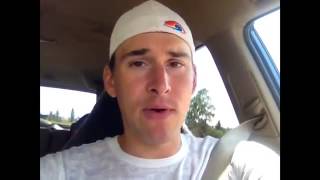
Ben Greenfield covers five essentials for race week: inversion exercises, mobility work, dietary adjustments, stress reduction, and swimming practice. Get your body ready without overdoing it.
Foreign.
Hey, what's up, you guys? It's Ben Greenfield. And I know that some of you don't like it when I shoot videos in my car, but you know what? I've got something I want to tell you, and I'm gonna tell it to you because it's on my mind right now. I'm tapering for a race this week, and there are five things that you need to do the week that you're taping for a race that most people do not do. Ok? So these are really practical tips. I'm gonna dig into them right away with you. Five things that are gonna make you feel like a rock star on race day. Number one is that you need to invert, okay? You need to invert for every day for five to seven days going into your race. The longer the race, the more this becomes necessary and the more beneficial it is you invert. What I mean by that is you go to Google and you do a search for yoga inversion poses, or if you're lucky enough to have an inversion table that you got off Craigslist or whatever. You go out there every day and you spend five to ten minutes inverted, drains blood from your legs. It makes your legs feel. Feel light, airy. It helps you recover faster. So invert every day that you're tapering for a race or for a triathlon. Okay? Number two is you go hunting. And what I mean by go hunting, that's a term I borrowed from Kelly Starrett from mobilitywod.com you need to go and take all the time that you'd normally be spending training and instead, grab a lacrosse ball, grab a muscle stick, grab a foam roller, put on your MP3 player, find a quiet spot in the house and go hunting for all those tight spots. And spend a good two to three minutes working out those tight spots. If you want to grab Kelly's book Becoming a Supple Leopard, that's a really good book. So is AllThingsMobility.com that's another good one. But basically, what you want to do is go hunting. Find any tight spots in your low back, your hips, your calves, the side of your thighs, your inner thighs, any of those spots. Get pressure on them and work them out. Number three is that for most of your meals, especially for those last two or three days leading into the race, you want to make them with a juice juicer or make them with a blender or keep them really simple. Now, I tend to go with blending or juicing. So for example, I will juice, lemon, ginger, carrot, throw some sea Salt, throw some olive oil in there and that will be a meal. And if I want to add protein, I can literally add like organic collagen that I can get off of Amazon into a very easy to digest meal like that. I can blend kale with Brazil nuts and almond butter and coconut milk and kind of do my usual everything in the kitchen sink in a blender. But as much as possible, use modern technology to digest food for you and it will basically free up energy in your body, life force, so to speak, that you don't have to use or that you want to have in reserves for during the race. So blend and juice as much as possible. Get a good blender and preferably get a decent juicer. Like a masticating juicer is a really good one and it literally chews your food for you. Okay, Next one is find any cortisol bleeds in your day to day routine and get rid of them. The last thing you want to do on race day with all this precious training time that you've built up is be amped up with cortisol the day of the race or be not recovered properly because of all the cortisol and the stress that you've been fighting all week. So, for example, I actually try and free up some time. I don't do as much riding, I don't have as many commitments, I don't do as much facebooking, twittering, all that stuff. I just try and get rid of those little things that are never going to bug me. I don't even check my email as much during a race week. So get rid of cortisol bleeds as much as possible, okay? And then the last thing you want to do is get in the water almost every day. Feel for the water. I cannot overemphasize enough the importance of getting in the water, even for 10 to 15 minutes. Okay? We're talking about jumping in the water or a river or a lake and just swimming for a really, really short period of time. Okay? 10, 15, 20 minutes. It takes very, very little, but you get a feel for the water. And what that does is it helps you on race day feel very, very comfortable once that swim start gun goes off or siren or air horn or whatever it is. But you get in the water every day. You just do some simple sculling moves, little bit of work on form, just get a feel for the water. So those are the five things that you need to do race week. Let's review.
Number one is you want to do mobility. Number two is you want to invert. I know I reversed the order of those. It's all good. You forgive me, right? So we want to invert. We want to do mobility. We want to get rid of cortisol bleeds, we want to get a feel for the water. And hot damn if I'm forgetting the fifth thing that I just, just now like two seconds ago was talking to you about. That's live video in your car for you, folks. Let's review again. Mobility inversion, juice or smoothies or blending your food. That was the other one. Get rid of cortisol bleeds and get a feel for the water. Okay? You do those five things, you're going to have an awesome race. But that stuff all flies under the radar. So try it out and you'll be happy. All right. I'm Ben Greenfield from BenGreenfieldFitness.com over and out. Leave a comment if you like the video or share it with a friend.