What Happens To Your Body & Blood When You Race Back-To-Back Spartan Races?
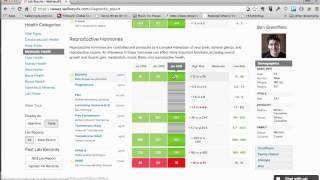
Ben Greenfield describes his WellnessFX blood tests taken immediately before and ~3 days after competing in back-to-back Spartan races (Super on Saturday, Sprint on Sunday). He compares specific laboratory changes: modest decreases in total cholesterol (LDL and HDL), a rise in triglycerides (attributed to alcohol), doubling of inflammation (hs-CRP) though still low, increases in fasting glucose and insulin (likely dietary), little change in thyroid between tests but large improvement compared to his prior endurance-triathlete state, a small drop in morning cortisol, reduced IGF, rising estradiol with increasing total testosterone over time but high SHBG limiting free testosterone, elevated liver enzymes and creatinine consistent with muscle breakdown, a notable drop in iron/hemoglobin/red blood cell count after giving 16 vials of blood prior to racing, and a drop in vitamin D. He offers practical advice: don't give blood immediately before an important race, support liver recovery (glutathione/NAC/calcium D-glucarate, sulfurous foods), replenish iron/red-meat intake, consider aromatase inhibition for high estradiol, and be mindful that alcohol can raise triglycerides and post-race nutrition affects glucose/insulin.
Chapters
Hey, what's up? It's Ben Greenfield and we are looking at my Wellness FX dashboard because we're about to jump in and see what happened to my body two weeks ago when I decided to fly down to California and do back to back Spartan races. So here's the way that this worked. I did my first Wellness FX full blood test on on Friday morning. I flew down to California. I raced a Super Spartan on Saturday morning, a Sprint Spartan on Sunday morning, and then I flew back Monday and retested on Tuesday morning because I had to fast. And so I fasted on Monday and then went into the lab and tested on Tuesday. So let's sign in and see what happens to your body when you do back to back Spartan races. And by the way, as you're watching this video, if you go to the blog post over@BenGreenfieldFitness.com that accompanies this video, you can actually follow the link there to get your own 15% discount on your own blood test. Or you can just visit BenGreenfieldFitness.com SpartanBlood how do you like that? Spartan Blood okay, Here is my WellnessFX interface. You can see lots and lots of numbers here because every time I do a test, it gets imported into this dashboard. So rather than displaying these results as.
A line and dot graph like this, I'm going to switch them to a table because when I switch them to a table, it's going to be easier to see what exactly happens specifically on the two January 2015 tests. So this right here that I'm circling before, this is after, and this will allow us to really delve in and look at some of the details. So first of all, you can see the total cholesterol is elevated. It's above 200, which I'm very happy about. I try and keep my cholesterol above 200 because that's very important for hormones, for steroids, for making cholesterol membranes and cells. It's extremely important. A lot of people are afraid of high cholesterol. Remember, high cholesterol is only bad if you also have high levels of inflammation, high levels of blood glucose, and high levels of triglycerides. And so the total cholesterol actually fell a little bit in the three days. It fell about 11 points between the first race and the second race. And that's potentially simply because I burnt through a lot of calories in those two days. And so my body was shunting more fat precursors towards ATP and energy than it was towards cholesterol formation. But Interesting that cholesterol dropped a little bit and it looks like a lot came from a combination of LDL and HDL. You can see my LDL drop from 114 to 106. HDL from 111 to 106. Nothing earth shattering there. Interestingly, triglycerides rose. Now this is likely because of the fact that I had three drinks on Sunday right after the race. Triglycerides rising is not a good thing. You want a really high HDL to triglyceride ratio and mine is really high. You can see it's 2.1, which is fantastic. I never would want triglyceride to HDL ratio to be below 1. But one of the things in addition to fruit, high fructose corn syrup and high amounts of processed sugar intake that can elevate triglycerides is alcohol. So I suspect that it was more that than a lot of exercise that caused my trigs to go up by 10 points. We learned this in the 30 day pre and post no alcohol test that we did last month with one of my readers with Jason Sissel. He did a 30 day and his trig triglycerides plummeted when he quit alcohol. Well, mine went up 10 points and it's probably because I had a few bottles of booze after the race, which is nothing that I necessarily think you should avoid. It's just something to note. You can see that my APO B, which is a protein that adheres to the surface of LDL cholesterol, it dropped by 10 points. That's something I would expect because when cholesterol drops, APOB is by nature going to fall. So so far nothing, at least in my opinion that interesting other than we know that having a little bit of beer after a race sparks your triglycerides. The APO A1 was not measured, so we'll skip that. Now here's something interesting. Inflammation. My inflammation was below 0.2, hardly detectable on Friday. But by Monday or by Tuesday my inflammation had more than doubled. So it was still low. You know, I still take a lot of things like curcumin and fat fish oil to decrease HSCRP or my general inflammatory marker. It's still low. But to put this in context for you, and I'll put a link to this over at BenGreenfieldFitness.com where this video will appear. But when I did this similar experiment, blood work before and after a triathlon, a half Ironman triathlon followed by an Olympic distance triathlon, it sent My inflammation through the freaking roof. Now the difference between a triathlon and a spartan race is that the triathlons involve well over the course of that weekend, six plus hours of racing. Whereas the spartan, even though it was more intense, was only about, well, slightly less than two hours of racing. So the volume of exercise is definitely going to affect your inflammatory markers. And shorter high intensity exercise, it turns out even when it's racing, does not seem to spike inflammation as much as longer, more voluminous things like triathlons or let's say marathons, half ironmans, things of that nature but, but still a doubling of inflammation. Now next we get down to we're going to skip over fatty acids because I did not test my fatty acid levels. That wasn't something I was too interested in for this particular test. Insulin. Insulin rose significantly between the first and the last test and so did blood glucose. This again is something that I suspect was more dietary related. The fact that I fill up on things like hamburgers and sweet potato fries and alcohol on the day after race. And we definitely see that there are some metabolic bounce backs from that. Because you can see fasted glucose went from 89 to 96. Now I always like to see fasted glucose below 90. Now it is true that very high cortisol levels can mobilize your liver glycogen causing blood glucose levels to go up. So I may have had high cortisol levels post race. We'll look at that in a second. That would cause glucose to go up. But typically that high cortisol causing glucose to go up does not necessarily cause a subsequent rise in insulin. And so interestingly both my insulin and my glucose went up causing me to believe that this is likely due to post race nutrition or lack of quality thereof as opposed to something that the back to back races actually did to me, my thyroid interest. This is very interesting. Here is when I was a full on endurance ironman triathlete following a low carb diet. Look at what my thyroid was at 5.6 or to my TSH extreme thyroid dysregulation. Now I do very little endurance and I don't follow a ketogenic diet. Look at my thyroid now. Pretty significant what happened once I started A not over training and B allowing myself a more sane 20 to 30% carbohydrate intake versus the 5 to 10% carbohydrate intake that I was on. Pretty significant huh? So not a big change in thyroid really between the two races. Okay, now we get down to cortisol. Well it Looks like cortisol actually dropped. My cortisol was, well in my opinion relatively high for a morning cortisol measurement. Even though it's still in the quote unquote green low risk range. I'd frankly like to see cortisol even lower. You know, when I test people who aren't hard charging athletes, their cortisol is many times below 10, sometimes creeping closer to 5. My cortisol on Friday was 18.3. On Tuesday it was 14.3. Granted this could have been simply a function of there being less traffic while driving to the lab on Friday or on Tuesday versus Friday, but we do know that it doesn't seem that recovering from a race necessarily spikes cortisol levels. And again, if you go back and look at the back to back triathlon measurements that I did, my cortisol was through the roof after doing back to back triathlons. So it doesn't seem that doing these back to back spartan races has much of an effect on your cortisol levels in terms of raising them, which is nice. If anything, I saw a little bit of a drop in cortisol levels and this also could have been due to the fact that I had some alcohol the day before and I was a little bit more relaxed after all the racing and everything was done compared to being all amped up and hyped up before the racing. So insulin like growth factor, a marker of anabolic hormones, this actually fell a little bit. So I was still in a little bit more of a catabolic state post race despite my cortisol falling. But again, nothing extremely significant there. Estradiol. This is something that's interesting and you can't see the running graph because I just kind of hit it a second ago. I suppose we could go back and look at estradiol by clicking here and scrolling down to estradiol. Look at this. In the past seven measurements that I've done with WellnessFX, my estrogens have been rising, meaning that the testosterone that my body is making more of, it seems to be getting converted into estrogens. Now granted, I am also. Let me scroll back down here. I'm also producing more testosterone with each subsequent lab test that I do where as time goes on, my body seems to be producing more and more testosterone. As I get farther and farther away from endurance training, my total testosterone keeps going up and up, but so does how much of that testosterone is getting converted into estrogens. So. So I'm actually considering beginning to take what's called an aromatase inhibitor because High amounts of estrogens in men don't just make you more weepy eyed during chick flicks, but may also cause things like excessive fat formation. And so I personally don't want man boobs. I'm considering potentially starting into an estrogen control because I'm already very careful about like my shampoos and phytoestrogens and you know, clones and fragrances, things that would increase the overall amount of female sex like steroids hormones in my body. But this is kind of high and so not necessarily something caused by racing, but something that I should note that probably has nothing to do with Spartans whatsoever because it was high going in and high afterwards or higher than what I'd like it to see. So in the show notes I'll put a link, but I'm probably going to start on this supplement called Estrogen Control, which helps men not make too much estrogen out of the testosterone that they're making. So I will link to that in the show notes that accompany this particular video. My free testosterone didn't change too much from race to race. I'd still like to see my free testosterone get much higher. And the reason that my free testosterone is somewhat low is because even though my body is making enough testosterone, and by the way, not as a tmi, but just so you know, I have, I have no problems in the bedroom. I wake up like an 8 year old or 12 year old, I guess it would be a 12 year old boy every morning. And I love sex. I've got a lot of libido, I've got a lot of motivation, I've got a lot of energy. But you know what? I'm all about going from good to great. And since I compete in Anti Doping association sanctioned events and USADA sanctioned events, I can't take testosterone that's not legal for me to take because I don't have andropause. But I'd love to get my, especially my free testosterone higher. You can see that my sex hormone binding globulin is very high. And a lot of times you'll see sex hormone binding globulin, which will keep total testosterone from getting converted into free testosterone. You'll see this high in the presence of higher levels of cortisol or higher levels of stress. You'll see this often in hard charging athletes. I'm not sure because I've tried a lot of things. I'm not sure if I'll ever be able to get my sex hormone binding globulin low until I quit doing these type of things that send my body a message that, hey, you're beating yourself up pretty bad. Life is harsh, life is tough. So we're going to hold you back a little bit from being able to make babies. Okay. That's basically the way that you would look at something like this. Well, I'd like to see sex hormone binding globulin get a little bit lower. Ultimately I'll have to decrease stress and doing a lot of training, but you can see even a big jump in it from the first race to the second race. This is a significant rise in sex hormone binding globulin. So if my body didn't really want to make babies before the first race, it definitely didn't want to make babies after a weekend of spartan racing. So there's that. And interestingly, for those of you who wonder if sex can increase testosterone, I did have sex a couple of times. Yes. My wife was with me at the racing. Don't worry.
Anyways, though, I did see a rise in testosterone and a rise in sex hormone binding globulin. It's interesting because I would have thought that perhaps by having sex you might have a decrease in shbg. Right. But that didn't turn out to be the case. Anyways, lots of interesting things. You learn all sorts of questions to ask yourself when you get get these kind of tests done. Okay. Check out the damage to the liver from doing back to back heart events. Whenever you have elevated liver enzymes, that's synonymous with muscle damage. And man, oh man, 37 to 52, 39, dropped a little bit for alkaline phosphatase. Interestingly, 45 up to 88. Now granted, again, part of this could be due to alcohol consumption post race, but part of this was definitely due to the elevated stress on the liver from having to metabolize my muscle breakdown byproducts that I was creating from this race. So very interesting. The liver definitely took a hit. Good reason to eat lots of sulfurous vegetables and maybe use things like glutathione or calcium, D glucarate or N acetylcysteine or any of these powerful liver detoxificants after you do a hard event like this. Now the kidneys also saw a big rise in creatinine, which is a marker of muscle breakdown. Not too much of any other issues with the kidneys. You know, I drank a lot of water which probably helped out. I always drink a lot of water after I give a blood test. I'll talk about why here in just a second. But kidneys didn't take too much of a hit. So no big issues there. There weren't any real significant changes with electrolytes. Interestingly, this may have been due to the fact that I probably slammed about 5 liters worth of coconut water over the weekend trying to rebuild my blood levels after giving blood. But electrolytes look just fine here. So no issues with alkalinity acidity. You know, I look at carbon dioxide and chloride when I'm looking for acid alkaline balance. No issues there either. Everything looks pretty good from that standpoint. Vitamin D dropped quite significantly from a Friday to a Tuesday. To see a vitamin D drop in seven points, that's very significant. So this might be another thing where I learned that potentially to help my body recover post race, I may want to add in some vitamin D rich foods, maybe add in some, even some liver or some organ meats, for example, and perhaps take a little extra vitamin D after I've beaten my body up after a tough weekend of racing because vitamin D dropped considerably, which I thought was quite interesting. Alkaline phosphatase. Just as a reminder, this is a liver enzyme. I always tend to be kind of low on this liver enzyme. It's not a bad thing if you're low, it's a bad thing if you're high. So just thought I'd mark that because it was colored. Platelet count. My platelet count is fine. When it came to my platelet count, there's a few other things with the blood cells that I wanted to go over. First of all, my immune system kind of went on hyper alert. Look at my jump in white blood cells post race. Okay? This is one of the reasons that athletes can sometimes get sick after races. They just start getting this hyper alert immune system that's ready to go into overdrive. And that's, that's pretty typical. A good reason to be careful if you're flying or traveling or something like that post race to take care of your immune system. You don't have to wear a mask like you're traveling in China, but you could use some essential oils or something like that to keep your immune system strong or just get some good sleep to keep that immune system strong. Because the white blood cells definitely go up in most of their counts after the race. Red blood cells. Here's what I thought was interesting.
Red blood cell count dropped. My hemoglobin dropped significantly. And during this race, one of the things that I noticed was I seemed to be very short of breath. It was really weird. It was like I Couldn't catch my breath. It was like I didn't have enough red blood cells to carry oxygen around. I am wondering if just this drop in my red blood cell count from Friday to Tuesday and also this more significant drop in hemoglobin from Friday to Tuesday is what caused that. Now this is where you should probably know about back to back blood tests, that if you've got an important event, you may not want to do the pre blood test as soon as I did before the event. It's probably safer to wait like a good 72 hours to allow your blood to rebuild. Drink a lot of coconut water, eat some steak and do that before jumping into a race. Cause I definitely felt the effects of giving blood. Because you do give 16 vials of blood for this test. And it's a good test. But I would say one thing I learned is I'm not gonna do this again like right before a high, high priority event. Cause I actually did not feel that great from an oxygen utilization standpoint at the event. And the only thing I can put my finger on is this slight drop in hemoglobin may have actually contributed to that. So just interesting, thought I'd throw that extreme sandbagging in there. And of course look at the iron drop just from giving blood to Tuesday. Look at that huge drop in iron. I mean this is significant.
This is a reason why if you have very, very high levels of iron, just look at how giving 16 vials of blood almost halved my iron. Okay, that's really significant, not necessarily good when you're gonna go out and do a hard event. And hey, I've learned my lesson. I gotta rebuild all my blood now before my next race. But it's really interesting what happened to iron after I gave blood like that. So you know, again, all the more reason to eat a red steak after you do something hard. And by the way, exercise also increases iron turnover. So that's something to know as well. Although I didn't bleed, there were no barbed wire wounds during the race. So that would not have caused this.
Slight drop in folate or folic acid. No surprises there as that's.
A molecule involved with metabolizing energy. We talked about the drop in vitamin D. We didn't really see a change in vitamin B12. If anything, a slight rise in vitamin B12. It's possible that giving blood may have also dropped the folate a little bit there. Red blood cell magnesium. No change in magnesium, no change in calcium. So that's a lot of stuff I realize, but big picture Here. Okay, What I've learned, number one, number one biggie, is don't give blood the day before an event because it decreases iron and it decreases hemoglobin dramatically. Okay, that's number one. Number two is take some kind of like liver support, like a detox type of liver support. And take some vitamin D after you do a hard, hard workout or a hard racing event like this, because it turns out that that may actually help you out a little bit. Know that going overboard with your post workout festivities is going to cause some deleterious effects on diabetes and insulin resistance. But hey, you gotta live a little. Know that switching from something like hardcore Ironman triathlon and a low carb diet to something slightly more sane. I know it's crazy to call Spartan racing sane. It actually results in a favorable bounce back in both the thyroid and then also, my testosterone has risen considerably. Know that in terms of estrogen, even if you're making enough testosterone, I found out from these tests that some of it is getting converted into estrogen. So I'll start using an aromatase inhibitor for that. Know that hard charging athletes don't want to make babies. So know that. Just understand you're putting your body under stress, but sometimes that's the price you pay for putting a few notches in your belt. And then finally, what was another thing? Oh yeah, beer increases triglycerides. Duh. And those would be the biggies. Those would be the biggies. You may have some questions, so feel free to leave them under the video and I will be happy to answer your questions. Thank you for watching. And again, you can save 15%. That's actually really significant. Wellness FX doesn't offer that discount much to anybody except you guys. So you can get your own discount on a pre and post blood panel for running your own crazy experiment. The experiment could be 30 days apart, it could be three days apart. It doesn't matter. Anything you think that might be cool to do and you want to test, you just go to BenGreenfieldFitness.com SpartanBlood BenGreenfieldFitness.com SPARTANBLOOD and you can do your own lab experiment. Okay, thanks for watching and have a healthy week.
More from Jeffrey





The Solution to Aging Might Be Closer Than Anyone Realizes - With Ben Goertzel


