What Happens When Your Past Never Goes Away?
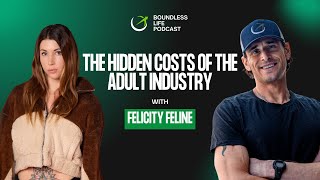
Felicity Feline, a former adult actress turned health coach, describes entering the industry as a teenager, earning $500–$1,000 per shoot, and the emotional damage and substance abuse that followed. She discusses how OnlyFans changed the business, worries about underage content, and shares the health practices that helped her rebuild.
Chapters
I signed a deal with the devil when I got involved in porn. I sort of agreed to this type of lifestyle. That's going to just be something I have to embrace. And you have to be okay with that. People are going to see you naked on the Internet and they're going to judge you and it's going to be a part of your life forever.
As anybody knows who's listening to this episode for some time, I'm not a fan of the effect that porn has on the brain, whether it's the developing brain or the adult brain. But there's even more to the story because there is damage also done to the people within that industry. And so today I interviewed former adult actress Felicity Feline. I have to admit I was a little, I guess, apprehensive or unsure about doing this interview because I know that there are some people who might Google her or look her up and stumble across porn themselves in the act of doing so. My only counsel to you is don't do that, especially based on what you hear in this interview. It's bad for your brain, it's bad for the people in the industry, and overall, it's a loss for everyone involved. So check yourself. I do give some tips about how to do that during the interview. And all the shownotes are@BenGreenfieldLife.com Feline Felicity does a great job sharing some of her health, nutrition and fitness tips and strategies. So a lot here for you. BenGreenfieldLife.com Feline and let's dive in now with Felicity Feline. My guest on today's podcast is Felicity Feline. She's a certified health coach. She's a yoga instructor. She's a professional drummer and model based out of la. So Felicity has a really interesting story and she reached out to me about her health journey and her biohacking journey and her unique perspective on the adult entertainment industry, because she left the porn industry in the early 20s and kind of became pretty outspoken about what she went through there and some of the emotional and physical health issues that particular industry presents. And she also spends a lot of time, just like biohacking, the life of a professional musician, you know, someone whose experience is late night and all the beautiful pollution that LA has to offer. So I wanted initially to interview Felicity about the porn industry and her take on the damage that might be causing socially and to the actors and actresses and to the people who consume it. You know, a topic I've discussed in the past, but never with somebody who's kind of got the Inside baseball perspective. And then it turns out Felicity, who I happen to have dinner with and LA a couple of weeks ago, also has pretty good perspective on a lot of the ways you can manage your health when maybe you don't have the ability to go to bed at 10pm every night and sleep eight hours a night. And some of the things, some of the tricks she has up her sleeve for that. So, Felicity, welcome to the show.
Hey, Ben, thank you so much for having me. I am so grateful to be here. I've been listening to your podcast and reading your books for man, I mean, over 10 years. So I'm so stoked to be here.
Thanks for making me feel old right off the bat.
I've learned so much information just. Just from listening to your podcasts and your guests, and it's really impacted my life amazingly, and I've shared it with a lot of people I know. So. Yeah, thank you. I'm so stoked to be here, and I'm really excited to share some insight to people, a different perspective, you know, about the adult industry and just different industries in general and, like, how to navigate it.
Yeah, for sure. What got you into that industry in the first place?
I have a wild story. I mean, it's just. I guess I could go back to my childhood. You know, that's the best way to start it. I grew up on Long Island. I'm from New York, and I grew up in a pretty rural area, beachy town. You know, my family is amazing. I'm very close with them. We were all very athletic. We played sports. Growing up, very. Just grounded a lot of family traditions. You know, my mom liked to cook dinner every night and just have everyone together. And I had a great childhood and. And I grew up playing drums. I picked percussion up in fifth grade, and I had a lot of healthy outlets. Like, when I was a kid, I just had a lot of things to get my energy out, and that was a really good foundation for me growing up. A good structure. But as I got older and as a lot of young women do, when I started to kind of explore my, I guess, sexuality and, like, my sense of self, I was confused. And I grew up kind of a tomboy, you know, and I. I wanted to kind of understand why I was insecure and jealous about porn and models and things like that. Like, I always wanted to think, you know, maybe I could be that. You know, like, there was always this underlying insecurity for me as a kid to see, like, what that would feel like. And I also just. I loved Art and music. And I wanted to kind of be this like, rock star health person. And I just. In college when I was 12 before, let me back up in high school when I was trying to figure out what I was gonna do for college, I was sort of in between going for art, health, science or music. And I got into college initially for visual art, graphic design. Cause I was really into that. So I went to art school for two years. Wasn't really my thing. Um, after two years I was just kind of over it. And I wanted to go more into like, health and fitness. So I went for health science at Stony Brook University on Long island. And I tried that for another two years. During that time, I was starting to experiment a bit with modeling and different things. And I got very tempted, I guess you could say by fast money.
Yeah, Almost like the early day equivalent of what I think. At least from my perspective, a lot more women are now going through with OnlyFans.
Yeah. I mean, and this was even before OnlyFans. Like, you know, this was before the onlyfans days. And like, I want to get into that, you know, about like, how only fans kind of changed the whole game regarding, like the adult industry. But yeah, when I was a kid, I mean, I was just, I was confused. You know, there was a lot of things I wanted to do. I had a lot of different passions in life and there was a lot of things that I was into. And I was very creative and artistic and athletic. And I just, I wasn't really sure what I wanted to do. But the idea that I could make money by, you know, utilizing my body, like just, you know, and modeling, that was kind of intriguing to me. And in art school, like, I had done some nude modeling, like portrait modeling and things like that. And it kind of like exposed me to this very like, psychedelic world of just offering, like, wow, you know, people will pay for this. Like, people appreciate beauty, like, of the body. And so that mindset, I guess, opens me up to the idea that, like, okay, like, maybe I could do stripping. Maybe I could do webcam. Maybe I could do this. And so I sort of just slowly kind of got more comfortable with everything.
Yeah, I'm almost like gaslit to a certain extent.
Yeah, yeah. And it's, it's, it's a dangerous thing during this time, like this age, because, I mean, I'm 19, 8, you know, 18, 19 years old. And a lot of people nowadays, like these agencies, like, they're grooming young girls that are around this age because they know they're very Susceptible to like being influenced. Like, because they, you know, they, they want this lifestyle.
And then I'm, I'm just curious, by the way, just to put this in perspective, I'm assuming there's kind of tiers like when you go from something like nude modeling to webcam to porn videos, et cetera. What's like, you know, when you say that, that cash, the fast cash was kind of attractive, what is it that a young woman's kind of looking at in your case when it comes to how much you might make from let's say modeling or nude modeling versus full on porn?
I would say like an average would be like around 500 to $1,000. You know, for shoot, like for, you know, like that's like a pretty standard thing in porn. Like it, it increases depending on the content and depending on who's, who's in the scene. There's a lot of factors.
Yeah, and are you, are you paid like any type of royalty on the perpetuity of that video if it is owned by a certain website or used in other ways?
No, not really. It's pretty much. I mean this is something well, we can dive into, but with the adult industry pretty much back so before OnlyFans really, um, people created a following like they created identity for themselves as a porn star. Like by working for external companies. Right. Like using them, using their website to build them up. And they all pay you a flat rate and you don't really get royalties. Like, you know, you just, they, they pay you a flat rate. You show up, you shoot the scene and, and then they put the images on their website, the videos and that's just kind of how it rolls. But OnlyFans kind of changed the game because it was this online platform for people to be able to create their own content and to essentially like be their own boss.
Right. Cut. Cuts out the middle person to a certain extent.
Yeah. And so that's what really intrigued me when I was around 25.
And we should probably clarify, I mean, cuts out the middle person. It seems like, I think to the user, but I actually listened to an interview actually when I was in la, I told you, I was on that Soft White Underbelly podcast. He interviewed an OnlyFans manager who just really opened the kimono, pun intended, I guess, on the whole industry. And how if somebody's communicating with an Only Fans model, they're chatting with some, you know, dude in Pakistan or India. I know many of these photos are just like recycled. They're not like customized for the customer. They're just pulling them out of a database that was shot years ago. And like it really isn't what, what you see or what you think you're seeing.
No, I mean, OnlyFans really just. I mean, so if, if I could just go back a little bit like to kind of like my childhood, like how I got to going into porn. Because basically like once I started shooting for mainstream porn companies, I ended up moving to LA and just working for companies. And I was, you know, making decent money as like a 20 year old living in LA, like building my life. And I used the extra time that I had to pursue my other goals in life, like drumming and health and fitness and like do all these other things. So I kind of had other things like in, you know, in, in my vision that I wanted to do. Like, I kind of just looked as porn as like maybe a stepping stone to get to the next chapter of my life. But then more like online platforms, like Only Fans and Sex Panther, like phone sex apps, like these things started coming out and people realized that like they could make residual income just online from fans that follow them that they acquired from porn and they can just, they could reap the benefits from that. So like, I was sick of shoot, you know, I was sick of shooting like with companies and just having sex with people that, you know, I, I didn't want to have sex with. And it was a very strange world. It was very, very wild. You know, it's, it's very hard to maintain healthy relationships in porn. Just the Dynamics just of STDs and just intimacy. Like there's so many things within the porn industry that make it very difficult to have like a normal life.
Yeah. Yeah, it's such a foreign world to me too. You know, just based on some of my writings in my book and on my website about the sacredness of sex as an act. And also my perspective, you know, as a guy who got married at 20 and has been married for 23 years, you know, with one partner, just that that whole world seems so foreign and so, and so strange from my perspective.
It really is. And that was the hardest thing for me because, you know, coming from a very traditional family with, you know, my, my parents are very happily married and I had a great childhood. And like just seeing all that, it was, it was hard for me because like, I wanted this like, you know, kind of rock star porn star life, like living out in la. Like I just wanted to be wild and free. And from pretty much like 20 to 25, I was single. You know, I Just kind of did my own thing. I explored. I just, you know, I got to really know myself, essentially. And I saw so much in the industry. Like, I just. It was really sad, a lot of it. I mean, I. I don't want to say. I don't want to demonize it because, you know, I think in a sense, like, porn can be used as a tool. I'll put it like this, right? Like, if in a relationship a couple are very outspoken about, like, hey, like, you know, I'm watching porn. This is what I do. Like, if they're very communicative about it and they know what each other are doing, that's fine, Fine. But I think if someone is watching porn behind someone's back, that essentially is. Is. Is a. Is cheating, right?
Well, yeah, there's. There's definite, definite potential for relationship erosion. And I think, you know, some of this, some of the sacredness of sex, if you are, you know, thinking about what you just saw or thinking of another person, you know, even if it's not a real person per se, in some kind of digital experience, it can still affect your relationship. Not only your physical relationship, but the mental and spiritual relationship that's downstream from that, in my opinion. And I think that there's a lot of things that I've talked about, and I'll link if you're listening and you go to BenGreenfieldLife.com feline f e l I N E. I will link to some of the other podcasts I've done about pornography, but you've probably seen a lot of this, Felicity, like the impact on neurotransmitters and dopaminergic transmission and dopamine sensitivity, meaning across the board, outside, just sex, needing more and more of a certain stimuli to feel better. Erectile dysfunction is an obvious issue. Relationships, objectification of the opposite sex. There's a lot of things that I think are no longer a secret in terms of what it does to a male or female mind. But one thing I haven't talked about much is the other side. And I've told my sons this. I'm like, look, you have to realize it is somebody's mom or daughter or sister or granddaughter or whatever that you're viewing. And to a certain extent, if you are funding that, you are supporting that person. Being in a position that might not be. Well, I wouldn't say might not be is not good for them to be in. So I want to bounce that off you, you know, as somebody who was inside the industry, as a performer, as an Actress. Do you think that there's, there's harm or danger or, or just like a negative experience being a, being an actress in the industry?
Yeah, absolutely. I was going to say you had Dr. Tricia Leigh, I think it was.
Yeah, yeah, yeah.
And that, that podcast was amazing. Um, that's actually what made me really want to reach out to you to, to talk about, you know, having an alternative perspective about this. Because, yeah, I mean, it affects relationships so intensely, and it's something that I think is very uncomfortable for people to talk about. You know, even parents, like, talking to their, their children, because it's, it's just such a prominent part of society nowadays. Like, I mean, porn is just everywhere. It's in social media, it's. It's everywhere online. You can, you can so easily. And so you have to have a sense of self control. And like, when I was saying with the idea of it being a tool because, you know, as someone that's worked in porn, like, I don't want to demonize the adult industry. It's like people make their living. Like, people are hustling and, and people want to make their money. Like, I'm not gonna, I'm not gonna shame anyone for doing what they want to do. Like, if that's, if that brings them happiness and joy, like, let them do it. But I really think that in relationships, like, if you can't have an open relationship about what you're consuming, like, when it comes to porn, and if it's affecting how you view your partner or how you view sex in general, because it can easily warp your perspective of the human body, just of how sex is in real life, you know, because a lot of porn, you know, even just, it's staged. It's very specific, you know, it's targeted to people. So it can be addictive. And I think it really affects relationships and it affects people to connect and to understand, like, what sex really is.
How did it affect you being in the industry? And specifically how did it affect you in a way that didn't really serve you or, you know, left you, you know, either psychologically or otherwise harmed?
I think having my other outlets, like being a drummer and, you know, and being an athlete, like, that kind of like, gave me this other thing that, like, I identified myself as. So, like, I didn't really, like, tie myself up so much in my, my sexuality as a porn star. Like, I was just kind of looking at it. Like I wanted to experience it. Like, I was curious. I mean, I. I just experience different things in life. I Love to experiment. Like, I, I just, I was kind of fascinated just to know, like, what it was like to be a porn star, you know, like, just, Just to experience that. So looking back, like, when I see videos of myself when I was young, like, I mean, I'm 33. When I see myself at, like 20 years old, it's, it's, it's crazy.
You mean see yourself at 20 years old in porn?
Yeah, I mean, it's like, it's, It's a very trippy thing because my mindset was so different then. And when people are that young, they're so susceptible to just impulsive decisions. And that was me, man. Like, I mean, I was like, I was a fiery, impatient kid. Like, you know, I just, I wanted to get everything quick and fast and just explore. And. Yeah, like, I made decisions that I really wish I thought twice about because, like, I didn't really think about the circumstances that would come down the road. And with porn, it's like, it's so difficult to navigate. Like, once you put yourself into that industry and you put yourself in such a vulnerable way naked on the Internet, for people to judge you and see you, you're going to be pigeonholed, in a sense, and it's going to be very difficult to get maybe normal jobs or just to have normal relationships because people are going to see you in this light.
Yeah. Yeah. I mean, you're basically talking about you walking down the street not knowing how many random strangers have been, like, looking at you naked the night before, you know, in their dorm room or bedroom or whatever.
Yeah. But even just, like, how you view yourself, I mean, I've, I've, you know, a lot of friends that I've had within the industry, you know, they've really struggled with their mental health, just navigating life. They're like, you know, I don't know what I want to do long term or like, you know, what, what do I do with my life? Because, like, they identify themselves in this way and it's very hard to escape it. I mean, even, like, I see it with, you know, if I post videos of myself drumming or, you know, I try to, you know, make a health and wellness video or it's just something like that. I'll get comments sometimes of people just saying, like, oh, go back to porn, you know, or go do this. And it's just, it's, it's. It's sad. You know, there's a lot of just gross things on the Internet that linger.
How much did you have to, like, numb with, well specifically like drugs, chemicals, et cetera.
Yeah, well, I mean fortunately my early twenties when I moved out to la, I kept a very straight. Like I was pretty solid. Like I, you know, I partied, I had fun. You know, I was more of a pothead. Like I loved weed and I wasn't a huge drinker. Like I liked psychedelics and like, you know, I do MDMA and things like that. But like I was pretty, pretty solid. Like. Cause like I knew I had to keep my shit together because I was not going to ask my parents for any help and like I wanted to prove myself that like I was taking care of myself and I could, you know, handle my business. So I was pretty level headed for most of my 20s. But later on I definitely struggled with experimenting and partying way too much. Festivals, traveling, you know, it's just all of that like got very into ketamine, ghb. I mean, like, oh man, like a lot of the drugs and stuff in porn too is very prominent. That's another thing that I don't think people really understand in the porn industry. I mean it's rampant.
Meaning what people are watching when they view porn are often people in some kind of inebriated state.
For sure. I mean I would go to set houses sometimes and girls would just be like zonked out on Xanax and meth or something, you know, I mean it's just, it was a very common thing for people to just sedate themselves in a way because like they couldn't really deal with their reality. And that's just a very common thing in porn. And it's sad because it's like why are you doing this as a job? Like, you know, it's like if you can't deal with your reality, you know, maybe you should do something else. But then they don't know what else to do, you know. And it's like to get a normal job is, is, is very difficult and maybe even frustrating because you're not going to make the same fast money or have that excitement that the adult industry can give you.
What do you think? I mean, and by the way, you're not making a good case to me for supporting the industry right now. Not that I would anyways. I know I have a different perspective than you. I think, you know, my traditional Christian background and the fact that for me porn is pretty much off limits. Besides maybe some photos that my wife and I send to each other, of each other. But when it comes to porn, let's say that the industry and actually the OnlyFans interview that I listened to with the guy on Soft White underbelly, he mentioned this, that he was trying to get out of the industry because he saw it basically getting nuked by AI and VR porn. So let's say that nobody 10 years from now is in the position that you were in, Felicity, because everything's digital, right? Just point and click and tell your avatar what you want to do. And maybe you're wearing a haptic suit and VR glasses or whatever. Do you still think that there would be some kind of harm or damage done to the psyche of people consuming that form of porn?
Yeah. I mean, the VR and digital world is pretty scary. I mean, it kind of terrifies me. I mean, you see it in every industry now, like music and. And video and editing and everything. But in porn, it's extremely scary because it's creating these extreme, unrealistic expectations, you know, and people think that, oh, the body needs to look this way, the vagina needs to look this way or this. And it's. It's sad almost because it's creating, like, these. These standards that are very unattainable for. For most people or just, you know, it's like beauty is in the eye of the beholder and should be about connection and just how you feel about the person. And I feel like porn just creates these, like, very extreme prototypes that are extremely unhealthy and the generations coming up, like, I think it's making it very confusing their relationships with sex. And one thing that I've been very vocal about over the years was breaking down the whole underage, barely legal category. Yeah, there's an organization, Exodus Cry. Like, I've worked with them.
Exodus Cry. Like exo d us.
Exodus Cry. Yeah, they. Yeah, they. They've done documentaries about abusive porn and underage, like. Like underage, barely legal porn. Things like just kind of exposing, like, the dark side of the industry, but basically kind of exploiting the fact that people in porn, like, they. They prey on vulnerable young women that are, like, ex, you know, starting to come to their. Their more feminine. Their feminine world and exploring their sexuality. And they're young and. And these are the people they target room to get on OnlyFans or to shoot porn. And like, the categories in porn, when it says, like, you know, barely legal or high school or college, like, it's very creepy. And like, I always thought that, like, it almost makes this underlying thing, like, it's. It's okay to be a pedophile.
Yeah. And I've spoken with a couple men at least who started with that. And within several years, I know one guy in particular. He was convicted of raping a 7 year old. That's the slippery slope.
It is. And there's a lot of that in porn. Like there's just a lot of darkness that lurks in the industry. Because it's unfortunate that this industry, it's so monetized and it makes sense. So much money, but like there's so much darkness and weirdness in it and like it sort of just sugarcoats it and makes it seem like it's okay. And now it's becoming kind of more mainstream.
Do you think? Because when you, when you talk about the darkness, like again, my faith based background just brings this question to mind. Do you think it's like demonic? Do you think there's like demonic influence in that industry?
I think for sure, yeah. I mean, I think it attracts certain types of people too. I mean I'm sort of an anomaly for getting in porn because like I had a really good background. I actually went to Catholic school till fourth grade. So like I had a, I had a Catholic background. And so I have like a very spiritual side to me. And like, I definitely, definitely felt a lot of weird darkness in the porn industry, you know, but, but then, you know, I have this other side of me. I, I think that's more of like the musician thing. Like I wanted to be like a rock star and like I thought like, oh well, you know, I'm a girl and I'm hot. So like I could kind of like do the, the modeling thing too. Like, so I tried to like combine the music and porn, like together, like thinking that like that would, that would work. And they're similar, the industries, but in porn, I mean, man, like some of the parties and the expos that I would go to, the energy in the room, like just the vibration of all the people there. It's very strange, like, you know, because I've worked a lot of expos and conventions. Like I've been a sales rep and a brand ambassador for a lot of different health companies over the years. Like working in health and fitness and you know, when it's like when I go to like health conferences and you know, expos and biohacking stuff. Like, I love it. Like the energy is amazing. Like people are really connected and they're there. It's like when you're at a porn convention.
I believe it. My personal philosophy on this is like, you know, if you read a book like Napoleon Hill's Outwitting the Devil, you kind of get a decent understanding of how, you know, the dark forces like to use sex, drug and rock and roll, right? Those are three tools. And you know, again, I know caffeine is a drug and there's some great rock and roll out there, but painting with a broad brush, sex, drugs and rock and roll carry with them like a certain type of dark energy, or at least they have high potential for that when bastardized. And so when you look at things like whatever excess use of, you know, Xanax or ketamine or drugs and alcohol, and then you look at the bastardization of the sex act and then if you look at just like what type of energy really, really dark music can bring with it, it's almost like from a religious perspective, Satan has found a really, really good way to try and solely and damage and blemish this creature that God made in his image. And why not come at it from the most intense dopaminergic angles possible, right? Sex, drugs and rock and roll, you're just basically seeing, you're leveraging the built in dopamine pathways that God gave us to basically drag a human being slowly to hell, for lack of a better description.
Yeah. And I mean, I've been a metal drummer for many years, so I've played in a lot of metal bands and metal music is sort of similar in that way where it has sort of a dark energy. But I sort of channeled, I think, a big reason why I survived, honestly, like getting out of mainstream porn because I channeled so much of that darkness into music. And so I would just like get on my drum. Like me, like, you know, I just, I just got it out with like metal drumming.
Yeah. Cathartic response.
Yeah, yeah, exactly. Like, it was very, very cathartic and, and just so healthy for me, you know, and also just, you know, physical activities like hiking and playing soccer and things like that.
How hard was it to get out, to like quit?
This is the hard thing, right? It's, it's very hard to quit. And this is a lot of, a lot of the issues that women I've seen or men to that struggle in the adult industry. Because if you want to leave and like, you know, maybe like you want to have kids or you want to like start a family or you want to have a more normal life or you just want to do something different or, or you're just burnt out, you know, like you just, just, you're just sick of it. It's kind of very difficult to start navigating in a more Normal life. Because there that temptation, the fans, like, they're always going to want to pull you back in. And I guess I'll explain. Like, when I was 25, that was when the time only fans and more of the online apps came out. And so I sort of stopped shooting for the external companies. And I was just like, all right, I can just monetize. Pretty much, like, make the same income by just working for myself and making my own content, so I don't need to shoot for anyone else. So I did that and then was focusing on my other stuff. And then I want to just have normal relationships. Like, I just wanted to date people. Like, I didn't want to have to worry about shooting porn, you know, So I kind of exited it then. But when I would go through a bad breakup and I was feeling insecure, I knew that there was these companies that being like, hey, Felicity, like, you want to shoot? Like, you look great. Like, do you want to shoot a scene? Like, the door was always open, you know, and, like, it's. It's hard because the money was always there. And, like, your fans always want you to come back. Like, they always want you to keep doing it. Like, and it's a. It's really, really hard to not feed into that.
Yeah, you want to buy mom and dad a nice new air fryer for Christmas, you know, you just gotta give a couple hours of your time and you're back in.
Yeah. So really, like, relationships is what kind of kept me focused on not getting back in the. In the industry. Like. Like, because I wanted. I wanted monogamy. I wanted to have intimacy. Like, I wanted to have, like, a real relationship. So that's what really drove me to not get back into porn. But then there was times, like, I slipped up, you know, and like, during a gap when I was single, I would. I would shoot a couple scenes or something, and then I'd realize I'm like, nah, you know, I don't want to do this anymore. And, like, so, like, I really haven't shot anything for probably four or five years, like, mainstream. But that was during a time, you know, where it was a little slippery for me. And I wanted to also say too, as far as, like, mental health, because my. My last relationship, my boyfriend passed away. Like, he. He overdosed. And we. We had. Yeah, I mean, we had a wild life because just with partying and shooting content and that was like, the epitome of what the adult industry and drugs and everything, like, combined could do to a relationship. And he couldn't Handle it mentally, you know, and that was a very difficult thing to experience. And like a lot of other people I know, like, trying to maintain a healthy relationship, like, in that world is really, really difficult.
Oh, yeah, I can imagine. You know, it's. I don't think, any surprise to somebody who's watching or listening that there is a lot of darkness and damage that happens behind the scenes in the industry. And I know you've alluded a few times to how you're into health and biohacking. You use some of it then, you use it now. But for people, not that we want to give people a playbook for being an adult actor or actress, do these biohacks, but instead, just for people who kind of, like, maybe don't have the perfect life, perfect job at their disposal. They're shift workers, maybe they're a musician, maybe they're playing poker, whatever, working in a casino. Just all these positions where you do fight an uphill battle. I want to turn to the health piece of this. What has been some of your biggest wins and some of your best tips and strategies for kind of managing health while being in a career, you know, like drumming in la, that isn't necessarily considered the healthiest career.
This is a fun, fun topic for me because. So it kind of also stems back to childhood. A lot of my health journey began with my skin, which is, yeah, I. I love skincare and just nutrition and just how food affects the body. So when I was a kid, I used to have really chronic eczema, and I would just get very inflammatory responses on my skin, like from certain foods. And I noticed it, like, at a very young age. And my mom didn't really understand, like, you know, why that I would get these skin issues and things. And I realized it was from the food that I was eating. And so I got blood tested. I found out that I had both genes for celiac. I started eliminating things from my diet, and I started to just slowly realize, like, how much food was impacting my health. And so I became just very obsessive and curious just about nutrition and ingredients and just everything. So I became fascinated just with food and herbs and nutrition and, like, just everything at an early age. So that kind of snowballed me into getting into the health and fitness world. But I definitely went through some weird journeys. Like, I. I went vegetarian for periods of time. I was a raw vegan for a period of time.
I'm sorry.
Oh, yeah, man. I mean, it was. That really wrecked my body, my hormones. And then slowly I realized as A blood O positive that I just thrive on a more paleo, more carnivore based diet.
And it's so funny you say that by the way. I mean if you've listened to the podcast for any number of years, you know this felicity. But my first foray into anything that might be remotely considered ancestral or holistic nutrition was when my wife was struggling severely with eczema and acne and brought home a book from the student library called the Dietary Cure for Acne by Loren Cordain, an early forefather of the paleo movement. And it was in that book that I realized, oh, maybe some human beings can't consume dairy and grains might have an impact on insulin in such a manner that it affects things like pores and the skin and yeah, very, very similar. Like my wife kind of got me turned on to holistic nutrition via the skin. The skin gut axis.
Yeah, exactly. Some people just have different ways of knowing when you put something in your body that your body's not happy. For me it was my skin, like it would immediately show up in my skin in some way. So I just became very aware of this. And my, as far as my diet, it's just something that like, you know, I've always been very disciplined about and yeah, I feel like now I really fine tuned and like I understand my body and what it needs. I mean my, as far as my diet, I mean I'm as ancestral is I guess the best way I could describe it. My diet's basically grass fed meat, eggs, I'll do some low glycemic vegetables like squash, organic fruit for my carbs. I really don't eat grains or much dairy. Like I'll do organic parmesan cheese, but I'm very, very simple. I don't really like to eat out a lot, like I just prepare my own food but I try to keep it as simple as possible.
Yeah, and what about like the nightlife piece? You know, I know that you're aware of circadian rhythmicity, light mitigation, certain tactics whether it's supplements or strateg for sleep. What's your stack for like late night out? Want to feel good the next day?
Yeah, I used to take a lot of more supplements when I was a raw vegan because I, I had to, you know, because I wasn't getting the animal based nutrients.
So your brain didn't slowly waste away.
Yeah, but now I mean I try to get most of my nutrients from food. Like I just get really high quality organic meat and eggs. I feel like I'M getting like, majority of what I need from that. But then I also, you know, I, I take magnesium, digestive enzymes every day, amino acids, and then I'll take certain herbs like just for cognitive health, like ankle biloba. And I cycle with things. I'll take lecithin sometimes, you know, just, I'll, I'll, I'll experiment with different things. But I've been trying to dial down on supplements, honestly. I mean, I do take a lot of collagen too, collagen peptides. But yeah, I mean, I've kind of dialed down honestly on a lot of synthetic vitamins and whatnot or just supplements in general, because I feel like my body's been really getting everything I need from food.
What about things like strategies for blocking light at night or things that you're doing to manage circadian rhythm?
Yeah, well, I was also going to say I do take vitamin D3 and then krill oil too, every day and astaxanthin for my skin. But so for me, see, this is, this is the tricky part in my life. I've always had sleeping issues, I think, just like from touring and being on the road a lot and traveling. I struggle with sleep because, like, I'm a night owl and I just get very active more in the night for some reason, like, and it's very hard for me to unwind. So usually my nighttime routine is just cbd, Reishi, magnesium, and then I'll take melatonin. You know, at a certain point, like, not too late, but I try to do that. And then I just make sure the lights are dim. Like, I don't try to, you know, I don't expose myself to a lot of bright light. But yeah, it's really hard. It's really hard because I'm up late a lot.
Yeah. And you're no doubt familiar with the idea of social jet lag. Right. Where go to bed 10pm to 6am four days a week. But then you have three others that widely vary. That's where sleep consistency actually trumps sleep volume in terms of the health benefits of sleep.
Yeah. And I'll take certain things. Tyrosine helps me a lot and theanine the next day if I'm. I'm sleep deprived and I'm not a big stimulant person because caffeine. I think I'm a slow metabolizer of caffeine because if I have it past any time after 4pm, I just won't sleep. I just won't sleep. I just, I'll stay Awake and I just am not tired and I've been that way my whole life.
Right. Slow caffeine metabolizer, probably from a, like a CYP genetics standpoint.
Yeah. So I try to just minimize, honestly, like just my intake of stimulants in general, my morning routine. Sometimes if I do need to be caffeinated, if I need energy, I'll do mushrooms, different mushrooms, like lion's mane and Chaga and Rishi with things. But I usually just do my organic matcha with collagen and organic coconut milk on sweetened and just make my little keto latte and like, I'll, I'll drink that usually at the beginning of the day. But yeah, caffeine is just like, really, I don't know, it's. I'm very sensitive to it.
With the crystallized intelligence that you've developed up to 33 years old, what are some of the bigger health tips, broadly speaking, that you would give to people that you've kind of discovered along your journey?
For me, I try to keep processed sugars very, very low. Seed oils? No, like, I do not consume seed oils. I just avoid oils, really. In general, I cook everything in organic butter. You know, I just stick to just high protein, easy digestible vegetables like squash and sweet potatoes, cucumbers. And then I get organic fruit from my carbohydrates. Like, I just keep it super simple. And I find that like, that keep. Keeps my body very clean. My digestive tract is good. It just, I don't have excess bacteria or yeast coming in because I think that's a big thing too. A lot of people consume like these carbohydrates that create just yeast in the body, which just creates like a whole host of problems. So that, and that also affects the skin, you know, and hormones. So. Yeah, I mean, that's sort of like how I just gauge myself because even, like, if I go to an expo, right, and I'm like sampling stuff and I try some like protein bars and like, you know, little things with like sugar alcohols, like, oh man, the next day I'll get like a whitehead.
I've had, I've had Food Belly after Food Baby after the, the healthy food Expo, you know, 12 ketogenic donuts will really do the trick.
Yeah, so it's just like my body is just very, it's very sensitive. So I just, I just stick to kind of what I know is good for it. And then, you know, I take supplements as I need it. Like, you know, I mean, I think, yeah, the, the core for me is just the krill oil, magnesium, D3, digestive enzymes, you know, amino acids when I need them. Yeah. And then occasionally, you know, just herbs. I like to cycle with it. And then for me, like, I don't cheat with my food ever. Like, it's just like, I don't. I don't look as food as, like, a cheating thing. Like, if. If I'm cheating on my body, it's like I'm partying, you know, like, I'm drinking alcohol or I'm. I'm doing some drugs and I'm out all night. Like, you know, that's like my way of kind of, like, beating my body up. And then, you know, I kind of take the protocols to kind of get myself back up. I mean, I do sensory deprivation tanks a lot. Like, I do float tanks.
Oh, that. That makes really good sense with the amount of sensory stimuli you're immersed in at night.
Oh, yeah. Like, I do them twice a month at least, just because it's like an Epsom salt on crack. Like, literally, it's just all the salt, all the magnesium from it just absorbs right into your skin, and you just feel amazing after. Like, it just. My whole body feels regenerated after I do a float tank. I do those very regularly. I get massages regularly. I do my vibration plate every day. I do foam rolling every day. I stretch and do my yoga every day. So it's like I have a very, very disciplined way of doing healing modalities for me. Yeah. So I balance it out.
Yeah. The only thing I didn't hear is some kind of, like, axial loading of the bone. Strength training. I know you get a little bit of that in yoga, but even though I know you well, I mean, I don't know how much you're focused on aesthetics now that you're not in the porn industry, but are you still, like, lifting or. Or doing anything with the weights?
Yeah, I mean, I. I'm pretty naturally muscular because I grew up playing sports. I was a really competitive soccer player, like, up until college. I even played at, like, a pre Olympic level at one point. Like, I traveled internationally and, like, yeah, I loved soccer. I was really, really into. Into it. But, yeah, I fell out in college and just. And stopped. You know, now I just kind of play for fun, but I still have a lot of that muscle, you know, just from. From being an active kid. So I can gain muscle very easily if I want. I just kind of like to do more fluid exercise. Like, I like hiking. I love swimming. I just, you know, I like active things that like, are engaging and get me into a flow. I'll occasionally walk with dumbbells or I'll go to the gym and just kind of do cables or just, just dumbbells. But I do low, more low weight, high reps. I just don't want to bulk a lot of muscle, personally. I mean, I think, you know, women, it's great if, like, they want to gain a lot of muscle and muscle is so important for the body, but I just never wanted to be overly muscular with my frame, you know? So, yeah, I try to keep it like more lean muscle.
Not, not that I'm gonna make you feel old, but 10, 15 years from now, you know, as perimenopause gets on the horizon, that bone loading becomes so important. Yeah, the pulling of the tendons and the ligaments against the bone or the ligaments from the muscle to the bone, but also the loading of the bone. So, you know, even if it's like single set to failure training, one set for each muscle group, that isn't going to result in significant hypertrophy. That's, that's a big one to focus on at about this stage of your life.
Yeah, no, you're right. Cause, I mean, osteoporosis runs in my family too. My mom, she, she broke both her hips. Actually. She had to, she had to get both hips replaced. So I'm very conscious about that with my bone health. I mean, and that's why I really make a conscious effort too, to make sure I'm, I'm just very mineralized my body, like getting, getting salts, getting, getting good protein. And then I also forgot to mention, like, silica. I take a lot of silica. Silica is like a game changer for me.
Yeah, that'll be good for the bones. You need to stimulate the, the bone growth cells, the osteoblasts. What I'll do for people listening is if you go to BenGreenfieldLife.com Felicity I have a podcast with Mira Carlton. You'd like this one too, Felicity. Actually it's BenGreenfieldLife.com feline f e l I N E. I'll link to this podcast I did with Mira Kelton, which is really good for the bone density piece. So back to the adult actress piece and the porn industry. What would you say to people right now in terms of, like, if you were to give one big warning message.
Or.
One piece of advice when it comes to navigating that whole world? And before you do, while you're thinking about that What I do with me and my sons is we just have an app installed on our phones and on our computers, on our browsers, and it's an accountability app, meaning that no matter where we go on the Internet, at the end of each week, I get an email with all my son's activity, they get an email with all my activity. So that one's called Victory app and it's super useful just knowing that you're going to be sharing this stuff with your family. So kind of like you mentioned, be open with your partner if you're going to use porn. And I think if all men did that, there'd be a shockingly low number of partners just nodding their head in approval and I suspect it wouldn't go over well. But what's your message to people watching right now?
I would say you are what you consume, right? So if you're consuming a lot of porn, it's going to affect you in one way or another, your relationships or just how you view sex in general. I, I've always. Well, in previous videos that I've made talking about just thinking twice about getting involved in porn, I would just seriously ask yourself if you're 100% okay with knowing that people are going to see you naked on the Internet and they're going to judge you and it's going to be a part of your life forever. Like, you can't erase it.
They own your image. You having been in that industry, you can't write a cease and desist or like a name, image and likeness letter. That just doesn't work.
It doesn't, because, I mean, it's. You kind of sign your soul away. I mean, in a sense, like I, I kind of felt like I, you know, I signed a deal with the devil. Like when I got involved in porn, like, it's like I sort of agreed to this type of lifestyle. That's going to just be something I have to embrace and you have to be okay with that. And it's so hard because when you're young, you know, you don't really think sometimes the long term effects, you don't think like, oh, 13 years from now, 10, you know, like, I'm, I'm growing, I'm a different person, I want to pursue different things. Like, you know, it's just these are things that you really have to ask yourself. Like if you're really okay with that and you have the mental fortitude to be strong, to be able to be okay with that. And the harassment, the cyberbullying, the comments, like all that stuff that you're going to experience, you need to be okay with that. And also that you might have difficulty navigating relationships, like big time. You know, it's, it's something that is a very, very common thing with people that get involved in the adult industry. They really struggle having healthy relationships.
Yeah. And men, women, teens, et cetera, who are contributing to the success of that industry by being customers probably aren't doing those people any favors when it comes to funding that entire amount of damage that occurs to people like you, what you experienced.
Yeah, well, part of the thing is too, I always thought that they really. Well, this is one of the things with Exodus Cry that they were trying to organize a petition to raise the age of porn from 18 to 21.
You mean 18 to 21. That would be to be an actor or actress.
Yes. Yeah. So to be able to shoot pornography, to put yourself on the Internet like you should be 21 instead of 18. I mean, because I, I was so. I was 19, you know, when I got involved and I just, I was at such a vulnerable point in my life. Like, I was lost. I was confused. I was experimenting. Like, people make bad decisions when they're young or impulsive ones at least. You know, like, they, they want to experience things, but that's not necessarily good when you know it's, it's going to be out there on the Internet and can haunt you for the rest of your life. So I really think that the age should be raised to 21 because at least, like, it gives people a little bit more of a time frame to make a more solid decision about how this will affect them long term. Yeah. So that, and then I also just think, you know, the, the categories in porn, like, I've talked a lot about, like, abusive porn, just some of the extreme taboo things that, that people consume. I think that can be very detrimental to how people view sex and like, view their partners.
Oh, absolutely. There's no doubt. Yeah.
Yeah. And it's, it's scary because, like, I've ex, I've, I've shot like, types of porn like that and I've spoken publicly about how, like, I really, you know, really wish I, I thought twice about doing that when I was younger. But, you know, it's like when you're in the industry, you get exposed to a lot of opportunities and offers. Like they, they want to push you to, to, to explore your boundaries and your limits. And, you know, I, I, yeah, like, looking back, I, I really wish I thought twice about all that. But when People watch that type of porn, it's like they think that, oh, is this what my partner wants? Is this, is this normal in sex? And then I feel like it's creating this kind of perspective for young people growing up that this is the type of porn that they want to experience. And, yeah, it's, it's creating a very unhealthy perspective on sex.
Yeah, we're, we're moving forward into a future in which I think the problem is going to go away in certain sectors, such as live human beings getting damaged as much as AI and VR rolls in. But there's going to be far more scalable damage to especially, like, young boys and young girls who are discovering this stuff before they've even been worn already. So I think it's going to be a big battle. Felicity, thank you so much for coming on and doing this and for sharing with us.
Yeah, no, of course. Thank you so much for having me. That's been amazing. I'm so grateful to be here.
Awesome. Well, folks, you can access the show notes@bengreenfieldlife.com feline that's f e L I N E. And until next time, I'm Ben Greenfield along with Felicity Feline signing out from BenGreenfieldLife.com have an incredible week. Do you want free access to comprehensive show notes, my weekly roundup newsletter, cutting edge research and articles, top recommendations from me for everything that you need to hack your life and a whole lot more. Check out Ben Greenfield, LIFE.com it's all there. BenGreenfieldLife.com See you over there. Most of you who listen don't subscribe, like or rate this show. If you're one of those people who do, then huge thank you. But here's why it's important to subscribe, like and or rate this show. If you do that, that means we get more eyeballs, we get higher rankings. And the bigger the Ben Greenfield Life show gets, the bigger and better the guests get and the better the content I'm able to deliver to you. So hit subscribe, leave a ranking, leave a review. If you got a little extra time, it means way more than you might think. Thank you so much.
More from Jeffrey





The Solution to Aging Might Be Closer Than Anyone Realizes - With Ben Goertzel


