What To Put In Your Ironman Bags
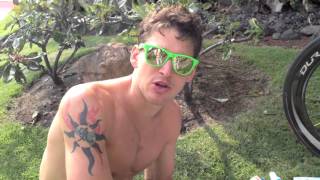
A spoken how-to from Ben Greenfield explaining what to pack in the five Ironman race bags and his personal race-day routines. Chunk 1 covers the pre-swim bag (goggles, swim cap, timing chip, magnesium, antiseptic wipes, supplements like oil of oregano and adaptogens, powders to prevent chafing/blisters) and the bike/transition bag (shoes, socks, helmet, mini-tool, water and fuel bottles, arm coolers and special-needs bottle strategy).
Foreign.
Hey, it's Ben Greenfield. And in today's video I'm gonna show you exactly what you need to put in your Ironman bags to make sure that everything goes a okay for you on race day. So we're just gonna start with each of the five bags that you're gonna get when you do an Ironman triathlon. I'm gonna show you a couple of little extra tips and tricks for you. Your bicycle. We'll rock and roll. If you have questions, leave them as comments under this video and I'll be happy to reply. Alright, let's start with. The first bag that you get is this nice little gray bag. Typically it's called a pre swim bag and in this bag you put just a few things that you are going to want right after the race or right before the race. Now in my case, just a few quick things I put in there. Of course I throw the essentials. My goggles, my swim cap and my timing chip. Always remember to include some extra safety pins because your timing chip can come undone. I put one in there in the timing chip just because I have had it knocked off a few times. Bigger deal in a wetsuit legal race than a non wetsuit legal race, but still something to throw in there. Okay. Also, these are more for after the race, but I do include some magnesium to put on my body after the race race I will put some on my thighs. They tend to get a lot of burn in them right as I'm coming out of the water. Putting some magnesium on your thighs can help with that, especially for the first 15, 20 minutes of the bike. And then of course an action wipes for after the race so that I can wipe myself down on all the blood, sweat, urine and other bodily fluids that collect on my various orifices. So next up, a few other things. I use as little sunscreen as possible, but I load with astaxanthin, which is a natural skin protectant. I just got this bottle, it's made right here in Kona on the Big Island. Good stuff. This race for which I'm filming this video is taking place in Kona, in the saltwater in the ocean, relatively clean, but just because it's something I generally do as a best practice anyway for stagnant water or water that I'm not quite sure of as far as the cleanliness aspect of it. I use oil of oregano, put a few drops of oil of oregano into my mouth before the swim just to make sure I can kill parasites, bacteria, stuff that might get into My system during a swim. This is something I'll more often use in still water, but that goes into my pre race bag. So it helps your immune system basically. A couple of other things. Some cool feet powder. I'll sprinkle this into my bike shoes and into my run shoes prior to the race to make sure that my feet stay cool. Imagine that. So cool feet. I put some of that, that's just a natural clove powder with some other kind of anti chafing type of stuff. I put some seat saver, slather this all over you know where prior to where the race begins as well as under each armpit so I don't get chafing in my armpits and the back of my neck so I don't get chafing from the swim skin that I'll be in last. Couple of things, I'll slam these prior to the race. 1 tnshi. These are Chinese adaptogenic herbs and then Vespa which is like hornet juice. It allows you to tap into your fatty acids as a fuel. I typically do bulletproof coffee before I race about two hours prior, which is just coffee mixed with butter and oil and need to tap into those fats much more efficiently during the swim. I do very few carbs before a race. That's just my thing. So these work well for me as far as that goes. Alright, so next up let's look at the bike so you come out of the swim. Some races will require you to have a clean transition area, meaning that you can't have your shoes, your helmet on your bike and they need to be in a bag. And for this race I will have my shoes in my bag and I gotta give a shout out. These are my custom made Rocket 7 shoes that say B. Greenfield on them. The most comfortable shoes I've ever worn in my life. They'll be in my bag with that powder sprinkled into the inside of them. For an ironman, I wear socks, so I'll wear 110% compression socks. Put these on. These will stay on during both the bike bike and the run. If it's looking like it's going to be rainy on race day, I'll throw an extra dry pair in my T1 bag. I'm sorry, my T2 bag, the bike to run transition bag. I'll also throw an extra set in my run bag as well. My run special needs bag. Because wetness creates blisters, you can't go wrong on a wet day putting as many dry socks as possible in your bags of Course, the helmet goes in. I use a geeky looking giro air attack helmet. A few other things. I like to carry a little mini tool with me just for peace of mind. Something gets uncomfortable, something breaks. Just a tiny little mini tool. I don't know the brand of this one, but it has a little CO2 cartridge adapter on it. So I can actually use this as my CO2 adapter. So I plug my CO2 into it like this and I just toss this into my back jersey during the race. But I keep it in my bike gear bag. So I remember to just toss it in my back jersey before I go. And then when I get back from my bike, I'll just leave it in the transition area before I head out on the run. Of course, my race number will go in there as well. You want to crinkle this up a little bit, fold it a little bit so it doesn't really like flap in the wind. That can actually decrease in wattage once you crinkle it up, it just kind of makes it adhere to your body a little bit. Once you've got that on the back of your bike. Looks pretty dang ugly, but it works. Okay, a couple other things. One bottle of clear plain water. This will already be on my bike. And I'll carry this right there in between the actual bars. I use something called an XLAB Torpedo for that. And then I'll have another bottle that's full of my actual fuel for about the first two to two and a half hours of the bike ride. We're not going to go into what I actually put in this bottle because if you go to my YouTube channel and you look up the video what to eat during Ironman, you'll see a really good video that explains everything that I put into this bottle. But it goes right here.
So that's everything except for one other thing that I'll be using for Hawaii DeSoto arm coolers. These will take sweat off of your skin. They look like this when you wear them and they take the sweat off your skin as you sweat and they turn it into a nice cooling, convecting, moisturizing. Actually, I don't know if it actually moisturizes, but they look like that. So about the dorkiest thing on the face of the planet that you could wear while you're riding a bike. But when you're racing in the lava fields of Hawaii, these come in handy. These are made by a company called desoto. They're just arm coolers. Halfway through an Ironman triathlon, you get to what's called a special needs station where you get special needs for your bike. So what I'll have in my special needs station is one more bottle full of my fuel. I'll have a shot of X2 performance which is jam packed with a bunch of stuff like D ribose, ATP tall, a little bit of caffeine.
Basically a bunch of precursors for energy. It's like a kick in the pants, kind of like Red Bull with none of the unhealthy effects. So I keep one shot of that in there and I'll just slam that when I get to special needs. One change that I'll make for those of you who are familiar with, for example Ironman Canada, where I stuck to really like slow release fuels and fats the whole time. About the last hour of the bike, I will be loading my body up with a few extra slow release kind of complex carbohydrates to get me through the run without bonking. So I've got a few bonk breakers, about 500 calories worth of bonk breaker energy bars that will go in my special needs bag for the bike. And these I'll consume in the last hour the bike. So let's move on to the run. Coming off of T1 on the run, I simply grab a flask that's full of the same type of energy fuel that I have mixed into my water bottle for the bike and I grab that flask and run with that for the first half of the run. And I keep an extra run number in my bag just in case. You never know if it might rip or blow off or something during the bike and you don't want to get a penalty running without your number. So I always keep an extra run number just in case. Maybe I can wear two if I feel like it, who knows? And then the last thing, special foods for the run. I'm pretty easy on this one. One more run flask that has the same fuel mixture that I have in the run flask that I'll be carrying the first half of the run. And then one more shot of X2 performance. And like I mentioned, if it looks like it's going to be a rainy day, dry socks in that bag too. But that bag is pretty easy. Super quick. So just a few other quick things. I told you I'd toss a few of the little tips and tricks your way for the bike. First of all, tire change. I race with tubulars, so I tape the tire change right here underneath the seat. That's a good aerodynamic place to just basically wrap your tubular, put it under there, and I just strip it on there with electrical tape. And it's just kind of a hack job, but it works okay. It's not pretty, but it works. And then I've also got what's called a pit stop here. So what that means is that I've got a CO2 cartridge and an extra tire just in case I flat. And I've already used my pit stop and it hasn't worked. So I'm good to go for at least two flats without having to rely on any outside aid. And I can change a tubular in about two minutes. And so I can really get done fast rather than waiting around for a truck for an hour or so to come save me. So that's it. That's the Ironman setup. If you have questions, then you can leave them underneath this video. For a bunch more tips, you can check out BenGreenfieldFitness.com or YouTube.com BenGreenfieldFitness I'm Ben Greenfield from Kona, Hawaii. Best of luck in your training and your racing.
More from Jeffrey





The Solution to Aging Might Be Closer Than Anyone Realizes - With Ben Goertzel


