Transcript excerpt from a YouTube video showing Tim Corcoran teaching about Oregon grape: how to identify it (evergreen shrub, leathery toothed opposite leaves, yellow flowers, purple-blue berries), edible uses (berries eaten fresh; recipes described: 'Oregon grape lemonade' and jelly) and medicinal uses (common tincture used for bacterial infections; active compound berberine present in roots). Includes a live demonstration and participant dialog.
Chapters
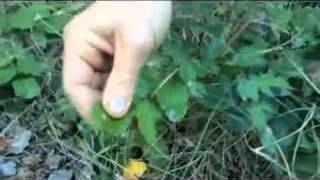
Okay, so right here we've got. This is technically considered a shrub, and it's Oregon grape. And this is a native species to North America. Here you can see it's readily identifiable by the leaves that are thick and leathery. And you can see they come to a point with a little needle like points at each of the tips of the teeth of the leaves. They grow opposite. And it's called an evergreen because it stays green through the winter. This won't die off during the wintertime. It'll actually stay green and be green over and over forever. That's why it's called evergreen. Like that one. Exactly. Now, Oregon grape.
In the summer months we'd see yellow flowers. And here in the fall, the flowers have given way to the beautiful purple blue grapes right on here. And if you take a close look at the grapes, guys, does it look like there's almost a little bit of powder on there? Kind of. Okay, take your finger and gently rub one of those little grapes and see if it changes the color.
If we take one here, it looks.
Like a worm gun.
It does. Now look at this, guys. Can you see that? It's making it really dark purple or blackish. Okay, what that's telling us is there is a powder on this berry right here. And that powder, this is really cool. It's a natural yeast. And you can actually use that to start breads and to create your own wild natural bread inside it.
A worm got inside.
Oh, a little worm got inside that one. You're right. So these grapes are really good. If you guys want, you can try one.
Are they poisonous?
Not poisonous, they're edible. And that there's going to be some seeds in there.
And it's got a really nice sour taste to it. You want to try one, Ben? Absolutely. Let's try one for a little taste there.
Now that juice in there is really good. And one of the things my family and at our school that we love to do is we'll make Oregon Grape lemonade. And we gather up a whole bunch of those berries and sprinkle, squeeze them down and sift out the seeds. And then we'll mix that with lemon juice and a little maple syrup and water. Oh, my gosh, that is so good. Especially on a hot summer's day. So good. Now, in addition, Oregon grape makes an amazing jelly. You can again squeeze the juice out of these berries and add a little pectin, which doesn't have much of naturally, but you can add a little pectin from either a wild source or a commercial store Bought source and make an amazing jelly that's one of our favorites. Now the other thing about Oregon grape is that it makes an amazing medicine. This is a big medicine plant. In fact, anytime you spend time at the health food stores, right away what you're going to find is the Oregon Grape tincture, which is really common and really popular out there. The Oregon grape tincture.
It'S particularly effective at handling bacterial infections. And we do a lot of work with survival. And so oftentimes, if we find some of our participants with infections, which happens from time to time, an organ grape tincture can take care of that really fast. And I've seen it make the difference in participants being able to participate and continue to participate in a survival class and having to leave. So big medicine. And of course, that comes from the.
The element known as berberine. And if we were to dig up some of the roots, which we can, if you guys want, we can dig up the roots. And if you, when you open them up, you'll find they're this bright yellow and that's that. What makes that yellow is the berberine, which is the medicinal quality. Should we try that? Yeah, let's do it. Okay. So guys, do you have those digging sticks? No. Okay, let's find some new ones.
We've just done a little bit of light digging and the root is really close to the surface of the ground and it comes right up and already just from scrapings. Help me out here, guys. I'm just gonna lightly scrape this with my fingernail. And look what color that is. Look at how pretty that is, guys. Yeah. In fact, our indigenous ancestors would have used this for a natural dye. And we can still do that today. You can take any kind of white cloth and you could dye it that beautiful yellow. Look at that. And if we were to open this up, see if I can get this. I might need to get a knife out. You have a big one. Yeah. Oh, great. Awesome. Jesse got this one. Here we go. If we were to open this guy up. There we go. Look at that color in there. And again, what makes that yellow is the berberine, which is the medicinal quality and the medicinal element of this plant. Amazing antibacterial properties. Great, so you just steep it in water. Yeah. You would make a, you could make a tea out of this for quick survival uses. For more long term medicinal uses, we would make a tincture. So we would take this root, clean it up, soak it in glycerin or an alcohol high proof, like vodka or something, and soak it in there for. Draw it out two months or so, and it would draw all those. All that medicine out. And you'd have that powerful, powerful tincture with that medicine in there. Very powerful. Yeah. Good. Good stuff, Morgan.