The Future Runs on Power Dynamics - Jen Zhu Scott on AI, China, and Resilience
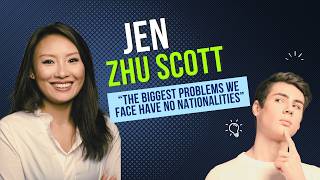
Jen Zhu Scott discusses raising daughters in an AI-driven world while building PowerDynamics, modular energy-efficient compute systems. She draws on Taoist philosophy to argue that AI should serve human goals, not drive them, and emphasizes long-term mastery over beginner's luck. East-West collaboration and on-the-ground experience in places like Shenzhen matter more than media bias about China.
Chapters
I profoundly believe the biggest problem in the world we're facing, from curing cancer to solve climate change to how do we deal with AI, etc., those kind of problems don't have nationalities. They're not American, they're not Chinese, they're not German. And yet we can't help ourselves to constantly apply this kind of national border to those problems, which is so annoying and stupid. And, um, I think for me to succeed solving this problem, we also have to figure out this power dynamics between this kind of a national tendency to, uh, a global problems.
Before we dive in, a quick whisper about today's sponsor, Ghostfounder. You know that moment when an idea jumps from someday to why not today? Ghostfounder lives in that moment. Ghostfounder takes the sketch from your napkin gives it a heartbeat, and walks it out into the world. Fast. While everyone else is still writing pitch decks, the ghosts are wiring prototypes, lining up seed investors, and tuning your ops. Product-market fit isn't just a hope, it's an outcome. If you're the kind of renegade who refuses to wait for permission, visit ghostfounder.com. Because around here, we scope things, build things, and fund things. In that order. Coast Founder, the quiet engine behind loud breakthroughs. Welcome. Today's guest is Jen Zhu Scott, entrepreneur, investor, and mom. She's been named one of Forbes' top women in tech. She's advised on the HBO series Silicon Valley, which I actually binge-watched and absolutely love. And she's also given a pretty snappy TED Talk about why your data should be treated like a valuable asset. Jen truly bridges East and West, tech and policy, business and ethics. And in this episode, we hope to dig into how she thinks about the future, how she makes high-leverage, high-value decisions, and what it takes to raise resilient kids in an AI-driven world. Welcome, Jen. Thank you so much for joining us.
Thank you so much, Vlad. It's great to be here.
Who wants to do the first question, Jay?
You go, you go. You did such a good intro.
All right, I'll keep my radio host voice going. Please. Jen, so basically in the beginning, we're trying to understand a little bit about your personal journey and your personal history. This is our first encounter, so you're truly telling us everything for the first time, which really helps. But so with this list of accomplishments that I've just rattled off, which I know each of these items takes you know, many years to accomplish. I guess, where did you start? How did Jen become Jen of today?
Yeah, a lot of people ask this question, but I think timing is everything. And I was born in the mid-'70s in a very small town of a million people in West China, very remote. And However, I'm also coming from a long line of family that may have had a hard stop in terms of the assets and educational opportunities in 1949, but it was a long line of very intellectual, very accomplished both in terms of politics and business side of family. So carrying this kind of duality between poverty and lack of access, lack of information, lack of opportunities. Also knowing, you know, my bloodline actually achieved some great things. And then be born in the mid-'70s, all the way through, I argue that our generation is the best, not only just the luckiest generation in China, but also luckiest generation probably in the entire human history because No civilization has witnessed in short 40 years of time accomplish so much. And my generation really coincides with that development, right? We suffer a little bit as children, but not enough to completely traumatize us. So we just remember things could be very different. And when we graduate from university, Everything you do, whatever you choose to do, you are the first because everything's greenfield. So it's low-hanging fruit, you know, everywhere. And then by the time we get to my age, where China is today, and having the insights of understanding where China's coming from, where it's going, while be, you know, with all this international exposure, education, linguistic abilities, and, you know, ability to transit between different cultures cultures and business and life context seamlessly just position us with such power to do things that's different compared to if you're just coming from a very static kind of background. So, I think it's timing how I become, you know, where I am and using Western lens, including my TED Talk. The editors at TED keep asking me, you have to talk about how you suffered and, you know, your journey, but I found I always cringe whenever people, you know, want me to talk about that because millions of people experience exactly the same thing. I'm just one of them and I got the lucky break. And so, it ended up as that beginning of my TED Talk, you know, turning that as a joke. So, I think, yes, there's a lot of hard work, a lot of blood and sweat. But most important, most important thing is really the timing.
Jen Zhu, so I watched, I watched your TED Talk, right? And I really enjoyed it. So we'll put a link to that. And I've already shared it with so many of my friends. So thank you for doing that. So you said you were born in the '70s, right? So I do quite a lot of work in China. And I rub shoulders with people that are born in the '80s and the '90s. And I guess you know better than I do, there's this sort of— they call it like a phenomenon, like people are like this tang ping thing, like where people say they just want to lie flat. And these are for people that I would say are born maybe in the 2000s, right? So could you give— you talked about timing, so could you give some of your perspective as to why, like, when you tell me about your history, I have this vision of you, you know, you said greenfield, right? You're just running and there's nothing holding you back and everything that you're running into just looks better and better. And so everybody's motivated and everybody's trying hard, right? And how, how is it that in just a short 25 years' time, right, the people born 25 years after you, they have the opposite. They say, hey, it's better to stand still, it's better to lay down. Like, there's no point running if you can't win. Could you give some of your insights into that? Because it really interests me how this can shift so quickly.
First of all, I really appreciate in love is intro. I'm a mother, and I think that's really a very important identity I have. When I think about this younger generation, I have very kind of maternal empathy to what they're facing. Their generation is very different compared to our generation. It's harder for them to really break, you know, into in the big way like in our generation, right? Because everything, anything that need— that should be distributed in the, in the society is much more distributed than 30 years ago. And unless you come from, you know, extraordinary, you know, family background, support. And if you just come from the bottom of the society and you are average intelligence and you kind of hard to really make that, you know, pattern break, right, compared to our generation. So I 100% appreciate and understand, you know, what's the point to kill yourself by working as hard if nothing fundamental is going to change, right? So I think it's a kind of a natural result. Perhaps it's an overreaction of this generation where they face the reality that it's the, the low-hanging fruits no longer exist in the society, and the type of working they're facing is very much, you know, repetitive and being divided into, you know, small pieces. They don't really get to see the big picture. And also, I think, don't forget, this generation is not only just facing the timing of the change of China, but also in terms of technological development, how things automated, how AI is now transforming entire society with this kind of convergence. It's hard to blame this generation how they feel about camping, like lying flat, right? At the same time, I also think lying flat, camping, is not exactly as the kind of face value. A lot of those younger generations are embracing many different new ways of working, right? They don't treasure like in our generation in terms of status as have a big job title in the corporates or having, you know, owning a property or asset. They're living in a very different way. Many ways I think in Western society, younger generations going through this as well. They don't feel like they need to own a house or cars or anything. And they kind of do this, you know, one-person company enabled with AI. They don't really need a big title, but they live a life where where unlike our generation, we feel the need to accumulate and accumulate assets, they live a life that's quite free. You know, they are not bounded by those kind of societal expectations, and they just live and work whatever serves their purpose in that moment. We'll see when they turn 50 how do they feel about this lifestyle. But right now, I totally understand, and in many ways, I envy their kind of sense of freedom. I don't need to be impressing anybody outside of myself.
Yeah. So I see that in my family as well. And I guess I'm a bit like you. I'm split. It's really hard to say who's smarter. Is it better to just have a job that helps you cover your expenses, cover your burn, and just live travel, you know, have fun and not take things so serious. And, you know, when we ask, you know, my wife's sisters, for example, it's like, why do you— it's like, well, wouldn't you want to have, you know, more of a career? Don't you want a promotion? You want more money? It's like, it's like, yeah, kind of, but then I have to do also so much more work and it's so much more responsibility, and then I might lose sleep over it and I might be stressed. And right now I'm none of those things, and I'm I'm being appreciated at work for my contribution. And yeah, I don't make that much money, but it's enough. It's freedom. It is freedom, I think. But then on the other hand, I think there's also a lot still in place in the world where this can also be really, can really flip against you really quickly, right? Because if that job, it's a single point of failure, right? So if you're not investing, because if you're not investing because you don't really have surplus to invest, If you're not building anything because you don't really want to work that hard, you know, you're not building anything that you own. I mean, then it also, you know, in a recession, you lose your job and then you're in trouble immediately. So it's, it's, I do see it also as risky at the same time. Right.
That's why, sorry for kind of digress a little bit, but that's why I really believe in crypto because, you know, we might, we might not understand it, you know, putting traditional assets kind of point of view, but for younger generation, generation, all the meme coin, um, we think it doesn't worth anything. How come there's such market cap just for some comic images, right? But for the younger generation, they see this very differently. So, you know, if they think that there's a value for things like this because of everything we just discussed, uh, who are we to say you shouldn't regard that something valuable? So I think, I think this is kind of a generational change and paradigm change that we have to have enough humility to just embrace and try to understand instead of judge.
Yeah, I mean, for me, when I was, like I said, in China, right, I met this guy who's a bartender by night, making cocktails, super nice cocktails, and then making coffees in the morning, right? And he was telling me, he's about, I think, in his late 20s, And he said, yeah, I don't want to own a house. I don't want to have kids. He said, because you know what I'm going to do tomorrow? I'm going to read about Confucianism and understand it even better and how it overlaps with Taoism and Buddhism, right? The three philosophies that underpin Chinese culture. And he's like, Jason, if I have a job, how am I going to do that? You know, I can't, because then when I'm not at my job, I'll have to look after my kids and talk to my wife and 'Now I can go hiking, bring this book along with me, and enjoy it while I'm overlooking like a crazy nice view,' you know. And so I do get it, right, that maybe there'll be a slew of, you know, thick vein of philosophers or, you know, deep thinkers that come from this generation, right? Because they're a bit more detached from the day-to-day. Than we can imagine to be.
In many ways, weirdly, you know, I spent a lot of time thinking about what would a good society look like when AI runs everything, right? In a weird way, I think this kind of school of thinking that became increasingly mainstream for younger generations, it's almost preparing a society where You have to adjust that a lot of our hard work, constantly hustling, you know, from our generation and older generations, there will be a shift, right? And the role of humans in the society will change. So I'm fully embracing it. And in many ways, I think for younger generation, they're doing a much better job than us to really think about how we only live this life once and every day is very valuable. And do you want to just go through endless corporate meetings that 10 years later you're not really moving much needle, or do you actually just really cherish every minute and read Confucius and have a hike?
So, but clearly you were not laying flat in your career. So at least not, not as far as we know. Um, you had mentioned earlier that, um, you caught a lucky break. Can you talk a little bit about that? What would you say was that lucky break, or what was that pivotal point?
Good question. Uh, I think there are ways to look at, oh, you know, my first company, um, what did I do, what did I do with that, and then, you know, with the various investments or projects I'm involved in. But I'm going to answer in a different way because I think it's very important, especially for the younger generation, especially for females in the professional field, and especially for females who are working in the very male-dominant sectors and companies and environment. I think my luckiest break, kind of my true inflection point, was I guess in my late 30s. I had a short experiment of working in corporates and realized that I'm actually highly unemployable because I don't conform. I don't like all the corporate games. I don't want to listen to people, you know, I think frankly dumber than me. And So I suddenly realized that, you know what, we live so much in the way that waiting for someone to define you. You are a podcaster, you are a public intellectual, you are an entrepreneur, you are a corporate executive. This is how you should behave, how you should say, how you should dress. And I think my late 30s, because of this kind of very profound conflict of working in the corporate against my nature of who I am, I realized that, you know what, nobody gets to define you. You just have to define yourself and whatever that means and stay very authentic to what you believe and what you can and cannot do. And And then I chose the path that eventually led to who I am today and who I will be going to. Often over the years, I get people asking me questions like, Jen, exactly what do you do? That question kind of annoys me so much, but at the same time also makes me laugh a little bit, right? Because I mean, a lot of times people ask me this question out of good intention. It's because they are they are asking this question coming from that kind of a framework that society gave to you. You know, are you an entrepreneur? Are you a CEO? Are you an investor? Or are you a corporate executive? So they were limited in that framework, but I spent a lot of time and effort and, you know, resource to make sure I am not in that framework. So I always want to respond to them, sweetheart, it doesn't matter. You don't have to understand because my success is not relying on your understanding. Of course, I couldn't say that, but I think the kind of inflection point and turning point for my entire career is to suddenly realize this inner agency and be able to kind of just define exactly my own path, even if that doesn't fit into anybody else's kind of framework. So, I think that's probably the most powerful realization in my entire career. So far.
That's so cool. Thanks so much for sharing. Can you help us further by telling us, how do you think you got that? How— what, what put— what put that into you? And with, let's say, your kids or with other people that you interact with, how do you help them to find that for themselves? If it's possible to try and define.
By the way, I'm really old. So this, like, late 30s, a long time ago. So I don't remember exactly how that came about, but I just remember I was deeply unhappy in the corporate world and waiting for some mediocre man to try to pat your shoulder and say, you're ready to do this. And I just feel like, no, you don't understand half of stuff I understand. And, you know, how the heck I have to wait for you to kind of define, you know, what I can and cannot do. And it sounds arrogant, but end of the day, I think, you know, we live in this society. If you don't believe in yourself, you don't listen to, you know, your true inner ability, what you can do, how could anybody else listen to you, right? So embrace, you know, your true potential yourself is probably step one for you to really do something. that the world will appreciate. So unfortunately, I think, who, who has, who said this? I think it must be, uh, uh, Nassim Taleb, um, author of, uh, A Black Swan. He said there are two things most addictive in this world. One is, uh, heroin and another one's monthly salary.
So yeah, yeah, yeah. That, that one really stuck with me as well. It's so true though, right?
It's so true. Yeah, and, you know, I am entrepreneurial and I create companies, and you have to suffer so much, you know, bootstrapping, sometimes, you know, dealing with things that you will never have to deal with in the corporate world. You know, everything's supported, especially you're senior. And at the same time, my earning, you know, upside is so much bigger than any of those corporate executives ever get, right? And so I look at that kind of support people subscribe to, not only just monthly salary, probably your driver and your secretary and your assistant, your chief of staff, all of that. I keep thinking that's really expensive, you know, all of that, that the salary is expensive, the corporate support system is expensive. So, this is not for everybody, but for me personally, I just think it, it works for me to take a bet on myself. And, um, I guess that's, that's the kind of wake-up moment for me.
Very nice. Yeah, I, I haven't spent, uh, a lot of time in corporate, and it also wasn't even that big of a company, but, um, I had an experience that was also meaningful to me working for an e-commerce company in Germany. And they fancied themselves a competitor with Amazon. And they had, um, well, at the time when I was there, 600 employees total. And then I read this article about Amazon's search optimization, because Amazon, turns out, in the US is like the second or third largest search engine, right? The Google, YouTube, and then Amazon, something like that. And they have about 800 engineers just optimizing search results. I was like, yeah, we're not really in the business of competing with Amazon. But then that was not really the— that was not the profound insight. It was just then, you know, I was given quite a bit of responsibility for delivering certain outcomes, and I was like, okay, great, well, here's a couple of challenges, here's how I would solve them. They're like, no, you can't solve them like that. I'm like, okay, it's like, no, here's— we define the problem for you, and we also define the solution. It's your job to make it work. And I was like, man, that's not how this works.
I—
you give me a problem, I'll figure out how to solve it, but you have to leave that up to me, right? And so I was like, yeah, this is— I never had another experience in my life where I so much felt like my time, like my life force is draining out of me, you know, where it was just every minute I spent in these conversations, endless meetings, endless conversations, I was like I can just go and do this. Why do we have to discuss it until everybody's like green in the face? Can we just fricking do it? You know, and so yeah, then that was the, but I guess it was the pain that I needed to then step out and bet on myself more. So it was good in the end, but it's interesting that you had a, like maybe a similar experience.
Yeah. Jen Zhu, you're a co-founder and CEO, right, of this company called power dynamics. So before I ask you what this company does, can you tell me, how do you balance what you just said about, you know, not defining people too much and not getting them addicted to a salary, right? How does that square with co-founding a company where people are working for you? So how do you, how do you find that, that strike that balance?
First of all, I think Balance is a word that's overused and misleading. A better word is alignment. And balance suggests temporary, because you balance now, next moment it's probably not balanced. And balance also suggests a conflict, right? Because, you know, you have to make sure both sides equal somehow. I found, you know, whenever I used to frame a lot of, you know, those kind of conflicts in life with balance as well. You know, you balance as working mom, you balance as a woman in this, and it always ended up with a lot of exhaustion and the results is not very good. And so, I realized that alignment is a better way to approach this. The alignment in Having companies as employees, you know, with employees that work for that salary versus, you know, my own choice, right, is that you recognize that each individual is very different. Each individual is built very different. This kind of very high-risk, high-reward entrepreneurial pursuit is not for everybody. Some people, because of who they are, because of their family needs, etc., they need to take that salary, right? I fully respect that and I appreciate that. So, as CEO, you have to find people who, you know, are the right kind of people to do that kind of role and align with your overall purpose with the right kind of people. And also, I think, for example, my husband works in a corporate, and because he works in the corporate, he takes care of the safety net, therefore I am able to take high-risk, high-reward type of work, right? So, I have a lot of respect for people to do that. It's not a disdain of people taking salary, that's terrible. So, I think if you can align with what people are good at, prefer to do, and the role they prefer to play, the risk appetite of everyone, then, you know, you can create this kind of cohesive, organic environment that everyone play their role, um, and that role is the right role for them.
It's a bit like, uh, again, a Nassim Taleb, um, quip or thought where he talks about the barbell strategy, right? Where he says, well, he's investing, he's got the ultra safe and the ultra risky. So with you and your husband, that's also some— made me think of that, like you can go out there and take the risks knowing that, um, the home front is taken care of, right?
100%.
Also, um, So you earlier, you commented when people ask you, what do you do? It's a bit of a bit of an annoyance. So rather than asking that, what are you, what are you working on right now?
Nice one, Loris.
Nice one.
Thank you. Thank you. So I have been investing, you know, both my own money and also clients, you know, with some large families in Asia with AI software, especially efficient AI. And also, I love crypto. Anyone follow me on Twitter, they would know that I don't ever invest anybody else's money in crypto, but I personally really love crypto because I'm an applied math major, and, um, you know, Satoshi's paper just completely sold me from day one. Um, so we also invest in some Web3 companies that's institutionally ready, and Especially in the past few years, I realized that digital economy essentially will run by AI, which governs all the analytical pattern recognition, decision-making, generative system. You also have the Web3 type of solutions working on authentication, transaction, ownership. Et cetera. So, what the digital society is going to look like is on the top layer, you have those two things kind of running everything pretty much. And then in the bottom layer, there are two things that's really needed. One is energy and one's compute. And also, two and a half years ago, I realized that as I started to analyze all these AI companies, I realized there's no way for me to predict which AI company is going to win. The ones who will have shorter wins, it's investible because they're, you know, tens of billions of valuation, or you just invest in the public market if you really believe in them. And for startups, it's just impossible to bet on them. It's highly risky. And so I realized that the real problem that needs to solve, that everybody needs, is how I can make the energy part as sustainable as possible and then make the compute part, from infrastructure point of view, as efficient as possible. So, um, I've been working on this company in stealth with my partner, uh, and a very big factory, um, in, uh, in South China for 2 and a half years, uh, didn't tell anybody pretty much. And, um, so what we accomplished is that basically PowerDynamics, um, is probably the only company in the world right now has consolidated the full BESS, so battery energy storage system, from kilowatt, megawatt to gigawatt capacity, and from battery cell to rack to container to AI-powered energy management system that directly through IoT connected with the hardware and to all the converters and, you know, to enable a kind of a microgrid utility type of ESS system. At the same time, also marry that with very advanced cooling technology, that's immersion cooling for both battery and GPUs. So we put those kind of everything into a container and produce this modular data center or compute infrastructure that's much more energy efficient and much more efficient in terms of compute, and you can plug and play. So right now, I just came out as the CEO about a week and a half ago and start to go around the world to do roadshows, meeting with the companies that really not only just thinking about sustainability of the, of compute as a slogan, but actually thinking about where are the nuances in this part, right? It's not only just electricity, it's water, it's land, it's noise, it's any evaporation of the chemical that actually cause fume in the atmosphere. And I must say, this is a very exhilarating space to be in, and it's a very big space to being where we are talking about national strategies. And I kind of joke with my partner because he's electronic engineering background and applied math. So from, from applied math to physics, it's a very easy transition. And but you cannot derive from math, physics to chemistry. You know, chemistry, you have to kind of just start from scratch and learn. And so, it's a, you know, in the past couple years, it's been a very steep learning curve for me. And then power dynamics is basically math plus physics plus chemistry because all the coolant, you really need to understand why we use this component, not that. And then electronic engineering and manufacturing and supply chain. And business and geopolitics. So, so, um, it's, uh, it's been fun to put it that way. That's what I'm working on.
Very cool.
Well, sounds, sounds so, so cool. Um, I want to sign up.
Is the, um, but is your, is your strategy to take it, uh, I guess, is the factory the product or is the compute the product or What's the idea?
Great question. Great question. I love this question. I think the entire industry, you know, first of all, manufacturing is so interesting. Once you spend some time in factories and you see how things are made, it really transforms your thinking. And to figure out manufacturing is probably one of the most intellectually challenging task in my entire career. So, a lot of companies or, you know, brands in this sector, all related to factory, their kind of end road is just thinking about, we're gonna sell the products. When you sell the products, you actually change the mentality of the innovation cycle, right? You're thinking about the customer gonna use the product, and for a number of years, and then I will improve and bring to the next version. And for some products, that might work. You know, people change their phone probably once, you know, once or twice a year. But for what we do, it actually doesn't really work because once you invest in infrastructure like this, you want to be able to use for 10, 15, 20 years. So how can we stay in the innovation cycle? And also, how do we stay different? You know, how do we differentiate with others, right? And the mentality has to come from we're not really only just sending the products. If you want a product, I'll sell it to you. But end of the day, the preferred business model is naturally I'm sending the capacity with you. So putting a very tangible term is that if it's a microgrid, I'm not just sending you bus, and, you know, all the software, everything comes with it. I'm actually— I would prefer to become independent power provider, IPP, and I sell that power with you to the customers in the grid. So I am embedded into the solution for the next 10, 15, 20 years. Any upgrade, any, you know, necessary changes, I will be with with the grid, right? Same for compute as well. I would much rather either independently or in collaboration to sell compute with data centers. So it will benefit for them as well in order to have such important part of infrastructure directly in their innovation cycle, right? So we will be able to upgrade everything together because it will be my interest. My interest is in the next 10, 15, 20 years for the life of the infrastructure, stay competitive, stay efficient instead of I sell the product, wash my hands, move to the next. And I think actually that's a— sorry, actually I think that's very important nuance that a lot of people are not thinking about in terms of sustainability as well, right?
It's a— so I'm involved in a project that has some components in common. It's called Watter with two Ts, watter.com. So my company does rapid prototyping and product development, and we have— I'm based out of Dallas, and I have a big company as a client that's in the energy space. But so I would like to discuss it with you, but probably not right now. Sure. But so it's— you've hit on so many points, so like my neurons are firing. But one thing that you said is, which is very interesting, You actually define PowerDynamics as a, it's an infrastructure play, I would say. It's a, it's an independent power provider and some, I think a key aspect that a lot of people don't understand about power, about electricity specifically, is that it's not actually a product, it's a service.
Yes.
And so that's why you have to stay with the client because you can't, like, it's not a one and done thing, right? Open the project, deliver and, and wash your hands. It, it just doesn't work that way. And then of course it is also an incredible business model because when you look at the richest corporations in the world that nobody talks about, those might be power utilities or energy producers, right? So, yeah, it's—
you got it.
Yeah. Yeah. So it's incredible. Really cool. Jay, you were, you were going to ask a question. I cut you off, I think.
No, no problem. I think I still remember the question. Yeah, it comes back to alignment again, right? In this case, with this business model, you are aligned. The better service you provide, actually, the more profit you can make. At the same time, the customer's happier. And at the same time, I'm in sales, right? Selling equipment globally, capital goods. And we always have to remind the new guys, right? Like, your current customers are your best customers. Like, don't, don't go calling anyone else new until you are sure that everybody that's already using your product is super happy because they're going to buy again. They're going to tell you, tell your— give your R&D team direction, everything, everything you need, right? So keep them happy. And I think with your business model now, it's nice. You will know whether or not they're happy and you can build those long-term relationships, right?
Yeah, and also financially it's much more rewarding as well. And I mentioned earlier that this is a very important nuance to think about sustainability that, that will be missing in a lot of people's mindset is because for something that, you know, the shelf life is that long, and if you just sell products and then you wash your hands and you go and you try to sell the next iteration, you improve a little bit, everything will be out of date in the next 3-5 years, and then you expected us to use 5-10 you know, 20 years. And what's missing is that all the efficiency you could have gained if you aligned your financial interest and the business model interest into the entire innovation cycle, right? So I think that's kind of the nuance that people are not really considering. I've learned so much in this process, really helped me to rethink how we can make digital economy a lot more sustainable. And it's not what's on the surface in terms of people thinking about electricity and water. And, you know, those are very, very important. But all the way to the point of what kind of shareholder structure you should have to enable this kind of innovation, a lot of people are not really thinking about it or not in the position to think about it. So yeah, one day I will write a very, very long piece once I, once I get through this busy period.
Yeah, please do, because it has, it's another aspect of alignment, right? You need different investors. You can't have investors that want a quarterly ROI immediately, right? You, you need the investors that are happy to deploy money for a couple decades and be patient, right?
Yeah, we have taken so much burden to make sure power dynamics Today we have R&D, product, manufacturing, everything's done, but only two shareholders, just my partner and me. And that gives us so much freedom and power combining with our alignment in terms of what we think is important to make digital economy very sustainable. And that enables us to really go 5 years from, you know, ahead of any other players who are under pressure, either from their, you know, private investors or, you know, public market shareholders, to do something that doesn't immediately appear to be making, you know, short-term commercial sense, but in 5 years that would be very, very relevant. So I think the world really needs this, and I feel very privileged to be able to help the world to solve this problem in this kind of structure.
You've also given it a very apt name because there's a good chance that your product will have favorable power dynamics in the future.
I gave a lot of thoughts, yeah, with that name. It's also power dynamics in the way that I have never shared with anybody about this, actually. It's always been, you know, like in my private mind about this because I profoundly believe the biggest problem in the world we're facing, from curing cancer to solve climate change to how do we deal with AI, etc., then those kind of problems don't have nationalities. They're not American, they're not Chinese, they're not German, and yet we can't help ourselves to constantly apply this kind of national border to those problems, which is so annoying and stupid. And so I think for me to succeed solving this problem, we also have to figure out this power dynamics between, between the, the tension between this kind of national tendency to a global problem. So yeah, that's another layer of consideration.
Yeah, because actually I wanted to say just now when you were saying, hey, with this company, you need to know about chemistry, physics, mathematics, electronics, right? I think a big part will be the cultural gap, like getting— get— because some, you know, everybody wants that final outcome, I guess, right? But to contextualize it culturally for them so that they accept it, I think that's also going to be a challenge. Right.
Yeah. Yeah. Um, and which is, uh, you know, I think it's, uh, it's a responsibility for people like all of us where you come from very distinct kind of cultural backgrounds. Um, you are brought up with very distinct cultural identity, and yet you live around the world and you speak languages that beyond your mother tongue and We kind of have a duty to communicate in a very different way, work in a very different way to come up with more kind of human-based solutions and approach to rather than, oh, one country has to be better than other. And it's fun to have that competition, but end of the day, for problem as profound as what we are trying to solve, you kind of have to go above of that kind of national, uh, frame.
Um, just before we jump away, right, from PowerDynamics, it's just so that I get it really clear. Is it going to be something that's very plug and play? Like, could you, could you, for example, go to a remote island of Indonesia that currently doesn't have electricity, and you can just rock up with this thing on your ship, maybe just dock somewhere, and then just start things rolling?
You guys are reading my mind. So, we actually did not compare notes before this podcast, but you're asking all the right questions. Obviously, the hyperscaler type of customers very much need to, you know, adopt this kind of solution because even from the improvement PoE, it can directly translate into their ROI. And But I also, because I love crypto, I love decentralization. I think decentralization is very important to build a good digital society. So in many ways, I have been spending time with my engineering team to work on this off-the-grid, decentralized kind of approach. So Bass by nature, by default, enables off-the-grid electricity supply, right? So if you're on the island, you don't really have connection to the grid, of course you can use battery and solar, wind, and be able to supply you. But also, I'm on the board of SUI. So SUI is now— SUI is a layer 1 blockchain that's created by the most senior team at Facebook when Facebook created Libra and Diem. So when Libra didn't work, The team left, and so those people that wrote Move language and all the essential technology created a company called Misten Lab, and that raised $300 million+ from A16Z, etc. And then as a result, they built SUI blockchain that is now the most scalable, you know, most— the throughput is much more real-world ready compared to any other blockchain before. And not only that, the team is kind of building Unlike some of the other similar projects, they basically build layer 1, start to throw money to bring applications on the blockchain in order to pump the token price. But this team, I'm so honored to be on the board and be on this journey with them because they're really building the new internet. So they're building the entire stack, you know, from decentralized storage to decentralized domain name. Et cetera. So the reason I bring this up is because I think with foundational model like DeepSeq that enable very, very efficient AI model to full-stack decentralized internet that creates by the SUI team, I think it's possible that you could just be on the island, you know, like you said, Jason, and use solar plus battery and connect to Starlink or something, and you will be able to have your local, very intelligent digital economy that does not connect to any of the grids, right? And with all the blockchains in the world, you, you know, everyone loves talking about decentralization, but I bet if you peel enough onion, you know, you peel enough through the onion, all the so-called you know, decentralized blockchain ended up being AWS, and it is centralized somewhere. So having this kind of solution that, you know, you basically have a portable battery with perhaps one GPU or a few Mac, you know, M3, and with the solar panel, and you will be able to have this kind of decentralized nodes in the middle of nowhere and have thousands of them everywhere in the world. And then you truly have have a decentralized, you know, blockchain, right? So, so as a kind of a disaster response, actually, and so we have been working with the largest food distributor in Myanmar, and since earlier this year, and in the middle of the process, because they're trying to bring some best into their businesses, right? CNI is a very big application for PowerDynamics solutions. So, in the middle of this process, the earthquake happened. And so, my team very quickly developed this kind of stackable, portable batteries on the trolley. You can basically put on wheels and, or, you know, stack it back in the car and 2 kilowatt-hour per unit. Stackable. So let's say if it's a family just need cooking and lighting, etc., you know, 2 kilowatt hours is enough. But if you want to have a local convenience store or medical center, you probably need 5 to 10, right? So you can stack them together and combine with this kind of foldable solar panel, and then you, you don't need to worry about electricity. Right now in Myanmar, there are only about 2,000 2 or 3 hours a day supply of electricity. So we're in process to help to provide that to Myanmar. So this company with their small convenience stores, they will be able to keep the perishable fresh. And solutions like this combined with compute, I can really envision this kind of decentralized economy, not only just you know, on software, but also on how—
Well, it's really cool. So your diversity of just backgrounds and experiences and different projects you've been involved in has really helped shape this solution, right? So sounds awesome, Jen Zhu. So I want to pivot away a little bit to more, I guess, meta level of innovation. So Jason and I talk a lot about the East and the West, right? He's, uh, Jason's the product of, uh, of a, uh, what, Chinese mom and Australian dad, but you have a, but you grew up in Singapore, right? And I'm, yeah, I'm super German, but I spend most of my time in the US, and my wife is American, and my business is in the US. And, um, so the reason also I think what we were able to ask pretty good, hopefully you said, you, your words, you said pretty good questions, is because we've spent, uh, time working in solar and the projects I'm involved in right now, innovation projects all around surrounding energy topics. But what we find right now is that it appears that China is leapfrogging the West in— there's a new report every day. So a new industry is being leapfrogged, it feels like every day at the moment. I know these are like, oh, overnight success, 10 years in the making type of things, But it feels a little bit from my Western perspective that we're losing connection, right? We're being outpaced. And so you've definitely spent an extensive amount of time also in both worlds. And I would really love to hear from you where you see respective strengths in innovation solving problems and where do you see blind spots?
Oh my God, so much to unpack here. But let's take a step back. Yes, in the past years, everything's a surprise to the West. You know, EV was a surprise, and military fighter jet is a surprise, and, you know, how China, Chinese cities look like, surprise. Deep-sea kids, a surprise. Robotics is a surprise. Whenever you find something's consistently surprising you, you know, probably the signal is that you are consistently underestimate, right? That's the reality, instead of it's a surprise. So I think, um, and I know, you know, Louis Gave, who was on your podcast before, he always made this point as well. You know, I am a Chinese, so, you know, I go back and I see everything and it's easier for me. But Louis is actually one of the very few high-profile public intellectuals and investors who has made an effort to really go in and with humility and see what's happening, not only just in China but also in emerging markets around the world. So I think the world has changed and is changing so fast, and, um, what's happening in China, uh, and also how the media is reporting China is, uh, fundamentally doing disservice to the world because of the combination of the prejudice innate prejudice, we have to admit, and in the West, combined with this kind of media that's always have very negative bias, that's propelling this kind of constant surprise of what's happening in China. I always say that if you are running a sizable business or a, you know, respectful size of, you know, portfolio, um, you're a business decision maker, you should just go to China. Go to— don't go to, you know, the obvious Beijing, Shanghai. Go to second-tier cities like Chengdu and Wuhan, Nanjing, etc., just to see how people live there and how the city operates. And you can walk away, love or hate China, I don't care. But if you didn't, you know, bring your humility, go to the— go on the ground and see what's actually happening in that country, you will profoundly misunderstand the changing world. So that's point one. Point two is, um, um, yes, East versus West, right? And, you know, we are very lucky kind of have exposed to both. And I think there's a lot of Eastern value that actually probably serve this world a lot more, uh, better right now. One is the long-termism, right? Eastern culture tend to think, you know, multi-generational and West don't. Second one is a community versus individual. I think focus on yourself is great to make you feel good, but at the same time, we live in this global village, you know, having this kind of Eastern community prioritized, you know, before individual and have this very real relational identity, you know, in Chinese culture that you are not just Jen Zhu Scott, you know, I'm my husband's wife and I'm a mother of my daughters and daughter of my parents and I'm sister of my brothers and I'm, you know, colleagues and partners of all my business associates. And that kind of relational existence is much more important in Eastern culture than in the West, as, you know, me as an individual, this is what I want, this is what I prefer. And also lastly, I think the most important thing is this kind of win-win mentality versus zero-sum mentality, you know, between especially US and China if you compare. And I think the disconnect right now is that China thinks that it just wants to become the best version of itself, and it's, uh, it's realizing, um, you know, its own right to revitalize the success we have witnessed multiple times in the past 5,000 years. And U.S. mentality is we must be number one and we have to stay as number one. And for China, it feels We're going to be the best version of ourselves, and if in the process that we bypass anybody, it's just a byproduct, it's collateral damage. We don't really care. That's where we want to be. And we want to create this kind of win-win situation instead of one must be better than the other. And of course, I'm generalizing here, right? Having said that, I'm reluctant to compare this West versus East because we're generalizing so much. US and Germany is very different. China and Japan are very different. Um, you know, West Coast and East Coast of the US are very different. So, um, if we, if we can talk about what's in common for a second instead of what's different, I actually, I happen to believe, and multiple people, you know, in my life have discussed this with me as well, this kind of observation that if we think about the biggest conflict, perhaps it's going to be a theme of the geopolitical dynamic for the rest of our life, is the US-China dynamic. And, um, I actually think Chinese are more similar to the Americans than Americans to German or Chinese to Japanese. We're very industrious and very hardworking and very competitive and sometimes can be very ruthless, right? And a lot of those traits we actually share with each other and very ambitious. And, and I think, yes, you know, the East-West, there are a lot of differences and there are a lot of innate conflicts. But I think if we can live in a world where we embrace each other's differences and coexist and learn to coexist peacefully and have the humility to learn from each other instead of constantly compare and bashing, etc., probably the world will be a little bit better. So there's this Chinese term that has always used in every single diplomatic statement in China. It's called chōtōn chūn yī. Chōtōn is pursuing the common ground, and chūn yī means allow the differences to coexist. So yeah, I love both with West and East, and I think, you know, I can learn from both sides and I adopt a lot of different value from both sides. It's possible to have both.
Yeah, I agree. And I'm really glad that you reframed it. And I feel bad for asking the question the way I did now.
Please don't.
But of course, it's a way to get the point out, right? But yeah, so like, I'm a very optimistic person about the future in general, and technology of course plays a big role in that. But then at the end, technology is just that, right? It's a tool. It's not— I don't want to have a religious discussion, but it's not the essence of what makes us human, right? These are tools that we use to make life better. And fundamentally, I think that by a collaboration, focusing on the common ground, like you said, we could live in a utopian future, right? We could all be driving silent, clean EVs that cost almost nothing, that are incredibly safe. And, you know, we could have like the, I don't know, like a the way I envision Singapore, right? It's everything is high-tech, everything works, it's super safe, it's super clean, and people are pursuing their, uh, their purpose, make a ton of money, and they're happy, generally speaking, right? So I, I think there's a lot more to be gained by collaborating than by, uh, beating each other down. And I always thought, you know, in Germany there's always been so much, uh, China bashing with, oh, 'You know, they steal all our IP, but then they make it better and cheaper.' And I'm like, well, I mean, how would— like, so I develop products. I'm like, well, you guess— you know where I start? I buy off-the-shelf stuff and I modify it. And that's where you start. You always start with someone else's creation. It all stacks on top of each other. Like, what do you expect me to go and do? Go and mine the ore to then smelter the steel to then make the thing? Like, it's just not how it works, right? You always build— it always stacks, right? So it's—
You know, I just came back from Munich. And my conversation in Germany consistently being German side wants my technology and wants my transfer to Germany, Europe, instead of other way around. So I think the media has been very irresponsible and in many cases very intentional. And it does disservice for all the investors in the West and make them miscalculate. What's really happening in the world. It's, it's, it's very stupid things to do.
But Jen, you know what I noticed that shocked me was, uh, I started living in Germany in 2015, and that's also the same time when I worked for this German company and needed to go to China a lot, right? And I, I remember when I first went to China, came back, tried to share what I saw and, you know, share what was happening. It's just like they don't come on flat out say I'm lying, but they, they just cannot accept what I'm saying to be true, right? And it's because you mentioned earlier about how, you know, if you're consistently surprised, then maybe you're underestimating, your expectations are wrong. But it was weird for me to see firsthand, I'm talking to people that that I would say are trusted friends or family of mine, but they just could not accept it, right? They just could not accept that, hey, I started in 2015, the whole line was German or American, it's 2018 now, and there's one small aspect now that's still European, the rest is Chinese. They just could not accept it, and I find it very difficult to explain why they can't accept it, right? Um, so I don't know. I think the media— it's, it's— I agree with you, the media is being irresponsible. But then I, I tend to ask myself, if the media were to come out and just do an exposé on China, would people accept it? You know, it's like maybe the gap is too big now. I'm not sure.
Yeah, I think I have a very simple explanation to this. It's prejudice. Even, I think, probably Financial Times will be, I would say, outlier right now. They, they actually try to report on, you know, business reality, um, you know, in terms of how China is, is ahead of the West, and, you know, in terms of technology. So including my own experience, I, I, you know, multiple paper invite me to write op-eds and And with some of them, halfway through, I just realized this is not about my opinion. It's about the editor's opinion. They want me to tell their opinion. And I have to say FT actually, I recently wrote a piece on DeepSeq when DeepSeq came out in January. And they really made an effort to respect my own words. And of course, they edit, but they actually make sure none of my opinions twisted in the process. For FT, which is supposed to be a very trusted news resource compared to a lot of others, and it's very business-centric, you can go on Twitter to watch whenever they post any article that's remotely positive, you can just read the comments. People are completely in denial on anything that's positive, right? So I think I think the Chinese government is doing one thing right. Um, recently they just make visa-free for everybody. Just come over and take a look, you know, like, um, everybody— if everybody went to China and came back to say the same thing— and yes, prejudice will always prepare you to believe in certain things and disbelieving certain things, but if everybody's saying that, what does that say about you? Right? So, um, myself included, whenever, whenever I, um, I say anything that's actually truthfully happening in China, uh, people say, oh, you're pro-China. I'm like, no, I'm pro-truth, you know. I pro-people, you know. I don't care. Every country should do well. Every people should have a chance to do well. But it just so happened China now is doing really well in so many different ways. They get the city right, they get their, you know, balance between capitalism and society right, they get technology right, and they get innovation right, and they get the domestic sentiment right, right? If you talk to average Chinese about how optimistic they feel about future versus average American or average European, you will see such a dramatic difference. Right, I spend a little bit time on social media. I spend most of my time on Twitter. I love Twitter. And I also spend some time on Xiaomishu Red Note, which is a Chinese app that I started using when TikTok refugees started to go on Xiaomishu. And then occasionally, you know, I have a very, very private account on Instagram just for friends and family. Occasionally I go on Instagram. So whenever I go on Twitter, I feel like World War III is imminent. It's going to happen next Thursday for sure, and nuclear will be involved. And when I go on Instagram, I feel I'm fat, I'm ugly, I'm poor, and my house is not beautiful enough. I'm not traveling to exotic places enough. And then when I go on Xiangshu, for some reason I feel wholesome. You know, I feel good. I feel I'm learning something. And I don't know how they, you know, I can't really pin down, but entire sentiment is so different, right? So I think for people who have that kind of stubborn prejudice or refuse to believe, they should just go pay a visit and see with their own eyes, right? Don't let any other what people tell you. Just, you know, see with their own eyes. Plus, everything in China right now is so cheap compared to US and Europe, and you get better service, and it's very safe. Why not? So, um, especially with tariff, you know, shopping China is amazing.
Yeah, I mean, I totally love this. You know, you know, um, when I said nobody believed what I was telling them, my wife believed, right? And she was always saying, hey, but we got young kids now, it's a bit hard. But, um, 2-3 months ago when the visas, you know, were opened, she actually said, hey, let's go to China. So, and I purposely did what you said, right? I didn't want to go to Shanghai or Beijing. I didn't want to go to a tier 1 city that I'm usually hanging out in for business. I myself wanted to go to China to see it, uh, like as if I'm on holiday, which I, I've never been to China for a holiday. I've always been busy and working, So we went to Jinan and we went to Kunming and Dali, right? And the experience for my wife and myself and my two young kids was so good, you know, and everyone was friendly, it was safe. And you would not think this is not a tier one place, right? You're in the city center. There's four lanes on each side, right? All EVs. So you don't hear any combustion engines. My wife said what, what really, really stuck out to her was how quiet everything was. She's like, I can see only cars, but I can't hear anything.
Yeah, right.
Yeah.
And, um, yeah, and she felt super safe. And, you know, everyone was so friendly. They came up to us to ask if we were okay, what do we need, you know, or let me give you a recommendation on where to eat. And it's just overall, like you said, wholesome, right? And, um, yeah, yeah. So I can only agree to say I hope I hope anyone who hears this podcast takes the chance if they can to go make a visit because once you're there, you can make up your own mind, right?
Yeah.
You can see the people for yourself. You can see the technology. It's up to you to then decide what China is, right?
Yeah. And I think, you know, what's missing in a lot of those kind of reports, etc., often media report, I don't blame the business, you know, media because they don't have any choice, right? They have to report company or they have to report, um, you know, as a nation's economy. But one thing is really missing in this kind of international narrative is just how kind and generous average Chinese people are. Like, people could not believe— you know, I have friends go to China and they're just strangers— will go out of their way spending time and money and just to help them. Um, it's, it's the nature of the people, you know. It's the hospitality, the kindness, and it's really beyond. And I really hope more people can experience that instead of just being, you know, taking, believing this very generalized, demonized view of Chinese people. I feel that part is really, uh, it's a shame, and I hope more people get to experience that.
So, so, uh, I kind of— it's hard for me to bridge that gap. So many thoughts at the same time. But clearly, when you were a child, Jen, China was not nearly in as good of a place as it is now. And I've kind of developed my own theory. You know, I'm a very, very novice philosopher. But I, but I try to understand, you know, how people think, what makes them tick. And something that resonates with me strongly is just general libertarian ideas, right? And a big tenet of that, actually probably the most important one, is the property rights, right? I think that property rights, strong property rights, are important for all people. I don't— I think regardless of culture or background or ethnicity or geolocation, because it fundamentally gives them the ability to to, uh, you know, to, to build something that will last longer than themselves. So I think it, it helps instill long-term thinking, which I think is something you mentioned before, is very prevalent in the Chinese mind. And I find it's very short-term also, what you said earlier, in the West. And I think you can see it. So in Germany, it's actually a beautiful case study. Um, when you go to a German city that wasn't bombed into rubble during World War II, so maybe an eastern city, right? So, uh, Jason and I met in Leipzig. He still lives there. And there's large stretches, whole neighborhoods that were preserved essentially. Um, and this stuff was all built like 1890s to 1910. So you see this gorgeous architecture, you know, like stonemasonry, wood carving, like insane, like the best, the best of the best at the time. And it's— it endures until today, and it's still glorious and beautiful, right? And then you see a new construction next to it and you're like, what's that? Like, why? Why? You know, like, it's not the window. Like, it's everything is trimmed for efficiency, but it feels cheap and it won't last. Or maybe it will last, but it's only because it's steel-enforced concrete. But it's not actually— it doesn't quicken the spirit, let's just say.
It's not beautiful in any way, right? You couldn't say it's beautiful.
Yeah, so anyway, this is a long rant to kind of get to a point. Somebody told me that, and it piqued my interest during your TED Talk, you had mentioned Shenzhen being designated a free economic zone. And to me, what that means is, and I don't know if I'm correct, but it means that it in a big way gave people maybe in enforced personal property rights within the free economic zone. I think it alleviated a lot of taxation and a lot of bureaucratic burden to go and do stuff, business, entrepreneurship type stuff. Would you say it's fair that that is something that kind of lit the fuse to launch this rocket of innovation and prosperity that China is experiencing?
Yeah, I think in a simple term, that kind of special economic zone definitely serves a few key purposes. Number one is to allow people to expand what they could do, but more importantly, I think, allow government to see and observe what could work, right? A lot of Shenzhen's policies, you know, a decade, a decade and a half later, became not so unique to Shenzhen anymore because the sandbox worked. And so they expanded it to other parts of the country. In late '90s— this is really revealing, I have not been trying to hide my age, but you know, this field makes me feel really old— in the late '90s, I I started my first company. I basically packed my bag and moved to Shenzhen without knowing anybody and rented a place and started my first company. At that time, in Futian District, my office was in Futian District. My office building is new, but outside of the office building, the highway is new. Across the highway was rice field. So, that was what Shenzhen looked like, right? It's a kind of direct, you know, what its raw and original condition as a fishing village to modern, you know, city building right next to each other contrasting. And I think the most important part in this is that if you think about Chinese culture and what kind of— what makes it takes, you know, in many ways I think this is probably a little bit big to expand, but I'm going to try a little bit because, um, you know, a lot of, um, uh, modern narratives often associate China as a Communist Party and, you know, Communist Party leading this country. What is the ideology of the Communist Party? But if you compare to the entire history of China, the Chinese people as an entity compared to the current regime. The current regime is a very, very small part, right? What has been consistent is that Chinese people are extremely hardworking, and meritocracy is built within our DNA, became epigenetic, because for thousands of years you could be born in the bottom of the society, and if you're smart, you're hardworking, you take exams, you Yebu ended up working, you know, with the emperor, right? So meritocracy is very much in our, you know, epigenetics. This does not exist in India, for example. If you're born in the bottom caste, that's your destiny. And also, you know, Chinese people are just very entrepreneurial. This is why there's only one kind of race or, you know, cultural entity ended up having its little, you know, city in pretty much every city in the world, right? You have Chinatown in every city in the world because people open laundries and, you know, have restaurants and build small businesses, convenience stores, and they all have this very strong family union. So it ended up becoming a very strong community. So I think when you have special economic zones like that and allow allowing people to innovate and create, and you get to keep what you create in many ways, it just unleashed this— what's already innate in Chinese people anyway, right? And that's why I think if you are in hardware business, and there's no place in this world compared to the entire Shenzhen ecosystem. If you want to build a prototype of anything, We're talking about, you know, you give, you send something in the morning, in the afternoon you will receive the prototype and it's still hot when you receive it, you know, it's from, you know, straight away from the factory. So I do think that having this kind of special economic zone with respect to the nature of the labor, of the talents, of how the community work, could work, but this model is not always replicable, replicable, because we have seen many special economic zones, um, a special industry park in all over the world, and ended up they did not work, right? So they're just sitting there and not really doing anything. So I think you can talk about policy, special economic zone, without talking about the nature of the gonna actually make things happen within that zone.
Can I, can I just share one anecdote? I think you guys might enjoy it. So back to how every country is a little— or every city has a Chinatown, right? So when I was a young boy, my mom told me, hey Jason, anywhere on the, on the planet where there's water, you'll find somebody from China. And I was like, haha, mom, yeah, sure, whatever, right? You're just saying that to like you know, give dad a hard time, right? And then when I was 23, I was in Scandinavia for an exchange year, and then we had 2 weeks off, and me and a few friends went to the— almost to the polar circle to like sit on dog sleds, right? And so I was in this city in Norway called Narvik, right?
And it—
of course it's dark, it's cold, it's horrible. We had no money, we were staying in a cheap hostel, right? I was so hungry and all my German friends were just eating like cold bread and cheese, right? And I was like, so anyway, I said, I'll go out for a walk. And my friend said, hey, come on, it's -20 and everything's shut. It's already 5 PM, right? And guess what? There was one shop that was open and this Chinese lady came out and asked me in Chinese, you want something to eat? I was like, mom, you are right. You are right. Like, I couldn't be further away and I can eat noodles.
Oh my gosh, yeah, I, I was in Germany and I almost wanted to tell, you know, my counterparts in Germany, like, don't compete, like, don't bother competing because none of you are prepared to work as hard as Chinese, right? Let's just collaborate and let's just do whatever, you know, you contribute what you're good at and we contribute what we, we are good at. For my engineers, if I send them something me at 8 PM on Sunday night, and I will immediately receive a response apologizing and saying, I'm having dinner with my family, so I cannot immediately reply to you, but you will receive everything by midnight. So I don't think Europeans or, you know, Americans or, you know, any other countries prepare to do that. So, so that shop in the middle of nowhere in, you know, Europe opening in the middle of night Yeah, that's Chinese, just so hardworking. You know, during COVID I always laugh about this. During COVID there were a lot of protests that happened. Only Chinese were protesting because they couldn't go to work. Everybody, everybody else will come, was, you know, protesting because they have to go to work. The only Chinese that let us go back to work, you know, it's kind of sad in many ways. That's why I think, coming back to our earlier point, not dumping is probably a healthy balance from the younger generation.
Jen, there's one big topic left that I really wanted to get into with you, and that is going back to what I had said in the intro and what you had acknowledged along the way. So you are also a mom. That's one of the very important hats that you wear. And so Jason and I are obviously not moms, but we're dads of two We each have two young boys, right? So mine are 1 and 3, and his are 2 and 5, or 3 and 5. And we think about this and we talk about this a lot. So in this day and age where AI and, you know, just generally the algos, right, seem to be very influential over what we think, how we see the world, and what we know even, or how we learn, How do you, how do you think about this with your daughters specifically?
Yeah. Thank you for asking this question. Those kind of questions probably occupy my mind in, during the night, especially when I can't sleep the most. I have two daughters and my older one is in university just finishing her fresh year and my younger one is in senior, so she will go to university next year. And I grew up reading Tao Te Ching, Zhuangzi, you know. So one of this philosophy which has very, very deep wisdom that I often return to whenever I face very big challenges or big questions that's hard to answer, which is do nothing. Then nothing's left undone. So, so I think, of course, you know, I work in AI. I, I use very mathematical lens to try to understand AI. I also love reading quantum physics, and because I'm curious about how human brain work, and if you try to understand neuroscience, and then you inevitably stump upon a lot of research in terms of where consciousness comes from. And if you're curious about consciousness, you will inevitably stump upon how the frontier research of quantum consciousness is all related to quantum mechanics and quantum biology. And in many ways, you know, this is a long story short, I think we We overly emphasize that AI society, we make AI as the overarching theme of what's going to drive our society. I do think it's going to be the most consequential technology mankind has ever invented. But going back to the philosophy, as I said, right, you know, do nothing and nothing left undone. Instead of trying to figure out what the world's going to look like, in, you know, 20 years' time, I kind of go back to what kind of life I want my kids to live. And I basically told my daughters two things. I told them, you have to do two things for me. And one is find something that you feel passionate about. And sometimes we don't find our passion until later in life, which is fine, but at least right now you have to find something that you truly care about. And number 2 is that once you find that, you have to try 120% in order to achieve whatever problem you truly care about. If you can do these 2 things, I don't care which university you go to, I don't care what kind of job you end up doing, I think you will live a very good life. And either along the way, you're going to adopt all kinds of tools, including AI or not. You're going to figure out because you will find your inner agency to solve the problem you really care about. And then you're going to care about what's the best tools, right? Maybe it's AI, maybe it's some other technology. And I think not to confuse that tool as your overarching theme is is probably better guidance for younger generation. As a result, I'm very proud that my both daughters are very sensible and they're both ambitious in their own ways, but they're also very grounded, living in this overly noisy, sometimes intimidating, daunting world of trying to navigate through complex political world and also converge with, you know, ever-changing technology. And so, yeah, do nothing and nothing is left undone. Yeah, think that for a second. Think that for the rest of your life.
I mean, I love Taoism and Lao Tzu as well. And, um, and so thank you so much for sharing it like that, because I think, you know, those two are simple but very powerful frameworks to think about things, right? You need something that will get you excited to get you out of bed and it means something to you. And at the same time, if it does mean something to you, then you should be excited to also then give it everything, right?
Yeah, exactly.
And stick with it, right? I think the, I mean, what's it kind of embedded in those two asks that you formulated to them is also to give it some time, right? Because it's like the most incredible thing. If you start something, you have this— Jason and I often say, you know, the story from The Alchemist, the universe conspires in your favor when you start something new, right? It's this beginner's luck. So you can all of a sudden, you're like, whoa, I'm already amazing at this. And it's like, yeah, but it kind of wears off. So you have to really stick with it to get to anything approaching mastery being maybe 10 years down the line or something. And I think you miss out on these compounding effects of your own abilities and your own insights if you switch too quickly, right? So I think it's really good advice and I'll definitely keep pondering that in regards to my own children.
Thank you for that.
Yeah. And I think, you know, as parents, it's a very humbling experience, right? You know, you guys are still in the beginning of the process. Just wait for teenage. It will be a very different challenge. But I think being a good parent is almost like a process to practice departure of your ego and, you know, bring humility because those little individuals, they may look like you a little bit, they might talk like you a little bit, they might carry some of your traits, but ultimately they're their own person and they're gonna do something completely different compared to you, and it's a good thing. My older daughter ended up— she just loves environmental studies and, you know, she's focusing on— that's her passion. She just wants to do something to, you know, to protect the environment, and so she's studying all the science and biology on that. And my younger daughter, you know, At the beginning, I tried to push her to study neuroscience because I think human brain is so interesting and all that. It's my ego, it's my projection on her. And when I give her permission to pursue what she truly feels passionate about, she ended up telling me, I want to get business side of music. It's completely left field from what I envisioned, but seeing how passionate she is, and how much time she's willing to spend on that, I think it's a fantastic thing. So, so yeah, just remove your ego and allow your, your kids to blossom in their own way. It's beautiful.
Jen, thank you so much. I think, I mean, I can honestly say you've blown my mind at least 3 or 4 times during this conversation, at least. And I really, really super grateful for you taking the time and for sharing these insights so authentically and so directly. So really big kudos.
Thank you.
Jay, any other comments, questions, remarks?
No, I also just want to say I really, really appreciate the time and I will be thinking a lot about what you've shared. And I hope at some point we could maybe talk again because I feel like I need some time to digest it. I would love to see how the stuff you're working on has been progressing. Yeah. So thank you so much, Jen. Really, really appreciate it. And thank you, Louis, for putting us in touch.
Yeah. Thank you, Louis. Thank you both. This has been such a rich conversation and I really enjoyed it. Thank you so much for the opportunity to allow us to nerd out a few things that you don't often get opportunity to share. So thank you.
And that wraps up our main conversation, but we're not done yet. We're going into overtime where Jason and I unpack some insights, reflect on what just happened, and connect a few dots. And go. How do we, Jason, seriously, how do we keep somehow leveling up. Like, it's not even so— like this. So I'm hesitant to say this because I do not by any means mean to cast a shadow on previous episodes, right? Not at all, because they were all remarkable in their own right. But this, for me, just now was a— it was another level of— it's another level of exchange on these— on the— like hitting so many of the topics that I, and I know you care so deeply about, right? And we think about so much, and like having the opportunity to discuss it with somebody like Jen is just, it's just incredible.
Yeah, I'm a bit also lost for words because I don't really know what to say. I just enjoyed it so much. I feel like she's one of these people, right, that I want to give her a bow to say, oh, you're such an amazing, inspiring mentor. I want to give her a fist bump to say, so glad that you're in the human race with us, right? I want to give her a hug to say, hey, come on, man, make sure this project works, right? Like, yeah, what you're working on, so important, you know. So for me, I really enjoyed it, and I'm so glad that we Somehow the universe conspired to allow us to cross wires, right?
Yeah. I mean, big thanks to Luis Vincent Gav, right? Yeah. And I mean, that conversation we had with him had a very similar feel. But I think having an LVG-esque person that has actually grown up in China Like, it's, it's not hard.
It's—
I, I'd imagine it's not easy to find, but then I guess maybe—
No, no, I think you're right. I think it's, it's hard to find somebody that knows China inside out because they've grown up in China, and then yet still have the language to be so relevant and to interface with the West, right? So in some ways it is pretty cool. She is like a mirror image of LVG, right?
Yeah, in some, in some aspects, right, and not in others, but that's the, uh, that's the individual of every human. Um, yeah, it was so many topics, right, we touched on. I think, uh, I think we did a decent job covering very broad spectrum of different topics, but each of these was giving so much ground. We could have— I could have talked to her for an hour just about power dynamics and water and all the, you know, like these, these business ideas and kind of the fundamental challenge they're trying to overcome. That by itself could be a whole episode for me. Um, then of course the, the discourse of East and West, where so much more to be gained from collaborating, focusing on the common ground. I mean, that's it. You could have a whole PhD thesis on that, right?
You could have a few PhD theses.
Yeah. It's, it's such an incredible topic.
Um, that's why I think it's so cool what she said, and I totally agree, right? Like, I've been telling, for example, Albert and all these other guys, like, for me, like, travel is the antidote to ignorance, right? And I think what China did to allow people to come in and to see and to allow Red Note to share what people have seen, it's just the best because What can you— and, and I actually think most Americans would go there and not actually feel any animosity. They would see it and they'll get inspired and they'll go, hey, let's do this at home, right? Let's do it at home. And why not? Like, just because I lose to you in football doesn't mean I stop playing with you. I need to, you know, kick you in the bum, right? It's like, okay, I go home and I'll practice my skills a bit more. And I think the reason, from what I can tell, the reaction to China is such, is because, like she says, the media is so irresponsible. So they're sowing so much fear about China rather than sowing friendly competition, right?
Yeah, but it's, it's, um, or even stiff competition, it's still better than fear.
But there's a lot of, uh, there's so many reasons, right?
So on the, on the, on the last episode We discussed this with a German friend and he said, yeah, there's a lot of China bashing because people find ways to profit from it, right? So they put their money into very critical news. I mean, I don't know, fake news, or maybe there's a kernel of truth, but it's presented in such a ridiculous light that it sounds so negative. And they find a way to make money by shorting companies they're talking about or shorting the Hong Kong dollar or who knows what, right? And it's a very purposeful— it is— what did she say? She didn't say ignorance, it's prejudice.
Intentionally irresponsible. Oh, and she said, yeah, there is prejudice in the—
but it's prejudice, I think, that's been engineered for decades. And it's, it's very, it's very unfortunate. Um, I, yeah, I feel like I really have to go. I mean, I've been to Shanghai that one time and it just doesn't— it's just not enough, right? I really want to also go and see it for myself.
Yeah, man, probably give Jen a call or Louis a call. Maybe somebody could show you around, or Peter, show you around Shenzhen, right? They would know someone there. And in your line of work, why not see where the nexus of it is, right?
So, so really, I need to, I really need to think about this because it feels almost irresponsible for my company not to have a, an office in Shenzhen, right? If we really, how am I saying it? Shenzhen?
Shenzhen.
Yeah. Because it's, it's, it would, it would probably be a, like a, like a main line of just inspiration and what, you know, just sheer—
what do you even call that—
like just drive and, and energy, you know, like, like, like the mind, you know, for the mind, right?
The yardstick. A yardstick and a frame, right? The yardstick and the frame. What's possible will be redefined. And, you know, yeah, bring that. I think, I think, I think you should. I think you should, if for no other reason than to see what you're up against, right? We'll see what's possible, see what you're up against, meet like-minded people for sure.
And the, um, I didn't fully, to be honest, understand the, uh, do nothing, then nothing is left undone. So maybe you can explain that to me at some point.
Try and read, try and read the Tao Te Ching, man. Such an important book for me. I think it's just basically saying, like, of course you can go in so many deeper layers, right? But at the end of the day, the world works, you know. So don't feel like important things are happening all the time. And sometimes, just because you feel like you want to be busy and you might do something, but your action of choosing to act might be wrong. Right, maybe that cake doesn't need to be beat one more time, right? That batter mix, you know, it's just— it's okay, give it time to rise and it will do its own thing. And I think she meant that in the context— if Jen's listening, maybe you can correct me if I'm wrong— but maybe she meant that in the context also of her kids, right? In Chinese, there's also a saying like don't go and pull the, the shoots out of the ground because you want them to grow faster, right? Because you kill it.
Well, it's also, it's also as a parent, right, you have to, you have to let them figure out what to do with this AI in this context of the AI and the future and the education, etc. It's like, it's really, it's really also their challenge to figure out. So So as a parent, it is probably better to say, I'm not the one to take action in respect to my, you know, college-age children and AI. It's really on to them to figure this out.
Maybe. Yeah, exactly. And I loved it at the beginning. I knew the conversation was going to be good when we talked about the Chinese, the young Chinese now being a bit demotivated, right? To go out and work hard. And her empathy, and, you know, maybe even sympathy, right, to understand where they're coming from. And to not— it's so— it'd be so easy for her, you know, to say, oh, you know how much I had to grow, how little I had when I had to grow up, and what I had to do, and all, look at these guys, they've got everything and they want to just sit on their bums, right? Like, she could have done that, like, millennial bash them easily, right? But rather she said, hey, in some ways she's even envious, you know? And it just shows that she's got that ability to see things from different perspectives, right?
Well, she also— I mean, she immediately framed her own experience, her own suffering, very relative, right? She was like, yeah, I grew up with nothing, but so did everybody else, right? It wasn't special. Like, I wasn't special because of this, but it's of course something that did shape me. Right. I think that's a very healthy, very real way of dealing, like thinking about this in your past. Right. And it's something that I try to also emphasize about when I think about my own past. It's always, it's like, yeah, you know, things happen, good things, bad things, etc. But it's, but so, you know, so does it to many other people. That by itself does not set me apart. It's often then how you respond to it or what you do with it. Right. That then makes the difference.
So it's right. Um, yeah, I don't know. I don't know how I'm gonna go about the rest of my day. I mean, my, my mind is awash and my emotions as well, not just my mind, right?
Well, I want to find the, uh, Financial Times article where she commented on Deepseek. I really, really curious about that. I want to read, read up on that and What an incredible person to have been on our show and what a great person to add to our network, hopefully, right? Just very grateful for the experience.
Yeah, me too.
Thank you, Jason. Without you and I doing this, none of us would have, like, we both wouldn't have this experience, right? So also thank you.
Yeah. And yeah, thank you. I wanted to say that, you know, I thought maybe not super appropriate, but when she said, you know, you go out and do whatever you want to do and you see how it develops over time, right? I was just— while she said that, I was sitting there thinking, yeah, here I am talking to you with my good friend Lovis. This would never have happened, right, unless I took that step out to chase something unseen.
Alright, man, let's call it and go and let the impressions percolate.
Yeah, man. Thanks, Lovis. It was so much fun. Thank you.
More from Jen


Hub Culture Davos 2018 - Jennifer Zhu Scott, Founder of Radian Blockchain Ventures