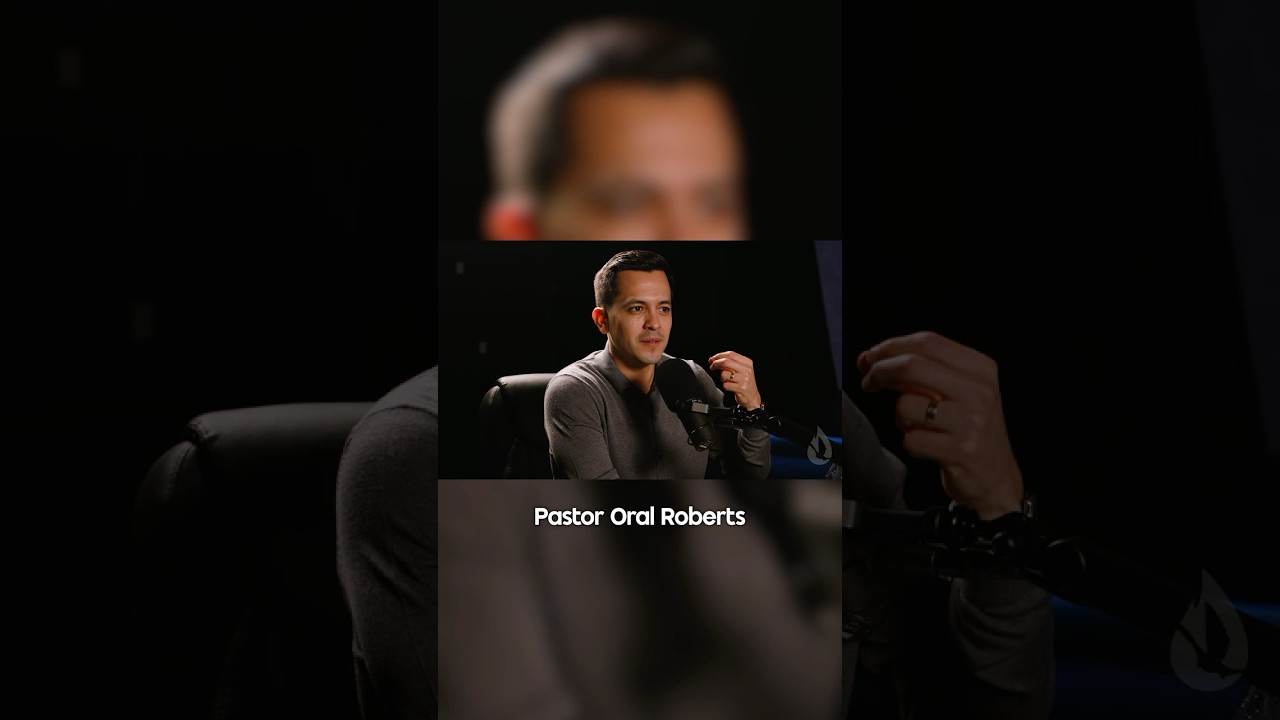
In this interview excerpt, Speaker B recounts two core teachings of Pastor Oral Roberts on praying for the sick. First, Roberts emphasized that the minister should pray in advance, so when approaching a person the prayer is already prepared; the minister’s role is to make a short, declarative statement that calls the desired outcome forth, rather than offering a long supplication. Second, Roberts taught that before laying hands—or any physical point of contact such as a cloth or oil—there must be a clear expectation created in the recipient. He illustrated this by initially blocking Speaker B’s attempt to lay hands on him, explaining that expectation must precede touch. Roberts also shared a personal anecdote about his chronic right‑shoulder pain, which he linked to the many hands he had laid on others, framing it as both a thorn and a passion. The conversation highlights Roberts’ practical approach to healing ministry: pre‑prayer, brief declarations, and intentional expectation through tangible contact.
Pastor Oral Roberts had taught you how to lay hands on the sick. Can you speak to that?
Yes, 2 things that he taught me about praying for the sick. One is he would tell the people, I've already prayed, so when I pray for you, you tell me what you want God to do, I come and agree. And then it was a short prayer. The principle there was, I'm not there to pray, I've already done my prayer. My, my is to make a declaration, is to call it forth. And so he didn't go into long prayers when he prayed for the sick. That was powerful. And then one day he said to me, he said, now, do you want me to show you how, how I would pray for people? I was like, yes. And so he, he asked me to pull close to him. And so I pulled my chair up close to him and he said, all right, I want you to lay hands upon me. Well, as I reached my hands to pray for him, he blocked it.
He put his arms just like that and blocked me.
And of course I was stunned. I was like, you asked me to pray and now you're blocking me. And then he stopped and he said, never lay hands on anyone suddenly. You must create expectation before you touch them. Ah, I said. I nodded my head. And so he said, now pray for me. I took a deep breath and I said, Dr. Oral, I'm gonna lay my hands on you, and when I do— he often suffered most of the time in his, in his right shoulder because he had laid hands on so many people. Very interesting that the very hand and shoulder that he was used to heal so many people through Christ was also his thorn in the flesh. Interesting. It was also his pain. It was also his passion. And so I said, Oral, when I touch you, God is gonna take that pain and release you from that pain. And he smiled and said, yeah. And I touched him and I said those short prayers. And that to me was so vital because those that do pray, often we spend too much time praying rather than really touching. He was very big on a point of contact. So the whole idea of create expectation, whether it's a cloth, Whether it was oil, whether it was the hands, he just believed that before you would release, there had to be an expectation.
It's interesting. I like what he said, that he, he had done all of his praying beforehand so that when he came to that prayer line of people waiting to be healed, it was just a matter of stirring their faith, laying hands on them, and seeing those miracles.