Jesus Reveals What Most Get Wrong About Talking to God
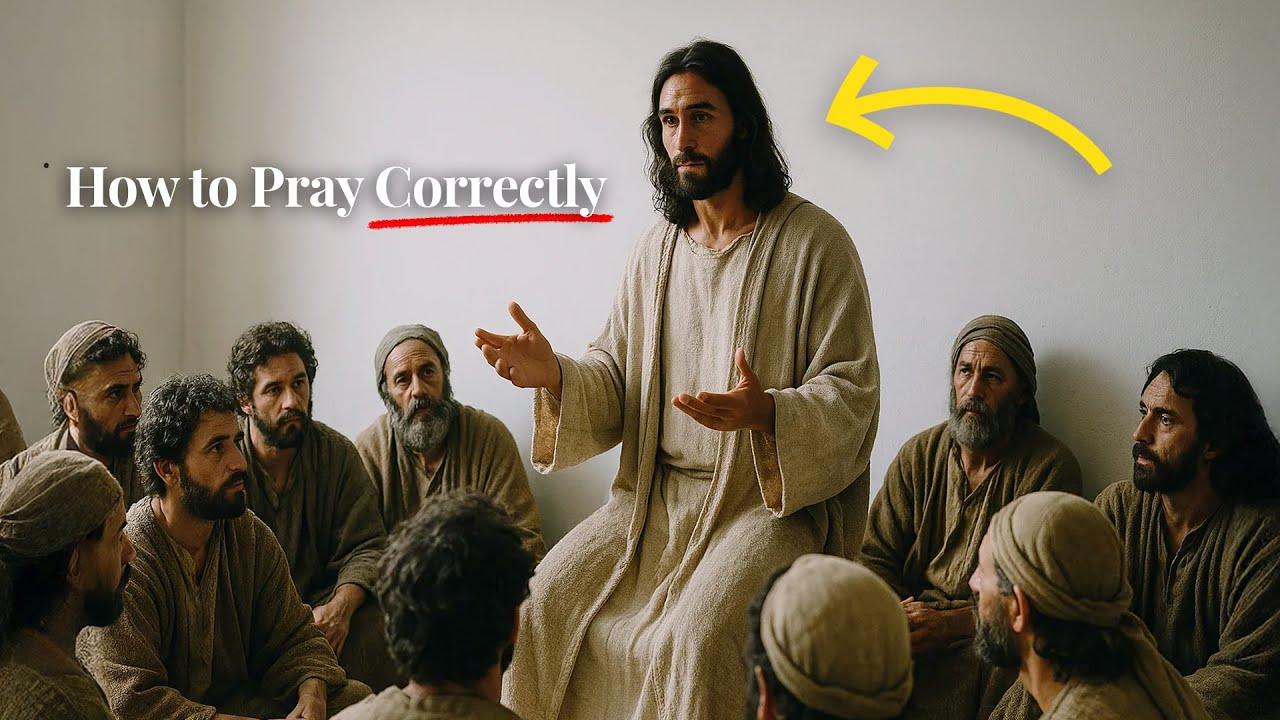
Jeremiah Tipton breaks down the Lord's Prayer from Matthew 6:9-13, showing what each phrase actually means. Prayer isn't a magic formula but a model for worship, surrender, asking boldly, forgiving others, and persistent faith.
Chapters
Jesus reveals what most get wrong about talking to God. Here is how to pray correctly. In Matthew chapter 6, beginning at verse number 9, Jesus said, pray like this: Our Father in heaven, may your name be kept holy. May your kingdom come soon. May your will be done on earth as it is in heaven. Give us today the food we need, and forgive us our sins, as we have forgiven those who sin against us. And don't let us yield to temptation, but rescue us from the evil one. If you forgive those who sin against you, your heavenly will forgive you. But if you refuse to forgive others, your Father will not forgive your sins. Now, we're going to break down this model for prayer that Jesus gives to us. And it's important to remember that Jesus here is not giving us a script, because remember that Jesus also said that we mustn't think that we're going to be heard by God simply because we go on babbling. So it's not a script that gives us power, but Jesus does give us a model that presents to us truths about prayer that help us to understand what it means to talk to God. Now, at the beginning of the prayer, Jesus starts with 2 powerful words that reveal 3 powerful realities. He says, Our Father. In Hebrews 4:16, we read, so let us come boldly to the throne of our gracious God. There we will receive his mercy, and we will find grace to help us when we need it the most. Now, this is a big one because this is where most believers get stuck. Remember that prayer in this regard, prayer is not like a key. It's like a candlestick. Prayer is not necessarily what unlocks the door to get into the presence of God. You're already in the room. Prayer is like that candle that lights the room and allows you to see where you're already standing. And so when we begin prayer, we begin with Our Father, that is to recognize his identity. He is the Heavenly Father. And it is also to recognize your identity. That's number 2. You recognize your identity because by calling God Father, you're acknowledging that you in fact are his child. So prayer begins with that acceptance. Prayer begins with that identity. Prayer begins in the presence of God. Our Father also is phrased in a very unique way here. Notice that we say our Father, not my Father. In other words, by praying these words or praying with the acknowledgement of these realities, we are accepting the fact that we are all one in Christ. So our Father, he is the Heavenly Father. I am his child, and I am united with other believers around the world. So we see his identity, our identity, and union with the body of Christ in those 2 simple words, our Father. And remember, because he's our Father, We can approach with boldness. Which art in heaven. Here is a recognition of citizenship. Our Father, we are his children, resides in heaven. Philippians 3:20 tells us, but we are citizens of heaven where the Lord Jesus Christ lives, and we are eagerly waiting for him to return as our Savior. So your citizenship is linked with your identity. So Jesus teaches us to pray with confidence, with faith, with the recognition of identity, with the recognition of authority, with the recognition of citizenship. That is how we are to approach prayer. We don't begin prayer by saying, Lord, please hear me, or God, are you there? We don't begin with doubt. We begin with faith. Our Father, which art in heaven, and we accept the realities behind those powerful words. Next, we see the words, hallowed be thy name. Now, this is worship. In Psalm 100:4, we read, enter his gates with thanksgiving, go into his courts with praise, give thanks to him and praise his name. We begin acknowledging the presence of God with praise and worship. A powerful man of God once told me that if you only have an hour to pray, worship for 45 minutes. If ever you feel stuck in prayer, like there's no momentum or you don't know what to say, Begin with worship. This helps to break up that difficult ground and helps to bring momentum to your prayer life, because by worshiping and acknowledging God, we are taking the focus off of ourselves and putting it on him. And when our focus is on him, that is what inspires faith. That is what inspires love. That is what inspires peace. Thou wilt keep him in perfect peace whose mind is stayed on thee, because he trusteth in thee. So worship is an important component of prayer because worship settles the heart. Worship brings us into the proper perspective. Worship removes distraction, and worship helps us to gain momentum, especially when we don't know what to pray. Thy kingdom come, thy will be done in earth as it is in heaven. This is surrender. This is to yield to the will of the Heavenly Father. This is about causing the earth to respond to God's will. In Romans 8:26-27, we read a very famous portion of scripture. And the Holy Spirit helps us in our weakness. For example, we don't know what God wants us to pray for, but the Holy Spirit prays for us with groanings that cannot be expressed in words. And the Father who knows all hearts knows what the Spirit is saying, for the Spirit pleads for us believers In harmony with God's own will. When we pray, it's not about getting God to do our will. It's about aligning ourselves with his will. This is where many believers get frustrated, and this is why they don't know how to talk to God, because they think that when they go to pray, they're trying to negotiate with God and they're trying to get him to do what they want him to do, or they're trying to get him to accept their agenda, their dreams, their hopes, their goals. But that's not— What prayer is about. In fact, you're gonna get very frustrated if that's how you view prayer. Prayer is not about changing the will of God. Prayer is about becoming the will of God in action. How does the kingdom come? It comes through the surrender of the will. Well, every time someone is born again, the kingdom of God expands. Every time a soul is saved, the kingdom of God expands. Every time you say no to sin and yes to the Spirit, the kingdom of God gains influence in your life. Every time you choose selflessness over selfishness, the kingdom of God gains influence in your life. So prayer causes you to walk in the will of God, to surrender to the will of God, not to try to change the will of God. Now, we as believers have a responsibility to establish the kingdom of God in the earth that he laid upon us. Now, God is sovereign. He, by his own power, at any moment could choose to just make everybody obey him or take everybody's free will away, but then he wouldn't be loving. So he has given us the responsibility of partnering with him. This is how he chooses to do it. He doesn't need us, but he chooses us. And he partners with our obedience. Remember that the scripture tells us that the prince of the power of the air, that is Satan, is at work in the children of disobedience, meaning that the only place that Satan can have influence is in the The state of disobedience. So where there is disobedience, there can be demonic influence. There can be satanic influence. There can be a worldly influence, influence of the flesh. So then when there is surrender, when there is obedience, when there is that daily yielding, there the kingdom of God finds its influence. So the power of God comes when I am living according to the standards of God while acting out the will of God. And prayer helps you to do that. Now, another way that believers can help to expand the kingdom of God is by getting involved with ministries like this. Help us on our mission to expand the kingdom of God. Help us on our mission to win souls, to build and disciple believers, to encourage the church, to spread the power of the Holy Spirit all around the world through events and media. You can make a difference. by becoming a monthly supporter of David Hernandez Ministries. Next, we see the phrase, give us this day our daily bread. Now, this is supplication. Many believers, for some reason or another, demonize requesting things of God. Some may tell you that it's immature to ask God for things. It's selfish for you to ask God for things. It's a lack of faith for you to ask God for things, but that's actually not the truth. The Bible reveals in Philippians 4:6-7, Don't worry about anything. Instead, pray about everything. There's not a limit on what you can pray for. Tell God what you need and thank Him for all He has done. There we see it's possible that you can make requests of God while still being thankful. Then you will experience God's peace. When? When I've submitted my prayer requests, then the peace of God fills me, which exceeds anything we can understand. His peace will guard your hearts and minds as you live in Christ Jesus. You are to continue to ask God to meet your needs. And as you do that, it actually unburdens you from the cares of this world. So many of us are walking around with fear about the future or uncertainty about our situations in life, because we're not approaching the Heavenly Father in prayer. You see, when you give to God your prayer request, by the way, He is your loving Heavenly Father who wants to meet the need. When you give to Him your prayer request, You're taking that burden off of your shoulders and you're placing it in His hands. Then the peace of God fills you. And when the peace of God fills you, now you can pursue God in prayer without distraction of the mind. And forgive us our debts as we forgive our debtors. This is forgiveness. Matthew 5:23-24, we read, so if you are presenting a sacrifice at the altar in the temple, and you suddenly remember that someone has something against you, leave your sacrifice there at the altar, go and be reconciled to that person, then come and offer your sacrifice to God. In Mark 11:25, we read, but when you are praying, first forgive anyone you are holding a grudge against so that your Father in heaven will forgive your sins too. And I really wanna challenge you here because the culture today just doesn't understand the forgiveness of God. We need to be people who forgive like God forgives. You ever hear somebody say, I forgive, but I don't forget? Really, that sounds virtuous or it sounds wise, but it's not biblical because the Lord forgives and forgets. And this doesn't mean that you literally need to erase it from your memory. That would be impossible to do, especially if you were trying to forget it. You would just be remembering it while you were trying to forget it. No, what this is talking about is a release of the offender, not seeking retribution, not seeking revenge, not trying to get everyone to hate them, not trying to get everyone to see them in a negative light, not holding onto grudges for years and years and years, but instead being reconciled, forgiving. Now, it's interesting to me, something I've observed over the years of preaching, I can preach on sin and I get some pushback. I can preach on giving and I get some pushback, but I, I've got the most pushback when I've talked about forgiveness. Believe it or not, that right there gets the most pushback because people, first of all, they take it so personal. In the comments, you'll probably read something like, well, David, you don't know what I've been through, or you don't know what you're talking about because you don't know my situation. And what happens is we justify our unique situation thinking that The Word of God doesn't apply to that situation, and that is emotionalism. We feel so strongly about it that surely God must make an exception for me. Next we see, and lead us not into temptation. This is the subjection of the flesh. In 1 Corinthians 9:27, we read, I discipline my body like an athlete, training it to do what it should. Otherwise, I fear that after preaching to others, I myself might be disqualified. Now think about this. This is Paul the Apostle here writing this. He's talking about his concern that he may be disqualified if he does not subject the flesh. In Romans 8:11-12, we read, the Spirit of God who raised Jesus from the dead lives in you. And just as God raised Christ Jesus from the dead, he will give life to your mortal bodies by this same Spirit living within you. Therefore, Dear brothers and sisters, you have no obligation to do what your sinful nature urges you to do. He brings life and vitality to my actual physical being. So the indwelling presence of the Holy Spirit affects more than just my mind, my emotions. It's more than just union with the Holy Spirit in my spirit, but he also affects this physical mortal body, giving it the strength that it needs to fight against the flesh. So in prayer, When you're talking to God, it's not just making your prayer requests, though that's okay to do. And in fact, it's encouraged to do, not just okay, it's encouraged. But it's more than just asking God for things. It is the yielding of self. It is the subjection of the flesh. You will find that as you begin to neglect prayer, maybe day 1, day 2, day 3, day 4, you've missed prayer each day, or maybe shortened your prayer time each day, you'll start to notice that the flesh begins to grow in strength and power. Now the flesh doesn't come and go. That is, you can't get rid of the flesh. You can't cast you out of you. It's like Psalm 139:7, if I go up to the heights of the heavens, you are there. If I go below, you are there. And this is what it feels like sometimes in the flesh. You wake up in the morning, you're with you. You go to bed at night, you're with you. You can't get rid of you. And so that part of you that needs to be weakened, that part of you that needs to be brought, under subjection, it doesn't come and go. You can't get rid of it. That is until we have the glorified bodies that we receive when we're with the Lord. But rather the flesh doesn't come and go. The flesh shrinks and grows in influence depending upon whether you walk in obedience or disobedience, but prayer helps to keep the flesh in check. And this is why you wanna keep that flesh's influence as, as, Small as possible to nothing, really. You wanna get it to nothing. Because if you don't do that, you don't keep that in check, then that is where it'll find its sinful opportunities. The flesh looks for those opportunities and prayer is what keeps it weak. But deliver us from evil, or as some versions say, the evil one. This is spiritual warfare. Well, who is the evil one? It's the tempter. James 4:7-8 say, so humble yourselves before God, Resist the devil and he will flee from you. Come close to God and God will come close to you. Wash your hands, you sinners, purify your hearts, for your loyalty is divided between God and the world. Well, how can I resist the devil? You humble yourself before God. How do I humble myself before God? It's prayer. Every day that you go without prayer, you're saying to the Lord, Lord, I can do this in my own strength today. I don't need you by my side. Well, that's what ego is. When prayerlessness is a manifestation of pride, we don't pray because we're too self-reliant. We don't pray because we don't think we need God's help for everyday living. But when you pray, you are humbling yourself before God. You are demonstrating your need for Him. Prayer is active surrender. It is yielding. And when you do that, you're humbling yourself before God in prayer. Then you're being given the power to resist the devil. And when you resist the devil, he doesn't fight, he flees. For thine is the kingdom and the power and the glory. Amen. It begins in worship. It's sealed in worship. Worship is an important component of prayer. Now, maybe you find yourself getting stuck. Again, this is where worship can play a key role. Jesus also taught us to pray with faith. In Mark 11:22-25, we read, Then Jesus said to the disciples, have faith in God. I tell you the truth, you can say to this mountain, may you be lifted up and thrown into the sea, and it will happen. But you must really believe it will happen and have no doubt in your heart. I tell you, you can pray for anything, and if you believe that you've received it, it will be yours. But when you are praying, First, forgive anyone you are holding a grudge against so that your Father in heaven will forgive your sins too. There we see that faith is an important component of prayer and that unforgiveness hinders faith. But when we pray, we are to approach God believing that he is capable of doing what he promised. Far too many believers approach God wondering, can he do it? Will he do it? Am I the exception to the rule? No, my friend, when you go before the Lord, Jesus taught that you should trust in God, trust in what He promised, trust His Word. He's never failed you and He's not going to fail you. So when you approach God and you put your trust in Him, you are exchanging your strength for His strength. You see, some of us limit our prayers according to what we think is reasonable according to our own ability. But when you exchange doubt for faith, hesitation for faith, When you begin to expect that God will do it, now you've traded your strength for His. When I pray according to God's power, I tap into His ability. So stop praying prayers limited by your understanding and begin to pray big prayers of faith. That's what Jesus taught us. Next, we see that Jesus taught us to pray together. In Matthew 18:19-20, we read, I also tell you this, if 2 of you agree here on earth concerning anything you ask, my Father in heaven will do it for you. For where 2 or 3 gather together as my followers, I am there among you. Now we understand that God is omnipresent. His presence is everywhere at all times, but there's something about the manifestation of his presence that's unique in our togetherness. I've noticed that as we gather with thousands of saints from around the world at our Encounter services that we host in various different states and countries, that there seems to be this intensification of power. When you get the saints of God gathering together, there is power in that agreement. There is power in that union. There comes upon the service this flow of miracles, this flow of power, this flow of worship that you can't quite experience on an individual basis. This is why I'm concerned about believers who say, it's just me and God. Remember, our God. Father, there's something about our togetherness. There's power there when we gather. So we do need community. We do need to be together. Yes, you are the church. And that's partly true. The full truth is that you are the church when you are gathered with others. In our togetherness, we become the church. You need community. You need fellowship. You need other believers. That's how God designed it to be. So I encourage you actually join our online community right now. Make sure you subscribe to this channel and click that notification bell when you do. When you subscribe, not only are you joining our online community, hundreds of thousands of believers around the world, but you are also going to receive alerts when we put out new content. So if you want more teaching on prayer, make sure you're subscribed and be a part of our online community. Now, Then we see that Jesus taught us to pray with persistence. In Matthew 7:7, we read, keep on asking and you will receive what you ask for. Keep on seeking and you will find. Keep on knocking and the door will be opened to you. For everyone who asks receives, everyone who seeks finds, and to everyone who knocks, the door will be opened. Jesus is talking about the power of persistence. You may not see the situation changing, but you have to begin to see it through the eyes of faith. Consider the children of Israel when standing before the great sea, an army behind them and a blockage before them. They began to fret until God spoke to Moses. Moses raises that staff, splits the sea, and they cross over into the promise. Now, many of us are like that. We're in situations when we're praying, where all we can see is what's going wrong. Maybe you're praying for someone, and not only are they not getting better, but it seems like they're actually getting worse. Maybe you're praying for a specific situation, and instead of it improving, it just stays the same, or it also keeps getting worse. This is where you have to begin to see with the eyes of faith, not for what things are, but— What they could be. for what they can be, not for what is happening, but for what God will do. In James 1:6-7, we read something a little challenging, but very important. When you ask him, be sure that your faith is in God alone. Do not waver. I'll say it again, do not waver. For a person with divided loyalty is as unsettled as a wave of the sea that is blown and tossed by the wind. Such people should not expect to receive anything from the Lord. So if you are wavering when you're asking, you're not going to receive. Think about the children of Israel marching around the walls of Jericho. Each day they marched around. I doubt they even saw a crack in the wall, yet they kept marching because they knew that eventually God was going to fulfill the promise. For years, my wife, Jess, and I struggled with infertility. We were praying for children. We couldn't have any children. The medical professionals told us that the only hope that we had was a procedure that we could not afford. And so all we could do was rely on God. And we prayed and we prayed and we prayed and we asked. Years went by. And within those years were very discouraging months, because every month that went by, we would believe, get our hopes up, pray that God would do it. And then every month, Our hopes would come crashing down. Each time it got harder and harder. Each year that went by, more and more discouraging because we thought it was less and less likely that anything would ever happen for us. Now, this affected me, of course, but I had to watch it affect my wife much more so than it affected me. That was part of the struggle for me. And of course, for her, it was a very heavy burden to bear. And so we're praying and we're praying and we're praying, and every year goes by, nothing. Every month goes by, nothing. On some months, our faith was high. We were expecting, we were believing. And then other months, wounded from previous disappointments, we were afraid to hope again. I know you may know what that's like, afraid to hope because you're afraid of being disappointed and hurt by that disappointment. So we would pray, pray, pray, ask, and then nothing would happen. Finally, I sat down with my wife, Jess, and I said, Jess, my dear, I said, we've cried our tears. From here on out, it's faith. We have to stop wavering. We're just gonna believe. I would rather go my whole life believing for the miracle than to give up one day too soon. And my dear friend, consider this. How many have given up on the miracle in the night that was scheduled to arrive in the morning? Don't give up because you may be giving up just one day too soon. No, Jesus told you when you pray, continue to pray, continue to ask. So Lord Jesus, I pray for that one now who desires to follow your instructions and wisdom about prayer. And I pray, precious Holy Spirit, that you would help them to remember these truths, to apply these truths, and That they might live a lifestyle of prayer. Set their hearts on fire. Give them a hunger for your presence. Help them to focus on you and you alone. Dear Lord Jesus, make them people of prayer by your Holy Spirit. We give you the praise and the glory and the honor. And I want you to type it in the comment section if you believe it. Type a big amen. Amen. Well, one more time, I wanna remind you, if you'd like to become a supporter of this ministry and help us continue to win souls, build believers, host events, release media, then go to davidhernandezministries.com/partner to become a monthly ministry supporter, /donate to give a single gift. Now, if you enjoyed this teaching, I have another teaching for you. It's gonna be a time of self-assessment. So if you're ready to self-assess, in a very honest and biblical way, then make sure you check out my teaching, If You're Seeing These Signs, You're Maturing in Prayer.










