California Cannabis Market Recording
In this May 2021 Cannabusiness Key webinar, host Jason Klein interviews California cannabis attorney Justin Keller to give a comprehensive overview of the state’s cannabis market. The discussion begins with a historical recap of California’s early medical‑use law, the ensuing gray market, and the fragmented regulatory framework that emerged in 2017‑18, involving three separate agencies (Bureau of Cannabis Control, Department of Agriculture, and Department of Public Health). They examine Governor Newsom’s proposal to merge these bodies into a single Department of Cannabis Control, noting the expected short‑term slowdown and long‑term benefits. The pair explain California’s Metrc seed‑to‑sale track‑and‑trace system and the unusually high number of touch‑points in the supply chain, then explore how licenses can be stacked, combined, or operated as micro‑businesses, and why many operators prefer multiple separate licenses to limit risk. They detail the provisional‑license “Band‑Aid” that now covers over 80 % of operators, the CEQA environmental‑review bottleneck delaying annual licenses, and the likelihood of extensions. Market‑side insights cover the shift from retail‑focused investment to cultivation and supply‑chain financing, the nascent but consolidating edibles and beverage segments (few brands dominate 50 % of sales), the lack of strong brand differentiation in flower, and the emerging “wine‑style” master‑grower branding. They also discuss local opt‑out policies, the impact of federal illegality, and the overall volatile yet opportunity‑rich outlook for investors and entrepreneurs in California’s still‑maturing market. The webinar concludes with a preview of a next session on brand franchising and a call to share the recording.
Chapters
I'm gonna hit the record button here. Okay, I think I— let's see if— yep, I've started the record button. Just give it one more minute, let a couple more people join in here. Okay, all right, well, let's get this thing going. Hello and welcome everybody to the latest installment of of the Cannabusiness Key. I am your host, Jason Klein. This is the May 2021 Cannabusiness Key. My guest today is my colleague Justin Keller, who's a colleague of mine who sits in the Los Angeles, California office of Ramone. I'll be telling you a little bit more about Justin today in a few minutes, and we're going to be talking, of course, about California cannabis marketplace. Now in my 4 years of doing the Cannabisness Key monthly, this is probably my approximately my 50th installment of this. Uh, we have never focused on California. Uh, we tend to focus more on East Coast states because that's where I sit, um, and on general topics. Uh, but, uh, this one's going to be a bit different today. I couldn't hold out forever. California is such a huge, interesting, dynamic market that gets so much attention around the world that, you know, it really deserves at least one webinar. And there's nobody sort of more in tune, clued in to what's going on in California than my colleague Justin. So we're going to be talking to him, sort of have a hopefully a really informative conversation. For those of you who are not familiar with California, like me, I think this is going to be one that's really enlightening. So we're looking forward to getting your questions as usual and having, you know, a good interactive back and forth with Justin. For those of you who've joined us before, you know that there's a couple of disclaimers we always begin with. Forgive me, I'm on the wrong page here. There we go. So the disclaimer is very simple, and for those of you in the industry, you've seen things like this before. As you know, marijuana, cannabis, sort of generic term, but specifically marijuana is a controlled substance under the Federal Controlled Substances Act. That means it's illegal under the federal law, but many states have legalized it for various purposes, including California, which has gone all the way to sort of recreational adult use, as we would know. So we're here to talk to you about this program today, to educate you about the program, not to give you legal advice about the program, not to create an attorney-client relationship. If you do have specific questions about your situation, I would recommend that you contact us directly and you ask us your questions, you know, privately, and we can give you some specific advice about how to navigate your situation. Ramone is a quickly growing and exciting firm. We've got a lot of great stuff going on here at Ramone and a lot of fantastic attorneys. I've now been with Ramon for about 8 months, and I can attest to all the great colleagues that I've got here, the great resources that we have, access to a lot of different markets, and, you know, very enlightened business model as far as being able to serve dynamic, exciting industries like cannabis. But we can do all sorts of things. So no matter what your, current situation is, um, or your industry, whether you're focused on cannabis, uh, or looking to do something else, uh, Ramon probably has somebody who can help you. So please, um, if you're interested in learning more about Ramon, go check out our website, uh, give Justin or I a call and, um, we'd be happy to show you around the place. Uh, here's a couple of the offices that we have. As I mentioned, we are quickly growing. Paris office is now opened. Uh, there's, uh, Frankfurt and Casablanca offices coming soon. And I'm sure 2021 has a lot more in store. So exciting stuff here from the firm. Okay, so I'm going to introduce Justin in just a moment, but before I do that, I also want to mention a couple of quick things. Number 1, June 18th, that's going to be our next webinar. We're going to be hosting Michael Bronfman. He is the CEO and founder of Curio Wellness. Curio Wellness operates back in my state where I do a lot of work, which is Maryland, and several other places. And they're doing some really exciting stuff, including rolling out a franchise model that might be coming to a state near you soon. So that's gonna be an interesting conversation with a licensee, with an operator, the vertical operator in Maryland, and, you know, with some designs on expansion. We're gonna be talking about what it takes to compete in that kind of competitive market. Same time, noon Eastern time, 1 hour. You can get the information on our email blast or on the Cannabis Business Executive, excuse me. Go check out that site and, you know, it's a great resource.
For you.
Also, just as a way of navigating the RingCentral platform here, we've got, of course, a Q&A tab there that I'd like you to use to ask me and Justin questions. So the way we've got this laid out, for those of you who haven't joined us before, is, of course, to make this interactive. This is not just a lecture. We're not here to just walk through the PowerPoint presentation. The PowerPoint that you see on the screen is, you know, to help us facilitate the conversation, but we want to get questions from you. We want to take the direction from you as far as what you're looking to learn about today. So I'd encourage you to, to use that liberally, and I will be monitoring it as we go, and I'll be sort of throwing out the questions to Justin as we go. So without any further ado, Um, the guest today is Justin Keller. He's my colleague in the Los Angeles office of Ramone. Uh, he has a great deal of experience, particularly in California, but with a lot of transactional matters. Um, he went to Loyola Law School, graduated in 2008. Uh, he has been, um, previous to sort of the cannabis industry has been, um, with several different firms, primarily in entertainment and music transactional work. Most recently, before he joined Ramone, he was a partner at the Frontera Law Group for the last, I think about 3.5, 4 years from 2016 to 2019, which was a cannabis firm and doing quite a bit of transactional work there. And he's been with Ramone since 2019. So Justin Keller, welcome to the webinar.
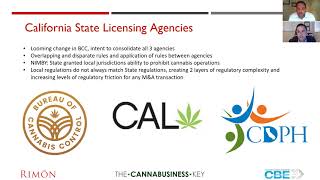
Thanks for having me, Jason. So I think first that I'm excited to present and answer questions about California. I think it's probably useful to do, you know, zoom out and just do kind of a little macro overview of how we got here. And with California, things were kind of— we were first to legalize. I mean, when I say legalize, I mean it liberally, because in 1996, we went with Compassionate Use Act, which basically, rather than doing what states subsequently did in creating a licensed system, we said it's a defense to criminal prosecution, it's still illegal, But if you have a medical recommendation, you can consume and you can grow for personal use. What that led to was a lot of gray market activity. It was very wild, and basically attorneys in the early days were mostly criminal attorneys that were, were helping people avoid going to jail for growing and selling cannabis. Over time, our laws kind of expanded, and we got to a system where, where in 2011 or so, Kamala Harris was our— she was one of the Attorney Generals for the state, and she kind of set forth this concept that people were using this exception to grow and consolidate and came up with these cannabis collectives. And then, and you know, basically where you could say, I know how to grow and I can grow for a collective of sick patients. And with that as the framework, while other states were working on regulating appropriately cannabis, we were able to have large groups of completely unregulated operators that were centralizing business activity, and it continued to— the state continued to grow, but without any real regulatory system. We saw other states lapping us in terms of like Illinois, Colorado, Oregon. Washington, etc. And at some point in the mid-2010s, California decided maybe we should try to regulate. So where we ended up was this patchwork kind of regulation that was— we had two competing interests. We had the existing operators who were scared about big business coming in who had accumulated substantial wealth from doing this gray market activity, and who were pushing for, you know, things that would benefit them and allow them to stay in control, and then on the other hand you had the regulatory bodies. In California, because it's pretty liberal, we didn't actually— it wasn't would they legalize, it was, you know, which which scheme would get approved, you know, as between the various relevant parties. And there was a lot of negotiation, and it ultimately led to a system that was put into place in 2017 and actually, you know, implemented in January 2018, which was kind of a sloppy go because they just turned on the lights. There were already thousands and thousands and thousands of operators, and day one you need a license or you have to stop. And as you can imagine, it wasn't the prettiest. But to make things more difficult, the problem was they didn't consolidate the whole program So the Bureau of Cannabis Control was established, and that governs the retailers, distributors, and testing laboratories. But they, they made the decision that cannabis is agriculture, so the Department of Agriculture, the CDFA, isn't in charge of the growing, And they said manufacturing is governed by the Department of Public Health. So you have 3 distinct regulatory bodies. The Bureau of Cannabis Control has some overarching kind of control over the cannabis system, but that actually hasn't really been clarified. And they all have somewhat different rules, the, you know, the manufacturing branch, the cultivation branch, and the Bureau of Cannabis Control. And then you also have— they decided to adopt partially because this is what the locals wanted— was, was a NIMBY approach where they actually said localities that don't want it can ban it. Localities that only want one dispensary can say one dispensary, then want no cultivation, you can say that. If you say we don't want volatile manufacturing, we could say that. If you say we only want tiny grows on one side of town, you can say that. So local can do whatever they want, and as a result of the kind of the regulatory framework, the state of California, which is very large, you have over 500 municipalities, you have 3 state, state, you know, governmental bodies, so if a client asks you, can we do X? The answer is almost always we have to, we have to see. It's unclear and you can't— there's no one-size-fits-all answer. Good for lawyers, bad for operators.
I think bad for business, right? Bad for investment. It makes, you know, lack of clarity is always a major risk factor in capital deployment. And, you know, I've certainly been intimidated by this patchwork that has existed in California. You know, as you described, sort of going back, you know, 10 years ago, there were these strange sort of collective, you know, collectives that were out there and of unclear legality and subject to all sorts of whims and fancies of local enforcement agencies or federal enforcement agencies and very much, I would say, gray market at best. Whereas now we've got this patchwork here in the last couple of years with these three different acronymed state agencies and this patchwork, as you mentioned, all over the state. So now, as we hopefully move into a more clear and consistent environment, sort of putting aside the local opt-out stuff, let's put that aside. What is this? What is the timeline and expectation as far as consolidation of Cal Cannabis, CDPH, and BCC? And what's it going to turn into at the end of the day? What's the sort of endgame here?
Yeah, so, you know, Governor Newsom, who potentially is getting recalled, we'll see, but He put into the budget that he was going to create the DCC as opposed to the Bureau of Cannabis Control. It would be the Department of Cannabis Control, and it would consolidate all three into one. The timeline he gave would be next month, but that was a year ago before COVID really, you know, impacted things. And more specifically, they're going to need new implementing regulations, and we haven't even seen drafts of those yet. So I believe we're still looking at some time out. The, the actual practical impact will be positive if you're looking at it from a long-term perspective of eliminating the differences in the enforcement and the way that these regulatory agencies have an approach in creating consistency. But from a short-term perspective, it's actually going to net negative. And the reason for that is Cal Cannabis, which is a division of the agriculture branch, they're, they're practically looking at cannabis like agriculture. So they are practical, they understand that it's a crop, And you know, it's a little more lax. I'm not saying that— it's still highly regulated, but it's a little more lax for California Department of Public Health, the CDPH. They're looking at this like a manufacturing operation. So you know, they're concerned about fire safety, they're concerned about public health, they're, you know, concerned about making sure that the products are are consistent and safe. But they again aren't looking at this with hypersensitivity necessarily to compliance. The Bureau of Cannabis Control has made a determination that it's extremely important that every single box is checked and checked in full. So the, the the DCC, the Department of Cannabis Control, most of the California industry believes will consolidate the 3 and take the approach of the Bureau, meaning just everything's going to be much more buttoned up, which is a good thing in, you know, when you look at it with the zoom-out lens. But when you're zoomed in, it just means, okay, every change that I'm trying to do to my premise diagram is going to take 4 times as long because they're going to have 4 times more problems. Every time I I'm going to have to have my investors go through this more robust and more time-consuming, um, you know, approval process. And it's not that people aren't getting approved. It's just timeline, which impacts closings, which impacts, you know, when the money comes in, et cetera.
Right. Yeah. And this is, um, I mean, I think we've all experienced it in one form or another, whether in the cannabis industry or just generally in the, operating businesses in the United States, bureaucracy can become overwhelming. And certainly people who are in the cannabis industry currently can appreciate that. The sort of bigger the bureaucracy, you know, the more likely it is to, you know, to be underfunded or understaffed or not capable of, of, of, executing its task in a timely fashion. And again, that's another level of challenge that California is gonna face as far as putting a single regulator out there, which can consistently apply the law in a fair and timely way. That's a big task, big, big task. Well, let's just talk about that for a moment because let's use an example and I'm going to take Chris's question from, from the Q&A section and use that as an example because I think it's a good one. Currently, you know, he asked how the compliance and traceability works in California and I think by compliance he means sort of, he may mean cultivation, sort of commercial cannabis cultivation. Compliance because he asked about traceability. So as I understand it, and correct me if I'm wrong, Cal Cannabis manages the state's track and trace system. And so, you know, that would be one of the tasks that would then, you know, now be under the big umbrella of this DCC. And can you just sort of describe, you know, and maybe in a quick one or two minute, you know, very broad overview of how the track and trace system works in California, or maybe just by comparison. Are there any unique features of the track and trace system in California that an operator, you know, coming from another seed-to-sale tracking state would want to know about?
I think, you know, we use Metrc for now, which is okay. I think as opposed to some of the other states where you can have a broader license type, perhaps because we have a lot of license types within the supply chain, it's touching more hands, so there's more scan-ins. I'll briefly describe the supply chain and how, you know, if you were talking the seed-to-sale concept, how it likely would go, we would have a licensed nursery who does immature plants and genetics, and they're allowed to sell those. So they— the nursery would transfer, would transfer it in the system to a distributor. A distributor or a transporter would then transfer it to a cultivator, Cultivator puts it in the ground, grows mature plant, harvests. The cultivator then gives it to a distributor who would take it to a processing facility for, you know, drying, trimming, curing, etc. The processor would give it to a distributor who in turn would take it to— it could be processed at the processing facility, but more likely added different distribution facility where if it was going to flower products it would be jarred and packaged and labeled. If in turn it was going to manufacturing, it would go to a manufacturing facility. You know, if it goes to manufacturing, you could have one distributor that's just doing extraction and selling it in bulk. Alternatively, some distributors are going to do all of the manufacturing at one facility. But let's say it goes to bulk oil, goes to a distributor, goes to a different manufacturer that's going to do an infusion or kit, commercial kitchen, whatever it is, goes to a different distributor who's going to get it tested. They hold it while a testing lab comes in, gets the regulatory testing done. When the regulatory testing comes back with a COA showing pass, that distributor or another distributor who's like your actual distributor who has relationships with the retailers would take it to the retailer. The retailer scans it in and sells it to a consumer. So the supply chain has a lot of subs.
Did everybody follow along?
You could have a lot less.
That is insane, Justin. That is totally insane from somebody not in California. I can certify that as absolutely absolutely insane, the number of various touches that, you know, would occur in any typical supply chain. I mean, there was at least, you know, you could have less, 20, you could have less, right? You could have less of, well, let's talk about that. So, you know, to what extent can we in California combine these licenses in vertical fashion or stack these licenses So that sort of, you know, we're internalizing some of these supply chain moves.
Right. So I see Chris responded with a question. With this, the structure that I described is mostly for what I would call kind of mass producers, where each of these facilities, they're trying to maximize output. So, you know, What you could have in a cultivation license, you could do, you can propagate your own immature plants. There's a chicken-egg of how did you get the first mother plant in, but that's a question the regulators don't normally ask. But if you didn't want to buy plants, buy, buy, yeah, if you didn't want to buy particular genetics from a particular nursery, You could have an area where you make your own immature plants in your cultivation facility. You could do your cultivation in the cultivation facility, the mature plants. You could process in the cultivation facility. You could, if you're going straight to flower, package and label in the cultivation facility. You could do, so you could do all of that, and let's say you were growing, packaging your flower, the shortest supply chain would be you do all that in the cultivation facility, a distributor takes it, gets it tested, and gets it to a retailer. But what I was describing was more a lot of times in California, because of the amount of flower you're trying to make, when you have a cultivation facility, you don't want to waste space with an immature room or two. You don't want to waste space with the drying areas and, you know, the processing areas. You want to maximize canopy, and there are limitations on how much canopy you can have. So if you had a, you know, a 30,000 square foot building, you want to have— try to get 30,000 square feet of canopy. So you'd have, in our case, the licenses are by square foot of canopy, so you'd have 3 10,000 square foot licenses all in this one 30,000 square foot building. Or rather than saying, okay, I have 20,000 of canopy and 10,000 of processing and, you know, nursery-like area. So people are kind of— a lot of groups are choosing to have a lot more people that do specific things within the supply chain and to be able to maximize, you know, everybody's efficiency at what they're doing respectively, rather than wearing more than one hat.
Right. So the short answer here is there are some license types that can be combined in certain ways. That's permitted under California law, just not the preferred way for many of the operators to do it for economic and business reasons.
Yeah.
And it sounds like you can also stack licenses, meaning you can have multiple licenses of the same type. Depending on your operation. And that sounds a little bit more common. And so those are both permitted. Now whether they sort of lead to operators choosing that path is a different— that's a different animal. But, you know, and I want to sort of make sure we're still moving through the slide deck because As the first 20 minutes of this conversation shows, we could sit here and talk about seed-to-sale tracking and cultivation strategies in California, even in one part of California, we'd spend an hour talking about that alone. This could be a 20-part series if we wanted to. We are trying to get a big broad overview. Just for everybody's edification here, we've got a big long presentation and Justin, as you can tell, is a wealth of information about that. We are not going to get through everything at all, not even in this presentation. But, you know, this sort of leads to, you know, these numbers here in this way that the provisional licenses have been distributed so far, or proposed to be. So where are we? You know, what is this? How should we interpret this? When you look at this chart on the active and provisional licenses, and provisional is still such a large portion of it, you know, what do you see here? Why do you Why do you think this is?
So there's a couple things, and I'm going to add one more comment back. There is what's called a microbusiness license, which is you can do pretty much the entire thing. I actually don't recommend that to my clients because although you can handle everything, you know, you could even be a retailer with the microbusiness license. They're all connected. It's all one business premise, and essentially what can happen is you could end up having— if you had a non-compliance issue, it shuts down all of it in one rather than segregating it into having multiple licenses. And I mean, I think— and then I'll move on to your question— one of the core differences between California and a lot of the other states is there is no limit on number of licenses. That's not to say that this is Oklahoma. The cities can decide how much they want, but like the state doesn't have limits. It's not like a lot of states where, you know, they give out this many licenses. So, right, you know, if you ask me, would you rather— if you could get a city to approve a microbusiness or give me a retail, a distributor, a manufacturer, cultivator, I'd take the 4 licenses over 1, even if you have to pay more licensing fees because then they're all kind of separate business units and, you know, if one has a problem, you're not shutting down all four. But to answer the question that—
I think it's— I just want to jump in and make a comment directly on that. It's an interesting way to look at it. It's about distributing risk and, you know, the I'd compare California's local opt-out, which is built into the law there, that local municipalities can opt out and restrict and limit these types of businesses in all sorts of ways, compare that against New York's new law, which was just passed about a month and a half ago, which does include an opt-out, but that opt-out is for a very limited period of time. Local municipalities have to opt out before the end of this year. And if they don't do that, they're locked in and they can't sort of go back and retroactively opt out. And, you know, so what that does is it sort of says, well, once you sort of get, get your foot in the door somewhere, you can be confident that you'll be able to continue those operations there. And that sort of doesn't go to your question of compliance. Issue. But it does go to your question of the risk of a change in the way that your local government's treating this.
And I think, I think that I wish California would have operated that way because what they did was say, if you want to legalize, do it. And localities have limited budgets and cannabis regulations are difficult. And you know, a lot of, small municipalities don't have it in the budget to write complex cannabis rules. So even if they were open to legalizing, they just don't. So we actually still have 30 to 40%, it would be my guesstimate, of the jurisdictions in our state, it's a ban still because it's— they'd have to regulate it and they don't have the money to hire attorneys and people to write these laws. And their city attorney is just I'm not going to do it. And the other thing you've had is people that wanted to legalize cut and pasted other ones, so you have repeated bad municipal codes that show up in lots of different places. Yeah. But as to this question with respect to the provisional license issue, so basically what happened was, like I said at the start of the conversation, in 2018 We were forced to turn on the light, and it was like, okay, you gotta get this license or you have to stop that day, and everybody was going. So they gave out these temporary licenses, and to get a temporary license you needed basically nothing except local approval. It was very little, but they wanted to be able to turn on the light, so they gave out temps, and the temps were supposed to be good for 6 months. But then at the end of the 6 months, the state was so far behind they hadn't actually even started processing any of the annual licenses, so they extended it for 6 more months of temps. And then at that point they were able to fully turn on the track and trace system after the first year, and then they weren't ready with the annual licenses because basically the paperwork wasn't— they weren't getting through it fast enough. So then they came up with this concept of— what happened was actually at one period of time all these licenses expired, the state didn't do anything, and operators were given a choice to either violate the law and continue to operate or shut down, which as everybody who is an operator knows, like, that can be kill your business right there, stop. So a lot of people violated the law and kept on going, Within a few months, the state said, oops, my bad, and said, we got these provisional licenses. And the provisional license, you still have to fill out more burdensome paperwork, but until we fully approve you, you can continue to operate with these provisional licenses. So as the slides show, it's like 83+ percent are still provisional, and this Band-Aid of provisionals is supposed to end December 31st, 2021, annual or nothing. But where our problem is, is California's environmental protection law, like CEQA is what it's called, um, is very, very daunting, not just for cannabis, for every business in California. Um, you know, we're trying to be a very green state. So a lot of cities, they did a CEQA waiver and they just said, ah, it's, we're, we're, the city's going to waive it. And environmentalists and the state have so far gotten up, pierced through a lot of those waivers and said no, those are ineffective. So until you've complied with the environmental laws, you can't have the annual license because you haven't completed everything for the annual license. And these things in some cases are like multi-million dollar 5-year lawsuits, you know. So practically speaking, unless they further extend provisionals, all these licenses are going to expire at the end of the year. And if I was betting, man, they're gonna extend it.
But I think they're gonna extend it, right? But I think it was Milton Friedman has a quote that says there's nothing quite as permanent as a temporary government program. That's great. And it might be true in this case, you know, I mean, you know, partly because it seems like they've put themselves in a box canyon. I mean, they, they've got to implement the solution, figure out a way out of it, and in the meantime, you know, to try to pull the rug out of this industry, you know, or, or, you know, put the toothpaste back into the tube or whatever the metaphor is. At this point would be a disaster. And so it's up to them amongst many other priorities in the state of California to figure out the path out of this situation that they've created. And until then, I don't see any other option but continuing the provisional.
I think what's interesting is a lot of the producer-oriented licenses, at least at the start, you know, went to areas that— cities that were looking for money and looking to stimulate their economy. So a lot of these are in the desert area of California, not your beautiful coastline, you know. That's not to say there aren't a lot you know, that are close to the water. But a lot of the big areas where you have a lot of production are, you know, some of the parts of California that, you know, an average folk isn't going to think of when they think of California. And those cities really need this tax money. So it's just this interesting conundrum because obviously this with global climate change and everything else, and, you know, the cannabis industry is pretty aligned on, you know, one geopolitical side of the thing. But I think that practically speaking, if CEQA stands in the way of this, the industry is probably going to transition back to the black market. I don't think it's going to stop. In California, at least.
Well, yeah. And that's a sort of really big picture look at this. And I would also— I mean, obviously there's a lot of political arguments here. Far be it for me to speculate about California politics. Even if I was in California, I probably wouldn't have the capacity to do so. But the amount of investment that's been made into California by influential political figures. And as you point out, the states and municipalities and counties that are counting on this and big political heavyweights that are interested in seeing this continue. I just don't see this whole thing being unwound by a bad rollout. But certainly that's what it's been, right? And we've seen some bad rollouts. I've been in this space for 10 years. I've watched some bad rollouts. I watched Chris Christie, Governor Chris Christie of New Jersey, just intentionally botch the New Jersey program for, I don't know, 5 years, 6 years. I've watched a lot of fearmongering about the Arizona program and local government officials being arrested and thrown in jail if they give out licenses. This sort of crazy fearmongering that was sort of commonplace back in 2013, '14, '15. I saw various coal memos through the years and various bad sort of bad policy. California's on its path to the worst rollout, trying to compete. For number one worst rollout there is. And you can see why. I mean, just sort of describing this here, you can see why. But still, sort of notwithstanding all of that, there is, you know, business activity. There still is, you know, very serious business going on in California. There are lots of opportunities. California seems to be a a leader in making brands, particularly, right. You know, and things that happen in California then sort of start to seep out and happen in other places. And so, you know, can you just sort of run through a few of your notes here on what you're seeing, you know, involved on the ground in California?
Yeah, I mean, I think these trends we're probably seeing all over, but You know, from the view from my office, I'll say, you know, primarily in the mid-2010s through to the Canadian bubble burst in maybe '18-'19, retail was what was the sexy investment. You know, I think there was a lot of being able to sell on your pitch deck and your projections. I think the Canadian market, you know, when they hit legalization in 2018 and the subsequent, you know, 90% loss a lot of those operators saw in valuation kind of scared everybody away altogether for the year 2019, part of 2020. And then, but it's bounced back pretty strong, I'd say. And the difference that I'm seeing is people are no longer, at least in California, investors haven't been as excited about retail. I think part of that has to do with 280E still here and seeing what that does to, you know, Good revenue doesn't correlate to great, you know, great numbers post-tax. I think that's part of it. I think, you know, projections— I mean, we've seen a lot. I mean, there still is a lot of interest in retailers, and I definitely have clients that are targeting them. But I mean, I think that The move, because right now how high the value is of flower, is cultivators are, and cultivation facilities are probably the hottest place for investment right now. I'm seeing operators looking to shore supply, and whether that's buying and building out facilities, or whether they are, you know, entering into off-takes. And, you know, agreeing to buy for 5 years all of the biomass from a facility. It seems like it's a race to shore up cannabis supply is now kind of the new kind of hot item that I'm seeing for investment. And along the same line, I'm seeing we still have barely any brand differentiation. I think I recently was reading, they were doing some polls and people just don't really know brand names. But there are— when I say people, I mean in the general sense. But there is a growing sense of people that are seeing brand differentiation and house brands are losing some of their, you know, kind of their pull. I mean, and people are getting more sophisticated about what flower they're looking for, you know, what strain, and then specifically who it's coming from. You know, there are a lot of master growers that are, you know, growing their brand and/or just their following of people that recognize your— we're emerging a wine industry type of model. I mean, it's very 1.0, but We're starting to get there. So I'm also seeing people overvaluing and starting to work with projections on brand plays, particularly because they think if this gets legs, we can roll it out to other states. And we're starting to see that happen via, you know, IP licensing white label agreements where California brands have some brand differentiation in the state and working with whether it's MSOs or groups that have a lot of control in any other states to try to roll their brand into that state. So we've seen a lot of JVs and licensing agreements that are starting to come, I'd say since 2020, 2021.
And this is certainly something we see, and I think that's what I meant when it went on the East Coast and the Mid-Atlantic where I'm active. It seems like it's something that's popular, that there's a brand out west, whether it's California or Colorado or Washington, Arizona, that, you know, has gotten a lot of traction. And it can be a popular— it seems to be a growing trend here that operators out there are wanting to bring those in and sort of market these as California-born and bred brands. And there's a— I think, yep, here we go on the next slide. And you know, this sort of buffers what you were talking about. And I'd really be interested in comparing these kinds of numbers to other industries. You know, I mean, you compare beverages, for example, cannabis beverages to the other beverages that we know about. You know, I mean, there's Coke and Pepsi, you know, they've got 95% market share between the two of them or whatever it is. I don't know how much Tab controls still. But, you know, there's, you know, there's obviously been a lot of consolidation in consumer brands, you know, across the board. Cannabis, it's going to take some time for this consolidation to come into play, but certainly we're seeing it. Probably most markedly looks like to me, just, you know, sort of eyeballing this chart, in the edible space. There might be a reason for that. You know, people, consumers might be a little bit more weary of edibles. You know, you can touch and taste and smell flour, you know, look at flour and see it and sort of as a consumer make a decision for yourself about the quality of it. Edibles are a little bit more difficult. To do that with, and so therefore you might rely on the brand for that sort of trust development, and that might go for, well, it might be true for beverages and vape pens as well. But maybe you can just sort of walk through here. I mean, California, 2 brands cover 50% of the market in edibles. 3 brands are 50% of the market in beverages. I mean, that's a huge market share for, or, you know, just a couple of owners?
So, I mean, I think it's a little misleading in that, you know, obviously across the board flower and pre-rolls are still accounting for the vast majority of product purchases. So yeah, with respect to the edibles and beverages, you're seeing some of the top guys do most of the sales. But I think, you know, I would say if you're talking— I'm, and I'm not familiar with their, their respective, you know, revenue, like I haven't looked at their books specifically, but I would say that like of these top 10 brands that are doing flower pre-rolls, they're probably selling more, moving more product, you know, than edibles and beverage combined, just in terms of what people are buying. I do think the beverage side is constrained because it's still somewhat new tech, and they're only in— we represent a good amount of beverage companies in California, and there's only two 2 to 3 licenses in the state that actually have beverage bottling and, you know, beverage-making capabilities. So these 2 to 3 licensees are doing all of the beverages. So, you know, I think, for example, in the beverage part, it's still, you know, there might be 3 brands of the top 50%, but it's like of brands that are stat— you know, stocked in more than 100 retailers, there's probably only like 8 anyway. So it's really not as— it's a little misleading.
Right. We're talking about beverages might be 2% of the total market share of all cannabis product, if that. I don't know. I'm just speculating, but it's probably a very small fraction and, you know, maybe growing. But I think to your point, it's obviously flower, raw flower still dominates the market. I think it does. Everywhere. And you know, that market share of flower is being drawn down probably, you know, at a regular pace in a lot of places. Edibles come in and are popular, you know, become popular and sort of as people become more familiar with it and, you know, vapes and other types of concentrates as well. These are sort of maybe a little bit more niche, but I think edibles, you know, tend to do better in recreational places where, where, uh, you get more naive consumers, people who, you know, haven't consumed cannabis in a long time or, or haven't ever and sort of new to cannabis. Uh, edibles always seem to be, um, the least intimidating, uh, way of, of sort of trying things out for the first time. Although, uh, we'll save it for another webinar. You know, don't do it like the New York Times opinion writers do it where they just walk in, they don't look at the label, they eat 100 milligrams of some candy bar and then complain that they were overserved. You know, that's probably not the right way to do it. So when you, when you're starting to consume your edibles, you know, read the label and be careful.
Yeah, I mean, I think that your point was well taken, and I agree that when you're putting— eating a consumer packaged product or drinking one, the brand is more important. I don't think, even though it looks like from the infographic that you have substantial brand differentiation, I think we're still pretty open. There aren't the Coke and Pepsi in California yet, but brands are forging the path. And that's a war that's going on, and that's informing the consolidation that's happening in the M&A market is Pathways creating the Coke brand that you can take across the, you know, 30 legalized states or whatever number we're at now.
So let's just, I mean, you know, we've got 2 minutes left here, Justin, and then I'm going to have to wrap this up. We're going to continue this in the 20-part series, which would be my preference. But hey, you know, just for everybody, you know, to remind everybody, we're going to send out this presentation. You're going to get a copy of it. There's a couple more pages, right? There's, I don't know, 4 or 5 more pages that we didn't even get to. But, um, and we're gonna, you know, have a recording of this webinar, and Justin and I are always available for personal consultations if you want to send us an email or give us a call. But let's just talk real quick, I mean in 1 or 2 minutes, where are sales in California now? I mean, are we satisfied with the numbers and what's the expectation for the rest of the year?
I think we're still on an up curve. I mean, I think Practically speaking, the, the US is increasing consumption at a faster rate than California. I think that's— although I would call the market still quite immature, you know, we have a 25-year cannabis quasi-legalization history here, which I think we've done some of our ramp-up already. But, you know, as the stigma of cannabis continues to be minimized. I think subsequent generations, you know, you see older people passing away and younger people getting older. I think where it's, it's still gonna ramp up. I mean, the concern for California is right now we have a very healthy market for the sale of flower, and that's partially due to supply-demand issues. And we have a lot of areas that have been making their way online who have allowed a lot of cultivation. So we will see, and that's one of the things that, you know, I was planning on talking about before we got through this too quick, is this concept that right now if you can buy indoor flower for $2,000 a pound, the model works really great for everybody. You know, but if we see lots and lots of flour come available because these new developments are coming live, will we see an oversupply issue? And what's that going to do to the supply chain in California? I mean, you know, simple economics. You don't need to be an economics major to understand that, like, if you have too much supply and the demand's not keeping up, the price is going to go down. So it's, I mean, it's something that a lot of people are dealing, are considering, and then, you know, on the one hand, people are talking about federal legalization, you know, it's a different talk, but I don't think we're going to see cross-state lines even with like a federalist concept of legalization anytime soon. So it's just, it's, we have a lot to see. I mean, I think the sales are going to continue to rise, but What it's gonna look like for the operators remains to be seen.
There's still a lot of, I mean, I call it dynamism. Dynamic might be a generous term for it. Fluctuation and volatility in the market, uncertainty in the market, significant setbacks will happen, can be unpredictable. Further growth will happen, but can also be unpredictable. I think, you know, you and I have both been in this industry for a long time, and sometimes it feels like, geez, you know, when are we going to get out of this, you know, infant stage of development and sort of move into a more reliable, sort of confident, and less volatile place. We're just not there yet. California is not there yet, not by any means. And, you know, that's great. It means there's a lot of opportunity for, you know, those intrepid investors out there and entrepreneurs who want to make a go of it. And it also means, you know, there's still plenty to be worried about as you do that. So we are going to have to wrap here, Justin. This has been exciting and we did not talk about, you know, some of these key deals that we've been seeing. We did not talk about what everybody else is doing, although we did sort of talk a little bit about, you know, consumer preferences and things like that. We didn't talk, you know, any sort of get to all this stuff. We are going to send out this presentation. If you're watching this here, you're gonna get a You can get a PDF of the presentation. You're gonna get a link to YouTube, a copy of this, a recording of this. Please do me a favor. If you're listening to my voice right now, send this to a friend. Send a copy of this link, the YouTube, to a friend that you know might benefit from this. Somebody who's operating in California, somebody who's looking to operate in California. You know, go ahead and share it. Amongst your friends and family, your colleagues, and go ahead and sign up for the next webinar. We try to bring you really actionable, useful information on this series. We're going to be talking about, you know, sort of more along the lines of brands when it comes to the next webinar. As I mentioned, Curio Wellness, and we're going to be talking about that sort of franchise model. We're going to be touching on similar kinds of things. And Justin, I'd like to bring you back and talk more about California, you know, maybe towards the end of the year as we let this thing play out a little bit more and see where it goes.
I'd love to be back. Thanks for having me, Jason, and it was nice talking to— speaking in front of all you that's watching at home.
Thanks, Justin, it's been really great. We really, really appreciate it. To all you watching at home, thank you so much. Have a wonderful weekend, and we'll see you here on June 18th at noon Eastern. Thank you very much. Have a great day. Bye-bye.
More from Jessie

Non-Competes and Confidentiality Agreements & What to Consider When Closing a Merger or Acquisition





Strategies to Minimize Duty Liability in the U.S. Heightened Tariffs Environment


Coffee Talk: Navigating Leave Laws: Ensuring Compliance and Managing Employee Absences Effectively



New Year, New Laws: Significant Employment Law Developments in 2024 and What to Expect in 2025