Curious About Curio - Jason Klein and Michael Bronfein Interview
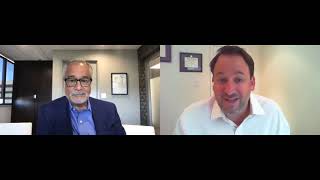
In this interview, Curio CEO Michael Bronfein outlines the company’s multi‑pronged growth strategy for the cannabis sector. He explains how Curio carefully selects premium brands (Wana, Dixie, Caviar) for licensing, ensuring brand alignment and quality. Bronfein then details the creation of a national franchise model for Curio’s wellness centers, paired with a $30 million Women‑Minority‑Veteran‑Owned (WMBE) fund that provides equity‑plus‑loan financing to qualified franchisees, enabling them to own a majority stake and build generational wealth. He describes the recent $26 million mortgage secured from Severn Bank (with CFG Bank participation), highlighting the challenges and opportunities of traditional banking for cannabis businesses and the importance of audited financials and strong internal controls. Bronfein discusses Curio’s federal lobbying agenda: normalizing commercial and investment banking, repealing or reforming 280E, and moving cannabis toward a nutraceutical regulatory pathway. He outlines the states where franchise filings are complete (Maryland, Virginia, New Jersey, Pennsylvania, Ohio, Michigan, Missouri, Illinois, Massachusetts) and the focus on the eastern U.S. The conversation also touches on Bronfein’s personal background in pharmacy, banking, and turnaround leadership, underscoring his credibility in navigating regulatory, financial, and operational hurdles. The interview concludes with contact information for prospective franchisees and a preview of upcoming webinars.
Chapters
we can provide to our customers, frankly, the more important we are to them. And our sales and marketing team can help them with merchandising all these different brands in their stores, and we can work with promotions with different brands in their stores. So it gives them more agility and more opportunities to make margin, and if we can help them make more margin, guess what? We're more important to them, and they buy us. But we're very, very cautious about what brands we partner with. I'm very proud of the 3 brands. Wana speaks for itself, probably the best chew in the, in the country in terms of market share and very, very well known, really high quality product. Dixie, one of the early pioneers, really great products too. And Caviar is a specialty product, um, um, and it's got huge acceptance in Maryland. So they're all brands that we view as consistent with our brand from a quality standpoint. We view ourselves as a premier or premium, I should say, products manufacturer. And so one of the first rules is, does your brand meet your brand image? Does the brand you're buying or licensing meet it? Because, you know, you wouldn't sell Hermes in a Kmart, right? It's a mishmash of brands, and you'd confuse consumers and probably not sell very much of it. So we look very closely at making sure that there's a good alliance there. And then, you know, culturally the people have to fit with you and because you're gonna get married, it really is a marriage when you start doing it. And we're very fortunate that in our case, we've got 3 very good partners, but we're always looking for additional high-quality brands. And in addition now, because we have seen the benefits of licensing other people's brands, we're beginning the process of licensing our brands to other folks, particularly in markets that we, know that we're not going to any, any time soon, primarily west of the Mississippi. So hopefully we'll be able to announce in relatively short period of time that some of our medicinal products are going to be available in other states manufactured by licensing partners.
Well, that's great. So is that the same, a little different from the investment fund and the franchise model that you put out? There's been some marketing and press on in the past couple of months. Is that—
Yeah, that's very different. That's very different. I mean, the licensing business is just leveraging technology we have and are making and using and taking it to new markets. One of the things that struck me when I first got into this industry was the amount of people that were retailers that had no retailing background. There's a large number of dispensary owners that really are passionate about this industry and about the value of this plant, but they weren't a retailer. They were all different kinds of things. And when you look at the stratification of the market, almost as in every market, in Maryland here, 20% of the dispensaries are enjoying about 70 to 80% of the revenues. So there's a lot of people out there that I think could benefit from a very prescribed system of retailing that allows them to have to not worry about all of the revenue generation and marketing and accounting and inventory purchasing, so forth. What they can focus on is being the best, you know, merchant to their customers and really create a really strong personal relationship with their customers so they build their volumes through that customer engagement. That's what franchises really do. So, about 2 years ago, we began exploring creating a franchise of our wellness center which has been very successful in Timonium, Maryland and is one of the top revenue producers in Maryland. Yet, you know, we don't advertise, we don't really do promotions of any great amount. We do some, but our strategy is really about the customer experience. It's a very different experience. For example, a pharmacist is heavily engaged in running the location, is our clinical director, does a lot of consulting with patients and so forth. But we think there's a big opportunity to kind of have that IP and that system in many other states. So, we recruited a CEO to run that division about a year ago, and And we went through all of the regulatory approvals and we literally just got them within the last month. So now we're ready to begin selling franchises, which we will launch in August at a big trade show. The other thing that I noted a couple of years ago, or maybe 3 years ago now, was that the industry, for good reason, was very focused on social justice issues, but there really wasn't anything happening. There was a lot of discussion, but there wasn't a lot of action. And people who know me well know that I hate discussion. I love action. And I like solving problems and I like innovating. And I was looking at the issue of diversity and inclusion in our industry. And I said to myself, you know, is there a way we could take this franchise program and use it as a way to really have a meaningful impact on diversity and inclusion? In industry. So, I have a very close friend and business partner named Theo Rogers, and I called Theo up and I said, "Theo, I want to talk to you about this idea." So, we went to lunch together and I laid the plan out and he said, "I love this idea and I'd love to be involved in it with you." And so, he and I began working on this and the outcome is what we call the WMBE Fund. And think of it as kind of a captive finance vehicle You know, when you go to a Ford or GM dealer, they have Ford Motor Credit and they have General Motors Credit, and they help finance your car so that you can more easily get what you want and then use it however you want it. Well, it's the same premise here. So, if you're a qualified franchisee and you're a woman, a minority, or disabled veteran, then there is a pool of capital that we raised, $30 million, that will fund about 50 franchisees, the franchisee will have to be responsible for $40,000 of the amount of the franchise startup. It was about $600,000, and the fund will provide the rest of the capital in the form of both equity and a loan to the franchisee. And the franchisee starts out owning 60%, so they're the majority owner from day one. And as long as they execute against the plan as prescribed, for better or for worse, then they have the opportunity to buy out the other 40%, which is owned by the fund, and as, as early as 3 years from the time they start the store operationally to as much as 7 years. So, there's a 4-year window there for them to get the store operating, and obviously us as the franchisor will be very focused on helping them in terms of learning the business, optimizing their operating performance, and getting them to profitability. But we believe that these retail stores can really create generational wealth for families, a very substantial amount. I mean, you know the volumes that dispensaries are doing today, and it's not unusual for a dispensary to make well over $1 million in operating income. So, you know, when you think about, you know, the other franchise opportunities out there, this is really one of the most profitable around. And we were fortunate to seek some consultants who had very strong and deep franchise experience. And one of them who did a lot of work with us liked it so much that he actually invested personally in the fund. So, to me, that was the best proof that we had a really good idea. So, yeah, you know, we're very excited about it. And we're most excited about the fact that we're actually doing something that can make a difference. You know, it's one thing to talk about things, it's one thing to put things on your website, and those are meaningful in the sense that you're demonstrating your commitment to a cause or an action. But really, you know, kind of taking that next step and doing something that is measurable and actionable in a material and real way, you know, we think that's pretty exciting. So I'm personally extremely proud of this, and our team has done just a great job of developing all aspects of the plan. And I'm, I'm really excited. I mean, I think people are going to have great opportunities and are going to frankly just make a lot of money for themselves and their families. And I think that'll be a great thing. And I think it will— what I'm hoping more than anything else is that our leadership shows others the way. You know, it took us quite a bit of time to figure this all out. It was not very simple. And the fund manager is a very bright guy named Jarrell Registry, who's kind of a math whiz. And, you know, we— he spent a lot of time modeling this thing out and figuring out all the different aspects and working with me and some other folks, Theo Rogers, as I said. So, we're very comfortable that we know we have a winning formula. Now, we want to take it to market. And once we do, We really hope that others, you know, who talk about wanting to really create access for women and minorities in this industry will follow our lead, raise capital in a manner that will enable it, and will come up with their version of what we're doing.
It's a really innovative approach here with the marriage of the franchise and the fund together. Because what that sort of allows, you know, to the first part of your statement there about the challenges of retail. Oftentimes people think retail, you know, is just as simple as having a good product and then flinging open the doors. And, you know, getting the right product on the shelf and all the other challenges that come along with it is something that they perhaps realize after the fact or, you know, underestimate. And it can lead to, you know, some of the sort of, you know, distributions that we see, as you were mentioning, the 80/20 distribution in Maryland, a small portion of the retailers holding the lion's share of the market. But then marrying that knowledge base that you can share with new retailers with the financing, which is oftentimes the biggest barrier to entry for new entrants for the program. Putting that together can be, I think it's a fantastic and innovative approach here. So are there particular states where you're hoping to roll that out or focusing on the first entrance there for that program?
Yes, of course Maryland, Virginia, New Jersey, Pennsylvania, Ohio, Michigan, Missouri, Illinois, Massachusetts. I think those are the states we've all filed all of the necessary documents in to be able to franchise. There may be one or two more, but it's a pretty significant— but other than Missouri, everything's east of the Mississippi. We're kind of focused on the eastern half of the country versus the western for this project, at least initially.
So, well, so that access to capital part is— there's an interesting tie-in here between another financing transaction that you've done recently on behalf of Curio. Obviously the reason that access to capital is such a problem is that most, if not all of these cannabis businesses, with very few exceptions, have access to traditional sources of financing. You know, with very, very few exceptions cannot walk into a bank and, you know, get a loan like you would for any other kind of business. And meanwhile, Curio recently put out a press release that you've put together a $26 million mortgage from a traditional source of financing, from Severn Bank here in Maryland. And obviously that's something that's been a long time in the making. And took a lot of effort, I'm sure, from Severin's part, but also from your part. And you sort of— can you just walk us through that, you know, what the lessons you've learned from that process? Do you think that traditional, you know, banks, credit unions are going to be more open to this you know, to financing the cannabis industry in the future? Are, you know, what are some of the challenges that continue to exist? How come a mortgage loan versus another type of financing? You know, just can you walk through some of the, some of the lessons?
Sure. So you may remember when I first started speaking, I indicated that I had been a commercial banker for about a decade. So I know a little bit about banking, but But like everything else, that was a long time ago and things change a lot. So, in 2015, when I was looking at this business, I went and read the regs to see, you know, I'd read some things that banks could participate, but it seemed fairly onerous and I couldn't get, you know, consistent answers. So, I read the regs and what I realized was banks could absolutely participate. But there's an administrative burden that's very significant, and the consequences of noncompliance are draconian for the officers of the bank. So it's not surprising that somebody from Bank of America or JP Morgan or some large bank doesn't want to do this. At this point, the industries, even if they had all of it banked, wouldn't move the dial. It's too small. But fortunately, you know, there are entrepreneurial, you know, kind of local bank operators if you will, regional banks and state banks, that because of personal relationships or just, you know, kind of their own desire to grow their business are more open to discussion. So, fortunately for me, my son was in law school and the chairman of the bank, of Severn Bank's son was in law school and they met each other and decided that their fathers should meet, which is what happened. And I started talking to the chairman of the bank, Alan Hyatt, and he was very interested in the industry as a kind of an entrepreneurial new market. And then we talked about how they in fact could do it. And to his credit, he had the courage of conviction and said, you know what, we're going to figure this out, and figured out the whole administrative side. And because from day one we were a company focused on becoming a public company, and so our financial statements are all audited, our internal controls are strong, we have the systems to be able to run our business as a public company today, and did back in 2016 when we started, he was, I guess, comfortable that we could in fact be a safe risk. And so, we were the pilot company in Maryland, and once we went a few months and he got comfortable and his team got comfortable, then he went out and started soliciting and, you know, really, I think, pretty much banks the entire industry today. And then another bank CFG Bank, also a bank that does a lot of healthcare lending, decided they wanted to learn about it. And so, they invited me and my CFO to come talk to their board in October of last year, much like I'd done to Alan's board in 2015, and got them comfortable. And so, we're just fortunate to have smart bankers who are a little bit entrepreneurial and were prepared to you know, take on the administrative risk because they felt like the credit risk was a really good one and they weren't really going to worry too much about that. So, we were very fortunate to be in that position. And so, we proposed to them that we do this mortgage under traditional conventional terms, 20-year amortization, construction period interest only, you know, so forth and so on. And both banks said, yeah, we want to do this. And because of its size, Severn led it and CFG participated, but I know they're both very interested in doing more business in the cannabis industry, certainly in Maryland and maybe outside of Maryland, I'm not sure. But again, we try to kind of lead by example and innovate by example. And so hopefully this will inspire other banks and other cannabis companies to talk to their banks about the fact that they can do this. And when you think about it, it has has a dramatic, dramatic effect on returns on capital and cost of capital, which is critically important to a high-growth industry. And so as a CEO, my responsibility to a large extent is return on capital, making sure that when I take money from investors or my own money, it doesn't really matter, that the risk-reward is appropriate and that we're making good decisions about what we're deploying capital against and what that return would look like versus the alternatives. And so, when you can take a building like that and instead of having to finance, you know, with equity, which has a very high return, you know, you can rent money at a very low cost, it's just a game changer for your business model and frankly for the industry. So, we've been working extensively in in Washington for the last 2 years. Wendy Braunfein has been leading this effort. We've really learned a lot about it, but fundamentally we're focused on eliminating the prohibition or discriminatory practices in commercial lending, but more importantly in investment banking and capital markets. You know, because when you talk about access to capital, you still need equity capital, even if you can get bank debt to grow these businesses. There needs to be a combination of that for purposes of risk management. And until we get Washington to catch up to the other states in the United States, we've got this mismatch of regulations, which leads to dysfunction or high costs or both. So we're really focused on normalizing commercial banking and investment banking, but also eliminating the punitive 280E tax code. Because I think that more than anything else, you talk about something that's making it difficult for new entrants, particularly women and minorities to come into this, it's 280E. Because if you can't keep your earnings and reinvest them, you can't get investors. And so, it's much easier for someone like me who's got a 30-year track record of building businesses to go get capital than someone who's perfectly qualified, but needs access to capital. Look, you know, I got an SBA loan in 1980 to open my first drugstore. You can't get an SBA loan today, right? I put up my house as collateral, and that was that, right? So, you know, getting those things normalized at the federal level are enormously important to a lot of the issues of this industry economically, but also to really the social justice issues. And I don't think people give enough credence to that correlation. You know, many years ago, I was the chairman of the board of the Baltimore Symphony Orchestra, and it was having— and I was called in at a time of financial distress to kind of come in and try and turn the organization around. And fortunately, we were able to do that. But I used to say to musicians, look, no margin, no mission. We have a great mission. You know, for our community and society, but we got to be able to fund it. And, you know, and that's really, that's really kind of my view of this whole issue with 280E and banking is it really, it really does impede our mission in this industry quite a bit. And not just the economic side, but the more broader community and inclusion side.
I think that's absolutely right. It goes to the, you know, the sort of structural risk that Washington and, you know, traditional sources of financing see in the industry. You know, that's something that not one business can change. I'm talking about 280E, talking about, you know, federal prohibition, but that a lot of businesses are in Washington trying to get their voice heard. But a lot of cannabis industry investors and businesses have been to Washington, have sort of tried the lobbying game, tried to team up and make change. And it's a slow slog there in Washington. A lot of businesses get frustrated, investors, individuals get frustrated with the lack of progress or what they see as the lack of change despite some of the really compelling arguments, many of which you're making here today. So maybe we can just talk here for a moment about that, about that idea of the worthwhileness of making change on the federal level and what your approach to lobbying has been. Obviously, it sounds like you're really focused on those types of changes that would loosen up credit to allow for more credit and more financing to startups. And it sounds like Wendy is taking that, you know, sort of leading that charge. Do you see progress on 280E over the next year or two? Do you see progress with respect to the loosening of banking regulations or the types of types of changes that might make banks and credit unions and federal financing like SBA and things like that more accessible over the next couple of years? What's your sort of prognosis on that in the next year or two?
I do, I do. I think, I think collectively what you're really talking about is access to capital in all forms. That's heavily influenced by returns on that capital, and 280E has a big influence on returns. So, you know, I've been in the pharmacy business for more years than I'd like to admit, and in 19— I guess, let me think for a second, what was the year? 2005, the Medicare Part D Act was passed, and that had a significant impact on my pharmaceutical business. And so I went from being involved in state lobbying, which which is what, you know, kind of governed our business till then, to federal lobbying. And I learned a lot in that process through a lot of mistakes that I made. And one of the things that I learned, probably that's been more important than anything else, is you have to inhabit the world of the legislature if you want them to listen to you, right? And one of the things that struck me in the end of 2019 was we had paid a bunch of money to a bunch of trade organizations and got the same response and the same kind of rap all the time, and nothing was moving. And because I am also in the pharmaceutical business, distribution business, and I do have to maintain relationships in Washington, when I call some of those relationships and ask them, you know, give me kind of, give me what's going on here, I get a very different response than all the trade association rhetoric. And so that led Wendy and I to having a discussion about, you know, if you're not getting the results you want, you got to do something different. And it was my view that the industry kept doing the same thing expecting to get a different result, and that wasn't going to happen. So we engaged a very well-respected firm called Invariant in Washington in January of 2020. And Wendy and some of their personnel really went on a discovery mission. They want to find out what is really happening in the halls of Congress around this issue of cannabis. Were people serious about it? Were they not? Were they giving us lip service? Who was for us? Who was against us? And we learned some interesting things, but fundamentally what we learned is that the probability of a big bang bill is pretty close to zero. It's just not gonna happen. Things don't happen that way in Washington, except, you know, once every couple of decades. You know, yes, you get a Medicare bill or you get a, you know, our Obamacare bill. Well, that, you know, it was 1964 the last time there was a bill of that consequence and it got passed in the Congress. So, you know, it gives you a sense of the timing. So incrementalism is really what works in Washington. The other thing we learned is that the Democrats had one view of the incremental approach and the Republicans had a different view of the incremental approach. And we also found that many, many elected officials did not conflate, like conflating social issues with economic issues. They wanted them dealt with separately. And as you know, our industry has really put them all together to try and make one, you know, defend the other and the other defend the other so that, you know, it's kind of two halves of a whole. But the Congress don't see it that way. And so we went about really doing a lot of diligence with Republicans and Democrats as to what they could accept and what they were interested in doing. And that led to the, um, the, uh, National Medical Cannabis Coalition, uh, uh, not a trade organization, but really just a coalition of, of like-minded people who are now working in Washington with 3 very specific goals. One, normalize banking, both commercial and investment banking, and open up access to capital markets vis-à-vis the stock exchanges. Two, eliminate 280(e). And three, begin a systematic approach through discussion and collaboration from being scheduled to being descheduled and having a descheduled product be covered under the nutraceutical and dietary supplement regime of the FDA. You don't want to— we don't want to find ourselves as a prescription drug. We want to be viewed as a you know, kind of a consumer product that can be regulated for safety but really is left to the manufacturer to define. And that's what the Food, Drug, Cosmetic does. So there's only 3 goals there, and we're making really great progress in that regard. And in fact, for example, Delegate Congressman Joyce, a Republican of Ohio, recently published a bill And I'm proud to say that he called upon our group to ask for very specific language and ideas that would address some of the things that we're interested in. And so we're trying very hard to, to kind of take all the emotion out of this and just get to the facts and figure out how can we be a voice of pragmatism and one that resonates with the legislators where they live. And so far So good. We had a conversation with Senator Wyden maybe about 6 weeks ago, and we asked him on that call what he thought about, you know, 280E and banking. And his answer directly was, I believe by next year's 420, both of those will be resolved. So I'm hopeful that that wasn't just, you know, optimistic speculation, but rather was based on the work he's doing. And, you know, he and Senator Schumer, Senator Booker are going to publish a bill probably in September, we're hearing now, that's supposed to be this comprehensive bill. But I think realistically, they all know that that's a messaging bill, one to kind of frame an umbrella issue from all its dimensions. And then Congress can get to work at kind of chopping away at that, little pieces at a time. I don't believe there's any probability that a bill of the War Act or, you know, whatever Schumer's going to put out, they're going to get 10 Republicans for. So it's not going to happen. But you could get 10 Republicans who say, yeah, I want my constituents to be able to cash their paychecks, get their mortgages, you know, have access to capital in a fair way, just like every other legal business in my state. And why should they have these punitive taxes which rob them of their ability to grow their businesses or attract capital? I can live with that. So I think that the pragmatism of the approach is going to certainly have influence. And we'll see. We're going to keep chopping away. And I'm expecting Wendy to have that broad and fine persistence I talked about earlier.
Well, I think that's certainly a force for good. These issues, I think, can— the issues that you are focused on and highlighting, could really make a big difference in expanding access to the industry and just contributing to the overall health and growth of the industry, which certainly has seen a lot of growth over the last decade, but there's a lot more to go. We know that there's a lot of patients out there in states that don't have very well-functioning medical programs that don't have access that should. There's certainly a lot of adults out there who would be interested in taking advantage of the sort of wellness aspects of cannabis in a recreational adult use regime who currently don't. And, you know, we need healthy businesses which rely on good access to credit in order to grow and in order to bring good quality products to market. Obviously, Curio has been a, um, a, a great example of that, uh, and I think a lot of people here on watching this webinar have, uh, can, can learn from some of those lessons. So Michael, this has been, this has been outstanding. It's, it's, uh, 5 minutes to the hour, so we've got to wrap up. Um, but before we go, um, where can people find you? Um, can we direct them to your website, social media? How can we follow up with you to talk more about some of these things? For example, we've got some people here who are already interested on the webinar and chatting with me about the franchise model in some of those states that you had mentioned. So where do they find out more about that?
Well, they can go to our website to find out more about just the franchise, and the franchise itself in mid-August will launch its own website because among other things, it will have an online application for the people that would like to see if they qualify for the WNBE fund. So that'll be launched in concert with our full national launch of the franchise come the end of August. My email address, I believe, is on the website, but it's an easy one. It's michael.bronfine@curiawellness.com. I'm one of those people that actually answers all my emails. So sometimes not as quickly as I'd like, but I try to be, be courteous and respond to everyone. And, and so, you know, certainly can reach out to me there, um, uh, or just call the number here at the office and someone will find me. Uh, so I'm pretty accessible.
Wonderful, wonderful, wonderful. Well, uh, just as a reminder, uh, this is an ongoing webinar series, so we're going to be back next month with another great interview and conversation for, for all of you out there who are interested in issues related to cannabis businesses and actionable information for investors and owners. So Michael, thank you again so much for joining us today. Best of luck with the continued efforts that you're making over there. At Curio, and we'll be rooting you on over here.
Well, we really appreciate it, Jason. We appreciate the opportunity to chat with you today and, and your questions. And look, we think this is a very young, very nascent industry, and so we hope to be part of its growth, its evolution, its maturation, and frankly, its professionalism, because it's changing in a positive way, and we love being part of that. So we're really, really excited about the future and look forward to being part of it.
Thanks a lot, Michael. Have a wonderful day. Have a wonderful weekend. See you next month, everybody.
Take care. Bye-bye.
More from Jessie

Non-Competes and Confidentiality Agreements & What to Consider When Closing a Merger or Acquisition





Strategies to Minimize Duty Liability in the U.S. Heightened Tariffs Environment


Coffee Talk: Navigating Leave Laws: Ensuring Compliance and Managing Employee Absences Effectively



New Year, New Laws: Significant Employment Law Developments in 2024 and What to Expect in 2025