What Makes Holistic Industries a Great Place to Work, Shop, and Invest
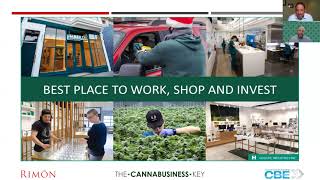
In a recorded RingCentral webinar, attorney Jason Klein interviews Josh Gunderson, CEO of Holistic Industries, about the company’s evolution from a family‑run wine‑import and retail business in Washington, D.C. to a vertically integrated, multi‑state cannabis MSO. Gunderson recounts his early career in wine importing, the launch of a D.C. cannabis license, and the pivotal moment when he helped a family dealing with severe pediatric epilepsy by creating a low‑dose CBD product, which sparked a patient‑focused R&D effort. He describes how advocacy work with parent groups informed state‑by‑state expansion into Maryland, Michigan, California, Massachusetts, West Virginia and others, leveraging a team of seasoned finance, marketing and science leaders. A core theme is Holistic’s emphasis on culture: hiring smarter people, internal promotion (165 of 180 senior openings filled internally), transparency, and a “best place to work, shop, and invest” mantra. The conversation moves to brand strategy—Liberty retail stores, the CPG‑style Strain line, micro‑dose Dewdrops gummies, and the celebrity‑licensed Garcia Hand‑Picked flower—highlighting the challenge of maintaining product consistency across diverse markets. Finally, Gunderson explains the Liberty Wallet, a cash‑less loyalty and payment platform designed to streamline ordering, curbside pickup, and delivery while navigating the fragmented cannabis payments landscape. The interview ends with a preview of the next webinar featuring Air Wellness.
Chapters
Awesome. Ready to roll.
Gonna hit broadcast. Hello and welcome. Let me get this right. Welcome to the Canon Business Key. My name is Jason Klein. I am your host and principal attorney with Ramon Law in the Cannabis Business Group. Uh, I have a fantastic guest today, Josh Gunderson with Holistic Industries. Uh, we're going to be talking about the growth of Holistic, uh, Josh's background, his experiences, uh, and all the lessons he's learned, uh, over the last 10 years in growing Holistic to what it is today. Um, as per usual, We are using this RingCentral platform. We are going to be recording the webinar. We're going to be sharing it with everybody afterwards, and we're going to be posting it up to social media. So thank you very much for joining live if you're watching this live. If you're watching this later, thank you for tuning in. If you are live, you have the opportunity to ask some questions, so please use that chat box up on your RingCentral toolbar or the Q&A. Actually, I prefer the Q&A if you can, if you can do it that way, so it's all in one place. But if you'd like to just chat with one of us or with Josh or send a message through, feel free to do that as well. We are going to be talking about all sorts of things related to Holistics. So if you have questions for Josh about, you know, the company, about his background, about his thoughts on the industry or some of his experiences, push those through and we'll be sure to lob those over to Josh during the next hour. I want to, as usual, just sort of get through a little bit of explanation about who we are. If you haven't tuned into one of these before, Ramon Law is an international law firm. We have a fantastic group of attorneys over here that do all sorts of great legal work, including cannabis work. We have a ton of experience in the United States and internationally with cannabis work. I personally do a lot of work on the East Coast and tightly regulated markets with direct cannabis businesses as well as hemp businesses. And we have a whole range of experience throughout our offices with this industry and with, you know, frankly, a lot of other industries. Growth industries, young industries. So if you're in a situation where you're looking for some legal assistance and, and want to talk to somebody, feel free to reach out. Be happy to talk to you anytime and see if we may be able to help you or your business. Just a little bit more marketing collateral showing you where we are. So we're growing quickly. In fact, let's see, I think Frankfurt may be online. The Frankfurt office might be online as of this event. So, and there'll be more stars at the next event. So talking about the next event, actually, we're going to be doing that next one. That's August 20th, Friday, in, in, in about 4 weeks from now, noon to 1 PM as usual. Our guest is going to be Jonathan Sandelman with Air Wellness, a very quickly growing, expanding, vertically integrated MSO. Jonathan's got, you know, about 30 years of of history on Wall Street with Bank of America, sort of veteran banking and finance guy. So, you know, that's going to be a great conversation. We're going to be talking about SPACs, we're going to be talking about, you know, investment and Wall Street's approach to this industry. So sign up. What you do is you go to the Cannabis Business Executive website, If you aren't already signed up for their newsletters or alerts, you know, just head over there. You can sign up. You can get yourself registered for the next event. You can get all the information about it. And then join in. Share with a friend. And, you know, we'll see you at the next one. So I think that's it. That's all of the little homework we want to get to before our talk. And so now we've got Josh Genderson. CEO of Holistic Wellness. And you know, usually— I'm sorry, Holistic Industries. Usually I have a formal bio to read, but, uh, Josh, uh, I've known you for 10 years. Uh, your, your bio is simply as follows. Josh has his start in the cannabis industry in the same place that I do, uh, which is Washington, DC. Uh, I know a market that's near and dear to both of our hearts. Since then, Josh has taken Holistic and established this brand with licenses in a number of different states: Maryland, Michigan, California, Massachusetts. The list goes on and on. There's 6, 7, 8 different states at this point and continuing to grow, West Virginia being the most recent one. So, you know, Josh has has taken a single license from 10 years ago and parlayed it into one of the most exciting, dynamic companies in this space. So that's all the introduction you need. Josh, welcome. Thank you very much for joining today. And let's jump right into it.
Awesome.
I'm happy to be here.
It's good to talk to you always, Jason. I'm excited to watch next week's or next session. Jonathan's a wonderful, interesting person. If I would have known, I would have done this interview from the Casablanca offices, but next time.
Yeah, absolutely. Let's go through and take us back to say 2009, 2010, 2011. Obviously this is, you know, just sort of before the DC program really began to get up and running. You know, give, give our audience a bit of background about what you were doing back then and, you know, your family's background and what your connection was or your interest was in the cannabis industry in the first place.
Absolutely. So, you know, I didn't know quite what I wanted to do, you know, in college, and I knew that I loved business and I loved—
I was fascinated by a lot of intricacies within business.
And my family has been in the wine business for about 80 years, almost 80 years. And, you know, I, when thinking about what I was going to do, First decision, don't go into the family business. For all the reasons that somebody wouldn't go into the family business. But I loved wine and I loved, you know, I just love the expression of wine and its place and the joy it brings to people. And really, you know, if I'm being honest, and you know, that's one of the things I'm proud to say, you know, that, that, that is important to me. Um, that, that passion for wine really started with cannabis. Um, you know, I've been a, a major cannabis, uh, enthusiast for a long, long time. And, and, you know, it shared a lot of the things that I loved about wine and vice versa. And, you know, whether it was, it was the, the sense of place, the, the genetics, the entourage effect, but you know, I just, I think I appreciate it in a different way than a lot of people. And so I went to New York, I started importing wines, and you know, there's all these countries that have more vine per square foot than other countries within wine-producing regions. And you know, I was fascinated at the time by the dollar arbitrage. And buy, you know, how you could buy money and, you know, and use the power of the US dollar to your advantage. And so I started to learn about that, and I got my importing license. And, you know, the key piece here, and I'll talk about this probably 10 times today, is I hired a bunch of people smarter than me. And I started bringing in wines, you know, the goal was to have them land on the shelf at $10. So, you know, I landed on Spain, Portugal, and Argentina as the 3 countries that had, you know, the highest quality, the most producers, and the best, you know, dollar ratio. This was pre-euro. So, you know, you go to those countries and they're just so excited, and there's so many wineries, and they want to get their products, you know, in the world and in the US. And so I ended up putting together a book of about, you know, 200+ wines. That was an amazing experience. You know, you learn so much, especially when you bring people in that have breadth and depth of experience. You know, got those wines into every state in the US and got lucky. Liquor business was consolidating around the country, and so ended up exiting there. Came to DC with a lot of confidence. And took over a family business that I had worked in, you know, from the age of 12. And the family business is a retail business on Capitol Hill, as Jason mentioned, you know, longtime Washingtonian. And, you know, I had— I came in hot, you know, with some confidence. And I learned a lot of things being in a family retail business. And, you know, you learn about dedication to community, and you learn about treating people right, and you learn about fierce loyalty to the customer. And there's a lot of other liquor stores or wine shops to go to, right? And you need to really be special, and that means every day working on it. And so I dug in, and in DC there are a lot of anomalies. Being a Washingtonian means dealing with things that people in other states don't really have to deal with. And, you know, that could be a whole separate hour conversation. But one of the anomalies is that it's the one place in the US where you can cross all three tiers of the liquor system. So you can be an importer or producer, you can be a distributor, or you can be a retail, you know, slash restaurant bar. And so this amazing retail business that my family had built you know, had a lot of opportunity for more revenue and revenue streams. And so started importing, started distributing, you know, got the wines all over the country, into all the restaurants and bars in D.C., started e-commerce platform, and, you know, hired a bunch of smart people, again smarter than me, and, you know, really worked on culture. You know, family businesses have a a culture that can be permeated over time. And it was important to me to really create a culture that got people excited and wanted to, you know, wanting to move up and you could really feel it. And there was a buzz going on and we increased revenue quite significantly. And, you know, where I'm talking to you from right now is about 100 yards from the Senate. And so you can't help but be, you know, a little bit tied into what's going on politically. You know, and that means that it's been a crazy couple of years for me. But at the time, you know, once the new revenue streams were really up and running, I started thinking about the cannabis business. You know, and DC having one of the older programs passed by ballot referendum, you know, the other anomaly in DC is called home rule. And for those listening that don't know what that is, it's basically Congress has oversight over DC's budget. And so, you know, any law that's passed in DC needs to be approved by Congress. And there was a blanket no for many, many years. There was a rider that said no to anything cannabis-related. And so there was this dormant, you know, program sitting in DC and, and, um, you could start to read the tea leaves in, in 2008, 2009, And it really looked like the House was gonna flip blue during Obama's midterm. And that was a perfect opportunity to get this back and running and revamped a little bit and hopefully approved. And so, you know, we worked, a lot of people worked on getting this done. It did, you know, the city passed it, Congress approved it, and there was an RFA and they, you know, there was an application process. I think there were about 500 applicants. For 7 licenses to grow and process and 6 to retail. So, you know, we put together 2 companies and worked really hard, found some incredible app writers that are still with us today, and told a story of a regulated business and a passion for the plant and for the patient. And, you know, with a lot of hard work and a little bit of luck, we ended up getting 2 of the 7 grow processing licenses. And so it was very exciting. You know, this was something I had always dreamed of. And so like everything else, I sort of hit the ground running fast. You know, I went to California and Colorado and Canada and Holland and really tried to learn best practices and, you know, hired some great people, hired some not so great people, but, you know, still to this day, learn so much every day. Got these grows up and running, got these processing labs up and running, kitchens, created some brands, and it was a blast. It's a small program right now in D.C., poised hopefully for some serious growth soon, but small but mighty. And so, you know, a year and a half in, we were operational, And, and, you know, we were cash flowing and we funded the whole project. It was a small little thing and it was fun. And I just said to myself, you know, this is a great side business. And, you know, little did I know, about 2 weeks later I'd be introduced to a woman, a wonderful woman. Her name is Lisa Layden, who had a child with, with severe, severe epilepsy. And, you know, he was classified as intractable. His name's Jackson. And, you know, they were suffering and it was a pain that I had never seen or felt so directly. And I didn't really understand the breadth and depth of the situation and, you know, globally how cannabis, you know, could help. But this was right around the time when Sanjay Gupta and, you know, some of the mainstream media started talking about cannabis therapy. Charlotte's Web popped up in Colorado, and you had all these desperate moms, and they started to see that there was a medicine that was working and was not psychoactive. And it was like this aha thing for them. And so in talking to Lisa, I learned that she had coalesced a group of moms that were all flying to Colorado and smuggling back a non-psychoactive medicine at the peril of their careers, many of them, you know, high-ranking government officials and doctors and lawyers, and it was their children. And, you know, I was not a parent at the time. I am now, and you really start to understand that a parent whose child you've helped, you know, becomes your fiercest ally. So for me, it was just a natural thing to start making this product at the expense or risk of losing some margin and revenue. So we started, we brought in a lot of CBD-specific strains. I hired a PhD chemist who's our Chief Science Officer still today. And we started making this medicine and we subsidized it. We've been subsidizing it for many, many, many years. And while I realize now what we did was, we ran the least clinical trial of all time. And we'll talk a little bit about what we've done since. And we've participated in real clinical trials with major universities. This was as rudimentary as rudimentary gets, but it was so patient-facing. And some of these kids went from 60, 70 seizures a day to none. And they were getting quality of life back and they were just coming back to life and their parents You know, you could just see the joy and the emotion. And, you know, I'd walk into a room and they'd start welling up and I'd start welling up. And it was, it was an incredible life-changing moment for me. And it wasn't all altruistic. You know, the reason I tell that story is because that group of moms really had a lot to do with, you know, what I'll call the East Coast into Midwest Cannabis experiment. And so, you know, I started to follow them as they would go to state houses and picket and demand medicine for children. And it was a very potent form of advocacy on both sides of the aisle. And, you know, as I would follow them, I'd start to work with the legislators and, you know, try to help craft bills that made sense. And, you know, I think we did a decent job. But, you know, you'd start to pay attention to the state and, you know, the need in the state for cannabis as medicine. And then we would apply and, you know, having an incredible team, having great app writers, having, you know, an early, early license on the East Coast, you know, were all things that really put us in pole position in a lot of these states. And then the support from these moms was, you know, amazing. And so we would apply and we kept winning. We were winning not just a dispensary, but we were winning 1 of 3 verticals in Maryland or 1 of 4 in Pennsylvania, and 1 of the first in Massachusetts. And it happened really quickly. And I was bringing as many smart people in as I could with breadth and depth of experience in business, Whether it was finance, we have our chief financial officer is a 20-year public market CFO, whether it's marketing, our chief marketing officer was the CEO of the largest pharma ad agency in the world. People that really understood their lane and business on a broad scale, but also coalesced around a passion for for cannabis, for the plant, for the patient, customer. And around that time, I've been running so hard for years, we're into 2015, 2016, 2017, and this term of ours started popping up, MSO. And I sat back and thought about what an MSO was, and these were our competitors. For the most part, and this is a generalized statement, there were financial engineers that saw a widget and a ground floor opportunity. They went to Canada and they bought a shell and did a reverse, and there was a lot of money flowing in and out. They were buying a lot of licenses that we were winning on merit. They were then taking these licenses from each state, these companies, and trying to jam cultures together and add aggregate. And it just was apparent to me that the consumer, the patient, what we were doing was translating a little bit better. There was more passion behind it. And I don't know of very many industries that have companies where their leaders or their founders aren't passionate about the product. And so I thought that was a big differentiator and that was really an aha moment for me. Company. And, you know, at this time we had, you know, 12 stores, something like that, and 4 grows, processing, kitchen, you know, about half a million square feet of production. And, you know, it was just amazing. And so I rolled everything into one parent company and we had 100% participation in that process. And that created what is today Holistic Industries. And the first thing I did after rolling everything up was I went to California. And everybody said, don't go to California, don't go to California. It's LA, we'll eat you alive. It's too mature. The consumer's too educated. But coming from the liquor space and working in retail, I like competition. I think, A, if you're good, you're good. And B, it makes, you know, being in a competitive market really makes you better. And in some of these markets that are more limited and have, you know, stricter rules and guidelines, that sort of really helped us enter California right when adult use was being switched over. And so, you know, we had a little bit of an advantage understanding compliance and and all the legal aspects that you need to understand. So the first company we bought in California was what they call a pre-ICO Prop D micro license. So basically a vertical license that allows you to cultivate, distribute, retail, process, all the things we do in all the other states. And very quickly in about 8 months to a year, we implemented our policies, We started treating the employees really well, which is a core tenet of Holistics. Culture to me is very important. And, you know, to go on a little tangent, I think when you think about labor, you know, and you think about the new paradigm of labor today, and you can't open a newspaper without reading about this. There is a cultural shift when it comes to hourly labor, when it comes to millennials. And, you know, it's really not about $17 or $18 an hour or $19 or $20. It's more about, you know, people feeling a sense of place and pride and being able to learn and grow and transparency. You know, why are my goals my goals? Why are my KPIs my KPIs? And so, you know, we started really early creating this, um, a culture of transparency, you know, a culture of compassion and, and, you know, at the same time, one of being the best place to work, shop, and invest, you know, and that was what I really pushed nonstop and in that order, right? And I think you need to be the best place to work, And you get the best employees and you get the most passionate people that are either cultivating or processing or packaging or working in your retail stores and selling, you know, or working wholesale and selling to third-party retail. And when you have people that are passionate and love what they do, it really does translate to the person they're selling to.
Well, if I could jump in there, Josh, for a minute and You know, yeah, take a, take a drink of water. There's so much here and there's so much to the story, right? And, um, you know, there's, there's so many threads to pull and what you were just talking about that I want to sort of tug on, but, um, with our limited time, I want to, you know, focus it in. I sort of— that last, um, thread that you were talking about, the sort of human capital that you have in the company. Yeah, and the culture, the sort of cohesive cultural, you know, culture in the company to, you know, where everybody's on the same page and where there is an appreciation for that human capital. You know, that is something I would say is maybe not too holistic, but industry-wide something that has been slow to come about because, as you had mentioned, this sort of growth strategy, uh, over the last, uh, you know, 2014, 2015 through 2019, 2020 is a consolidation. There's been big trends in consolidation, uh, with these other MSOs, um, and, you know, buying up and putting pins in the map and getting new licenses and sort of just trying to shove everybody under one banner. But Ballistic's taking a little different approach and obviously valuing that culture and that the human capital as, you know, your most important assets. You know, that's something that's, that's a little different. You don't hear that from everybody these days. Can you just, can you just talk about sort of what process you go through when you are onboarding a new state or a new, you know, location and how you go about sort of doing— I mean, I know we're already off thread from what we were originally planning on talking about, but can you talk about your training process for a moment and just sort of how you, you know, from sitting in Washington, D.C., and from your C-suite, you know, being in their place, how do you bring a cohesive culture across all these different operations in all these different states?
Yeah, no, it's a great question and I'll tie it back to where we were headed, but, you know, I think we had a jump on COVID and remote working, right, because we were all over the place anyway.
And so very quickly we adopted, and we'll talk about technology and how it's, you know, improved a lot of the things we do, but we were very early on using Zoom or different teleconference platforms so you could at least feel like you were in the room with somebody. And then a lot of travel as well. But the way I think that this is most successfully done, being vertical in every market, and I think we're operational in 9 markets currently with 3 coming online. But when you're vertical in a market, you know, it allows for a couple things to happen. Number one, when you're opening up a new store in that market, you know, and we have usually 3 to 6 stores per state that we're in. When you open a new store, you can, you know, you can bring people into one of the other stores and they can really understand what the culture is like. You can bring people to a production facility so they can see cultivation. From whether it's breeding or cultivating or the post-harvest process. You can bring people into the science aspect and the processing aspect so they can learn how we process and not just how to use a machine, but what's really happening and how you separate these magical cannabinoids, if you will, and terpenoids and recombine them. For a retail employee, you know, to be able to see that and spend time learning about that, you know, it really helps to— it helps, you know, relate to the patient and explain to the patient what they're buying, or the customer, um, how it was made. You know, those things are really important. Um, I think maybe the most important is creating bench strength. And so for me, it's always been about creating bench strength, taking people from local to regional to national. And, you know, I think one of— you know, I do a lot of interviews, and one of the most exciting stats for me to talk about is always, you know, last year— I'll butcher the exact number— but we had about 180 higher-level roles open up. And of those, I mean, over 165 were internal promotions. And so, you know, once people start to really see that you can, you know, if you, if you work hard and, you know, love what you do, there's growth and you can create opportunity for yourself. That, that, that can't be underestimated, you know, and you really start to bring the best out of people. You know, like I told you, transparency, cross-departmental transparency and communication and You know, it's hard as you get bigger, but I spend a lot of time making sure that the family business culture that, you know, I started from, you know, permeates into Holistic. And families, you don't always get nothing. It's not always rosy and sunny. And, you know, it requires direct conversation and there's conflict sometimes and working through conflict. And, you know, that's how you create a really healthy ecosystem.
With your employees.
So we've really spent an outsized amount of time focusing on that. And I think, you know, I think that's been a very, very crucial part to our success and also to retaining, you know, the vast majority of our people.
Hey, Josh, I want to get to some of these brands. That you've been rolling out because Holistic is known, you know, obviously sort of through the Liberty brand in many different states, but with your vertical licensing, you've been able to, you know, bring a lot of different brands to the market, and that's not an easy thing to do, right? You know, sort of developing, testing, and rolling these brands out is a is a huge challenge. There's a lot of different brands, a lot of different competition, and a lot of different markets. You know, the consumer in California is very different from a consumer in West Virginia or Massachusetts or any other place. And the program and the way, you know, that you're able to do, to, you know, put the sort of products together to brand the products and label the products differ in each place. And obviously there's no, you know, none of this interstate trading around. So, you know, when you want to roll out one brand in all your places, that's not one rollout. That's, as you said, 9 different rollouts at this point for you. So can we, you know, and I want to also talk specifically about this Garcia brand and the idea of celebrity branding. You know, it's something that's relatively new to the industry or sort of becoming more and more popular, and I'd like to hear your thoughts about how you go about courting, identifying, you know, a celebrity brand to sort of bring together and how you build that relationship and, you know, some of the lessons that you may have learned sort of going through rolling this Garcia Handpicked out.
Sure.
You know, when it comes to brands, you know, you nailed it on the head right there.
Every state's different, every market's different. And so you need, you know, for— so when I think of branding and I think of my background, I think of the wine business, or CPG business. And, you know, when I think of CPG, like what is CPG? It's consistency, right? It's, you know, you buy a Dr Pepper, you know, you open it, it sounds the same every time, it looks the same every time, it tastes the same every time. You know, if you crack one open and it's clear one day and, you know, and sour, you know, I'm not gonna run back and buy Dr Pepper. Right, so consistency is really important. And when you're cultivating in a lot of different states, you know, with different microenvironments and climates, you know, you really need to pay a lot of attention to make sure that the consistency's there.
You know, and so the goal was to A, have consistency in products, and then B, have a product for everybody, you know?
You know, some of the things that are up on the screen now, as you mentioned, Jason, Liberty is our retail brand. And so across the country, when you see a Liberty store, you know it's a Liberty store. They're all custom and really fit the community, but they, you know, they look and feel like a Liberty store. Whether you're in Philly, you know, and it's an old Wawa that we converted, You know, or you're in Somerville, Boston, you know, it's an old, it's an old drugstore that we converted, or you're in San Francisco, you know, in Lower Pac Heights, and it's an old church that we converted. We give it its, its, you know, the local flavor, but you know, it's a Liberty Store. And I think, you know, again, consistency and making sure that, that it's the best experience every time we can dive into the retail experience later. So when thinking about how to cater to everybody, there's a lot of different market segments.
And I would say, and I think many people probably talk about this on your podcast, there are about 80% of the customer base right now is about 20% of the population, right? And they're generally looking for higher potency, strain-specific things. You know, flower is still really, really, really prevalent. And so we launched Strain, which, you know, it's kind of like the plain white tea of cannabis brands. And, you know, strain-specific, there's flower line, there's concentrate line, you know, there's a vape line. And we've seen incredible success with Strain and across the country. It's just an easy, cool brand, good price point. You know, I talked about my Chief Marketing Officer, Kyle Barish. You know, Kyle came from, you know, when he joined Holistic, he was the, prior to that, he was the CEO of the largest pharma ad agency in the world. And very briefly, you know, outside of a million other things that blew me away, Kyle became, you know, well known in the space, in the advertising space, when he was an ad executive and Pfizer was a client and they came to him with Viagra. And they said, we want you to, you know, run point on this project and it's a pill for impotence. And, you know, there was a major stigma attached to impotence and, you know, nobody wanted to go and No one wanted to talk to their doctor and tell them they were impotent. No one wanted to tell a friend about it. You know, it was taboo. It was stigmatized, just like cannabis in many ways was. And so, you know, listening to that story and how they, you know, came up with the word ED, you know, and they brought in Bob Dole and, you know, people that were relatable to different, you know, market segments. It just amazed me how you can break down barriers, you know, with the right messaging. And so, when he, you know, $36 billion later or something like that, Viagra is very viable now, you know? And so, that was very intriguing to me. And Kyle came and created an amazing world-class marketing department. And Dewdrops was one of the first brands we rolled out with Kyle and Dewdrops are, microdose gummies, you know, and all different, you know, cannabinoid breakdowns and flavors. But at the end of the day, they're 2.5 milligrams a gummy. And, you know, the world's worst experience is taking a little bite of a, you know, a gummy and trying to put it back in the wrapper and back in your pocket and, you know, not knowing if it's going to hit you too hard. But these you can You can take one, you know, and you can take another, you can take another, you know, it's really, it's up to you. And we really started to talk about it's wild to be mild, you know, and take a walk on the mild side. And, you know, there's a lot of people I know, I'm sure you know, many people listening know that don't want to be, um, you know, incredibly intoxicated, right. And feel some of the psychoactivity that a lot of THC can make you feel. And want to take the edge off, whether it's anxiety, whether it's just a rough day, whether they're not sleeping well. And so we've seen an incredible, incredible rise in Dewdrop's popularity from launching. And I don't have a— my mom doesn't have a single friend that's not taking a Dewdrop every day and cutting out other things that were working. And so it's pretty amazing to watch that. CanaCeutic, I'll talk about—
If I could, yeah, if I could just jump in real quick on the, you know, as an edible in general, right? I mean, edibles have plenty of their own challenges, right? Because you gotta get the dosing right, but you gotta get the taste right, and you gotta get the branding right. And edibles are growing for a reason, because the industry as a whole is getting better. At those 3 things, at creating products that people want to, want, want, you know, are, you know, are excited to ingest, putting things together that people, you know, enjoy ingesting, meaning like it tastes good, it doesn't have a bad, you know, aftertaste or something like that, and something that they can trust the dosing on, right? You know, which is it is what it says on the side of the package. On the wrapper. Those 3 things are really tough to do, but I feel like we're just starting to step into sort of dialing those things in right with respect to edibles. Do you have a lead chef and do you share these recipes? Is this all consistent across, you know, all Dewdrops and all operations across your different processors in different states?
Yeah, absolutely. So, you know, Dewdrops are gummies and chocolates in the shape of a dewdrop, different flavors and everything. Our chief science officer, before he joined Holistic, was a chocolatier. He's an Ivy League PhD in plant chemistry and plant extraction, but he happened to be a chocolatier, and his passion was making chocolate. And so that didn't hurt.
You know, we knew how to dial in, how to dial in these products.
Processes. You know, you talk about sort of things being kismet, you know, his background more specifically was in mass spectrometry and extracting terpenes from hops. And so, you know, it couldn't have been more perfect, you know, for an edibles program. And so we now have a head chef, we have a head of edibles R&D, you know, who's constantly experimenting. And we're, you know, we rolled out live resin gummies and, and we're working on solventless and fast-acting. We rolled out, and so, um, constantly just getting better and better. As you mentioned, that segment's growing very quickly.
Um, and, and then in the—
on the packaging, and this goes across every brand, um, we go to the highest common denominator when it comes to compliance.
And so whether that's Pennsylvania, where you're not allowed to see the flower. You can see like Garcia flower is in a jar in a box. Strain products, opaque, nothing. So that's made life a lot easier and made it feel almost like a national program. There are variances in the way things are tested and things like that.
You don't have 9 different 9 different ways to package each product in each state. And so you have a consistency in there. If I could just talk about that Garcia brand for a second, and I'm sorry to move you along so quickly. We've got about 15 minutes left, and I know there's one more slide we wanna get to talking about the Liberty Wallet too. But when we're talking about that Garcia brand, which is a flower brand, if I've got it right. Ironically, these edibles, the vapes, the concentrates, all those things, those go through processing and it's much easier to bring a consistency to it. The same plant in, you take one cutting of a mother in a facility, in one cultivation facility, two different cuttings and you put them in the ground. You could and you probably will end up with slightly different results, even if they're under the same lights and they're all under the same facility and everything else is identical. Growing flower that has the consistency of a cigarette, quite frankly, right? Like tobacco. And making it exactly the same every time or the consumer experience to be the same every time, the taste, the experience. That's even a bigger challenge in my estimation, rolling out a consistent flower brand.
Yeah, I don't think there's a single cannabis entrepreneur or executive or operator that will tell you anything else but cultivation is the hardest part. And for all the reasons you said, you know, and it's agriculture Um, and so the goal with Garcia, you know, you asked about celebrity brands before, um, I never wanted to license anything. You know, we, we have this great marketing department, um, we've always been able to come up with great brands, get them to market fairly quickly, and, and get, you know, a lot of, uh, a lot of, uh, consumer loyalty. Um, so, so, you know, I, I, and I didn't love the idea of a celebrity brand for a number of reasons. I think that some of the early ones weren't rolled out properly, which really hurt them mostly because they were bought by— the rights were bought by a private equity group of some sort. And then that group had to go find disparate operators in the states they wanted to launch in. So right off the bat, I think if it's an MSO like us that has has operations all over the country, and as close to you can get as consistency when it comes to cultivation across the country, it gives you the ability to have it not be kitschy, right?
To be super high quality. And as a fan of the Grateful Deads, and I'm sure there's many listening, because there are just so many, right? And whether you're in your 70s or, you know, working in Wall Street or in Silicon Valley, or you're, you know, in your 20s and you're a mechanic, you know, it has such breadth and depth within the fan base and the most loyal, devoted, diehard fans. And Jerry Garcia's estate is very picky about who, you know, they don't go around licensing things, right? They're very picky about the likeness of their dad. So, you know, they had been looking for a partner for years and years and years. And, you know, when I met with the management company, it was about something completely different. It was about festival consumption, you know, and after talking for a while, they asked me, would you ever be interested in licensing a West Coast, like a California brand? And I said at the time, you know, no, the only thing I'd be interested in licensing is this one brand, you know, and you guys happen to manage the estate. And so we started chatting and within, you know, 3 months we had a deal signed, we had a concept, within a year we had the product rolled out and launched. So the Garcia brand is flower, you know, it's jarred flower, it's pre-rolls, and then there's an edible line. Component. So Jerry Picks, you can see the, uh, the tin on the bottom. Um, so we make, uh, we make 5mg gummies that are, um, used a mold with Jerry's exact guitar pick. And, um, and you know, there's, there's live resin gummies and there's facts, it's fast acting. Um, but, but the Jerry's Picks have been incredibly popular. On the flower side, you know, we rolled out Garcia hand-picked in California where you have the most educated consumer, you know, the most competitive landscape, you know, when it comes to quality and price. And so all the amazing things you get when you get a brand like Jerry Garcia, you know, and that loyalty, you know, that's all the best part. On the other side, you get a very particular fan base who doesn't want something kitschy, or, you know, they don't want to see the name and image stepped on. So quality was the most important part for the family and for us. So we, you know, we picked genetics basically— there's a school of thought that through Grateful Dead parking lot scene, you know, through the '80s and '90s, people, Americans, learned about name brand cannabis and it made its way from, you know, Northern California across the country. And so the idea of these sort of old school strains and their lineages was really important to us and the family. And so when you do find Garcia flower, you know, and it's top quality, you know, we make, it's always you know, our best of the best of the best, it always is, you know, of the lineage of these old school strains that were on DeadLot. And, you know, we— because you can't have the exact same experience every time with every female of every plant, we have a sativa, an indica, and a hybrid, and they'll pivot, right? And so You know, we'll have 6 or 7, you know, coming down the pike at all times, and we'll pivot to the 3 that are the best, that fit the brand the best. So, you know, you'll see a little variation from time to time, but you won't see variation in quality. And it's been such a well-received brand and such a success on that front, and people are going crazy for it. So it's been an amazing adventure.
It makes a lot of sense.
Yeah.
Yeah, that sounds great. Yeah, and I think it's a great point. There's a lot of pressure when you're bringing in a brand like that, like Garcia. Pressure meaning it's a known commodity to a lot of people already. You're not starting it from scratch, and there's a lot of respect that you need to show, and, you know, especially with the fan base, widespread recognition. Like, like Jerry has. If we could, well, here's a picture of one of your newest operations right down in Van Nuys so everybody can see a bit of the branding that you would come to expect in a Liberty store. But in our last 5-6 minutes here, one of the most exciting new developments over at Holistic is this Liberty Wallet. And, you know, this is a, this is a payment solution, obviously. Everybody here understands that payments, you know, sort of consumer-side payments at the register is a very challenging thing in this industry. If you could just talk very briefly about what Liberty Wallet is, what it solves, and if you could just address, you know, where this— where you see this payment solutions thing going. Are we gonna have, you know, Visa or MasterCard or American Express step back into the space and sort of normalize operations on payments? Or do you think, you know, we're going to continue to have cash and, you know, alternative payments only for the foreseeable future?
Well, you know, I think until there's some form of federal legislation, you know, and that would be a whole other hour, I think, I think until then, you know, you probably won't see MasterCard or Visa or Amex, you know, running to this space. So, you know, the retail experience is the most important piece to me, you know, outside of quality and consistency. And, you know, there's a lot of dispensaries and, you know, at one time on the East Coast, you know, if you opened up a store in Pennsylvania and Maryland or Massachusetts, or in DC, or really anywhere, you really didn't have that kind of competition. You had a lot of newer operators that didn't have to learn what they were doing. And you had a lot of operators that had trouble funding their build-outs and things like that. And so, it was a great time for a business. But, you know, But as the years have gone on, more and more stores have opened up and, you know, it's starting to feel more and more like more mature markets out West and in Colorado, things like that. So you need a differentiated experience, you know, and there are a lot of great dispensaries and, you know, just like in our wine shop, there are a lot of great wine shops, but there are differentiators, you know, and I think one of them is this over-the-top customer-employee relationship. And whether you're a wellness guide or a budtender, as people call it, or manager, or liberty lead, having relationships with your patients or your customers and making them feel really comfortable and having an assortment that is unrivaled and having, being really sharp on pricing, you know, these things are all super important. And you couple that with this relationship piece and, you know, somebody you know and trust is recommending products to you, you know, you're a lot more likely to buy them. You know, you need to have fulfillment's very important, right? Nobody wants to wait an hour. And so, you know, I think COVID did, again, it did do a lot of things to accelerate the industry. There are a lot of arbitrary rules that didn't allow you to have curbside pickup in some states or delivery or online ordering. And then the payment piece, you have to go to an ATM or use one in the store and pay a surcharge and you had to have cash and the stores have to have cash. And it's not the safest way for the retailer. And it's sort of, there's an extra pain, extra step for the consumer. So, you know, one silver lining with COVID is that a lot of these emergency regs were put in place that allowed you to do the things I spoke about, you know, and we were ready, you know, and so curbside became about 70% of our revenue in retail, delivery, you know, another 10%, and, you know, people love the experience and so it's, sort of stabilized a little bit, but we have a ton of people that now can just get curbside or get delivery, order online. And so, you know, we wanted to— we're always trying to innovate and be the best, and we have an amazing, amazing tech department. And our CTO comes from banking, you know, and he was in tech banking for a long, long, long time. And so we were trying to think of the most streamlined, efficient way for a customer to order and to learn about our products and to pick up and pay and, you know, just like we think about the in-store experience. So, you know, we basically created, you know, this new technology, you know, to continue this trend of being the best place to shop. You know, it's really safe and secure for customers. I would say it's kind of like Venmo and a Starbucks app, rewards app mixed together. So loyalty programs, it's all about getting customers, right? When people talk about we're creating a loyalty program so customers become loyal to us, we really built Liberty Wallet to demonstrate our loyalty to customers. What does that mean? That means when you go on, whether you're on iPhone or an Android, you go into the App Store, you can download Liberty Wallet. It's the totally cashless payment platform. Like Venmo, you can really budget and monitor what you're spending. I think that's an important piece. And, you know, it's a lot safer, it's a lot more secure, you cut out the cash part. And then, you know, every time you buy, even when you just sign up and put money in the first time, you get free Liberty Bucks. So, you know, we are really, you know, trying to show our loyalty to the consumer. And, you know, we rolled it out a couple weeks ago. And again, you can get on the Apple Store or Google Play Store. And the transaction rate and the switchover rate has been mind-blowing to us. And, you know, we've really created this first of its kind, best-in-class loyalty program that, you know, that addresses 4 or 5, you know, concerns that weren't available before. So you get on the app, you put some money in, you get money back every time. You, you know, you can order for, for quick pickup, for delivery, for in-store pickup. And so these are all things that, you know, just, and it's streamlined and it's functional and it's just been, you know, beyond what I ever imagined it would be. So that's, you know, without spending an hour talking about it, that's what we've created. Liberty Wallet is here. It's fully functional. It's in the markets, all the markets that we operate in. And you can go on.
So go ahead, for you listening, for all you listening right now, go ahead, go to the App Store, go download it, check it out. Whether you're a customer of Liberty or not yet, you will be eventually if you're not already, if you haven't already been in the store, but just go download it, check it out. See what it's all about, see how it works. I think it's a great innovation. I think there's going to be more and more of customer loyalty programs like this and combining it with our sort of modern technology and payment systems. So unfortunately, we're out of time. We've got to wrap this up. We do have way more to talk about, Josh. I'm going to need to have you back, you know, not too long from now. To talk about some more updates and, and, you know, commiserate about, you know, all the goings-on in the industry. Thank you so much. I really appreciate you joining us here today. I think this was a fascinating conversation. I brought it back to this slide here for everybody to see your email address. Go ahead and email Josh, right? It's got a full inbox already, but he will respond to your emails. He is happy to chat with you if you have more questions about Holistic or things he didn't get to, we didn't get to on the talk today, you know, go ahead, hit him up on an email. You know, include me, don't include me, regardless. I want everybody to be connected in with Josh and connected in with Holistic and everything that you're doing over there. So Josh, again, thank you so much. I'm looking forward to you attending our next webinar on the 20th of August with Josh, with John Sandelman at Air Wellness. That's going to be the next one. So, you know, like I said, go over to Cannabis Business Executive, sign up for that, sign up for their alerts. And we're going to, you know, continue bringing you features of great CEOs and executives in the cannabis industry. Josh, thank you so much.
Thank you, Jason. And thanks to everybody listening. And yes, feel free to reach out and check out the Liberty Wallet, come to our store. It's a great experience and I'm looking forward to sharing it with the world. So thanks for having me on.
I'll see you again soon. Thanks, Josh.
Bye-bye.
More from Jessie

Non-Competes and Confidentiality Agreements & What to Consider When Closing a Merger or Acquisition





Strategies to Minimize Duty Liability in the U.S. Heightened Tariffs Environment


Coffee Talk: Navigating Leave Laws: Ensuring Compliance and Managing Employee Absences Effectively



New Year, New Laws: Significant Employment Law Developments in 2024 and What to Expect in 2025