5 Levels of Leadership: How to Grow Without Chaos
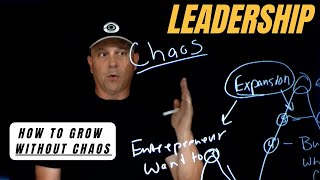
Recorded YouTube training by Jim Johnson describing how leadership evolves as a contracting business scales. Reviews a 12-pillar contractor blueprint and a scaling matrix (solo/tech → operator → entrepreneur → business → owner/pinnacle), maps five leadership levels to growth stages, warns against doing the right things at the wrong time (which creates chaos), and closes with Q&A and practical takeaways (know your numbers, establish guiding principles, prioritize people development).
Chapters
We're going to be talking about leadership, what the transformation of leadership looks like as your business grows. And I think you're going to find this super valuable. We're going to, over the next few weeks, go through this entire matrix of what you should be doing and when you should be doing it. The fact that we have coached thousands of contractors, the ultimate thing that we see most contractors doing is a lot of the right things. They just happen to be doing them at the wrong time. And so last week when we spoke, I talked about this blueprint, these 12 pillars that you see in front of you. Leadership, culture, process and system, your team or hr, finance and numbers, accountability. And then you have technology, marketing, sales, production, training and recruiting, hiring and onboarding. These 12 pillars of the things that we have to do. And we chose early on to be a holistic coach, a coach that works on all of those things because we realized that if you're doing just one of them, you might be doing something at the wrong time. Now, we're going to be doing this training today on some new technology, so bear with us. We're still learning how to use this cool tool. It's called a smart Light Board by Learning Glass. So if any of you are interested in getting something cool out there to do some of your videos with, this thing's pretty sharp. You're going to be on mute while I'm doing the actual presentation. We want to get through this in one quick pass. And while you're out there listening to what it is that I'm sharing, I'm going to challenge you to do two things. Number one is I want you to, each time you come up with a question, write that question down. Number one, that'll cause you to listen for questions and probably learn more by listening and intently wanting to ask questions. Writing it down will help you remember it and also reinforce it. The other thing I'd like you to do is, as you hear a golden nugget or maybe a takeaway, write that down as well. Because when we get done at the end, I'm going to open it up and we're going to go back and forth. I'll answer any questions I hear, your takeaways, get your feedback. We want to make this where it's truly valuable for folks out there as they learn about what their business is, how to run it. And ultimately, our goal as a coaching company is to help you achieve your goals without sacrificing the things that matter most, like your relationships, your health, your mind, all of these things. Your body like all these things are really important to us. We want to learn how to work efficiently and optimized so that we're doing the right thing at the right time, not making mistakes and losing time, and then doing them quickly and efficiently as we do them. So that kind of sets the ground rules. Hang out for the next, I don't know, about 20 minutes or so and we're going to do a little bit of training on this and then open it up for some questions afterwards. Now, like I said last week we talked about the contractor's blueprint. That's the white bars, the 12 of them that you see with leadership, culture and the various things foundationally and operationally that we need to do. If you need a refresher on that, feel free to go to last week's recording on that. And then we also talked about the scaling matrix. In other words, what should I be doing when according to my business. And so I'm going to go through a little bit here and just do a bit of a refresher and reminder that the things down here are for the solo or tech leader. The this person's usually under 250, $500,000 in revenue. They're a one man or one woman show. They have started one of two ways. Usually they are either a great salesperson that's decided to go out on their own and start their business or they're a great installer that's getting word of mouth and opportunity to do jobs on the side. Got so much that they started to actually turn it into a business and kind of came up, became a business without them really even knowing it. And those folks, what they have to know in order to scale up to the next level is they have to know the million dollar must. And so these while related to the 12 pillars, you don't have to do everything that's in the 12 pillars. As a matter of fact, you don't have to be a very good leader. So this leadership thing isn't so important to a solo or tech person because really the only person they're leading themselves, what they do have to learn is a little bit of self accountability. So the main things they need to learn and the things that are important for them to grow and scale to the next level are how to create opportunities, how to close those opportunities, how to fulfill the work, exceptionally to create a great customer experience and then ultimately to collect their money to create the cash flow they need to grow their business. So those are the main things that a solo or tech operator needs to to Learn now, whenever it comes to your, your next group of folks, you have to really think, hey, who am I next? And this is where you start to become an operator. And so you're budging up against a million dollars. You're trying to move into the two or three million dollars and you're probably starting to hire your first people. So now those 12 pillars all start to come into play. We've got to learn how to lead, we've got to learn how to build a culture, we've got to have systems and processes, but we don't have to do everything in all of them. So we have to do a certain level. And so that's kind of your next level. Again, this is a little bit of a refresher from last week, so I'm going to move through this fast. But up next you have your entrepreneur, this person, up levels a little bit more and does a little bit more in each one of the areas of expertise. And so you're up leveling each time. You're learning something new, doing the right thing at the right time in the right sequence. That's another very important part of this, is you have to do things in the right sequence in order. In other words, I don't want to be doing a whole bunch of sales and marketing stuff until I have my leadership and culture and process and those type of things in place first because they all rely on each other, they all affect each other. And so as the business grows, solo tech, one person operator, two or three people, maybe usually friends and family, entrepreneur moves into hiring people outside of their circle. Business is starting to put leadership people in place. And so you have to have different skills in each one of these pillars to do that effectively. And then you move into an owner being a true owner. An owner is not an operator. They're very different. Operator is in day to day owner is leading people and may even have a leader in place that runs the business for them because they're focused on the next level of leadership, which is expansion and deciding how do I want to expand if I do want to expand and where they may go from there. So those are your major areas. Now I want to give you one more reminder. All of this, okay, is built off of something very, very important. You can think of these as like pillars of a building and this being the slab right here. We got to lay that slab first for us to build those pillars off of. But what we don't want to do is we don't want to lay that slab on anything that is faulty we don't want to lay it on some false beliefs or things like that. And so the thing that we have to lay that on or the Rock True foundation is your guiding principles. Because those are going to affect everything you do from that point forward. If your guiding principles are to do right by others, to create a great customer experience, to do things in a way that is about somebody else before you, that's going to change the trajectory of everything else that you do. If your guiding principles are about achievement and winning and gaining, that's going to change everything about what you do. So I really strongly advise you to consider what are your guiding principles? Especially if you're smaller, like you're just starting to get going in your business, what guiding principles are going to drive you and ultimately the rest of your business? Because if you start off with principles that are a little bit questionable, everything about your business, it's going to be questionable. I talked last week about the DNA of our business. This living, breathing thing that we're creating. And this thing, we have a choice. It can either be something that is beautiful and awesome and grows up into a child and a teenager and adult and it's just, it grows like that as you scale through that scaling matrix, or it could be pretty ugly. We want to avoid the ugliness. So there's a little bit of review just so everybody's on pace with what we're going to be talking about today. Because what I'm going to do is I'm going to talk about this pillar right here, leadership, and what happens in those pillars and what you may be thinking about as you move forward with your business. So I'm going to grab all this. We're going to move it out of the way. Cool. Technic technology allows me to do so. And then we're going to come over here and we're going to do a little bit of a visual to help you guys out.
Okay.
So I want you to think of your leadership kind of like a mountain. Okay. And you'll notice I have a little valley in there. There's a reason for that. And we'll, we'll talk about that in just a minute. But you're going to be going up this mountain and you're going to be hitting certain stages along the way. Okay. Like so. Now whenever we first start with this solo or tech, I want to remind you that that's the thing that we're focused on is the solo and tech to start with. We have not really true leadership yet. We have the most important thing the thing that truly is going to be what determines where you go. And that is for this solo tech person, they have a decision to make. That decision is, do they truly want to leave? Do they want to be responsible for other people? Do they want to be held accountable by those other people? Do they want to learn the skills that they need to lead those people? Do they have inherent talents that allow them to lead? And so there's this pinnacle moment in our lives where we decide, hey, I don't want to be the person swinging the hammer. I don't want to be the person selling. I don't want to be the person doing the grunt work. I want to lead other people to teach them how to do those things. And so that's the first step. Think of that as number one. Okay? That's your first level of pre leadership. And that's the thing we've got to do before we decide to start to leave. Now, this is where our identity moving forward as human beings starts to change. As you start to lead people, and that decision comes from you choosing that you're accepting the responsibility. Now, as you move into an operator, that would be position number two here. We'll put a two in there. And this is the operator. You're going to end up with a few more people. You're going to end up usually with friends and family, maybe a spouse that's helping out, a brother, a cousin, somebody like that, and maybe a good friend. I know that's how I started. And I can remember going through that and some of the struggles that that created, but also some pretty cool things that happened there too. We kind of knew each other, so we. We had a basis of alignment that was already there. And so we don't have to do everything to be a decent leader at that perspective. And it's pretty much a decision that as this operator and as this leader, it's. You're leading because you have to. You've decided, hey, I'm gonna build this thing, and I've got to have other people, so I lead because I have to. And so I want to put that on there, that the reason people follow you is because they have to. It's not anything special about you other than maybe you have an opportunity for them. You haven't gotten too far into all the stuff. But, hey, I got this thing. It could help you make some money, and I can teach you something. Would you like to come to work for me? And they go, yeah, great. This is where our vision starts to come together. We start to share Opportunity. We really need to be thinking about that. If you want to bring people into your world and that you expect them to do the things you ask them to do, there has to be a reason for them. It can't just be all about you and you making a big business and all that other good stuff. They don't care about that. They may love you and care for you and want to help you, but they're only going to do that if there's something in it for it for them. And so we call that with them. What's in it for me? And so this is where you start to develop your vision. You start to develop the opportunity that comes along with this. And so we move there from operator to entrepreneur. This is where things start to get really fun. My handwriting is terrible. And then we'll call that level three. And so at this level, people start to follow you a little bit more because they want to. This, this person that's following you, they see something in it for them that they didn't see before. There's this still I have to aspect of things, but there's also this piece of it that you've built some trust. You're leading them because they have started to trust you in what it is that you do. And so I want to be really clear about this one. It's really important to understand that there's some trust that creates a want so much like they have to hear. They want to hear, okay, you've done something, you've created a vision, you started to create a culture. They're enjoying where they work, they like what they do, and the benefit is in it for them. And that's why I drew a valley right here. This is the part where we tend to start to maybe get a little proud of ourselves. We've done something that a lot of people don't do. When you get to this stage right here, you're starting to break into the five, seven, maybe even as much as $10 million in revenue. You're heavily involved still. You're in the day to day operations. You're probably performing a role like a general manager where you have some sales managers and production managers and office managers that are working for you. You have teams working and you've created something that's pretty special. And here's where I'm going to give you your word of warning because this happened to me. I got pretty proud of myself. I created something pretty amazing and people were doing very well. And I started to believe my press clippings. Everybody was telling Me how awesome of a thing that I had created. And I was able to go and buy the things I wanted to buy, take time off that I couldn't have taken before. And I lost sight of everything that I was about and what I was doing. And I had a bit of a backslide. The second that we put ourselves on a pedestal that we are God's gift to leadership, we can fall pretty quickly and lose that trust that we built. You start to maybe look at people as dollar signs. You look at people as, what can you do for me? Instead of what you can you do for them? And this idea of almost a bit of narcissism, where, man, I've created this amazing thing for you. You should just want to go out and work, and you should be thanking me and praising me for doing that. And the second that you do that, you lose everybody. You lose people. They start thinking about going and doing it on their own. They start thinking, thinking about, how could I do it better? They start thinking about all those things because you hold no more value for them. And that's ultimately what happens is because you don't hold value to somebody else, you run the risk that those folks are going to be not loyal to you. Everybody wonders why people aren't loyal. It's usually, take a look in the mirror. The reason they're not loyal is because there's no value. So let's go and talk about the next level here. Okay, I'm going to make this a little bigger. I think we'll bring it down here so I can write a little bit bigger for you guys. And so we move from an entrepreneur and probably maybe some backsliding. And that backsliding can happen at various different areas or levels throughout this. But we move into this thing that is a little bit more than just being an entrepreneur. We now have a business on our hands. Now when we have a business, people are following you for a different reputation, different reason. They're not following you because they have to or they want to. They're following you because you've done something that's impressive enough for the organization that they want to be a part of it. You've created a culture that people want to be a part of. You've built skills of your own that are valuable to them. They see you as what they want to be. And so they start to follow you for a whole different reason because of what you've done for the overall organization, the team, the group themselves. And so this is the production aspect of things. They see production and they go, wow, that's awesome. I can see value in that. For me, I want to belong to something like this, and I trust and can see value in that leader. So this is level four, okay, of your leadership. And if you were looking at that pillar, you're growing in each one of those things. So I'm going from tech to operator to entrepreneur to business. So what comes next? You know, we talked about this already of the different levels, but I've got this business and they're following me because of what done something for the organization. Now, remember, a leader isn't just an owner. It could be a sales manager, it could be a production manager, it could be an office manager, general manager, coo, CEO, cfo, all those different titles. Those are all people that are leading and they've done something for the organization that makes other people want to follow them. So this is where I'll call out a little bit of, like, write down a question like, what have they done? Think about that for just a minute and maybe what have you done that has gotten people to follow you? So now we're going to go on to the next level, this next level of what it is that we do. And this is. This is one of my favorites. This is where the game changed for me. I went out, got some coaching. I was able to survive the downfall, build a business that was pretty amazing, 25, 30, $40 million a year, and then create, do some other things with that, and I'll talk about those as we move on. But I kind of got stuck right there with, hey, I can't, I'm not moving forward anymore. And I kind of hit a bit of a ceiling. And the ceiling wasn't because of any of the other stuff. It was because of my lack of skills as a leader. And so this next one, number five here, that is your owner. And this one is about people development. This is where you go from what you've done for the organization to you now teaching others and showing others what they can do for the organization. And so they follow you for a different reason. They follow you now because you can build them. You can give them skills and tools. You can give them instruction and guidance. You can be a mentor and an advisor. That is valuable to them because whether they work for you or not, those are skills they can take throughout a lifetime. And when you achieve that level, your business grows exponentially. This is where you start to see opportunities and occasions and various different things. You start to see this ability to truly own the business. Most of you that are owners of businesses. You're operators, you're in the day to day. You perform a function, you're some type of role in the company. Even whenever you move into entrepreneur, you're still day to day doing the thing. When you move into business, you're still the leader. Ultimately, you're the person that's there doing the thing each and every day. Now when you move to an owner, that's a different thing. You own the business. And owning that business allows you to put people in place to actually run the business. You're not running it anymore, they are. You're their trusted advisor, you're their North Star, you're their guiding light that they can come to for advice and information. But this is the most difficult part. This is the part where we start to let go. Because we have built amazing leaders. We've built amazing people. We have built the infrastructure to grow leaders in our business. We have to empower and allow them to lead without telling them what to do. We go from all of this other stuff and showing and telling to empowering and allowing. And it's one of the most difficult things. It's the most difficult piece of this climb. You can see, it's actually the steepest part right there for us, excuse me, as leaders to overcome. This is the most challenging piece of what we'll ever do as leaders. Excuse me. Thought I'd get a drink there. Now there is one more level, this level that's a little bit different than the others because you're at now the pinnacle. You're here at this pinnacle. You've reached the top and you're there. And the reason that people follow you, they follow you because of what you represent. They follow you because of your character. They follow you because your achievement isn't about you. You've shown that, it's about everybody else. And this is where the expansion part of our scaling matrix comes in. This is where we have a team of people running our business and doing it effectively. We're meeting with them maybe once a week just to keep our finger on the pulse. And that's about it. And we're allowing them to do their job, to fail and succeed, to achieve the things that we've set out together to achieve. But I'm letting them run it. And because of that, I can now expand, I can now go open another location. I can decide to take on a new trade. I can do a lot of different things. There's a tool out there called the expansion matrix that helps us make those decisions. But so many people and this is the caution and reason I'm sharing this today. So many people go after this one way too early. They're doing the right thing. This idea of expanding out and doing more and building something that is more siloed in what they do. But they're doing it way too soon. They're doing it way back here as an entrepreneur where they haven't even figured out their business yet. They haven't got all their processes and systems and sops and HR and finance and numbers. They haven't gotten all those things in place yet. But they're out there opening a new location or taking on a new trade or take like you haven't perfected anything. And because you haven't perfected it and put people in charge of it, and you're now going to go and expand, you're going to experience the thing that I want to bring the most caution to. And this is where we start to goodness gracious, sorry, guys. If we do it out of order, if we do the right thing at the wrong time, what we create, and I'd love for you guys to share with me if you've ever felt this in your own business is we create chaos. I feel like I'm wearing all the hats. Nobody's doing what they're supposed to be doing. I'm answering the phone all the time. I'm on job sites all the time. Everything feels like chaos. You're just flying by the seat of your pants and you're hoping and praying that everything works out. And your answer to solve all problems is to sell more. Well, I'm going to challenge you to do your leadership in order as you grow your business, learn the skills that are necessary to grow your business. We actually have a piece of content about this called Leadership 101. That's a training class that we do about the super skill of leadership. And I might get into that here in the future, which is connection. I got to connect with people. How do I do that? What are the skills I need to know what we really want is and what we have a choice over is order. And so you here have a choice. You can either go and create the chaos for you because you've decided to do leadership levels out of order according to the pillars of your business and the scaling matrix, or you can choose order, chaos or order. One of those two for you. So that's our training today. I want to call attention here to the overall make a little smaller there that the solo in tech has a decision to make and to understand the responsibility that comes along with it. They are not even a leader yet. They don't have anybody to lead. But then they decide to go on these next five levels. They're going to go and start a thing, and they do it because they have to. And people follow you because they have to. And as an entrepreneur, they go to the next level. And now I just want to call attention a little bit to these levels and what's going on there. Okay, there's this decision to lead, but then here at the solo tech, the only. I'm sorry, at the operator, the only thing that you really have going for you is position. You're leading because of the position you're in, okay? Not for any other reason, not because you're skilled or talented. You're a great leader, anything like that. You are the owner and people are involved with you, and it's because you're the owner or you're a sales manager and somebody made you sales manager. But do you actually have the skills? They're following you because they have to because of your position. Now, whenever you get into the entrepreneur, here, this is permission. So the difference is, here was something that was forced. Here is something because I have to. I want to. I'm sorry, I want to. There's permission involved. And then you have production stay on track here. Then people remember the people part, and they're finally the pinnacle. So those are the P's. Now, where does all this come from? Jim Johnson's not the brilliant person that came up with all this, but Jim Johnson was wise enough to go gain the knowledge, understand it, and have some wisdom about how he was going to start to lead his people with failures along the way. And so I would strongly encourage you to go make a purchase. It's a very affordable one, probably about 20 bucks. Go buy the five levels of leadership by John Maxwell, because that's what all of this is based off of. That book changed my life as a leader, and I think it'll change yours as well. So with that, I've walked through doing the right thing at the right time and what it means to you as a leader in that pillar of your business. Next week, we're going to dig into culture and what are the right things to do at the right time for your culture, you don't have to do everything at once. And I think we all get caught up with, like, trying to get everything done all at once, which gets us out of order, creates that chaos that all of us hate when we're really striving for order. So with that, I'll end it. We're going to. I want to encourage you that if you have questions about this that you have the ability to get those answers. We have a tool that we created out there called Contractorsage AI and it's an AI tool of my brain. It's got almost 20 million words in it. You can ask it any question 24 7, 365 to get answers to more depth on something like this and how to lead your people, when to do the right thing at the right time. And it doesn't matter what role you are, whether you're an owner, a sales manager, a production manager, office manager, let the tool know who you are, what you have accomplished, what your goals are and what stage you're at. It's going to remember that about you and it's going to help you build to by doing the right thing at the right time. Now, if that's not enough for you and you're interested in one on one coaching, go to our website, take an assessment. We'll do a free coaching call with you and we'll talk about what it looks like to work with us as a client. We love helping you guys. Our goal is to help you achieve your goals without sacrificing the things that matter most. And thanks a lot for being at the contractor training room today. We will continue to do these weekly. We do them free. We want you guys to do amazing out there. We want to see you succeed. With that, we'll go ahead and unmute. Mike's will allow for questions and Q and A takeaways. So what do we got? Here's a link to our stuff. Great questions. Gianna, jd, Josh, Jason Hansen, Sydney. What do you got out there? What questions did you write down, what takeaways did you have? And if we can unmute their mics. Noah. Hey, Gianna, how are you? You're there? What's up, man? Hey, jd, we can hear you. What's up, ma'? Am? Oh, he was like, oh, man, he was so excited. Like, what happened? Josh, do you have something to say? I see your mic's unmuted.
No, but I will.
Great, man.
I tell you, it's refreshing to come to something like this every week because I have to remember that I have to practice all the time to get better. And this helps me remember to practice because, you know, I've been, I've been an owner and I've scaled a company from 3 million to 23 million and now I'm back starting over again. General manager for a New company. And so I think I have all these things that I need to do. And then I get in that chaos thing because I'm trying to do it all instead of following a process and going, okay, this is do this first, do that first, do that first. And then this reminds me, hey, slow down a little bit. You know, see where you're at. Right. And. And then go from there. So it helps a lot to. To remember to practice.
Yeah, we really gotta understand where we are. I'd say, Josh, I know you pretty well. You're probably in that operator to entrepreneur area right now with where you're at. I know you guys sold your business and now you're helping somebody else build one. So you almost have to look back and go, hey, what did I do back then that helped me build that thing? And why am I trying to be that $23 million leader right now when I need to be this two or three million dollars to do just the things I have to do and really understand the people that work for me? That's great insight. Thank you. Anybody else with any questions, feel free to put them in the chat area too. If you want to type them in, I can take them that way as well. Try and get all the stuff off my screen there so I can actually see it. What do you. I do have this question and whoever wants to. What do you guys think of the way I presented this and using this tool to make it very visual and kind of see what happens as you go along?
Hi, Jim.
How are you?
I met you, I think, at Arat recently with Brooks.
I. Yeah, I remember. I remember. Nice.
Actually, just finished your contractor blueprint book. I really, really enjoyed it. It is my first couple years in leadership, so. Really enjoying these example, the visuals that you're giving, because it really. I do think it ties in directly with your. This book. On my second run with it right now, kind of tearing it up a little bit.
If you haven't written in it, made notes in it, highlighted it and stuff like that, start is use it. Like, use it that way, it should bring you some pretty strong value. I. I hope, yes, people can go right to our website and buy that book or go to Amazon. It's on there, funny enough. Like, sold thousands of copies, which I was never expecting. I thought if I sold 100, it'd be a big deal.
So.
Yeah, no, it's very valuable. I appreciate it. Thank you for the information.
No worries. No problem. Sydney, you got something. I see you're unmuted.
Only the takeaway. That you know, tech is our continuing necessary evil. It's great when it works. I've been having connection problems all morning, but.
Yes, you've had connection problems with us.
No, I'm sitting in a somewhat dead spot in my truck. So I've struggled to stay connected.
But this is a question I'd like to answer. This is one of those things like, hey, we're here, let's answer a question.
The graphical interface is cool.
You like? Okay, cool. There's a thing out there called Starlink. If you haven't seen it before, I use it whenever I travel. They make a small version that's actually like for our vehicles that you can get Internet anywhere, anytime, any place. You can be on a 14,000 foot mountain if you want to be. And yeah, it costs something monthly, but I can be connected and literally treat my truck like it's its office. So you might go check that out. Depends on your opinions on people. But Starlink works great. I love it, man. It is, it changed how I can do business and it's actually pretty affordable for what it does.
Well, that's a, that's a great tip. I've looked for something like that a lot. You know, try to get connectivity through your vehicle or whatever. It's always sketchy, but it's hard.
Yeah, I think the little thing is about that big. Yeah, I think it's about that big. You set it up on, in your vehicle and off you go. So. Yeah. And I mean it's super high speed. I like it better than my own home Internet. So something to consider. Anybody else have any questions about things? Any takeaways?
So I think, I think a comment I made, you said create opportunities. I think you need to throw the word profitable in there.
A profitable opportunity. Yeah. You got to say no to something.
Yes.
That's great insight, Sydney. A lot of times as new entrepreneurs and getting out into business, we're desperate for work. Because of that desperation, it might lead us to taking on a job that's not profitable. That's why knowing your numbers is so important. So you know, Cindy, I'm going to take your, your, I'm going to take your advice, I'm going to add that in on the million dollar musk that we got to know our numbers. Maybe not necessarily finance so much, but we got to know our numbers and know some basic finance. So thank you, I appreciate that.
I would say the biggest mistake I've made and I've been in business for myself since I was a junior in high school and I'm 63. As long as there's money in the bank. I kept on trucking. I never really paid attention to the numbers. But this business requires you to pay attention to your numbers.
I could not agree more. There's. There's some simple things you need to understand about profitability, about overhead, about your cost of goods sold. Those are pretty simple. You can probably find that on YouTube just about anywhere. I've been considering doing some. Some content on that. And I think when I get to finance numbers, I will discuss that. And that's going to be three weeks from now, so pay attention. I'll talk about that particular one. Anybody else, takeaways or questions? You get a shot, it's free. I'm not charging anybody anything, so here's your chance.
I think we all need encouragement to slow down hard to do. Well.
There's a saying in golf. It's one of my favorite sayings, that slow is smooth and smooth is fast. And if you've ever watched golf, you. You watch these people that play, you look at them and you're like, wow, that just looks so smooth, right? Like it look like they put any effort into it. Whack. It's just gone. Play with a guy that's much like that. But the way he was able to do that is all the work he did underneath to develop that swing, that discipline, to have that smooth, well timed, perfect rhythm swing. And we've got to look at our businesses that way, that we've got to build the underpinnings first of a strong foundation before we go out and sell a whole bunch of stuff and make a mess of things. That doesn't mean we shouldn't sell anything. It just shouldn't mean that we're trying to sell everything, which is very different. Anybody else? This over a little bit. Any insights from any of these levels? And you're like, hey, that kind of. That's kind of me. I've done that and this is what I'm doing about it. Braden dropped the link to the book into the chat area there. If you guys are interested, and a lot of you have it already, Please, it's worth your time. I'm going to give some advice on books. If you're not a reader, I'm going to challenge you just a little bit to be one. All right. I know that sounds sometimes not appetizing to folks, but reading is a skill. It's not a talent. It's something that all of us can learn, and it's the most invaluable asset and skill. I'VE ever learned in my life. It has brought more value to me than anything, any coach, any video, any, anything. But when you're reading, I want you to think about the book that you're reading, reading if that book is motivational, inspirational, that type of thing. Because a lot of you defaulted whenever I said, hey, read some books, you defaulted to audible. I'm going to listen to some books. While motivational and inspirational books are just fine to listen to. And I think you should and I think you should find podcasts that are motivational, inspirational. If you're reading a book that's practical and tactical, get the book, open it up. If you're a Kindle person, put it on Kindle, highlight it, make notes, write in it, write about it, write what you learn, ask questions. And before you even read a book, write down what you think you know the book is going to say. Write down the questions you want to get answered or don't open the book. So that's my advice on reading. And I don't read as many books as I used to. I'm actually going back to the books I've read before. I'm spending real time in each one, about one a quarter and just tearing it apart, understanding it. So there's a little bit more advice. I hope you guys find that valuable. I'm going to open up for any last questions or chat and then we're going to close this. All right. It looks like we are out of questions and out of insights and out of feedback. Hey, thanks for being here. Really appreciate it. I hope you found value in it. Tell your friends, pass along. I'm going to be doing this every week. 11:00 clock on Thursdays. Contractor Training Room. We do have a whole platform that has a lot of this stuff on there. But that middle part where you guys didn't get to talk, that's going to go on to our platform as a piece of learning content. So optimizing my time. We're going to talk about that a little bit as we grow as leaders as well. That's our session for this week. Thank you so much for being here for Contractor Training Room. And if you've got questions, you need them answered and you need to coach in your pocket, go Check out ContractorStage AI. It's been pretty radically changing the way people are able to get answers. So we're out.










