A Strategic Approach to Leadership and Field Sales Teams with Zac Kerr
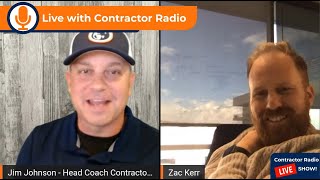
Podcast episode (Contractor Radio) hosted by Jim Johnson featuring Zac Kerr, chief strategy officer at Sales Rabbit. They discuss leadership strategy for field sales/door-to-door teams, emphasizing people development, extreme accountability (look in the mirror), intentionality/creating outcomes, cultural investment in employees, and practical approaches to sustaining energy in interactions. The conversation includes personal reflections on resilience, legacy, and mentoring.
Chapters
Hey, everybody, Jim Johnson here, the head coach at Contractor Coach Pro with this week's episode of Contractor Radio. So awesome to have all of you guys here. We love doing these episodes of Contractor Radio. We're here to serve you as contractors to help you get better with what you do. This week's episode is not going to be any different. We have a superstar guest coming on today. He's amazing. We're just waiting for him to tie up a few things and so he'll join us in just a few seconds. I see he's popped in. But before we get to our special guest, we're going to be talking a little bit about leadership strategy and especially when dealing with field sales teams. And, and we usually will start off with a little tip of the week. And so this tip for our Contractor Radio episode is the ability to connect with your team. Sometimes we tend to think of this thing as a what's in it for me? Aspect from both sides of the fence. Like, what's in it for me as a business, what's in it for you for that person that's working for you instead of a what's in it for we? What's in it for us? How are we going to the same place at the same time? And one of the best ways for you to do that is to not just connect on a business level with people setting goals and those type of things, but truly invest in them, connect with them at a personal level. And one of my favorite questions I like to ask is, where do you see yourself in five years? I ask all of my employees this and normally it'll be a very business related type answer. They'll be, you know, I want to be sales manager or I'm running a location or whatever that may be as a contractor. But then I'll dig in a little bit further and ask them where they see themselves personally. What have they achieved? What's their status in the world these days? Who have they helped? What are they trying to accomplish on a personal level, a spiritual level? You know, how can we all be a better human being and find a little purpose in what we do? And it's funny, when you make that connection like that, the conversation becomes completely different because you're now truly concerned about them on a relationship level. And people tend to want to hang around you a little bit more if you're going to help them get to where they want to be just as much as where your company wants to be. So keep that in mind. Connect with your people. I am so excited to Bring our guest on today. We get to do a lot of these episodes, but this is truly one of my most favorite people to have a conversation with because he brings value each and every time. He is the chief strategy officer, which strategy is a big thing for us for Sales Rabbit. And if you don't know who he is, do everything you can to follow this guy because he shares golden nuggets that are valuable to you. Zach Kerr, welcome aboard to Contractor Radio today. It is awesome to have you, man. You are truthfully one of my favorite people on the planet.
Hey, thanks for that kind introduction.
No problem. It's well deserved. Absolutely well deserved. So in today's episode, I kind of want to talk leadership strategy and especially in regards to like field sales representatives. You have a strong in that security solar now like software for that industry. I think that's just super cool that you took all this knowledge that you have and you wrapped it up into this tool that helps people be better leaders and lead those field sales teams, have better data available to them. And so can you kind of give us a little background on like how you got there, give us a little bit of that backstory so everybody knows a little bit more about Zach?
Yeah, absolutely I can. So yeah, I've been in, we'll call it field sales. Field sales is a category that Sales Rabbit created with G2 Crowd, which is a evaluation website that evaluates software tools. Field sales representative represents a bunch of different type of sales we'll call modalities or sales channel activities such as door to door contacting or in person follow up from other types of digital demand lead sources. Nonetheless, I've spent most of my career working with field sales related organizations in some way. So what that means is I started out in door to door doing sales in the home security industry, worked in multiple organizations there and then founded a security company that we operated in multiple states and then moved on to solar. We ran a solar company in I think it was 13 states. And then I was one of the founding members of Sales Rabbit, which services field sales organizations. We've been doing that for about seven and a half years. And you know, we have, we've served thousands and thousands of clients around the world and tons of continents. You'd be surprised at how big door to door is and yet also how small it is. And in that capacity is really where I've learned a lot about the contractor home improvement space. You know, I've really focused on technologies that serve the segments in the construction, building, home services, home product category. So I'VE always kept my eye on. A lot of the software companies are serving that space, some of which I've invested in or sit on the board of and just absolutely think that it's a really neat space. And I love the people in this space, really, really great people who've actually influenced my life as well. So happy to be focusing on them and their needs and their organizational needs. So there's kind of a high level overview there. Jim.
No, that's awesome. Like one of the things you said is like you service door to door type companies and field sales companies in other countries and is it different? Is it like, is it different in Australia or Germany or wherever else you might be? Is it different for those folks in what they do, or is it pretty much the same thing?
Yeah, I'd say it's about 80% the same. Where you get some differences is in local rule and regulation. Some countries are not as kind towards, you know, door to door activities as we are here in the us we sometimes think that the US is fairly restrictive. It's actually not at all. You step into Europe, you're dealing with gdpr, which there's some implications of that here in the us, Certainly California. But in terms of data privacy, which changes the way that people prospect and what they can do, there are some industries that are more regulated than other industries in other countries. Meaning you can or can't do door to door for specific types of services or products in some countries. So you just get like some weird law and regulation variation in some of these other countries. But generally the practice of prospecting, pitching, contact and closing is the same. Sometimes there's just different motions you have to follow to comply with law.
Okay, I've always been interested. We work with clients in other countries too, and there are some subtle differences, but at its core it's still pretty much the same thing. So before I ask you all the other questions about leadership and field sales teams, all that other stuff, I always ask a few questions that are a little bit different. And so the first one of those questions is to this point, I may have asked you this on a podcast in the past. I don't know if you remember or not, but to this point, what is your greatest achievement that doesn't include getting married or having kids. That's like the easy win right there. So it doesn't include that.
So what does that include? Is that mostly business then?
So it doesn't have to be business, but just it can't be about the wacky. Like that's if we don't answer that. We get in big trouble. So it's like, all right, we'll skip that one. We all know that's number one. So what's number two?
Yeah, so I think, you know, in terms of business perspective, I love business. I think because it's a platform for me to interact with other people. And I love people and I love organizing, the organizing business elements. It's just a great platform to bring people, products, services, marketplace, economics, investing kind of everything into one great place. And so business has been a really fun thing for me to focus on in my career. And I'm a young person, I'm still getting going, but I, I think I've had some really cool experiences in business that have helped me to learn things a little bit in a, in maybe a more accelerated environment at a younger age. So I've, I've done a number of things from, you know, being involved in various investments or raising money to getting to work with really high grade people, founding companies, exiting companies, being a part of acquisitions, and those are all really great pinnacle experiences. But I would say I'm not like really proud of those or anything as much as I am kind of like my pull through that, you know, going through really difficult experiences where there's maybe violent opposition and pulling through, pulling through those experiences, whether that lasts for a week or months or years. I've been through some hard stuff in business and that's fortified me and it's helped me more than any achievement or accomplishment. And so I think I'm proud of my achievement there. In terms of pull through, I think just learning how to deal with failures, whether that's big or small failures doesn't matter. It's more about just having the right paradigm and mentality on how to interact with when things go wrong. You know, whether it's our own, our own doing or someone else's doing, things go wrong, you know, and you just have to interact with it and how you interact with it changes the outcome. And I feel like I've been through enough stuff that's gone wrong. It's really helped me figure out how to, how to operate in a modality where it's okay to have things go wrong and figure out how to get out of it and, and respond to that. And then I, I think I'll just say a third thing, which is something that I work hard on and I'm still poor at, but, and that's just living, living in a state of choice, you know, having, having the ability to choose how you spend your Time and energy. I think as a human being, that one of the most precious or sacred things that we have is our ability to choose our experience every day, to choose how we spend our time and our energy. We all have limited energy, and we also have lots of energy. But choosing how you channel that and the experience that you have for yourself and others is really. Is a really important thing. And it's hard to maintain that mentality or modality of living where you're just constantly in a state where you're creating the outcomes that you want to have happen in your life. And so learning those principles and processes to maintain that state. There's things to act and there's things to be acted upon. Getting yourself conditioned to be in a state where you're acting on principle and not being acted upon and really being intentional and creating the outcomes that you want to have every day is, I think, one of the greatest achievements. You know, as. As a business person, as a husband, a father, whatever those roles are. That universal truth applies to everything.
So, wow. There's a reason I love talking to you because you're what I call a deep thinker, and you're a bit of an old soul. Has anybody ever described you that way at all? Yeah.
Yep. I do get that. People tell me I'm an old soul.
You talked about a couple of things there. One was this. How you react to struggle, how you react to the bad things. Right. Like the good things. That's easy. So contractors constantly are dealing with the bad things. We're always dealing with something, whether it be our people and some struggles there, or a client that's unhappy, or we roofed the wrong house. There's always something going on. As a contractor, what's your approach? Is that something that you can put into, like, hey, I do these, this, this, and this, or is it different for each circumstance?
The problem is, is that people aren't willing to take extreme accountability for their experience every day. That's really the underlying principle. Because once you, you know, as a creator, we're all responsible. We create our businesses that we live in. We create our people organization, we create our culture. We create the systems and processes that we manage or abide by. We create our personal beliefs, values, everything and people. One of the greatest faults of humans is that, one, we desire to be governed by something else or some other entity. And then, two, we often don't want to take accountability. We want to blame something else for something we're experiencing. The problem with that mode of thinking is that it actually robs us of our agency, our motivation and our will to change the circumstance or whatever it is that we're experiencing. And I think one of the greatest deceptions that we allow ourselves to believe in is that we don't have the power or ability to change the circumstance or whatever it is that we're experiencing and therefore we don't act. But human beings are actually incredible and they have incredible power to move and change and create whatever it is that you really want. When you learn the principles and skill sets you can wield things into existence and create. And so when you begin to realize that you can change your circumstance or experience every day, you begin to invest in the things that will actually get to that outcome and not just short term solutions. And so if you're thinking about your business and you're interacting and you're upset with, you know, a recurring theme that keeps happening, oh my darn sales guy or ops guy or fulfillment guy or this guy continues to do this or this and I continue to have this outcome or this experience. You know, some people would say, oh, it's this guy, right? Well, an extreme accountability person would say, obviously I haven't put the system, process or proper training onboarding in place to prevent this situation from happening and I'm at fault for this, not my guy, and I need to do better and I need to change that and go back and rework that. Well, part of building a business is that you, for years and years and years have been doing those fixes and getting it into a place where your business is on a strong foundation, it's scalable, and you've gone through that enough times where you've really got it figured out. Part of being an entrepreneur and business owner is de risking, you know, your business ventures up front. And the more you do it, the more cycles you go through across more industries and businesses or whatever, the better you get at de risking it and becoming more intentional on getting the types of outcomes that you want to have in your business. But for first time business owners and entrepreneurs, that's a very difficult cycle to go through. Especially when you have personal dollars or investment or money tied up into it, or family money or you're trying hard. Your daily income is dependent on you thriving today or next week. You're not really in a position to make long term investments and so you end up making short term hacks to fix the problem that's in front of you instead of the recurring problem that's going to come if you don't do something on principle and do it the Right way. The way we do anything is the way we do everything. And oftentimes as business owners and entrepreneurs, we get caught into a vicious cycle of short term solutions and short term thinking. And as a result, we never get to those long term outcomes.
So that is like the mantra around here. You know, take the time to set it up right in the first place and you'll solve a lot of problems down the road.
For you it's so much easier and it costs so much less.
Well, you know, you hear this concept all the time. Take massive action. I'm like, yeah, it sounds great, like just jump off a bridge and go for it. But without any kind of plan, like, hey, maybe I should have a parachute or is there something down there for me to land on? Do I wear a scuba suit because the water's cold? Like without having some kind of strategy for what it is that you're going to do and laying it out pretty well, it doesn't have to be one or percent hashed out a hundred page business plan or anything like that, but having some thought process to what you're going to do is going to move you a lot further, a lot faster.
Is that something I've loved about watching you teach in this industry, Jim, and your team, is that you give real actionable advice and guidance you can execute on it. If you tend to a day training with you, and I've been in many of them, you're gonna leave with real things you can execute on. Listen, there's lots of awesome thought leaders out there and motivational books and they're great. They teach good, important principles that help us govern our agency and get the outcomes that we want. But those individuals are not going to teach you the simple truths that you need to hear. They're going to tell you stuff that you want to hear. They're big revolutionary ideas, they're not little evolutionary ideas. And it's the small evolutionary changes that actually get you the outcomes that you want. But those things are not always attractive to us. We don't, you know, they're not dramatic. We don't see dramatic changes or improvements. It's subtle changing. We all desire to change our, our circumstance and situation, but we don't want to change ourselves. We don't want to make the small changes. You know, but to me, I, and, and you know, it's just the way I view the world is it's those little things that really make you who you are, who your business is, who your culture is. And those are the levers.
Yeah. And it's like pulling these little tiny levers. It's not the big jackpot. I think everybody tries to pull that jackpot lever all the time for that quick fix that solves this problem as some kind of silver bullet solution when all it is is a bunch of little bitty levers all stacked up on top of each other. It really gets it kind of to this tipping point that it's now a business that I can manage and work on instead of, you know, being in that day to day grind every single day of being an employee of your business. Which is kind of my whole mantra here. The other thing that you said, like this extreme accountability, we always call it looking in the mirror. Anytime anything goes wrong, look in the mirror first. That's the first place you should always look is like, was there something that I could have done to solve this problem? Does it first lie on me? If it doesn't, then I'll have that conversation. But first look there. Would you agree with that?
Oh, totally. And like something that's coming to my mind is, you know, I'm thinking about like, you know, relationships with other people, specifically my spouse. It's just, you know, I think the world would teach us that it's about who's right and it's about what's right, you know, and we're all learning and trying to discover and none of us, I mean, we're all faulted, we all make mistakes big, you know, we all fail, we all suck. I mean, we all suck. We're amazing as humans. We're great, great in so many ways, but we also suck in a lot of ways. And maintaining that level of humility and willingness to be wrong and to be challenged, there's just so much value in that and discovering what's right. And we should maintain that, I think in all of our relationships. Last night when I went to bed, I told my wife because there's so much going on in my world every day. And really the thing that I tell myself, the thing that's most important to me is my family and my kids. But my actions don't always represent that, you know, based on where I spend my time or energy some days. And I told my wife last night when I went to bed, I said, hey, if there's anything I'm not doing as a husband or father, please just tell me and I'll do my best to respond. And you know, that's just admission of I care so much, but I'm always, not always cognizant or aware. And we can say that same thing to any of our employees or anyone in our. In our daily interactions. Hey, you know, I care so much about being the leader that you need me to be, and at times I fear that I'm not there for you because I'm distracted. If that's the case, please, like, call me out. Help me be a better leader to you and to your team or your organization or your state or your department or whatever it is. And people respond to that.
You know, I got that advice, that very same advice from a mentor about 25 years ago. It's one of the greatest pieces of advice I ever got was to be willing to put your ability on the line for everybody else. And what he meant by that was be willing to have everybody critique how good you are at what you do and have ears to listen. Have ears to listen because they'll probably tell you the truth and you'll know what to work on, and you'll just become a better leader from that one simple thing alone. And it was. It was a change for me big time. I was scared of it. And the reason I was scared of it because I actually knew I wasn't being the leader I needed to be. Like I said, the challenge was this. The challenge was to put out to every single person that was working for me at the time was about 170 people that were working for me. And tell them. The. Have them tell me the worst part about what I do as a leader. I was like, oh, my God, man, I do not want to see this. I. I don't want to see. I don't want to see this. And I put it out there. And. And it was eye opening. It was really eye opening to where I was failing. And I was quickly able to make some changes and completely change the dynamics of that business and the growth of that business. And it was. It was extremely valuable information. What's the best advice you've ever gotten from a mentor?
Oh, gosh, Jim. I can think of all my favorite mentors and people I love and have changed my life. These are people that are close to me, that I've worked with, some in a professional capacity and hired them to help me get better. You know, that's a large chest of advice and wisdom and to be able to streamline it down into one. And also, I'm thinking a lot about authors of books I've read and things that have just fed me. And the thing is, you can never really quite pinpoint certain things again. It's all the cumulative information and experiences and conversations that you have in your life that really amount to who you become. And so that's just a large collective. But I can think about some of my beliefs that I formed that have come from advice or direction or principles that I've read that I really value. But maybe we could pivot this back to this industry that we're focusing on. Field sales, right? In terms of advice inside of field sales, here's some really great advice that I was taught when I was learning. Build organizations. It's about building people. You're in a people building business than you are anything else. You know, whether you're selling fences or windows or doors or pest control or security systems or solar systems, whatever it is, you're really not in that business. You're in a people building business. You're developing human beings. Therefore your organization should have resource allocation as such to build people and develop people. I think that we tend to think that we're a product and services company, especially in these field sales and door to door sales organizations. But the truth is, is we should see that we have, you know, two customers. One is the customers who buy our products and services that we sell. And the other customer that we have are the sales reps and agents that go and sell those products and services. And those are the people that we are developing. And when we realize and correctly align our organization, our budgets, our capacity and our patience with people that were a people development business, we begin to do everything differently. And it gets totally different outcomes and results because we begin to invest in people and people are the greatest asset. And those people go out and they create other assets, whether that's paying customers or teams, or building organization system, process or partnership and business development or branding and marketing, whatever it is, whatever that value is, it starts with people. And specifically in sales, you should see yourself as a recruiting company first, people development company first, and a sales company second, product services, sales, marketing organization second. And when you begin to look at that, you begin to think about, well, how do I create the best experience possible for my two types of customers? Knowing that if you create an incredible experience for your sales rep customer, your people customer that are joining your organization, they will then go out and create incredible experiences for your customers. And if you begin to recruit, to train, to onboard in a more productive, experience driven manner, those people are going to come on and they're going to learn, oh, this is just how we do things at this company. They're going to begin to have company and career pride. If you have initiatives that are meaningful and touch on the, the humanity and the sociality of us as human beings and things that have culture and significance to them. People will get more value out of being a part of your organization and they'll attach to that and that'll become part of the reason why they go out and sell the products and services that you sell. Especially with the rising generation, I've been saying this for years. They want meaningful work, they want meaningful activity. Now some people may say, oh, this is all real idealistic what you're talking about. That's not real world. And it comes back to. No, this is real world. It's that you don't believe that you can create this type of work environment or business or experience and you under invest in the things that bring these types of outcomes. So I don't know, there's some thoughts we can dig in.
Oh, that's like that extreme accountability, right? Like you just, you just laid out extreme accountability for what it is whenever it comes to that investment in our people. I could not agree with you more. By the way. This is a people centered industry and I think all businesses are people centered. You put the people first and they'll put your customers first. I think the guy at Amazon, I think that's his big thing, right? And Zappos is very much like that as well. You, you mentioned a few things that were like really important to me. One was the, the importance of the individual, their value beyond just being a cog in the wheel of your business, their value as a human, this human part of us. And I think most people want that as a relationship. And you said you've been preaching this for years too, that people are after something more than just a paycheck. They're after this purpose, this reason for being, this idea that they're making a difference in the world. And I think a lot of the millennials today, and maybe even the Gen Z folks nowadays, the guys that are a little bit older, like Gen Xers, like me, tend to have this thought process that they don't work as hard, they're not wired the same way, they're not motivated the same way. And I, I would agree with them. They're not, they're motivated differently. I think our time frame, or at least my time frame, was very money and status oriented. And I don't think the, the new kids on the block are about that. It doesn't seem like to me. Would you agree?
Yeah, I would say that it goes both ways across the generations. We're all learning from each other and we all have really Important lessons to learn from each other. It's very interesting that the younger generation has some of the organic and natural knowledge that they have. And there's a lot for us to learn from them. And there's a lot for us to learn from the, you know, the generation who's gone before us. I think people as a whole, Jim, you got. You obviously got a lot of different cohorts, personalities, but a lot of times people don't really actually know what they really want.
I would agree with you. 100. I go to and do these events all the time where I do a business analysis. I'll go in for two days and I'll hang out with them. And one of the big things I'll do is I'll get everybody together into one room and I'm like, so why are you doing all this? And it's like this light bulb almost goes off. Like, I don't know why I'm doing it. Why am I, like, what is my reason for being every day? Which is a frustration to me. I think. I think more people should take that into consideration. Like, what is the bigger meaning behind why I'm involved? And I know we're getting really deep into stuff right now, but that's where those relationships and interactions, that connection really happens. I think that's where I just.
No matter what it is that you're doing, if you don't have a clear definition of what you want out of it, you're. You're never going to be excellent. And if you can define why you're doing what you're doing, if you can define how long you're going to do that thing until you get a certain outcome and a willingness to move on from it, if you're not getting that outcome and realigning with whatever it is you need to be doing in the universe, really getting defined there, because everybody has to make income. We all need income, we all need sustenance, we have bills to pay, we have things to buy and, you know, educations to pay for and blah, blah, blah, blah, blah. And so we all work. Some of us work for different reasons. You know, social media sells a dream of not working, being rich, having all the things that you want, etc. But I just think that, you know, people need to get really clear on what they personally want that's important to them, not with. Not what the world or what social media is selling them. And if you can hack through the facade and if you can get really real with yourself, you'll have a deep well, that you can tap to go out and go do hard things and go do things at a level that you previously wouldn't be able to do them had you not found that personal well of knowledge, that inside voice, that, that meaningful purpose. And once you have that, I mean, that's what I mean, like humans are, humans have incredible capacity and capability to do incredible things. And it's the coolest thing to see people wake up and become someone new that they previously never had any ambition of becoming. And you see this, you see people change. And like as humans we should be willing to just grant each other the ability to change and become new and do things we previously haven't done and allow people to move on and become a new self because we're meant for that as humans. We're meant to be evolutionary and to change and to become someone that we previously were not. And that's when we get our best results. That's when we create excellence and we're living a more fulfilled life. Because income generation and money making itself just has such limited Runway, such limited Runway. And once you have all the resources you need, your whole view of everything about why you do whatever should change, it should change. And if you can get there, if you can kind of short circuit and have that mentality prior to having whatever resources you need to do whatever mission you have in life, you're going to get there faster because you're going to have that deeper well of meaning and inspiration to drive you along the path and pay the price earlier and sooner to get those long term results or outcome that you want.
Is that a part of what should be? You're a leader in a business, whatever business that may be. You can be in a variety of different things. You can be an owner, a sales manager, ops manager, whatever it is that you are. Should you challenge the people that are working with you to think that way? I mean, should that be part of your strategy as a leader is to challenge people to determine what that is for them?
You know, I, I'm in an interesting environment where with some of my direct reports and team here, it's like, you know, I want them to stay and work with me as, as long as it's productive for them. And you know, I operate with a little bit different mentality and of course like it's in my interest to get people bought into what I'm doing here and have them stay with me and build with me and I think like that. But I also have a willingness to realize that. And especially with the rising generation, data shows they just don't stay with organizations as long. And so what are you going. How are you going to respond to that? Are you going to govern your people with greater force and manipulation, or are you going to accept the reality that people move on to organizations faster? And I think the quicker you embrace and accept that and allow for transparency to exist, the more that you're going to be a part of those conversations with your employees and team to help them discover, like, what it is they really need to be doing in life. And in that process, you'll find that you'll actually have the meaningful conversations and you'll tease out of them the things that they really want. You'll be in a better position to serve them and create the work environment for them to thrive. And now you're getting into career planning, conversations that actually are meaningful, that actually change their life and their trajectory and their career. And I can tell you it works. It works. It absolutely works. And I think I have a greater willingness to except the fact that, you know, employees are going to move on. And I do spend more time sometimes with employees and direct reports, talking about things that have nothing to do with our business and our project together and their outer world and playing more of a role of mentor and help. But I can tell you, as a result of that, the work that we get done when we are focused on is like, it's premier, it's next level, it's super good. And that's just an adaptive, you know, skill set. I think, as leaders that we need to be. We need to be utilizing.
I think that's because you're in real relationship with the people that work for you. It's real. It's not just based on numbers and production and outcome. It's based on investment in them as a human. They know it. So they want to. They want to actually want to put out more than what you expect. Whenever you have that type of relationship with somebody, man, Zach, this is good stuff. Like, I wish everybody would take this kind of stuff to heart. It's extremely valuable to your business.
I was just. This just reminds me. So again, coming back to that, it's all idealistic, you know, because when you're dealing with people all day long, like, it can be draining, no question. It can be absolutely draining. Again, it comes back to what is your mentality on people and what are you really trying to get done in your organization? Because if you. If you flip your paradigm to I'm an investor in people, and then people invest in the business, you begin to have A capacity there for the. For all those exchanges all day long. And you can do it. So anyways, I had a training one time, and I'm sitting here in my office. I have this. I have this right here. I had a training and we had to write a little thing on the back of this training. And I remember having this aha. In this training. That interaction doesn't drain, it sustains. And I made a commitment that I'll see my interactions as opportunity to create energy with the people around me and enrich others one on one and affirm them often, which is such a powerful principle to affirm your people. And so I came to this conclusion that I show my love and my leadership to my people by being in the present moment with them and giving them my best self. And I wear this on my bracelet. Be here now. Live in the present moment with the people in front of you. I have this little thing on my desk. Here's my iPhone. New iPhone kind of sucks, by the way. But I have this. I have this little icon holding a carrot, and I'll just set it on top of my phone to remind me to focus on the people in front of me, you know, because that's where you're gonna change things, you know, it's the people in front of you.
I know. You said this twice. Now. This seems idealistic, or as a contractor might put it, a little too touchy feely, right? To. To. As a psychologist might say, esoteric. The reality is, whenever you do live in the present moment, which is so hard to do today with all the information slamming us from all corners of the world, it's hard to stay in the present moment. And you're running a business at the same time, and all these other things are flying around and you've got all these problems to solve and all these issues that are arising, but you're having this conversation with this person to remove all the distraction away from. Be present in that moment. They know, like, they actually, like, they go, I can tell this guy's paying attention or this guy's not paying attention. When you're paying attention and you actually listen to what people are dealing with, that production just goes up. I just, they. They feel it that you are invested in them. Zach, seriously, I think I got like, I don't know, five or six different amazing quotes out of you today. I'm sitting here. You know, interaction doesn't drain, but it sustains. Invest in people. It's not about who's right, but what's right. I mean, every time I talk to you, I get those little blurbs that I carry with me. I would challenge everybody that's listening today to this. Like, this man has a ton of wisdom because of the experiences that he's been through, and he's sharing that with you. Take that with you today and share it with others. That's how this works, is to get better every day. So I got one last question for you, unless you have another point you'd like to bring up.
Oh, no, I'm all conversational.
Okay, so this is my last question for everybody, and so I don't give anybody any kind of warning on it, but we all only have so much time on this planet. At some point we're all going to go. And when that day comes for you, you know, a lot of people are going to gather, celebrate and all that about Zach. What do you want them to remember? What do you want your legacy to be?
Thanks for the question.
Man, that's a big one.
Yeah, no, that's good. I, I think mostly I just, I hope to live a life that, where I put people first, you know, and people in principle first. I, you know, would love to be known for that, you know, that I was able to put, you know, my, my, my own needs to the side to, to get, to get the principal thing done. So I think in general, it's just my view of the world. Like there's, there's lots of interesting things in the world, but nothing, nothing matters without people in the mix. And so how do you, how do you create just amazing experiences for people? Because you get a part of that process and it makes your life more meaningful. Look, there's self interest in that statement too, right? The ability is being able to acknowledge that you have self interest in things, but blend it with mutual. And create mutual interest with a lot of really amazing people and repeating and doing that time and time again. Different businesses, different markets, different investments. I want to receive amazing experiences and I also want to give and create amazing experiences. So.
It seems like the more of those that we give, the more we get back. Would you agree with that?
Oh, yeah.
So where does all that come from? Like, you're so people oriented. Like everything today, this whole conversation has been about everybody else but Zach. Where does that come from? I don't know.
I don't know. Training. I've done a lot of training, a lot of reading, you know, timeless classics, books, principles, you know, they all teach you that. I mean, they teach you a lot of really amazing universal truths and principles, but really, I mean, if you try and reduce it all down, it's, I mean, just my view the world is, it's about, it's about people. So you might as well get really good at understanding and that it's about other people and then build your life around that and you'll have a really fun and meaningful life. And look, man, I'm after that. I just want to enjoy every day. I want to live a happy life and be with people that I love being around. So being. We often say being in control, but it's not about being in control. It's about being able to create. Because you're never going to be in control, but you're always going to be responding to things that are going on or you're going to be creating things that are going on. And so how good do you get at creating things that are going on that are what you want to have going on? And how frequently do you do that? To what degree do you do that?
So that's the second time you've brought that up. Kind of this whole idea of creating your own destiny. Right. And I believe in it. How do you approach that? Like, is there, is there any kind of like, mechanism that you use to say, hey, I'm going to create? I'm not going to respond.
It's principles of intentionality. So if you go study being intentional or being a creator, things like that, planning meditation actually is very foundational. It's removing these outer voices and learning to get into your inner voice and having an inner sense of awareness. And again, yeah, maybe it's touchy feely. That's cool. You can call me the touchy feely guy. I don't, I don't give a crap. It's what works. And people who have a strong sense of orientation and direction as to who they want to be, what they want to do, how they want to spend their time, who they want to spend their time with, what activities they want. You just have a greater orientation in life. You know how to navigate everything that's coming at you. And you prioritize better. You give the things that you care about time, and you say no to everything else. I've always said that saying no means being on for the things that you actually care about. So many things coming at us every hour, notifications on our phone from this platform or this or that or whatever. And that stuff can just distract and deter you from what you really want. We all know that. And so when we talk about being a creator, Jim, it's practicing discipline. It's Getting clear minded, getting clear hearted and really viciously going after what it is that you really want in life. And when you validate that, when you target something you really want, you go out and you get that and you learn that process of creation and then you do it again and again and again, you just get good at it, you know, and you do it again and again and you build this toolkit, this skill set, you build people around you to help you to go out and nail it. And that process I think is like super fun. I love that cycles of. That's why like a startup and starting new businesses is really fun and interesting because you get to a place where you have to look at all these variables and you have to try and account for them and come up with a thesis or theory on what's going to happen and what elements am I going to have to put into place in order to combat these things that are going to happen? And whether it's making a personal change, maybe you're wanting to stop doing something and start doing something else and you're planning on that on a personal level or it's in a business getting good at being able to detect and see around corners as to what's gonna happen when you start making a change or doing something and planning and preparing for that. I think that's cool. I realize that's not for everybody, but.
It'S the whole reason we do the strategy conference is taking time to think deeper about what it is that you're actually after and then developing a plan to get there that can be followed and actually implemented. I think sometimes we sit around, we draw on whiteboard towards exactly what we want to do and like, it all sounds good, but we walk away from it. Nothing ever happens with it. Being a bit more intentional about it is really. So this is a selfish question. What's the best book you ever read on being intentional about what you're doing?
You know, it comes back to what I said earlier. I don't know that I can cite one particular book. It's a. It's a collective of so many conversations. And here's the thing, like for me, as much as I love books and reading and stuff and you got to do it, you got to do it all the time. The best lessons and learning I've had are through other people and conversations I've had. And is that representative of something that's universally true or is that just representative of something that's true about my life? It might actually be the latter. The reason I say that is because I do connect with people and I learn a lot. People are real. Here's the thing, people in this industry, contractors who come across as hard asses, I've connected with in a very personal way. And you learn about some of these people and they're amazing and they have real fierce concerns, self doubt, challenges like anyone and man to see, see those people, you know, get it, get in control and take charge and, and, and move forward and become powerful creators in their business. Like, it's awesome.
So yeah, if there's one thing I've noticed about all this coaching stuff, it's more of that than the business stuff. It's like just getting this, getting your.
Ego out of the way, right?
Yeah. It is so amazing to me that the most fulfilling things for us has been saving divorces and keeping people away from bankruptcy. You know, somebody's child that's dealing with the opioid situation. Like there's so many of that stuff that's really going on out there that having somebody that can listen more than anything else is valuable to people.
And I love it when like you see one of these contractor businesses that like, they're seeing that challenge, whether it's in their own family or one of their employees families or their community and they do something about it and they take it and they make it a part of their company mission or initiative, whether it's for a quarter or for four quarters or two years or however long they do it. It's like that becomes part of their story like why you should join their company or what they're doing because they improve this problem in society or they're helping this cohort of people who are struggling with this particular thing. And we've made a resolve as a company that we're going to focus on this. We're going to dedicate our time, energy and resources. And as a result, there's great dividends in that for the company. Again, acknowledging your self interest in all things that are good. There are things that will come back to you. There is ROI in those activities when properly executed.
Zach, I know that I've probably kept you longer than you were expecting and I am grateful. I'm always thankful to have a conversation with you. I think that you bring a lot of value to this industry in a way that we don't always get to see because of your past experiences. And so thanks for being on Contractor Radio today and I look forward to our next conversation.
Jim, thanks. And thank you to you and your team for the incredible work that you do in the industry, up leveling teaching training. Also for your attendance and influence at all these events, continuing to up level and set a standard. You know, you've always been an incredible contributor in so many capacities. Certainly I've watched that. And so I want to return the gratitude and thank you as well.
Thanks, man. I'm kind of blushing over like you. It's really and truthfully not about me, it's about everybody else. I've accomplished a lot of what I've wanted to accomplish in life and handled a lot of challenges. And those challenges have made me who I am. I just want to share that with other people, serve other people in the best way I can. May not always be right, but I'm doing the best I can in this.
Me too. I say that same thing. I'm like, hey now. Just so everyone understands, I'm probably wrong 20% of the time, but I still think the 80% that I brought the table is really good idea, you know?
Exactly. Well, Zach, hey. Enjoy the rest of your day. Say hello to everybody at Sales Rabbit for me. Give them all hugs and high fives and elbow bumps, whatever is acceptable there at this point in time. And we will see you.










