Achieving Social Media Success: Proven Strategies for Growth with Tim Brown CEO of the Hook Agency
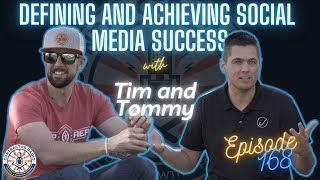
Conversation on Contractor Radio (host Jim Johnson, with Sam) featuring Tim Brown, CEO of Hook Agency. The video covers strategies for social media and SEO for contractors: Hook Agency helps contractors with organic Google rankings, Google Ads, websites, and lead generation. Tim emphasizes producing high-volume, repurposed pillar content (YouTube/podcast → blog → reels/shorts), accepting some imperfection, and targeting a defined niche audience (roofers/contractors). He contrasts chasing viral metrics with tracking business outcomes (messages, leads, revenue), cites 1.5M annual page views for his site, and outlines SEO levers—content velocity (they produce ~3,000 words/month per client) and link acquisition (guest posts, directories, press releases). He recommends creating content to answer frequent objections and using tools like Ahrefs or SEMrush to evaluate backlink/traffic opportunities.
Chapters
Hey, I'm Jim Johnson, your host here with Contractor Radio, and I want to thank you for taking the time today to listen to our show. And our show is all about you, helping you get control of your business so you can grow your business and find that personal and financial freedom you're after. So hang on tight. Episode's about to start.
I wanted to sit down with you today because first off, Hook Agency has been around, I think you said, since like, 1819. Somewhere in there.
Yeah. So 2016. 7. 2016 is when I went out on my own, but, like, we went a little harder on roofing around that time.
Gotcha. Gotcha. So we've had a lot of really cool conversations about what exactly it is that you do. But before we get into the deep questions, what exactly does Hook Agency do?
So we help contractors get higher on Google, whether that's with the ads, which we. We do help people with ads as well, or the organic result. And I think organic. That main section of Google with all the listing of links and the maps, that's stuff that we're particularly specialized at. We're good at both of them. And then we help make beautiful websites, and basically we try to help people get more leads, and Google is a big avenue for that.
Gotcha. So one of the things I wanted to ask you about is something that your company actually doesn't do, oddly enough, because over the course of the past, I would probably say six months, from my perspective of what I've noticed, the amount of content that you shoot, film, photograph, whatever you want to call it, and posting on all platforms, that's something that you have really started to take a lot more seriously. I think on a personal level, for Hook, you really got started more so with the funny memes before the video really started going. So I wanted to talk to you about just specifically content and how you think that that has personally helped you out from what you're doing and also how it could potentially help out a contractor who's looking to do it from a more organic way.
Absolutely. So I'll say this is like, I'm intense with the amount of content I create. And comparatively to most SEO companies, we are also intense for what we do, posting on people's websites, content going on a regular basis. But yeah, the actual strategy that I've been doing is. Is really like make pillar content like a YouTube video and then in a podcast, as ours is a YouTube video and a podcast. And then it turns into. And I've created a system for it to turn into a blog. Post basically automatically, you know, some. A writer is assigned to that, then reels. So somebody in my company, I made it into a little machine internally. Right. Where there's people in the company, there's somebody in the company that's savvy that identifies all the reels, and then there's somebody externally that edits all the reels. And it happens without a lot of my intervention. Actually, none of my intervention. Sometimes there's little mistakes and stuff like that. Like, I'm pretty sure something went out today that said Tommy and it was actually Chuck. But you know what? You just gotta let it fly. Cause it's 80%. You know what I mean? I need people. Your vision is limited by perfection. You know what I mean? Like, if it needs to be perfect, then the vision gets really small.
Fair enough.
So, like, I. I'm cool with a mistake. I'm cool with the video saying Tommy, not Chuck. Tommy. Chuck.
Yeah.
Even though it'd be better. And there's a reason. It's a positive thing if it was correct.
Yeah.
But I'm gonna let it go. And I'm not. I didn't even say anything. I might occasionally, like, actually, like, be a little bit more intentional. But ultimately, like, you have to be okay with a little imperfection when you're on beast mode, right? Yeah.
Yeah.
When you're in beast mode, you got to go hard. And it's not really in this day and age with, you know, we're not trying to go viral here. We're trying to be intentionally valuable to our core audience, which isn't that large of an audience, ultimately, I want 500,000, 3,000 on a good day. 10,000 views of roofers. Honestly, my target market is only 10,000 people, probably.
Yeah.
You know what I mean? So I don't necessarily need this for the world to see it. And sometimes when I'm going after that audience, that larger audience, which I do sometimes because I've been trying to go viral for. For fun.
Yeah.
It's a distraction from my main audience and being of service to them.
Yeah.
But anyways, this day and age, you need to put out a ridiculous amount of content to get seen. And so, yeah, we've done that. At scale, it's two. It's two reels. And then they go out on all the platforms. Yep. So two tick tocks, two reels, two, you know, YouTube shorts, and on Instagram too. Yeah. And so essentially, over all the spots, you just. You get a lot of views from that. It's not, you know, like I said, it's not me going viral, but it's, you know, know, a couple thousand views per video or whatever. And that ultimately adds up.
Of course it does.
Some people will spend so much time perfecting one video, and it's hard. It's hard to do that these days a little bit, because it is. You know, what if that one is a dud and it gets 300 views or whatever? You know, it's tough. That's the tough part about being in videography these days, is you kind of need the quantity game too.
You do. And one of the things that I've learned in is, like, when I first started posting heavily for myself, everything had to be right, had to look right, had to sound right, the message had to be right, all the words had to be right. And what I eventually learned was.
People.
Actually appreciate imperfection because it makes it more real. It's a little more relatable when it comes to. To them, because none of us are perfect.
I think that's one reason why lives do so well on, like, Facebook and all the platforms. Lives on Facebook do really well because sometimes you're bumbling like that. I think we will, like, a little, like, I don't know, you know, I'm trying to get to my next point and, like, maybe, like, I also like feedback. Like, we like ourselves. Right? We like ours. We like thinking about ourselves so we can be part of the. The content. Yeah, we're excited. So a lot of times I'll invite people to comment. I'll even shout out their company or, like, shout people out as I'm doing the live. Because then people like that. And there's a. Even on Tic Tac, too. There's people that, like, sit there and, like, write people's names. They're seeing themselves in the content. They're, like, asking people to be involved, you know, like, that's part of it. And you're trying to like people. We like ourselves.
Well, even just simply, like, tagging somebody in your. Just a typical photo post, like the with people tag people portion on Facebook like that. That makes a huge difference on the level of engagement that you get with the stuff that you put out as well.
Absolutely. I see a lot of people that don't use all the functions when they're posting.
Right.
Like, when they're on social. They're not tagging people. They're not saying where they are. They're not. All of that contributes. I feel like the more data you give Facebook about what's going on there, the more likely they. They are to show it. It's kind of like SEO in a way, right?
In a way, yeah.
The more information we give on our page, the more Google is likely to show it because it can. It knows what it is and can, when people are searching for something like that, show that page. And so, like, there's a lot of corollaries, you know, with, with algorithms on social and on Google. And so I've been a student of algorithms. I haven't mastered them. But that's, you know, part of the beauty of it, I think. Like, I'm a beginner and I'm going to continue. Like, I don't, I don't think of myself as a master, but I always said, you know, we have 1.5 million page views on our website every year.
Okay.
And it's a little less obvious. I'm not an influencer. I don't think of myself as an influencer. Really. It's cool that a non influence and I had that before, like, even some of this clout from memes roofing memes, which I'd say that's the closest I've come to being like light, light influencer roofing. But, like, I had 1.5 million page views on our website and I wasn't an influencer because I knew how to work that algorithm.
Yeah.
So you can learn how to work out your algorithms and you don't have to be an influencer or even like, involve your personality. Because some people want to avoid that.
Yeah.
For various reasons. Sometimes they're scared and sometimes they just want to build a business that doesn't require them. Yeah.
And, and I've also learned, and I think you've learned this as well, you have to define what your success looks like for you on social media. You know, some people, they define success by the amount of views they get or likes or engagements or anything like that. I don't really care so much about that anymore. And it's because I meet people all the time that are like, hey, man, I see what you're doing on social media. Like, I'm keeping up with you that way. And like, but nobody. Why don't you engage with it? Why don't you comment? Why don't you do something? You know? And it used to frustrate me, but now I'm like, don't let it frustrate you because you never know who's seeing what you're doing. So I started defining my success as how many messages am I getting? Because that's the people who want to do something Those are the people who are taking it seriously. So for me, if I go. If I go three days without receiving a message about something that I do professionally on Facebook, my content's not working. And that's how I judge it now.
So there's something called dark social. So they call it dark social when somebody's like, you could send a video to a friend. Mm. You didn't like the video. The content creator has no idea that you ever viewed it. But then they're like, sending it and there's like people. There's so many people seeing it. And a lot of these platforms now show you impressions.
Yeah.
But you don't know how much of that is real or whatever. Yeah. I think the thing that's kind of, you know, a siren that's attractive about TikTok is essentially, I think it's like the microsecond is a view. They call. They call it a view.
Yeah.
You could watch half a second and they're gonna call it a view. So people are out here, like, obsessed with this short form video thing. And it's like, really? How much real business did you get from that?
They're obsessed with the algorithm, not the short form video is what they're obsessed with.
Yeah. And there's something to be said about you should be wielding whatever is working at that moment in content for your business. You should be using short form video now. You should be going hard. But the question is how much of it is turning into business? And if it's not turning into business, then it's just a glamour metric and it's just distracting to what you're doing as your main thing. And what I've learned is, so I've got a lot of real business, millions of dollars of business from what I do on social media and our website, and obviously like millions of dollars of business. And I track it back and I know where stuff comes from and stuff like that. But ultimately, if you are sitting out here just focusing on views and stuff like that, and literally the content has nothing to do with what your main business is, you really could waste a lot of time. And I have. I certainly have. I feel like it was kind of for fun, but I've realized it is a time waster to sit there and try to, like, go viral. Yep.
Then that's kind of what I found as well. I don't go viral anymore. The one video that I do have that went viral had nothing to do with business whatsoever. And I was like, this did me no good.
Yeah.
It made me feel Good for about seven or eight hours.
And then post the metrics. You can post a screenshot.
Yeah, I could post a screenshot and. But at the end of the day, doesn't do anything now. I don't mean to take anything.
I just had one kind of do that. Like, it was kind of big. It did like 130,000 views or something.
Yes. That's great, though. That's awesome.
It's great. But it. Literally no business result. Yeah, like a lot. Like, honestly was a distraction for a couple of years. Well.
And again it turns into. What do you define as success in social media from the organic side. And the last thing I'll say about this, and I only bring this up because you said you've been obsessed with algorithms and you follow them. TikTok's the only algorithm that I'm aware of from a social network where the algorithm chases you instead of the other way around. So on Facebook, we can set our own algorithm of what we want to see.
Yeah.
Based off of what we like, on what we comment on, what we share, all that good stuff. And they'll continue to feed more of what we engage with. Whereas on TikTok, the way that they distribute content, they distribute it based on what's getting the most views, not necessarily what I would want to engage with. And that algorithm chases us, which is why it's been so addictive.
Which is the lowest common denominator, too. Like, yeah, they ultimately, like, they just want to keep, you know, we want to keep people on the app. Like, I know ultimately I get that. And it's good.
Well, that's what all social platforms do. But Facebook has a different way of doing it than what TikTok does. TikTok takes what's getting the most engagement. Let's continue to show it. Because they have different levels of distribution on TikTok depending on how well the video has performed. But I want to kind of steer away from that just for a second, because there's one thing that we were talking about off camera that I thought was really interesting, and it's the difference in styles of SEO.
Yeah.
So you guys are obviously aggressive. You make that abundantly clear. But what is the difference between something like a. Like a content SEO and like, backlink SEO?
Yeah.
Like, what's the difference?
So ultimately there's. Those are the two main levers you can pull. Like, let's say we're in the cockpit and we're trying to crank up our speed, where time is a big factor with SEO. So no matter what you Do. And I know all the SEOs say that the scam artists and the legitimate company.
Yeah.
Time is like actual really important part of SEO.
Yeah.
But time plus content and a good amount of it, like the absolute ideal is like a heavy duty content velocity.
Yeah.
And then links from reputable websites back to your website. Ones in your niche, like home service niche websites and local websites that are linking to your website. So those are like the two main levers. If we could crank both those, we'd be flying. And so basically what I tell people is like if they're or I'm looking, people ask me to like check out their company that they're using. Right. They're like, so I'm just trying to see what they're doing. And sometimes they're doing good stuff. And I actually tell prospects when their current SEO is doing good stuff. I'm like, it's just time. I'm sorry, it's just time. Or your market is hard.
Yeah.
You know what I mean? You're in San Antonio, you're in Minneapolis or wherever.
Yeah.
You know, so ultimately either go after more suburbs to get like those earlier wins to if you can rank for five suburbs, you could eat for, you know, you could be a 10 million, 20 million dollar company. You don't have to own a major market. Right. So there's a lot of different little components that there. But ultimately your SEO company should be creating a good chunk of content. We do 3,000 words every month. It's keyword targeted. 3,000 words or and excuse me, I should say, and getting links from other websites back to yours. And every single month we're getting links from other websites back to clients websites. And ultimately those two things are the big if they're not doing that, that's they're not being aggressive with SEO. There's ways to do SEO where you're just like tweaking the technical side of it. Meta titles and descriptions. Those things do matter. They really do matter. We just think of it as 20% of our overall deliverables because it's easy to get. Some people will just keep on giving you an audit every month.
Yeah.
You got this list of keywords and you got like some analytics. Analytics are not going to change the trajectory or velocity of your company's rankings.
Yeah.
You have to push effort and more effort than your competitors because this is a competition. So you have to actually there's got to be effort done every single month. The technical stuff is part of it, but it's just not gonna move the needle by Itself. Yeah.
I think the content SEO portion is easy for people to wrap their head around. You can see it, it's tangible. You see what's happening. Correct. Where. Where I think SEO gets difficult to begin to understand specifically in the contracting world is the backlink side of it. Everybody knows they need it, but nobody truly understands it. If that. If that makes sense.
Some people do play it down. They're like, I don't. You don't. You know, can't do that. Or like, Google tells you not to. Because it. Google does tell you not to, by the way.
Fair enough.
There's ways to do this that are so. There are natural. You know what I mean? We do local directory listings. We do guest posting, which is writing for other websites and getting in that website a link back to yours. We do press release distribution, things like that that are kind of. It's a natural way to get links back to your website. Yeah, those are. It's basically, it's a simple thing. If you had a friend, let's say you do have a friend that has a website that has a lot of traffic. You know what I mean? All you got to do is say, you know what, Tim, I want to. I want to write a blog post about this particular topic, like for a roofer, you know? Yeah, of course. I want to write a topic about what size of hail creates damage. Can I write that article for you? Mm. And if they actually have traffic to their website, it's a good. A decent amount of traffic. Yeah, of course.
Define a decent amount of traffic.
I would say like thousand plus people on the website a month.
Okay.
Amount of traffic, like, if they have that. And there's ways that you can see this from the outside. Ahrefs. Ahrefs.com or semrush. Semrush.com.
I love semrush. I love that.
They're so fun. And you can, like, look at your competitors and look at what they're ranking for and you can steal those keywords. Yeah. Beautiful thing. There is an opportunity to then tell them, hey, is it okay if I could write this blog post is going to be 500 plus words and I'm going to make it good. Like, I'm going to actually make it solid. And then you'd write that blog post for them. And then in it, ideally in the first couple paragraphs, you'd link back to your website.
Yeah, of course.
So that content that you're creating for that person's website, some people are like, I don't want to make that. Well, that is a fundamental component to all marketing, creating heavy duty content. And there's so many easy ways to get into this. And the first way that I like to tell people about is what are the objections that you've had this week? We all get a little tinge of like anger, like sadness or frustration when a prospect rejects us. Right. What if I told you, you don't have to feel that. What if I want you to put this in a spreadsheet or a note on your phone. Every single time somebody has an objection, they turn you down for whatever reason. Write it down and then create an empathetic but comprehensive video to address that objection. It's multiple prongs. We can put it on social media, we can put it on YouTube, we can cut it up into reels, we can use it for sales training for our team because it's hard to do this right. I am about to hire a sales assistant. I've got 20 videos that that person. All the objections that we experience on a regular basis that I've already made and I didn't make them that. I mean, I know this is a, an abomination for a video person, but I didn't make them that fancy. Some of them were just me walking around my neighborhood after work.
It's what works, you know, I mean it is.
If you have your 20 objections and you have videos giving empathy and comprehensive like reasoning, why say more expensive? That's a very common objection. Yeah, of course. Why would I go with you if you're more expensive? Well, we had somebody that just bought a website from us that we are twice the cost of the nearest competitor and we've done a lot of soul searching and work around why we're expensive for websites. We believe in what we do and this kind of work and this kind of videos will not only be really good for your sales process, it's be to going, going to be really good for your internal understanding and you're sharing that information with people on your team, training, leadership. And people need this content on the Internet. Most, most roofing companies, most contractors, home service businesses are not creating this kind of content because they're scared. Don't be scared.
It's true.
Have fun.
Yeah. And that's what it's supposed to be. If it's not fun, it's done right. Yeah, like, like you got, you got to enjoy it. And you know, I'll be talking tomorrow, you know, to the sales guys about how they can support from a content creation side and you know, social media and doing all that good stuff and make it to where it's easy for them. Because there are ways to make it easy. Yeah, there's ways that you can combine your personal life with your work life to be able to promote your company and what you're doing. You don't have to do it every day, but there are ways to do it. And that's actually part of what I'm going to be talking about tomorrow. I'm looking forward to it.
Awesome.
We're gonna have fun, man. I appreciate you sitting down with us, Tim. We had fun. And, guys, seriously, if you're interested in, you know, SEO or Google Ads or anything to that extent, I do recommend that you give Tim at Hook Agency a call. We don't partner with people that we don't know do good work here at ccp. So obviously that is a testament that you do good work.
And if we suck ass, then you can just talk to them and be like, these guys suck at. So you know what's cool. Hey, I'm cutting through the noise here for a second. I just want to say that ultimately, we care a lot about our reputation. We're gonna do our absolute best to make sure that a referral from you guys is honored, of course. And so ultimately, we'd love to chat with you.
And that goes both ways. By the way, if you guys need help from us, and not just in marketing. I know I'm the marketing coach, but in anything, you know, with. With sales, with hr, with financing, to culture and mission and vision and leadership, you know, ccp, That's. That's. All of those are pillars in what we coach. Marketing is just one of eight or nine pillars that we coach on here, so we can help in numerous different ways. But, man, I appreciate you, bro.
Brother. Absolutely.
Be good and peace out.
Peace.
Oh, you're still here. Well, you must have thought it was great. Make sure to like and subscribe to contractor radio and never miss an episode, because we're here to help you get better at what you do.
Sam.










