An Environment of Excellence with Chris and Michelle Russ
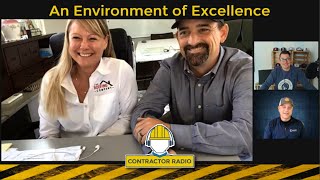
Contractor Radio episode interviewing Chris and Michelle Russ (The Roofing Company, SC). Michelle (≈16 years in roofing) and Chris (VP of Sales; former 'gypsy cowboy') describe founding their roofing company ~4 years earlier and achieving rapid growth by documenting processes, delegating, and enforcing consistent execution. They emphasize building a magnetic culture through authenticity, accountability, core values, hiring for character, mentoring, and weekly leadership meetings. They recruit via culture and social media, maintain a marketing team (4 people), a careers page (www.theroofingcompanysc.com), and report very low turnover (~2%). They are active in community giving (regional coalition donates one needy roof per quarter across SC/NC/GA; local coat drives and church roof projects), and highlight leadership lessons: define roles/lanes, trust teams, and lead by example.
Questions this video answers
April 21, 2021
About 16 years
About four years before the interview (≈4 years)
Chris: VP of Sales; Michelle: General Manager/operations leader
Approximately 2% (described as very low)
Chapters
Hey, everybody. Welcome to another episode of Contractor Radio. Contractor Radio is here to educate, entertain, hopefully share some strategy and tactics to help you with your contracting business. And today we have two of the superstars out there, rising stars in our industry. Can't wait to bring them on because they have created an environment in their business that is one of a kind and it's very magnetic. And we want to talk about what that does to attract the right people and the right clients to their business. But before we get there, let's have a little message from one of our sponsors. We do have to pay the bills. And we'll be right back with our special guest today.
Want more 5 star reviews from your customers? At Signpost, we make it easy for your customers to give you great reviews on Google, Facebook, Yelp and more. Our software connects with industry specific solutions driving even more reviews from your customers. Drive loyalty and repeat business by sending the right messages at the right times to your prospects and customers. Message your contacts from anywhere, anytime, using text, photos and video all in one app. Check on progress with campaigns and review generation across Google, Facebook and Yelp. Visit signpost.com and get your demo today.
Hey, everybody. Welcome back. Thanks for being patient with us as we play one of our commercials. If you haven't engaged with Signpost yet, you really need to. They make your customers raving fans about you, they help you with your reviews and really customer engagement and creating this magnetic thing with customers. But we want to talk a little bit more about being magnetic with our people today. And we've got a couple of special guests to come on. But before we do, we're going to change up our podcast a little bit this week and we're going to bring on one of our other coaches who's going to be a part of this conversation because he knows these people quite well. Hey, Nathan. What's happening, buddy?
Oh, man. Just enjoying the spring as it's on its way. I am a big fan of sunshine and a little warmth.
Yeah, that's something people don't know about us. We don't all work in the same office. We're actually all remote. We work all over the place. We have coaches in Colorado, which is where Nathan is. We have other coaches in Minnesota, where that's like the Arctic Circle and Santa lives. I think we have Ohio, Florida, and so also here in Texas. So we're going to do our podcast a little bit different as we move forward by bringing on some of our coaches that either know the guests that are coming in or have something in particular they may want to ask some questions on as well. So without further ado. Nathan, you ready to bring on these two? I'm a little scared.
I can't. I can't wait.
Let's go.
All right, let's do it. Hey, Chris and Michelle Ross, it is great to have you on board today. I'm gonna make you the focal point, if we can here real quick. All right, there they are. So good to have you on the show today. Is this your first podcast?
I think it's mine.
It's Chris's for. Okay. I know Michelle's famous. Chris. Chris is trying to be famous, right? Is that the way it works? Okay, so Chris and Michelle are the owners of the roofing company in South Carolina. Can you guys give us a little background, like where you started and kind of how you've gotten to where you are today?
I'm gonna let Michelle do that for a minute.
So I've been in the roofing industry for about 16 years now. About four years ago, we opened the roofing company, and I just knew we could not do it the same way I had been doing it for many, many years, which was all in my head. And my. I would say my. My. My yellow legal pad, and that was. Everything was in my head and on my little notebook, and I was kind of being micromanaging every department, every team. And that's when we scraped up. We were three or four months into the roofing company, and we scraped up, put on our credit card a ticket to one of the conferences where we met Jim. And I remember Chris and saying, he's going to be our coach. And I remember saying, this is the way it's got to be. Something's got to change. Got to get out of my head and on paper. And so we proceeded to do that.
And.
It has not only tripled, I would say quadrupled in the last four years due to. Due to us being able to put the process on paper, which was a lot of my. A lot of my problem, which was getting it out of my head and on paper and delegating. So that's where we started. Chris.
Yeah.
What.
What roles do you guys play in your business?
A lot of it was, well, so she's smart, and she handles the smart stuff. And then I'm. I'm better at doing other things, thank God. The production side of things and. And doing the running and doing repairs and doing, you know, all the. The other side of stuff that's not doing with. With numbers. And so, you know, we were. We were at least smart enough to realize that there was stuff that we didn't know and that, you know, you don't. You know, you don't know it. But, you know, when we got out to start going to the conferences a little bit, we. We got to realizing that there was a lot of stuff we didn't know. So we've been too busy working. In other words, like, we've been here working, and then when we got out there, like, oh, you can do all that on a computer now. So. So that. That's. That's kind of what got us rolling. And then once we started, you know, going down that road, you just learn a little more something every day and. And get better very quickly once you know that stuff.
So the actual titles is Chris's VP of Sales. And I am basically the gm. I don't know if you call it. Did we ever come up with a name on that end? So it's kind of like on the end of it, if people, you know, on the production, on. On the other end.
So brains behind the scenes and the promoter outside of the. Outside of the building. Is that about right?
Yeah, we go with that.
Okay. All right, good. So I got a question for you, Chris. Michelle just told us she's been the roofing thing for 16 years. Have you been in the roofing thing for 16 years?
Not. I got trapped into the roofing thing. I was a kind of a gypsy cowboy before we started this, and I rode horses and did some various other activities all over the country and all over the world. And so when I met Michelle, I actually needed somebody to do my taxes, so she. My. I was told to go talk to her, and so that's. I kind of got. I stayed there after.
That was a smart move, Chris. Just on. Just so you know, Smart move.
She hasn't been able to get rid of him yet.
Yeah, I. I didn't, you know, as being a cowboy. Cowboys like to work off the back of a horse. So, you know, I don't know if you've ever heard the definition of a cowboy. It's somebody that's too lazy to work and too nervous to steal.
I did not know that definition. And funny story, I actually grew up riding horses, herding cattle, breaking horses and stuff like that. When I was really young, my grandfather and so I know enough about horses that they're bigger than me and you if you do something wrong, so. And I had that experience, broke a leg really badly. So me and horses, they were neat to look at. I don't ride them much anymore. So, you know, the whole. If you get kicked off the horse, you got to get back up and get on the horse again. No, none of that for me. Not. Not when it comes to actual horses. Other things. Yeah, I get back up and go again, but not horses. So four years ago, you scraped up enough to go to a conference. It was awesome meeting you guys, by the way. I can remember that interaction. And you came on with us. You started working with Nathan and going through. And getting these processes done. Was that the key was just getting it down on paper. All the stuff that was in your head. Do you see that often in other contractors? Because now you guys, you're, like, kind of famous. You created an association there in South Carolina, right? Like, you started that whole thing. Do you see that as common. Common in other contractors as well?
I. I do, definitely. And we have a lot of local contractors that will call us and ask advice. And we start with what you guys taught us is, where are you at? What's your process? Why are you paying your sales guys the way you're paying them? Like, you know, and it's. It's definitely helped a lot of. A lot of other people besides just Chris and I, for sure.
And we've made a lot of friends. And it weeds out the. The bad ones, too, because they're like, you're not gonna. You're not gonna have good interactions with every. Every person you meet, but it lets you know who. Who your good contractors are in the. In the area. And. And, you know, like, we've got. I had a guy, one of our people in the. In the association yesterday came to the house and picked up a bunch of shingles that we had. All stores were closed, but we had shingles. And he just came over here and got them. So that's. It's amazing when guys can work together.
That's something that's different. Like, Michelle, you've been in this a little while now, right? And so have I. I don't remember contractors working together, you know, before about five years ago. And here recently, we've started to build connections and grow together and start to kind of raise the bar in the industry a little bit. But I got a question. So, Michelle, you've been in it, you said 16 years. What was the key thing that made you, like, change your mindset about, hey, I've been doing it this way forever. What made you go, I'm gonna go to a conference?
Well, what happened with that was I got married to Chris, and then I've got, you know, two older girls that are in their mid to late 20s. And I could work, you know, 60 hours a week, 70 hours a week. It was my passion. That's what I love to do. Well, then we had two other children. And I think when I ended up with you guys, Woody was my. Our baby is like. Was like two or three months old. And I said, I cannot do this anymore and be able to give them the life that they deserve when I go get off work. But not only that, I'm handicapping each one of our people. So when we left the. When I left the previous company, we had five employees on our back. And all five would come to me and say, what am I doing now? Where's my schedule? What are we, you know, it was all driven through me. So if one of the babies were sick, well, then the company just stopped. And then it didn't, it didn't, you know, stop one day, the next day it just piled up more and more on top of me. So that was, that was a big moment for me. It's like I told Chris, I remember right before I said, I don't know what's got to change, but something's got to change. It's not working anymore. I can't do everything anymore, period. And that's when it started. Was realizing that I am only one person and a lot is in my head, but it's time to get it out. Nathan really drove home that it was hard for me to do, but I've got to the point that I can delegate well now to get it off and let them actually handle their, their teams in every department.
So, so what, what's been the most. I know you, you learn this stuff, right? Like there's, there's an order to things. These things got to get down on paper. We got to share them with everybody else. What's been the most eye opening point after that? Like, wow, okay, we've put all these things in place, we're implementing them. What. What was the biggest eye opening point after that?
You want to say it or would you want me to?
Well, I mean, there's, there's several of them. One of the things is that it's not as hard as everybody thinks it is, right? So, like, it is hard. You got, you got to do work and you've got to, you've got to really put in the work and it takes hours and hours to do it, but if you, if you do it, like it almost has to happen. There's. If you put in the work, it's got to happen. But if you've got somebody like, like you and Nathan that can. Can direct you in the right way to do it and hold you accountable for what you're doing, it's unbelievable how. How much faster and how much easier that is. There's, you know, there's not any real secret to it, but it's. It's just knowing the stuff. Like, you gotta know it.
Don't tell everybody that it's not hard or there's a secret. It's a big secret. It's a big secret. And then, like, that's the only way it is. You got to come to us to get secret. No, just kidding. Like, this is. This isn't rocky science, I would have.
To say, Jim, is you can put it all on paper, but unless you're consistent with it, it doesn't work. And we went through that about a year ago where, hey, we got this great plan, you know. Now why aren't you following it? Well, because I'm not preaching it every single week or I'm not talking about it and holding them accountable for it every single week. So the consistency is probably the biggest thing that I've learned in the process is you can write it down, but if you're not consistent with it, it does you no good whatsoever.
And the other thing is hiring really, really, really good people that are on the same bus as you are. Like, that's so, so important to us.
Yeah. So I was going to talk about that, but there's. Before I get there, Chris, you're going to. You're going to really understand what I'm about to say. Because of your background, that whole thing of the being consistent with it, it's the whole. From us as coaches, we deal with this all the time. You can lead a horse to water, but you can't make them drink.
Right.
You know that saying. I figure as a cowboy, we can. We can impart this information to everybody we work with, but if they don't, like, commit to it, believe in it and execute and preach it, as Michelle said, every single day. It was just a waste of money and a waste of time. And it's been cool to watch you guys. I'm just amazed at where you were and where you are today with the people that you have working for you. Most of those guys have actually friended me, and gals have friended me on Facebook, and I get to see their families and what they're doing. What do you think brings those people to work for you guys.
That they. That they can. They can actually see what our culture is, you know, through. Through our. Our social media and through our actions. You know, we've had. We've had people come, you know, all the way across the country to work for us. So, I mean, that. That's got to be. You know, they. I feel like they can see that or else they wouldn't have come. But, I mean, that's. That is. Our biggest thing is just that everybody here is respected. Everybody is, you know, a valuable player, and we recognize that, and we try to build people into leaders. And, you know, we realize that they might not be here forever, but if they. If they are here, there's a reason and, you know, maybe to go on to do something else better later on, but if it's to stay here, that's great, too. But we just want them to be better off when they. When they leave here. And I think people see that and.
Realize that I do, too. I see your presence on social media. Who's driving that? Where did that all come from? And who's that? Michelle? All right.
We've taken on a new department in the last month, and we have a new marketing team that we've been working to put together. But I've learned a lot.
Yeah, you. You've really taken it by the horns and spearheaded the whole thing. And now, if I remember right from our conversation the other day, you're training a couple people. Is that right? Why are you training them and not doing it yourself?
Well, I don't have time to do it myself completely, but I want them to be able to feel the passion that I have for the roofing company and have them, you know, so they need to learn it to their full potential. But it goes all the way back to is I've got to learn it to be able to train to teach someone else. I can offload their responsibility so that I don't continue to pilot on myself, because I'm really bad at saying, do it. I can do it, and then ends up being halfway done. So I had. We have a total of four people on our marketing team now, and three of those I work very closely with. We have weekly meetings and just saying what this week's, you know, agenda is and just having them kind of feel that same passion throughout, you know, social media. And the only way they can do that is when they're engaged with our culture in every meeting, and they feel it and they hear it.
So one of the biggest problems in our industry right now, we get this call all the time. This is like, number one in the last 12 months, I'm having a hard time hiring people I'm using. Indeed, I'm using ZipRecruiter. I'm making, you know, I got Facebook ads out there for people. Any. Now, do you guys struggle with having good people come find you?
Yeah, Well, I mean, it's just like everybody else. I mean, good people are. They're out there, but you've got to meet with him, know that you have a good job for them, number one, I guess. But then you gotta give them a reason to come work for you. Like, you can't just be like, hey, come work for me and not give them a good, you know, something to come work for.
So our whole idea is everyone that's ever worked in our company has come on through Chris or myself or through other teammates in the company. And so we started, you know, changing up. Instead of going through a deed, talking about this, you know, as when you do go out there and look for additional salespeople or different people to add to our team, it's more of, here is our culture, here's our team. If you would like to be a part, you know, then, you know, there's ways and avenues to come in. But it is definitely instead of geared toward, you know, we're hiring now and all these things, it's more of, you know, attracting them by showing them our culture, which I believe is a lot different. Most roofing companies have a culture, but it's not a good culture. I would say probably 80% of the roofing contractors out there, they probably don't even realize they have a culture. But it speaks for itself. When you, the other people that come in, they want to come on board with us, which is a no, no. Now we're not hire any other roofing contractors. No one from another roofing with the roofing sales background. So of course, we've made, you know, one or two exceptions at the time, but it is, it is number one rule.
It's easier just to. To teach good people how to be in the roofing business. You can't teach them to be good people, in other words.
Yeah, the old saying of can't teach an old dog new tricks either. Right. Like if you try to bring somebody in from the outside that is used to doing it a different way and being in a culture into your culture, it can actually end up being almost viral and negative inside of a business. Nathan, you got some questions for Michelle and Chris?
Yeah, I do. So for some of these people who. And I remember when you talked about the this particular person who came all the way across the country, I got a. I got a text message from Michelle. She was like, I can't believe that this happened for these people who you. You guys attract to you when you hire them. And I'm sure you guys ask them, like, why are you here? Why are you in this office? Why do you want to work here? And what do they say when you ask them, why do you want to come work for TRC or be part of our team? What do they say to that?
I can tell you what they say is because you taught us something other people have never taught us. You. You give up, gives it. Give us an opportunity that nobody's ever given us. And that doesn't necessarily mean money. It means that, you know, we lead by example. And, you know, I tell them, you know, Friday morning, and we have every huge leadership meeting on Friday with everyone in the whole company, and it's like, guys, follow your passion. You know, it's like, if I didn't follow my passion or I didn't love what I do here, not able to tell you guys how to make it your own. So. And there's been people. We have a very low turnover rate, but there's been people that come to me and go, boss, I just. I don't feel it like you do. And I say, well, then you need to find something that does. And they leave. Amlakovy amicably, whatever. So they. They leave, but they're positive and they're like, I will never forget what you told me. You actually, you know, helped me to decide and go the path that I wanted to go, which is amazing to me, because everyone isn't in roofing, everyone isn't in roofing sales, and everyone isn't in production. And there might not be a spot for them, but to know that I was able to jumpstart them no matter where they are in life, be able to jumpstart them on what their passion is. By teaching them to start honing in on their whys and start reading books and start going about it in ways and teaching them things that I've learned. It creates a different culture of people that want to learn and want to grow regardless of what the boss thinks or what we think is a whole.
In the company, that's incredible. To have a. To have a culture that's so palpable that people can tell if they don't fit in and they're not over here blaming the company, which is the thing I hear a lot like, oh, they were like, this. And I told them they needed to fix this and they needed to do that to be a better company.
How.
What are some of the. What are some of those little secret pieces? Maybe not secret. Right. They're probably. They're probably more obvious than most people think. But what are some of those things that you guys do that make that culture so palpable that somebody could be like, this is my kind of place, or I don't know. I don't know if I fit in here. What I mean, are they. Are there activities? Are there mantras? Do you guys all drink a certain type of Kool Aid? Do you wear the same shoes? Like, do you.
What kind of.
Do you guys hold hands and chant? What. What is it?
Well, we start with the Kool Aid.
Perfect. Grape or cherry?
Go ahead.
Well, so it's not really like one thing. It's everything working together. So, you know, there's. Our core values are one that we, you know, we. We live and we die by those. Like, we hire and we fire based on those. Another thing is actually holding people accountable for their actions is something that learned is very important. And allowing people to solve their own problems, like, you know, what we try to have happen is not for people to come to Michelle or I or any. Any one of our managers with problems like they need to come to us with solutions is kind of what we. We try to aim for is bring us some solutions to what's. What's happened there and turn around, let them figure it out. Because maybe we don't always know the answer or maybe. Maybe they just need to learn it better for their self. You know, you learn it better if you learn it for yourself sometimes.
And I would have to definitely say I agree with that 100%. But I would have to say too, is people want a leader that's real or leaders that are real and they understand. They've been through hard times, they have weaknesses, they have strengths, but someone that engages them on a level that they don't put them on a pedestal. And every one of you know, our team hears things from Chris and I, every leadership meeting that make us very real. And they understand, okay, so you've been through some hard, hard stuff in your life. You've had this. You. You've hit rock bottom numerous times. And. But they see that, and when they hear that, they go, oh, okay, well, I'm not the only one. And so you give them hope without saying, you've got hope, or you. You're not telling them. You're showing them by example. Hey, this is what I've been through. Here's an example that you never knew. And you, you know, when. When they understand that you're real and that you're not just all taught, but it is by example they tend to gravitate towards you. No matter where they come from. They understand that there's a realness about us that you can't buy or that you can't just be one day. Which I would have to say is a lot. You know, by example is a lot of it. A lot of it.
That's.
That's huge.
I heard.
I heard a couple of major things in there. The first thing that I heard that I thought is super cool is the concept of authenticity, right? Like you're not being fake with your people. And then the second one that I'm hearing is empathy. I mean, you guys are explaining that you guys haven't always. I mean, we haven't always been a rock star. And honestly, there's still places in my life where I'm not a rock star that I'm growing too. The last one that I heard is you guys had explained that you're willing to share with people some of those more sensitive moments in your life in order to connect with them, which. Which keeps you from being on that pedestal, which is a huge thing for me. So what. Last thing I heard in there was humility.
I got. I got one other one that I heard you give people hope. That was the one that really stuck out as you were talking is, you know, this world is a pretty rough world. Chews people up and spits them out on a daily basis. And for others to see, hey, people have had tough times. They've had rough moments in their world, but they've been able to come through it, pull up their bootstraps and get going. Anyway, that gives them this, hey, maybe I can do that too. You see that in your business every.
Every week, every week, when we share another moment, you know, of just realness is what I would say is people are in awe that, wow, I didn't know that happened to you, like, that happened to my best friend. And you would not even understand what happened to her now. Like, she's took that the other way now. I see. You know, but it just creates an excitement that just rolls through the company, and every department feels it. Every manager has, you know, has shared personal moments. So you once the, you know, say the leaders of the company, Chris Knight, you know, share some of the personal things that we've been through and how we hit rock Bottom and we're able to do that. Well, then what happens is you create that example to your other managers. So when they have their leadership moment, if they talk about it and then everyone goes, oh wow, you did too well, it just creates a hope and excitement that you cannot, you can't preach to them to tell them. You have to show them or tell them what you've been through by example. And I think that that has been our key to our 2% turnover rate into our high, you know, our high culture is just being, it's being engaged, being very real with them to understand, hey, I have bad days just like you do. There is nothing more, you know, but we've got to stay positive and let's, let's keep moving forward, you know, look at the big picture and kind of try and steer at the same time. Everybody does have moments of weakness, including us.
Well, yeah, and as far as that culture goes, it's, I think people pro. I've actually been reading a book.
Surprise.
It's called the Road Less Stupid. If nobody's read that, that's a, it's a really good book.
I love that name.
And so one of the things in there he talks about, about is where people get culture wrong. Like, culture is not necessarily having a bunch of monsters in the refrigerator and ping pong tables and, and that could be it, but it's not necessarily it. Like, you know, cultures is, is making people understand that they're capable of doing anything that they want and know that they are being held accountable by other people. Because that's a culture too, is having a culture of go getters that know what they need to do and go do it instead of bellyaching and being, you know, a victim mentality. Like, we make sure that everybody practices a positive mindset. We don't allow negative thinking. You know, that kind of sounds bad, but like we just, we don't accept that as, as a thing. Like you might have a bad day, just dwell on it for a minute and then, and then, you know, so get on with life.
So, so we're going to pause for just a second. I want to take a break, but I want to dig into this concept that culture isn't what most people think it is. And we're going to come back with that in just one second. You guys good for just a few more minutes? Yep. All right. We got to pay the bills around here. Somebody's got to keep the lights on. So we're going to go ahead and hear a little message from, get the referral Sam. All right, guys, we are back. And look at Michelle. He. She's. She's getting her work done in every spare moment that she can. I love it. So you said something there that caught my attention, Chris. I think a lot of people think of culture as like, all the stuff, right? Like, like at Google, they got slides and stuff and pinball machines and the, the breakfast bar and all that. But is that the way you guys see culture? Is it something different?
No, I mean, that's. All that stuff's good, I guess, if you've got, you know, if you've built up. If you built up to that, if that's become something. But, you know, a lot of it is. Is what you. What you expect out of people, as long as that, you know, that is the culture. What, you know, what, what happened, what people. What people do when they're left to themselves to do something. That's culture. So, you know, the, the fun stuff's fun, but the, the work stuff is the stuff that a lot of people miss.
Yeah, I. You said exactly what I was hoping you were going to say, because I think everybody gets. Gets caught up with thinking culture is the fun stuff, but culture is something you really own, and it's really very personal to usually the leaders in the business that then permeates throughout that business. I have seen companies that are all about the fun stuff, and it attracts all the fun guys. And sometimes work doesn't get done unless those expectations are put in place. And then the other, the other cultures that are family and everybody's part of the family and you really, like, look out for each other. It really. Culture is unique to each and every company. Would you agree with that? Yeah.
And that's not to say that we don't, like, we don't have fun. We have a lot of fun. We have all kind of fun. But, you know, there's, there's, you know, we do trips, we do all. All that other stuff that a lot of people do, but it's, you know, it's the, the people building is.
Is.
Is our culture is building people and making sure that they're better off when they leave us. Kind. That's kind of. We, me and Missy have similar visions and whys, but the mine is that everybody that meets me is better off for having met me. Like, if you're not better off after meeting me than you were before you met me, then what was the point? So that, like, that's, that's. That's kind of my mission, and that's what I I drive the company towards. And she's got her. She's got her own too. But that's, you know, that's. That's kind of one of those important things to know that you can build your culture with is. Is, you know what your why is?
Well, I mean, before you, Michelle only had one set of taxes to do, and now look at her.
Yeah, so that was Chris's. What's yours, Michelle?
My why is very similar, but slightly different. My why is for every person that comes in the company to have them see their full potential and realize their full potential potential and live their full potential. So I do a lot of one on one mentoring with them and helping them to realize their fullest potential. Because a lot of people, especially through Covid, it took a turn for the worse in the mind. It wasn't so much economically down here, but it did a lot to the mindset because people were closed in, which took them to a different level. And so mine is slightly different. Although, you know, we play off each other's a lot. Is that it?
That's super awesome. So we can have two different whys between two different leaders and still have them aligned with each other and a part of the culture. That's not something I've heard before. It seems like everybody says, hey, I gotta be on the exact same page as everybody else.
But I think that's a little bit differently, though.
Yeah, just a little bit in a.
Box, so to speak.
But I think that's what is unique about you, that those are things that attract people to you guys is that you, you. You can see things a little bit differently. They're aligned, but they're not exact. And that's okay. And you both build other people in different ways, which I think is super cool. Nathan, what else you got?
So I definitely have seen and worked with a number of marriage partnerships in a business, and some of those things, they all run a little differently. And so I play, I play a lot of. I play a lot of outdoor volleyball. And one thing that is very unusual is for a couple to be able to play a competitive sport together. Especially like if you're playing twos, two, two against two, and you're playing right next to your partner, it's pretty rare to see a couple that can actually manage that without wanting to kill each other. So my question for you guys is how. How has that worked for you guys? As you guys have, you know, you guys have been married and started this company and then also had kids at the same time while also seeing what I think you said three times growth levels and, and being married, like, how has that worked?
It has good days and bad days.
I do both.
Sometimes. We're, you know, we're trying to challenge each other in, in ways, but I think it works the best when we steer and we stay in our lanes. As you know, he stays on sales and I say on the other departments and I don't try and tell him how to do sales or versa. I think it works best that way because we each also, like, we expect our teams and our managers. We have to be held accountable ourselves. So if it goes wrong, we can't tear each other apart. We have to look at it as a whole and let each one hold that responsibility to the fullest.
Yeah, that's pretty awesome. So how did you guys. What was that process like, figuring out what your lanes were? Because I remember having a few conversations. Michelle is so good at processes, for those of you who don't know her very, very well, that she kept building processes around Chris's job and then he didn't have a job anymore. And so how, how. What was that like?
Well, in my mind at the moment, Chris didn't really want a job. That took us, Nathan, about eight months to actually figure out if he wanted a job and if he did, what did he really want? And that's. That was a whole nother process with Chris and I separately, because I felt he didn't really want to be involved. Involved, that he wanted to do other things and be able to go and do things when he wanted to. That's where he did really want to be involved. And so we sat down, actually spent about six, eight months ago, and sat down and says, okay, this is your new job. And then we had to come up with a description for the new job and then a name for the new job. And we're still fine tuning, as you do with any business, we're still fine tuning, you know, some of those ends. But he has a title and he has a role and he. I've relinquished a lot on that for sure, but we do it.
But, you know, a lot, a lot of that is, is like you kind of want to work yourself out of a job, but then when you get there, you like, you know, you want to train people to take over your job in theory, but when you get there, you're just like, oh, crap, what do I do now?
Now what do I do? It's fun. It's funny that you guys put it that way because that's, that's what we do as coaches is we, we help everybody get control. So, okay, now I got control, I got processes systems and all that. Then we grow, right? And so now we got these new people, we train them in. We almost work ourselves out of a job. And like Chris said, then what? Right. Okay, now I just don't have anything to do.
You go fishing?
Yeah, go fishing. Right. Is that soul? Chris, did you go through that part where he was like, I don't really feel like I have much to do? And then you went, what else can I do to, to grow with this?
Yeah. Well, that's where you. One of them things where, you know, we talked about the positive stuff. You catch yourself belly aching a little bit and you need to just quit having your pity party and, and go on do something else.
No, there was no point in there where you were like, I think Michelle's trying to get rid of me. Is that, is that. Did you ever think that?
I don't think she's trying to get rid of me. I think she was doing, you know, what she thought, but we never talked about it, so.
Get rid of them ever. If he wanted to go fishing, I want to make sure he could go do what he wanted to do, too. And my mind is not a lot on recreation, so I just was like, hey, let's put somebody in place to do this. But we fine tuned a lot of that in the last year. A lot.
That's awesome. That's awesome. So one thing that I've got kind of like two other things, but one thing I know that you guys do and are very concerned with is your impact on the community. So I know that you're pretty inwardly focused on the growth and loving on your people and helping them overcome their things and helping them achieve what they're after. But I also know that you guys are pretty active in the community. Tell me a little bit about, or tell everybody a little bit about what that looks like for you guys and how that involvement has gone and what some of those rewards are.
Well, yeah, I mean, what we want is to, to support our community. You know, a lot of folks like to, to give and, you know, give overseas and all. That's great. And, you know, give away from. From where they live and that's great too. But, you know, the people around here are what pay our bills and the people around here what, you know, keep food on our tables and keep the business running and, and keep everybody in the job. So we, we want to make sure to get back to our immediate community and let them know that we do appreciate them and we do love them, and. And we. We just think that it's. It's better to start right here.
Yeah.
Because you guys don't just cut checks to people. I mean, you're. You're. I mean, I. I know that that's. That's kind of. I mean, it's a fun thing to do.
There's.
It's fun to give money away.
Right.
But you guys do more. Like, you guys post on social media. You guys are actively involved in associations and like, tell us a little bit about some of that work that you.
Guys do, which is slightly different than the roofing company we get. We come together, and that's the coalition of professional roofers that's in South Carolina, North Carolina and Georgia. We all get together once a quarter and donate 1. One needy person's roof once a quarter between all of us. And it's a nonprofit organization, and we do that. But the roofing company itself, we're always on the lookout for maybe a recreational. Like the last one we did was Anderson Youth Association. They didn't have floorboards up. And one of the coaches that I knew come to me and was like, well, hey, I know another company that's doing it. Would you like to be involved? And I'm like, absolutely. Well, pay for. You know, we'll pay for one one ball field. And so we erected the goal post that they have not. Or the score. The scoreboard. Yeah, the scoreboard that they hadn't had in 10 years to help, you know, the children to be able to. And the parents to see the scores. And then this week, actually tomorrow night, Wednesday, Wednesday, we had come across the.
Church we originally went look at just.
To replace the roof, and they didn't have any money. They were hit with COVID and they could not gather together in worship. And then we come to find out afterward is they had leaking inside the building. So it was a catch 22. They could not even worship because now the leak, now that Covid is released in our area, everyone can worship. They couldn't even go ahead and be in the building because of the leaking was so bad into the parsonage, so into the service place of worship. And so they weren't able to even raise the money to be able to do the roof. So we went in and we are actually. We had one of our suppliers, Hughley Brown and Firestone, actually come in and donated the materials to get the job done. We had another contractor reach out and pay, you know, pay some money toward the bill and some Fashioners and things that we needed. And then we're actually starting that job on Wednesday.
Somebody else on this call helped out.
Yes, you guys helped out a little bit, too. Thank you very much. And then we're just, you know, footing the bill. Just be able to help them get back to worship, by the way, Sunday, which we're really, really excited to do. And we try and do those depending on the size of it. We try and do those at least twice, three times a year, just with the roofing company. Depending on, depending on the project.
I'll tell you what I like about that. The thing I like about that is you don't do it for the recognition. You do it because you genuinely have generosity in your heart and you want to help other people. You saw a need. He went, hey, they're not going to be able to do this with the way we would normally do things. What can we do to facilitate this? You guys put a GoFundMe out there, if I remember right. And it seems like you've raised the money. We're going to put a roof on this place. That, to me, is what makes what we do worthwhile. I feel very fulfilled by seeing the people we've coached give back, be generous. And the fact that you're doing your community, I absolutely love. I think that's.
We even had people reach out anonymously and, and go to the, the suppliers and, and make donations like we don't yet know who they are. So. So that's, that's, that's pretty, that's pretty good. When you, you know, people just want to help just because. And then. Yeah, sometimes people are just looking for an avenue to help. And if you put it there, that don't mean we got to give all the money. It don't mean we got, you know, we can just advertise and say, hey, we're having a Coke driver, a cam driver, or whatever. Like you just kind of facilitate that. And, and that's, that's giving back too. So everybody thinks you just got to give money to people. And that's not necessarily the case. Always.
Yeah. And actually that coat drive, I think we took three trips down to the, to the needy place and we rolled that coat drive out in November and December.
I was gonna say, is that, is that the name of it?
But the name of it was. But it was a very clear. Elected the coats that took them to the homeless shelters. So it didn't go to like a Goodwill and they didn't sell them, but they actually distributed the coats to the Needy people. So I can't remember what the name of it was called.
So something stuck out to me there, though. You had people you didn't even know go in and pay bills and stuff like that to help with this whole St. Matthews thing. And I think that rolls all the way back around to what Michelle was talking about earlier is just being real and authentic, and this is who we are and what we do. And it's noticeable, you know, the difference between fake and real pretty easily. I think it's clearer than most people realize. Nathan, you said you had a second thing. You said you want to ask them two things. So what was the second?
Yeah, so I.
The.
The. The one thing I was. I was interested with you guys from your perspective as it pertains to your great people, how there. There are a lot of people out there who pay a lot of lip service to culture and leadership, and it's just the truth. They pay lip service to it. Right. But one of the struggles I've seen sometimes with certain contractors is it's kind of a grueling process to hammer that out and figure out what it is and who you are. Right. And what your culture is inside your business. It takes work and it takes a lot of deep thought. And it's not just, oh, we are like this.
Right.
Like, if you think about your own personal self discovery, that takes years and years and years. And we as people are changing and evolving consistently. And so a lot of people don't see the quote, unquote roi, the return on investment when it comes to culture. And so I'm a little curious on two fronts. Number one, what does it feel like? And what is the experience like to work where you guys do and to lead this group of people that you have and how do you feel about them, number one. And then number two, does that have a tangible ROI as a leader and as a couple of company owners at the roofing company?
Okay.
So I would say first, I got on the second question of thinking. Thinking he was gonna. So you might have to repeat the first question, Nathan.
The first question was, how do you. How do you feel about your people and your team? And how does that impact you guys? Owning your company was the first question.
So I love our team. I absolutely would give the shirt off my back for any one of our team members. The. I think the longest one has been with us is eight years. Quite a few have been with us for.
We opened the roofing company, they came.
They came with us. We absolutely love them. And so is there an roi on that. You bet. In multiple ways. Because number one is they don't leave. And I'll use one. One girl as an example. She ended up finding a boyfriend, and she ended up getting married. She came to me in tears and. Just tears, just bawling, saying, I just. I can't believe I have to tell you this, but I'm gonna go home. I'm pregnant. I'm gonna go, you know, have my baby. I'm gonna take care of my baby at home. And I'm like, why are you crying? She's like, because I can't tell you that. You know, and she's just upset that I would be upset. And I'm like, it's okay, you know, that's that. I'm like, I'm very happy for you. Like, what can I do to help you make it easier? And I knew the steps were coming. Like, I, you know, told her years before. I'm like, I know what's happening. It's exciting her grow. But at the same time, I'm. I'm still a business person, but, you know, I said, look, you brought in a valuable player. Well, now her husband works for us in our service department, and what a wonderful man. And it's like. But the extension of that through her is. And I don't know that you could count it monetary as more as it is an individual. An individual, because we care so much about them as a whole, as do I put an ROI on it. Of course, there, you know, it's a business. But at the same time, I don't calculate the IR like that. I calculated how can I benefit you to the fullest at the same time, you spend 80% of your life at work. Why not love doing it? And why not go ahead and be the best self you can be and change yourself? I've changed over. I mean, I've changed so much in the last five years that they're able to see that, you know, and they're able to also grow by me growing, too.
Yeah.
So what's. What's the biggest area you've grown in, Michelle?
What's what.
What's the biggest area you've grown in? You said you've grown a lot in the last five years.
Yeah, myself. Myself, I've grown in. And probably. Oh, man, that's a loaded question, Jim. I would have to say the confidence, but the confidence that my team is solid. I have had many people after me to do podcasts, and I said, I'm not going to do that. I'm not going to go step out until I know that our people can withstand the weight of anything that comes at them. And they are solid like your foundation is, is good. And I would say the confidence in knowing that without a shadow of doubt that my whole team is loyal to a fault and my whole team would do anything. As if I was saying in the meeting, one meeting is like, guys, the ship only rises when the water goes up. You got the water, you know, and we might be the leaders steering the ship, but at the same time, that ship ain't going nowhere if the leaders, if, you know, if the team isn't behind them. So. And I feel that way about everyone. So I would say probably for me, I've overcome a lot in a male dominated industry. Being a woman, that has always been, you know, somebody said it perfect the other day when I did another podcast and he said, I feel like women are like when a man goes to a bar, when you go to the bar and everyone's in where the women are the ones that have to have the rope in front of them and they have to be on the VIP pad. And he was like, is that really how it is? And I said, oh, yeah, absolutely. We get vetted a whole lot more than men do. And I think that has really, you know, on the back end that I've had to deal with a lot. So now it's like I have 40% females in the company and it's like, girls, you can do this. You got this, you know, and by example that they're, they're understanding. Okay, well, I can overcome that. Even though this guy said this and this, you know, and so that probably has been probably one of my biggest grosses, overcoming the fact that I don't have to prove myself anymore.
Yeah, it's like two things. Like, you're comfortable, like in what you know, and you've gained the knowledge and you've got the experience. And it's like, it doesn't matter if I'm a girl or guy. But the, the biggest thing I think I took out of that was if I remember right before, you're pretty micromanaging. Nobody could do as good as you and all that other good stuff. And now you got like, you learned how to trust. Yeah, that's a hard thing to do sometimes. And, and it's, it's, it's. What's the right word? It gives. It's this new sense of freedom too. Right? Like, oh, wow, I got these people that can do this stuff. Now I can go do this other thing that I really wanted to do to like, take my business to the next level. I love it. Nathan, you got anything else for these two amazing folks?
Ah, no, I, I don't, other than I love you guys and I'm so proud of you guys and I'm so excited for where you're headed. I just, it's so cool to actually be on this podcast with you guys. You know, I, yeah, I just makes my week.
Well, let's talk about the elephant in the room. I hear that there's a grandpa in the amongst us.
You know, he's always been a grandpa. He just now has grandchild.
Are you, are you surprised I didn't start the show with that? Like, yes, everybody, I became a grandpa on April 12th and super awesome, super cool. I, I, I don't even know how to explain it. It's just really an amazing thing. But with all of our guests, we always ask three questions. So I got three more questions for you. They'll be fairly rapid fire, so, and we'll let you guys decide which one of you wants to answer a question.
But Chris has to answer at least one of them.
Chris guy, answer at least one. So, and you could both answer all three of them if you want. What's your greatest achievement today? That is not getting married or having kids. Chris, if you don't say getting married, you're going to be in big trouble. All right. No, we're going to take that one out of the way so you don't get in trouble, so you don't say something you shouldn't say. What else?
Just really just getting happy with me. Getting, getting happy with where I'm at in life and having an attitude of gratitude, as it were. Like, I, I've heard people talk about that all my life, and I, probably right before I got married, it's about when that happened. And, and once that, like, once that happened, I've, I've just learned to be happy with whatever you got because, like tomorrow that, that's not guaranteed. Like, you could wake up with a wooden leg or a hose in your nose or something. You know what I mean? Like, you don't, you don't know what's coming and so just be happy with what you got today. And, and that's, that's a big thing I've learned over the last couple of years is just be satisfied with what that doesn't mean. Don't do, don't sit around and not do anything. Don't not like, be satisfied that I've got a couch and a And, you know, Jerry Springer to watch. Like, that's not what I mean. Like, but be. But be happy with what you do have and be happy that you do have that at least.
I'm a bit worried about your medical services in South Carolina.
If you could wake up and where he sleeps too.
You wake up with a hose in your nose.
Where.
He comes out with this.
How about you, Michelle?
I would say probably the greatest accomplishment, the greatest thing is our team and the roofing company. I would have to say that 100% awesome.
All right. Best piece of advice you've ever gotten from a mentor.
Put your nose down and just do it.
That's a good piece of advice right there. That's called discipline.
I mean, it really, really is. You just gotta do it. Don't worry about what other people say, because people gonna say things and make sure you got good people with you that had the same goal in mind. That's. That's the. One of the best ways to succeed.
I think I would agree.
Mine would have to be. When someone asked me what was my why. I think that started a path. Something in my mind that changed the trajectory of me and of the roofing company. When someone asked me that specific question was probably that. It was something that sticks out in my mind.
It's a big question. I don't think enough people take enough time to think about. I would agree. Okay, last one. This ought to be interesting. So we only have so much time on this planet, and it's really a pin prick of time. And at some point we're all gonna go, right? And when that day comes and everybody's there to celebrate your lives, what do you hope they say about you?
I would say. I would hope someone would say.
She.
Led by the heart. I can be a cannon. I could be a loose cannon at times, but everything I do is very intentional and strategic. But it's. I'm very passionate about it. So I would love to say in all cases, it was. Even if I made the misstep, it was done because I 100% fully believed it. I'll probably have to say that that's good.
How about you, Chris?
Well, it kind of goes back to my. My thing of, you know, making everybody's life just better in some way. I would hope that they would say he made my life better in some way. You know, I don't know what that is. That could just be like, you know, I gave them a pack of cookies one day or something. But, you know, something, something, something that I did made their Life better. Either we. We helped them have a job or we. They. Through meeting us, they met somebody else that put them in contact with somebody that made them a better life, or we taught them a skill that. That helped them to go on and start their own company or go on and raise a family that, you know, maybe they didn't have some. Somebody in their life that. That had. That cared about them or, you know, some. Something. I would just. I would hope that they would say that I made their life better and, you know, hopefully I don't have to pay people to carry my box.
I knew he was going to have. So. Hey, Chris, you definitely made my better. My life better for meeting you. It's. It's. It's been a joy. I love working with both of you guys. I. I know Nathan, he. He talks about you guys all the time. He's. He's like, I. I don't want to use the word proud, really, like, but that's kind of the word that we use is because you. You're adults. It's like you're not our kids or.
Anything, but of us, from where we've.
Come, we're proud that he took the time and energy, all the energy. And your knowledge and his knowledge. And, you know, that's like. Like we said earlier, you don't know what you don't know till you know it. And we would. We wouldn't have known it without. Without the help of you and other people, but we have never. I would say, you know, if somebody's on the fence about using Yalls Yalls services, jump off the fence and get over there. Because, you know, it is an investment. It is. It is time, and it is, you know, a lot of dedication to do it. But if you. If you follow through with it, you will. You will get to a better place. And, you know, we. We've never felt cheated working with you guys.
That should be our tagline. We should make that our tagline. Like, you'll never feel cheated.
Hey, we always recommend everybody that needs some help to y', all, and we hope that that helped y' all and them. And we wouldn't do it if we didn't believe in you.
We really appreciate it and we're grateful for you guys. Not for what you've accomplished as far as revenues and all that other stuff, but what you've done with it. You've done the right thing by yourselves and by your people and by your community. And I think that's pretty awesome. It's what fulfills us and what we do. It is. It's why we started this whole thing in the first place. So thanks for being on the show today. Appreciate it.
Thank you.
Hey, if somebody's listening to this and they're looking for a job and they want to fly across the country, how do they get a hold of you guys?
Call myself.
Yeah.
You're going to share that on a podcast? You might be. You scared of that?
They can look. They can look us up on Facebook. They can look us up online. I. I don't mind calling myself.
The website is www.the roofingcompany sc.com and there's a careers page on there that you just go on and fill out join the team tab or, you know, and then we'll reach out to them within 24 hours.
Perfect. Chris, Michelle, keep doing what you're doing. Keep doing it right. Don't go off and go fishing all the time. Chris. We'll catch you guys next time around. All right, Bye, guys. Hey, Nathan, thanks for helping me host today. Appreciate it. Here, let's put a savage. I don't need to be bigger than you. Thanks for helping us today. Great questions for our guests. They're amazing, aren't they?
It was my pleasure. I. I enjoy talking with them and just. I think their. Their passion and. And their. Their love of. Of people in their community is. Is inspiring to me. Like, it gets me excited, it gets me fired up, and I.
It.
What.
What they. What they do and how they think and how they feel is infectious.
Yeah. It's one of those things. Like, this is why we do what we do and why we want to keep doing it, because we can have more of these stories like this one. Thanks for being on today. We'll talk to you later.
Yeah, brother.
You're out of here. You're booted. All right, everybody. That was our episode today with Chris and Michelle, Russ from the roofing company. Amazing, amazing story of where they were and where they are today. It's just proof it's possible for everybody with a little bit of work, a little bit of effort. And there was something in there that he said at the end, which was discipline. That's what it takes to be great. Just go do it. Do it every day. Thanks a lot for hanging out for our show. We appreciate you. We will see you next time around on contractor radio.
Now that you know and believe in how it's made, it's time to become an Atlas Proplus contractor. With Atlas, you get the selling power of Atlas Shingles featuring Scotchgard, the brains of a top team of engineers creating quality shingles and the time and money savings of HP42. Sign up for a free Atlas Pro account. You'll get free digital tools, have access to financing, be able to request samples, shop the Pro store and more. Start installing entire Atlas systems to earn more Atlas bucks and provide your customers with even better warranties. The Atlas System Atlas Roof Shingles, Weathermaster Ice and Water Underlayment, Atlas Synthetic or Felt Underlayment, Procut Starter Shingles and Atlas Hip and Ridge Shingles. Once you have a Pro account and begin installing systems or shingles featuring Scotchgard Protector, you can go to silver, Gold and Platinum levels, getting even more benefits and rewards with each level. It only takes 15 Scotchgard systems or 1500 squares to become Silver status. Just remember to register those homeowners war warranties. Build your business, get more benefits and earn more bucks. Plus close more jobs using Atlas Shingles featuring Scotchgard. Our shingles are designed and tested beyond industry standards in our RD facility schedule, sales training, shop our resources online, order marketing materials and more today. Begin your Apple Atlas Pro Legacy now or contact your local sales rep to learn about new programs available for trying Atlas.










